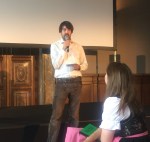
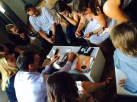
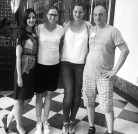
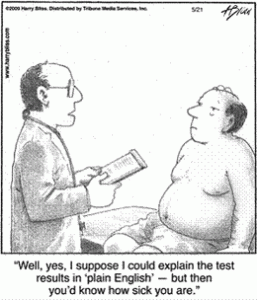
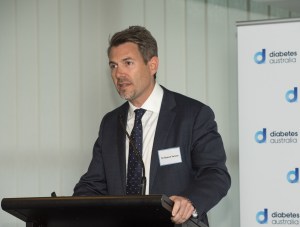
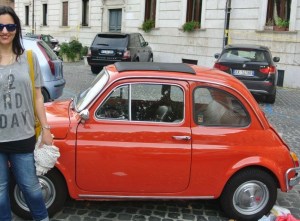
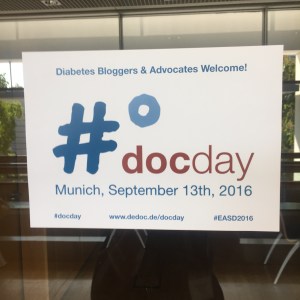
Some more snapshots from this year’s EASD meeting in Munich.

Juvenile no more

All over the internet last week was Miriam E Tucker’s piece for Medscape about the age of diagnosis of type 1 diabetes. Data presented at the meeting suggested that fifty per cent of type 1 diabetes is diagnosed in people older than thirty years of age.

Flying High

I know a couple of commercial pilots who were forced to give up their careers when they were diagnosed with type 1 diabetes (and a few kids who had to give up their dreams of ever becoming a commercial pilot). A new study out of the UK gives hope for a change to the blanket ban found in many countries. Read all about it.

Afternoon naps and type 2 diabetes

I’m a big fan of a power nap, but a new study suggests that long afternoon napping is associated with an increased risk of type 2 diabetes. More here.

MySugr announcements at EASD

The uber-cool team from MySugr keep kicking goals and taming monsters. Two announcements at EASD which further enhance the MySugr app.

Firstly, this: the integration of MySugr with the Abbott Freestyle Libre app (LibreLink, currently not available in Australia)

And this: MySugr now offers live diabetes coaching, working with diabetes educator and author of ‘Think Like a Pancreas’

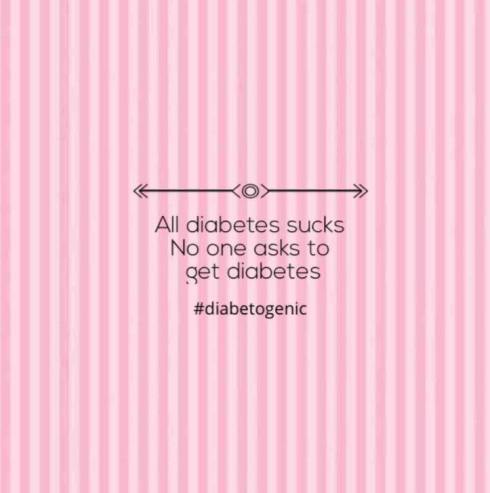
Also from MySugr is their terrific take on diabetes and language – specifically, writing about diabetes. This was shared by Ilka at one of the DOC satellite events. Love it, love it, love it!

Virtual EASD

Brilliant to see the EASD meeting embracing technology to bring sessions throughout the conference into anyone and everyone’s screen through their virtual EASD platform. This does a couple of things. Obviously, it means that those unable to attend the conference can see what is being presented. But more than that; it allows those people to engage in online discussions. Many were commenting on twitter and joining the dialogue with those actually in the room.

Well done – would love to see this used more widely at more conferences.

Oh, hey again Kaleido!

Once again, it was the Kaleido stand at EASD that stole the show with sheer colour and cheekiness.

It was great to reconnect with the team and chat about what has happened since I first met them all at least year’s EASD in Stockholm. There was much excitement as they now have CE mark which means they are almost ready to launch.

Most pleasing was to see that their pump now includes a bolus calculator, an addition made after feedback from people with diabetes. (Nice engagement, folks!) It is still a no-frills pump – there is no integration with CGM and none planned. And that is fine. It really is.

Launch details are getting close. Unfortunately, no plans to launch here in Australia straight away, but apparently we are on their radar. (In the meantime, I’ll keep hassling them to come here and colour our world!)

(The Kaleido stand also had a very cool interactive wall asking all about the people visiting. This was the (almost) final product.)


DISCLOSURES

Absolutely none for the things I’ve written about here.

All others as per this post

I want to try something new and I need your help. I am trying to work out just how different it is around the world when it comes to paying for a vial of insulin. Here in Australia, a 10ml vial of Humolog costs me just under eight Aussie dollars. What about you?

So, I’m asking for you to post a photo of yourself, with whichever insulin you use (penfill or vial) and tell me how much your out of pocket cost is in whichever currency you use. For some, it will be nothing. For others, a lot more.

Post your photo on the Diabetogenic Facebook page, or tweet it using the hashtag #InsulinPlayingField. And on World Diabetes Day, I’ll share the results.

So go! And share this around. Let’s see how far we can get this going and how different the playing field is across the globe.

If you have not caught up with what happened in the opioid session at MedX this week, please do. ePatient, Britt Johnson, who blogs at Hurt Blogger wrote this outstanding piece about her experience on the panel in a session titled ‘The Opioid Crisis’ where she was pretty much ignored by the moderator of the panel. I read her piece in dismay because Britt’s experience is all too common.

As I wrote on Facebook yesterday, it is these twelve words of Britt’s post that are, for me, most telling:

The plan had been to feature me in the final five minutes.’

This was the response from the moderator of the panel when she was challenged as to why Britt has been ignored whilst on stage.

The final five minutes.

That’s right. After the healthcare professional experts got to say what they wanted; after the moderator directed the discussion in a direction to get what she wanted; after everyone but the patient was given an opportunity to speak. Then, and only then, would Britt have been given the opportunity to say what she wanted.

The final five minutes.

It’s the equivalent of being given a completed resource, almost ready to go to print and being asked to provide feedback. It’s the same as being a perfunctory consumer on an advisory board, often added at the last minute to tick a box.

This token and downright insulting attitude about where ‘patients’ fit into the healthcare puzzle is toxic.

We have become accustomed and too accepting of the status quo. We feel humbled when we are added to a panel discussion when, really, we should be the main event. We are honoured to be asked to provide feedback on an already developed service that we are meant to use because we mistakenly believe our opinion is being sought and matters even though it’s too late for our feedback to be taken on board. We believe we are doing well when a consumer is added to an advisory board made up predominantly of clinicians and researchers because, hey, it’s a start.

A start is not good enough anymore.

I am angry. I am so angry about this. I am angry about what happened to Britt at MedX. I am angry that there was not a single person with diabetes on the program at this year’s ADS ADEA conference. I am angry that it is 2016 and we still have to beg for a place at the table, on the panel, on the Board. I am angry that conversations ABOUT us are happening AROUND us. I am angry because there’s never a hesitation then it comes to convening a clinical advisory group, but a struggle with how and where to engage and appoint a consumer advisory group. I am angry because too many think ‘focus testing’ means engaging at the end, and that it is enough.

But mostly, I am angry at myself. I am angry for this post I wrote last year where I pathetically felt grateful because people with diabetes were quoted at a conference – not actually handed a microphone, not actually invited to sit on a panel, not given an opportunity to lead the discussion. We were quoted and I thought that was enough.

It was our final five minutes. And, actually, it wasn’t enough.

We are more than the final five minutes.

We are more than that; we are so, so very much more.

Apparently, I went to Munich. I was away for 6 days, and 60 hours of those days were spent in transit. I believe that, (as I deal with jet lag, hypoglycaemia, and mainlining caffeine), it is fair and accurate to say that I am too old for this shit.

I am also incapable of forming paragraphs. But dot points are fun! Here are some observations and a few silly thoughts from last week. (I’ll write some sensible things when my brain is back in the same country as the rest of me.)

  • I am told by people Munich is a lovely city. I will have to take these people’s word for it, ‘cause I saw very little of the city.
  • I did not buy a dirndl and for this, I will be eternally sorry. As will my husband.
  • The EASD conference itself was, as predicted, very rats and mice-y. I sat in a number of sessions and wished I was a mouse (while wishing my diabetes away). Alas, I am not a mouse. And I still have diabetes. Damn.
  • I did not get sick of laughing at the fact that one of the halls at ICM Messe München is called Langerhan Hall. Also, I did not get sick of saying ‘I wonder if my islet cells are in there’ – to everyone within earshot. Even if I didn’t know them.
  • Obviously, Grumps was not as amused by this as me.

  • As was the case at ADA, my arm is more recognisable and famous than me. A barista at one of the exhibition hall stands said, as making me a decent coffee, ‘Oh – I know you. I saw your arm the other day near the station.’ I am a walking billboard for Rockadex! (I am not sponsored by Rockadex and purchase my own patches.)
  • Dr Kevin Lee from Queensland is a tweeting machine! In fact, I think the thing I was proudest of at EASD was seeing him tweet! (Actually, probably should say that Professor Mark Cooper’s giving the Claude Bernard Lecture was also a moment of national pride, but Kevin’s tweeting was on another level!)

  • One of my favourite talks was about diabetes, cardiac health and exercise (go on, laugh….), but that was mostly because presenter Dr Nikolaus Marx, finished up with a discussion about passive exercise and cardiovascular events during the World Cup. If you were in the room, it was me who cheered when he mentioned the increase of cardiac events after Italy beat Germany. (#VivaItalia!). For clarification, I was cheering at Gli Azzuri’s victory, not the number of Germans having heart attacks. (By the way, this was a real study. Published here.)
  • A HUGE shout out to these three women. AADE presidents elect, past and present, Nancy D’Hondt, Deb Greenwood and Hope Warsaw are absolute advocates for and champions of people with daibetes, and peer support. This is them at the docday blogger and advocate event. This level of commitment by HCPs to consumer engagement is enlightening, and a lot could be learnt from their example here. Thank you. Thank you. Thank you!

  • It was wonderful to see quite a lot of discussion about AP. Anytime someone wants to actually get these into market and into the hands of people with diabetes, that would be just great! Thank you.
  • I may have screamed a little when I wandered through the Association Village to the excellent historical display of diabetes by the German diabetes Association. Terrifying might be the word for these needles. I said a little prayer of thanks to the diabetes angels for modern day tech, and for being diagnosed in 1998.

  • I need to take a break from twitter. This was the state of play when I said good bye to the conference.

And finally, a word about language, because I am unable to attend a conference and not talk and write about it. (I think it’s actually become a law somewhere.) This probably deserves a post of its own and that may happen, but here we go anyway.

This is the fifth EASD conference I have attended, and going in, I know that it is going to be challenging, language-wise. There often appears to be very little consideration that there could be PWD in the room listening in to how HCPs are speaking of us. In the opening ceremony, I tweeted this at EASD president, Professor Juleen Zierath:

I was a little disappointed at Professor Mark Cooper’s constant use of ‘diabetic’, but it was by no means any more than most of the other speakers. I suppose I just hold Australian speakers to higher account given the work we have been doing here around language and diabetes.

This tweet generated quite a lot of discussion, and came about after I was exhausted and annoyed and mostly frustrated by the way speakers were referring to people with diabetes.

 Perhaps the best response was from Nick Oliver:

Here’s the thing – and it is something I spoke about during my talk at the DOCDAY event. Language DOES matter. We all know that. It’s completely and utterly disingenuous to say it doesn’t. For some people, it doesn’t bother them and that’s terrific. For others, though, it really does. So why would anyone do something that may offend when it is so easy to avoid that?

DISCLOSE DISCLOSE DISCLOSE

My (economy fare) flights and accommodation expenses were covered by AMSL and J&J. I was attending the EASD conference mainly to attend the J&J DOC exchange meeting which I was involved in preparing and presenting. No one ever expects me to write anything. These are my words and observations only. (And seriously, have you seen what I have just written? No one wants to be associated with that!)

We watched the movie Looking for Alibrandi with the kidlet the other night. I remember when the book came out. I’d left school, was in first year at Uni, and still trying to work out who the hell I was. My mum, sister and I all read the book and couldn’t stop talking about it.

That book was one of the most important things I read when I was younger, because it resonated so much. The idea of not understanding where I belonged had shaped a lot of my adolescence, and was continuing to confuse me as a young adult. I know I wasn’t the only one feeling like that – many kids of post-war migrants felt the same way. Not that we really spoke about it, which was why Looking for Alibrandi was so important. It put into words the jumbled thoughts in my head.

My parents moved from Italy to Australia in the late 1940s (my dad) and early 1950s (my mum). They both grew up here – all their schooling was in Australian schools. They speak English perfectly without a hint of an Italian accent.

We didn’t speak Italian at home, and weren’t particularly involved in the Melbourne Italian Community. Most of my parents’ friends were not Italian, and I only had very, very few Italian friends. At secondary school, there were a number of Italian girls whose families would have been similar to mine, and yet they weren’t the girls I hung out with.

I wasn’t really sure where I fit. I didn’t belong with the Italian girls, because their parents were all a lot stricter than my kinda strict parents; they all spoke fluent Italian – often to each other – and were more involved in the Italian community. Equally, I didn’t really feel that I belonged with my ‘Aussie’ friends because they totally didn’t get the overprotective Italian father thing I had going on at home. Or my love of Fiats. (Or that we had Nutella in the cupboard at home!)

I was in this kind of middle ground that left me wondering where I belonged. And it is a position in which I find myself again today in the diabetes world.

I am a person with diabetes. But for the last 15 years (so, for all but 3 of my diabetes life) I have worked for a diabetes organisation. It leaves me in a unique position that brings great opportunities and privilege, but also makes me feel like a complete outsider at times.

HCPs are confused by me and sometimes suspicious of my vocal advocacy on engagement and the power of peer support; others with diabetes are sometimes wary because they wonder just how free I am to be open and honest about my diabetes; within diabetes organisations I am seen as someone who has fingers in many, many pies; global advocates are curious about how I manage to write this blog while still being in paid employment with a diabetes organisation. To avoid confusion (frequently my own), I speak differently depending on the audiences I stand before, and adapt my tone and language and stories slightly to suit HCPs, PWDs, industry reps or government people.

But essentially the stories are all the same and it is my voice telling the stories.

Next week, I’ll be in Munich at the European Association for the Science of Diabetes (EASD) Annual meeting. The EASD conference is an interesting one. It is very ‘rats and mice-y’ – the term I use for conferences where I look confused in most of the sessions because I have pretty much no idea what is being said, however understand enough to know that someone, somewhere has managed to cure diabetes. In mice.

Despite it’s very science-focused content which attracts very science-focused folk, I feel very ‘right’ at this particular conference, because there is a wonderful advocate, blogger and consumer satellite program that means the city is full of ‘my people’. And that is why I am there – for those events.

If I feel as though I don’t belong at EASD, it’s because I am the only Australian advocate there. I have travelled the furthest distance, I am jet lagged for most of the time and people have trouble understanding my accent. But the Italian contingent at the advocate events claim me as one of their own (albeit one of their own who doesn’t speak the language), so at least I feel that I fit somewhere.

So at least for next week, I’ll know my place. And it will be alongside some of the most dynamic, clever, passionate and dedicated people I know. My people. They will teach me a lot as I learn what they’ve all been up to since we last met and I’ll clumsily share what’s been going on here in Australia. That’s where you will find me.

(And you’ll also find me sitting down the back of science-y sessions looking confused. And wishing I was a mouse.)

easd2016_4c_180px

This photo* sums up why I do what I do, and why many people think I sound like a broken record, with a vocabulary of a mere seven words. Specifically, these seven words: ‘Have you spoken to people with diabetes?’

Because so often, the answer is ‘No’. Or ‘No – we’ll be doing that after we have had some meetings.‘ Or ‘Yes – we spoke to you‘ at which point I remind them that I pointed out when they did indeed speak to me that they should find other people with diabetes to speak with. Because I am but one person and speak for no one other than me. (Or, perhaps, another woman in her 40s who loves Nutella, boots, coffee, lives in inner-Melbourne, waves her hands around madly while speaking reallyreallyreallyreally fast, can recite Marx Bros movies from start to end, has what some would call an irrational fear of birds (and butterflies), can sing (badly) pretty much any song from the 1980s, has over 25 striped t-shirts in her cupboard and is battling an eleven year old daughter who has decided that she too loves stripes and wants to borrow all her mother’s clothes.)

Most people are not like that. (Fortunately.)

Anyway, this picture also demonstrates that those who have the privilege of designing services, activities, programs, settings for people with diabetes often miss the point – perhaps not by much, but nonetheless, they miss it. It’s usually because they forgot to ask us, or asked as too late, or didn’t keep coming back and asking and checking in. And then, when we don’t use what they design, we are branded ‘non-compliant’ or ‘disengaged‘ or ‘not interested in our health’, when the truth of the matter is that their design (without our input) just doesn’t fit our needs.

I have given so many talks and written so many pieces about this. But perhaps all I need is this on a t-shirt, tattooed to my arm (forehead?) and on the back of my business cards. Don’t design before speaking to the user. It’s actually really easy!

(*I don’t know the source of this photo, but if anyone does, please let me know so I can credit appropriately.)

There are few topics guaranteed to polarise and cause debate like food and what we are eating. Our choice of what we put in our mouths will always generate comments, whether invited (and welcome) or not. And add diabetes to the mix and it gets even worse. From ‘Should you be eating that’ to ‘Here, this is low fat, low sugar, high cardboard content’, we get it all!

I wrote a couple of months ago about how I had unintentionally started eating low(er) carb, and shared my thoughts on how that was going. I’ve also made a few comments on my social media feeds about some things I’d been trying. Interestingly, and as a result, I’ve been contacted by complete and utter strangers wanting to give me their thoughts. This in itself is not that odd; I frequently have messages from people I don’t know about my blog.

What is different here though, is the tone that is often used. And it is not always particularly positive. I’ve been accused from jumping on a bandwagon, loving Pete Evans (that one made me laugh for about four days straight!), letting down the team and being untrue to my Italian heritage. I ignored them all.

I’m a few months in now and couldn’t really care less what people think. I am trying something to try to improve my own diabetes management, not anyone else’s and I’m certainly not even considering suggesting that this is something others might like to try. The My Diabetes My Rules thing possibly applies here more than anywhere else.

The experiment has been continuing, and what I have been most interested in is not only the results regarding my diabetes, but I also really wanted to know if this change in my hearting habits is truly sustainable.

So, a couple of things I want to say to begin with. I have not adopted low carb high fat as a way of life for me. I am ad hoc at best. There are some things that I refuse to change and I have no problem with that at all. This lack of real commitment has drawn criticism from a few people who also thought they would message me to say that if I wasn’t doing low carb high fat properly that I was a fraud and should just shut up. I ignored them too. (That’s the beauty of writing your own blog – you don’t have to listen to people!)

The sustainability issue seems to have worked for me by muddling through the best way I can, making sure that I never say no to something I really want to eat. And perhaps, that was the ‘Aha’ moment for me. There is no right way to do this – except the way that works for me.

For example: I love bread. Love it. Adore it. Love. Love. Love. But there is bread and there is bread. When I eat bread, I only eat bloody good bread. Like a beautiful, chewy seeded sourdough from Baker D Chirico, bought fresh from the bakery and slathered with lashings of real butter – preferably French; always salted.

I’ve decided that there is no point eating a piece of highly processed square bread out of a packet that is not freshly baked and is full of preservatives. So I don’t eat it.

My breakfast most mornings continues to be a milky coffee. I’m nor cutting out the milk or the sugar, even though I know both do raise my BGLs. But I manage that as well as I can, hoping for no spike within half an hour of consumption. I am not good in the mornings without that first (and often second) coffee. And for the love of all that is good and those around me, it’s best that I just have my latte and get on with it.

Overcoming the mindset of needing to eat carbs has been a huge challenge for me. HUGE. It is possibly a combination of 18 years of conditioning about the need to include carbs in my meals and also generally loving carb-based foods.

But there are options. And as I work out what they are, meals are becoming easier.

Where I think I have been getting the biggest bang for my buck is adapting evening meals to be lower carb. This has resulted in far nicer glucose levels in the evenings, overnight and, subsequently, in the mornings. For me, it’s complete
ly and utterly undeniable that not loading with carbs equals diabetes that is far easier and nicer to try and manage.

So, here are just a few things that I’ve prepared recently to give you an idea of what I have been doing to lower my carb intake. Often, my evening meal is zero carbs which is generally what I have been aiming for as this offers the best post-prandial results.

For the colder months, the oven has been working overtime, cooking braises and stews for hours at a time. Or one pan wonders like this that combine chicken, chorizo, lemon, garlic and spinach.

 I always love to serve them with mashed potatoes, but have tried mashed cauliflower instead. I refused to even entertain the thought of mashed cauli until recently, when I decided to try it and have found it it delicious. (I either steam or bake it first
and then pulverise it with a stick blender with salted butter (lots) and milk. Or cream if I have some in the fridge.) I can eat a huge bowl of it and my glucose levels do not shift a smidge. (I know this to be true because I have, on several occasions, eaten nothing but a huge bowl of it for dinner and then watched the flat line of my CGM.)

Actually, cauliflower has become a favourite food. And it’s insanely cheap at the moment. Roasted cauli has become another staple. My favourite way is to cut out the core and bake it whole, drizzled with olive oil, oregano and fresh garlic. But cauliflower is one of those veggies that simply soaks up flavours, so anything goes. I’ve also tried lemon, garlic and rosemary which works a treat. (I’ve worked out that steaming the cauli in the microwave for about 5 minutes first cuts the cooking time down, so usually I do that before shoving it in the oven.)

I made low carb gnocchi one night with hazelnut meal instead of flour and tossed them through a burnt butter and sage sauce, with tiny pieces of crispy fried pancetta sprinkled on top.


Do I feel as though I missing out on anything? Not really. Because if I want something, I still eat it. No foods are considered taboo, there are still no ‘good’ or bad’ foods. I still bake heaps and sample everything I make. (Case in point – these amazing squidgy choc-chip cookies I made the other day that are delicious!)

But what I do know is that minimising riding the blood glucose rollercoaster makes me feel better and this is by far the easiest way I have ever known to do that. It’s not perfect and there are still un-explained highs and lows. There is no name for this way of eating. But it is working for me, so for now, I’ll stick to it.

There is a dance I do with diabetes each and every day. I praise, celebrate and highlight the good; I avoid, shut out and ignore the bad. The things that scare me are pushed away – as deep as they can go. When they threaten to rise to the surface, I do the equivalent of sticking my fingers in my ears and start chanting ‘la, la, la’ so they recede to where they belong. Out of sight. Out of mind.

I’ve done this for as long as I’ve had diabetes. From day one, I pushed away the ugly and scary images of diabetes complications. I conveniently ignored the warnings and threats. Obviously. Because no one wants to be scared or warned or threatened the day they find out they have a life-long chronic health condition. Or ever.

I am scared. Diabetes scares me a lot. It always has, but for some reason, it is more at the moment. I don’t know why. Nothing has changed. There has not been a frightening experience or a noticeable change in anything. But as days and weeks and months and years as a person with diabetes gets crossed off some imaginary calendar, I am suddenly feeling that it is a countdown to where the really difficult things start.

I worry about what each passing hour is doing to my body and to my mind. If I’m being particularly forgetful, I wonder if it is because my head is so full of diabetes considerations that there is no room for a synonym for fear (dread, anxiety, terror, dismay alarm….) or recalling what day my kid has library each week.

But thinking about it more, I think the fear comes from the lies we are sold about our diabetes. I was promised the day I was diagnosed by a lovely, but most likely completely out of touch doctor, that diabetes is a matter of maths and that if you do the equations properly, it can be easily controlled.

Diabetes can’t be controlled, and with each moment of failure – and there are many and they are constant – I have feared the consequences. And I fear diabetes. With each missed calculation or out-of-range number or confusion about how the hell this thing really works, I see failure. And fear.

Diabetes is not a matter of maths, and the idea that I can control it results in a constant state of high alert as I pretend to be a body part that, when working, is pretty damn perfect. I am not perfect. In any way. And neither is the way I manage my diabetes. It’s messed up. And I’m messed up about it.

And now, as always, there are the fears. And they seem bigger and bolder all the time. I fear diabetes-related complications – long- and short-term. I fear losing the ability to take care of myself and care for others. I fear diabetes becoming so intrusive that I am unable to do anything else. And I fear diabetes becoming the first, last and only thing others think about when they see me. Perhaps most of all, I fear diabetes becoming the first, last and only thing I think about when I see me…

I wonder just how differently I would feel about diabetes – the known and unknown – if I was told at diagnosis that I would get this wrong more times than I got it right. And that was perfectly okay, understandable and acceptable. I wonder how much less significant the feelings of failure would be. And how much more in check my fears would be.

9 March, 1998. 37 days before diagnosis.

I chaired an interesting session at the Roche Educators’ Day last week (it’s the kick-off event to ADS ADEA each year, held the day before the official conference starts) presented by Sydney endocrinologist Professor Steven Boyages.

The session was called ‘A connected ecosystem for healthcare professionals and their patients.(We’ll just ignore the use of the word ‘their’ because, quite frankly, I don’t belong to my HCP, but this post is not about language, so let’s move on….)

Steven started by highlighting there is nowhere to hide when it comes to the online world and diabetes (or any healthcare, really) with this statement: ‘Be prepared: patients will already have looked you up on line.’ (Indeed – the first thing I did when asked to chair his session was Google Professor Steven Boyages. Then I found him on Twitter!) He went on to dismiss any luddite attitudes with the comment ‘If I can do it, you can do it!’

Other important points included that healthcare has – and continues – to move away from being a patriarchal system where what the doctor says goes. And that technology is here to stay. In the case of diabetes, more and more people are expecting their HCP to be as tech savvy as we are, not only knowing about the latest technology, but also being able to use it.

But perhaps the most controversial part of Steven’s talk was when he asked this question: ‘What business are we in?’ Voices across the audience responded with ‘Healthcare’, ‘Caring for people’, and even just ‘People’. He shook his head and paused. ‘No,’ he said. ‘We’re in the business of selling.’

And therein lies the challenge. Because when you look at it, it’s kind of true. HCPs are selling something – health. And to get there, we often need to make changes or do things we don’t particularly like. And that is a bloody hard sell. No one wants to follow directions all the time – especially if those directions include things like jabbing ourselves, or eating lots of green things. (In fact, Steven gave the example of GPs being asked to follow the same BGL monitoring they expect of PWD. Only two out of twenty managed to do it for the week of the trial.)

There needs to be a more attractive proposition and that has to incorporate the tools designed to make diabetes management easier. Those tools include devices and technology as well as communication channels. We expect our connectivity to be outside the 9 – 5 hours of the traditional office and, as Steven said, if we can’t get help from our healthcare team, we’ll find someone available. We already bypass HCPs for most of our decision making – whether it be through the use of technology or advice from peers.

Healthcare has been transformed in recent years, and it’s just the beginning. There will be more and more changes, and more and more expected of the system and those working within it. Which is why everyone needs to get smarter about using the devices, the structures and the data.

During the discussion time at the end of Steven’s talk, someone said, ‘But surely all these new apps and programs add time and we don’t have time.’ They were referring to the program that is used with a new blood glucose monitor. I was shocked at that comment, because it misses one of the key benefits to diabetes technology, so I was pleased with how Steven replied. ‘Not at all,’ he said. ‘In fact, if we are using the technology properly and empowering PWD to use it properly, they will be able to do a lot more of the trouble shooting themselves.’

Knowing how to use devices, understand the data and respond to the information has meant that I rarely need to get in touch with my HCPs outside of when I am actually having a consultation with them. Most of the time, I manage myself. Because I have the tools available and know how to use them.

Being in the business of selling health is indeed tough. The products being sold are not shiny new cars or the latest mobile phones. It’s often not something tangible that can be held up as something aspirational. But health? Surely that is something we all want. We just need some smarter ways to sell it – so that we are willing to buy!

DISCLAIMER

I was invited to chair two sessions at the Roche Educators Day last Tuesday at the ADS ADEA conference. Roche kindly funded my travel to the Gold Coast (my return travel and accommodation were covered by my work). Roche also registered me for the ADS ADEA conference, covering related costs. The also gave me a lovely box of chocolates, most of which I ate myself without sharing, because: chocolate!

I’d already returned home to Melbourne on Friday morning when Dr Kevin Lee gave his talk on on healthcare social media. I wrote about his planning for the talk here after Kevin engaged OzDOC for some advice on important topics to cover. I’m really sorry I wasn’t there to hear his presentation, although felt there in spirit after I saw this! (Thanks, Ash!)


I reckon that this is the fourth or fifth year the ADS ADEA have spoken about social media and how healthcare professionals can use it safely. I remember seeing diabetes educator Natalie Wischer give a great talk back in 2012 highlighting the different social media platforms available and how they are being used in diabetes. This was just after we launched the weekly #OzDOC tweetchats and I stood up and gave a plug for our weekly online get-together, urging the HCPs in the room to have a look – to lurk – and see what we were so excited about.

I gave a talk the next year (that’s the photo Dr Kevin Lee used in his talk), encouraging HCPs to engage with the online community. And last year at the Roche Educators Day, I ran two practical workshops about how HCPs could use SoMe to connect, enhance and support diabetes care.

It has been on the agenda for a few years, and now it is time to stop talking about it and actually do it.

As mentioned last week, Symplur highlighted just who was talking online at the conference. As usual, the ACBRD team was doing a stellar job live tweeting sessions and promoting their excellent work. And, of course, advocates on the ground were doing their (our?) best to share and engage. There were over 2.7 million impressions on Twitter for the duration of the conference, which is certainly an increase from previous years.

I would really love the ADS and ADEA to be proactive about encouraging social media. I would love for them to look at what happened a couple of weeks ago at the American Association of Diabetes Educators conference and see how meaningful social media interaction between people with diabetes and healthcare professionals can and does happen. Safely. The real engagement and collaboration between the organising professional body and advocates saw impressions on Twitter of over 17.5 million, and over 860 people engaging online.

So, how do we go here in Australia about increasing online presence and discussion? In the room for Dr Kevin Lee’s talk were two of Australia’s most prolific and well-known patient advocates – both high-level users of HCSM. I’m referring to Kim Henshaw and Ashley Ng. I wasn’t in the room, yet was actively participating, re-tweeting and engaging – as were many others during sessions that I was sitting in earlier in the week. Having more consumers in sessions provides that connection with PWD not at the conference to hear and see what is going on.

I also think there was, perhaps, a missed opportunity at the session speaking about social media use. Having an advocate on the panel or chairing the session (and remember: Kim and Ashley were in the room!) would have added significant value to the discussion. Dr Kevin Lee went straight to the source when he was putting together his talk. Think about how great it could have been had one or two of those who helped him pull together his information were on the stage elaborating on their comments. Perhaps next year.

Follow Diabetogenic on WordPress.com

Enter your email address to follow this blog and receive notifications of new posts by email.

Read about Renza

Archives