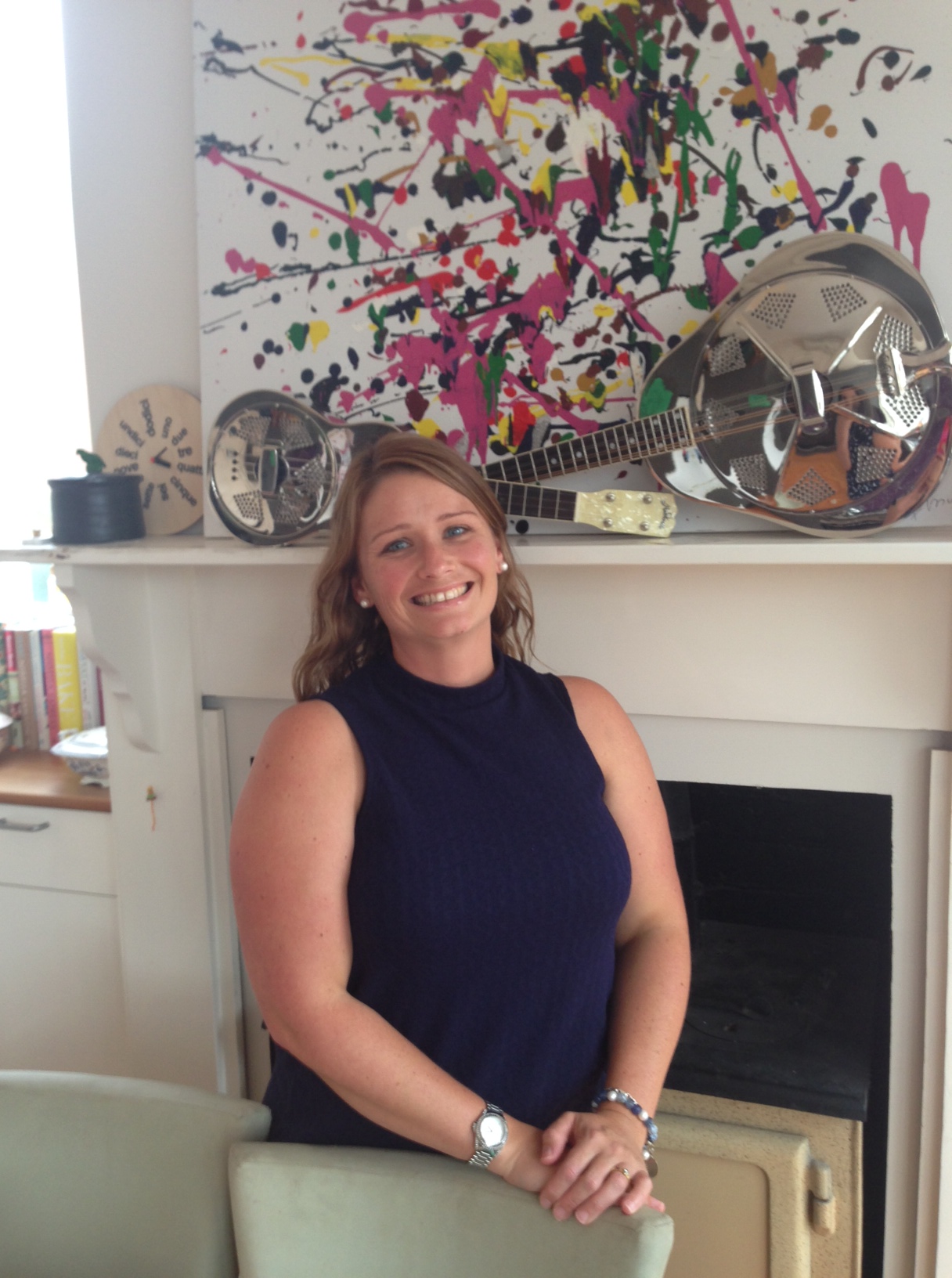
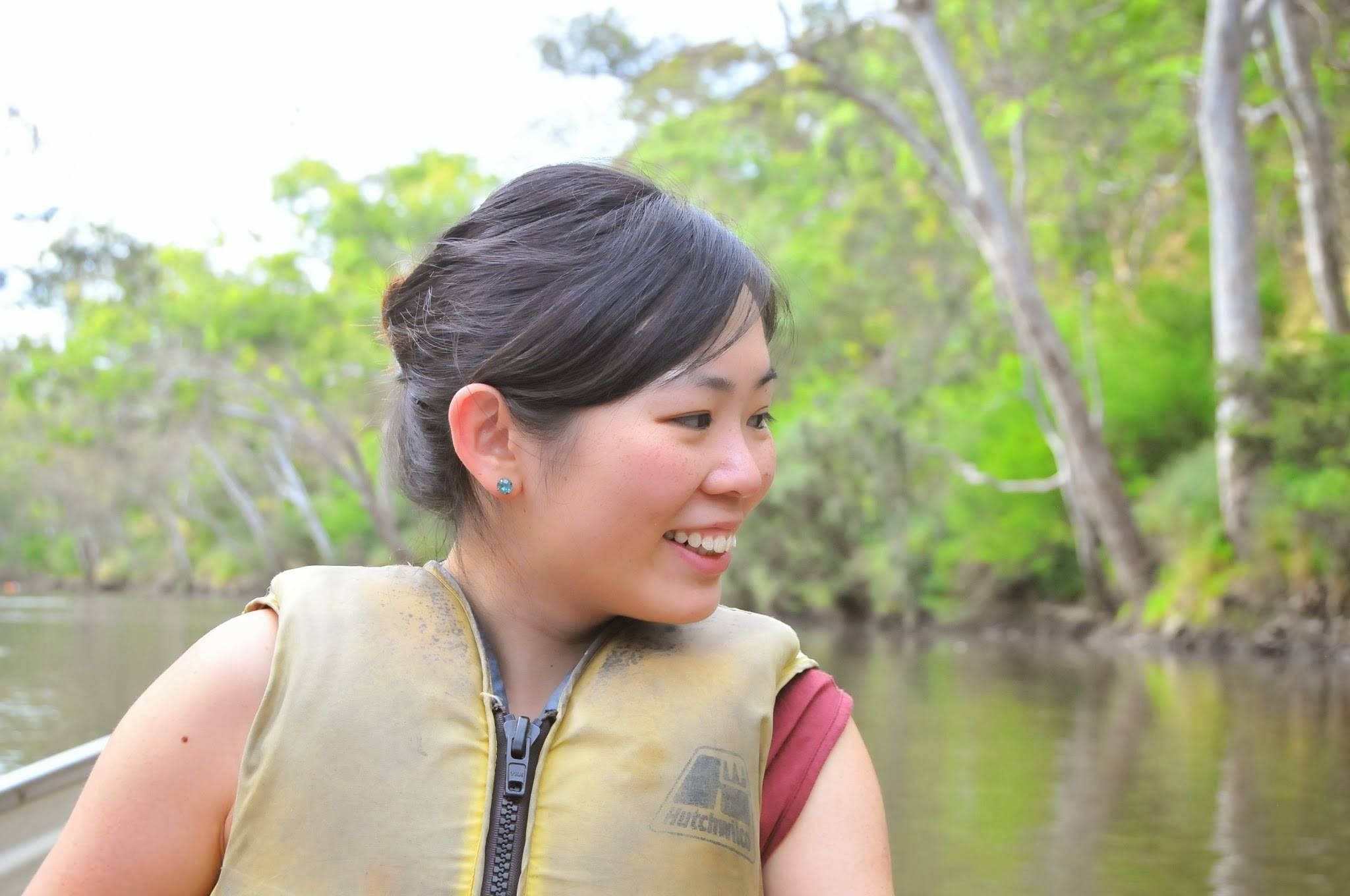
There is a wonderful website I love called ‘Humans of New York’. It showcases the work of Brandan, a NYC-based photographer who tells the stories of people on the streets of New York and accompanies their words with gorgeous photos. I love it for a number of reasons. The stories are all beautiful and run the gamut from gloriously joyful to tragic and tear-inducing. Also – New York: what’s not to adore! There are ‘Humans of….’ blogs and projects from other cities too now – Melbourne has our own.

There’s an intimacy and openness to Brandon’s subjects as they share what’s on their mind at the moment he takes the photo, or tales of things that have happened in their lives.

I’ve always loved hearing people’s stories. I ask a lot of questions of people in an endeavour to get to know something that isn’t at the surface. Finding out what explains people – what makes them tick, get excited, saddens them – is a privilege and a joy.

Reading blogs gives the same insight and it also connects me to the writers. Diabetes blogs by others help me understand my own diabetes story better. And I blog in the hope that my stories do the same for others.

So – I’m starting something new.  Every now and then, I am going to ask one of my friends with diabetes to send me a photo and a sentence or two about their diabetes week or something about their life with diabetes. I haven’t got a catchy name for this yet, but suggestions are greatly appreciated.

If you’d like to participate, get in touch using the contact me button at the top of my blog.

So – for today, I’m asking Eliza to kick it off this new project.

photo


Where was your last overseas holiday?

My last trip was to Japan. It was unbelievable. Having diabetes didn’t stop me tasting every food I could find or having a go at every slope on the mountain. The most tiring part was digging my skis up out of hip-deep powder every time I fell over.

Japan 2

Someone said to me yesterday that it seems that I only ever eat doughnuts and Nutella. Or doughnuts with Nutella. This was in response to a photo I posted on Facebook which showed the kiddo and a couple of her friends being shown how to make Nutella spring rolls*. Actually, it was in response to most of the photos I post on Facebook which may or may not be of doughnuts and Nutella.  Whatever!

People seem to love pointing out what they consider to be the irony of a person with diabetes having such a strong love of fried sweet dumplings. It’s possible that the happiest day of my life was the day I discovered Doughnut Plant in New York.

But there’s no irony as far as I’m concerned. I love a good custard bomba, sugar-coated zippoli or jam-filled doughnut. And I have diabetes. And I have an insulin pump and I know how to use it! I must have missed the day at diabetes school where we were told we couldn’t eat doughnuts.

We are told that there is no such thing as a ‘diabetic diet’, yet the mixed messages we receive about what we ‘should’ and ‘should not’ be eating only lead to judgement and accusatory questions such as ‘should you be eating that?’ The stigma associated with diabetes and the media’s misrepresentation of all people with diabetes as overweight, lazy, fast-food-guzzling machines perpetuates the myth that food for people with diabetes should be cardboard-flavoured and devoid of any enjoyment.

Well I say screw that!

For the record (and in a pathetic-and-less-than-half-arsed attempt to justify my eating habits), I actually do enjoy an incredibly healthy diet. I cook most days and there are always lots of fresh vegies and lean meat on my plate. But there is no fun in posting a photo of chicken paillard with rocket, avocado and walnuts. As delicious as it may be.

beignetsToday is Mardi Gras and whilst I can’t be in New Orleans to join in Fat Tuesday celebrations (if only!) I will be thinking of beignet – the pillowy, fried and sugary doughy delights that I enjoyed in great quantities at Café du Monde when I visited the great NOLA last year. And at some point today, I hope to have one or three (with a side of insulin), sprinkling icing sugar down my front as I wave a handkerchief, walking the second line as Melbourne celebrates Mardi Gras in our own way.

Also – here you go! Some Disney and Dr John magic for your Tuesday.

Nutella Spring Rolls

Add a dollop (about a teaspoon-full) of Nutella to the middle of a spring roll or wonton wrapper

Fold in the sides and then roll into a cigar shape

Seal edges with egg

Fry in vegetable oil

Sprinkle with icing sugar and eat while hot

Enjoy

Bolus as required (either using a pump, pen, syringe or working pancreas)

Swimming, breakfast, shopping: a typical Saturday morning.

A waking BGL only slightly higher than usual reminded me it was time to change my pump line, so after my shower, a shiny new line went in and the day started. Diabetes task one done for the day and in the frantic manner of Saturday mornings, I didn’t think about it again.

When I finally stopped to get something to eat, I didn’t check my BGL. Rookie mistake number one, except I’m not a rookie – just a busy person who, in all honesty, couldn’t be bothered seeing a number on a machine. I bolused for the carbs in the milky coffee and toast and ticked off another diabetes task for the day. Off I went.

I was standing at the register of a store in the city when the nausea hit. It wasn’t a wave so much as a tsunami. I knew I had to get out into the fresh air as quickly as I could.

I got into the car, found my meter and checked my BGL to see a lovely number in the mid-twenties staring at me. Still thinking clearly at this point, I grabbed the emergency syringe I keep in my diabetes kit and drew up some insulin and jabbed it into my stomach.

I got home before the vomiting started.

And then, I attended to the cause and went through the mental checklist trying to find something – anything – to make sense of the sudden spike. I was sure I’d bolused for the food I’d eaten which my pump bolus history confirmed; I was coming down with a cold, but surely there was no way that could have sent my BGLs so high so quickly; I checked for ketones and saw a number that didn’t startle me too much; I looked down at new line….and there it was. The tell-tale red at the top of the where the canula entered my skin. I ripped it out and blood gushed everywhere. Blood in the line, I thought to myself, as I tried to stem the flow. I thought about how dramatic it sounded.

New line in; a temp basal rate set; glasses of water; an hour of sleep; extra BGL checks through the rest of the day to avoid the plummet. And the feeling of being hit by a bus.

It was a typical Saturday morning. With diabetes in the mix.

I first heard of the International Diabetes Federation’s (IDF) Young Leaders in Diabetes (YLD) Program when I attended the World Diabetes Congress in Dubai in 2011. There, I met some of the young leaders and heard about the program’s aims and intentions.

Alex and Renza

Alex Silverstein at the opening ceremony of the World Diabetes Congress in Melbourne last December. He’s usually less elaborately painted up!

I knew just how valuable and important this program would be when I first met Alex Silverstein in Chicago last year. Alex was the first President of the YLP and I could see why he had been selected to take on this role in the program’s early years. He’s smart, dynamic, passionate about the cause, funny and just a downright nice guy – I’m blessed to call him a mate. I’ve been lucky enough to meet up with him again at other conferences, including in Melbourne where he handed over the presidency to the equally awesome Keegan Hall.

In the lead up to the World Diabetes Congress in Melbourne last year, the YLD representatives spent some time together working with diabetes advocates and HCPs for their Leadership Training. They discussed global diabetes issues, how to effectively communicate and advocate were covered. I was invited to attend the session on social media use and was amazed at the enthusiasm and commitment in the room. The program involves 132 young people from 70 countries around the world, each with a different story about life with diabetes.

We need advocates with strong voices and the IDF should be commended for bringing together this group. Under the direction of Debbie Jones and Paul Madden and a smart and dedicated faculty, this program provides a voice for young people living with diabetes from around the world, many of whom would otherwise not have the opportunity to tell their stories and advocate the needs of their peers. Many are focusing their energies on highlighting issues such as access to insulin in countries where this life-saving drug is considered a luxury and the associated costs prohibitive.

The Aussie YLD contingent (plus an old bag).

The Aussie YLD contingent (plus an old bag).

Our Australian representatives on the YLD program are three of the most intelligent young women I’ve had the pleasure to meet. Ashley, Stephanie and Rachel did us all proud in Melbourne at the IDF Conference. They continue to be advocates for young people with diabetes in Australia through the YLD Program as well as the Diabetes Australia Young Leaders Program.  Ashley is a regular blogger and has recently been involved in setting up a Facebook page to bring together young adults with type 2 diabetes.

See some of the young leaders in action in this great new video.


On Saturday night, before delving into the craziness that was White Night, I attended the launch of a terribly exciting new resource. Enhancing Your Consulting Skills; supporting self-management and optimising mental health in people with type 1 diabetes is described as an ‘education resource for advanced trainees in endocrinology and other interested health professionals’. That’s right. It’s written for health professionals who will be working with and for people with type 1 diabetes. launch - Consulting Skills

I attended with a dear friend who shares my pancreatically-challenged state. We also share the same endocrinologist – one of the collaborators on the resource – and were there at her invitation. We know just how lucky we are to see an endo who understands self-management, ‘gets’ the fact that burnout happens and doesn’t have a judgemental gene in her body. We know that having an endo who we can email in between appointments is a privilege we would never abuse. And we know that living in the inner city means that we have access to healthcare that many others can only hope for.

Hopefully, this resource will mean better education of new endo trainees and that the care we are so fortunate to receive will be available to many more people with diabetes.

This resource is a huge step forward in medical education. It is the first time that the needs of people with type 1 diabetes have been directly addressed with a strong focus on self-management and mental health. As Professor Alicia Jenkins highlighted in her speech, people with type 1 diabetes spend, on average, three hours per year with their healthcare team. The remainder of the time we’re doing it alone. There is no treatment option other than self-management and an understanding of how HCPs can support that is critically important.

Endocrine trainee, Michelle, gave a candid speech how she has come to view people living with diabetes. She said that when she first started attending a young adults with diabetes clinic, she was frustrated and said that she blamed her patients for not getting the results she expected. This honesty was refreshing and it was so pleasing to hear how she now knows to focus on the positives rather than negatives when working with PWD.

Dr Jennifer Conn gave a warming speech about how she never stops learning from her patients. This humble attitude is one of the reasons that this book is so well written. It acknowledges the expertise held by the person who lives with diabetes and knows their condition better than anyone else possible could.

I looked around the room and saw that there with the glitterati of the diabetes HCP world, were some of the pancreati – the people with diabetes who the book was written for. It’s a tribute to the writers and organisers of the launch event that people with diabetes were invited.

Tweet - launch

I’d like to congratulate the team who have put this together, and the NDSS for supporting the development of the resource. This is a win for people with type 1 diabetes and I can certainly see similar volumes being written for type 2 diabetes and, indeed, other chronic health conditions.

At the end of the event, I wandered back out onto the Melbourne streets, waiting for nightfall when the city would light up and fill up with hundreds of thousands of people.  I looked at my friend and thought how lucky we are – a night of Melbourne brilliance kicked off with hope for a better future for people with diabetes.

Disclaimer

One of the collaborating writers involved in this resource is my endocrinologist. I was asked to provide comment on some sections of the book and my photo and a screen shot of this blog are included in the final book. I did not receive any payment for any of this involvement.

The development and printing of this book were funded by the National Diabetes Services Scheme (NDSS) which is administered by Diabetes Australia. I am employed by Diabetes Australia – Vic.

I couldn’t be more excited to receive this in the mail today:

Kerri book


And I couldn’t be more proud of the wonderful Kerri Sparling who I am lucky enough to call my friend.

Renza & Kerri Brunetti

Run, don’t walk, to order your copy of Balancing Diabetes now!

Today is Diabetes Art Day.  The last time I took part in Diabetes Art Day was in 2012 when, instead of making art, I looked at it. We were in Rome and spent the day wandering around the Sistine Chapel. But this year I decided that it was time to actually produce something. I’m not a great artist. In fact, our daughter overtook my drawing abilities when she was about…oh, maybe 12 months old. However, Diabetes Art Day isn’t about producing perfect works of art. It’s about thinking about how diabetes can be represented in ways other than words (I kinda missed the brief as you will see below).

photo 1

So in an endeavour to do something quiet and cool (and indoors) to escape yesterday’s sweltering heat, my family sat around our kitchen table and made some art. Out came coloured paper, crayons, textas, colouring pencils, stencils, stamps and anything else in the craft basket that looked like it might be fun.

And then we drew and collaged and stamped. I decided to use lots of different colours and place the blue circle over the top. I liked the idea of a rainbow-esque kaleidoscope of bright and not-so-bright colours because to me, that’s how diabetes is. And while the elusive pot of gold at the end of the rainbow may be a cure, there is still hope in between even if we never actually find it.

Renza's pic

Hope. For me, there always needs to be hope….

And the kiddo and Aaron came up with these gorgeous pieces.

Kiddo's pic

Is that a Twitter bird I can see?

Aaron's pic

More colours and a blue disc of hope.

So, here is our family’s contribution to Diabetes Art Day. I’m going to frame the pictures and put them up in my office so that I can be reminded that sometimes it helps to look at diabetes in a different way.

Postscript:

And then I got a little carried away with the stamps and did this:

photo 2

Follow Diabetes Art Day on Twitter: #DArtDay

For the first time in a while, I woke this morning feeling rested. I realised that it had been some since I’d had a solid night’s sleep without getting up for anything. And it felt good!

I’ve always been someone who can fall asleep at the drop of a hat. Sitting in the passenger seat of a car for more than 20 minutes is all it takes for me to doze off (I’m really not a great driving companion). And I think that in all my travels I’ve been awake for take-off maybe twice. The second the plane starts taxiing, I’m asleep. Caffeine doesn’t affect me and I can sleep in bright light and through loud noise.

When I was diagnosed with diabetes, one of the most difficult things to deal with was the need to wake at a certain time (much earlier than I was used to) so I could have breakfast and take my first insulin shot for the day. I can still remember the relief I felt when I started using a pump and could go back to sleeping away half the day if so desired (as it often was).

I worried about how I would cope with the promised sleep deprivation that a baby would bring, but pure luck delivered us a baby who slept through the night from an early age and who, even now, sleeps in on weekends and over holidays and knows to leave the grown-ups alone if she rises first.

But lately, sleep hasn’t been coming easy.  Between the heat (and resulting hypos), getting used to sleeping in a new house and waking due to pain in my right eye following my second cataract surgery, I haven’t really had many nights of restful slumber. Plus, it doesn’t help that the allure of ‘just one more episode’ of Breaking Bad is reducing the number of hours spent in bed.

The nights disrupted by diabetes result in days disturbed by diabetes. I find myself yawning and finding excuses for more coffee to try to keep me alert. And I think about sleep – and then stress because I’m tired and not sleeping properly. I feel sluggish and slow and find it difficult to stay on task. And I spend most of the day banging on about how tired I am because I didn’t get enough sleep.

Which, apparently, is the problem.

I read today that just thinking about sleep positively can impact on performance. This study published in the Journal of Experimental Psychology says that complaining about not getting enough sleep is the reason that performance suffers – not the actual lack of shut eye. There’s a placebo effect for you!

I’m not sure if that’s true, but given the number of nights diabetes does reduce the hours of sleep I get, perhaps some positive thinking is in order. Diabetes unfortunately means that there are nights of broken sleep. Maybe instead of complaining about it, I just accept it and think about the time I was actually dreaming and how good that was. Or look forward to the sleep that’s coming up.

Also, maybe a limit on the number of Breaking Bad episodes would help too. Just saying.

This week, the new school year starts for many kids and teens in Australia. I proudly watched our big nine-year-old walk into her new classroom – seemingly confident and secure. As parents, we know that with each passing year, we have to hand over a little responsibility as our kids grow up. We need to foster their independence and celebrate it, even at times when we want to bundle them up and try to protect them from the big bad world.

Today, my dear friend Catherine Forbes, writes about how her family is navigating independence with their fifteen year-old daughter who just happens to have type 1 diabetes. I love Cath’s attitude and approach because raising her beautiful girl isn’t about diabetes. It’s about helping her daughter be the best person she can be. Diabetes or not, I think this is relevant to all of us. Thanks for writing, Cath.

One of the most amazing things about watching your child grow up is seeing them take on their own responsibilities and realising that, even without you, they will thrive.  It’s no different when your child has type 1 diabetes.

For the past ten years, it’s been my job to look after my daughter; to keep her safe; to keep her alive. I’ve been the one testing, injecting, doing site changes, making adjustments and going to appointments.  I’ve been the one checking the carb count in every piece of food that she eats.  I’ve been the one nagging.  I’ve been her carer – and it’s been the most important job that I have ever done.  Sometimes, it’s extremely difficult to let go of that.  It becomes our identifier.  It’s who we are.

Cath

Cath and her daughter

But, I’m here to tell you that ‘letting go’ is so worth it, so rewarding and, ultimately, the best possible thing that you can do for your child.

Now, I’m not talking about handing everything over to them and walking away.  That would be a disaster.  What I’m talking about is slowly letting go of the control that we have, allowing them to make their own decisions and their own mistakes.  Allowing them to learn how to look after themselves safely for the rest of their lives.

Let’s face it; as much as we joke about them having to build a granny flat for us when they move out, the reality is that they are likely to be living on their own at some stage.  Possibly living with friends or a partner.  And certainly – not with us.  We want them to be confident and competent in their own care.  We want them to know what to do in any given situation.  And we want them to live happy lives.

Twelve months ago, we began consciously working on this transition time with our daughter.  She was 14 years old and had just been selected to tour the United Kingdom and France with her school netball team.  Even though she would have teachers with her for the tour, we wanted her to be confident enough to look after herself while she was away.  I made sure that she knew that I was there for her if she needed me and, nervously, handed over the responsibility for testing, carb counting and bolusing her insulin.  I did not ask.  I did not nag.  I cut back on the night time testing.

I admit to you all that, as we approached her quarterly visit to Diabetes Clinic, I feared that we would see the worst HbA1c ever.   It was a tough lesson – but also one of the proudest moments of my life – when she presented her best result EVER.  She had taken control.  She had stepped up.  She had set her own alarms to test during the night or she had asked me to check on her.  She had worn her Dexcom CGM and taken great interest in the effect of different foods and activity on her blood glucose levels.  Essentially, she was doing this on her own.

Stonehenge

Cath’s daughter at Stonehenge

When September rolled around and we waved her and her school mates goodbye, we knew that she was going to be just fine.  And, more importantly, SHE knew that she was going to be just fine.  For almost three weeks, I did not know her levels – not one of them.  I didn’t know what she ate or what activity she was dealing with.  And, when we spoke via Skype, diabetes was not mentioned once.  She told me about her adventures and the people that she had met.  It was magical.  A huge turning point.

Now, she is still driving her own diabetes management.  Several weeks ago, she told me that she wanted a pump holiday.  She asked me for guidance and I showed her what needed to be done.  In the past, her “holidays” have barely lasted a week.  Now, with her in the driver’s seat, she is entering week four on multiple daily injections and she is doing great.  I don’t know what all her levels have been but she is happy with them and that’s all that matters.  I see her testing.  I see her injecting.  I know that she is going to be just fine.

I know some remarkable and inspirational young people who just happen to live with diabetes – and I know that my daughter will be in good company in this community.  She too will be an amazing young person – taking life by the horns and doing whatever she chooses.  Diabetes is just a tiny part of the incredible woman that she is.

Catherine Forbes is a mother, advocate, volunteer and peer support mentor. You can follow her on Twitter here.

‘I’ve been compliant,’ I said to my ophthalmologist with great pride. ‘Compliant’, I said again and smiled at him and waited for a pat on the back. It didn’t come. So I tried again, emphasising my point. ‘Four times a day; both drops in my eye.  Just like you said. Didn’t miss a single drop. I was com-pli-ant.’

If there is a word that is evokes rage in me it is compliant. When used in terms of diabetes management, it makes me see red and start imagining the painful things I’ll do to the person using the word. Actually, it’s usually used with the prefix ‘non’ to give the word noncompliant which is even worse.

At the World Diabetes Congress last year, Twitter nearly broke thanks to a group of DOC renegades sitting in a lecture given by a doctor who insisted on using the term ‘noncompliant diabetics’ to illustrate the point that some of his patients were having difficulties following their diabetes treatment plans. There we were, non-compliant diabetics because we couldn’t keep our BGLs perfect and follow the rules and do the things we ‘should’ do and, you know, do it all with a smile. Bad, bad, BAD diabetics. This photo shows how happy I was:

pissed off

So with this hatred of the word, why was I bandying it about in front of my ophthalmologist like there was no tomorrow? And saying it so proudly? And frequently?

The answer is quite simple. Following the treatment plan I’d been given after my cataract surgeries was easy. Two different eye drops; four times a day; for 4 weeks. Then it was over. It was something that, for me, was manageable. There was a point where it would stop and then I wouldn’t have to think about it again.

The complete opposite of living with diabetes where there is no end point and no time where a box can be ticked and it will all go away. It was so lovely to be able to do something that was predictable, easy, knowing that there would be a time when it didn’t have to happen again.

Understanding the relentlessness of diabetes management is difficult to communicate. I don’t really expect people to truly appreciate what it is that is so frustrating and annoying and challenging. But I do expect a little respect and a little acceptance when things are not going to plan. I also think that using judgemental words that suggest that there is a deliberate attempt to ‘break the rules’ is unfair and lacks any sort of comprehension about a condition that never goes away.

Perhaps my delight in announcing so loudly and proudly to my ophthalmologist about how clever and bright and shiny I’d been with my eye drops was because for once I felt like I was actually doing something right when it comes to my healthcare. Perhaps I needed recognition (probably more from myself than anyone else) that I could follow directions and get the desired results. Perhaps I just needed to believe that I was doing something that would result in predictability and a satisfactory outcome. Diabetes doesn’t ever provide any of those things. No matter how compliant you are.

Follow Diabetogenic on WordPress.com

Enter your email address to follow this blog and receive notifications of new posts by email.

Read about Renza

Archives