Last year, after the Doctors 2.0 and You Summit in Paris, I spent a lovely evening with some diabetes advocates, having a dinner of steak frites. Coming along for the ride were a couple of others who had been at the conference, including Michael Seres who is a patient advocate from the UK. Michael was diagnosed with Crohn’s Disease and, in 2011, was the 11th person to undergo a small bowl transplant. Michael speaks regularly about his story and about the importance of patient-centred care and patient engagement.

Apart from ‘seeing’ Michael on social media, we’ve not connected again. I regularly see his name coming up as a speaker at conferences and in interviews. Yesterday, trawling the Twittersphere, I followed the link on a tweet to an article about patient representation where Michael provided some great comments.

The article ‘Walk a mile in patients’ shoes: How to become truly patient-centric’ was saying how important it is for pharma to truly engage with patients. Michael says:

“Every pharma company should have a patient representative on their board. I don’t mean someone who would come in and talk to them for a couple of hours. It should be someone who lives and breathes the disease. At that point when they’re developing new meds, they would also learn how to provide all those other services that are important to patients, but that the healthcare system cannot fund”.

He’s right! Bringing in a couple of patients for a couple of hours is tokenistic at best; patronising at worst. The discussion needs to be ongoing and all aspects of living with a health condition need to be considered when new meds (or devices) are being developed. A two-hour focus group does not really equal patient engagement – especially if you’re talking about in the development of a drug or device that is going to a part of the patients life forever more!

Focus groups for new devices often focus on the design – do you like how it looks?/is this the right colour?/would you like the screen to be this way or that? etc. But patients have far more to say than whether or not the thing looks pretty. The daily functionality of my pump or meter – how easy it is to use – is what makes me love a device or want to throw it out the window.

Had people with diabetes been engaged at the development stage of the latest smart pumps, I suggest that things such as giving an alert telling you to check your ketones EVERYTIME your BGL is above 14mmol/l would be able to be turned off. Or, at least, set to a level of the user’s choice.

Meaningful engagement with patients is a win-win for all involved. We just need to find a way for that engagement to happen as part of the ‘normal’ development process.

I am an invited speaker at the eyforpharma conference in Sydney in October of this year. Details can be found here.  
One of my favourite websites is Messy Nessy Chic. This is a site full of whimsy and fun and the completely unexpected. And each week, there is a list of 13 things I found on the internet today.

This is my all-time favourite find on this site and I’m still trying to work out how to buy them both, ship them to me and spend my days driving around in them, wearing a flowery dress and scarf in my hair.

In my internet wanderings lately, I’ve found a few things. They are nowhere near as quirky or quaint. But nonetheless, I thought they were worth a share.

OVER TO YOU, MS SPARLING

Kerri Sparling needs no introduction to the diabetes blogging world. She keeps on getting better and better and better (and publishes a book!) and then goes on the telly and does this.

It’s all perfect, but for me this was the line that resonated most: ‘Patient stories are the new wave of advocacy’. Yes, they are! Thanks, Kerri.

TYPE 1 MYTH BUSTING – QLD STYLE

This isn’t really new – in fact it was launched on WDD last year. But just in case you missed it, D-QLD has this great campaign busting myths about type 1 diabetes.

IT’S NOT JUST DIABETES

The annoying things we face as people with diabetes translate to other things as well. I was sent a link to this gorgeous blog. It’s written by a mum who has a child with Autism. Her post ‘What not to say to someone who has a child with autism’ is brilliant. This is my favourite part:

If I tell you Poss is on the Spectrum, the appropriate response is not “I’m sorry”. I know it may feel like it’s the right thing to say, but chances are, if I’m telling you, it’s because you need to know – not because I’m after your sympathy. Instead maybe say “ok – what do I need to know?”.  

That thing about wishing that we could legislate against stupidity? It goes far beyond people who say inconsiderate, insensitive, offensive things about diabetes.

DIABETES REVERSED IN MICE

Whatever.

PLEASE FORWARD MY BIONIC PANCREAS ASAP

But THIS! If you’ve missed it somehow (get out from the rock!) there’s been lots about the bionic pancreas all over the interwebs. I spoke about it on the radio.

And here’s a blog from someone who was on the trial.

WEARABLE DIABETES STUFF

Apple (et al) are going to make a diabetes watch! Or something. It’s exciting, although I’m not sure that it will ever really be their core business (see what I did there?).  Anyway, we’ll see if Apple get there first, or if Samsung or Google pip them at the post (and there?). I don’t have in-cider information (I’m done), but hopefully, this is something that will be for real in the next few years. (Thank you! I’m here until Friday; try the chicken.)

Today’s post is dedicated to Jane, who sent me the link to About a Bugg, and recommends you try the veal rather than the chicken.

Melbourne is experiencing some very nasty weather today. I’m writing this while sitting in my office eating my lunch and wondering if the roof is about to fly off our building. I’m also expecting the trampoline and television antenna at home to have moved neighbourhoods by the time I get home at the end of the day.

It’s often said that if you don’t like the weather in Melbourne to wait ten minutes and check outside again. It’s true – four seasons in one day is not really all that unusual. The end of a heatwave can see temperatures drop by 20 degrees (Centigrade) in a matter of minutes. Pelting rain can give way to blue skies and sunshine that will result in sunburn.

As a lifelong Melbournian, I’ve learnt to be prepared for all weather contingencies and carry an umbrella, even if my weather app predicts only a 10 per cent chance of rain. Always have an umbrella in the car. Wear layers than can be easily peeled off (or added) as the temperature jumps around. And understand that just because it is sunny this minute, don’t think it will be in half an hour’s time. Because it probably won’t be.

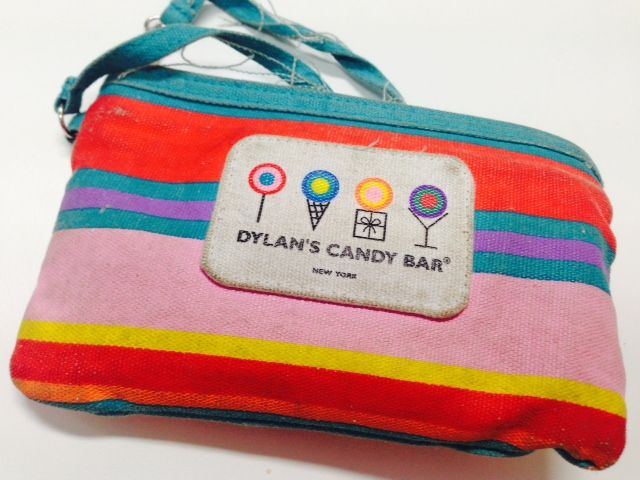
My diabetes contingency purse is the same. It covers a lot of possibilities and emergency situations. There are batteries for my pump, the charger for my meter, a spare cannula and cartridge for my pump, insulin, syringes (in case of pump fail, or if needed to syringe insulin into a cartridge), a five cent coin (new addition!), a spare needle and plunger to refill a cartridge if necessary, a copy of my basal rates (also saved on my iPhone).

Dylan'sAnd all of this fits into a small bright purse. From Dylan’s Candy Bar New York.

It’s an insurance policy of sorts because I know that as soon as I leave that bag at home, or fail to replace something I use, I’ll need it. I’ll have ignored the low cartridge warning on my pump and be out of insulin; I’ll catch my pump line on a door handle and rip the cannula clean from my skin; my meter will need recharging.

It’s just like those days when I’ve left my brolly drying out on the porch and forget to pack in back in the car. That’s when, in the ten minute drive from home to work, I watch the skies turn from bright, sparkling blue, to light grey to dark, to gloomy black and watch as the rain starts. And there I am in my car, cursing that I forgot the contingency plan. I should know better. Sometimes, I fear I’ll never learn.

My insulin pump, CGM and BGL meter all talk to me. (I just reread that statement and realised how weird it sounded. Thankfully – hopefully? – this is an audience that understands I’m not hearing voices and having conversations with devices.) They alarm and alert and let me know when they feel they need some attention.

And then last week, out of nowhere, my mobile phone got in on the act. I started receiving alerts at 11am each day, providing little reminders and prompts to help me live better with diabetes. At least that was what it was promising.

Somewhere, I must have signed up for this. As smart as my phone may be, it’s not likely that it signed up itself. Nor that my smart pump or smart meter made a call and hooked up with my phone. On one of the health apps or websites I use, I must have ticked the box that said ‘please send me annoying updates. At 11am. When I want to eat a doughnut. Telling me to NOT eat a doughnut. Which just makes me want a doughnut more. Now, where do I find a doughnut?’

The first day I received my 11am alert, I was a little surprised. It was a lovely, gentle ‘you’re-a-ok’ kinda message that made me feel quite loved, really.

The second day, it reminded me that breakfast was the most important meal of the day and linked to some ideas to start my day right. Disappointingly, my breakfast of nothing with a coffee chaser was not on the list.

The third day, it reminded me that checking my BGLs two hours after eating would allow me to correct any high BGL following the healthy breakfast (from the previous day’s list) I would have eaten that day.

The fourth day, it reminded me that carbohydrates are an important way to get energy, but not all carbs are created equal, and linked to a table that showed the best carbs to eat. Once again, I was disappointed. My favourite carbs (Nutella, anything containing Nutella and doughnuts. Filled with Nutella) were not on the list.

The fifth day, it reminded me that regular visits to my HCP and complications screening are important.

We ended our relationship that day. I don’t need an 11am complications screening reminder. Ever.

I found the healthy living (the diabetes healthy living) messages intrusive. Rarely at the moment I received the alert would I be thinking of diabetes. Instead, I’d be in the middle of something at work and suddenly I was torn away and reminded that a lot of my choices are not really healthy. I felt guilty. Guilty that I hadn’t eaten breakfast (except for a milky coffee), hadn’t eaten any carbs of value in the last 48 hours, hadn’t been checking post-prandial BGLs and that I was a couple of months late with my comps screening.

But more than that, it didn’t make me want to make any changes. It just added to the alerts and alarms and white noise. It was distracting and not actually achieving anything. So I stopped it. Most of the time, diabetes intrusions can’t be stopped or turned off. But this one can. The best thing to have come out of this little exercise was how I felt when I unsubscribed. I felt in control.


white album

I like THIS white noise.


Do you ever play that game where you change one word in a song or movie title for another? One that I find fun is changing the word ‘love’ for ‘lunch’ in old jazz standards:  Love Lunch for Sale; What is This Things Called Love Lunch; I’ve Got My Love Lunch to Keep Me Warm.  You get the idea. (Or for another idea, check out this Harry Potter-inspired fun!)

Today, when this ‘inspirational quote; came up in in my Facebook feed, I replaced the word ‘life’ with ‘diabetes.

resilience

I think perhaps it translates quite well. I am certain that diabetes hasn’t gotten easier for me. I’m sixteen years in – still a baby, when I think of the Kellion medallists I met recently – but even though I know a hell of a lot more about diabetes today than when I was first diagnosed, it’s not easier and it’s certainly not more forgiving. In fact, each year as I tick off another diaversary, I worry more and more about complications. Hypos have become less predictable.  I still second guess myself; something that I hoped I would not do as I gained the wisdom I expected would come with diabetes longevity. I’m still waiting….

As for getting stronger and more resilient, I know that definitely is true. I’ve found that I can build up my resilience stores – it helps when things are going well and I feel that I’m top of everything.

And the strength I have found to deal with some terrible situations has surprised me. At moments where I have thought that I was beaten and broken, from somewhere I have found the strength survive. And often even thrive.

I am definitely a stronger person overall because of my diabetes. Whilst diabetes has been fairly gentle to me overall, it has certainly blindsided me at times. But despite that, I’ve coped.

I think living with diabetes means we just have to be resilient – it isn’t a choice. Giving up isn’t an option when it comes to this relentless condition.

It’s Friday! Here’s the wonderful John Pizzarelli singing ‘I like Jersey Best’.

I’m a little worse for wear this morning. I’d like to say it is because I was being incredibly patriotic, had set my alarm and got up to watch the Socceroos play the Netherlands. Alas, it was a perfectly timed low that saw me tweeting this just as the game was kicking off:

photo

I thought that Jasper’s effort a few weeks ago when he woke me from a hypo was a one off thing. Not so much! Last night, he woke me twice.

The first time, I was dozing in and out of sleep when I felt something on my arm. There was Jasper, tapping me and watching me and straight away, I knew I was low. I got up and, as I often do so as not to wake the house, took my hypo and jellybeans into the front room. As I munched away, I checked to see what was going on in the Twitterverse. The latest tweet in my feed was from someone announcing the game was just starting, so I turned it the TV just in time to see the start. And then sent out a few tweets.

After I treated, because ‘treat before you tweet’.

I started watching the game, chatting on Twitter to some Aussie DOC-ers who were also up and watching. At some point, I fell asleep in front of the game. The next thing I knew, I felt Jasper’s paws again. I opened my eyes and registered that the game was 73 minutes in. I registered the score was 2-3 with the Socceroos down a goal. I then registered that I was low again.

In both cases my BGL was in the mid 3s. Jasper had woken me before the hypos turned too nasty. I think that in both cases, my BG was just getting to that level. The lows were easy to treat – both times responding quickly to the handful of jellybeans I threw down.

I’m tired this morning, but I don’t feel like I have a hypo hangover, which often follows after a particularly stubborn, persistent low. I don’t have a headache either. And I haven’t rebounded – possibly because I treated promptly and didn’t over-treat – a characteristic of many overnight hypos.

I’ve no idea what it is that is setting Jasper off. He’s 11 years old next month and it’s only in the last few months that this has happened. I don’t talk in my sleep when I am low and I don’t toss and turn any more than usual. But there is something that is alerting this gorgeous little puppy dog and he is responding by waking me.

Today, he will be rewarded with some doggy-treats. And extra hugs.

All in all, a rather uneventful, but tiring night. Pity about the final score.

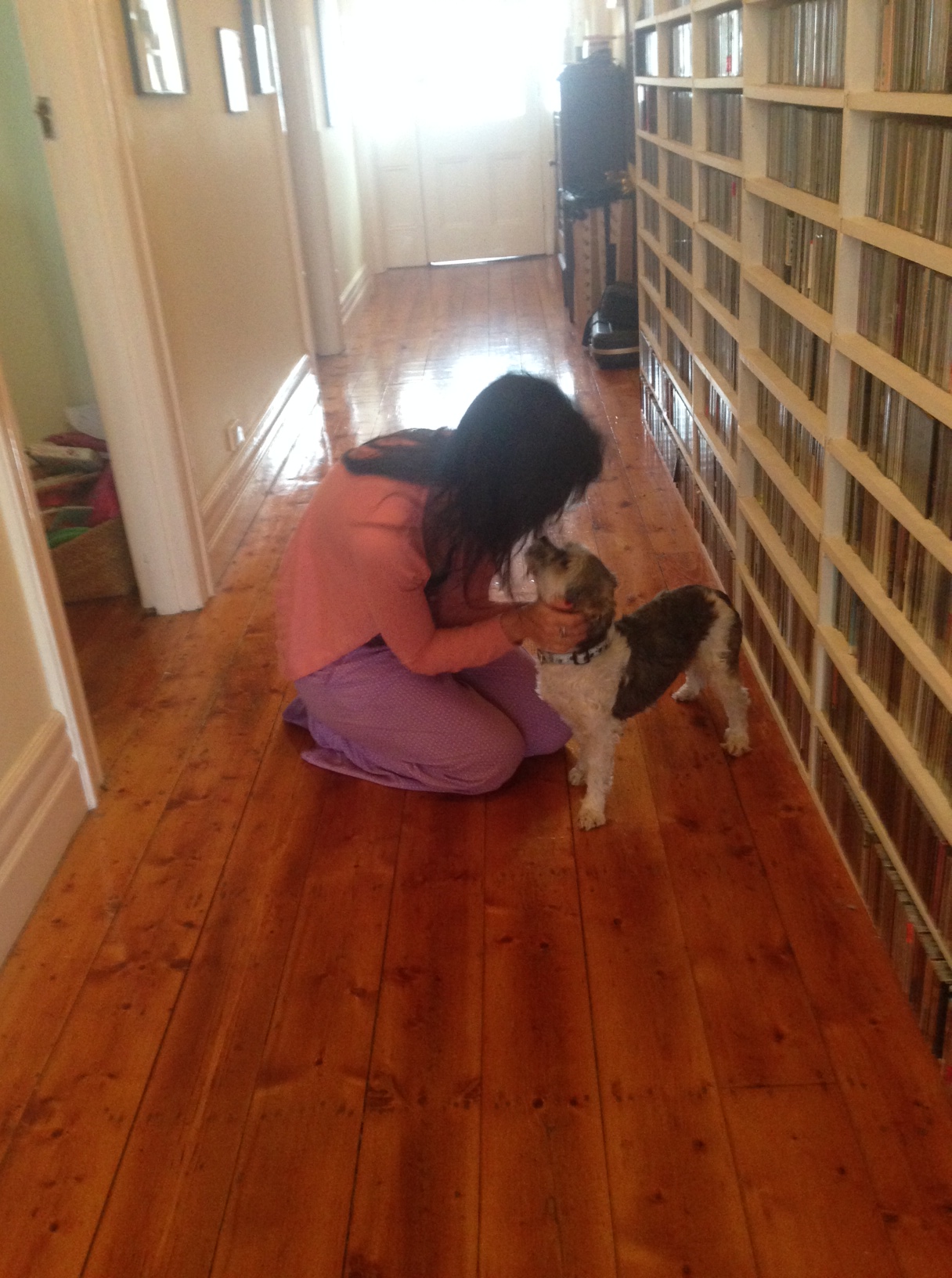
Cuddle one this morning for the wonderdog(excuse the pjs).

First of many cuddles for today for the wonderdog (excuse my pjs).

It’s report writing time. I know this, because I can see it in the faces, Facebook status updates and blogs of the many, many teachers I know.

In my former life when I was a teacher, I loathed this time of year. There are only so many ways to say ‘Little Lassie needs to do more flute practice at home’.

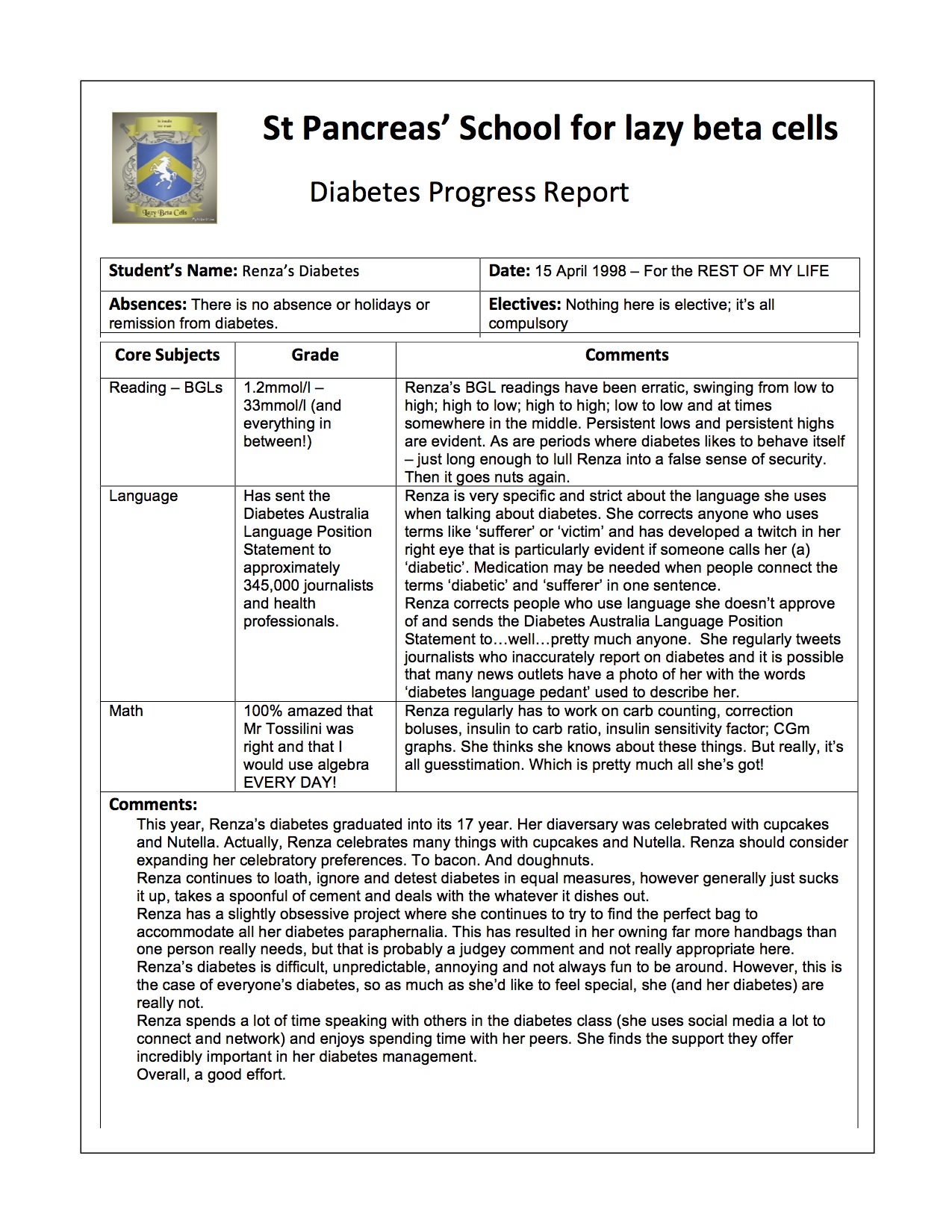
How terrifying would it be if we got diabetes report cards?…..

Report1

Do a Google search of the term ‘empowered patient’ and you will be inundated with thousands and thousands of links defining the empowered patient, instructing how to be an empowered patient or advising how to deal with an empowered patient (run for the hills and refer them on to another HCP). Health conferences have sessions dedicated to patient empowerment, there are countless social media sites and blogs on the topic, and there are many journal articles – written from the perspective of both the patient and HCPs about what patient empowerment means in healthcare. It could be considered a buzz term, even though it’s been around for some time.

Health organisations for conditions from diabetes to Sjögren’s syndrome(look it up!) dedicate pages of their websites, events and resources to guiding people to become empowered and ‘own’ their condition. It’s not a new thing, and while embraced my many, is still treated with some scepticism and nervousness by some and dismissed by others.

I am what I (and most) would call an ‘empowered patient’. Whilst, I acknowledge that the term is widely understood, I’m not sure that it really is a term with which I’m comfortable. Perhaps because the empowered patient can be considered difficult and annoying – a know-it-all who is there to try to take over the expertise of their HCP. That’s absolutely not what I am trying to do with my healthcare. When it comes to diabetes, I am the first to say I know nothing about diabetes – that’s why I see an incredible endo. But MY diabetes? I am the Universe’s leading expert in that!

For me, being an empowered patient simply means that I am in the driving seat as well as being navigator of my health issues– primarily diabetes, but also other things as well. (Last year, I demanded that I have a D&C following a miscarriage despite the OB wanting to just ‘wait and see’. Waiting and seeing for me would involve horrible pain; excessive bleeding and dealing with the miscarriage whilst on a long haul flight back home from NYC. Previous experience told me that. So I made sure that my wishes were not only known, but also carried out.)

In sixteen years managing diabetes there have been very few instances where I have blindly followed medical advice without asking questions, weighing up all possibilities and talking with others about their experiences.

But I wonder how much being empowered about my health condition and active in decision making is simply because that’s the sort of person I am. When planning for anything, I am organised and informed. I seek out the right people to speak with, I consider options, I ask a lot of questions. I make decisions based on what I have learnt and what I think will be best for me. Whether it is planning a holiday, choosing a contractor or looking after my health, I empower, educate myself. It’s my personality; it’s how I roll.

So does it mean that people who are not naturally like this miss out on the choices and options afforded to people who seek them? Does it mean that if someone is unable to empower themselves (perhaps because of language or cultural barriers, their personality or a lack of understanding of, or an inability to navigate the system) they wind up with substandard care?

Being an empowered patient isn’t at the expense of the expertise and knowledge of the HCP experts we’re working with. It helps form a partnership. I honestly do believe that it is because of our empowerment – our demands and expectations – that we receive better care, better options and, possible, achieve better outcomes. We make our HCPs accountable and answerable, but more than that, we make ourselves accountable and answerable. Sharing in the decision making means we also have to take responsibility when a medical treatment doesn’t necessarily work out the way we hoped. But I’m willing to take on that responsibility.

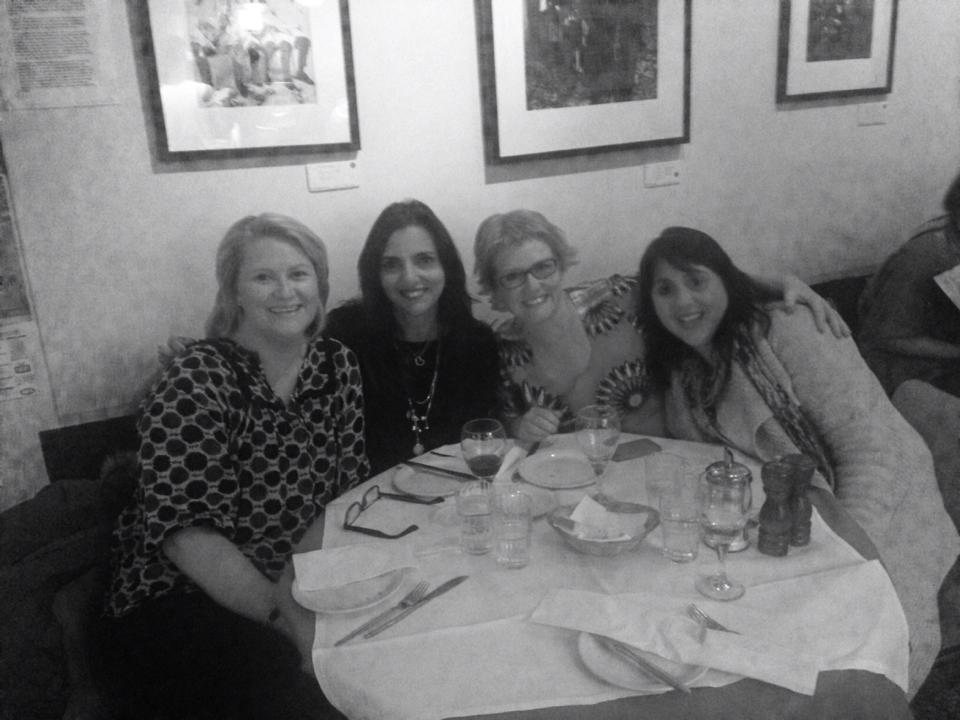
Last night was dinner with the ‘D girls’. These three women are some of my most treasured friends, and we have come together over the years because we have external pancreases. (Pancreata?)

They have been a part of my life for over ten years now. I met them all through my work (another reason to be grateful for this job!) but the reason that we’re friends reaches far beyond diabetes.

A night out with these lovely women generally involves much raucous laughter, a lot of inappropriate comments (we think the people at the next table left the restaurant because they were so disturbed by our conversation at one point) and plotting to fix all that is wrong with the world. We share photos of our gorgeous kids – all born around the same time – and talk about our families and friends and work.

Somewhere in there, we reach into our clothes and pull out insulin pumps, or reach into our bags for BGL meters. Talk of diabetes is scarce, but there may be an occasional comment or question. It certainly doesn’t dominate our conversation though.

As it turns out, some of my nearest and dearest friends do have diabetes. But that is not the reason for the friendship. Whilst it can be acknowledged as why we met in the first place, the reason for our enduring friendship is far more than beta cells that ran out on us. The reason I am friends with these three women is because they are smart, funny, beautiful and incredibly talented. I am honoured to call them friends. I love them to pieces and admire their strength, tenacity and protectiveness.

I see the way they deal with diabetes – the complete and utter ‘eff you’ attitude and acknowledgement that it sucks, but it won’t beat them – and know that I need to be surrounded by people like this.

The commonality that brought us together may be completely and utterly crap at times. But when we’re sitting at Marios catching up, laughing, supporting each other, talking a million miles a minute, we don’t care. Because really, it’s just four girls catching up.

D girls

It’s Friday; get your weekend started with some New Orleans funk. Here’s Trombone Shorty. (Swoon!)

Albert Einstein is a fraud. He may have worked out that E=mc2 thing and received a Noble Prize in Physics, but he got it all wrong when he defined insanity as doing the same thing over and over again and expecting different results.

Because anyone who has ever had to pretend to be a pancreas, (which, when working, is a magical, perfect organ), will know that the monotony of diabetes, which involves repeating the same things day in, day out, ALWAYS yields different results!

For people with diabetes, insanity is doing the same thing over and over again and expecting the same results. Just doesn’t happen.

This week, I had the same lunch on two consecutive days. Both days, my pre-meal BGL was in the mid 6s, I bolused the same amount of insulin and then sat at my desk for pretty much the next two hours writing and reading. How do you think that turned out?

DAY 1 – 5.6mmol/l (two hours after eating)

DAY 2 – 16.5mmol/l (two hours after eating)

Insanity would have been trying to work out why the hell that happened. Or being surprised at the difference. Sanity is saying ‘that’s diabetes’.

UPDATE

So, within 2 minutes of posting this on Facebook, a deluge of similar posts were listed. Here they are:

Glucolift (makers of the BESTEST glucose tabs in all the lands) have this brilliant infographic (about to be stuck up on my office pinboard)

Kerri at Six Until Me suggests that it’s perhaps diabetes that is the definition of insanity (she might be onto something)

And Sara from Moments of Wonderful wrote this as part of this year’s Diabetes Blog Week.

Great minds think alike?

Follow Diabetogenic on WordPress.com

Enter your email address to follow this blog and receive notifications of new posts by email.

Read about Renza

Archives