
You are currently browsing the category archive for the ‘Stigma’ category.
Last year, I wrote a piece for Mamamia’s health and beauty site The Glow about diabetes-related eating disorders, specifically insulin omission, manipulation or restriction for the purpose of weight loss. This is sometimes known as ‘diabulimia’.
This morning, when I checked my Facebook feed, I was really pleased to see that Mamamia had reposted an edited version of the piece on their website. Raising awareness of this issue is, in my opinion, really important, so to see it in mainstream media is a very positive step.
I am dismayed, although not really surprised, at some of the comments following the reposting of this piece. Today’s comments echo those that followed the original post in November last year.
Some commenters have called both me as the author and Mamamia irresponsible for writing about, and then publishing, the post.
I refute that and have done so ever since I started doing work in the area of diabetes and eating disorders more than seven years ago. This wasn’t some self-serving project that I started. I started this work – which including seeking funding to conduct research and developing a consumer resource – because it was clear that it was an issue of concern for many people living with type 1 diabetes. More so, many people who were in fact manipulating insulin to lose weight
The first time I presented our research and the resource we developed (in close consultation with people living with diabetes) at a healthcare professional conference, I was met with some resistance. One HCP stood up and told me that we had just written a ‘how to’ guide – that is, we were showing people with type 1 diabetes just how they could use insulin manipulation to lose weight. She said that she would not be promoting the resource.
And this is the gist of some of the comments on the Mamamia Facebook page today.
I maintain that this thinking is seriously flawed in many ways. It is assuming that only a small number of people are engaging in this practice and that not many people know about it. It suggests that the resource – which focuses on how to begin to discuss the issues and where to find help – is the first time that people reading it will have heard about insulin manipulation for weight loss.
However, this is just not true. The research conducted by Diabetes Australia – Vic in 2008 showed that 60 per cent of respondents (women with type 1 diabetes aged between 18 and 35 years) had omitted or restricted insulin at some point to control weight. And of those, one third did so on a daily basis. This finding was consistent with international research.
That’s not a tiny number.
So why do I think we should be openly talking about this issue? There are so many reasons.
When we don’t talk about things in an open and safe way they go underground. People start to feel that they are the only ones doing it and subsequently don’t talk about it. They feel isolated, shamed, stigmatised and unsure where to go for help.
We need to be talking about it so that HCPs understand that this is a serious and common issue – and to develop strategies to regularly screen for these behaviours and assist people who are engaged in this practice.
The research showed that health professionals working with people with diabetes are ill-equipped to deal with diabetes-related eating disorders. In fact, the same research showed that 85 per cent of those surveyed had never even been approached by a healthcare professional about insulin manipulation, and of those almost 60 per cent reported manipulating insulin for weight loss
We are wasting precious time and energy debating whether or not we should be talking about ‘diabulimia’. Instead, our focus should be on how we talk about it and what we do to treat it. We should be removing shame and stigma so that people with diabetes don’t feel embarrassed or fear judgement if they tell their HCP that they are manipulating insulin to lose weight. We should be removing barriers that prevent people seeking help.
I would argue that in this case being irresponsible has nothing to do with trying to shed light on diabetes-related eating disorders. I believe it is irresponsible to think that not speaking about it – not highlighting it as a serious issue – is that same as actually doing something about it.
So today, I urge you to share the article with your networks and start and contribute to discussions. Don’t sweep this under the carpet. Talk about it. Get it out there.
Sting is in Melbourne at the moment, getting ready to do a couple of concerts. Last night, he just happened to pop into Bennett’s Lane in Melbourne and sang a song with Adelaide musician Jo Lawry who is in his band. Here they are together singing one of my favourite Sting songs ‘Whenever I Say Your Name’.
This week, I wrote a personal piece about an extended bout of diabetes burnout. (Whoa – that’s a lot of words with ‘…out’ in them….)
I have been overwhelmed by love and support from the diabetes online community, and people outside the community as well. Seriously, completely and breathtakingly overwhelmed – and wish I could reach out to every single one of you who has reached out to me to thank you and give you a Nutella cupcake.
I wrote about this for one simple reason – it is my real life with diabetes, and that is what this blog is meant to be all about. Sugar-coating (ha ha – whatever) life with diabetes does no one any good and there is no point pretending it is all fun and games.
Talking about the times things are going well is really easy. Being humorous and looking at the bright side is easy too – and as a person who really does usually see her (champagne) glass/coffee cup as being half full, it is easy for me to seem positive about things all the time.
But the problem with that is that we don’t talk enough about the tough things. And that leads to feelings of shame, which, in turn contributes to stigma.
One of the reason I am such a huge supporter of the Australian Centre for Behavioural Research in Diabetes (ACBRD) is because, apart from being a bunch of fabulous, smart, funny and lovely people, their work means we are talking about the emotional wellbeing side of diabetes. Thanks to the immense body of work they are doing, diabetes is being seen as far more than a numbers game. The quality of life implications of living with this chronic condition are being considered and we are getting a better understanding of distress, anxiety and depression that is related to diabetes. Even more importantly, we are talking about it. And even more importantly, there are strategies being developed to address these things.
I’ve been writing about mental health and diabetes – and wellbeing and diabetes – for some time now because we need to be able to discuss it freely, free from judgement, devoid of stigma.
It’s the same reason that I have written so openly about my miscarriages. I don’t do it because I want people to feel sorry for me or pity me. I do it because it is part of my story. And I do it so that others can see that it is a perfectly normal thing to happen and that there is no shame in it. After I had my second miscarriage, my mothers’ group met. We were sitting around in someone’s living room with our young kids toddling around, playing quietly. It had been a while since we’d caught up and we were going around saying what we’d been up to.
‘Oh, things are their usual crazy self,’ I said. ‘But I had a miscarriage last month, so have been dealing with that too.’ It was the first time I had told anyone, apart from my immediate family and very close friends.
One of the other mums looked up sharply. ‘What? Why didn’t you say something? Why didn’t you let us know? I had a miscarriage three weeks ago. I don’t know anyone else who’s had one. I really need to talk about it, but didn’t know who to turn to. I really wish I had known.’ And she burst into tears, coming over to give me a hug. We sat there and discussed our experiences and how we were feeling and how we were dealing with things. We both felt guilt and shame. We both felt we had somehow failed ourselves and our partners and our families. We both felt the same way – yet were telling each other that we were wrong to feel that way.
It was at that point, I decided that I would no longer hide my story. Because hiding it – when I am usually such an open person – suggests it is something to be ashamed about. Because that’s what happens when issues go underground, we feel shame. I don’t want any woman to feel ashamed because she has had trouble carrying a baby. I don’t want any person to feel ashamed because they are feeling overwhelmed or depressed or in distress because of their diabetes.
There is no ‘fault’. And there should be no guilt. So when we open up and talk about the not-so-good things, we see and accept that this is part of life. It normalises things. It allows for open and easier discussion. And it helps us connect with others who are sharing the same experiences.
Because I can promise you, my story of burnout is not unique. Absolutely not.
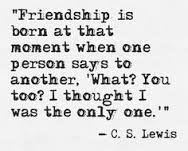
I’ve decided that my two favourite words in the world are not ‘coffee, please’ or ‘shoe sale’. No. They are ‘me too’.
Apparently, it’s snowing in New York! So the Brian Setzer Orchestra, live at the Rockefeller Centre with ‘Winter Wonderland‘ seems more than a little appropriate today!
There was a piece in the Huff Post the other day about things to not ask someone living with a chronic health condition – specifically ‘Have you tried….’
You get the idea:
Have you tried not eating after 6pm to help your blood sugars?
Have you tried to quit sugar? Completely?
Have you tried the drug they were talking about on A Current Affair the other night?
Have you tried giving up coffee? (While I don’t advocate violence, it is perfectly acceptable to respond to the fool asking this question with a sharp slap to the back of the head.)
Sometimes the ‘have you tried’ suggestions are just plain ridiculous. In last week’s OzDOC tweet chat, moderator Ms Kim came up with this beauty, asking for us to tweet how we would respond.
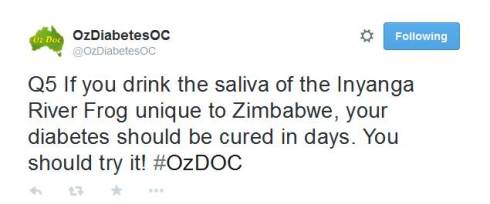 My take on comments like this is to roll my eyes and try to change the subject. I don’t believe there is any malice in someone making these suggestions; they really are trying to help. They want to help.
It’s what it represents that pisses me off a little. My diabetes management is not for up public tender. I manage it in a way that I see fit. I will ask if I need help. Actually, I’m not great at asking if I need help, but that’s not the point.
It is as though having a chronic health condition is a ticket for everyone to offer their ideas and suggestions. I’m fairly certain I’ve never asked people to workshop my diabetes management and I certainly haven’t sought to crowd source ideas for helping me out. And yet, it feels like it’s a public free-for-all at times!
I am sure that this is the same for people living with conditions other than diabetes. But with diabetes, perhaps because there is the link with food, and food is in the public domain all the time that people think they can weigh in. It doesn’t help that there are twits like the frequently-mentioned-in-this-blog-because-she-infuriates-me-so-much-and-is-a-dangerous-tool, Sarah Wilson, and the equally-derided Pete Evans who have mega-huge megaphones that reach a lot of people and feel that their pseudo-science programs are a good way to treat chronic health conditions. (Spoiler alert – they are not.)
For some people, the most difficult thing about living with diabetes, is the way that the public perceives the condition. While I seem to not get too hot under the collar about the public’s perception, I do understand how tiring some people get at the constant comments about diabetes, the misconceptions and how others want to get involved.
Diabetes seems to be rather unique in this sense. That public ownership of a condition that is a significant public health burden is certainly annoying at times. It’s similar to people commenting on the size of a pregnant woman’s belly (or overall pregnant body). Because it’s a bit ‘out there’ some think it’s okay to offer comment or offer suggestions. When I was pregnant, I was standing at the counter of a juice bar at the Queen Victoria Market and a man I am quite certain I’ve never met before, put his hand on my belly and told me that I was ‘a good size.’ I asked him to remove his hand and suggested that he mind his own business. Or at least buy me my pineapple juice if he wanted to get involved.
Finding ways to deflect comments without appearing ungrateful or rude can be tough. I know people want to help. But there is no curing diabetes and there is no magic potion that is going to make it better. It is sometimes a little insulting when people suggest things – especially things that are clearly straight off the snake oil shelf. Most who know me should realise that I am pretty linked in with what’s going on in the diabetes world. Do they really think that I could have missed that cure?
I (hope I) have a long life ahead of me and as it stands, that life is going to be shared with type 1 diabetes (well, at least for the next five years). I accept this and know that it is my lot in life. It would certainly be easier if people just didn’t think that it was public property and they had a free pass to comment.
I really hope I don’t sound ungrateful. Or rude…
By the way, this is how I responded to the OzDOC zinger from last week: 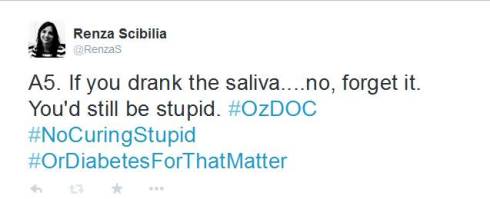
Because it’s so true. There ain’t no curing stupid!
Okay folks, it’s December. And my treat to you for the next couple of weeks is to provide you with fabulous Holiday songs. (I say Holiday not because I don’t want to say Christmas, but because they may not all be Christmas Carols.) Hold on – you’re in for a ride. Our Holiday album collection is certainly eclectic!
So, today, I’m starting with one of my all-time favourite musicians, John Pizzarelli singing Let it Snow.
My Facebook and Twitter feeds are full of diabetes awareness campaigns and it is only going to get busier in the next few days. World Diabetes Day is a global event, and around the world there is much going on to help get people talking and thinking about diabetes.
My favourite campaigns are those that strive to shoot down diabetes myths and one that is getting some well-deserved traction this week is Walk With D.
The aim of Walk with D is to help people without diabetes understand what life with diabetes is all about. But more than that, it hopes to address the misconceptions within the diabetes community too.
Diabetes myths are rife. Every day, I hear things that are simply not right about what diabetes is all about. It frustrates me; it angers me; it infuriates me – never more so than when it is coming from within our own community.
I am filled with despair when I see people with type 1 diabetes perpetuating myths about type 2 diabetes with incredibly destructive ‘type 2 bashing’. I don’t know how many times I’ve said the words ‘No one asks to get ANY kind of diabetes’, but believe me when I say if I had a dollar every time I’d uttered that sentence, I’d be wearing a new pair of Manolos almost every week!
‘Even within the diabetes community, there are levels of misunderstanding, misrepresentation, and mistaken messaging, often creating a divide where there should be a bridge.’ – Walk With D website
Help stop the stigma!
As with any successful social media campaign, it’s easy to get involved with the Walk With D campaign. Share your story and use the #WalkWithD hashtag. Make it personal and make it real. Visit the Tagboard on the Walk With D website to see what others are saying about their real life with diabetes. And share. Share. Share.
And if you need more of an incentive to get on board, Lifescan Inc will donate 100 BGL strips to Life for a Child every time the #WalkWithD hashtag is used during November. Get tagging, good people!
Everyone’s diabetes story is going to be different – the diversity of our community is actually one of its strengths! But we can surely unite in our aim to have diabetes spoken about respectfully and with courtesy. Surely we can bond over the fact that diabetes just plain sucks. Surely we can walk together with diabetes, united, with our heads held high and our arms linked.
I am as guilty as the next person of being judgemental at times. I like to think that I am not, but I’d be lying to myself if I honestly believed that I never uttered a pejorative comment about other people’s choices.
I really, really try to not be judgemental when it comes to how people choose to manage their diabetes. But I know that I am a zealot when it comes to technology and have been very, very guilty in the past of having conversations that sound like this
‘Are you on a pump? Why are you not on a pump? You should be on a pump? Pumps rock! Your life would be so much better if you were on a pump? That’s not a valid reason for not being on a pump. Do you want the details of my pump educator? Here, let me list the million reasons why I love being on a pump. Let me list them in a LOUDER VOICE to convince you. If you’re not on a pump you don’t really care about yourself.’
I know; I’m an absolute joy to be around sometimes.
But I’m trying to not be like this anymore. And to help remind me, I have made a poster of one of the things that has become a bit of a mantra and have it hanging in my office.

Feel free to substitute ‘diabetes’ for any other health condition. Or simply for the word ‘life’.
Because here’s the thing: when you make a decision about how you manage your diabetes, it is about your health. And that is an incredibly personal decision based on your own perspective, circumstances and experience. It’s got nothing to do with anyone else.
There is one caveat to this that I think is really important.
This works and is all fine as long as the decisions that you make as part of your ‘whatever’, (your diabetes, your life etc.) don’t negatively impact on others.
As a result, anti-vaxxers don’t get to claim this as their own. Because their irresponsible actions do affect others.
Same goes for doing anything that emotionally or physically hurts another person, or has the potential to.
Actually, also goes for people who wear leggings as pants. Because, LEGGINGS ARE NOT PANTS and your decision to treat them that way hurts my eyes.
BUT! If you are making decisions that impact on you and you alone, knock yourself out. You don’t owe anyone an explanation or need to justify your choices. Own it.
It’s the Friday before National Diabetes Week here in Australia. Over the next 10 days, diabetes will be in the press. A lot. And that means a lot of misreporting and a lot of people saying the wrong things about diabetes.
So, here are some of my thoughts about how to address this:
- Stay calm. If you hear or see or read something about diabetes that is incorrect, don’t get angry. Send a balanced, calm response to the journalist, radio/TV station/person talking with CORRECT information. Be brief, use facts – dot points are good.
- Know your facts! And that means no perpetuating other myths to bust the one that’s pissed you off.
- Get over the type 1 versus type 2 thing. Seriously. Don’t bash the ‘other’ diabetes.
- I send the Diabetes Australia Language Position Statement out to any journalist who uses damaging language when writing about diabetes. I tweet the link directly to journos all the time!
- Naming and shaming is okay if you’re nice and polite about it.
- Don’t engage. Make your point and walk away. There is no need to enter into an argument that will most likely get heated and result in abuse. Grace and dignity are amazing qualities; demonstrate them in spades!
- Action! If you’re going to complain, make sure you actually do something meaningful with it. It’s all very well to bitch and moan amongst your peers, but find the source of whatever has upset you and write to them directly. (See point 1 for the tone to use.)
- Follow up. And if you do take the time to write, you should expect a response. If you don’t get one within a reasonable time, re-send your correspondence.
- Pick your battles. I can tell you now that no one has bucket loads of money to spend on diabetes campaigns, so no matter how much you want the government or diabetes organisation in your state to run a full-blown campaign explaining the difference between type 1 and type 2 diabetes, it’s not gonna happen. Accept it!
- Remember that you know a lot about diabetes out of pure necessity. Don’t expect that same level of knowledge from everyone. Most of the stupid things people say are out of sheer ignorance or bad manners. Politely correct and move on.
- There are some great resources out there that can help. Check out this and this.
The primary aim of National Diabetes Week is to raise awareness of the condition – specifically awareness about prevention of type 2 diabetes. Consider any misreporting or silly comments an opportunity to provide information and education in the hope that the people perpetuating the myths won’t do it again. And as your (and everyone’s) grandmother would say: Keep yourself nice.
It’s Friday! And it’s freezing here in Melbourne. I’m trying to imagine warm sun on bare skin, so here are The Beatles with ‘I’ll Follow the Sun’.
This week in the UK, it’s Diabetes Week. I’m always interested to see the focus of campaigns for awareness weeks and this has to be one of my favourites!
Having lived first hand through diabetes weeks that have involved ticking time bombs and threats of every single diabetes complication under the sun, I wish I could give a proverbial hug to the team at Diabetes UK who have put together an empowering, positive campaign. In lieu of that, I sent a tweet.
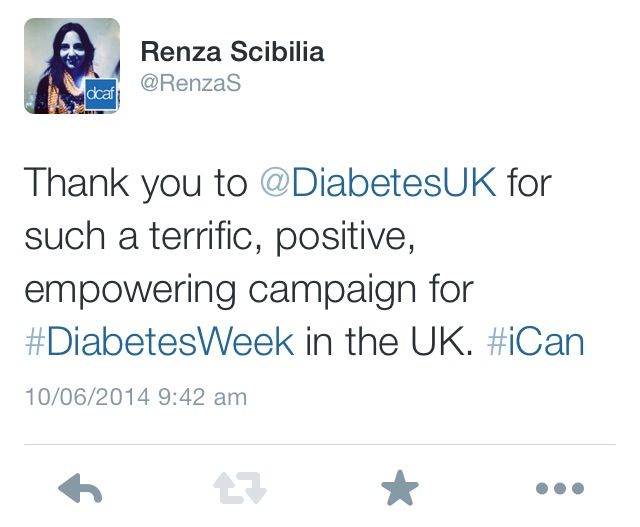
Using the slogan ‘I Can’ the campaign acknowledges the difficulties people with diabetes may experience, but wants to focus on the things that we CAN do. I love this!
I’ll be keeping an eye on this week’s campaign. I’m interested to see and hear the stories of people living with diabetes and how they have managed to face challenges.
I hope that this year’s initiative is a positive one for Diabetes UK and we see more of these kinds of campaigns in the future.
Check out the Diabetes UK Diabetes Week campaign here.
And follow the #iCan tag on Twitter.

I’m tired.
Today, I woke in a great mood after a good night’s sleep. The weekend had been relaxing and lovely – family, friends, food and gorgeous weather on top of it all. Plus, I bought a new necklace with a pineapple on it. It was a good couple of days!
I was standing at my favourite café near work, waiting for a takeaway coffee and thinking that the barista was a magician as I watched his choreographed movements, filling takeaway cups with perfectly brewed caffeine.
‘This good day is about to get better,’ I naively thought, the taste of that first sip of coffee so close.
And then, I checked my email and ‘bam’. There it was.
A discussion about not distinguishing between type 1 and type 2 diabetes in a setting where it really is not relevant. I sighed.
And realised how tired I am.
Nearly thirteen years ago, I was employed to run a very small and, at the time, somewhat tokenistic type 1 diabetes program for a diabetes organisation. Thanks to a very supportive CEO and me being a pushy little thing, the program grew and grew and now, incorporates a dedicated team doing some incredibly good work for people living with type 1 diabetes.
One of the reasons for the program’s success is that we have been very clear about defining it as a program for people with type 1 diabetes, making sure the information we provide is targeted and relevant to the people we are trying to reach. We acknowledge each and every day that people with type 1 diabetes have specific information requirements and then we go about providing that information in the way people want.
In exactly the same way, a couple of years ago, we realised that the information for people with type 2 diabetes was completely forgetting the changing face of the type 2 diabetes community. There are more and more younger people being diagnosed with type 2 diabetes and the information we had was very much for an older audience. Hence, Generation T2 – a new program for 18 to 39 year olds with type 2 diabetes.
There are times that it is important to distinguish between the diabetes and there is no louder advocate for that than me.
But there are times that it is irrelevant. Yet, people still get angry – even when it really doesn’t matter if the type of diabetes is defined.
I am tired.
I am over this argument and this discussion.
Last week, the government handed down a budget that is going to hit the hip pockets of people with diabetes like never before. All people with diabetes will be affected – regardless of type.
During the World Diabetes Congress we heard of places around the world where the cost of insulin is so prohibitive that there are people dying because they cannot afford to buy the drug they need to stay alive. Slow, painful, horrible deaths because they cannot afford to buy insulin. Just think about that for a moment.
Here in Australia, there are people who cannot afford to use an insulin pump despite desperately wanting to because they cannot afford private health insurance or qualify for the Insulin Pump Program to assist with cost of purchasing the $9,000 (plus) device.
These are the issues that we should be fighting for and getting angry about. These are the issues that are important. Access to healthcare – a basic human right for all people – ALL people with diabetes – is what the topic should be; not whether or not the Channel 10 news forgot to say type 1 (or 2) before the word diabetes.
I am a card carrying member of the diabetes community. I am proud of this community and I am pleased to have a voice within it.
But we need to stop the finger pointing and the name calling and the blaming. How can we expect people outside of our community to get it right if we can’t? Why is it more important for people to understand the how and why we got this condition as compared with the how and why we’re trying to live and manage with it?
I am proud of the Australian diabetes community, but it is here that I hear this attitude more than anywhere else in the world. This discrimination is not helping us – it is harming us. Does it matter if people don’t really understand the different types of diabetes? I get it. It’s annoying, it’s frustrating; it’s constant. But really; does it matter?
This is a first world – a first class – problem.
And I am tired. I am saying it’s time to stop. Enough!
How do you describe diabetes? I vary from ‘an inconvenience’ to ‘an effing pain in the arse’ and lots in between.
I’m all about words. Language is very important to me and I spent a lot of time crafting messages about living with diabetes that balances the ‘this is shit’ component with the ‘this is just life’ side of things.
One of the reasons that getting the language right is actually not so much for the people living with diabetes – we know the details and we know the words we choose to describe it. No; it’s for others. Because when we get the language wrong, we start to open ourselves up. To discrimination, stigmatisation, misinformation and negative perceptions.
It’s for this reason that I refuse to use the word ‘disability’ when talking about MY diabetes. There is much written about and debating ‘is diabetes a disability’ and I am definitely not qualified to really enter this discussion in any other capacity other than ‘this is my opinion’. And my opinion is coming from someone who has 16 years of diabetes under her belt with no significant physical or mental complications because of diabetes.
However, my beautiful, gorgeous friend and neighbour Jo is an expert here, so I called her and yelled ‘help me understand this!’ Jo has type 1 diabetes (believe me – there is a blog somewhere about two people with type 1 living two doors down from each other….) and is a speech pathologist who has worked in the area of disability for a long time. She’s clever, compassionate, direct and doesn’t mess around with words. Jo will hate me for saying this, she has recently been recognised with a nomination for a life-time award for working in the field of disability. She’s more than kind of awesome.
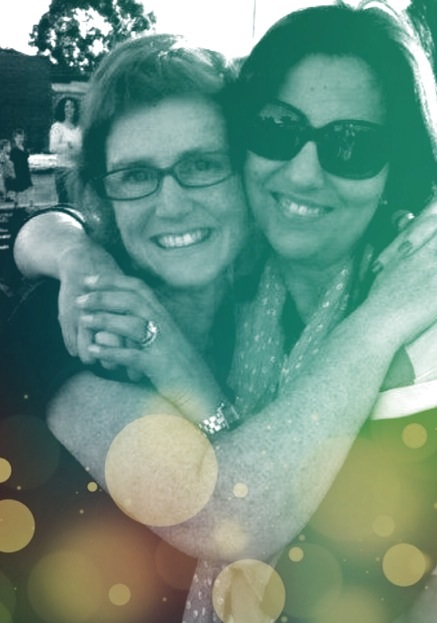
Jo suggested I start by having a look at the World Health Organisation’s definition of disability. This sent me into a world of pain because there were words I simply didn’t understand when put with other words and you know, comprehension.
So, I yelled at her some more (it’s what people do when they don’t understand) and here’s what Jo said that made sense to a fool like me:
JO: Renza (you stupid chicken who may make decent brownies but you’re pretty bloody simple, really). What I’m trying to say is that the social model of disability says the disability doesn’t belong to the person with the condition (that would be considered the disability) – let’s say someone with cerebral palsy, for example. It belongs to the environment. The environment doesn’t allow for the disability to be accommodated. People with diabetes can accommodate themselves – carry or buy sugar if they are low is a basic example of accommodation.
RENZA: So, is it like this? The environment accommodates my particular needs. If I was sitting an exam, I could take time to check my BGL or treat a low or take an extra loo break if necessary. But if I had a condition that didn’t allow me to physically or mentally sit for the three hours required to do the exam or have the capacity to understand the questions being asked then I’d be considered as having a disability?
JO: You’re simple, but yes. Now go make me some brownies.
Of course, diabetes throws all sorts of things into the mix including complications that may result in disability. But for me as diabetes affects me now, there is no reason that I consider the fact that my beta cells decided to shut up shop and move to the tropics as a disability.
I see diabetes as a ‘delayer’ at times. There are times that RIGHT NOW it stops me doing what I want, but this is generally remedied quickly (sometimes, not-so-quickly) and I can do whatever it is I planned to do.
The reality of life is that people face challenges of varying degrees. I’m leaving the last word to the clever Jo who says: Some people have challenges that can relatively easily be overcome and others (perhaps someone with a profound and multiple physical and intellectual disability), can’t live, without considerable effort from their environment to keep them alive, and if they are lucky have some kind of quality of life. It’s all relative!
I’m very interested to hear what others think about this. Where do you stand? Do you have an opinion? Do you consider or refer to your diabetes as a disability?





 Diabetogenic