You are currently browsing the category archive for the ‘Social media’ category.
My email autoreply is on and I have a glorious four weeks of holidays to look forward to. The last time I took any time off was back in January when my family travelled to NYC. There is no travelling this year. We have a new, beautifully landscaped back garden to camp out in over the next month instead. (By ‘camp out’ I mean sit comfortably on a sun lounger and drink Pimm’s.)
My plans are simple – do as little as possible. I’ve rallied against taking any time off this year because I’ve not seen the point. Why would I take time off to simply stay within the walls that I’ve stayed within for most of the year?
That was a mistake. I should have taken some time off. I should have stepped away from the computer and from work – even if it were just for a couple of days.
And so, I’m going to truly try to log off, to not stare at my computer, or open my laptop to just write a quick thing, revise something I’ve been working on, message a friend. I’m going to remove SoMe apps from my phone so that it’s not all that simple to quickly check for an update of what is going on in the Twitterverse or the world of Facebook and Instagram.
I wanted to finish the year on a positive by highlighting some of the people who have made the DOC truly remarkable. So, this is a little Interweb Jumble of the folks in the DOC who have made the place safe, happy and continue to truly be about community. Check them out if you already don’t. Expanding your view of the DOC is important if you want to learn about more than just your part of the world.
Cherise Shockley has a new podcast…
…and you should subscribe! It’s called ‘Don’t Keep it to Yourself’ and it’s my favourite new diabetes podcast which is completely not about diabetes! Instead, Cherise is pushing people outside their comfort zones and asking them to share things that others may not know about them. I’ve loved hearing the episodes she’s already shared and had an absolute ball chatting with her.
The thing about Cherise is that she IS community. Even though her podcast is not about diabetes, it is still about people supporting and looking out for each other. Because that is who this woman is! Subscribe and listen from wherever you subscribe and listen to podcasts.
DOC friends who have made me uncomfortable – but in a good way.
First up is wonderful Steffi from Pep Me Up whose Instagram stories challenged me to look at what was going on in the world in different ways. She has been absolutely relentless in her efforts to elevate the stories of people who are forgotten or left behind and highlight the bias we inherently have. You can find Steffi on Instagram here.
And secondly, the also wonderful Tine who you can find on Twitter at @SayTine. We’ve known each other for a number of years now and we bonded over a mutual love of food. We have been allies in the language matters movement. Tine’s feminism has always been aligned with my own, but she has introduced me to different people and ideas that have made me consider some of my own ideas.
Accessible Dtech information…
…from the always enthusiastic and excited Nerdabetic. I met Kamil for the first time a year or so ago and discovered that he is every bit as awesome and lovely in real life as he is online. I love the way he makes the latest in diabetes tech accessible and relevant to tech-imbeciles like me while also making it relevant to people whose interest in and understanding of technology generally makes my brain synapsis short circuit. It’s great to see Kamil appearing in the global DOC more with appearances on diaTribe. Kamil’s YouTube channel is here.
Brilliant photography…
…from a DOC stalwart. Mike Durbin was one of the first people I noticed in the DOC when I started participating in DSMA tweetchats over ten years ago. I’ve never met him, but am always interested in what he has to say, and his thoughtful takes on the diabetes world. Mike appears in every single presentation I give about diabetes peer support and the DOC because I always share this picture. It speaks community to me.
On top of being such an integral and wonderful part of the DOC, Mike is a truly outstanding photographer and this year, I have found myself absolutely obsessed with what he has shared. You can see his work on Twitter here.
More Clever creatives
I adore the gorgeous artwork Nicole Buchanan shares on her Instagram. She absolutely nails diabetes moments with stunning designs and clever captions. I’ve shared so many of her posts because it’s like she has climbed into my head and then perfectly explained the mess in there with a beautiful illustration. You can follow her on Instagram here.
Another favourite diabetes creative is Katie Lamb, another talented illustrator who manages to capture diabetes in her lush drawings. She’ll even draw you for a small fee! Find her here.
Aussie Jenna Cantamessa continues to share beautiful drawings on her Instagram here, and she has just opened an Etsy store so you can own one of her beautiful pictures.
Special mention to dedoc for keeping PWD at conferences…
…because it would have been all too easy for us to have been forgotten with conferences going online. Bastian has done a stellar job getting DEDOC Voices up and running, offering scholarships to PWD to be part of ATTD (the only IRL large-scale conference this year), EASD and ISPAD.
CWD keeping people connected
Children with Diabetes did a herculean job of not only running hugely successful Friends for Life conferences online, but also churned out relevant content all year, and seemed to run a bazillion meetups to keep people connected. In case you missed the fireside chat hosted by Kerri Sparling about #LanguageMatters, you can play catch up here.
Spare a Rose…
…will be back next year, but I just wanted to mention the amazing efforts of the community this year as we smashed all previous records and delivered a magnificent USD$73,748 straight to Life for a Child. How remarkable is it when the DOC stops looking inwards??
The offline DOC friends who kept me going…
…are the reason that I have reached this stage of this year with some sense of balance. A huge thank you to the squad of four friends from the US & UK who have shared their lives with me throughout this clusterfuck of a year in an endless message thread that has kept me going. And the IRL friends too – with special mentions to Georgie and Jo. I am so grateful we live close to each other.
And don’t forget…
…please do consider making a donation to Insulin for Life’s Secret Santa Campaign.
Finally…
…that’s all from me for 2020. I’ll be back in the new year, but for now I am switching off and doing everything in my power to be less busy, less online and less engaged. Probably the only downside I see with Loop is how reliant it is on being close to my iPhone at all times, because honestly, I would like to let my phone battery run flat and not charge it up again until the end of January! But I am making a concerted effort to turn off and ignore notifications and be more present with the people I am so, so lucky to spend my life with. To those celebrating, have a wonderful festive season. Thanks to everyone who has stopped by. See you in 2021.
I know…it’s almost Christmas. And if you are anything like me and mine, you’ve left the run of gift buying a little late. Or you’ve wound up in lockdown. Or the thought of battling crowds is not something that you are all that keen on because there are too many un-masked bandits in the shops.
And so, here’s another little reminder that there is no need to panic because Insulin for Life is doing Secret Santa and your can absolutely buy the BEST. PRESENT. EVER. with heaps of time to spare. All without hitting pause on your Netflix binge!
It only takes $5/€5/£5 to make a real difference to a person with diabetes in an under-resourced country. That small amount will provide a week’s worth of insulin and diabetes supplies to someone who otherwise might not have them.
My family made the decision this year that in lieu of gifts for my cousins’ kids, we’d make donations instead. We absolutely adore these kids, but know that they probably won’t miss the book or book voucher we usually give them. And we also know that making a donation in their names literally means saving a life. That seems like a pretty good trade.
Without a doubt, 2020 has been horrid for many, and those doing it toughest were already likely doing it tough even before a year-long pandemic. If you are in the position to make a donation to this cause, please do. If you can share the link to the donation page with friends, colleagues and loved ones, please do.
I know that the diabetes community comes together to support our own beautifully. We’ve seen it in a million different ways. I’m hoping that in the lead up to Christmas that support will look like people making donations to Insulin for Life…and encouraging others to do the same. Please do help if you can.

Diabetes Awareness Month has come to a close and with it the blue that has washed over my social media feeds will dim a little. I had a quiet month, spending most of my time following others rather than sharing my own content. It seems to have been representative of my year in diabetes advocacy, really.
I’ve been quiet. It wasn’t planned, but it has been deliberate. And it hasn’t gone unnoticed. I’ve started and stopped and started and stopped this post for a while to answer the messages from people who have so kindly asked if I am okay. Let’s see if this is the one that sticks…
Earlier this year, I wrote about having a panic attack while on a plane after landing back in Melbourne from ATTD in Madrid. You can sort of read about it here, although I was pretty vague about what actually happened saying little more than that I turned on my phone to a million Twitter notifications about a blog post that some people had assumed was written about me and then subsequent comments. I was surprised, horrified and more than a little confused.
This came hot on the heels of a couple of other tricky situations. There was the run in with the diabetes HCP who told me to tone down (after they completely misrepresented what I had written about). And then there was another HCP rallying troops to call me out (that caused me to lock my twitter for the first time ever at the end of last year).
Anyway…the culmination of all these things resulted in the realisation that this year was going to be a lot different for me. I was going to take a massive step back from much of the work I did that was public facing. I felt that I simply couldn’t take the scrutiny that was coming my way.
Even before the panic attack on the plane incident, I was feeling unsettled. I was unspeakably nervous about the presentation I had been invited to give at the conference in Madrid. This was a completely alien feeling to me. I have been speaking publicly for decades, and for twenty years, comfortably stood on stage playing the flute for anyone who would listen. Standing in front of an audience doesn’t make me nervous. It doesn’t make me sweaty and scared. And yet, here I was wondering whether I should not go to Madrid at all to stand up on that stage. But after some ridiculous bravado as seen in this post, I decided that I had to go.
As I sat on that plane, desperately trying to recover from the panic attack that was making it difficult for me to breathe and hiding my tears from the other passengers, I had a fleeting thought that I probably should have gone with my gut feeling and stayed home!
And so, I felt that there was only one thing I could do. Forget the whole stand up thing and instead step back. I wasn’t necessarily sure what that would look like. I couldn’t stop attending and being part of diabetes meetings and conferences because that is part of my job, but I could turn down speaking engagements or anything that put me in a position where I was sharing my personal, lived experience that others might find challenging, or at odds with their own. I needed to deal with the diabetes burnout that was so, so heavy and weighing me down.
COVID-19 certainly helped with that. As the world got turned upside down, a lot of the things that I was worried about simply didn’t happen. It became easier for me to limit my interactions with people and hide away a bit more.
The feelings of burnout and anxiety about being part of the community didn’t disappear, but they seemed less urgent.
And with that came the realisation that the burnout I was feeling because of diabetes actually was not because of my diabetes at all.
Diabetes burnout has always happened to me when those constant diabetes tasks became too overwhelming; when just the thought of opening up a meter bag, or checking my CGM trace was too much to even contemplate. Burnout meant that every single number became a measure of my value and worth. I’d lose all perspective and lose all confidence of my abilities to actually do what I needed to do.
The burnout I felt now was the effort of being a diabetes advocate IN the diabetes community. It was fearing that I was being seen in ways that actually were completely inaccurate – in fact at complete odds with everything I have ever stood for – and that led me to second guess everything I said, fearing that I would be misunderstood. It was feeling vulnerable and scared and exposed in the community that was meant to support me.
I received an email from someone in the DOC who has been around for many years, and I have known (on Twitter only) who told me that because I am confident in my communication, am comfortable challenging ideas different to mine and share opinions that not everyone agrees with it, I leave myself open to criticism. And that criticism and the dialogue that follows resulted in their corner of the diabetes community being less enjoyable to him and others. All while suggesting that, unlike he, who has never deliberately set out to disagree with anyone – I seem to revel in it.
Interesting take. I don’t seek to disagree with people. But if anyone is saying something that I believe is stigmatising to PWD or minimising our experiences, I will call it out. It’s been my MO for almost twenty years.
I never replied to the person who sent me that email. I cried about it for days, however, and have it filed away and occasionally return to the half-written response that I keep meaning to finish so I can hit send on my reply. I feel it’s quite impolite that I’ve not replied to someone who took the time to write to me… But, truthfully, I am too tired, and that so-called confidence has abandoned me.
Diabetogenic is the least active it’s been since I started it close to ten years ago. That’s not because I have nothing more to write – I still write every single day, I just squirrel things away now, too afraid to share them, sticking to safer topics – research call outs, fundraising initiatives, commenting on things that aren’t controversial or taboo topics.
I started this blog because it was the space for me connect with others – not only people who were walking the same diabetes path as me, but also those who were doing things very differently. Because often, they are the people I learn most from.
It became a place I could write about those issues that were tough – the mental health challenges of diabetes, the frustrations and desperation I felt about the health system, trying to navigate through health professionals who refused to acknowledge that PWD belong everywhere and anywhere diabetes is spoken about. And it was a place that my split-apart heart was able to open up and share the unspeakable sadness that I felt as fertility issues became part of my life. I am so grateful that I was able to do that and receive the support that I so desperately needed from people who understood how the impact of diabetes on those fragile, and so, so hard parts of life shattered me into a million broken pieces. Because it was those people who helped glue me back together.
Wanting and needing that support and connection hasn’t stopped. I still seek it. I’m just a little more cautious about how I go about it these days sticking with friends and others I feel safe with rather than the wider community that doesn’t feel safe. I know where to go to get what I need.
I don’t really know what to do with this blog anymore. Feeling unable to share a lot of what I want to say is alien to me. But for now, this doesn’t seem to be the place to do it. I guess I continue as I have been – hitting publish when I feel I can, and for the next month, anyone popping by will see a lot of pleas to donate to Insulin for Life.
And I guess that will have to be enough for now.

I’m loathe to talk Christmas while still in November. In fact, we have rules in our house that we do not even mention the word until after my daughter’s and my birthdays which both fall in the last week of the month.
However, the other day as I was doing some supermarket shopping, I heard the strains of Silent Night and noticed glittery decorations starting to adorn the streets. Honestly, this year is so all over the shop that I have no idea what month it really is, but if Woolies wants me to believe it’s the festive season, who am I to argue?
And so, let’s talk Christmas…specifically this:

We all know how tough this year has been. We all know that there is no corner of our globe that has not been touched some way by the COVID-19 pandemic. What we should all also know is that even though COVID-19 may be global, there are some people who have been disproportionately affected, and it is always the most vulnerable people in the most vulnerable places that find themselves in that situation. Contrary to the idea that COVID doesn’t discriminate, people already doing it tough are finding things even tougher.
Which, to me, means that for those of us who can, now is as good a time as ever to step up and support anyone finding themselves in that situation.
I’ve been trying to get rid of the tradition Secret Santa or Kris Kringle (or whatever you call it in your family or workplace) for years now, instead directing those funds to a charity that supports people with diabetes living in under-resourced countries . You can read my grinch-like posts about that here and here oh, and here, where I yell that NO ONE WANTS A BATH BOMB!! It’s true. NO.ONE.WANTS.A.BATH.BOMB.
BUT! People with diabetes want insulin, diabetes supplies and education, and by ‘want’ I obviously mean ‘need’. (NO.ONE.NEEDS.A.BATH.BOMB.)
Insulin for Life Global is a charity that helps people with diabetes in need of the things that I (try really hard not to) take for granted. I have spoken and written a lot about Life for a Child (LFAC), mostly in relation to the Spare a Rose campaign. Insulin for Life Global picks up where LFAC ages out. Because, diabetes is for life, not just until you’re 26 years old.
This year, Insulin for Life is launching its new #IFLSecretSanta campaign and is asking the diabetes community to please get on board. I’m totally on board with this Secret Santa campaign because it will be more than just a novelty gift that is likely to end up in landfill.
A donation of $5 (or €5 or £5) will provide a week’s worth of insulin and diabetes supplies to a person with diabetes in one of the countries supported by the charity.
I asked around, and it seems that most office Secret Santa gifts have a limit of $10. That’s two whole weeks of diabetes supplies (including insulin) to an adult with diabetes who might otherwise not have it. If your whole workplace gets on board (or family, or friendship group, or book club…) that suddenly starts to add up to a whole lot of weeks of diabetes supplies!
As with any campaign like this, it works best when people share to help raise awareness of just how easy it is to be a part of it. AS well as making a donation, it would be terrific if as many people in the DOC could share details of the #IFLSecretSanta drive and encourage friends and family to donate.
I promise that no one is going to miss not getting a bath bomb. But people with diabetes, unable to access or afford essential diabetes meds and supplies, will be grateful if the money for that bath bomb was redirected to the charity that helps them.
Okay, DOC, now’s the time to do our thing. We do this and we do this well. While there are lots of people in this community and we certainly do not all agree, or even all like each other, it’s campaigns like this that seem like a good time to put aside differences and come together. Let’s see just what we can do to help Insulin for Life and their first #IFLSecretSanta campaign.
Donate here. (It will take you straight to PayPal to donate, and your donation will go directly to Insulin for Life.)
Hashtag away on your preferred socials: #IFLSecretSanta
This blog has been quiet for the last couple of weeks because, honestly, there is nothing that I had to say that was of any value. Instead, I’ve been listening, learning, talking with friends and family, crying with friends, having difficult conversations with people. And feeling uncomfortable. I’m learning to not fight that discomfort, but instead examine it and work out how I can be involved in change.
Today, I’m dipping a toe back in slowly, and sharing this from New Yorker Cartoons (maybe this blog really is going to become nothing more than an appreciation page of New Yorker Cartoons and Effin’ Birds). This cartoon spoke to me. Because: tone policing.

Recent New Yorker Cartoon by Jason Adam Katzenstein. (Click for source)
I write about being tone policed in the healthcare space, and that is what I am writing about today. It’s happened for as long as I’ve spoken up about my experiences of diabetes and my thoughts and ideas about healthcare. I’ve been called aggressive so many times by HCPs who have not liked it when a mere ‘patient’ has suggested that they are being damaging to people with diabetes in the words they are using to talk to and about us.
The bolshie nuns who taught me at secondary school taught me that when women are accused of being aggressive (or strident), it is usually because we are being assertive. I’ve come to learn that it’s not just women. It’s anyone who has, for too long, been expected to just take what is dished up – and to accept it with gratitude.
Being assertive, being aggressive, being challenging and saying enough is enough should not result in being told to tone down. Or to be excluded from discussions unless we agree to be more moderate. Or more respectful. When that respect is truly a two-way street, then let’s talk about that. But for as long as power imbalances are at play, and HCPs insist on speaking on behalf of us, or only agreeing to speak with us if they like what we are going to say; or when HPCs feature more in diabetes campaigns because they insist on centring themselves rather than actual people living with the condition…well, then we don’t have true two-way respect.
Our diabetes community is not immune from tone policing each other. It’s happened to me. I continue to listen to type 2 diabetes voices because I can never expect to understand what they are experiencing in our community unless they tell me. It may be uncomfortable for me to hear – but that discomfort comes from a place of my complicity. It is not my place to tell them to moderate the way they are speaking about their experiences, just because it makes me feel prickly. But it does happen. In the timeline of my involvement in the diabetes world, I know that when I was first diagnosed, I contributed to the stigma many people with type 2 talk about, and then, as I learnt more, I moved to being quiet about it when I saw and heard it – even though I disagreed with it. Now I am trying to be a better ally and calling it out when I see it. And shutting up and listening and accepting what people with type 2 say.
We learn when we listen. We learn when we are open to accepting that we do not have all the answers. We learn when we stop being so centred on our own experience and try to turn the spotlight onto ourselves when instead we should be shining it on others.
We learn when we don’t tell people how they should feel or how they should speak.
The other day, I went to a local pharmacy to buy some pump lines. There is one pharmacy in my neighbourhood that usually has insulin pump consumables on the shelf, so I don’t need to order them in. I just pop in when it’s time to top up my supplies and get what I need. I asked for a box of the lines I use. ‘There are two on the shelf,’ said the sales assistant. ‘Do you want both? You probably should stock up.’
‘No thanks,’ I said to her. I only ever buy one box at a time, usually when I am down to my last three or four lines. With the new box, I would easily have a six to eight-week supply.
‘Oh,’ I said to her. ‘You really don’t need to encourage people to buy more than their usual order. We don’t have shortages – that has been confirmed by Diabetes Australia and the Department of Health. Suggesting people stockpile is not a good idea at all.’
Are you stockpiling, or thinking about it? If so, I’m ask you to please reconsider.
I get that these are confusing and stressful times. I haven’t seen a roll of loo paper on the shelves at my local Woolies for weeks now. Other pantry staples are in high demand. And since the weekend, fresh fruit and meat sections have been almost stripped bare. Despite being told that we don’t need to panic buy, we’re seeing this behaviour and it is causing a great deal of distress to a huge number of people.
The last thing we need is for there to be the same situation when it comes to diabetes meds and supplies.
Here’s the deal: we are okay. There are no shortages. We don’t need to panic and stress. That has come directly from the Department of Health who has oversight of all drugs and NDSS supplies. It has also been communicated from Diabetes Australia*.
Where things have the potential to go the way of loo paper is if people suddenly start changing their buying behaviours. Then we have problems.
Think about it this way: before coronavirus, when was the last time you couldn’t find loo paper if you needed it? Never, right? And now, because there was some weird idea that toilet rolls were going to run out, people bought packs and packs of it. I know people who have hundreds of rolls of loo paper stocked up in their houses at the moment. I also know people who have been down to their last roll and are desperately trying to find kindly neighbours who will happily and readily spare a square (or two).
This is what happens when people change their buying behaviour and we really don’t want that to happen with diabetes medications and supplies.
WHAT YOU CAN DO
Be sensible! And don’t change from what you usually do.
What is your usual buying pattern? For me, I have always called in my insulin prescription when I open my second to last vial of insulin. That has been my pattern for years.
I buy pump consumables when I am down to the last few of each. A box of lines lasts me around six weeks; cannulas longer because I tend to reuse them a couple of times. I top up blood glucose strips when I’m down to half a box. (A box lasts me forever because I really only use them to calibrate, and I am rather lax at that).
The only, only thing I have a ridiculous stockpile of is lancets. Because: who changes lancets? And the only reason I have that stockpile is because every new meter comes with about ten of them. Plus, I think I still have the same box I bought 22 years ago at diagnosis…
I am making no changes to my buying pattern and behaviour and I would urge everyone to do the same. If people just keep on keeping on, we will not have shortages. If people start to make changes and panic buy, we could be in situation loo paper.
OTHER CONSIDERATIONS
We do have limits on our NDSS usage. I know I rarely think about this, because I never reach mine. I remember needing a special exemption when I was pregnant because I was doing a heap more BGL checks each day, but other than during that time, I have never needed to worry about getting to my limit.
ALL drugs and diabetes supplies have ‘use-by’ dates. The shelf life on some items (such as sensors) is shorter that on others. If you stockpile, there is a good chance that what you have hoarded will be out of date by the time you get through your supply. That will mean that when you eventually go to use them, they are not covered if something goes wrong (such as sensors not lasting their full time etc).
Also, if you reach your limit, that could mean that you are no longer able to access subsidised product, and you may be required to pay the full amount for them. For those of us who remember the days before pump consumables were on the NDSS, it suddenly makes running a pump VERY expensive…
PLEASE THINK OF OTHERS
When I left the second box of lines of the shelf at my pharmacy last week, I did that knowing it was likely that someone else would be in soon after needing the same lines. If you order two or three times more than usual, someone downstream is going to potentially have trouble accessing what they need when they need it.
Some people can only afford their diabetes supplies on pay day, or when they are running really low on supplies. They rely on being able to access things WHEN they need them and cannot stock up beforehand. Please be considerate of people in all situations.
If we all are sensible about this, we can completely avoid supply problems.
WHAT TO DO IF YOU ARE ALREADY STRUGGLING TO GET WHAT YOU NEED
Contact the NDSS (1800 637 700) with every single detail of what is going on in your situation. Provide details of the access point (usually a pharmacy) that has not been able to provide you with what you need. How long has this been the case? What are you trying to purchase? Have you tried somewhere else locally? (Remember that most pharmacies do not keep insulin or NDSS products in stock and they need to be ordered in.)
Also, please, please, please do not engage in online speculation of shortages online. This is what causes panic! If you have a personal experience, contact the NDSS!
TWO FINAL THINGS
- Keep washing your hands!
- IF YOU ARE STOCKPILING LANCETS, STOP IT. STOP IT NOW!! You KNOW you will never use them! And no one else will either, so they will haunt and mock you from your diabetes supplies cupboard/drawer for the rest of your days.
*DISCLOSURE
Yes, I work for Diabetes Australia, however I am not writing this because of that and have not been asked by anyone at Diabetes Australia or the NDSS to write this.
I am writing it because I am a person with diabetes who does not want to find herself struggling to access the meds and supplies that I need to stay alive, nor do I want any of my diabetes brothers or sisters to find themselves in the same situation.
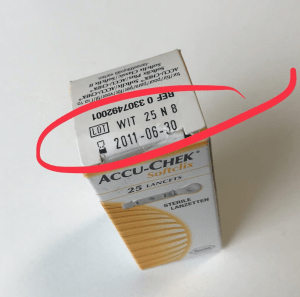
No need to stockpile lancets. Or anything else!




 Diabetogenic