You are currently browsing the category archive for the ‘Social media’ category.
On the fourth day of #NDW, I’m considering the reach of social media and the diabetes online community.

After a friend found herself stranded overseas with a malfunctioning (i.e. dead) pump, she put out a call to her online friends for help using the communication tools of the 21st century – Twitter and Facebook. In less than 24 hours (the delay was because of bloody time zones!) and after being introduced online to many DOC folks, she has, in her hands (and attached to her body) an operating pump. Social media was the vehicle and members of the DOC from all over the world got on board to help. (Interestingly, or perhaps disappointingly, the pump company proved no help at all.)

And last night, #OzDOC celebrated its second birthday in the best way – with a party-themed tweet chat that brought people together from across the globe. It was fun and frivolous with many laughs – and ’80s song quotes. And mentions of Nutella.

Yesterday, with National Diabetes Week less than half over, I was starting to feel a little burnt out. It was getting hard to see so much diabetes everywhere (says the woman with diabetes, who writes a diabetes blog, is an active member of the DOC and works for a diabetes organisation). It was hard to stay focused on the things that help and the messages that work. It was tough seeing through the murkiness of negative messages. It was getting hard to stay on message!

But thanks to last night’s chat and knowing that my friend has a working pump again, I’m hurdling the negativity and the judgement and moving on. I’m focusing on connectedness. And so – I am sending virtual jars of Nutella to everyone at last night’s chat and to the many people who joined the dots to get my friend a pump. And just like that, I’m back on message!


From when I was a young whippersnapper of a girl, I kept a diary. It was very much in the ‘dear diary’ style and was full of age-relevant angst:

Dear Diary
It’s not fair! My sister is cuter than me and because she is younger gets all the attention.
Love (a 7 year old and clearly whiney – although right about her being cuter than me) Renza

Dear Diary
I hate my body. I wish I liked the way I looked.
Love (a 13 year old) Renza

Dear Diary
I really like the boy at the tram stop. Will he notice me?
Love (a 14 year old and yet to learn ‘he’s just not that into you’) Renza

Dear Diary
I’ve met a guy. I really like him. Like, REALLY. He might like me.
Love (a 20 year old) Renza

You get the picture. When I go back and read through my old diaries I laugh about the things that were taking up all my thinking time. And I sometimes feel embarrassed at the desperation I read in my words. Everything was such a drama!

But the thing I love about them is that I know that every word I wrote was honest. There was no need to sugar coat anything because the pages were for me and me alone. Really, these diaries are a candid snapshot – warts and all – of my rather boring life.

I don’t keep a diary anymore. There are times when I will sit down and write something about what’s going on, but it generally gets deleted or thrown away. Of course, I write this blog about diabetes – MY diabetes – but it’s only part of what is going on in my life. And whilst everything you read here is factual, there is a lot I don’t write about. Much of my story isn’t just mine – it involves all the people around me. Whilst I may in passing mention my family, friends or workmates, it’s not up to me to share their stories. Which is unfortunate, because believe me when I say they are far more interesting than am I (and the kiddo is hysterical!).

I am very conscious that I am not the only person reading this. And I want the three or four of you who do read Diabetogenic to like me, so I hide some of the more difficult aspects of living with diabetes. The result of this is that sometimes I give the completely false suggestion that I have it all worked out – which couldn’t be further from the truth.

It’s for this reason, that I love this Tumblr.

My Diabetes Secret is a virtual dumping ground that allows people to be honest about how they are feeling about living with diabetes. Because they can post completely anonymously, it is brutally honest. There is no need to censor the sadness or frustration or extreme anxiety that diabetes can bring.

I like to read it to remind me that I am not the only one struggling with this condition some days. The diabetes blogs I read (and the one that I write) lack a lot of the rawness evident in My Diabetes Secret. This is absolutely not because we’re trying to deceive. But putting things out there about just how much pain we are sometimes experiencing is difficult.

I love to read diabetes blogs and I love the people who write them. Our stories mirror each other frequently. They provide great comfort and they make me feel far less isolated.

But some days, I need to know that there are others feeling the extreme anger, anxiety and hate that I am about this condition. Whilst I don’t necessarily want to share details of it here – of those deep, dark fears that keep me company when I can’t sleep – it is incredibly reassuring to know that others feel the same way.

You can also follow My Diabetes Secret on Facebook here and on Twitter here.

It’s been a big week. Of advocacy and misconceptions and stigma and messages getting lost.

DessertCalledDiabetesGate was exhausting and the wash up of it for me is really just how disappointed I am in the whole situation.

This post is not about trying to keep the issue alive – especially given that when I wrote about it on Tuesday I was suggesting we all just walk away. In fact, this post isn’t really about the café and the dessert at all.

No, this post is about how we, as a community, dealt with the situation and how, in my opinion, many of us got it wrong. And because we got it wrong, our real message was lost.

While many people asked the café politely to change the name of the dessert and were able to articulate the reasons why, many others got defensive and aggressive. Some attacked the café, others attacked individuals who disagreed with their stance. It got ugly at times – very ugly.   Our community went from looking like people genuinely concerned about trying to stop stigma about our health condition to a bunch of wowsers.

And from there, it was a short leap to ‘Australians can’t take a joke anymore’ and ‘it’s political correctness gone mad’. Our community was attacked on Facebook, in the comments sections of news articles and on television. Studio 10 picked up the story and the show’s panel discussed it. Thanks to Jessica Rowe for being the voice of reason on the show who tried see the situation from ‘our’ side.

But that’s where the message got lost. It stopped being about diabetes. Instead, it became about people needing to lighten up and have a laugh. I laugh at myself and MY diabetes all the time. But I don’t do it at the expense of others. I would never make a joke about someone else’s medical condition or someone else’s diabetes.

We need people to understand why it’s not okay to call a dessert diabetes. We need people to understand the hurt and the stigma they are contributing to when they use this ‘humour’. We need people to understand that it’s not that we can’t laugh at ourselves – it’s just that we are a little sick of the misconceptions out there about diabetes.

We can’t get the wider community to understand our side when we get abusive or aggressive or get our messages mixed up. We can’t successful advocate anything if we can’t do it collaboratively, evenly and calmly. This doesn’t mean that we all need to agree – clearly there were some people who couldn’t have cared less about this particular issue – and that’s fine!

United we stand, divided we fall. This week, on this occasion, I believe we fell. Quite spectacularly.

There’s lots coming up in the next few weeks and if you live in Melbourne, you may be interested in these couple of events. These events are all run by Diabetes Australia – Vic. (I’m employed by DA – Vic, but they have not asked me to promote their activities here. I’m doing it simply because the events are great and people should try to get along if they can!)

Smack bang in the middle of National Diabetes Week, Diabetes Australia – Vic is hosting a movie evening where we’ll be showing a film called Sweet 16. It’s free, but bookings are essential. Here are the details.

If you are aged 18 – 25 years and live with type 1 diabetes, check out Connect – In – also coming up in July. It’s a weekend full of information and social activities. Details here – book quickly!

The latest in type 1 diabetes research and technology will be covered at the annual Research Revealed event on 26 July. Book now!

Hope you all have a great weekend. Here’s some Alicia Keys for your Friday and for my New York dreaming and planning.


SoMe day‘So, um, I’m going out for dinner with people I met on Twitter’.  I first said those words a few years ago when I was in New York. It was a freezing cold night and I jumped on the subway to meet three women who, until that very night, I’d only ever conversed with using 140 characters or fewer. They seemed okay – their tweets were amusing – and they knew the same people I knew. On Twitter.

I remember speaking to my mum who was back home in Australia and telling her I was heading out – in the dark, to an area I’d never been, without my husband or daughter – to meet these strangers. ‘So this may be the last time I speak with you’, she said to me.

Fast forward a couple of years, and I’ve been to countless dinners, coffees, catch ups and events that have been organised with people I’ve met on social media. Now, I don’t even think about it twice. It’s how it happens! Admittedly, these ‘strangers’ are part of the same community and we usually know a lot of people in common.

Many of the people I now call friends I’ve met thanks to social media. It could have started with a retweet, a ‘like’ on Facebook or comment on a blog. But from there, my online community – other people around the globe living with diabetes has grown and grown. And my offline community has too, as online friends become IRL friends.

Today, it’s Mashable’s fifth annual Social Media Day.

For me, I’ll just be quietly thinking about how much smaller and less diverse my world was before I took those first tentative steps and entered the online world. I’m a more connected, better informed person thanks to the social media revolution.


collage

Last year, after the Doctors 2.0 and You Summit in Paris, I spent a lovely evening with some diabetes advocates, having a dinner of steak frites. Coming along for the ride were a couple of others who had been at the conference, including Michael Seres who is a patient advocate from the UK. Michael was diagnosed with Crohn’s Disease and, in 2011, was the 11th person to undergo a small bowl transplant. Michael speaks regularly about his story and about the importance of patient-centred care and patient engagement.

Apart from ‘seeing’ Michael on social media, we’ve not connected again. I regularly see his name coming up as a speaker at conferences and in interviews. Yesterday, trawling the Twittersphere, I followed the link on a tweet to an article about patient representation where Michael provided some great comments.

The article ‘Walk a mile in patients’ shoes: How to become truly patient-centric’ was saying how important it is for pharma to truly engage with patients. Michael says:

“Every pharma company should have a patient representative on their board. I don’t mean someone who would come in and talk to them for a couple of hours. It should be someone who lives and breathes the disease. At that point when they’re developing new meds, they would also learn how to provide all those other services that are important to patients, but that the healthcare system cannot fund”.

He’s right! Bringing in a couple of patients for a couple of hours is tokenistic at best; patronising at worst. The discussion needs to be ongoing and all aspects of living with a health condition need to be considered when new meds (or devices) are being developed. A two-hour focus group does not really equal patient engagement – especially if you’re talking about in the development of a drug or device that is going to a part of the patients life forever more!

Focus groups for new devices often focus on the design – do you like how it looks?/is this the right colour?/would you like the screen to be this way or that? etc. But patients have far more to say than whether or not the thing looks pretty. The daily functionality of my pump or meter – how easy it is to use – is what makes me love a device or want to throw it out the window.

Had people with diabetes been engaged at the development stage of the latest smart pumps, I suggest that things such as giving an alert telling you to check your ketones EVERYTIME your BGL is above 14mmol/l would be able to be turned off. Or, at least, set to a level of the user’s choice.

Meaningful engagement with patients is a win-win for all involved. We just need to find a way for that engagement to happen as part of the ‘normal’ development process.

I am an invited speaker at the eyforpharma conference in Sydney in October of this year. Details can be found here.  

One of my favourite websites is Messy Nessy Chic. This is a site full of whimsy and fun and the completely unexpected. And each week, there is a list of 13 things I found on the internet today.

This is my all-time favourite find on this site and I’m still trying to work out how to buy them both, ship them to me and spend my days driving around in them, wearing a flowery dress and scarf in my hair.

In my internet wanderings lately, I’ve found a few things. They are nowhere near as quirky or quaint. But nonetheless, I thought they were worth a share.

OVER TO YOU, MS SPARLING

Kerri Sparling needs no introduction to the diabetes blogging world. She keeps on getting better and better and better (and publishes a book!) and then goes on the telly and does this.

It’s all perfect, but for me this was the line that resonated most: ‘Patient stories are the new wave of advocacy’. Yes, they are! Thanks, Kerri.

TYPE 1 MYTH BUSTING – QLD STYLE

This isn’t really new – in fact it was launched on WDD last year. But just in case you missed it, D-QLD has this great campaign busting myths about type 1 diabetes.

IT’S NOT JUST DIABETES

The annoying things we face as people with diabetes translate to other things as well. I was sent a link to this gorgeous blog. It’s written by a mum who has a child with Autism. Her post ‘What not to say to someone who has a child with autism’ is brilliant. This is my favourite part:

If I tell you Poss is on the Spectrum, the appropriate response is not “I’m sorry”. I know it may feel like it’s the right thing to say, but chances are, if I’m telling you, it’s because you need to know – not because I’m after your sympathy. Instead maybe say “ok – what do I need to know?”.  

That thing about wishing that we could legislate against stupidity? It goes far beyond people who say inconsiderate, insensitive, offensive things about diabetes.

DIABETES REVERSED IN MICE

Whatever.

PLEASE FORWARD MY BIONIC PANCREAS ASAP

But THIS! If you’ve missed it somehow (get out from the rock!) there’s been lots about the bionic pancreas all over the interwebs. I spoke about it on the radio.

And here’s a blog from someone who was on the trial.

WEARABLE DIABETES STUFF

Apple (et al) are going to make a diabetes watch! Or something. It’s exciting, although I’m not sure that it will ever really be their core business (see what I did there?).  Anyway, we’ll see if Apple get there first, or if Samsung or Google pip them at the post (and there?). I don’t have in-cider information (I’m done), but hopefully, this is something that will be for real in the next few years. (Thank you! I’m here until Friday; try the chicken.)

Today’s post is dedicated to Jane, who sent me the link to About a Bugg, and recommends you try the veal rather than the chicken.

There is a lot of stigma associated with many health conditions. We know that there is significant stigma when it comes to mental health. Groups such as Headspace provide fantastic information about how and where to seek help as well as support initiatives such as the Fifth Army movement which promotes mental health awareness.

But I think that diabetes experiences the worst stigma of all because it seems okay to blame people with diabetes for their condition. This seems to be the case more for type 2 diabetes, but people with type 1 also report being stigmatised and discriminated against because of their diabetes diagnosis.

Any time diabetes is mentioned on the news, it is accompanied with photos of overweight people digging into a burger or slouching in front of the television. Accusations of laziness, overeating and a sedentary way of life follow and before you know it, people are pointing and saying ‘you brought it on yourself’.

Whilst we can excuse this as ignorance or just plain stupidity, it doesn’t change the fact that living with diabetes is tough enough on its own without having to worry about being shamed for having it.

So it was with much excitement that I read about the new Diabetes Stigma Project, an initiative of Dr Jessica Browne and Adriana Ventura from the Australian Centre for Behavioural Research in Diabetes. I know both of these women and am not at all surprised at how well considered this project is.

Funds collected will be used to develop a short questionnaire that will measure people’s experiences of diabetes stigma. The questionnaire will form part of a larger survey that will also examine depression, anxiety, diabetes-related distress, self-management, employment and social support.

This is, indeed, an ambitious project. But providing a clear snapshot of the situation will help address not only the impact of stigma as it relates to those of us living with diabetes, but also find ways to reduce stigmatising behaviours from occurring in the first place.

How can you help?

If you can, consider making a donation to the project. Any amount would be appreciated. The project’s target is $5000, but of course, more money will allow the survey to reach more people and provide a broader understanding of the social stigma associated with living diabetes.

And this is where social media comes into its own!

‘Like’ the Diabetes Stigma Project Facebook page and share the link with all your networks. Share on Facebook and Twitter and even consider writing a far better blog than this one! Tell your friends and family about it and explain why this is such an important issue.

To keep up, follow #diabetesstigma on Twitter and keep an eye on their Instagram – @diabetesstigma. And here is their YouTube clip which you can share with everyone you have ever met!


The Australian Centre for Behavioural Research in Diabetes (ACBRD) is a partnership between Diabetes Australia – Vic (DA–Vic) and Deakin University. I am employed by DA–Vic and do not work for the ACBRD, however have been involved in some of their projects. No funds raised in this campaign will directly or indirectly contribute or fund the work I am employed to do.

diabetes tales

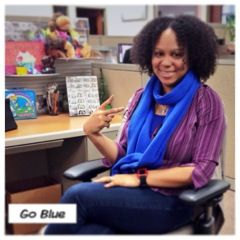
Cherise

I was diagnosed with Latent Autoimmune Diabetes in Adults in June 2004.

I’ve learned….

  1. I cannot blame myself for the inconsistency of diabetes.
  2. Breath. Pray. Relax.
  3. Leave diabetes at the altar.


cherise

Cherise is the founder of Diabetes Community Advocacy Foundation. Each Wednesday at 9pm (US EST) she can be found hosting the DSMA tweetchat. Follow Cherise on Twitter here.

Want to feature on Diabetes Tales? If you’re interested in taking part, let me know!

diabetes tales THE GRUMPY PUMPER

No. It’s not the “Bad” Type

No. I don’t have it “Really” bad and that’s why I’m on a pump.

No. If you press that button I won’t die. YOU WILL!!
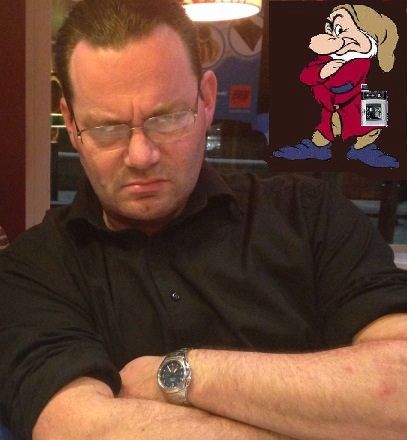
 

Grumpy

You can read more from Grumpy at his blog, The Grumpy Pumper and follow him on Twitter here.  (He’s actually quite delightful!)

Diabetes Tales is a new thing I’m trying out at Diabetogenic. If you’re interested in taking part, let me know!

In last night’s OzDOC tweet chat, this question was asked:
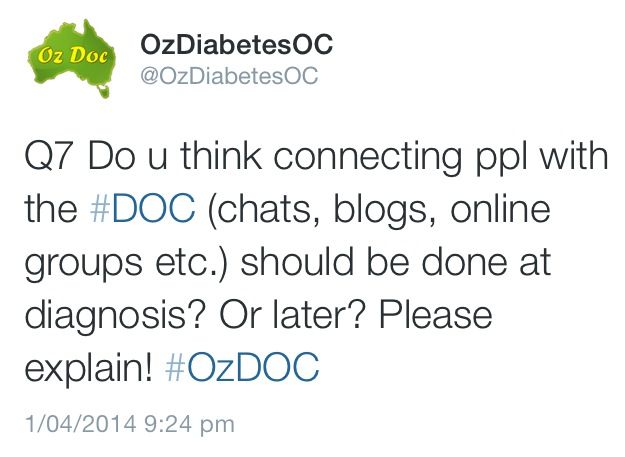
OzDOC tweet

Obviously, I am a huge fan of the diabetes online community. I am honoured and lucky to have met so many amazing people both online and in real life. And many of these people, I truly consider to be friends.

But when I was diagnosed, I certainly had no desire to meet anyone else living with diabetes. Surely having nothing more than a faulty pancreas in common wasn’t the basis for lifelong friendships. And that is the truth. When I look at the people in the DOC who I am friends with, we have far more in common than a need to carb count and inject insulin.

While diabetes may have brought us together, it certainly isn’t what has held us together. The reasons the friendship has developed into something more than exchanges on Twitter include similar attitude to life in general; the same (often questionable) senses of humour; a mutual like of travel; kids the same age (many of my friends and I were planning pregnancies at the same time); sympathetic political views; a love of Nutella.

Today, I wouldn’t be without my friends from the DOC. I have been kept company many nights, unable to sleep, by many of my northern hemisphere friends. Our discussions span far more than diabetes, and the advice, comfort and friendship offered has seen me through difficult times as I feel the embrace of those many  thousands of miles away. This community has become my extended family.

We can’t force the DOC onto people. But what we could consider is making sure that people newly diagnosed are at least aware that there is a dynamic and supportive community out there. We can provide the connections and the networks. We can provide the ‘how to’ and allow people to dip their toe in gingerly and remain in the background. But it needs to be up to the individual to decide if and when they want to make the approach. And when they do, we will greet them with open arms and welcome them.

Follow Diabetogenic on WordPress.com

Enter your email address to follow this blog and receive notifications of new posts by email.

Read about Renza

Archives