
You are currently browsing the category archive for the ‘Research’ category.
ADATS on Friday was a great day of diabetes technology and treatment advancements.
There was a lot about automated insulin delivery (AID) systems, which, when you think about it, is really what is at the cutting edge of available diabetes therapies in 2018. David Burren, the Bionic Wookiee, gave a keynote on his experience using DIYAPS and why it works for him. And smart endocrinologist Dr Barbora Paldus gave what I heard was a fabulous talk about different AID systems, including what is coming onto the commercial market as well as DIY systems, and providing details (using terminology that made sense to everyone!) about the different algorithms. And fuzzy logic. I’m so annoyed I missed her talk, but it was on at the same time as the session I was chairing (and it’s bad form for the chair to leave the room to go to hear other speakers).
Before going any further, let me say this – not as an statement of tokenism, but as absolutely heartfelt and something I believe one hundred percent. We can talk about systems that automate insulin delivery with the aim to improve diabetes outcomes, but until these are affordable, accessible and available for everyone who wants to use them, we must acknowledge that these technologies will not be able to be used by most people with diabetes. Everyone ‘working in diabetes’ has an obligation to work towards improving access and affordability to minimise the ‘haves’ and ‘haves not’ landscape that we are already seeing, and will see even more in the future.
I chaired a session that focused on the current MiniMed 670G system trials underway in Australia and then hijacked the panel discussion in the afternoon about the topic because the consumer rep. had to leave early. So, where are we with approval for this system (and how long before lucky people can get their hands on one)? Well, the pump is now approved through the TGA, however is not being provided to PWD yet. The new sensor has not received approval yet, and the system as a whole has not either. Medtronic Australia is saying that they are hoping it will be available by the end of the year. The approval process is out of their hands, but I know they are working super hard on their end to get this to PWD as soon as they can.
I have spoken with a few people who have done the trial here in Australia. We need to remember that trial conditions are often not ‘real life’ conditions, so what I am writing about today does not necessarily reflect the experiences of people using the 670G every day and outside of trial conditions. (The system has been launched in the US and there are lots of stories online from people who have chosen to use this system and I would encourage anyone thinking about using it to search for and find what they have to say.)
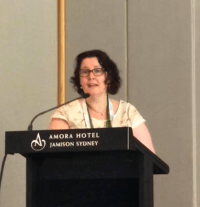
Research guinea pig and 670G study participant, Leanne Foster.
The session last Friday was comprehensive in that it included presentations from HCPs in the private and public sectors, adult and paediatric settings, a dietitian, and (thankfully) a psychologist. For me, the highlight was hearing from self-proclaimed research guinea pig, (and friend for over fifteen years) Leanne Foster, who has been a long time diabetes technology study participant and was involved in the study.
From listening to the details of the study design, this was not trial for the fainthearted! There were significant demands placed on participants, and expectations were high. To be clear, participants were not given the system, provided with a bit of training and sent on their merry way to simply live alongside the device back in their everyday world. There was a lot of logging, counting, device wearing (not just the pump and CGM that make up the 670G system).
I think it is important to mention this, because one of the themes that was repeated by several speakers was that for many participants, their own burden of diabetes – how much they thought about their diabetes and what they were required to do – increased while using the system on the trial.
It is also important to mention that this is a first generation device. The system that will be launched here is likely to be the same as the one in the US, yet there have already been more sophisticated and aggressive algorithms developed and tested as part of this trial.
While possibly unfair, it is impossible to not compare experiences of people using the 670G and DIYAPS, because these systems are endeavouring to do the same thing: automate insulin delivery, increase TIR, reduce what the PWD is required to do.
And there were some things that struck me as really widening the gap between the two systems.
Firstly, the concept of added burden was astounding as my personal diabetes burden is the lowest it has ever been in the twenty years I’ve lived with diabetes. Since Looping, I think about diabetes far less than I did beforehand.
That burden is not only applicable to PWD. Many of the HCPs who presented said that they found themselves required out of hours significantly more with people using the 670G. I have not once called my HPC about any diabetes-related matter in the last 15 months I’ve been Looping. Obviously, I wouldn’t be contacting her if there was an issue with the system, but I’ve not contacted her for any general diabetes trouble-shooting that would result in me making changes to any of the settings on my tech.
There was a lot of talk about the 670G system ‘booting out’ of auto mode, meaning that automated insulin deliver doses stop, instead going back to the fixed basal rates set in the pump. This happened every day for many people; several times and for a number of hours at a time. I can say that in my experience, my system loops continuously. There are extremely rare times where my green circle turns red, and the pump reverts back to delivering what is set as my basals. But I am always able to troubleshoot by following a few basic steps and Loop will inevitably return to green.
One thing that struck me, was the number of times we heard about the system struggling to cope with the day-to-day lives of the trial participants, and the only way around that was for them to amend their behaviour. There was one moment that had me sitting there in disbelief when I heard the example of one trial participant who was having recurrent lows overnight and the only way to remedy that was for them to have 10g of carbs before bed. Suddenly, I was thrown back to 1998, being on Protophane and Act Rapid, and the only way I could keep horrid night-time lows at bay was to have a glass of milk with corn powder before bed. (Anyone else do that?)
The very idea that new devices being developed will require PWD to change their behaviour for said device to ‘cope’ with our real life is astonishing! This is, without a doubt, a step backwards in my mind. I know that my experience of Loop is that it has easily been able to adapt to my incredibly un-predictable life that includes far too much travel to different time zones, a varied and sometimes erratic diet and days where I have walked 30,000 steps with others where I’ve been horizontal for most of the day. I haven’t had to modify my behaviour in any way to please my Loop, and I’m not sure I would be so enamoured by it if I did.
What is definitely not a step backwards however – in fact it’s a monumental leap forward – is the potential of this technology and technology like it. As a convert of automated insulin delivery systems, the idea that people will be able to soon access devices that commercially available, under warranty and supported by the company’s customer service is only a great thing. Not everyone wants to build their own system, not everyone is comfortable using a DIY system, especially if they don’t feel they have complete support of their HCPs. Once the 670G becomes available, many of the concerns PWD have will be alleviated. Adding choice is only ever a good thing.
But perhaps the most telling sentiment about how the technology impacts on real life came from Leanne. She loved the idea and experience of automated so much (even with all the disclaimers of the trial requirements) that when she was forced to hand back the 670G system when she finished her part of the trial, she as having none of it! After begging to keep hold of the system (which she knew simply could not happen), she had everything ready to go to build her own DIYAPS and has happily joined the Loop family for now. The capabilities of the 670G technology – the automation and the results – such as the improved sleep – were too much of a good thing and she was not prepared to go back to what she had beforehand. And THAT is telling.
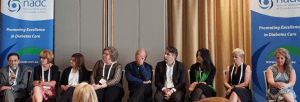
Automated insulin delivery panel. L-R: David O’Neal, Sue Wyatt, Kerryn Roem; Jane Speight, Tim Jones, Spiros Fourlanos, me, Jane Holmes-Walker, Melinda Mus
Disclosure
My flights from Melbourne to Sydney were covered by the National Association of Diabetes Centres (NADC), the organisers of ADATS. I am on the organising committee for the conference.
I am not involved in the Medtronic MiniMed 670G trial. I have worked with and consulted for Medtronic on other projects.
I’m heading to Sydney this morning (it’s early…too early) for the Australasian Diabetes Advancements and Technologies Summit – ADATS, (follow along at #ADATS2018), which had me thinking about the conference last year where I spoke about Loop, scared a shitload of HCPs, was almost traumatised into never speaking again in public (almost – didn’t happen) and was happy to be branded non-compliant.
Today will be a far gentler experience – my role is as a member of the organising committee, and as a session chair. Surely no one will want to sue me for that. Right?
As I ponder that, and reminisce about last year’s talk, here are some links. So many links that I have been wanting to share. So, have a cuppa, have a read, and share stuff.
Also, being deliberately non-compliant is kind of fun…

(Disclosure first: My flights from Melbourne to Sydney are being covered by the National Association of Diabetes Centres (NADC), the organisers of ADATS. I am on the organising committee for the conference.)
_________________________________________
Finally DIYAPS makes it to the mainstream media in Aus
I’d heard of The Saturday Paper, (which was a surprise to the journalist who interviewed me), but apparently not all that many people have. It’s a weekly newspaper (somewhat unimaginatively named – it’s a paper and comes out each Saturday) with long-form articles. One of those articles was about DIYAPS and came about after journalist Michele Tyde heard about the Diabetes Australia DIYAPS Position Statement.
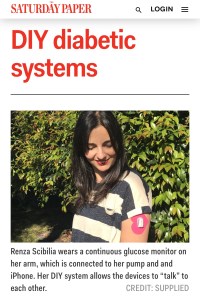
Read the DIYAPS Position Statement here.
The body part is connected to the PWD
‘Talking about the “diabetic foot,” the “diabetic kidney,” or the “diabetic eye” suggests they are somehow separate from the person whose body actually hosts the diabetes. This language suggests the diabetes-complicated body part is more like a malfunctioning car part that needs service – if only we could be provided with a courtesy foot, eye, or kidney to use until our own is better!’
The language at ADA this year (all the way back in June…all the way over in Orlando) didn’t really set off too many alarm bells. Until we had a good look at the program. I wrote this piece with The Grumpy Pumper for diaTribe about how it seems that #LanguageMatters a whole load less when talking about diabetes-related complications…and that needs to change.
Conference blogs
It’s great to see the Ascensia Diabetes Care team continue to support diabetes bloggers by inviting them to write up their thoughts on diabetes conferences. The latest contribution is from Sascha Stiefeling (who blogs at Sugar Tweaks) where he gives some insights into the start of EASD. (It was written in German and translated into English.)
Oh – and here’s the post I wrote for them about the Australasian Diabetes Congress a couple of months ago. (I was not paid to write this, or supported by Ascensia to attend, but I did work with them on their Social Media Summit.)

No weakness at all
On Mental Health Awareness Day this year, UK writer and poet David Gilbert wrote this beautiful post about the strength – not weakness – of living with mental illness.
How we are wrong about obesity
This piece about obesity is a must read. It talks about how weight bias from healthcare professionals and stigma often results in higher weight people avoiding going to the doctor because they fear discrimination, not being believed and being shamed.
More on weight stigma
And read this piece (also on diaTribe) about how weight stigma hurts people and affects health outcomes.
Keep Sight
This week, Diabetes Australia officially launched the first ever national eye screening program, Keep Sight. The program will make it easier for Aussies with diabetes to get their eyes checked. You can read about the program here (from when it was announced back in July).
Disclosure: I work at Diabetes Australia, but was not asked to write about this program. I’m doing so because it is important.

Your story is important
True champion of listening to ‘the patient’, Marie Ennis-O’Connor wrote this wonderful piece about the power of storytelling in healthcare.
Always be kind
I’m always fascinated to read stories from HCPs who write about their experiences on the other side of healthcare. Moving from care-giver to the one needing care can be life-changing. In this BMJ Opinion piece, health researcher Maria Kristiansen writes about how important compassion and kindness from healthcare professionals were for her and her family during her young son’s illness and death.
More on kindness (because we can never have enough)
The first sentence of this article in BMJ by Dr John Launer had me hooked: ‘I’m not a clever doctor, but I’m a kind one’. Have a read.
Diabetes in hospital
I know I’m not the only one to be terrified of needing to go into hospital, worrying about a lack of knowledge about type 1 diabetes treatment and my technology, and having to fight to maintain ownership of my own diabetes care. Adam Brown at diaTribe has written about his recent trip to A&E, surgery and subsequent recovery after his appendix ruptured. Lots of great tips for anyone who may wind up in hospital.
Digital diabetes
How can digital medicine and research, and artificial intelligence transform diabetes? That’s the question research scientist in diabetes, Dr Guy Fagherazzi, asks in his (open source) review in Science Direct that you can read here.
Bake these!
And finally…It’s nearly the weekend and if you have a spare 20 minutes, you really, really should think about baking these! They are crackled parcels of molasses, spice and all things nice and are, quite possibly, one of the best things I’ve ever baked.

It takes a village.
How often do we say that about life with diabetes? I know I say it all the time.
It doesn’t matter if you were diagnosed as a child or as an adult, diabetes is rarely a solitary health condition. While those of us whose beta cells actually decided to go AWOL are the ones physically affected by the condition, our loved ones are also part of our diabetes existence.
As someone who is surrounded by a village of loved ones – family, friends, neighbours, colleagues – I can’t ever state enough how important they are in my diabetes wellbeing. I am so grateful for their love and support. I love that they are there for me when it feels like diabetes is kicking my arse. I love how Aaron knows that when things are tough, all I need is him to look at me, nod and say ‘diabetes sucks’, hand me a cup of tea and hold my hand to make me feel better. I love it when our daughter displays her keen advocacy skills by talking about diabetes in the same way I do, using the language I use. And I love it when my loved ones celebrate the wins and successes and diaversaries alongside me.
The Australian Centre for Behavioural research in Diabetes (ACBRD), in collaboration with the NDSS, is currently looking for family members and friends of people with either type 1 or type 2 diabetes to participate in some research to help them develop an information resource about how to support people living with diabetes. The resource will also focus on how loved ones can take care of themselves too.
To be eligible to participate you must meet the following criteria:
- You are 18 years or older
- You are either a family member or close friend of someone with diabetes (e.g. parent, sibling, spouse, best friend)
- You live in Australia and are able to partake in a telephone interview, or meet with us in person in either North Melbourne or Geelong
- You are able to read, write and speak English
- You are available in early-mid June 2018
You will be thanked for your time and for providing your experiences with a $50 gift voucher.
If you are the loved one of someone with diabetes, thank you! And please consider taking part in the research for the development of this resource by contacting Caitlynn Ashton by email or phone (03) 9244 6668. (Please note, Caitlynn’s days of work are Monday-Wednesday.)
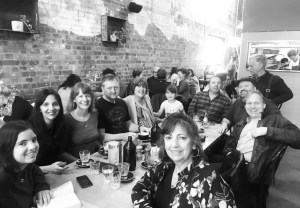
Celebrating my 20th diaversary with some of my village people.
I’m back from a very busy week in London and Copenhagen. I arrived back in the door at home exactly two minutes after Harry and Meghan got hitched, so I missed the whole happy occasion. If only we had some sort of magical way to see photos and videos and relive beautiful experiences like that. Oh well, never mind.
The main reason for my trip was for the kick-off meeting for Hypo-RESOLVE, a new four-year project focusing on better understanding hypoglycaemia. I’m there as part of the Patient Advisory Committee (PAC), which is made up of advocates from across Europe. Obviously, it is now legislated that an Australian also be included in any European diabetes advocate activities. I believe it’s called the Eurovision Law.
The project is made up of eight work packages, each led and staffed by leading European diabetes researchers and clinicians, and after seeing just who was going to be in the room, I suddenly was struck down by the worst case of Imposter Syndrome I have ever experienced. This didn’t get any better when I was told that the presentation I had been asked to give was not only for the PAC. No – it would be in front of all eighty project participants. I looked at the list of who I would be standing up and speaking to, and cursed the meme- and photo-filled presentation I had prepared, wondering if I could pretend to understand statistics and graphs, and add some to my slide deck to at least try to sound smart.
I decided to stick with what I knew (memes, cartoons, photos of weird hypo tales), and left the slide deck as it was, hoping against all hope that I would manage to keep myself nice, and sound as though I understood what I was speaking about.
I was asked to give a talk about the real life experiences of hypoglycaemia. Fortunately I have kept a pretty good record of the literal lows of my diabetes (which, incidentally, was the title of my talk). Thanks to the search function on Diabetogenic, I was able to easily pull together a number of stories about the lows I’ve had. This proved to be more useful than I realised because these days, lows are few and far between. Since I started Looping, I’ve not had the sort of low that has made me want to write about it and try to analyse what it all means in my diabetes life. In fact, I’ve not had any lows that have required anything more than a mouthful of juice or a couple of fruit pastilles to treat.
Reading back through my blog posts was actually really quite confronting, and I found myself getting emotional as I read details of terribly scary lows and how they had impacted on me – in the moment, and in the days following. As I read, I remembered the anxieties I felt about something happening while low that would seriously affect my family.
I’ve not asked them, but I wonder if the fact that I have so few hypos these days makes Aaron and the kidlet feel calmer about my diabetes. They still see me sucking on a juice box every now and then, but it is done without urgency, and without the look in my eyes that betrays the calm I used to try (and fail) to convey.
In my talk, I really tried to express just how significant hypos have been in my life with diabetes. I tried to explain that even once a low is ‘fixed’ there are often residual effects – effects far beyond just trying to work out what my glucose levels would do after playing the how-low-can-you-go-hypo-limbo.
I spoke about how the emotional fallout after a nasty hypo can be crippling, leading me to second guess every diabetes decision I made, wondering what I had done to cause the low in the first place – because that is the ongoing narrative of diabetes….we did something wrong to cause the hypo (or the complication, or the high, or the technology failure). And I really tried to explain how sometimes there are no answers, no matter how hard we look, or how desperate we are to find something to blame.
Of course I spoke about the language of lows and how the words we use impact on the way that hypos are considered. There is no doubt that ‘severe’ hypos are serious and need urgent attention and investigation, but so-called ‘mild’ hypos can be just as burdensome.
Obviously, everyone’s hypo stories will be different and I took great pains to clarify that I was speaking of my own experiences only. In the past, hypos have terrified, paralysed and alarmed me. I was afraid to sleep, I was afraid of lows when awake. I was scared I would have a particularly nasty low around my daughter and scare her. I am fortunate that my deliberate non-compliance has resulted in almost no lows, and feeling safer that I have ever felt before. My fear of hypoglycaemia is manageable these days, yet I don’t take for granted that it will always be like this. I still carry hypo food around with me – there is no point tempting the hypo gods by not being prepared!
I’ll be writing more about Hypo-RESOLVE in coming days. I’m so pleased to be involved in such an exciting and interesting project; I’m honoured to have been selected for the PAC. I’m beyond thrilled that PWD are included in the DNA of the project – right from the kick-off, not brought in at the last minute for comment when all the decisions have been made. And mostly, I am grateful that hypoglycaemia is being given the attention it deserves. I honesty hope that one day no one ever needs to feel the panic and fear that so many of us have come to know.
Kicking off the kick-off meeting (Click for source)
You can read all about Hypo-RESOLVE in the Innovative Medicines Initiative media release from last week announcing the launch of the project. My flights and accommodation to attend the Hypo-RESOLVE kick off meetings were funded from within the project. PAC members are volunteers on this project.
Are you an adult (aged 18 – 75 years) with type 1 or type 2 diabetes living in Australia or the UK?
No? Avert your eyes and go back to looking at pictures of of cats on the internet.
Yes? Stop right there…. You can go back to looking at pictures of cats later, ‘cause right now, you have better things to do.
Like THIS:

Click to take the survey.
YourSay (Self-management And You): Quality of Life Study needs people just like you to have your say about the impact of living with, and managing diabetes on your quality of life.
You only have until the end of the month to participate, so now is definitely the time to do it.
And to say thank you, I baked these and am virtually sending you a couple:

You’re welcome!
The ATTD conference is, by its nature, very technology-centric. This is absolutely not a negative; in fact, it was one of the reasons that I had always wanted to attend because I am such a DTech junkie.
However, as it turns out, it wasn’t the promise of hearing about, or seeing, the latest devices that had me most excited as I perused the program, setting out my schedule for my busy days in Paris.
No, it was this session on the afternoon of the Thursday that really piqued my interest:
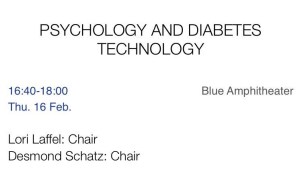
I knew we were off to a good start when session co-chair and first speaker, Dr Lori Laffel, flashed this slide up, announcing ‘Diabetes is Stressful’.

Sometimes, there is an assumption that diabetes technology automatically reduces stress. To a degree – and for some – that may be true. For me, the thought of wearing CGM all the time reduces the stress of not being aware of hypos. But it also adds stress with the never-ending, pervasive data data-feed.
There was also this dichotomy that so many of us face:

Acknowledgement of the terminology we use was a welcome addition to this talk. I think that at times our expectations are not being particularly well managed with the way technology is named.
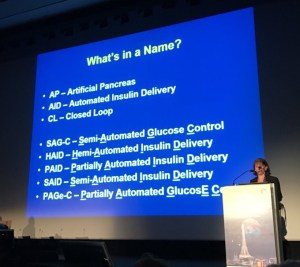
Expectations were covered again when Dr Kath Barnard took the stage.
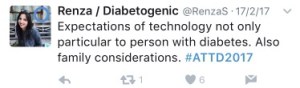
I love that Kath discussed the responsibilities of health psychology researchers when it comes to improving the outcomes of tech. She mentioned the importance of developing and using device-specific measures to assess psychosocial impacts on both people with diabetes as well as their carers. Most important was the point of ensuring robust and consistent psychological assessments in clinical trials to better understand participant experiences. This often seems to be a missing component when it comes to researching technology.
This is a recurring theme from Kath: that the juggernaut of diabetes technology advances needs to stop being only about button pushing and changes to clinical outcomes if their full potential is to be realised.
It’s important to note Kath is not anti-tech – in fact she frequently acknowledged the ground-breaking nature and significant potential of diabetes technologies. But her dedication to individualising technology use for each person with diabetes is her over-riding message.
Overall, the take-home from this whole session was this comment from Kath, which became a mantra for me for the remainder of the meeting: 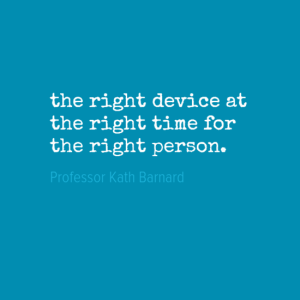
Next up, Dr Andrea Scraramuzza from Italy explored the human factor in technology in paediatric diabetes, however his talk was relevant to adults too. Human Factor brings together information from psychology, education, engineering and design to focus on the individual and their interaction with products, technology and their environments with the aim of better understanding the connection between human and technology.
I really loved this presentation because it brought home the idea that it doesn’t matter how whiz-bang the tech is, if the education is not right, if human limitations are not considered and if people with diabetes are not willing to learn – or clinicians are not willing to teach – the potential of that tech will never be reached.
The session closed with the always brilliant Professor Stephanie Amiel who spoke about hypoglycaemia – specifically, where to go when the technology hasn’t worked. I thought this was a really sensible way to round out the session because it reminded us all that technology is never a silver bullet that will fix all situations. Sometimes, we need to revert to other ideas (possibly alongside the technology) to search for solutions.
I was really grateful for this session at the conference. All too often psychology is ignored when we talk and think tech. The focus is on advances – and the speed of these advances – all of which are, of course, super important.
But it is undeniable that alongside currently available and still-in-development technology is the fact that there is a very personal aspect to it all. Whether it be considerations of actually attaching the tech to our bodies (unfortunately this wasn’t really discussed) or tech fatigue and burnout, or simply not wanting to use the tech, this is the side of diabetes and technology that needs to be researched and understood because how we feel about using the tech absolutely impacts on the results we get from it.
Well done to Professor Tadej Battelino and the ATTD organising committee for including this session in the ATTD program. It really was most useful and hopefully the HCPs and researchers in the room walked out thinking a little differently. I know that there were a lot of advocates in the room who really appreciated the session – because we always are thinking about this side of diabetes!
I do, however, have a challenge for the organising committee. As excellent as this session was, it could have been even better if they had dedicated some of it to hearing from people with diabetes talk about this issues being discussed by the clinicians and researchers. That would have really brought home the message. Perhaps next year…?
Disclosures
My flights and accommodation costs to attend the Roche Blogger #DiabetesMeetUp were covered by Roche Diabetes Care (Global). They also provided me with press registration to attend ATTD. My agreement to attend their blogger day did not include any commitment from me, or expectation from them, to write about the day or their products, however I have shared my thoughts on the event here. Plus, you can read my live tweets from the event via my Twitter stream.
It’s day four of holidays for me. Already lazy mornings, easy days and gentle plans to meet up with friends and family are clearing my mind, and I can feel the backlog of stress and exhaustion – the things that are part of everyday life – start to make way for sharp thinking and smarter decision making.
And in terms of diabetes this means more attention paid to alarms and alerts on my various devices: the calibration alert on my phone for my CGM gets attended to immediately, the low cartridge reminder on my pump is heeded at the first warning. I stop and think before blindly acting, and calmly troubleshoot as I go along.
My head is clearing. I am starting to think about diabetes the way I like, at a level that feels safe and sensible and manageable. I make rational decisions; I take the time to fine tune what I am doing. Diabetes has a place that is comfortable, I feel better overall and far more capable of ‘doing diabetes’.
 Earlier this week, the findings from the Diabetes MILES-2 study were launched. (Quick catch-up: MILES stands for Management and Impact for Long-term Empowerment and Success and is the work of the Australian Centre for Behavioural Research in Diabetes (ACBRD). The first MILES survey was conducted back in 2011, with over 3,300 Australians with diabetes taking part. The MILES Youth Report was launched in 2015, reporting the experiences of 781 young people with type 1 diabetes and 826 of their parents. This study formed part of the NDSS Young People with Diabetes Project for which I am the National Program Manager.)
The MILES reboot (Diabetes MILES-2) once again provides a snapshot of the emotional wellbeing and psychosocial needs of Australian adults living with diabetes. Over 2,300 people participated in this study and the results are comparable to those from the first MILES study. The Diabetes MILES-2 survey included the addition of some issues that had not been investigated in MILES, such as diabetes stigma.
Some key findings from the report include:
- 17% of survey respondents had been diagnosed with a mental health problem at some point of their life
- The respondents most likely to experience moderate-to-severe depression and anxiety were those with insulin treated type 2 diabetes
- The respondents most likely to experience severe diabetes distress were those with type 1 diabetes
- The aspects of life reported by all respondents as being negatively impacted by diabetes included emotional well-being (for those with type 1 diabetes) and dietary freedom (for those with type 2 diabetes)
- More stigma was experienced by people with type 2 diabetes using insulin as compared with people with type 2 diabetes not using insulin
Anyone affected by diabetes knows that the psychological and emotional side of diabetes is as much a part of the game as the clinical tasks. In fact, for me, it is the most difficult to deal with. What’s going on in my head directly affects how the I am able to manage the practical side of the condition.
When my head is clear – the way it is slowly, but surely becoming as I settle into holiday mode – and I have time and space to rationally think about, and focus on diabetes, the routine tasks seem manageable. The numbers present as nothing more than pieces of information: they allow me to make decisions, act, or not act. I am able to be practical and seem to have my act far more together.
But for the most part, diabetes is not like that for me. I don’t manage my diabetes the way I want and that is mostly because I am simply unable to due to the distress and anxiety I feel about living with a chronic health condition that terrifies me a lot of the time. I feel overwhelmed and, in the mess of life, diabetes becomes impossible. I am not proud of this – but I am honest about it.
If I am perfectly truthful, there is nothing in this report that surprises me. But it does provide validation for how I am feeling – and how many others with diabetes are feeling too. And I am so pleased that there is evidence to support what so many of us who live with diabetes feel.
It’s no secret that I am a very big fan of the ACBRD’s work. Diabetes MILES-2 once again shines a light on the ‘other side’ of diabetes and serves as a reminder that unless the psychosocial side of living with this condition is addressed, we simply can’t manage well the physical side. And it forces those who want to believe that diabetes is a matter of nothing more than numbers and mathematical equations to consider the emotional wellbeing of those of us living with diabetes each and every day.
The MILES 2 report can be read online here.
It’s gloomy in Melbourne today. I have tights on for the first time in months and my hair is now frizzing thanks to the rain I was caught in as I ran next door for a coffee. (The silver lining in all of this is that there is fabulous coffee right next door to my new office. Also, extra silver lining is that I can see the weather out of my beautiful window. The not-so-silver-lining is that I am reminded that I am fool, because window = seeing rainy weather and yet I still forgot to take an umbrella…)
So here are some things that are keeping me either amused, happy, annoyed, interested, fascinated and heaps of other things too!
Roses spared and children saved
Today, the Spare A Rose Facebook page announced that 376 children would be benefitting from people’s generous donations this Valentine’s Day.
It’s not too late to make a donation, or even consider making a monthly donation throughout the year. AUD$6 each month equals a month of insulin for a kid who would otherwise not be able to afford it.
While this was the focus of our Valentine’s Day, there was still a lot of baking. Because I love a heart shaped cookie. Or giant brownie. And sprinkles.

Still the wrong name for this week
I think that the name misses the mark because it focuses on weight and not health. The overall aim of the week is to encourage people to cook more at home to achieve a healthy weight. Here’s just a little of the conversation with the DAA (after they read my post last year) on Twitter:
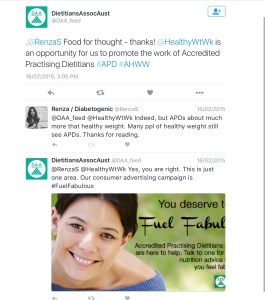
I think that this really does a disservice to the role of dietitians in healthcare. I am of a healthy weight, but have benefitted from the expertise of dietitians in the past.
The name of this week turns me off actually wanting to participate in any way, even though there are some terrific initiatives. What are your thoughts on this one?
In the genes
Why do some people develop diabetes-related complications and others don’t? We’re told that ‘control’ is the reason, but we also know that some people develop complications, despite years of what is considered ‘good control’ while others who struggle to reach targets don’t.
Things I wish I knew
I learn new things about diabetes each and every day. But how much easier it would have been while navigating this annoying bloody path to have known stuff earlier on. Diabetes UK has released a new book, 100 THINGS I WISH I’D KNOWN ABOUT LIVING WITH DIABETES, which includes information collected from over 1,000 people with diabetes with input from clinicians. The final 100 were selected by people with diabetes, (nice engagement there!), who chose the tips they thought most useful.
Oh – and while talking about Diabetes UK: Happy Birthday! They turn 82 years old this week.
New (to Australia) Tech
Looks like Australia is about to catch up to our friends in the EU who have had access to Freestyle Libre Flash Monitoring. The Flash website went live this week. More details – such as cost and release date – are yet to come, but you can register your interest. Have a look and register your interest.
And while we’re talking new tech in Australia, a couple of weeks ago, the Aussie launch details of the Dexcom G5 were announced. You can download the app (iOS only) which is already available from the App Store, although you won’t be able to use it until you are hooked up to a G5. The App has the ‘Share’ capability which means that you can (just as it says!) share your data with others.
Rock on
Last week, I was sitting at the front of our house, enjoying the sunshine and my day off, and listening to Live Fast, Diabetes, the new song from Adelaide punk/rock band, Grenadiers.
A very crotchety woman walked by, stopped as she heard the music, and scolded me with this nugget of wisdom: ‘You’re too old to be listening to that noise.’
Yeah, we know
Science: ‘Apparently BGLs are lower in warm weather.’
PWD: ‘Ah, yeah. We know. We’ve known for ages….’
Love it when evidence catches up!
And finally….
It’s Tuesday. Do the #OzDOC tweet chat! Tonight at 8.30pm AEDT.
Last night, I was lucky enough to attend the 2015 Research Australia Awards Dinner and celebrate the best in Australian health and medical research, and advocacy
The reason I was there was to tweet. Actually, that’s not the truth, but I thought I should mention it considering that both emcee, (ABC’s national health reporter) Sophie Scott, and Diabetes Australia CEO, Greg Johnson made particular reference to it when addressing the audience.
The real reason I was there was because Diabetes Australia was awarding its annual Outstanding Award for Diabetes Research.
This year’s winner of the award is the inimitable Professor Peter Colman from the Royal Melbourne Hospital.
I could spend words and words and words explaining why Peter is a worthy recipient (read here for just some of his wonderful work). Anyone who knows him – or knows of him – would understand why he was a most deserved winner. His acceptance speech was, as expected, humble and appreciative. And he offered an insightful perspective of diabetes research.
The other highlight for me was the Advocacy award which this year went to brother and sister team Connie and Samuel Johnson who are responsible for Love Your Sister. Connie is living with terminal breast cancer and together with her brother has been raising awareness about the importance of young women being ‘breast aware’ and raising money for breast cancer research at the Garvan Institute.
Connie gave an impassioned speech about why medical research is critical to cancer. She implored that we need to stop the misconception that thinking positive cures cancer. ‘The real fact of the matter is that medicine cures cancer,’ she said. ‘Not postive thinking; not prayers.’
Obviously, Connie was speaking to a room full of researches; she was preaching to the converted. But she is absolutely right. Advances in medicine and improved outcomes – whether in cancer, diabetes or other health conditions – are due to research. They are not due to people being optimistic and cheerful.
I like to think that I am a very positive person, but no amount of positive thinking is going to beat my BGLs into submission or frighten my beta cells back into action.
That doesn’t mean that I am throwing myself a pity party, and I certainly don’t think that is what Connie was suggesting. For me the balance is this: feeling positive or having a positive attitude is all good and well, and it probably does make the day-to-day acceptance of living with diabetes easier. But it is the insulin, the devices and the tools I use that actually treat my condition.
We need more money going into medical research. We need to reward our medical researchers for their work and commitment and dedication. I was honoured to be in a room full of these incredible people last night and so glad that I got to personally thank and congratulate one of my diabetes research heroes.
(All this reminded me of this e-card which is cheeky, but makes me laugh every time I see it!)

One of my (very frequent) criticisms of diabetes conferences – especially here in Australia – is that there is not enough input from people with diabetes. The very people who are the reason that these conferences exist are largely silent and very, very invisible.
This year, however, I am so pleased to say that even though there may not be many of us storming the halls of the Adelaide Convention Centre, the voices of people with diabetes are being heard very, very loudly.
The day kicked off with a breakfast celebrating the 10th anniversary of the OzDAFNE program. There, in between discussions about the program was a video showing people who had completed DAFNE sharing their thoughts about the course.
I then headed to an often-challenging session on hypoglycaemia, where Dr Christel Hendrieckx from the ACBRD, in her session about the emotional and behavioural consequences of hypoglycaemia, dedicated a slide to quotes from this Diabetogenic post about the language we use when referring to mild and severe hypos. I am not sure that I have ever been prouder. (I also completely broke the no photos rule with this, but they are my words, so I thought I would be safe!)

In the next session , diabetes educator, Virginia Hagger (also from the ACBRD), spoke about the TEAM T1 Program. Once again, interspersed between stats and explanations of the program, quotes from teens who had attended TEAM T1 were read out, highlighting how the course helped them.
Virginia spoke again later in the day, this time about the Diabetes MILES Youth report and played the video used at the launch of the report (and shared on this post) for the audience. The words used to explain how young people feel about living with diabetes are powerful and their impact is significant.
Amelia Lake from the ACBRD (you’ve noticed the common theme here, right?) spoke about the development of a resource about young people with type 2 diabetes and retinal screening. She too provided great insight into how young adults with type 2 diabetes feel about eye checks by sharing quotes of their experiences.
While it would indeed be wonderful to have people with diabetes sitting in sessions, and standing on the podium lending their voice to provide the practical side of the theory often being discussed, incorporating the words of many into talks is a powerful and effective way to hear from us. Plus it means that there is never only one voice – which can at times seem tokenistic – being heard. Instead there are many – every single one important as the next.




 Diabetogenic