
You are currently browsing the category archive for the ‘Real life’ category.
‘Why do you even care what’s happening in America? It doesn’t affect you, does it?’
I’ve been astounded to hear a few people ask me this question after finding out that the kidlet and I participated in the Women’s March a few weeks ago, or after hearing me speak about the current situation in the US with the Trump Administration threatening to repeal the Affordable Care Act, and allowing insurers to discriminate against those with pre-existing health conditions.
I care a lot about what is happening in America at the moment. Without a doubt, my main focus is what is going on with healthcare and insurance, (however today, I am stunned, dismayed at Betsy DeVos’ confirmation as Education Secretary, but that is mostly because I cannot believe that someone who thinks guns have a place in schools ‘because of, you know, grizzlies’ is in charge of education).
Does it affect me directly? Well, probably not. But it is incredibly naïve of us to think that what happens in the US is completely irrelevant here in Australia. We know our politicians look to the US for policy direction. Our new Health Minister, in his maiden speech to Parliament, put forward the case for the adoption of a healthcare system more in-line with the US-system.
Of course what is going on in America affects us, but, actually, that’s not the point.
The real point is that I care because it’s about people. Not only that, it’s about the most vulnerable people. And like it or not, people with chronic health conditions are vulnerable. We are high-level users of healthcare, we face more discrimination and we cost more to the system. We can be hit where it hurts: easily and unfairly.
Of course, within this group there are some more vulnerable than others.
In the same way, I’ve had people ask me why I care so much about insulin access around the world, which seems like such a callous thing to even think, much less say out loud, when you remember that the life expectancy for a child diagnosed with type 1 diabetes in sub-Sahara Africa is 12 months. I actually still struggle to get my head around that really.
I care because I am a global citizen and I care because my social responsibility is to those less fortunate. I care because when my brothers and sisters around the world are struggling because they can’t access diabetes care, it hurts us all. I care because when I hear that instead of protecting the most vulnerable – as they should – governments are building walls (no pun intended) to make it more difficult, more frustrating and more tiring, the response should never be ‘oh well’, it should be ‘What.Can.I.Do?’ I care because diabetes is hard enough without having to fear being turned away from A&E or from other treatment. I care because no one should die because they can’t easily and affordably access a drug that has been around for 95 fucking years.
Of course I marched last month and you can bet that I will be doing it again. And you bet that I will be standing alongside my friends in the US as they fight one of the hardest battles they’ve ever faced just to be able to access healthcare, and my friends from around the world too as they fight access issues. And I will continue to make donations to charities helping those who cannot access insulin and be an Ambassador for Insulin For Life Global as they continue their excellent and necessary work.
But if you really think that it’s all too far away, so it won’t touch us, then perhaps you might like to do something to help people closer to home. As someone delicately reminded me last week, it is not only people in developing countries who struggle to access diabetes healthcare and drugs, and whose outcomes are far, far poorer than those of us living firmly inside a privilege bubble.
Get involved with or make a donation to an Australian-based charity if you would prefer to do something to help those closer to home.
We should all care because when others are disempowered, it means they are not able to get the best care or expect the best outcomes. And we do something because we can; and if we can, we should. That is what being socially responsible is all about.

Flowers die; children shouldn’t. Make a donation to Spare a Rose, Save a Child, and Life for a Child today. Click on the rose to take you straight to the donation page. Simples!
Recently, I was slightly shocked at a comment made while I was enjoying a pleasant lunch.
‘A is pregnant,’ came the announcement.
‘Oh, that’s lovely,’ I said. Although I don’t really know A, I was still very pleased for her.
‘Really? I’m not sure if that’s such a good idea considering her health condition. What if she passes it on?’
Now, if I had any sense of decorum or tact, I would have stopped right there and changed the subject. Or left the table, suddenly desperate to visit the bathroom. Or become focussed on the pattern on the table cloth. Or thought about the dessert that was about to be served. I would have done anything other than say something.
I am not that person.
‘You’re kidding right?’ I said, prickly with anger. ‘Do you know how many times I’ve been told that? Do you know how many times people have inferred that I am selfish for having a child – and trying to have more – because of my diabetes and the possibility that I could have passed on my crappy genes?’
I was annoyed at myself for saying anything. My kid was sitting opposite me, listening to every word I said. She may not have joined the dots between how A’s health condition could impact her a baby, and me with my health condition impacting my baby (i.e. my kid). I’d just made it abundantly and painfully clear, however.
‘I’m sure that she’s getting really good advice and that she is on top of it. But I’m thrilled that she is having a baby if that’s what she wants and it sounds like it is. Not that long ago, she wouldn’t have been able to. Just like women with diabetes couldn’t. I really hope she is feeling well and has lots of support around her.’
This conversation happened a number of weeks ago and it is only now that I am ready to speak about it; to write about it. I was terribly upset at the time – the topic is very sensitive and clearly, more than 12 years after our girl was born, I still struggle with the perception that others may have: I was selfish for having a child because I could pass on diabetes to her.
But the more I thought about it, the more I realised my feelings are very mixed up. Along with the anger flashing in my voice, there is guilt. I have so much guilt about the chances of passing on diabetes to our daughter. It terrifies me, and the fear can be overwhelming.
Living with diabetes meant having a baby was not a particularly straight forward matter. The decision to actually go ahead took a lot of soul searching and discussion. The actual getting pregnant took time, effort – and great pain as I lost babies. Yet, I never had a baby because I was being selfish. I did it for a lot of other reasons, but being selfish was not one of them.
And rarely a day goes by when I don’t consider the impact my decision could have on our girl. Perhaps I don’t like to be reminded of it which is why I reacted so stormily. Or perhaps I am still just really, really scared.
Just over three years ago, we sold our house and prepared to move into our new one. The real estate agent we had charged with getting us the best possible price for our much-loved first home walked through each room, nodding his head and taking notes. Once he’d finished the tour, we sat around the kitchen table and he started:
‘Your house is beautiful. You have it decorated very tastefully and it’s incredibly warm. The artwork is just lovely. The rooms are well proportioned and there is a sense of space. It’s really easy to fall in love with this home.’
We smiled at him. Clearly we had nailed the single-fronted Victorian style, not overdoing the period features, instead adding modern touches throughout while still giving a nod to the heritage of the area. Obviously, I should have been a stylist and was wondering how we could get on The Block.
Evidently, we’d be getting a call from the editor of Belle magazine for a feature. I imagined the photo spread: there was I standing in the kitchen whipping up a batch of cookies; Aaron sitting on the front veranda playing the guitar; close ups of the rosebushes in full bloom across the front of the house; the kidlet sprawled on the floor of her room, drawing; me lazily lounging on the couch reading with one of the dogs curled up at my feet….
And then the real estate agent brought me out of my reverie and back to reality.
‘Now, get rid of half of your stuff! There’s a storage place around the corner. Use it! Also, why is there Nutella everywhere?’
We stripped the house right back, brutally removing any details that made the house ours.
The music room was turned back into a bedroom, so by the time we had finished there was not a single musical instrument in the house, except for an oud we’d picked up in Morocco a couple of months earlier. The floor to ceiling CD shelves were dismantled and we held onto a handful of CDs, the rest going into boxes.
Books and bookshelves also were packed away leaving fewer than half our collection on show. Photos were packed away, reminders of our travels stored safely. Nutella jars were hidden away. By the time we finished no one would know that a musical and bookish family who had spent a lot of time traveling the globe and eating Nutella had been living there for 15 years.
The house felt a little like an empty shell, however it did provide potential buyers a sense of the space and feel of the house. In essence, we had taken the house back to basics allowing anyone walking through to imagine themselves making cookies in the kitchen or playing guitar on the veranda…
My diabetes management feels like it needs someone to walk through it and get rid of the excess. It seems there is so much going on – diabetes technology everywhere; bells, whistles and alarms; apps to record, remind and recommend; comparisons between different devices. I’ve been thinking about building some sort of automated system after being inspired following some meetings in New York. I look at numbers, turn them on their head as I analyse them and use the data to make minuscule changes, but don’t feel any clearer about what I am doing. There is a lot happening and it feels a little cluttered.
The thing is, I don’t really know what back to basics is when it comes to diabetes. Is it a complete and utter disconnection from technology? Returning to a basic and planned diet that is similar each and every day? Is it keeping records of everything in a simple notebook, looking for patterns?
Reminding myself of my word for the year – and overarching direction – perhaps I just need to pause and consider why it is that my diabetes management has found itself where it is – slightly chaotic with a lot going on!
It’s time to pause. It’s time to remember why 16 years ago I wanted to start using a pump and why 8 years ago I started using CGM. What were the motives behind those decisions and are they being achieved? Are they still relevant?
Lots of questions. Lots of thinking to do. With an overall aim of simplifying things, and that can’t be bad.

The front room of our old house ready for sale: from walls lined with books and comfortable places to read and work to bare basics.
Yesterday, on her first day of school, the kidlet’s English class was about autobiographies. So, we had a long chat about some biographies and autobiographies we’d read – and ones we wanted to read – and why they are a really important way for people to share the stories of their life.
Story telling is one of the most powerful ways to record events, emotions and life experiences. Others who may be going through similar experiences can feel great comfort knowing that others have not only lived through certain situations, but stuck around to tell the story! And it is also a fabulous way to share stories with those not familiar with different places, circumstances or surroundings.
Our stories have the ability to inspire, offer an opportunity to learn, and help make sense of things around us.
So, it took me no time at all to respond with a resounding ‘YES!!’ when I was contacted by Anna Sjöberg from Anna PS and Sofia Larsson-Stern from Diabetesia, asking me to be in their book about people living with type 1 diabetes.
The e nd result of their hard work is a fabulous book – ‘We can, want and dare …and we have type 1 diabetes!’ – and it features people from all over the world telling their stories of life with type 1 diabetes.
When putting together the book, Anna and Sofia wanted to provide real-life stories from people with type 1 diabetes from all walks of life: from kids and teens
(such as this one who is, quite simply, AMAZING!) to adults doing all sorts of amazing extraordinary, and every-day things. There is a Brooklyn-based chef, an incredible young advocate from Sweden and another Swede whose Instagram profile describes him as a Multisport Team Ninja Warrior! Oh, and a Melbourne blogger and activist.
The books was launched it its original Swedish-language version last year on World Diabetes Day and the English-language version has just been launched and is now available.
This book is not just for people with type 1 diabetes, although, with its stories of hope it certainly would be a wonderful thing to give someone newly diagnosed! It is also for friends and families of those living with type 1, and people who really have no significant connection to type 1 diabetes, because it provides an understanding of the complexities of the condition that we live with and offers a very personal insight into life with type 1.
You can order your copy of the book here.
GIVEAWAY GIVEAWAY GIVEAWAY
I have three copies of ‘We can, want and dare …and we have type 1 diabetes!’ to give away to Aussie-based readers of Diabetogenic, thanks to the team at Anna PS. Just click here and send me a message telling my why you would like a copy. Keep it short – brevity is key here!
DISCLOSURE
I was invited to provide my profile for the book and received no payment for my contribution. I will receive a signed copy of the book for my bookshelf, though, and can’t wait to see it!
Our daughter starts back at school today. It’s her first day at secondary school – a significant day, and as I waved good bye to her this morning, watching her walk into the school theatre for morning briefing, I realised that this is one of those really big transitions in a person’s life. And a parent’s life too…
I managed to wait until after the Principal’s address to parents, and after leaving school grounds to get a little teary, so I’m calling the morning a win all around!
As I drove into work, I thought about all the things we’d done to get ready for the day. We’d attended information sessions, gone on school tours, enrolled in cello lessons, decided which language to learn, ordered and collected text books and stationery, organised a public transport pass, learnt how to use the school’s intranet, done a few practice school runs on the tram and many other things that we did as we thought of them.
The check list we were working from seemed endless and we kept adding tasks to it. But we made it, and by last night, her schoolbag was packed and she was ready for her first day.
But our story is common and all families with children starting at (or back at) school have done similar things. However, there are some families who have a whole lot more to do than just make sure they have the right coloured pencils and appropriate snacks in the lunchbox.
There are over 11,000 preschool and school-aged children here in Australia with diabetes, and they – along with their parents – face different and extra challenges preparing for their first days of school. In addition to the things I’ve mentioned above, they have another checklist that needed to be dealt with. The diabetes at school checklist.
While they are packing school bags with books and pencils and lunch for the day, they are also building hypo kits to be delivered throughout their child’s school. They will probably have spent some – maybe considerable – time with teachers explaining some diabetes basics and what to do in the case of a diabetes emergency.
It’s likely that their child’s healthcare team will have been involved in preparing some sort of management plan for the school, outlining how to support the child during the school day, with extra attention given to activities such as sports days, PE lessons, camps and excursions.
Possibly, their school will have undertaken some formal training, such as the School Seminars offered by Diabetes Victoria. They should have received a copy of Mastering Diabetes and hopefully shared the school-relevant information with their child’s teachers and other school staff.
It’s a lot to think about. And it’s understandable why many parents feel a lot of concern, especially when you consider that there is no standard requirement by schools when it comes to supporting children and adolescents with diabetes.
And, quite frankly, that’s not good enough.
Since returning from holidays this year, the majority of my work has centred around diabetes and schools, and today Diabetes Australia launched a new report calling for a systematic, nationally consistent approach to supporting children and young people with diabetes in the school setting. Children and adolescents with diabetes have a right to fully participate in all school activities, but to do so does require training and commitment.
It’s time to move away from the mixed-bag, approach that is in place now, where it seems that luck determines if a school is well prepared and teachers are well trained. Kids with diabetes deserve much, much better.
You can read the report here and the media release here.
DISLCOSURE
I work for Diabetes Australia and have been involved in the preparation of this work and the media release. I have also been involved in some media interviews about this issue.
With millions of people across the globe, I marched for women’s rights on Saturday. Alongside my beautiful daughter – who is growing into a fearless and fierce activist herself – I stood in solidarity with my sisters from all continents of the world, as we called for protection of our rights.

Solidarity Sisters!
It was beautiful in Melbourne – a true mid-Summer day with stunning clear blue skies and a hot sun overhead. We stood on the steps of the State Library – my favourite place in the city – and listened as women from all walks shared their stories and urged us to stand up, rise up and never give up.
After a while, the kidlet and I walked to the back of the crowd, looking for some shade. We found a park bench and she looked for a vantage point to get a look at the rally and wander around to take some photos as I sat down at the other end of the bench to calibrate my CGM.
I quickly pricked my finger and squeezed blood onto the strip. When the number came up, I entered it into the Dex app on my phone.
The woman sitting next to me on the park bench smiled over at me. ‘Me too,’ she said, holding up the bag of jelly beans she was eating.
I beamed back at her. ‘Are you okay? The heat isn’t helping, is it?’
‘I’ll be fine. Just need a few minutes before the march starts. I’ll be okay.’
I smiled again and stood up. ‘We always are, right? Enjoy the march.’
‘I will,’ she said. ‘And you too. One foot in front of the other.’
I nodded. ‘It’s the only way.’
I walked over to the kidlet and we made our way back through the crowd.

#WomensMarchMelbourne
Sometimes, I’m a lousy person with diabetes (PWD). I am thoughtless and unclear about what I need, have ridiculous expectations of others – and myself, and am lazy. But I’m not always like that. And I think I know what I need to do to be better.
Being a better PWD is about being true to myself. It is also about reflecting on exactly what I need and I hope to get it.
- I need to remember that diabetes is not going away
- I need to remember that the here and now is just as important as the future
- I need to remember that I don’t have to like diabetes, but I have to do diabetes
- I need to remember that the diabetes support teams around me really only have my best interest at heart, and to go easy on them when I am feeling crap
- I need to empty my bag of used glucose strips more frequently to stop the strip glitter effect that follows me wherever I go
- I need to remember that it is not anyone else’s job to understand what living with my brand of diabetes is all about
- I need to remember that the frustrating and tiresome nature of diabetes is part of the deal
- I need to be better at changing my pump line regularly
- I need my diabetes tasks to be more meaningful – quit the diabetes ennui and make smarter decisions
- And I need to own those decisions
- I need to see my endocrinologist
- I need to decide what I want to do with my current diabetes technology. There is nothing new coming onto the market that I want, but what about a DIY project to try something new? #OpenAPS anyone…?
- Or, I need to work out how to convince the people at TSlim to launch their pump here in Australia
- I need to check and adjust my basal rates
- I need to do more reading about LCHF and decide if I want to take a more committed approach or continue with the somewhat half-arsed, but manageable and satisfactory way I’m doing it now
- I need to remind myself that my tribe is always there and ask for help when I need it.
- I need to make these!
And being a better PWD is knowing what I need from my HCPs and working out how to be clear about it, rather than expecting them to just know. (I forget that Legilimency is not actually something taught at medical school. #HarryPotterDigression)
So, if I was to sit down with my HCPs (or if they were to read my blog), this is what I would say:
- I need you to listen
- I need you to tell me what you need from me as well. Even though this is my diabetes and I am setting the agenda, I do understand that you have some outcomes that you would like to see as well. Talk to me about how they may be relevant to what I am needing and how we can work together to achieve what we both need.
- I need you to be open to new ideas and suggestions. My care is driven by me because, quite simply, I know my diabetes best. I was the one who instigated pump therapy, CGM, changes to my diet and all the other things I do to help live with diabetes
- I need you to understand that you are but one piece of the puzzle that makes up my diabetes. It is certainly an important piece and the puzzle cannot be completed without you, but there are other pieces that are also important
- I need you to remember that diabetes is not who I am, even though it is the reason you and I have been brought together
- And to that – I need you to understand that I really wish we hadn’t been brought together because I hate living with diabetes
- I need you to remember that I set the rules to this diabetes game. And also, that there are no rules to this diabetes game
- I need you to understand that I feel very fortunate to have you involved in my care. I chose you because you are outstanding at what you, sparked an interest and are able to provide me what I need
- I need you to know that I really want to please you. I know that is not my job – and I know that you don’t expect it – but I genuinely don’t want to disappoint you and I am sorry when I do
- I want you to know that I respect and value your expertise and professionalism
- I need you to know that I hope you respect and value mine too.
And being a better PWD is being clear to my loved ones (who have the unfortunate and unpleasant experience of seeing me all the time – at my diabetes best and my diabetes worst) and helping them understand that:
- I need you to love me
- I need you to nod your heads when I say that diabetes sucks
- I need you to know I don’t need solutions when things are crap. But a back rub, an episode of Gilmore Girls or a trip to Brunetti will definitely make me feel better, even if they don’t actually fix the crapness
- Kid – I need you to stop borrowing my striped clothes. And make me a cup of tea every morning and keep an endless supply of your awesome chocolate brownies available in the kitchen
- Aaron – I like sparkly things and books. And somewhere, there is evidence proving that both these things have a positive impact on my diabetes. In lieu of such evidence, trust and indulge me!
- I need you to know I am sorry I have brought diabetes into our lives
- I need you to know how grateful I am to have you, even when I am grumpy and pissed because I am low, or grumpy and pissed because I am high, or grumpy and pissed because I am me.
Today is my first day back at work. I spent the weekend preparing for the day by sitting in the sunshine, drinking coffee, deadheading rose bushes and switching back on the part of my brain that thinks about work. And remembering how to walk in high heels.
The new year looms ahead. It’s huge. There are things to finish from last year and lots of new projects waiting to begin. And starting fresh with a clean slate and thinking strategically about how to get things done is important.
I don’t really do New Year’s resolutions. I’m lousy at committing to anything remotely healthy, so there is no point in trying to promise to do something that I’ll do for two days, then stop doing and then feel bad at myself for not doing it anymore.
I don’t really want to use the New Year to focus on diabetes by concentrating on particular tasks or specific measures. Outcomes seem to be organic and setting goals, while a noble gesture, often lead to disappointment. Feeling like a failure is not how I want to begin the year!
But I do like the idea of embracing the New Year and cracking open its spine, revealing clean pages and new beginnings.
Australian writer and publisher, Mia Freeman, shared that last year, she came up with a word that would help draw her attention to her plans for the year ahead, and has done the same for this year.
I like this idea – the thought of having some sort of directive that would be an overarching theme for decision making and planning, and would, hopefully, mean that I ended the year feeling a success rather than just a shattered and weary mess.
Because I have found myself pretty exhausted at the end of the last few years. I know everyone is – we get to a point where we are just done and need a break. I felt as though I was burnt out with life when I went on leave, and the much needed holiday was about getting back to a place where I felt I could tackle what lay ahead.
With this in mind, I wanted my word to help me avoid that burn out, so that come the end of the year, the exhaustion I felt was not so overwhelming.
So, I spent some of the time we were in New York auditioning words, trying them out, rolling them around on my tongue and hearing them in my mind, thinking what they could mean for me throughout 2017. As I walked around the snowy streets, I projected how I wanted to feel at the end of this year and what I would need to get there.
The word I have settled on is pause.
As soon as I said it, I knew it was the right word. I wrote it down, over and over, thinking about how it could shape and help plan my year. I wrote it on scraps of paper and shoved them into my purse and handbag to remind me. And the minute I walked into my office this morning, I wrote it on a post-it and stuck it to my wall.
Pause doesn’t mean that I will be stopping anything I’m doing. It doesn’t even necessarily mean I’ll be cutting back. But it does mean that before committing to anything new, continuing with something old or exploring different ways of doing things, I will pause and think about why and how I am doing it.
The tendency to simply say yes to everything serves no one – the results are me not doing things as well as I might like or feeling disappointed with the end result.
I also am seeing how I can adapt the word to suit my diabetes management. I think that too often, I am on autopilot, not really thinking about what it is that I am doing. To pause means giving meaning to actions, attention to decision making and focus to the way I choose to manage my diabetes. Jumping on a bandwagon because it has been written up in a few different diabetes magazines – without pausing to consider if it is right for me – really makes no sense. I am very guilty of wanting, needing the latest toy without necessarily stopping to think if it will serve any purpose.
There is already a lot in the calendar for 2017 – all the way through to its end with the IDF’s World Diabetes Congress rounding out the busy year in December. I’m the Deputy Stream Lead for the Living with Diabetes Stream, so there is no chance of slowing down as the year winds down.
So, with all this in mind, my word for the year is going to help shape how I approach things. I’ll have to see how it goes and I expect I’ll need to pull myself back at times, reminding myself to stop, think and, perhaps, wait. And then, as I pause, take the time to let things sink in, catch up and take shape.

My darling friend, Annie.
Once we remembered that there were other people on the street, we set to introducing our families to each other. Our husbands shook each other’s hands, and our girls shyly greeted each other with hugs. That was the last moment of shyness for the rest of the week.
Our families have had a week of being tourists in the most wonderful city in the world. We looked at the Manhattan skyline from across the Brooklyn Bridge; we soared to the top of the Rockefeller Building, gazing across the city as the sun started to set from dozens of stories above the ground; we sat in cafes, warming up on coffee and hot chocolate and wonderful conversation; we wandered through Central Park as snowflakes started to fall, the girls unable to believe their luck as they ran with their arms outstretched catching the snow; we saw in 2017 standing in Central Park with fireworks exploding over our heads with the promise of a new year. And throughout it all, diabetes was managed by those of us who wear our pancreas on the outside of our bodies – but didn’t for a moment affect the time we were having.

Annie and I know each other because of diabetes. She is mother to three extraordinary girls, one (Pumplette) who happens to have diabetes. I’ve linked to her blog many times here, and if you’ve not popped by yet, please do!
We often spoke about how wonderful it would be to introduce our families – although we did have some concerns at our girls actually being able to discuss their neglectful mothers who, it seems, abandon them at the drop of a hat to rush off to some diabetes conference or another.
We made it happen this week, and our girls barely paused for breath, chatting constantly, getting excited at all the city has to offer and amusing themselves with endless rounds of Banagram. Our kidlet was thrilled to have three new friends and couldn’t get enough of spending time with them.

Friends for life.
We closed our apartment door. Annie and her family headed for the elevator and I sat next to our kidlet on the couch as floods of tears started. I hugged her tight, promising that it would not be the last time that she saw the girls. I reminded her that Annie and I live on opposite sides of the world and are in contact all the time – that we speak and message and FaceTime frequently.
And I reminded her how wonderful it was that as 2016 ended and 2017 started she had made three wonderful new friends. She nodded and wiped away her tears. ‘I miss them already,’ she said. And I nodded too. Because I understand how that feels. I know the elation of seeing friends from far flung places and then, when saying farewell, not knowing when we will see each other again. But the beauty of it is that while it hurts to say goodbye, there is an endless promise of saying hello again. And I assured it that she would say hello and hug those girls again. Many, many times.
Happy New Year, everyone!

Seeing in the New Year.
There is so much around at the moment that I wanted to write about properly. But it’s holidays and there is champagne and my kid made brownies with toffee popcorn on top and the neighbours came over for drinks and didn’t leave and I need to pack to go to New York.
So here are some links for some holiday reading.
THIS piece
The title of this piece sure seems to have riled up some people, but bloody hell, just read it. Anna Floreen, who is pretty damn awesome, has written this fabulous piece, sharing her experiences of going through the teen years with diabetes. A must read for parents of kids with diabetes to get some insight into what young people think about dealing with diabetes.
THESE biscuits
These have become my holiday favourites this year and I’ve made about 4,326 batches of them! Four ingredients, super-dooper easy, delicious and look impressive. Plus, they are gluten free, so great as a gift for friends with coeliac disease. What more could you want?
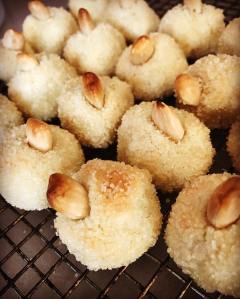
I’ve had the recipe for them scrawled in my recipe book for years – I can’t remember where I first copied it down from – and this from the New York Times is pretty much how I have been making them.
THIS news
Great update about the work Ed Damiano is doing on the Bionic Pancreas just published in The Lancet. The study has shown some pretty exciting results. It’s getting close – really close – and that is just so damn exciting! Maybe we can out one on our Xmas lists next year…
THIS study
If you are a young woman (aged between 16 and 25 years) living in Victoria, Australia, you can take part in a women’s health study, which is looking at the relationships between lifestyle behaviour, physical health and mental wellbeing.
You’ll be reimbursed for your time, so get involved! All the details are here.
THIS poorly worded sign
For the love of all that is good: proof read, people. Please, proof read!

THIS good news
Great news from the Australia Diabetes Society who has just released a new position statement about scuba diving and diabetes, recognising that motivated individuals with well-controlled diabetes (both insulin-requiring and non-insulin requiring), may be able to safely participate in recreational diving.
THIS story
You know, there are some people in the DOC world who are worth their weight in gold. Lou Vickers is one of them. Read her story here.
THIS (slightly old) article
This piece, from Dr Katherine Barnard and Dr Jill Weissberg-Benchell, was published just after ATTD this year (back in Feb) and provides comment on the relationship between diabetes technology and psychosocial aspects of diabetes. A very interesting read, especially considering the way DTech is moving!
THIS position statement
The National Health and Medical Research Council and the Consumer Health Forum of Australia have released a revised statement about the involvement of consumers in health and medical research.
THIS time of year
So, we’re heading off for a couple of weeks and I’ll occasionally be checking in, but probably not much as we’ll be spending a lot of time trying to keep warm on the cold streets of New York.
Thank you so much for reading, commenting and sharing Diabetogenic this year. The love and support I constantly am afforded by people who read posts here is astounding and makes living with diabetes that little bit easier. I wish I could adequately say just how grateful I am.
I’m looking forward to an exciting 2017 – there is already so much on the horizon with exciting projects, collaborations, activities and plans being hatched. It’s shaping up to be a very busy year, so I’m looking forward to a little downtime over the holiday time.
Season’s greetings to you all. I hope you manage some rest, relaxation and quiet reflection in the coming weeks. I’ll see you in the New Year.

Season’s greetings from my clan to yours.





 Diabetogenic