
You are currently browsing the category archive for the ‘Real life’ category.
Diabetes Week kicked off in the UK yesterday with the launch of their very own Language Guidance statement. Well done to all involved. It’s great to see another language document joining the movement started by Diabetes Australia back in 2011, and added to in recent years by the ADA and AADE (who presented their Guidance Statement last year), diaTribe Foundation (who has written extensively on the issue) and the Team Novo Nordisk (who developed a great guide for media reporting on the team.) And now, it’s great to see the UK on board, too.
Click to read the new UK Diabetes Language Matters guide.
In Australia, it’s been wonderful to see just how widely our statement has been used. Conference organisers have embraced the Diabetes Australia statement, including it in speaker packs, encouraging presenters to align their talks with the document. (The table which offers suggestions for words and phrases that can be problematic is a very useful reference tool.)
I can still remember the launch of the Diabetes Australia statement. It was at the State Library of Victoria which played to my word and book nerdiness almost perfectly. There could not have been a better setting for a media launch about words, language and diabetes.
Little did we know back then just how significant or far-reaching this document would be. At first, we were met with a lot of resistance, and people thinking that it was political correctness gone slightly mad. But we persevered and made sure that we were clear why this work was necessary.
I remember sitting in talks given by HCPs and flinching constantly as judgemental and stigmatising language was considered appropriate. Now, in Australia at least, it is startling when someone uses words such as non-compliant, because the ongoing, constant and committed efforts by many have completely changed the way that the words are used when speaking about and to people with diabetes.
While the official statement was launched seven years ago, the impact language and words have on diabetes was not a new area of discussion. People with diabetes have been talking and writing about how significant the (positive and negative) impact of words can be. I remember seeing discussions about it on the Reality Check forum not long after I was diagnosed, and speaking about it at events we ran back when the consumer program started at Diabetes Victoria in the early 2000s. We knew that words had power. We just needed to bring everyone on the ride with us to get them to understand it too.
And that’s why the Diabetes Australia statement – and all those that have come since – are so important. They provide a framework to refer to; something to hold up as an example of how things could be better.
Even though there has been a lot written and spoken a great deal about language and diabetes over the last seven years, we’re not finished. This is not a static movement. No one can for a moment think that we have ‘done’ language; there will always be new and different things to consider. Some particular areas of interest to me in recent times include the language we use when talking about hypos. And how we reframe the way we talk about diabetes complications.
I wrote this piece after the ADA Annual Scientific Meeting last year when I realised that we need to keep moving forward because there is still much to be done.
But while we do that, I believe it is important that we never deviate from the intention of the language matters movement. It is not about dictating to people with diabetes the words we can and cannot use when talking about our own diabetes, or criticising the words we choose to use. It is about framing the way people speak to and about those of us living with diabetes, and encouraging the use of language that is inclusive, engaging, non-judgemental, destigmatising and respectful. It is about using words that make us feel empowered, positive, hopeful.
Fundamentally, it is about making things better for us.
‘No one asks to get diabetes. And no one asks to be diagnosed with a diabetes complication.’
I don’t know how many times I have said these words – in presentations, casual conversations, in meetings. I feel like a broken record sometimes, but it seems that I’m not done saying it because there are still real problems with the way we talk about a type 2 diabetes or diabetes-related complications diagnosis.
Both are discussed as an end point. And often an end point following failure which is so problematic that it makes every single part of me wince.
‘You got type 2 diabetes because you did/didn’t do this, this and this….’
‘You developed a diabetes-related complication because you did/didn’t do this, this and this.’
And then…there is nothing. There is nothing about what happens next: who to turn to, what help is available, ways to live well. Just some blame and shame and a massive spoonful of guilt, too. You’re welcome!
We need to change this. How different would things be if news of a type 2 diabetes or complication diagnosis was not accompanied with finger pointing at all the things that got us to that point, but instead an acknowledgement that this may feel scary, and a helpful list of what is available to help us.
Being diagnosed with type 2 diabetes is not an end point. Neither is being diagnosed with a diabetes complication. It’s a transition. And at that transition point, we need hope. And to know what’s next. (Cue: Snuffy Walden.)
Pumps. Pens. Syringes.
Patch pump. Pod.
Share your data. Don’t share your data.
Blood glucose monitors. Continuous glucose monitors. Flash glucose monitors.
Low carb. High carb. Low(er) carb. No carb. ALL the carbs.
Private diabetes team. Public clinic.
#WeAreNotWaiting. #WeAreWaiting.
Apps for recording data. Scribbling down numbers on the back of an envelope. Making up numbers as you go along.
Online peer support. Face to face peer support. No peer support.
How fortunate we are to have choices – to have choices we can make for ourselves for our own brand of diabetes.
I’m feeling a little burnt out at the moment by the zealots online who think it’s their way or the highway. Do what works for you and share it, by all means. But attacking someone else for doing something different is just being a dick. Don’t be a dick. There’s really no need.

On Saturday, I had the pleasure of attending the Australia Diabetes Society’s (ADS) annual Insulin Pump and CGM Workshop. I’d been invited along another ten or so people with diabetes who already wear CGM or Libre to share our insights into living with and wearing sensing devices.
(Quick shout out to the ADS. For those who don’t know, the ADS is the professional body for endos in Australia. Over the last few years, their leadership team has been absolutely instrumental in finding ways to better include PWD in what they are doing. As an organisation, they have been innovative, and responsible for ground-breaking initiatives such as the Enhancing Consulting Skills resource. We need our professional bodies to be like this. And we need them to work with us so that we can provide our perspective to the work they are doing.)
The idea of the workshop is for endocrinologists to have hands on experience of the technology rather than just what they see and are taught at industry events. (For the record, the industry events are super important because they are an opportunity to learn about the shiny technical side of things. And get branded pens. Pens are awesome.)
Discussion was the focus of this session. There was no long presentation with people taking notes. Instead, we were asked to sit at tables with endocrinologists, and encouraged to share our the real life experience of wearing the technology.
Now, I don’t know about you, but this is always the way I want to learn and to share information. I seem to get annoyed at sessions when I have someone speaking at me for ages, telling me what they think I need to know. I much prefer to have discussions and watch conversations go off on tangents, providing attendees with the details and information that is relevant to them; that they will be able to take home with them and put into practise.
The thing about having PWD in the room is that we have a tendency to hold little back. My friend Jodie and I were at the same table. We both wear Dexcom, but our experiences are quite different. (Or as I put it: ‘She does what she’s meant to. I don’t’.) This was actually a master stroke, because it showed the endos just how varied our experiences can be. And that while what works for one person may not necessarily work for another, there really may not be a ‘right’ way to do things.
Jodie and I demonstrated putting in new sensors so that the endos could see how the actual insertion works. We talked about using an alcohol swab where we were about to site our sensor (in this case, I was the one following the instructions I’d been taught when I first started using CGM. ‘ Yeah…I can’t be bothered,’ said Jodie and I wanted to high five her and welcome her to the dark side of non-compliance.)
There was one endo at our table who was pressing every single one of my ‘OH-YES-LET’S-TALK-ABOUT-THAT’ buttons, and the first thing she said when we removed the sensor from the packaging was ‘Why is there so much waste in there?’
We spoke about the fact that current Dex sensors don’t have reusable inserting devices and that really, the companies could perhaps do a little more to find ways to reduce waste, while continuing to produce a sterile product. (The G6 apparently has addressed this…)
At one point, the Dexcom rep. mentioned the share function on the G5, and as if by magic, my new favourite endo jumped in with ‘Who makes the decision as to whether or not their data is shared.’ I wanted to hug her, but it was the first time we’d met and I thought that might be a little creepy. But yes; oh yes! We were going to talk about consent.
The absolute best thing for me was that not once as I shared by clearly (and absolutely owned) deliberately non-compliant CGM existence, did one of the endos look at me with disdain, shake their head, raise an eyebrow or tut tut. They asked how what I did made things better for me.
Some examples of questions and my answers:
Why do you wear the sensor on your arm and not your stomach?
I find it more comfortable and it reads more accurately. Plus, it lasts longer there than on my tummy.
Why do you restart the sensor?
Because I’m frugal and don’t want to fork out $90 every seven days when I know it works perfectly well for me still at 21 days
Look, the Dex reps should turn away right now, block their ears and pretend that they don’t understand me, because I am going to be really candid about this. Firstly, I am going to say that I adore this product. I would say that no matter who is in the room – I’m not sucking up to the AMSL reps because I’m hoping they’ll throw some free product my way. They don’t and that’s fine. I mean it. This is a brilliant product that I literally trust with my life. But there are some things that piss me off…
Sensors are around the $90 mark. They are approved for use for seven days. But at the end of those seven days, the sensor is still working perfectly. In fact, many people report that it works even better after the first week. Why should I throw out a perfectly good, working product if it is still doing what it says on the box?
I know the risks. I am choosing to do this myself and I am more than happy to own it.
But while we’re on this topic. The transmitter is AUD$540 every three months. That’s right, after three months, it stops working. The batteries are still good to go for a couple of months, but the device is factory set to stop working. Now, this has been done with a whole lot of safety considerations in mind and I understand those. But again, a device that is not rechargeable and still has some use in it has to be thrown out.
So, I don’t really have any qualms about using all sorts of DIY solutions that allow for the transmitter life to be extended.
I’ll say it again – I know the risks. This is about me and no one else. I am happy to take those risks.
So, you don’t calibrate it as recommended. Why?
Because sometimes, stopping whatever I am doing to calibrate is not something I want to do. Plus I’ve been wearing this for over 2 years now and I’ve learnt what to trust and what not to trust and how to use it safely. I have set my own boundaries that I feel are acceptable and perfectly safe.
Do the alarms bother you?
They used to. But now I’ve managed to customise them to a way that works for me. I have all the alarms on now, but in the past, I had all the high alerts and alarms disabled because they pissed me off so much. But the predictability of Loop means that the alarms are rare and I generally I have the headspace to respond to them as they happen. (Although the please calibrate one can drive me nuts sometimes.)
Do you share your CGM data?
I have in the past, but I don’t these days. As an adult with diabetes, I make that decision and there have been times when I’ve liked the idea of someone having my back – usually when I’ve been travelling solo. But since I’ve been looping there has been no need.
What’s Loop?
Um…we’re going to need a longer session… Here’s the address to my blog. Sorry for all the swearing.
After the event, the event organiser sent me a lovely text message, thanking me for my time and for speaking at the Workshop. She said that the CGM session was a highlight for many of the attendees. ‘People with diabetes make the best teachers,’ she added. And she’s right. When we are talking about what it’s like to actually live with these device on our bodies and in our everyday life, we really are the best people to talk about it! HCPs are great at talking about the science and the clinical side of things. But we make diabetes real because we are living it. You can only get that when you go straight to the source. And yes; we’re the source.
Disclosure
The ADS provided me with a $50 gift voucher to thank me for my time on Saturday. I was also given one Dexcom sensor to insert at the Workshop which I am still wearing. (And will do so for the next three weeks or so…)
It takes a village.
How often do we say that about life with diabetes? I know I say it all the time.
It doesn’t matter if you were diagnosed as a child or as an adult, diabetes is rarely a solitary health condition. While those of us whose beta cells actually decided to go AWOL are the ones physically affected by the condition, our loved ones are also part of our diabetes existence.
As someone who is surrounded by a village of loved ones – family, friends, neighbours, colleagues – I can’t ever state enough how important they are in my diabetes wellbeing. I am so grateful for their love and support. I love that they are there for me when it feels like diabetes is kicking my arse. I love how Aaron knows that when things are tough, all I need is him to look at me, nod and say ‘diabetes sucks’, hand me a cup of tea and hold my hand to make me feel better. I love it when our daughter displays her keen advocacy skills by talking about diabetes in the same way I do, using the language I use. And I love it when my loved ones celebrate the wins and successes and diaversaries alongside me.
The Australian Centre for Behavioural research in Diabetes (ACBRD), in collaboration with the NDSS, is currently looking for family members and friends of people with either type 1 or type 2 diabetes to participate in some research to help them develop an information resource about how to support people living with diabetes. The resource will also focus on how loved ones can take care of themselves too.
To be eligible to participate you must meet the following criteria:
- You are 18 years or older
- You are either a family member or close friend of someone with diabetes (e.g. parent, sibling, spouse, best friend)
- You live in Australia and are able to partake in a telephone interview, or meet with us in person in either North Melbourne or Geelong
- You are able to read, write and speak English
- You are available in early-mid June 2018
You will be thanked for your time and for providing your experiences with a $50 gift voucher.
If you are the loved one of someone with diabetes, thank you! And please consider taking part in the research for the development of this resource by contacting Caitlynn Ashton by email or phone (03) 9244 6668. (Please note, Caitlynn’s days of work are Monday-Wednesday.)
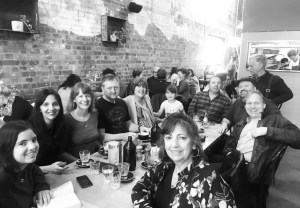
Celebrating my 20th diaversary with some of my village people.
A couple of years ago, I clumsily wrote a post about how there is simply not enough information available about women, diabetes and sex. That post remains one of the most read posts on this blog. Within half an hour of pressing the publish button, over two dozen women I don’t know reached out to me to say it was the first time they had ever read anything about the issue, and that their concerns and questions have never been addressed…mostly because they didn’t know how to ask them.
A week or so ago, the topic came up again thanks to a new survey that is being conducted out of the UK, headed up by health psychologist Kath Barnard. The introduction to the survey highlights that sexual health issues for women with diabetes are a neglected are of study, acknowledging they have an impact on wellbeing, self-image and relationships.
Here is what I wish I was told about sex and diabetes when I was diagnosed – or at least could easily find information about somewhere.
- Diabetes can affect how you feel about sex. (Seriously, being diagnosed as a 24 year old, this should have been a headline.)
- And it can affect sexual function in women. I really wish I had known this, because it was not mentioned when I was diagnosed (or for a long time after). Sex was different after diabetes, but because no one told me that it could be, or what might happen, I thought that this was just me. And because I thought it was just me, I didn’t speak to anyone about it. I guess because I was embarrassed and ashamed.
- Yes, sex is exercise and can result in hypos. But it’s not just lows that affect sex. (This was literally all I was told at diagnosis about the impact of diabetes on sex: ‘You might have a hypo after or during sex, so eat a sandwich beforehand.’ And all I could think about in that moment was trying to work out how to incorporate a sandwich in foreplay. (Please do not send suggestions.)
- High glucose levels are not good for libido. Sitting with glucose levels in the high teens and twenties does not put me ‘in the mood.’ It makes me feel tired, grumpy, frustrated and stressed. All of these feelings are conducive to diminishing sex drive.
- And rollercoaster glucose levels don’t help either.
- While I was warned that sex can cause hypos, I wasn’t equipped with how to deal with that. ‘Sorry, honey – I need…well, I need some honey, because I think I’m about to pass out,’ is a mood killer. For everyone involved. I learnt that very early on.
- I wish I had been told how to speak about my concerns about sex – with HCPs and especially with Aaron. I felt like my body was failing at everything and that made me feel decidedly unsexy. But by not having the words or ideas of how to speak about it, I simply didn’t. (And again, I wouldn’t have had any solutions even if I did speak about it, so what would have been the point.)
- The body image issues I had been living with for some time became amplified once I had diabetes. Suddenly not only could I see all these faults with my body, but now it was also broken from the inside. I felt unattractive, I didn’t want to have my body on show because to me it felt inadequate. It would have been good to have someone suggest I speak to a psychologist and work through this sort of shit!
- ‘Here are some ideas that might work if lubrication becomes an issue, because it might.’ That would have been a mighty useful comment to have received, instead of feeling like my body was slowly, but surely, shutting down all functions that I had, until that point, taken for granted.
- Here’s an idea: often, at diabetes events, we receive bags chock full of goodies: Foot cream, alcohol swabs, glucose tabs, cardboard-tasting muesli bars, recipe books. Throw a tube of lube in there too, event organisers! At least this will get people thinking, realising that if this is an issue for them, they’re not the only ones, and probably start some conversation.
- I wish HCPs understood that this may be a really difficult and awkward conversation for some people, and many women with diabetes won’t feel comfortable raising the issue. So please take the lead here and ask questions – even: ‘Have you noticed any difference in how you feel about sex?’ Do it gently…
- Desire and arousal are not the same thing. Wanting to have sex, but knowing that it may be painful, difficult or just plain not the same as before, plays with your mind. I wish that had been explained to me, because arousal issues actually meant desire was affected.
I think that had I been better informed about all of these factors, or at least told that sex was something that diabetes could (or would most likely) affect, I would have been better equipped. It took me a while to muddle through it all myself.
I know that talking about sex – in and out of a diabetes context – is not always easy. But just because something is difficult doesn’t mean that it should be swept under the carpet and ignored.
Unsurprisingly, it was speaking with other women and learning that they had the same issues, questions and concerns that led me to seeking clinical and psychological help to work through everything. I feel like I got there in the end, but it took a lot longer that it needed to. Because I honestly thought that I was the only one dealing with it all. However – as is so often the case with diabetes – our concerns and stories are already someone else’s, and there are answers to be found if we know where to go to looking. I just wish that instead of having to search, they had been given to me at the beginning.
Please consider filling in the Female Sexual Health and Diabetes survey here. It only takes about ten minutes.

I’m back from a very busy week in London and Copenhagen. I arrived back in the door at home exactly two minutes after Harry and Meghan got hitched, so I missed the whole happy occasion. If only we had some sort of magical way to see photos and videos and relive beautiful experiences like that. Oh well, never mind.
The main reason for my trip was for the kick-off meeting for Hypo-RESOLVE, a new four-year project focusing on better understanding hypoglycaemia. I’m there as part of the Patient Advisory Committee (PAC), which is made up of advocates from across Europe. Obviously, it is now legislated that an Australian also be included in any European diabetes advocate activities. I believe it’s called the Eurovision Law.
The project is made up of eight work packages, each led and staffed by leading European diabetes researchers and clinicians, and after seeing just who was going to be in the room, I suddenly was struck down by the worst case of Imposter Syndrome I have ever experienced. This didn’t get any better when I was told that the presentation I had been asked to give was not only for the PAC. No – it would be in front of all eighty project participants. I looked at the list of who I would be standing up and speaking to, and cursed the meme- and photo-filled presentation I had prepared, wondering if I could pretend to understand statistics and graphs, and add some to my slide deck to at least try to sound smart.
I decided to stick with what I knew (memes, cartoons, photos of weird hypo tales), and left the slide deck as it was, hoping against all hope that I would manage to keep myself nice, and sound as though I understood what I was speaking about.
I was asked to give a talk about the real life experiences of hypoglycaemia. Fortunately I have kept a pretty good record of the literal lows of my diabetes (which, incidentally, was the title of my talk). Thanks to the search function on Diabetogenic, I was able to easily pull together a number of stories about the lows I’ve had. This proved to be more useful than I realised because these days, lows are few and far between. Since I started Looping, I’ve not had the sort of low that has made me want to write about it and try to analyse what it all means in my diabetes life. In fact, I’ve not had any lows that have required anything more than a mouthful of juice or a couple of fruit pastilles to treat.
Reading back through my blog posts was actually really quite confronting, and I found myself getting emotional as I read details of terribly scary lows and how they had impacted on me – in the moment, and in the days following. As I read, I remembered the anxieties I felt about something happening while low that would seriously affect my family.
I’ve not asked them, but I wonder if the fact that I have so few hypos these days makes Aaron and the kidlet feel calmer about my diabetes. They still see me sucking on a juice box every now and then, but it is done without urgency, and without the look in my eyes that betrays the calm I used to try (and fail) to convey.
In my talk, I really tried to express just how significant hypos have been in my life with diabetes. I tried to explain that even once a low is ‘fixed’ there are often residual effects – effects far beyond just trying to work out what my glucose levels would do after playing the how-low-can-you-go-hypo-limbo.
I spoke about how the emotional fallout after a nasty hypo can be crippling, leading me to second guess every diabetes decision I made, wondering what I had done to cause the low in the first place – because that is the ongoing narrative of diabetes….we did something wrong to cause the hypo (or the complication, or the high, or the technology failure). And I really tried to explain how sometimes there are no answers, no matter how hard we look, or how desperate we are to find something to blame.
Of course I spoke about the language of lows and how the words we use impact on the way that hypos are considered. There is no doubt that ‘severe’ hypos are serious and need urgent attention and investigation, but so-called ‘mild’ hypos can be just as burdensome.
Obviously, everyone’s hypo stories will be different and I took great pains to clarify that I was speaking of my own experiences only. In the past, hypos have terrified, paralysed and alarmed me. I was afraid to sleep, I was afraid of lows when awake. I was scared I would have a particularly nasty low around my daughter and scare her. I am fortunate that my deliberate non-compliance has resulted in almost no lows, and feeling safer that I have ever felt before. My fear of hypoglycaemia is manageable these days, yet I don’t take for granted that it will always be like this. I still carry hypo food around with me – there is no point tempting the hypo gods by not being prepared!
I’ll be writing more about Hypo-RESOLVE in coming days. I’m so pleased to be involved in such an exciting and interesting project; I’m honoured to have been selected for the PAC. I’m beyond thrilled that PWD are included in the DNA of the project – right from the kick-off, not brought in at the last minute for comment when all the decisions have been made. And mostly, I am grateful that hypoglycaemia is being given the attention it deserves. I honesty hope that one day no one ever needs to feel the panic and fear that so many of us have come to know.
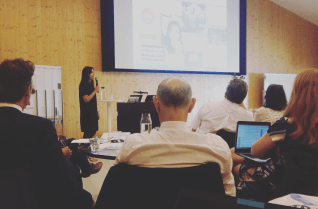
Kicking off the kick-off meeting (Click for source)
You can read all about Hypo-RESOLVE in the Innovative Medicines Initiative media release from last week announcing the launch of the project. My flights and accommodation to attend the Hypo-RESOLVE kick off meetings were funded from within the project. PAC members are volunteers on this project.
I’m in London for a couple of days of meetings before flying to Copenhagen….for another couple of days of more meetings. But I was smart this time, managing to set aside a whole day before the meetings start to do this:

These three women – these wonderful women – are part of the lifeline I have to help me manage diabetes. It may have been faulty pancreaes that brought us together, but what ties us together is support, friendship and love.
Thank you Annie, Georgie and Izzy for coming to meet me in my jet-lagged state in London. Thank you for building me up, and filling my jar. I couldn’t do this diabetes shit without you all.
I woke yesterday morning to a shit storm on Twitter. I had dozens and dozens of notifications where I had either been retweeted, mentioned or @-ed. (And yes, sorry, I did just turn the @ symbol into a verb). I was hoping that someone was sharing news with me that in the eight hours I’d been asleep, diabetes had been cured, JK Rowling had released a new Harry Potter book, or Nutella would be sponsoring me to…well, eat Nutella.
Alas…it was none of these. No; it was not.
I slipped down the rabbit hole of people replying to a tweet where I’d shared an awesome blog post by my mate and all ‘round wonderful human, Georgie Peters. Georgie was commenting on the recent study which has been widely shared (and written up in the NY Times) about type 1 diabetes and LC diets. (If you’ve not read the NY Times article, do! The study is really interesting and as someone who predominantly follows LC it all makes perfect sense to me…and makes my CGM trace devoid of roller coasters lines.)
Georgie’s piece was not demonising LC. In fact, quite the opposite. She was suggesting that it is absolutely a valid way of eating for some people, just as eating moderate to high carbs might be.
Distilled into one word, Georgie’s post was about CHOICE.
In more than one word, Georgie was warning that diets that are inherently restrictive in nature could lead to an increased risk in eating disorders. Georgie was specifically referring to children on LC diets who are not given a choice in the way they are eating, or as she far more eloquently puts it: ‘…the food choices of children and their right to bodily autonomy.’
Choice. It all comes down to choice.
Apparently, that was completely lost on the people challenging what Georgie was saying. One person was somehow trying to say that the idea that a diet restricting carbs was no different to a kosher diet, and does that mean that people following a kosher way of eating have an increased rate of eating disorders? (If you can join the dots to make something that even remotely makes sense, please do so for me, because I have tried and keep coming up with a massive question mark.)
Another doctor claimed that she insists all her surgical patients go on a low carb diet (pre-surgery), and that they have no choice in the matter. Two things: type 1 diabetes isn’t the same as prepping for surgery. And any doctor who even suggestedthere being no choice in anyaspect of my diabetes management would be given the sack very quickly. (I’ve no idea about pre-surgery diets, because that’s not my thing. Diabetes is. Georgie’s post was about diabetes, not about pre-surgery diets. The surgeon’s comments added to my confusion, because: apples and oranges…which are probably banned on her LC diet. And further down the rabbit hole we go.)
The food we eat; the diet we follow, are inherently personal choices. No one has the right to insist that there is only one way of eating. One of the frustrations that some of us who do want to follow a LC diet have is that there are some HCPs who refuse to even acknowledge that it could possibly be a positive and useful diet for people with diabetes, some going so far to say it is harmful.
The other day as many of my friends shared the NY Times article, I saw them plead for others to open their minds. I want that, too! I want people to have the information about how LC might work as a diabetes management strategy and be open to the idea. But more than that, I want people to then choose what works for them.
And when it comes to parenting (and I know that I don’t have a kid with diabetes, but I am a parent), I know this to be true: we all want what is best for our children. The thirteen-year-old in our house doesn’t have complete autonomy over food choices, because I do ninety percent of the shopping for food and cooking. I like it that way, because I get to eat what I want, and don’t have to do any of the cleaning up after I’ve messed up the kitchen! Win, win!
While she doesn’t have a choice in what is served up at the dinner table, she does get to decide what of it she eats. I know she doesn’t have diabetes, so when it comes to thinking about food, she doesn’t have to consider her glucose levels. But there is far more to health than that.
I am doing all I can to inform and educate her on what makes for a healthy, balanced diet. I have to trust that what I am doing is enough to result in her making healthy choices most of the time.
Choice – that’s what Georgie was writing about. Is it really that hard to understand?
In kind of related, but really, just that I want to share something: this nut and seed bread is incredible:

It’s low carb (at least, it is the way I make it, because I swap the oats for coarsely ground hazelnuts) and, quite frankly, is the best thing I have ever eaten. (To make it decidedly not low carb, slather in Nutella…!)
There is something to be said for the comfort of routine. Yesterday, I had my annual eye check. And like clockwork, it played out the same way it always has.
Just like always, the week before my appointment, I received a reminder message from doctor’s office. That cued the call to my dad to lock him in for chauffeuring and morale duties.
Just like always, a little part of the back of my mind was occupied with the upcoming appointment and a series of ‘what if’ scenarios played out.
Just like always, the night before my appointment, my anxiety levels were heightened. I tried to alleviate them with a bit of twitter humour.
Just like always on the day of the appointment, Dad picked me up and just like always, I told him how nervous I was. ‘Twenty years of diabetes now, dad.I’m worried this might be the appointment where the news isn’t all good.’
And just like always, he said ‘Just wait and see. There’s not point worrying before you see your doctor.’ His morale boosting comments, just like always, right on point.
Just like always, I nervously waiting in the second waiting room to be called in to the first appointment.
Just like always, the orthoptist had me read from a chart and put drops in my eyes and sent me on my way to the next waiting room. And just like always, my vision blurred and my heart rate increased.

Drops in; vision blurring. Waiting…
Just like always, my dreamy ophthalmologist called me into his room. (Dreamy because he’s lovely to look at. But more dreamy because he is just so damn kind to me in my ridiculous nervous state). ‘Are you well,’ he asked, just like always asks, and I realised that I have not always answered, ‘Yes. So well…’
Just like always, he said: ‘Your vision and eye pressure look good, Renza. No changes at all since last time.’
Just like always I allowed myself to smile a tiny bit. But no too much. Because the reason we were really there hadn’t happened yet.
Just like always, he turned down the lights in the room and shone an almost painfully bright light into my eyes. He asked me to look this way and then that way. He looked at the front and back of both of my eyes.
And just like always, when he’d looked for all he needed to look for, he turned the lights back on and smiled at me. ‘There is no sign of retinopathy or any other diabetes-related eye problems. Your eyes are great.’
Just like always, I breathed again. I smiled. Really smiled. ‘I’ve had diabetes for twenty years now. Today’s news has made me really happy.’ I said. And I thanked him for giving me such good news.
Just like always I wandered back down the corridor, feeling far lighter. I paid the bill, I found my dad.
And just like always, he looked at my beaming smile and said, ‘I told you so. Just like I always do.’





 Diabetogenic