
You are currently browsing the category archive for the ‘Peer support’ category.
Well, it’s been a year. It’s always the same. Come December, and as Mariah is blaring in every store I walk into, I start to feel exhaustion. But it’s not all bad news. Holidays loom ahead. Sunny weather means more time outdoors. And long, warm nights out with friends and family seem like the perfect way to spend my time away from work. Oh, and perhaps most excitedly, my mother is going to make her famous zippoli – my favourite Italian Xmas food.
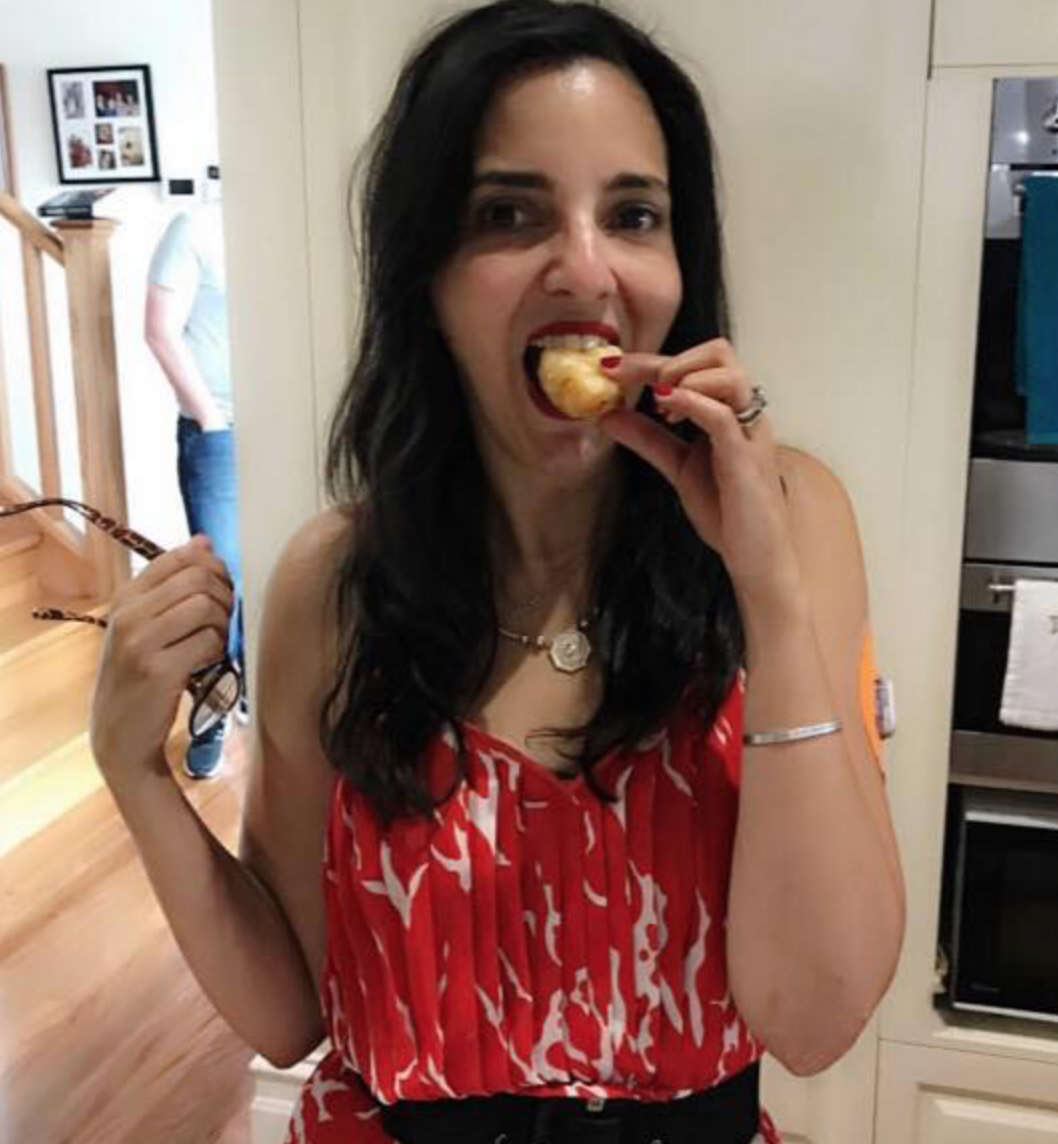
The happiest time of the year is when mum serves up zippoli. What a time to celebrate being from an Italian family!
The diabetes world remains comfortingly – and frustratingly – static at times. There are constants that shape each year, but there are also changes. Some are positive, some lead me to wonder just who is making decisions that impact on PWD and why do they seem so far removed from the realities of living with this condition?
I’m ready to draw a line under 2018 – a bold, thick, solid line – farewelling the year with the knowledge that there will always be some things about diabetes I know to be true.
Diabetes is hard. The relentlessness of it doesn’t really subside. As much as we have tools to try to make things easier, it permeates, something I realised back in July when the wind was knocked out of me as diabetes unleashed itself into every part of me, taking hold and trying to pull me under.
There is no silver bullet. Loop does seem magical to me, but my diabetes is still there. It is just here in a different way – a new normal.
The inequalities of diabetes continue to be an important theme throughout our community and we can’t turn our backs to the fact that access to the most basic of diabetes medications and treatments remains out of reach to many. There is no one way to advocate for change, and I commend everyone working at the front line to improve the situation.
Which brings me to the point where I remind everyone that it is absolutely not too late to make a donation – however small or large – to Life for a Child. Saving the life of a young person at Xmas time seems like an absolute no-brainer to me.
Peer support remains a cornerstone of my diabetes management toolkit. Of course the shape of that support changes – I’ve met some incredible new people this year and been involved in some remarkable projects. At the same time, there have been some important collaborations with diabetes friends I’ve known for some time. It’s those diabetes friends that continue to help me make sense of my own diabetes, make me realise that my village is global, and know that wherever I turn, someone will have my back. I can’t explain just how reassuring that is.
Despite feeling that there have been times that the community has been splintered and a little disjointed, I still believe that the diabetes community is something positive. I also know that it can take time to find your tribe in there, and accept that not everyone has to be best buddies. But when you do find those people who you just click with (and that doesn’t mean agreeing on everything, by the way) you do everything you can to hold on to them, because that’s where the magic of working with peers happens.
While co-design seems to have become a bit of a buzz phrase, there are some examples of it that just make diabetes activities and projects so much better! This year, I’ve had some incredible opportunities to work on projects with a vast array of stakeholders and what can be achieved is incredible.
Sometimes, (a lot of the time?) we need humour in diabetes. And sweary birds. Finding Effin’ Birds earlier this year was a source of such joy and happiness, especially as I realised that (unintentionally) the clever folk behind it have made it all about living with diabetes. I cannot tell you how many moments I have come across one of their pics on my social media feeds and it has perfectly nailed my diabetes mood.
We can’t be afraid to have conversations that can be considered difficult. This was the foundation of the Australian Diabetes Social Media Summit this year, but it went far beyond that. Women, diabetes and sexual health remains an issue that needs a lot more attention. And we need to keep talking about mental health and diabetes.
Language matters. Whatever people believe, the way we speak – and think – about diabetes has far reaching effects. It affects everything from the treatment we receive, the public’s perception of diabetes, where fundraising dollars are allocated and how governments fund diabetes.
And so, I think it is fitting that I round out the year and this post with one of the things I am so proud and honoured to have been involved in. It is one of the best examples of co-design; it involves diabetes peers, it acknowledges that diabetes can be a difficult monster to live with, and it holds people with diabetes up. Oh – and it reminds us that absolutely, completely, utterly, #LanguageMatters.
I’m taking a little break from Diabetogenic to do … well… to do nothing. That’s what I have ahead of me for the next three or so weeks. No plane travel, no speaking engagements, no media, no dealing with the diabetes things that get me down. Except, of course, my own diabetes thing. But I asked Santa for a pleasant few weeks of diabetes being kind to me. I’m sure that’s what I’ll be getting under the tree. As long has he can work out how to wrap it.
I hope that everyone has a lovely festive season. I do know for many it is a really difficult time of the year. Thank you to everyone for reading and sharing and commenting. I’ll be back some time in January. Ready to go again, and to rant and rave, celebrate, and shamelessly talk about what’s going on in my diabetes world. I hope to see you then.
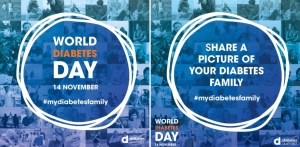
This year for World Diabetes Day, the International Diabetes Federation has decided on the theme ‘Diabetes Concerns Every Family’. According to the WDD website, the aim of the campaign is ‘…is to raise awareness of the impact that diabetes has on the family and to promote the role of the family in the management, care, prevention and education of the condition.’
I get that. I have said it on numerous occasions: it takes a village to live with diabetes.
I was a little nervous when I first saw some of the materials from the campaign, because I was worried that it may focus too much on the negative effects of diabetes and how it burdens the families of those living with diabetes. I know how diabetes impacts my family and I feel enormous responsibility already about that. I don’t need to be reminded of it, and I certainly don’t need to be guilted into being told that if I am not managing my diabetes properly I am doing a disservice to my family.
Although there have been a few little things that hint at those ideas, mostly, what I’ve seen has been positive and focused on celebrating and acknowledging those villagers who help us live with diabetes.
Diabetes Australia has decided on the campaign of #MyDiabetesFamily to highlight the idea of the village, and acknowledge that ‘family’ looks different to a lot of people. For some people with diabetes, it will be their immediate family – parents, partners, kids etc – who are their main cheer-squad and supporters; for others it will be their friends, work colleagues or maybe gym partner. Someone the other day told me that their dog is their most important diabetes supporter, providing them with comfort – and alerting them to lows.
I was asked to put together a collage of the people who I would refer to as #MyDiabetesFamily. This is it:

#MyDiabetesFamily
Obviously, and most importantly, Aaron and the kidlet feature. They know my diabetes in a way that no one else does because they see it most. They see the difficult days, the frustrations and how overwhelmed I can get, but they also see my celebrate the positives. And they have seen how much my diabetes – and my attitude to it – has changed in the last 12 months. In some ways, they benefit from Loop, too because my diabetes intrudes a lot less into our family’s life.
My parents and my sister are on there too – another obvious inclusion. Their support is never ending.
My gratitude for my family – in the more traditional sense of the word – is unending. They may not have diabetes, but they deal with it in different ways. While they may not understand that feeling of unquenchable thirst that comes from high glucose levels, or the panic of an ‘eat the kitchen’ low, they do know what it is like to be spectator to it all and I know that they all wish that I didn’t have to deal with those things – and everything else diabetes has to offer.
And the photo at the top shows just some of my friends with diabetes. As it turns out, this was the first photo on my phone with a group of diabetes friends, and these fab people are just a tiny number who also make up #MyDiabetesFamily; I am lucky to say that there are so, so many more.
These are the people whose islet cells are as absent as my own; these are the people who ‘get it’; these are the people who intrinsically understand what diabetes feels like – even if each of us have different experiences, and we use different words to explain it, and come from and with different perspectives. These are the ‘us’ in #NothingAboutUsWithoutUs; they are the ‘tribe’ in ‘Find your tribe, and love them hard’.
And in the middle? Well, that would be me. Because I am the one who is so grateful to have them all there as part of my life, helping and supporting me.
Want to get involved and celebrate your own diabetes family?
Have a look at the Diabetes Australia Facebook page (click on the image below to be taken there) to find out how.
DISCLOSURE (because they matter and I always disclose. ALWAYS.)
I work at Diabetes Australia, and had some involvement in the development of this campaign. I am writing about the campaign because I think it is a truly important one – not because I was asked to by any Diabetes Australia staff. Plus – I’ll take any opportunity to highlight the folks who make living with diabetes easier!
Last weekend, we were in Carlton, waiting to order some lunch in a casual café. We stood there deciding what we wanted, waiting for our turn. We reached the counter and were about to order when the woman behind the counter said something. It took me a moment to realise she was speaking directly to me. ‘Sorry?’I smiled at her, asking her to repeat herself. ‘Your Dexcom,’ she said. ‘How do you find it?’ My smile got wider. ‘Oh, I love it! Wouldn’t be without it.’ I said. ‘Do you use one?’
She rolled up the sleeve on her tee-shirt, turning her body slightly. ‘No, I use Libre,’ she said, pointing to the sensor on her upper arm. ‘But I’ve been wondering about the Dexcom.’
She was young, and was diagnosed about four years ago. ‘It’s hard,’ she said to me, and then asked how long I’ve had type 1. ‘Twenty years,’ I watched her eyes widen. ‘And yes…I know. It can be hard.’
She told me she thought it was really tough being diagnosed as a young adult. ‘I remember not having to think about diabetes. It makes it hard that I have to think differently about things now because of diabetes. Like when I want to go out drinking. I think it would be easier being diagnosed younger so it’s all you know.’
‘I’m not sure there is ever a good age to be diagnosed with diabetes. I think each age would probably have its challenges. I’ve always felt that I maybe was a little lucky missing the teenage years and all that comes with it. But it certainly wasn’t easy being diagnosed at twenty four… it sucks all ‘round!’
Back in September, in a little street in Rome as we waited to order gelato, I had another ‘diabetes in the wild’ moment. The gorgeous Roman sun meant almost everyone was walking around in tank tops and strappy sundresses. ‘Look,’ said the kidlet, her eyes on the arm of the woman in front of me…and the unmistakable disc of her Libre sensor.
You can guess what I did next:
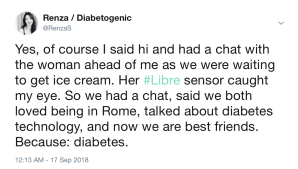
After introducing myself, we chatted about our diabetes tech. We spoke about funding and how we need the technology to live well, and how much easier it makes travel and negotiating time zones. Oh, and then we talked about the wonderful times we were having in Rome and the delicious food. It’s never all about diabetes!
After last weekend’s encounter, I realised that despite knowing a lot of people with diabetes, I still feel the need to reach out when I see another. And these days, I seem to always ask a version of the same question: ‘Do you know many people with diabetes?’ I guess I’m taking the temperature to see just what their support network looks like when it comes to other people in the know and how linked in they are with other PWDs.
We look to connect with the people whose stories mimic ours because that’s how we make sense of our own diabetes, or the diabetes of someone in our family. The other day when I visited with a family support group, the connection shared between the parents of children and teens with diabetes was clearly on show. One parent told me that until she started spending time with other parents of kids with diabetes she felt so isolated. ‘They’re the only ones who get it,’ she said me and I nodded furiously. Because while I don’t ‘get’ her situation, I certainly do understand what it means to find that connection with others who do.
For me, I do peer support in a very casual way. It is informal. How I have come to know those in my tribe has usually been completely serendipitous and the way we remain connected is too. It’s the occasional phone or Facebook messages, sharing something we’ve seen or checking in after we notice something on their social feeds. It’s the ‘Can we Skype now?’ from a friend in a different time zone looking to find a few minutes to catch up (or, even better, catching up with those in different time zones IRL thanks to my crazy travel schedule!). Or it’s the quickly organised ‘Let’s catch up for a coffee somewhere local’ from those not only in the same time zone, but also the same postcode!
We talk about the value of peer support, and there is increasing evidence to show just how valuable it is.
So for November and Diabetes Awareness Month, one of the things I think we need more awareness of is the value of those connections. ‘Prescribing’ peer support always seems an odd way of thinking about it, but perhaps there is some merit in ensuring that part of HCP training includes introducing the merit of peer support, and providing information about how they can point people with diabetes to others.
My tribe of other people living with diabetes hold me up, hold me together and hold me close. I wish that for everyone.
 #DOCDAY is now as much of the EASD program as other satellite events. While you may not see me limbering up at the start line of the EASD5K, you certainly will see me prepping for #DOCDAY!
The first #DOCDAY event was back in 2015 in Stockholm when diabetes advocate extraordinaire, Bastian Hauck, hired a small, overheated room in the back of a downtown café, with plans to house some diabetes bloggers and advocates who would be at EASD, providing us with the opportunity to share some of the things we have been up to in diabetes advocacy. The promise of coffee and cinnamon buns was more than enough to see the room fill to capacity before the event started.
My, how the event has grown! The following year in Munich, Bastian had the brilliant idea of moving #DOCDAY to the conference centre and inviting HCPs, researchers and industry to attend. The event was still very much an opportunity for PWD to share our work, but it made sense that we weren’t simply talking to each other. The echo chamber of diabetes can be vast sometimes!
Bastian has asked me to speak at each #DOCDAY event. I’m yet to work out whether it’s because he’s desperate for presenters, or if he just wants me up there so people can giggle at my odd accent and unintentional (yet frighteningly frequent) ‘Australian-isms’, that make sense to no one other than me and the very limited number of Aussie HCPs who are in the room. (Thank you to the couple of Aussie endos who came along this year and some other folks from the Diabetes Australia family!)
There was a very strong focus this year on DIY technologies. Dr Katarina Braune – fellow looper and paediatric endocrinologist – spoke about some incredible grass roots initiatives involving sharing information and expertise about DIY systems among the diabetes community in Germany. Katarina is a force to be reckoned with – dynamic, passionate, smart (so smart!) and committed to ensuring that people who want to come on board the DIY train are supported to do so.
Dr Shane O’Donnell, postdoc research fellow from University College Dublin, spoke about a new project called OPEN which is an international collaboration of PWD, HCPs, social and computer scientists and diabetes advocacy groups. (Disclosure: I’m involved in this work.) We’re hoping to investigate and establish an evidence-base around the impact of DIY systems on PWD and the broader healthcare world.
And I spoke about the recently released Diabetes Australia DIYAPS position statement.
It’s clear that this is a hot topic amongst some advocates. But the message remains clear – this is not about converting everyone onto a DIY system. It’s about ensuring those who chose that path are supported, a point I was at pains to hammer across:
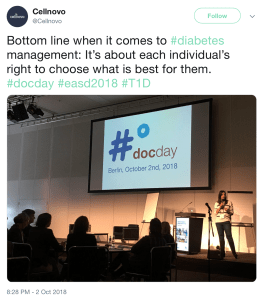
(Click for original tweet)
The great thing about DOCDAY is that it is totally informal. There is no real agenda. Bastian likes to have a couple of people lined up to kick off proceedings, and say a few words, but the floor is open to anyone who has anything relevant to share.
Mandy Marquardt, Team Novo Nordisk cycling champ, spoke about her Olympic plans and how she’s clearly not letting type 1 diabetes standing in the way of achieving her dreams.
And Amin from MedAngel spoke about the importance of knowing that our insulin is being stored correctly, and about a poster presented at EASD which showed that a lot of the time, our fridges at home are not keeping insulin within the manufacturer-recommended temperature range, which means that insulin quality and potency may be compromised. More about that here.
(Also – great time for those of us down under to think about ordering a MedAngel as the weather starting to heat up. Do yourself a favour – and give yourself some peace of mind – by knowing your insulin is not being cooked or frozen. For Australians, order here.)
Some new initiatives I heard about this year include:
Diatravellers: a brilliant idea of using social platforms to connect travellers with diabetes to interact, share information and promote activities (such as events and peer group meetings). It’s early days yet, but keep an eye on their website as more information comes to hand.
The awesome Steffi from Pep Me Up (where you can buy very cool stickers for your Libre sensor, temporary tattoos and my choice of medic alert bracelets), is working with the community to develop a new code of ethics for diabetes bloggers. Another ‘watch this space’ idea which is just getting started.
And, Weronika Kowalska spoke about ConnecT1on Campaign, her new project for the European Patients Forum Program for Young Patient Advocates which will feature type 1 diabetes advocates connecting with people from all over the world. This is an awareness raising initiative and you can follow along on Instagram.
One of my main criticisms of EASD is that there is such limited ‘patient’ involvement in the actual scientific program, which is frustrating considering that there is a huge contingent of bloggers and advocates in attendance (thanks to Roche Diabetes Care organising for us to have access all areas media passes as part of our involvement in their #DiabetesMeetUp event). This is why #DOCDAY is so important. It gives us an opportunity to take the stage and talk about initiatives and issues important to people affected by diabetes. The HCPs and researchers who attend get to hear us and speak with us. It’s such a simple idea, but one that makes perfect sense!
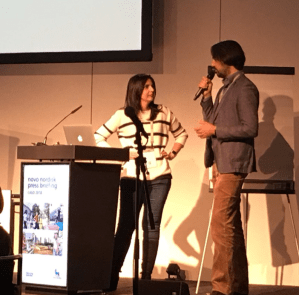
It’s possible Bastian was translating something I had just said…
(Click for photo source.)

Click to be taken to Daisy Natives store.
I bought a new t-shirt the other day. I saw it on Instagram and decided that I just had to have it. I’m not sure if it was growing up in a mostly female household; or the six years I spent in an all-girls school; or perhaps it’s the friends I am fortunate enough to be around a lot; or maybe the fact that most of the people I work with are dynamic women; or raising a daughter in 2018. Whatever it is, girls supporting girls, and women supporting women is the approach I have always tried to take in both my personal and work lives.
I guess my thinking is that we need to look out for and support each other because we know that outcomes for girls and women around the world are not always that great. And also, when women build each other up, and support and encourage each other, we are unstoppable!
I was thinking about this last night as I followed a Twitter conversation that all started after a somewhat sensationalist article in a newspaper about a bloke (sportsperson?) who, as it turns out, seems to have some diabetes-related neuropathy. As people shared the article and spoke about it, there were a couple of comments from people with diabetes about this person – another person with diabetes – ‘not looking after himself properly’.
When I started reading, I almost pinched myself to make sure that I hadn’t been sucked into some sort of void, and been dragged back to another time. Because this conversation has happened before – countless times. (A search through Twitter and this post pointed me to just a couple of those times.)
Diabetes-related complications and stigma. Diabetes-related complications and language. They go hand in hand. And along for the ride is judgement.
The complexity between diabetes, and developing diabetes-related complications is far too much for my little brain to comprehend. But I do know that there are no guarantees in diabetes. And I know that blaming people for whatever path their diabetes travels is not helpful in any way.
When someone suggests that another person with diabetes is ‘not looking after themselves properly’ there is a lot packed into that. It may not be intended, but that comment is so loaded with blame and shame and judgement that it becomes agonisingly heavy and, quite frankly, terrible.
To suggest that someone’s diabetes-related complications are the result of them ‘not looking after themselves properly’ means that essentially what is being said is that the person intended for this to happen. That they ‘brought it on themselves’. That they deserve to now have to face a future of diabetes-related complications.
To that, I say bullshit!
And, somehow, it is even worse when a comment like that comes from another person with diabetes, because if anyone should understand how harmful judgement can be, surely it is others with diabetes.

Supporting each other doesn’t mean just patting each other on the back and saying ‘good job.’ It is far more than that. It is acknowledging that we are doing the best we can at that moment time with what we have. It’s accepting that there are myriad ways of managing diabetes, and that people should have the right and the ability to choose the way that is right for them – even if we don’t think it is right for us. It is encouraging others’ efforts, cheering their successes and standing alongside them when things are tough. It is being happy for other PWD when they are doing, or being invited to do, great things.
It is not saying ‘You are not doing enough’.
We would be quick to say that it’s not okay for a healthcare professional to suggest that we are not trying hard enough. We don’t accept it when the media make claims that people aren’t looking after ourselves properly. We push back and say it is not okay when those without diabetes suggest that we are not doing our very best.
And in exactly the same way, it is not okay for other PWD to criticise one of our own because, honestly, we should know better. We should be on the same side. We should be building each other up.
It is completely unreasonable to expect that people with diabetes are going to agree on everything, and actually, who would want that anyway? Diversity of opinions is as important as diversity of experience. We all have our own ideas and ways to live with diabetes and there will be times that we completely disagree. That is all fine, as long as it is done with respect.
But even with those differences – differences that we can celebrate – the commonality of messed up beta cells should be what brings us together to be on the same side.
I could be Pollyanna-ish about it all and say that we should just be kind to each other, and that may be a good place to start.
Living with diabetes is fucking hard. We never, ever get a break from it. No matter how manageable our diabetes seems or how cruisy things may be at a particular moment, it is still always there. It doesn’t matter if we are scaling mountains or running marathons. Or living our dreams or travelling the world. Or getting up in the morning and going to work or school. Diabetes does not take a break.
Diabetes doesn’t take a break. But we can give each other one. No blame. No shame. Just an acknowledgement that we are doing the best we can. PWD support PWD. That’s what makes us stronger. That what makes US unstoppable!

P.S. If you really don’t agree with what someone is doing with their diabetes, you can say nothing at all. You don’t have to be critical.
The day before the Australasian Diabetes Congress (ADC) started, Ascensia Diabetes Care brought together a number of Australian diabetes blogger and advocates for the Australian Diabetes Social Media Summit, #OzDSMS – an event that promised to tackle some interesting and difficult topics in diabetes. The social media component was relevant for a number of reasons: the #TalkAboutComplications initiative that The Grumpy Pumper would be speaking about had been (and continues to be) driven on social media; and we really wanted to share as much as we could from the day on different social media platforms to ensure that those not in the room had a clear picture of what was going on and were able to join the conversation.

This planning for the event happened after one of those brainstorming meetings of minds and chance that sometimes occur at diabetes conference. I caught up with Joe Delahunty, Global Head of Communications at Ascensia at ADA because he wanted to speak with me about the launch of their Contour Next One blood glucose meter into the Australian market. And from there, plans for the social media summit were hatched. Joe isn’t afraid to look outside the box when considering ways to work with PWD, and his idea of a blogger event tied in beautifully with the ADC which would already have a number of diabetes advocates in attendance. We both knew that we needed a drawcard speaker. So he sent us Grumps.
One thing was clear from the beginning of the event’s planning – we wanted this event to tackle some issues that aren’t always readily and keenly discussed at diabetes gatherings. It is often a frustration of mine when following along industry-funded advocate events that the topics can seem a little frivolous, and there is the risk that they can seem a little junket-like because most of what is being shared is selfies from the attendees in exotic locations. (For the record, I am always really proud of the Aussie DX events hosted by Abbott because the programs don’t appear as though we’ve been brought together to do nothing more than celebrate our lack of beta cell function while swanning around Australian capital cities.)
The #OzDSMS program was simple – three talks plus a product plug. The discussion was going to be led and directed by the PWD in the room, but the Ascensia team wanted to be part of that discussion, rather than just sitting and listening.
Grumps led the first session in a discussion about how the whole #TalkAboutComplications thing came about after being diagnosed with a foot ulcer. Although he had prepared a talk and slides, the conversation did keep heading off on very convoluted tangents as people shared their experiences and asked a lot of questions.
 For the second session, Grumps and I drove a discussion focused on decision making and choice when it comes to diabetes technologies, with a strong theme running through that while the people in the room may know (and perhaps even use) the latest and greatest in tech, most people using insulin are still using MDI and BG monitoring as their diabetes tech. (For some perspective: in Australia, there are 120,000 people with type 1 diabetes and about 300,000 insulin-requiring people with type 2 diabetes. Only about 23,000 people use insulin pumps as their insulin delivery method. And there would not be anywhere near that number using CGM.)
This certainly is interesting when we consider that most online discussions about diabetes technology are about the latest devices available. We tried to nut out how to make the discussion about the most commonly-used technologies relevant – and prominent too.
Also in this session was a conversation about back up plans. While this is one of Grumps’ pet topics (he wrote about it in one of his #WWGD posts here), I think he met his match in David Burren, our own Bionic Wookiee. Between the two of them, they have back up plans on top of back up plans on top of back up plans, and over the week came to the rescue of a number of us at ADC who clearly are not as paranoid well organised as them.
Yes, there was talk of product. Ascensia’s Contour Next One meter was being launched at ADC, so there were freebies for all and a short presentation about the meter. (For a super detailed review of the new meter and the app that accompanies it, here’s Bionic Wookiee’s take.)
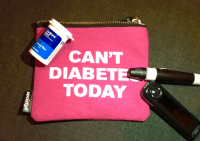
It makes sense that device companies use these sorts of events as an opportunity to spruik product, especially if it’s a new product. I am not naïve enough to ever forget that we’re dealing with the big business of medical tech, shareholders, ROI and a bottom line. But as I have said before, I WANT us to be part of their marketing machine, because the alternative is that we’re not included in the discussion. I’ve not drunk the Kool Aid – I’m fully aware they know that we will have some reach if we write about their product. I’m also fully aware that even though our bias should always be considered, the words remain our own.
I was super pleased that during the small part of the day dedicated to talking about the device, the presentation wasn’t simply about trying to blind us with all the fancy bells and whistles included in the meter. Instead, the focus was on accuracy. As I wrote here, accuracy will always be king to me, because I am dosing a potentially lethal drug based on the numbers this little device shows me. (Well, these days, I need it for when I calibrate my CGM which will then inform Loop to dose that potentially lethal drug.) Accuracy matters. Always and it should be the first thing we are told about when it comes to any diabetes device.
 We moved to the Adelaide Oval for dinner for a final presentation by CDE and fellow PWD, Cheryl Steele, who also spoke about accuracy and why it is critical (this went beyond just talking about the new meter). I walked away considering my lax attitude to CGM calibration…not that I’ve necessarily made any changes to that attitude yet.
It was an exhausting day, but a very satisfying one. There was a lot of chatter – both on- and offline and it felt that this was just the start of something. Ascensia has not run an event like this before and hopefully the lively discussions and engagement encourages them to see the merit in bringing together people with diabetes for frank and open dialogue about some not-so-easy topics. While this event was exclusively for adults with type 1 diabetes, I think people with type 2 diabetes, and other stakeholders such as parents of kids with diabetes, would benefit from coming together to share their particular experiences and thoughts in a similar event setting, and potentially some events which bring different groups together to hear others’ perspectives.
As ever, I felt that this event (and others like it) go a long way towards boosting opportunities between PWD and industry, and I am a firm believer that this is where we need to be positioned. Thanks to Ascensia for allowing that to happen; thanks to others from far and wide who joined in the conversation – we were listening. And mostly, thanks to all the advocates in the room for contributing so meaningfully.

Disclosures
I was involved in the planning for the Ascensia Diabetes Care Social Media Summit and attended and spoke at the events Grumps attended. I did not receive any payment from Ascensia for this involvement or for attending the Summit. They did provide lunch and dinner, and gave me a free Contour Next One blood glucose meter. And an almost endless supply of coffee. Ascensia has not asked me to write about any of the work I’ve done with them. But I will, because I like to share and I know there are people who are desperate to know what was going on while Grumps was here!
Grumps was here as a guest of Ascensia Diabetes Care, who brought him to Australia to be the keynote speaker at the Ascensia Australia Diabetes Social Media Summit and to speak at other events about his #TalkAboutComplications initiative.
My travel and accommodation to ADC was funded as part of my role at Diabetes Australia. I would like to thank the ADS and ADEA for providing me with a media pass to attend the Congress.
Last week, I spent a busy week at Australasian Diabetes Congress. I spent a lot of time with work colleagues, health professionals, the event organisers and researchers.
And I was fortunate because most of the time, I was around at least one of my peers. Between the #DAPeoplesVoice team, (Mel, Frank and David), other diabetes friends from home, (Ash, Kim, Gordon and Cheryl), and away (Grumps), there was always someone nearby who I could rely on to ‘get’ diabetes. (This is important always, but conferences have their own special challenges where diabetes mates are certainly appreciated to help keep some perspective!)
I have written countless times before about the power of peer support. I have also written that my peers have been the ones to have truly helped me through some of the most difficult diabetes situations I’ve faced – not necessarily with advice, but simply a knowing look, a nod of the head, or the words ‘me too’. Our peers help us make sense of what we are dealing with, provide us with endless support and help make us feel connected to others. And that’s important with a condition such as diabetes, because it is all too easy to feel that we are on our own.
Which is why I was so pleased to learn about ConnecT1ons, a new initiative from Diabetes Vic, which is looking to provide that support to another group within the diabetes world – parents of kids with diabetes.

It is undeniable that parents of children living with diabetes have their own brand of challenges. This was brought home to me again last week during the Diabetes and Schools Forum when parent of three children with type 1 diabetes, Shannon Macpherson, spoke about some of the difficulties she and her family have faced with her children in the school setting.
And again this morning, when I was speaking with a parent who is having a very tough time with her young, kindergarten-aged child. ‘Renza,’ she said to me, as she explained what was going on. ‘You have no idea. Having a child with diabetes is impossible because we cannot be with them when they probably need us the most.’ She’s right – I have no idea.
But other parents of children with diabetes would and do understand. And as they shared their empathy, they would also probably share some of the things they’ve done to help them through similar tricky situations.
Diabetes Victoria is looking to bring parents like this together for an event where they can meet other parents of children with diabetes. Plus, it’s a few days of respite from looking after their child with diabetes, while knowing their kid is safe (and having an absolute ball) at diabetes camp. What a brilliant idea all ‘round!
You can watch a video explaining the project here, and hear from Jade, the mum of a young boy with diabetes share some of her experiences – and how parents just like her will benefit from ConnecT1ions.
As is always the case, finding funds for initiatives like this is a struggle, so today, Diabetes Victoria launched a crown funding campaign and is seeking to raise $15,000 to run ConnecT1ons. If more is raised, they can run additional events. The crowd funding is only open for a week, so please do consider making a donation – and doing it now! Click here to be taken to the Pozible page.
Congratulations to Diabetes Victoria for acknowledging that parents of kids with diabetes are a specific group that need support amongst their own peers. Extra huge congrats to Kim Henshaw who has spearheaded this project as part of her role as Children and Families Coordinator.
Please do donate. I returned home last week after spending time with my peers feeling refreshed, energised and connected. Parents of kids with diabetes deserve to feel the same by spending time with each other.
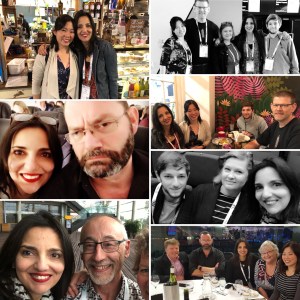
Not a functioning beta cell amongst us.
Disclosure
None! I was sent information about ConnecT1ons from the Communications Manager at Diabetes Victoria last week, but she did not ask me to write about it. I don’t work for Diabetes Victoria (I left there back in Jan 2016) and have had nothing to do with this new initiative. But you have to admit it’s a good one. Hence, this post.
Just over half way through the Australasian Diabetes Congress and after a massive few days, I’ve lost my voice, my way and, my ability to form coherent thoughts. Thank goodness for links and stuff.
Grumps Down Under
Before the Austalasian Diabetes Congress (ADC) even kicked off, our skies darkened, a final Winter cold-blast hit the east coast of Australia and The Grumpy Pumper arrived. Oh, and Melbourne lost our World’s Most Liveable City crown the day Grumps arrived in my hometown. I’m not necessarily saying these things are connected, but that’s a lot of coincidences…
Anyway, Grumps and I spent the next few days drinking Melbourne coffee and tackling the issue of language and diabetes, and Grumps spoke about his #TalkAboutComplications work. The ACBRD team has written about his visit last week here.

Coffee. Because: coffee.
Once Melbourne had enough of Grumps, we headed to Sydney to do more work, including visiting the offices of Life for a Child and catching up with some of the team there.

#OZDSMS
After arriving in Adelaide, it was straight to the conference centre for the first gathering of Aussie diabetes advocates and bloggers for Ascensia Diabetes Care’s Social Media Summit.
Grumps was the special guest and as well as speaking about diabetes complications, he and I led a discussion about decision making in diabetes technology.
You can see what all the chatter was about by checking out the #OzDSMS tag on Twitter, (there was a lot of discussion!), and I’ll be writing more about it in coming days.
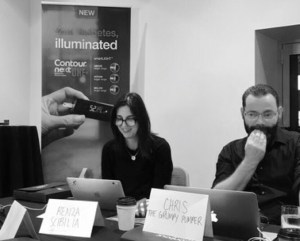
Hard at it!
DIYAPS at ADC
The next day, ADC kicked off with a symposium on the Brave New World of Diabetes Technology. Three early Aussie loopers – Cheryl Steele, David Burren and me – took to the stage and you can watch all our talks here:
New DIY Diabetes Technologies Position Statement at ADC
And if you make it all the way to the end (the symposium went for 2 hours all up), you’ll see Diabetes Australia CEO, Greg Johnson, launching Diabetes Australia’s new position statement about Do It Yourself Diabetes Technologies. I am so proud of this world first position statement, something that all diabetes stakeholders from all over the globe have been crying out for. (A reminder to anyone asking ‘Why don’t we have one of those?’: please don’t reinvent the rule. Adapt and use this for your jurisdiction and get it out there to start the conversation.
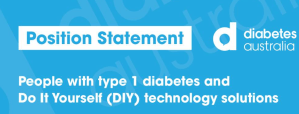
(Click link to go to position statement)
PWD on stage at ADC
Later in the day, the stage in Riverview 7, I was pleased to stand on a stage crowded with some wonderful diabetes advocates for an ADC first – a symposium on Co-design. More about this another time, but some familiar Aussie advocates shared their work which has really advanced the role of people with diabetes in the development and delivery of diabetes services, activities and resources. I was so pleased to be able to show the new Mytonomy ‘Changing the Conversation’ video as an excellent example of co-design.
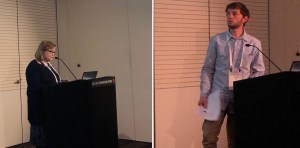
Melinda Seed and Frank Sita at the co-design symposium
Sexy new pump hits Australia
And rounding out day one was the official launch of the Tandem t:slim pump which is making its way to our shores next month. This is a sexy, sexy little pump and I know there are going to be a lot of people very excited about it! (The pump is being distributed by AMSL Diabetes in Australia, so keep an eye on their website for more details.)

PWD at ADC
Pleasingly, there has been a presence of people with diabetes at ADC. Probably this is most visible when reading social media updates from the #DAPeoplesVoices. David Burren, Melinda Seed and Frank Sita have been invited by Diabetes Australia to provide updates and commentary of the Congress. They are tweeting machines and have been covering sessions, live-tweeting throughout. But that’s not all! Ashley Ng facilitated a Twitter workshop, encouraging HCPs at the event to get on Twitter and share what they were learning. Kim Henshaw is here from Diabetes Victoria; Tanya Ilkew from Diabetes Australia is also here. Grumps is here. And I’ve been doing what I can in between presenting and meetings.
I crashed last night with my voice gone, and fell asleep wrapped in the memory of a brilliant few days of impactful and meaningful advocacy efforts. There’s so much more to do. But these sorts of events, and opportunities to spend time with other people with diabetes who are certainly on the same wavelength and have the same commitment to bringing in the voice of PWD to all discussions, certainly help to advance our cause.
And one more thing
It looks like it’s that time again, Australia…

Disclosures
I was involved in the planning for the Ascensia Diabetes Care Social Media Summit and attended and spoke at the events Grumps attended. I did not receive any payment from Ascensia for this involvement or for attending the Summit. They did provide lunch and dinner, and gave me a free Contour Next One blood glucose meter. And an almost endless supply of coffee. Ascensia has not asked me to write about any of the work I’ve done with them. But I will, because I like to share and I know there are people who are desperate to know what was going on while Grumps was here!
Grumps was here as a guest of Ascensia Diabetes Care, who brought him to Australia to be the keynote speaker at the Ascensia Australia Diabetes Social Media Summit and to speak at other events about his #TalkAboutComplications initiative.
There is never a better time to employ the WAIT (Why Am I Talking) philosophy than when speaking with someone newly diagnosed with diabetes. Even if there is lots I’d like to say, as I wrote in this oldie from the archives.
________________________________________
She called me because someone had told her to get in touch. ‘Speak with Renza. She gets it.’ Is what she was told. She we organised a time to meet and over coffee we talked. And she searched my face for reassurance as she told me how scared she was feeling.
When I meet someone who has recently been diagnosed with diabetes, I say very little. I listen. I ask questions and gently try to find out what is going on in their head. I don’t say much about my own diabetes, because I don’t want to imprint my experience in their mind. Everyone feels different at the time of diagnosis and working out exactly what they are feeling needs some time.
I listen and sit there quietly and try to reassure and be positive. I nod a lot, and let them talk and vent and, if they need to, cry. Usually people cry. And I let them know it is okay. I did all of this with the woman who called me. She did cry and she did vent. And then she cried some more. And I said hardly anything.
But this is what I wanted to say:
- It is okay to feel scared and uncertain. Or angry. Or completely and utterly ambivalent.
- Because, you see, there is no right way to feel right now – or ever – about living with diabetes. And equally, there is no wrong way to feel.
- You don’t have to work this all out this week. Or next week. Or next year. In fact, you never have to work it out.
- But do work out what you can manage today and do that. And whatever it is, it’s enough. It. Is. Enough. And well done you for doing it!
- Find your tribe. In fact, this is what I want you to know more than anything. Others who are also ‘doing diabetes’ will help you make sense of this new world. You have to be ready to do that, but do be open to the idea. I wish that someone had introduced me to others with diabetes when I was first diagnosed. It took me over three years to meet another PWD and I felt so alone in those three years.
- And when you do meet people, don’t think that anyone has this diabetes thing worked out completely. Even those who say they do…
- …because, there is always more to learn, which is daunting and exciting in equal measure.
- I promise you – whatever you are feeling, whatever you are thinking, someone has had that same feeling and same thought. You are not alone. (Reading diabetes blogs will prove that to you!)
- Diabetes may feel like it is about to take over your life and it probably will for a little bit. And there may be times that it does again. But it will not define you for the rest of your life or determine who you are. It can be as much or as little of your identity as you choose to let it.
- You will be okay. You will be okay. You will be okay. (And, yes, I am saying that for your benefit as much as my own!)
- There will not be a cure in the next five years. Or even ten. I am not saying that to be pessimistic, I just want you to understand that hope is really important in living with diabetes. But unrealistic expectations that won’t come true are not going to give you that hope; they will destroy it.
- Ask questions. All of them! You may not like the answer (i.e. see previous dot point), but ask anyway. You will be amazed at the things you learn.
- Your diabetes; your rules. This will become more and more apparent the longer you live with diabetes. You don’t need to explain, apologise or justify anything you do to manage your diabetes. Ever.
- Anyone who makes you feel crap about your diabetes – whether it be the fact you have diabetes, or how you are living with it – needs to fuck off. (And if you can’t tell them that, find someone in your tribe who can! I am happy to be that person. Truly! I have the mouth of a trucker and I’m not afraid to use it.)
- Do not watch Steel Magnolias. Ever.
- Right now, this probably seems like it is the worst thing that will ever happen to you. This may sound odd, but actually, I hope it is. Because I know you can get through it.
- You will laugh again. And smile and feel light. You will not think about diabetes for every minute of the rest of your life. It will be there, but it does not have to rule your very being. It certainly doesn’t rule mine. You will learn where to place it in your world, and that is where it will sit.
- You do not need to feel grateful that you have been diagnosed with diabetes and not something else. Because it does suck. It’s good to remember that and say it every now and then. Or shout it out. While drunk.
- Go buy a new handbag. Trust me! If you want, I can help you to justify it as needing a new bag to cart around all your diabetes crap, but just do it for yourself. And while you’re at it, a new pair of shoes. Just because!
- Call me. Anytime. If you want. Only if you want. And even if it just to hear me tell you that you will be okay.
But I didn’t say those things. I only said this: You will be okay. I know this to be true because you are strong and resilient and capable. I know this to be true because many others have walked this path and worked out how to make it okay for them. You will do that too. It will be okay for you.
And I hope that was enough. Or, at least, enough to start with.
I have a very scientific way of collecting info to share in these Internet Jumbles. I make weird notes on my phone that absolutely make sense when I note them down, and then make absolutely no sense when I revisit them to put together the latest edition. (Case in point: ‘DMK mine’ had me stumped for a few hours until I realised that was shorthand for the HypoRESOLVE piece on Diabetes Mine. The DMK is because the meeting was in Copenhagen. Of course it makes sense. Perfect sense.)
Half the time, even after trying to work it out, I still can’t understand my notes, so there is a shedload of stuff I wanted to share that is still a mystery trapped in my iPhone.
But! Here are the ones I was able to decipher. Buckle up…it’s a long one.
Ask patients? That’s novel
Results of a review of international literature examining patient involvement in the design of healthcare services showed that patient engagement can inform education (peer and HCP) and policies and improve delivery and governance.
I am always interested to read these sorts of articles, but must say, my response is often an eye roll and the words ‘No shit, Sherlock’ muttered under my breath.
Research and people with health conditions
What is the role of people with health conditions when it comes to research? This editorial from BMJ suggests that full partnership is the best way.
And this infographic from Public Health Research and Practice about how to involve consumers in health research is also useful.
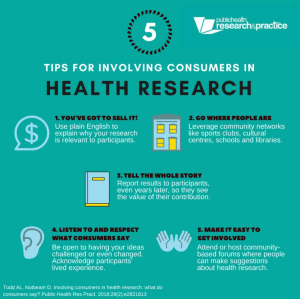
Thanks for listening
It’s so nice when people actually take home some tips and tricks from presentations I’ve been involved in. This tweet over the weekend from diabetes educator Belinda Moore (referring to a symposium at last year’s ADS ADEA meeting in Perth in which I was fortunate enough to be involved) was gratifying.

Peer support remains an absolute cornerstone of how I manage my diabetes as effectively as I possibly can. It is those others walking the same road who help me make sense of a health condition which takes delight in confusing the hell out of me!
The driver’s seat
This post from Melinda Seed underlines why she believes that the idea of diabetes being a ‘team sport’ is not especially accurate.
Complications and language
The awesome PLAID Journal (which you really should bookmark and read) published a piece just as ADA kicked off about why we need to change the way we speak about diabetes complications.
The piece was written by me and Chris Aldred (AKA The Grumpy Pumper), bringing together Grumps’ #TalkAboutComplications initiative and my constant banging on about language. (I first wrote about needing to reframe the way we talk about complications five years ago in this piece. Every word still holds true.)
You can reads the PLAID Journal piece here. And please share. This is a message that we need to get out.

Wellness is not the same as medicine
My huge crush on OB/GYN Dr Jen Gunter only increased after she published this piece in the NY Times last week.
I have written before about how damaging the ‘wellness industry’ can be in diabetes, including this piece on the language of wellness.
Diabetes Voice reboot
The IDF’s magazine has had a reboot and is not delivered in a digital format. Check it out here.
Well, that’s candid…
This photo of Cherise and me snapped at Diabetes Mine’s DData Exchange is hilarious in itself, but Amy Tenderich’s caption is gold!

(Click for source)
Right device, right person, right time
Dr Kath Barnard’s piece in Diabetes Medicine Matters reiterates her message from the 2017 ATTD meeting (I wrote about it here) about the importance of matching the right device at the right time for the right person.
What are the barriers to preconception care ?
This piece was just published in Diabetes Research and Clinical Practice looking at the reason women with diabetes may or may not attend pre-pregnancy care. (I was a co-author on this piece.)
‘If only there was a….online community for people with diabetes’
That comment came from a HCP at a diabetes conference a few years ago – just after someone (maybe me? I can’t remember…?) had literally just given a talk about the diabetes online community.
The DOC is not new – it’s been around for some time – and this great piece from Kerri Sparling gives a history of the DOC.
HypoRESOLVE on Diabetes mine
I was interviewed by Dan Fleshler from Diabetes Mine about HypoRESOLVE. You can read his piece here – it gives a great overview of the project.
On a break
I’m going to be taking a little Diabetogenic break for the next couple of weeks. The rest of the year is shaping up to be super busy, so I thought I’d use the next fortnight to get myself organised.
I’ll be sharing some old posts from the Diabetogenic archives and expect to be back just in time for the Australasian Diabetes Congress which kicks off in Adelaide on 22 August.
In the meantime, be well and be kind to yourself.





 Diabetogenic