
You are currently browsing the category archive for the ‘Family’ category.
I have written before that the thing I hate most about diabetes is when it becomes the problem of other people, especially my family. I feel enormous guilt that diabetes is part of their lives, even though they are not the ones who were given the diagnosis. They don’t have a choice and yet they are involved and invested in this as I am.
So it was with great interest – and a little trepidation – that I added two sessions to my WDC schedule that were being presented by the partners of women living with type 1 diabetes. I knew that I would find them difficult. And I did.

Riva and Boudewijn
Boudewijn (Bou) Bertsch is the husband of HuffPost writer Riva Greenberg. I’ve read Riva for years and have always been interested in her insights, and so thrilled that she writes about diabetes in such a practical way on a site with such reach.
The take home messages for me from both these talks was that as much as we may want to own our diabetes and keep it to myself, our partners share the load. They have a role to play – and they do help make diabetes easier.
There were little snippets from both men about how they get involved in their wives’ diabetes. At one point, Bou held up a small jar of glucotabs saying ‘This is a way for ME to have some control and feel meaningful to Riva.‘ He carried them around in his pocket at all times. It reminded me of Aaron filling jelly bean jars around the house after we brought the newborn kidlet home from the hospital. The breastfeeding hypos were so debilitating that we had left little jars within reach of anywhere I may sit down to feed.

Asim and Sana
Asim Rasheed, husband of Sana Ajmal (former Vice-President of the YLD Program), shared similar sentiments. He also spoke about how in Pakistan women with diabetes are considered not worth marrying, which is heartbreaking.
But perhaps the most illuminating moment of the sessions given by partners was when Bou said ‘I don’t always need to make it better, or come up with another idea. I just need to be present.’ Those words rang so true. I understand the need our loved ones have to ‘fix’ our diabetes. But there’s no fixing this condition. There are measures of coping and living. And supporting.
Aaron has a way of showing that support and he probably doesn’t even realise it. He can’t fix my diabetes; he can’t talk down the high numbers or force up the low ones. But he has a way of acknowledging the overall crapiness of the situation. Two words – ‘Diabetes sucks’ – is all it takes to feel that I have someone championing me; someone riding along side. And that’s all I need.

Renza and Aaron
I am sure that for him – just as for Bou and Asim – he would think it nothing. But heading out to replenish hypo supplies, leaving glasses of juice on the bedside table in case I wake up low or helping me with particularly nasty overnight lows all relieve me from some of my never-ending responsibility.
I can hide it as much as I would like; I can try to own it alone and not share it; I can claim that I am the fiercely independent woman I truly am. But all those things don’t matter. We do diabetes. We don’t have a choice.
On Sunday evening, I caught the last of the ABC miniseries ‘The Beautiful Lie’ – a modern day adaption of one of my favourite books, Tolstoy’s Anna Karenina. I didn’t love the series; in fact, I found it frustrating, and I distracted myself by reading excerpts from the book while watching the show.
But there, in the final episode, was a line that had me thinking. It came from Kitty, one of the characters who had lived with an eating disorder for much of her life. She had just given birth and was watching her beautiful baby boy and said to her partner: ‘You know, I spent so many years hating my body. All I could see was what it looked like and not what it could do.’
I wrote down her words quickly because they resonated so much. I too have spent a long time hating my body. As well as never being satisfied with how it looks, I focus on what it can’t do. I focus on the autoimmune mess that I’ve come to live with, and fertility issues and anything else that is wrong with it.
And in all that – in all the complaints and revulsion, I forget to acknowledge what it can do; what it has done.
When I complain about my faulty, broken body, or grumble about how I don’t like the way I look in a certain outfit, I am forgetting the good things it can do and that’s kind of disrespectful. Because it has done lots.
Today, our beautiful baby girl is eleven. I need to stop blinking, because each time I do, I look up and she is another year older and another ten centimetres taller. She is such a great kid and we are so utterly proud of her.
And my body conceived her and grew her and nourished her. And once she was delivered, it fed her, and it managed, through the lack of sleep and complete and utter new-baby fog, to look after her and keep her safe.
My body rolled around on the rug with her and together we rolled down grassy hills; it danced and we ran with scarves in our hippy creative dance classes at Mangala; it sat for hours on the floor of libraries and bookstores as we read; it chased her around playgrounds, pushed her on swings, caught her on slides; it climbed play equipment and trees; it’s answered a million ‘but why?’ questions; it walked for miles and miles and miles as we explored cities around the world.
And it has cuddled and hugged and kissed her beautiful little body, enveloping her in love.
Even with all the things that I complain about and the things that I hate – even with a health condition that sometimes needs immediate attention – my body has still done all those things. It doesn’t matter how it looks and it doesn’t matter about the things that it can’t do. I may not be able to make my own insulin, but I can act as a pretend pancreas pretty well and do a hell of a lot of other things too. It may not have given me as many children as I would have liked; but it did give me one wonderful little girl. And that is enough. So very, very much enough.

Birth day. So loved.
Being fiercely independent about my health is something that I cherish. I have a strong need to own my own health and well-being and direct the course taken to manage my diabetes as best as I possibly can. I do this with full disclosure that the mess ups are mine as much as the successes. The buck starts and stops with me.
But sometimes – always, actually – it helps to know that there is support at hand when needed.
That help might be in the form of someone to accompany me to appointments (thanks dad, who has chauffeured me to almost every single ophthalmologist appointment I have been to in the last 17 years), someone to meet me afterwards over coffee so I can debrief and share what happened, or someone to actually sit alongside me whilst in the consulting room, taking note of what is being said. Having a second set of ears is always a great idea, especially if what is being covered off is challenging in any way.
I usually attend appointments with my endo alone, although sometimes, my mum may be with me to keep my company. We use it as an excuse to then catch up for coffee and cake. Other times, when there has been something ‘big’ to discuss, Aaron comes along and listens intently, rarely commenting unless he can see that I am uncertain about something. And then we go for coffee and cake.
I pretty much always see the GP alone, but truly, my GP appointments are always super quick and about something so specific – and usually simple – that I don’t need to take someone along for the ride.
Most of the time, I am happy to be on my own. I relish the time in the waiting room – all alone, nice and quiet, and usually a trashy mag or two to catch up on.
The day I was diagnosed with diabetes, I was squeezed into an end of day appointment with an endocrinologist. I asked Aaron and my mum to come along to help me understand what was happening. The next day, as I saw the dietitian and diabetes educator and endo again, they were there, and together we took in all the new information, letting it swirl around us and settle uncomfortably. A new health reality that involved needles and numbers and thinking about food in a different way. This needed a team approach.
It was incredibly useful to be able to ask them questions about things I had only half heard or half understood as my mind tried to take in all I was being told. I found myself turning to mum for suggestions around food, and to Aaron about how I was feeling and what I was worried about.
As I got used to ‘having diabetes’ I asked fewer questions and learnt to focus on what I needed to know. These became the things that we would discuss in appointments and afterwards, blocking out the ‘white noise’ of the things we didn’t need to know.
I have people around me who know a great deal about diabetes; people I can call on when I need to for advice and company and a friendly face in the waiting room. Someone on my side; someone by my side. My own personal wingmen.
A friend I’d not seen for many years contacted me the other day. Apart from occasionally seeing her name pop up on my Facebook feed, we have had no contact for over ten years.
Out of the blue, she got in touch because she had recently had a miscarriage and was feeling pretty down. She wanted to speak with someone who had been through the experience and she had seen some of my posts about how I felt immediately after I miscarried a couple of years ago, and some follow up posts since.
As we spoke – well, I mostly listened, because I knew that was what she needed – it struck me that it is always the subjects that are taboo that are the ones we need the most support with.
In diabetes, it is still complications that seem to be a topic we are uncomfortable speaking about. We speak about them in hushed tones, as if by not giving them a name we don’t give them weight.
We are scared to ask questions, because we are afraid we will say the wrong thing. We don’t want to upset people and we don’t want to look like we are prying.
But perhaps that is what we need to do a little. We need to pry.
And we can do that in sensitive, caring ways that can and do help.
I learnt how valuable having someone gently pry could be back in 2003 when I had my first miscarriage. As I was enveloped in grief and trying to work out what to do and get through the days, a friend picked me up and took me out for a coffee. She had her new baby boy with her, which was just what I needed. A gorgeous little smiling poppet, who was happy to sit on my lap and be cuddled and have his chubby cheeks kissed.
‘Renz,’ she said. ‘Tell me what happened.’
It was the first time that someone had actually asked me that. Most people asked if I was okay, which clearly I wasn’t, but that wasn’t the answer they wanted, so I would smile through my tears and nod.
But here was someone actually asking me to tell them exactly what had happened. And I did. She listened, reached out and held my hand when the tears gently started and hugged me at the end. She didn’t offer any advice, didn’t tell me it was ‘for a reason’, (seriously – the worst response ever), or tell me that everything would be okay.
She just listened. And then she said, ‘I am really sorry’. It was just what I needed, and I nodded through that too, thanking her for giving me permission to tell my story, even if it was difficult for her to hear.
I have employed this tactic over the years – not only when I hear about pregnancy loss, but other things too. It is really hard to stay silent sometimes, because we want to reassure people, we want them to know that they will be okay and we want to take away their pain.
However, I have found that that is not what people want. Often, they are just looking for an outlet; a way to tell their story and be heard.
It doesn’t even need to be something really big for this technique to work. When I tell people that I have had a hypo, I don’t want them to look for solutions. I don’t want then to workshop what happened leading up to the low or to talk to me about what I had (or didn’t have) for lunch. I just want them to listen.
I really don’t expect them to fix things. I know for me, I just need someone to legitimise how I am feeling. And acknowledge that it is tough.
My husband has the best response when I tell him I’ve had a crappy diabetes day. ‘Diabetes sucks,’ he says to me, leaving it at that. And he’s right. It absolutely does.
This time last week, I was sitting on a plane, flying back from Friends for Life. As we’d booked this trip at the last possible moment, I was not travelling the long LA – Melbourne leg with Aaron and the kidlet. We hadn’t managed to all get on the same flight and my trip (booked though work) and theirs didn’t coincide.
So I had a lot of thinking time and kept trying to put into words what the Friends for Life (FFL) experience was for me. I found myself tearing up quite a bit, and kept touching the green bracelet that was wound around my right wrist. It’s still there, and I find myself glancing at it when I am sitting in meetings, or as my fingers fly across the keyboard typing these words.
I had an idea of what I was going to experience at FFL. I have spent enough time with FFL alumni and read a lot about it to have formed an impression about what the week would hold.
I knew what to expect.
Excect I absolutely didn’t. I had no idea.
I expected it to be all touchy-feely. I expected lots of hugs. I expected a quiet understanding – of all and from all who were there. I expected to feel included and part of something and welcomed.
And those expectations were all met. Ten fold.
But what I didn’t expect was the sheer, overwhelming emotion of the conference.
And I didn’t expect the science.
Make no mistake. Friends for Life is a diabetes conference in the truest sense of the word. It is not a support group meeting – of course there is support, but it is much more than that – it is a scientific meeting with the focus very clearly on providing up-to-date, evidence-based, important information to people living with diabetes. It’s not dumbed-down – absolutely not! The information presented at FFL would not be out of place at the ADA scientific meeting I’d attended the month prior, or ADS-ADEA conference I am attending next month.
I didn’t expect an exhibition hall that was bigger than what I know I’ll see at the annual ADS-ADEA conference.
I didn’t expect that there would be announcements like the one Ed Damiano made about his work on the (brilliantly named, iLET) bionic pancreas. And when it was made, I didn’t expect the outpouring of emotion, of gratitude, of understanding, of hope.
And running alongside it – as part of it – are the sessions where you sit, and breathe and cry and nod and share your story. Or say nothing and just fill up.
This is not a cult-like gathering of the pancreatically-challenged and our support people. There is no sitting around feeling sorry for ourselves. Equally, it’s not a pep rally where we marched to the beat of the same drum, patting ourselves in the back. Every person at that conference has their own story and while there certainly are similarities, there are also differences.
Friends for Life challenged me. It made me feel uncomfortable at times. The discussions were not all easy and self-affirming. There were topics that I don’t regularly talk about, instead hiding them away in a chamber of my mind that I manage to keep locked away most of the time. I sat quietly in talks about how diabetes affects those around me. I struggled to share my story at times. But I did, often with hesitation, because talking about how diabetes impacts on Aaron and our beautiful girl hurts me in ways that make me feel like I am falling to pieces inside.
I didn’t walk out of all of those challenging sessions feeling great. But I felt validated and I felt less alone. And I understood better that it was okay to speak about those confronting issues, even if what I am feeling isn’t wonderful. I took away from those sessions the ideas and strategies other use and I feel better equipped to manage some of the more difficult aspects of living with diabetes in the family.
I attended FFL as a guest of Children with Diabetes (CWD). For years, I have been begging CWD President, Jeff Hitchcock to bring this event to Australia and while I did that with the idea that it would be great for people affected by diabetes to have the experience, I had no idea just what that experience would mean. I still am not fully cognisant of what the experience has given me.
My expectations weren’t met at Friends for Life. They were exceeded. And I hope that we can find a way to bring it to Australia so that as many people as possible can become part of the FFL family.
A huge thank you to Jeff Hitchcock and the CWD Board for covering my costs to attend Friends for Life 2015.
Work today involved celebrating 45 Victorians who have lived with diabetes for 50 or more years. There are no words to say how humbled and inspired I am by this group.
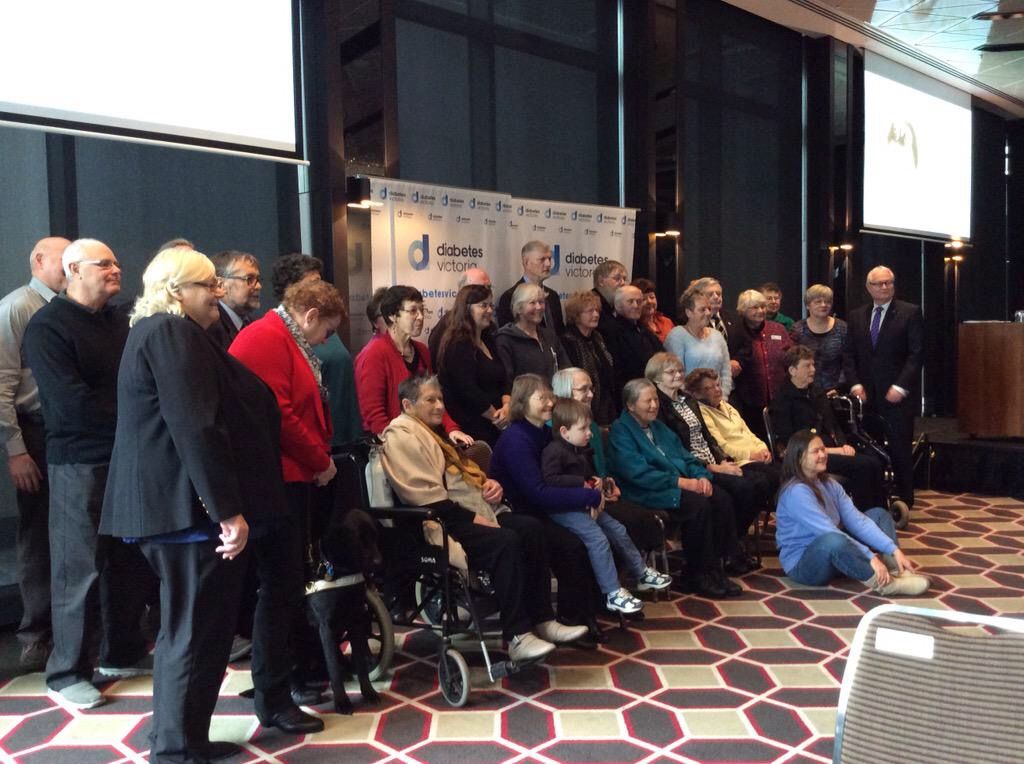
Congratulations to this year’s Kellion Victory Medal recipients.
The keynote at this year’s Awards was presented by one of my favourite diabetes people, Cheryl Steele who I (and many others) most fondly refer to as ‘Aunty Cheryl’.
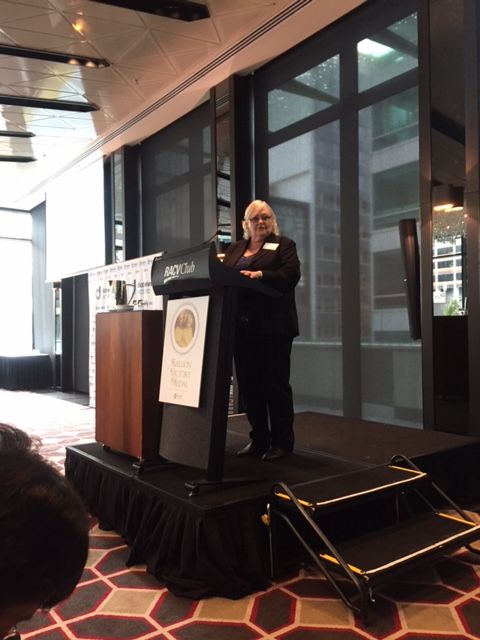
Cheryl giving her wonderful keynote address.
The Kellion awards celebrate not only the person living with diabetes, but also their support network – something Cheryl pointed to in her keynote address.
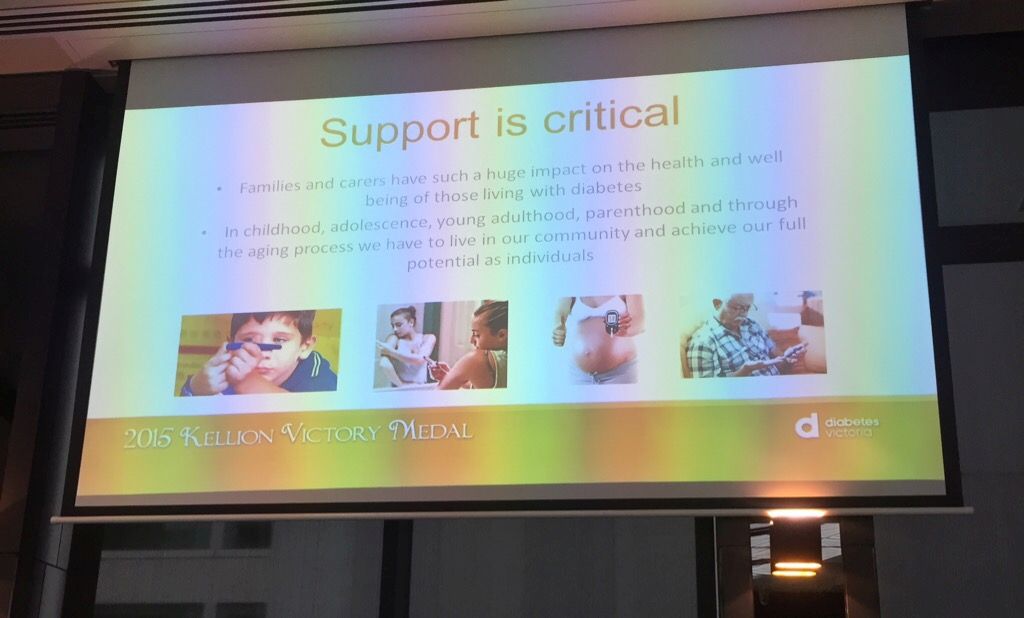
I have attended about 15 of these ceremonies. They never get old or stale. Today was an absolute career highlight for me; emceeing the awards was an honour and privilege.
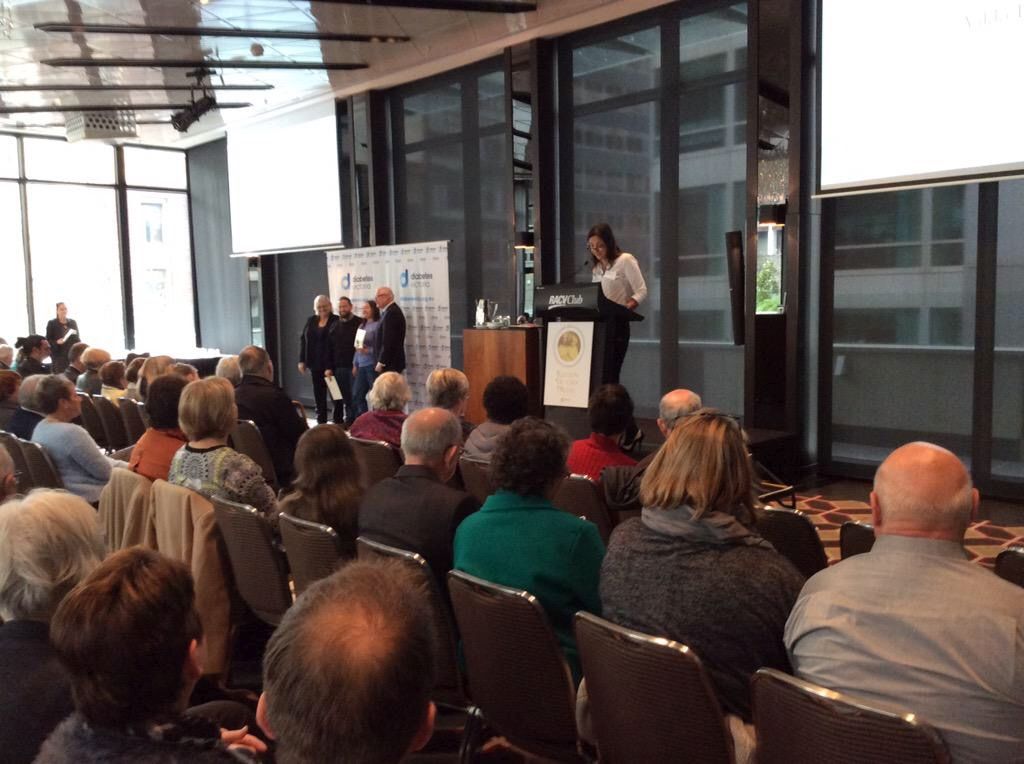
The stories I read out today fill me up with hope and I am inspired to keep going.
There were many quote-worthy moments from today’s ceremony, but my favourite came from 50 year recipient, Vikki Donovan who gave the following advice:
‘Don’t let diabetes impede on who you are and what you can be. Life is for living, diabetes is for managing.’
I’m a long way off getting my Kellion medal. But I will get there one day.
*It’s Thursday in Australia, but Wednesday where we are.

We got here. Thirty-two hours, four plane legs (thanks to an unexpected stop in Tampa due to thunderstorms closing Orlando airport), a kid who vomited her way through pretty much all thirty-two hours of the four plane legs, and hour and hours of low blood sugar somewhere over the ocean.
And now on my wrist is a bright green band. I’ve reconnected with friends I’ve known for years here and made new ones. And there are strangers by the pool with matching green bands and matching pumps hanging from their bathers.
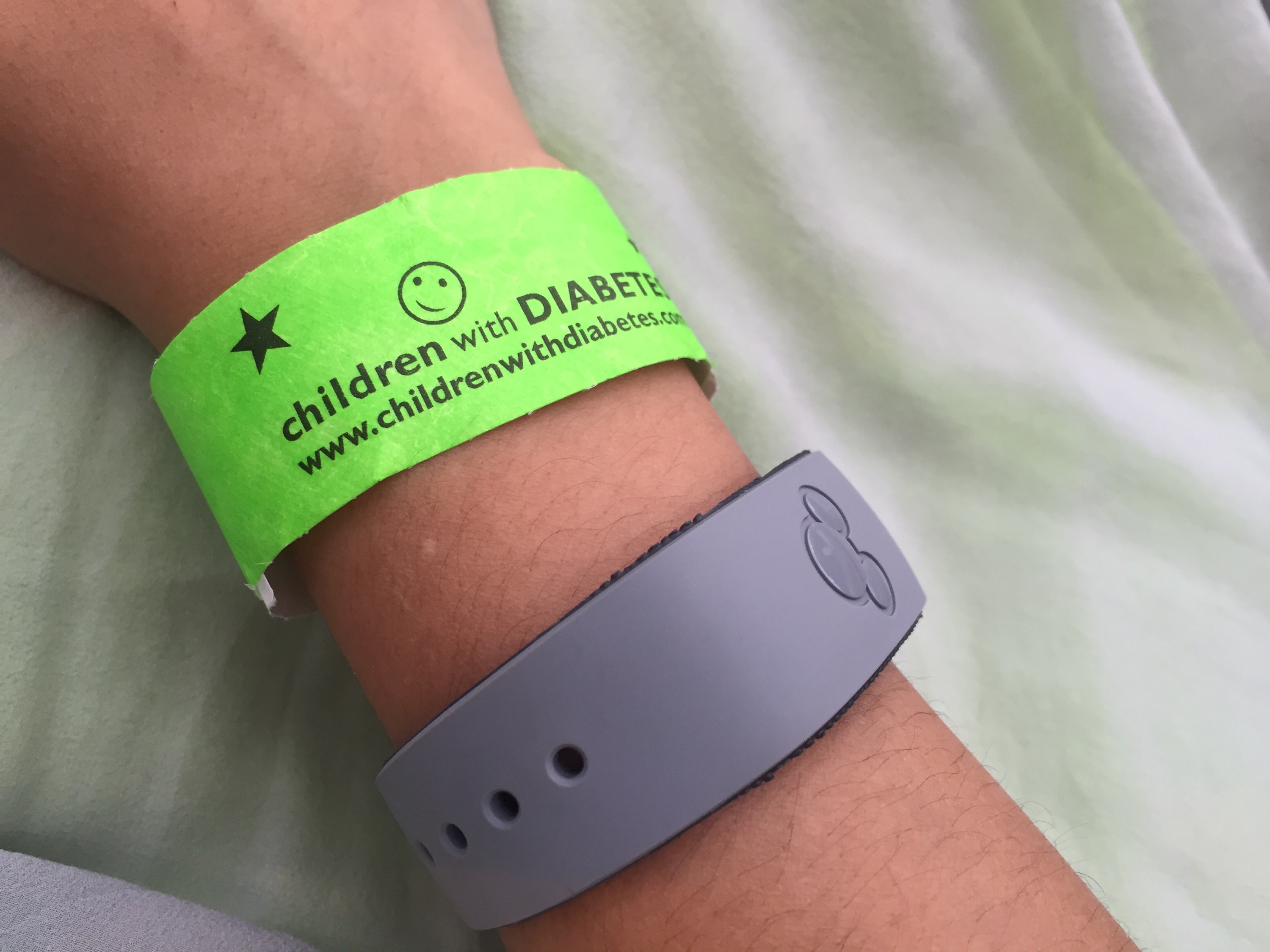
My family are getting to know the Friends for Life family, being welcomed as warmly as I was when I first met everyone.
‘They look like diabetes people,’ said Aaron as we were walking around the lake the other evening.
‘How do you know?’ I asked him, wondering if he had developed a diabetes-detecting superpower.
‘She has a pump attached to her pocket,’ he said, nonchalantly.
And she was. I hadn’t even noticed.
It’s going to be a big, big week!
Follow ow along at home:
The Diabetes Hands Foundation MasterLab Summit – “A More Effective Summit’ is using #MasterLab and Friends for Life is at #CWDFFL15
One afternoon whilst in Boston, I left the confines of the Convention Centre so I could attend a DOC event. It was hosted by J&J and the event started with a two hour walking tour of Boston. This was a brilliant idea on so many levels, not least because it meant that I would actually get to see some of beautiful Boston and hear about its rich history.
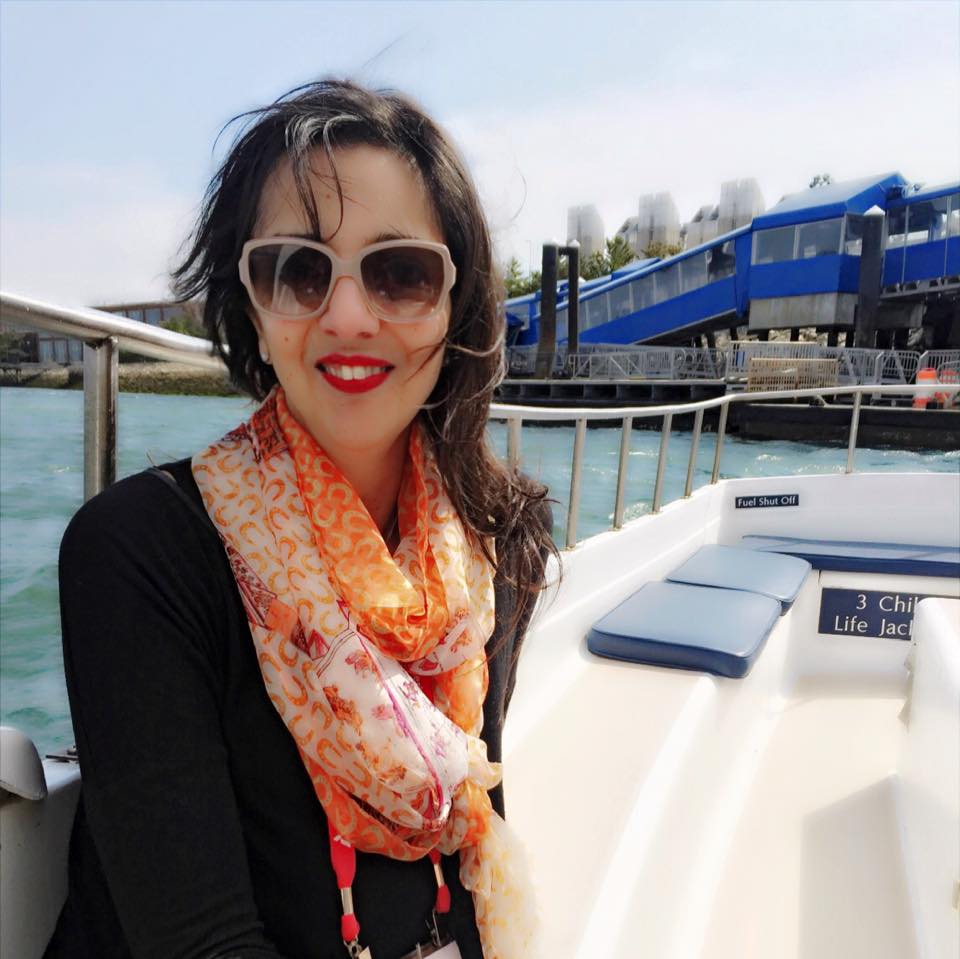
Water taxi to work.
Boston is really a stunning city. Between the glimmering harbour, stunning architecture and cobble-lined streets, it’s a very pretty city to walk around. (Because, believe me, you don’t want to drive around it. The traffic is bloody horrendous!)
Our walking tour followed part of the Freedom Trail (read about that here). We made four of the sixteen stops on the walk. (Which only means that I now need to return to Boston at some point and do the whole trail!)

Some of the sights on our walking tour of Boston.
So, what do you really hate about your diabetes? was one of the questions. Not necessarily an easy question, but one that I jumped in to answer first. Because actually, for me, it has an easy answer. As much as I write about the crappy hypos, and difficult days with BGL swings resembling some sort of Himalayan mountain range, and the emotional side of diabetes, the thing I hate most about diabetes is never really far from the front of my mind.
I hate that it’s not just MY diabetes. I wish it were. But it’s not. I hate that it is also my family’s and friends’ diabetes. I hate that they know about diabetes and that they have to sometimes be a part of it – taking an active role in helping me. They don’t get a choice. And while they would never say this – and they probably don’t even feel it – I feel like I am a burden. I hate that my diabetes is also my husband’s and daughter’s and mum’s and dad’s and sister’s and in-laws’ and friends’.
I stopped speaking. Some of the others in our group were nodding. I can talk about diabetes a lot without getting too emotional. I can be pragmatic and direct. These are the facts – this is what it’s like. But when I talk about my family, I do get emotional.
I felt my eyes starting to sting and was glad that I had a pair of glasses hiding my tears. Not that it would have mattered had I openly cried. As I said, I was amongst friends and the only response would have been a huge hug. Possibly from this bloke:
The wonderful Scott Johnson.
Discussions about diabetes can be tough. But when you have kind, generous and understanding people around when having these discussions, it makes things just a little easier.
Thanks to the team at J&J who put on the walking tour and drinks afterwards for members of the DOC.
I am almost over my jet lag. I know: I’ve been back for two weeks now and I am still dealing with the effects of a messed up body clock. I expect that by next weekend, it will all be good and I’ll be fine again.
Which is terrific. Because next Sunday, I’ll be getting on another long haul flight and going back to the U.S. so I can go to Friends for Life (FFL).
I can’t tell you how excited I am about this. (The going to FFL part; not the long haul flight/more jet lag/perpetually messed up body clock part.)
I‘m more than thrilled to be given the opportunity to attend FFL. I have spoken to so many people who have gone and I get the same words from everyone: ‘It’s life-changing’, they all say. I have met Jeff Hitchcock from Children with Diabetes (who runs FFL) a number of times, and each time, I inevitably say ‘Jeff – how do we get this to Australia?’ Part of the reason I’m going next week is to see how indeed we could make that happen!
Because here in the wonderful land of Oz, we don’t have anything like FFL. Of course, we have camps for kids with diabetes and, in some states, family camps. In fact, just this weekend (and next weekend too), Diabetes Victoria will be hosting our annual family camps for kids with diabetes and one of their parents.
The difference with FFL is that is for the whole family – everyone! And it’s not just for kids with diabetes. Panreatically-challenged adults can go and take their family along too (including my little clan, which is making me explode with excitement!). This means that at FFL, everyone is considered – siblings, parents, partners, kids of parents with diabetes, even grandparents!
This completely subscribes to the It takes a Village idea. And the longer I live with diabetes, the more people I speak with who are affected by diabetes, the more I realise this is a truism like no other.
I am so happy that my family is coming along too. When it was decided that I should attend this year’s FFL, I knew there was no way that I could go without them. I was crazy if I thought the kidlet (and Aaron!) would ever forgive me for going to Disney World alone – even if it was for work.
So, I’m looking forward to joining the Friends for Life village next week, and adding my little tribe to it. It will even be worth the jet lag that will, undoubtedly ensue!





 Diabetogenic