
You are currently browsing the category archive for the ‘DOC’ category.
I’m back at work today (pretty sure you can feel my delight in just those five little words). I know I am back at work because I am wearing a pencil skirt, tights and black high-heeled pumps instead of jeans, boots, a scarf, a hat, gloves and a puffer jacket with some sort of fur lining. Today I look like I am ready for work rather than ready for a day of wandering around New York.
But all is not lost. It’s been six weeks and I have a wonderful holiday of nothing but great memories and a photo album of nothing but gorgeous photos. So, onwards and upwards and all that.
Yesterday, as I sped around the supermarket, the onslaught of the next commercial opportunity hit me fair and square in the face. No, I’m not talking about Easter (I could act all outraged that there are Hot Cross Buns in Woolies, but we bought some and have been eating them, so that would be kind of hypocritical). I am talking about the festival of love – Valentine’s Day.
Valentine’s Day can go one of three ways for people. It can be a day of overt love declarations involving flowers, cards, poems, sky writing, gorilla-grams, stripper-grams (don’t judge), candle light, champagne, walks on the beach; it can be a day of sadness and misery and feeling left out; or it can be a day of complete oblivion where one is confused why there are so many people carrying bunches of balloons with ‘I wuv you, Shnookums’ written on them in glitter.
This year, I say screw that. This year, I say how about you do something that is meaningful that will not only help others, but also make you feel great. This year, it doesn’t matter if you have a Valentine or not. Everyone can play.
I am, of course, speaking of the Spare a Rose Save a Child campaign.

Now, if you have diabetes and/or any links to the diabetes word, you have probably seen and heard about this campaign before. I’ve even written about it here. The general gist is that instead of sending a dozen roses to your Valentine, send eleven instead and with the money that would have bought the extra one (about $6 in Aussie money) make a donation to Life for a Child. Those five bucks will provide insulin to a kid in a developing country for a whole month. Or, give your Valentine ten roses and donate $12.
All good, right?
But I have a little challenge for you.
This is a brilliant campaign because it is so simple. It’s easy to explain and it’s really easy to get involved. So my challenge is this. Let’s get this moving way out of the diabetes world. Let’s get this into the hands and hearts of our friends and family who may not really consider this as an idea for Valentine’s Day. Let’s tell our workplace HR teams and see if they can encourage it as a work-place wide giving program (there’s even a tool kit to get you started!). Pop in to visit your neighbours and ask them to get involved. Next time you are going for a walk in your local shopping centre, drop in to some of the small businesses and ask them to get involved. Ask your kids if they would like to donate some of their pocket money.
Roses and diamonds and jewellery and books and CDs and vouchers for massages and guitars and DVDs of favourite movies are all lovely and fun for Valentine’s Day and I am not suggesting you complete give up on the idea of sharing gifts. But how about sharing the love a little this year? I know that I certainly will be making a donation and have already strongly suggested to my Valentine that he do the same. (And check out this and this cute card to attach to your gift, telling your Valentine how you’ve shared the love this year.)
So, how about making sure a child has life-saving insulin available to them by donating just a few dollars in your loved one’s – or your – name. Because THAT is a gift of love and I honestly can’t think of anything I would like more this Valentine’s Day.
This week, I wrote a personal piece about an extended bout of diabetes burnout. (Whoa – that’s a lot of words with ‘…out’ in them….)
I have been overwhelmed by love and support from the diabetes online community, and people outside the community as well. Seriously, completely and breathtakingly overwhelmed – and wish I could reach out to every single one of you who has reached out to me to thank you and give you a Nutella cupcake.
I wrote about this for one simple reason – it is my real life with diabetes, and that is what this blog is meant to be all about. Sugar-coating (ha ha – whatever) life with diabetes does no one any good and there is no point pretending it is all fun and games.
Talking about the times things are going well is really easy. Being humorous and looking at the bright side is easy too – and as a person who really does usually see her (champagne) glass/coffee cup as being half full, it is easy for me to seem positive about things all the time.
But the problem with that is that we don’t talk enough about the tough things. And that leads to feelings of shame, which, in turn contributes to stigma.
One of the reason I am such a huge supporter of the Australian Centre for Behavioural Research in Diabetes (ACBRD) is because, apart from being a bunch of fabulous, smart, funny and lovely people, their work means we are talking about the emotional wellbeing side of diabetes. Thanks to the immense body of work they are doing, diabetes is being seen as far more than a numbers game. The quality of life implications of living with this chronic condition are being considered and we are getting a better understanding of distress, anxiety and depression that is related to diabetes. Even more importantly, we are talking about it. And even more importantly, there are strategies being developed to address these things.
I’ve been writing about mental health and diabetes – and wellbeing and diabetes – for some time now because we need to be able to discuss it freely, free from judgement, devoid of stigma.
It’s the same reason that I have written so openly about my miscarriages. I don’t do it because I want people to feel sorry for me or pity me. I do it because it is part of my story. And I do it so that others can see that it is a perfectly normal thing to happen and that there is no shame in it. After I had my second miscarriage, my mothers’ group met. We were sitting around in someone’s living room with our young kids toddling around, playing quietly. It had been a while since we’d caught up and we were going around saying what we’d been up to.
‘Oh, things are their usual crazy self,’ I said. ‘But I had a miscarriage last month, so have been dealing with that too.’ It was the first time I had told anyone, apart from my immediate family and very close friends.
One of the other mums looked up sharply. ‘What? Why didn’t you say something? Why didn’t you let us know? I had a miscarriage three weeks ago. I don’t know anyone else who’s had one. I really need to talk about it, but didn’t know who to turn to. I really wish I had known.’ And she burst into tears, coming over to give me a hug. We sat there and discussed our experiences and how we were feeling and how we were dealing with things. We both felt guilt and shame. We both felt we had somehow failed ourselves and our partners and our families. We both felt the same way – yet were telling each other that we were wrong to feel that way.
It was at that point, I decided that I would no longer hide my story. Because hiding it – when I am usually such an open person – suggests it is something to be ashamed about. Because that’s what happens when issues go underground, we feel shame. I don’t want any woman to feel ashamed because she has had trouble carrying a baby. I don’t want any person to feel ashamed because they are feeling overwhelmed or depressed or in distress because of their diabetes.
There is no ‘fault’. And there should be no guilt. So when we open up and talk about the not-so-good things, we see and accept that this is part of life. It normalises things. It allows for open and easier discussion. And it helps us connect with others who are sharing the same experiences.
Because I can promise you, my story of burnout is not unique. Absolutely not.
I’ve decided that my two favourite words in the world are not ‘coffee, please’ or ‘shoe sale’. No. They are ‘me too’.
Apparently, it’s snowing in New York! So the Brian Setzer Orchestra, live at the Rockefeller Centre with ‘Winter Wonderland‘ seems more than a little appropriate today!

There are some very clever people in the diabetes world and today I want to write about the incredibly astute and hip crew from mySugr who look for innovative and fun ways to help ‘tame the monster’ that is diabetes.
I met Fredrik Debong from mySugr at the first EASD Blogger Summit where I heard about his diabetes-focused start-up and saw first-hand some of the things they were developing. Fredrik kept saying that we need to bring sexy back to diabetes – he and his team do it incredibly well! (Seriously – have a look at them all!)
Since then, I’ve been fortunate enough to meet others from the team – including Marlis Schosser, (who will forever be known as the saviour in the Pumpless in Vienna story I keep sharing in conference talks), and Ilka Gdanietz who has been at all three Blogger Summits. (Ilka is wonderful for a number of reasons, one of which is she shares my love of Nutella!) This year, Ilka gave us a sneak preview of some of the exciting things happening at mySugr headquarters. mySugr launched in the US last year and the team there is headed up by Kyle Rose and Scott Johnson.
The mySugr Companion app has been around for a few years now and I would really encourage you to have a look at it. As far as a logbook app goes, it is pretty damn perfect, and the version for kids is adorable! I guess that’s what happens when you have real people with diabetes creating tech for real people with diabetes. It just works!
But wait! There’s more.
Just this week, mySugr has launched their new initiative: mySugr Academy. The Academy will offer online training programs for people with diabetes and the curriculum has been developed by healthcare professionals and people with diabetes. The first course to be offered has been designed specifically for people with type 2 diabetes. Have a look at this teaser clip to give you an idea of what to expect.
Coming courses will be for people with type 1 diabetes.
mySugr is all about diabetes education and information, but it does it in an incredibly fun, interesting, accessible and cheeky way. It is groups like this – with a first-hand understanding of real life with diabetes – that make products that I want to use. Great, great stuff!

Monster-taming at mySugr HQ in Vienna.
My Facebook and Twitter feeds are full of diabetes awareness campaigns and it is only going to get busier in the next few days. World Diabetes Day is a global event, and around the world there is much going on to help get people talking and thinking about diabetes.
My favourite campaigns are those that strive to shoot down diabetes myths and one that is getting some well-deserved traction this week is Walk With D.
The aim of Walk with D is to help people without diabetes understand what life with diabetes is all about. But more than that, it hopes to address the misconceptions within the diabetes community too.
Diabetes myths are rife. Every day, I hear things that are simply not right about what diabetes is all about. It frustrates me; it angers me; it infuriates me – never more so than when it is coming from within our own community.
I am filled with despair when I see people with type 1 diabetes perpetuating myths about type 2 diabetes with incredibly destructive ‘type 2 bashing’. I don’t know how many times I’ve said the words ‘No one asks to get ANY kind of diabetes’, but believe me when I say if I had a dollar every time I’d uttered that sentence, I’d be wearing a new pair of Manolos almost every week!
‘Even within the diabetes community, there are levels of misunderstanding, misrepresentation, and mistaken messaging, often creating a divide where there should be a bridge.’ – Walk With D website
Help stop the stigma!
As with any successful social media campaign, it’s easy to get involved with the Walk With D campaign. Share your story and use the #WalkWithD hashtag. Make it personal and make it real. Visit the Tagboard on the Walk With D website to see what others are saying about their real life with diabetes. And share. Share. Share.
And if you need more of an incentive to get on board, Lifescan Inc will donate 100 BGL strips to Life for a Child every time the #WalkWithD hashtag is used during November. Get tagging, good people!
Everyone’s diabetes story is going to be different – the diversity of our community is actually one of its strengths! But we can surely unite in our aim to have diabetes spoken about respectfully and with courtesy. Surely we can bond over the fact that diabetes just plain sucks. Surely we can walk together with diabetes, united, with our heads held high and our arms linked.
This Friday is World Diabetes Day which is a chance for diabetes to get some much-needed mainstream attention and awareness.
There is an absolute plethora of activity this week in the lead up to the big day and, as usual, there is much online activity. Social media has the potential to reach a lot of people quickly, easily and cheaply. I’ve been involved in several campaigns in recent years and am always keen to see what clever ideas people come up with to raise awareness of diabetes around the world.
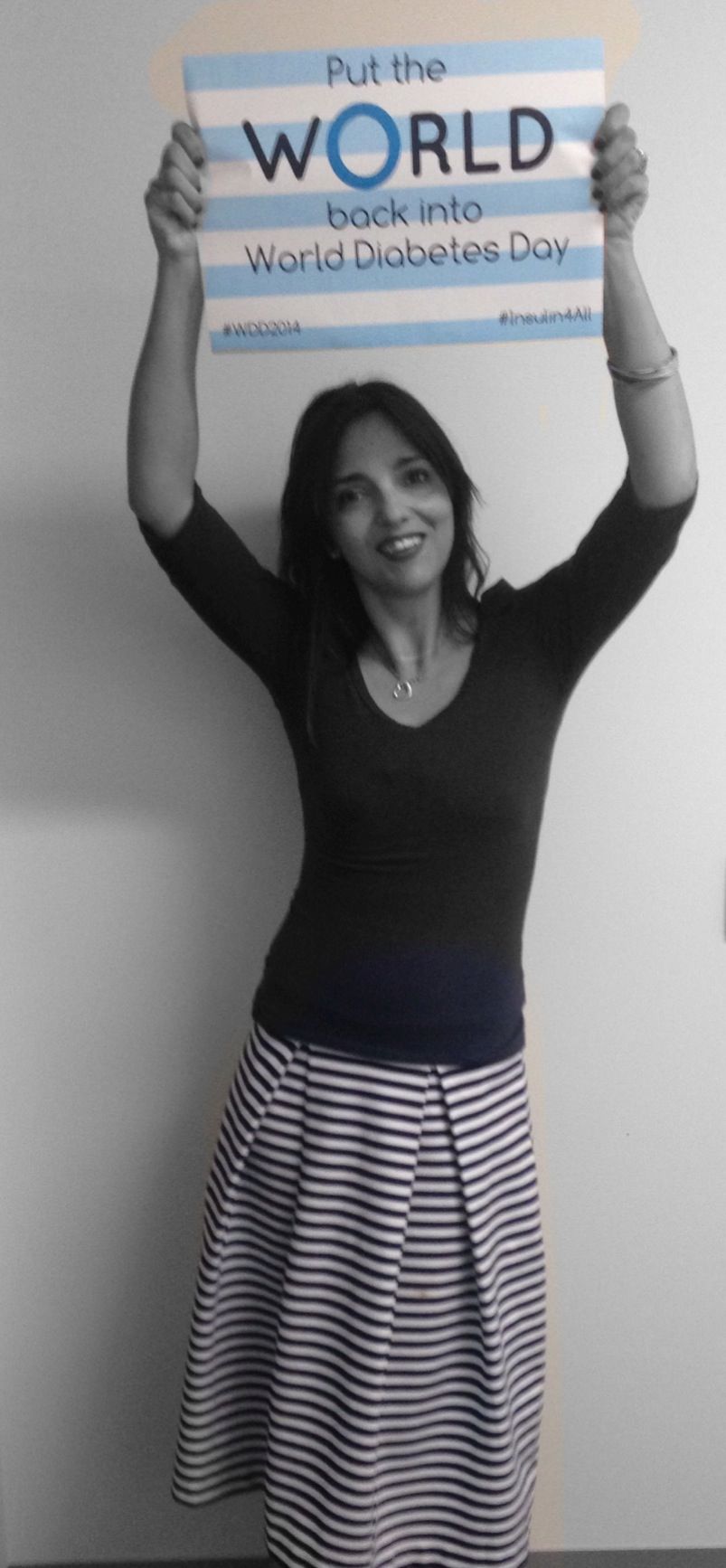
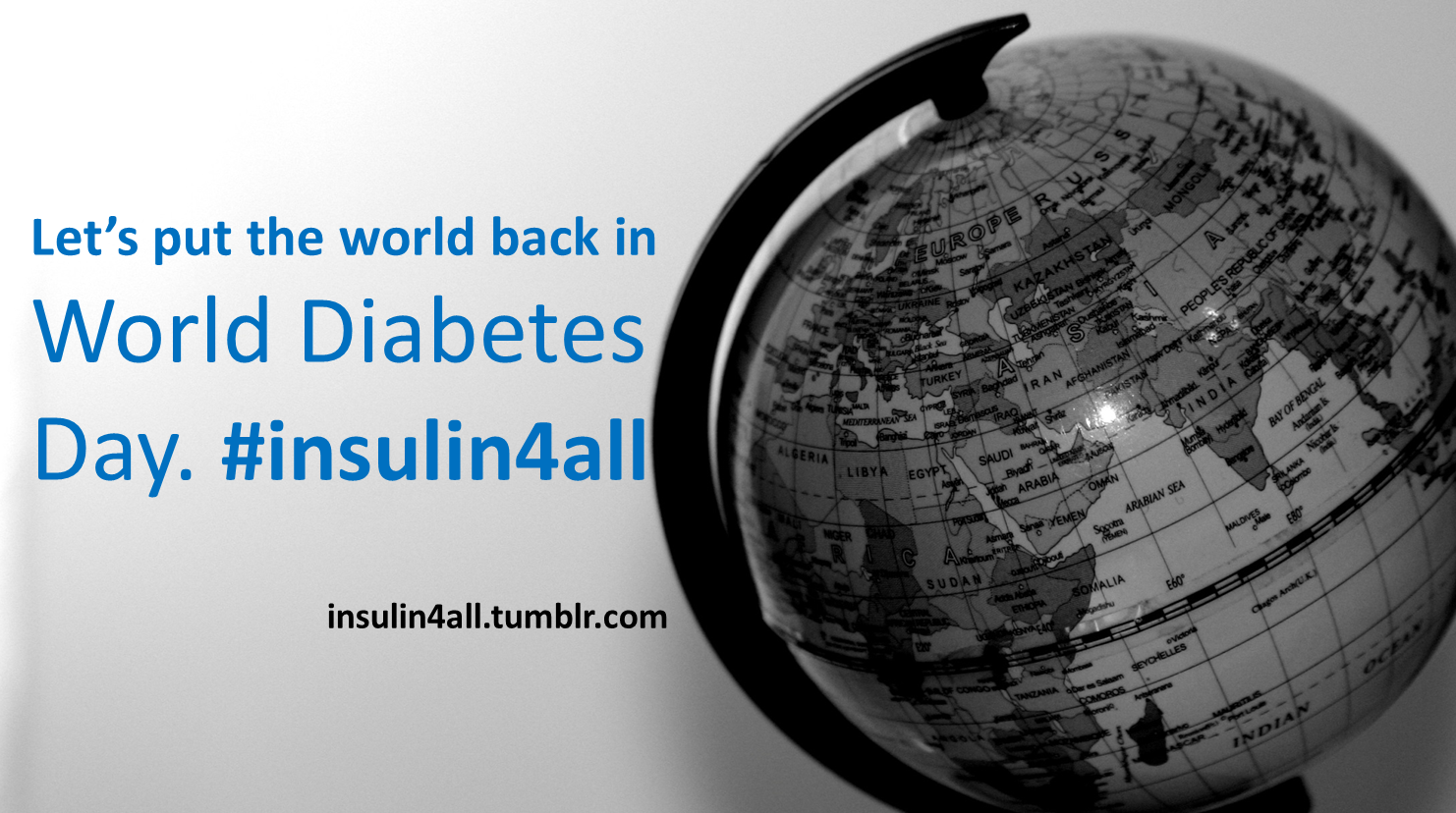 This year, one of my favourites is about access to insulin. The Access Alliance has created a Tumblr to draw attention to the fact that many people do not have easy access to insulin and other management tools, diabetes education and support. It breaks my heart that in 2014, almost 100 years since the discovery of insulin, there are still many, many people who cannot afford the insulin needed to manage their diabetes. This campaign is asking people to remember diabetes is a global issue and for some, accessing the things many of us take for granted – insulin, test strips, BGL meters – is a huge struggle.
I think about this often – in fact, every single time that I walk out of the pharmacy with my 5 x 10ml vials of insulin to load into my insulin pump. For less than $40, I have the next three month’s supply of insulin in my hands to take home, and keep safe and cool in the fridge. I feel guilty when I bitch and moan about the fact that I had to make a phone call to order in the insulin because the pharmacy doesn’t keep it in stock. Really? That’s the burden I deal with when I need insulin? I have to make a phone call and wait 24 hours before popping in to get my prescription filled. 
No one in this day and age should find accessing insulin – or any life-saving drug – a struggle.
So, get creative and make a poster. Take a photo and upload it to the #Insulin4All Tumblr. And then share it with everyone you know – not just people with diabetes. Preaching to the converted is really important because it strengthens the numbers of people advocating, but reaching out to the general community, making people aware of the issues, getting others angry at the inequity of access to healthcare is important if we are going to make change.
Who do you write your blog for? The question came after one of my recent presentations about how healthcare professionals can use social media to connect people living with diabetes.
My flippant answer to that question is ‘Oh, me and my mum. And some weird guy in Romania who seems to be really interested in my life…..’
The easy question – which is also frequently asked of me is WHY I started a blog. The answer to that one is simple. I hoped it would help me connect with others sharing my story. Because every single time I told of one of my experiences at least one other person – and usually many more – said ‘oh, me too’.
It was exactly the same as when I heard others with diabetes speaking about their lives. I wanted to jump up and down and yell out to them that it was the same for me. (And if I’m being truthful, I actually did do that a couple of times!) These sorts of connections made me feel less alone.
I considered writing a blog an extension of a lot of the work I was already doing: being the ‘here’s-one-we-prepared-earlier’ case study at meetings and information sessions. This, however, would be writing it down. I did this while I was pregnant with our daughter – I kept a weekly online diary that was published on a diabetes site. It was therapeutic and reassuring for me. An ongoing blog would give me the chance to write about and examine my real life with diabetes, and hopefully connect and share with similar folk around the world.
People tell me they like the candid, raw and honest way I tell my story; they feel they can relate. I try to inject a little humour and sometimes that works, other times it falls flat. I have been told to tone things down (I had to stop telling my ‘I will hunt you and all your family down and hurt you all if you steal my pump’ story because my husband said that with my Italian heritage and (falsely) assumed mafia connections that people would get scared*).
I decided when I started writing my blog that there were certain things I would not write about. I would not share others’ stories and I would never, ever write about things told to me in confidence.
I occasionally write about my family and friends, but it is usually incidental to the real issue I’m writing about – sometimes it helps illustrate the experiences and give context.
But what you see is very much what you get. I am conscious that loved ones and people who actually know me and my family read this and sometimes that makes it difficult to write about the more challenging things I’m facing. I don’t want to worry people, but equally, I don’t want to sugar coat things either.
Everything I write, though, whether it is about a particular experience or my circumstances, it is all honest. Sometimes too honest. There have been times that I’ve written something and then the phone calls have started as friends and family check in with me to make sure I am okay.
So who do I write this blog for? I guess it’s actually the same reason as why I write this blog. Mostly – and selfishly – for myself. To connect and find support. And I’m really lucky, because that has been exactly what’s happened!
*I may have stopped telling the story, but that doesn’t make it any less true!
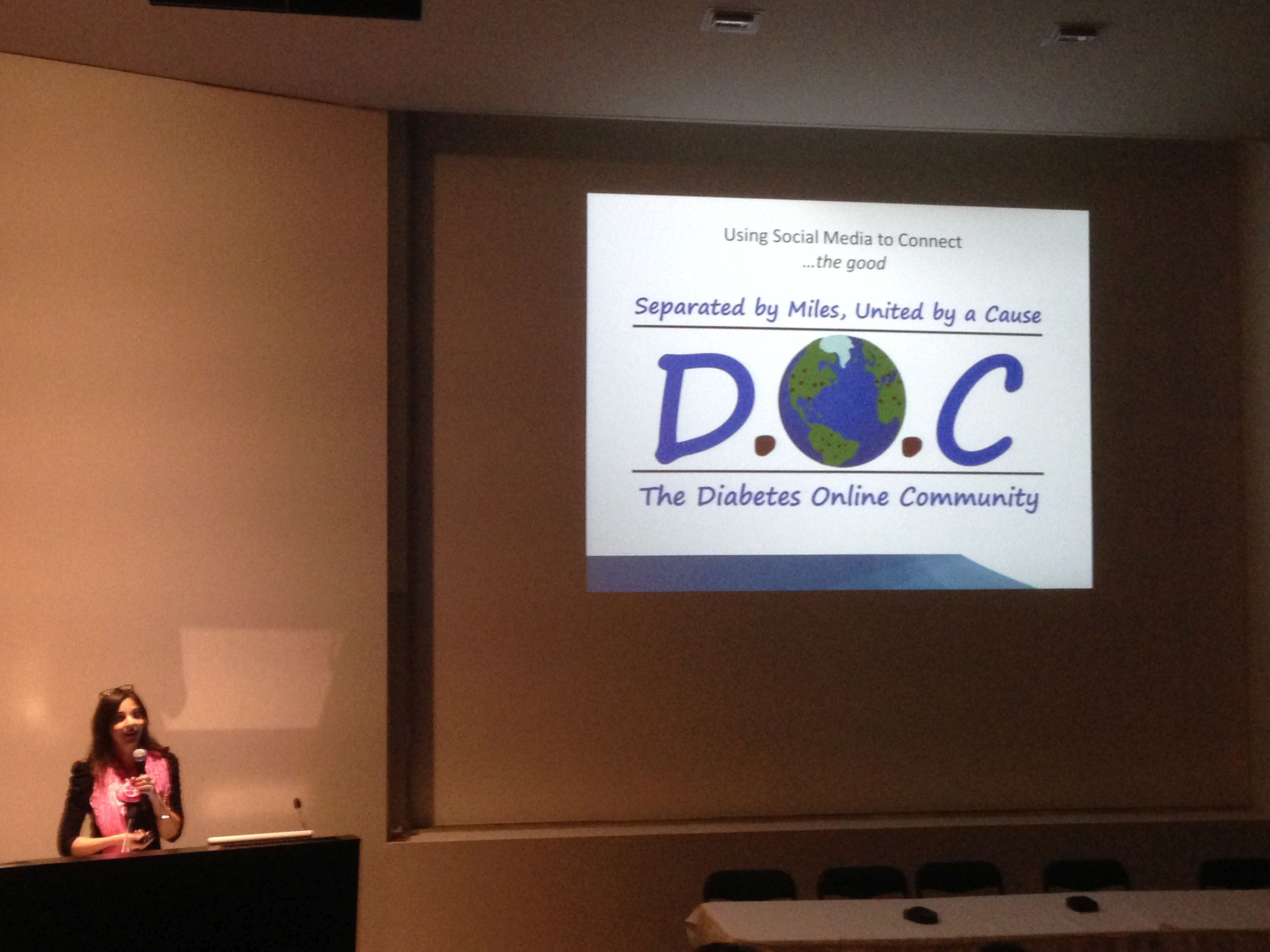
Presenting at yesterday at the Royal Melbourne Hospital’s Grand Rounds.
I’m Paris-dreaming at the moment. The gorgeous Belle du Berry and the rest of Paris Combo are providing the soundtrack. Happy Friday!
Stop for a moment and imagine that the cost of buying insulin for a month was financially crippling to you and your family.
 Think about having to make the choice between buying insulin or buying food.
Think about rationing insulin and taking the smallest quantity possible – just so you are taking something, but not what you need.
Think about how terrible you would feel. Think about the thirst and the exhaustion and the fuzziness.
Think.
I don’t do emotive and I don’t do scare campaigns, but this is the reality for many children – and adults – living with insulin-requiring diabetes.
It’s unfair and it’s terrible.
And now think about doing something about it that is actually quite simple.
Many of you will be aware of the ‘Spare a Rose, Save a Child’ campaign that has been run over the last two years around St Valentine’s Day. The basics are – instead of sending a dozen roses to your loved one, send eleven. And with the five bucks you’ve saved, make a donation to the International Diabetes Federation’s Life for a Child Program. That fiver has just provided insulin for a month to a child whose family could otherwise not afford it.
There are many, many reasons to love this campaign; but for me, I adore it because it is simple and tangible. One rose = one month of insulin. Two roses = two months of insulin. I’m a simpleton – this sort of maths works for me!
I know that it’s not Valentine’s Day right now, but it will be in a mere 137 days. Which means that you have 137 days to plan to see how you could possibly contribute to this great initiative.
Contributing doesn’t necessarily mean making a donation – although it is wonderful if you can. You can blog about it, spread the word on Facebook and Twitter, ask your workplace or school to get behind it. You can just TALK to people about it.
Oh – by the way, this was set up by a few do-gooders in the DOC. Yep, that’s right, with nothing but the internet, their contacts and 140 characters or less (and some blogs, Facebook pages and other social media things) they managed to get this up and running. The first year, they raised about $3,000. The second year, they made close to $30,000. (You can use this the next time someone tells you that social media is the work of the devil and nothing good will ever come of it!)
The ‘Spare a Rose, Save a Child’ campaign was discussed at the 2014 Euro Bloggers Summit (disclaimer-y bits on this page). Kerri Sparling spoke about how the campaign came about and how people could get involved. One of the aims of the Summit is to share great work being done by people in the diabetes community. If you have something you would like others to know about, pease feel free to comment below.
The diabetes online community is a truly global network. We see that every week in tweetchats and anytime we log onto social media. We know that connections are made that are life changing and, (as in the case of my dear friend’s ‘Pumpless in Vienna’ story – to be told here soon), life saving.
For the last three years, I have been privileged to attend the European Bloggers Summit, which is a satellite event run alongside the EASD Scientific Meeting. This event is a chance to really look at ways that consumer advocates can work together and support each other to make significant change to living with diabetes.
It was sobering to be reminded several times yesterday that those of us sitting behind our laptops, participating in the dialogue of the community are already very lucky. We looked at programs out there that are providing insulin to people who would not otherwise have access. Again – life saving.
The beauty of these events is that they are not simply a day or two of navel gazing and patting ourselves on the back for the work we do. We challenge ourselves and each other to do more, do better and reach more people. We plan for what we want to achieve and then hold ourselves accountable for what we have said we want to deliver.
The issues that we have in Australia and that I frequently write about right here are so often universal. Hearing friends from Europe say that the language of diabetes is an issue, or access to technology or medicines is prohibitive for some, reminds me that it is worth continuing to be in this space. When I hear about the frustrations experienced by others when it comes to consumer representation, I know that every time I say ‘nothing about me without me’ it is echoed around the world.
There are some amazing things going on, and over the coming weeks I’m going to write about some of the things I learnt about because I not only want to share this work, I also want to encourage others to get involved.

DISCLAIMER
The 2015 European Bloggers Summit was sponsored by Johnson & Johnson. I was invited by Johnson & Johnson to attend the event and did not receive any funds from Johnson & Johnson to cover travel or accommodation costs to Vienna or to attend the EASD conference. These costs were covered by my employer, Diabetes Australia – Vic.
Look! Uniforms for the Diabetes Online Community!





 Diabetogenic