
You are currently browsing the category archive for the ‘DOC’ category.
I’m back from the American Diabetes Association Scientific Meeting and I am pleased to report that the world hasn’t ended. Despite having in the same room, at the same time (and multiple times!), healthcare professionals, people with diabetes, industry and health organisations, the earth continues to rotate around the sun and we’ve not been plunged into the darkness of the apocalypse. I am relieved.
Actually, I’m totally not. Not at all.
There is much that we can be critical of when it comes to the U.S. health system. But their inclusion of consumers (patients, whatever you want to call us) at conferences is, from where I am sitting, enviable.
I cannot count the number of patient advocates in attendance at this year’s ADA conference. But we were everywhere. We presented, we attended sessions, we connected with each other, we tweeted the hell out of the talks we attended, we spoke with the aforementioned HCPs and people from industry and health organisations. We made plans for ways we could all collaborate and initiated projects that would cross seas and continents and provide support for other people with diabetes.
And the conference was all the better for it.
I return home to where there is, unfortunately, limited collaboration. When there is some sort of partnership or alliance, it is often tokenistic. Frequently, these are the words I hear when a collaboration is first suggested ‘We’ve been told that we should speak with people with diabetes about this project/resource/activity/ program. We’ve been working on it for months/years/decades now, so we think it’s time we brought in someone with diabetes to tell us what they think’.
Let’s be clear: that’s not a partnership. That’s a ‘Shit, we forgot to talk to the people this is meant for. Quick. Do it now. Then we can say we’ve consulted.’
Well, no. Not really.
At our annual scientific meeting here in Australia, you will not see a consumer contingent. There may be a few rogue people there who manage to get by all the rules and regulations because we work in the diabetes field. But by and large, we are a rare sighting. This is, of course, partly due to the Therapeutic Goods Act which prohibits direct marketing of prescription medications to consumers. We are not free to wander around expo halls with the name of drugs in our faces. It is not considered appropriate that people with diabetes attend the sessions aimed at HCPs for fear that we would misconstrue or misunderstand or misrepresent what we are hearing.
But never in my time of attending an event where consumers are welcome have I seen that.
I attended the ADA Meeting to hear about the latest in diabetes. I wanted to go to sessions and hear from speakers about breakthroughs and research and studies that aim to improve the lives of those of us with diabetes. And I did. I spent a lot of time in those sessions. I spoke with the presenters afterwards and felt welcome and included. I asked the speakers when they would be in Australia and made them promise to do consumer talks when they get here – not just talks for HCPs.
And I also spent time speaking with people from industry and hearing about in-development products. I heard about the processes in the US and in other places for subsidies and asked about how they have gone about improving access to their technologies. And I begged that when they say that they have a global team working on something that they remember Australia – reminding them that we may be a long way away, but we are still part of their market.
And I did all this alongside other advocates. It’s amazing how loud our voice becomes when we are together.
DISCLAIMER TIME: Whilst in Boston at the ADA Scientific Meeting, I attended sessions funded by: Medtronic Diabetes: Johnson and Johnson Diabetes and Dexcom. I did not receive any financial (or other) remuneration for attending these sessions.
If you have anything to do with diabetes and glanced at Twitter this week, it’s unlikely that you could have missed the juggernaut that was #IWishPeopleKnewThatDiabetes.
Wednesday 22 April was designated the day that the Diabetes Online Community would come together and share what we wish people knew about diabetes. We kicked it off with great force here in Australia and it took off like a runaway train from there! Late on our Wednesday night, I watched the US wake up and Twitter explode with the #IWishPeopleKnewThatDiabetes hashtag. I had to force myself to turn off my devices and go to sleep because I could quite easily have stayed up all night following.
I was amazed at the diversity of the things people were sharing. I found myself laughing out loud and wiping away tears at some of the things I read, and a lot of the time, nodding in agreement.
Critics of these sorts of activities say that they are a waste of time – that we are preaching to the converted and that it is a self-indulgent pity party. I say that’s rubbish!
Firstly, even if the majority of people who read the tweets are others with diabetes, why is that a bad thing? Building our community – coming together, supporting each other, listening to others’ stories – is how and why we become stronger. I had several people reply to my tweets telling me that they felt the same way. I did the same thing several times.
And there is absolutely nothing wrong with fist pumping and patting ourselves on the back for living with diabetes. Or saying it is tough. Diabetes does suck sometimes; it is difficult to live with; it is a shit. Acknowledging that doesn’t make us weak or pathetic. It doesn’t mean that we have given up or that we think that we have it worse than anyone else in the world. It is just saying how we feel.
I didn’t read all the #IWishPeopleKnewThatDiabetes tweets (there are over six and a half thousand of them!) but I did read a lot of them. I read tweets from people I know well and those I’ve never come across. I connected with new people and retweeted and retweeted and retweeted until I thought I was going to be sent to Twitter purgatory for a while and told to settle down!
Well done to Kelly Kunik who kicked this off last week. I don’t know that Kelly has had much sleep over the last few days. She seemed to be tweeting and retweeting pretty much around the clock! Kelly is a bit of a force of nature. I caught up with her and another DOC friend, Stacey, when I was in NY and the three of us spoke so much we forgot to eat. Seriously. We remembered to drink coffee, but somehow we didn’t remember to order lunch! Hope you’re getting some rest now, Kelly!
I couldn’t even begin to say what my favourite tweets were. Perhaps the ones that focussed on advocacy issues and dispelling myths. But every single one did resonate in some way – even if the experience was not the same as mine. I feel that I have a better insight into how diabetes affects people’s lives. I hope – and am sure – that others have walked away feeling the same way.
(To see the reach of the #IWishPeopleKnewThatDiabetes hashtag, click on this link. At the time this blog was published, it was up to almost 14,000,000 impressions.)
We added another SHAG print to our collection the other night after attending an exhibition opening at the fabulous Outré Gallery. We now have two huge artist proofs that are based on the fabulous Peter Seller’s film The Party. Dance your way into the weekend with the soundtrack here!
Go away. There is nothing to see here today.
Instead, enter #IWishPeopleKnewThatDiabetes into your search engine and spend the day reading about the things we all want everyone to know about diabetes.
This is the initiative of Kelly Kunik from Diabetesaliciousness. But don’t read her blog today either. You can do that tomorrow.
Today it’s all about this hashtag: #IWishPeopleKnewThatDiabetes
Go!
Yesterday I spent the day with this guy:
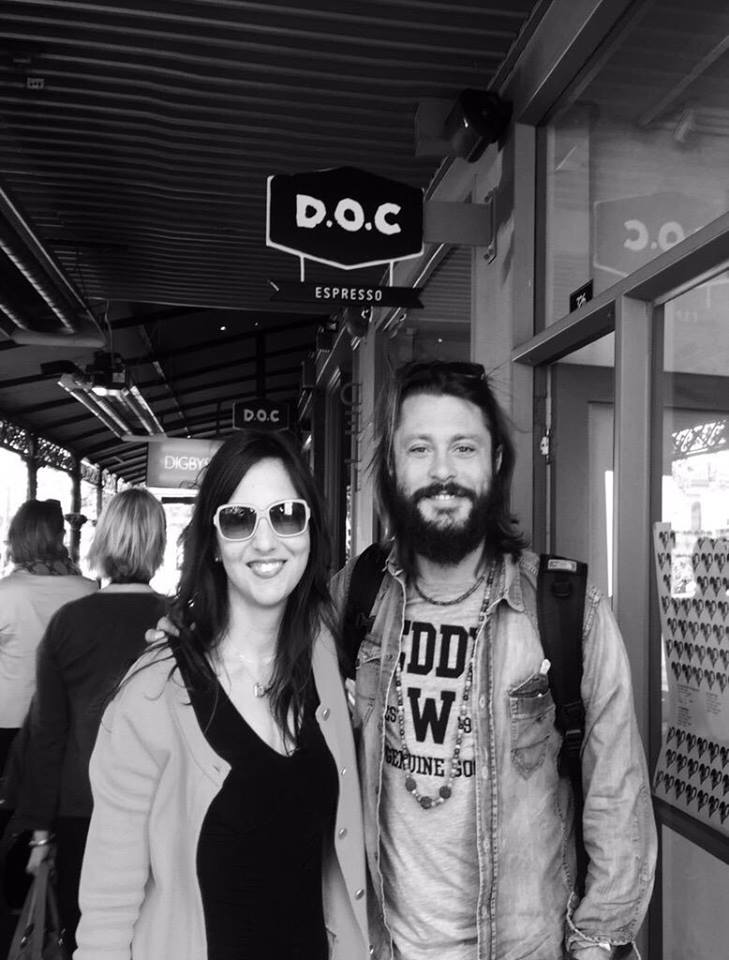
And you can read all about it over at the Diabetes Australia – Vic blog.
So, so glad it’s Friday! Some Miles Davis was suggested. So here you go:Sketches of Spain.
Once up on a time (July 2014), in a land far, far away (Vienna), there was a beautiful young woman. We will call her Jo (because that is her name). Jo was visiting Vienna to present at a conference because as well as being beautiful, she is smart and well-respected in her chosen field.
In addition to being beautiful and brainy, Jo also has diabetes (which only increases her beauty and braininess). Her insulin pump is her trusty friend, and together they had made the long trek to Vienna. (On a plane, they didn’t really walk there. Let’s not romanticise this story too much!)
But on their first day in Vienna, her pump went ‘kaputt’, which is German for ‘You’re on your own, I’m not working anymore.’
Jo was, understandably, distressed. A faulty pump would mean reduced intake of crisp apple strudel and schnitzel with noodles. Immediately, Jo got on the phone and called the pump company to let them know what was going on and organise to get a working pump to her.
Of course, it was the middle of the night in Australia, so there was no one at the pump company and she was put through to their international call centre. She was assured that someone would be in touch with her as soon as the Australian office opened the following day.
In the meantime, Jo wondered what else she could do. Who could she call that just might be able to help in the middle of the night? So she pulled out her phone, and in 140 characters or less put out this call for help.

And just like a fairy godmother waving her wand, the DOC came to the rescue!
The next day some DOC people sent tweets, Facebook messages, emails and possibly, but probably not, carrier pigeons to put out the call. Who could help? Who could save this damsel in distress kickass, sassy chick and get her back on a pump?
Enter the team at MySugr who are all too clever and aesthetically blessed for their own good, (seriously – they all look like poster children for….poster children), and the wonderful Marlis, who offered to lend Jo a pump.
Jo jumped on a cream coloured pony in a taxi and took herself to the MySugr HQ, hidden away in the streets of Vienna. She climbed the stairs to meet the woman with whom she’d been connected to help her…get reconnected. Marlis handed Jo a brown paper package tied up with string her spare pump.
This is the moment where Jo and Marlis met.

And at this point, Jo was no longer pumpless in Vienna.

She continued her trip – next stop presenting at a conference in Lisbon. Where she was not pumpless. Where she could eat all the Portuguese tarts she wanted without worry.
And she lived happily ever after.

Now, this is all lovely and the outcome was, indeed, wonderful. But what was going on behind the scenes was not. Time zones are a pain in the behind to manage at the best of times; being in a different country to the one where a pump was issued is going to add a degree of difficulty to getting a replacement pump.
However, Jo faced obstacle after obstacle after obstacle from the people she expected would help her. Because this was not a tick-the-box-cookie-cutter problem, they were unable to provide her a satisfactory solution – a working pump delivered to Vienna. Diabetes is never tick-the-box-cookie-cutter easy. It is difficult, messy, crazy, all over the place!
Jo called Euro offices of the pump company – she was not necessarily expecting the Australian office to courier a new pump to the other side of the world. But everywhere she turned, she was faced with a brick wall.
Except when she turned to the diabetes online community which is made up of wonderful people living difficult, messy, crazy, all over the place diabetes lives.
I have told this story dozens of times and have presented it at conferences both here and overseas. People stop me in conference halls to ask me about it.
And the reason that I share this story – which is not mine, – is because it shows (yet again) the value and power of our community. And it shows that social media can be used to connect people in such meaningful – life saving! – ways.
You know how I’m always saying that I feel very fortunate to have an online community that is so wonderful? And how the DOC gives me so much? And that I get support, love and reassurance? And all that stuff about how I feel connected and part of a global community? I’m always banging on about how I have information about real life with diabetes available and I learn so, so much. All the time. And how lucky I’ve been to meet people from every corner of the world and hear about their experiences.
It’s all true. All of it. And then, it gets taken up a notch with this.
I get sent parcels in the post:
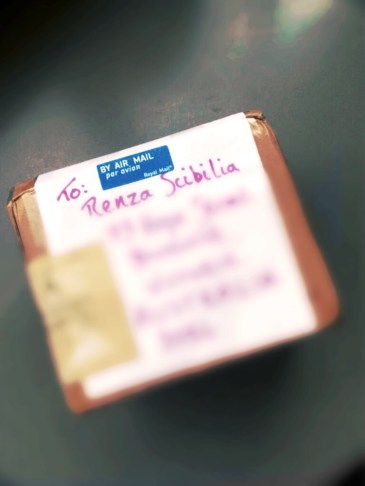
All the way from the other side of the world:
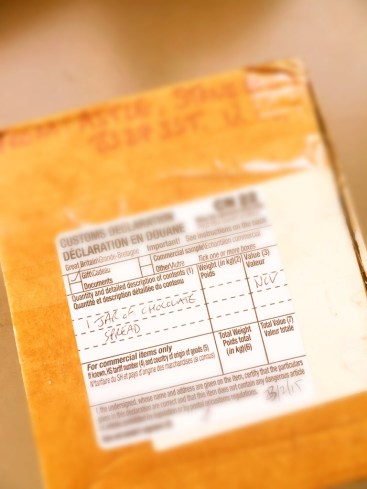
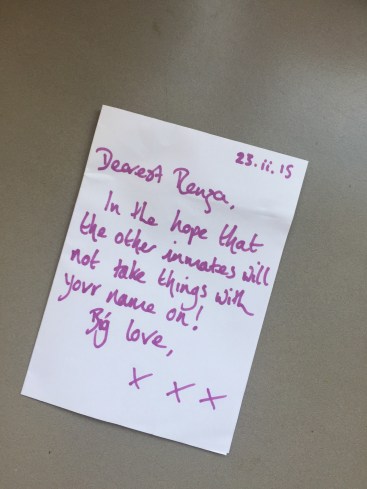
Inside, a handwritten note:
And scrunchy pink wrapping:
Underneath was the most wonderful surprise:
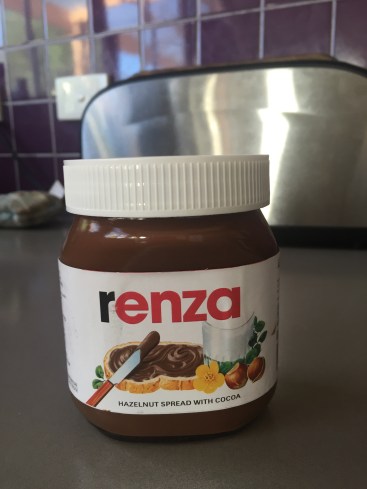
Most, most wonderful!
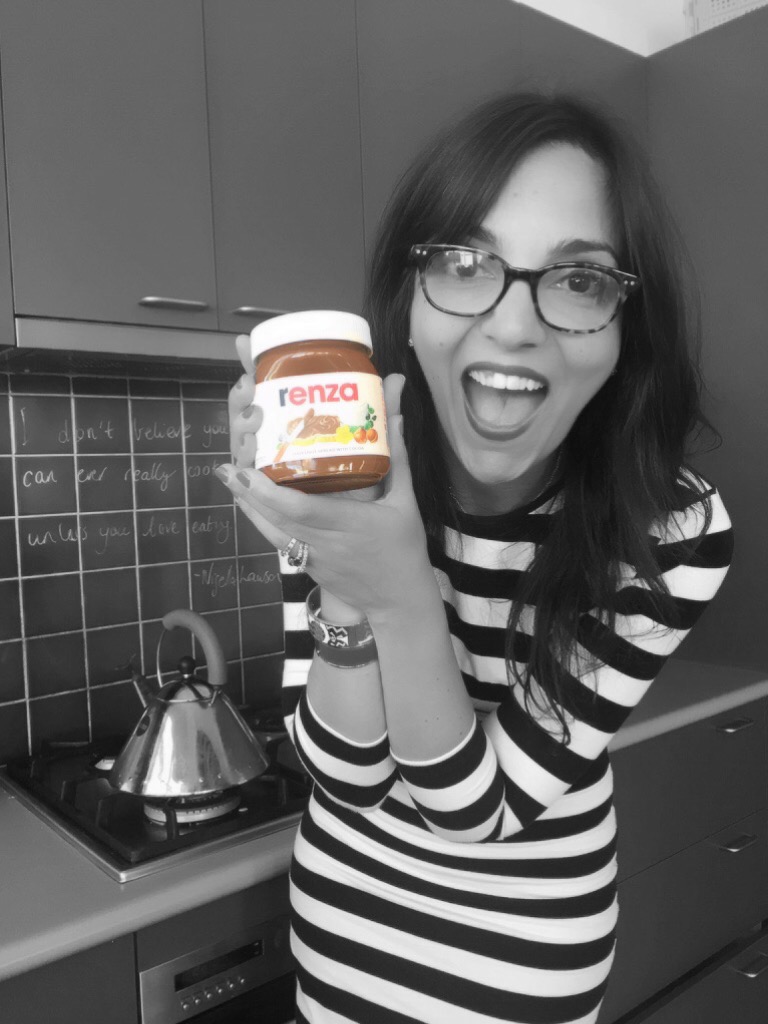
And then…
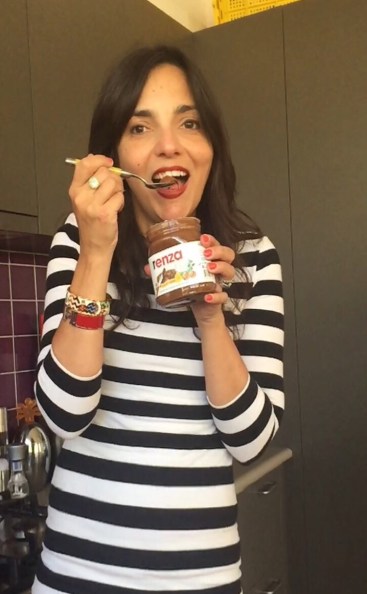
Dinner was served.
A huge thank you to the beautiful and wonderful Annie who I met because my effed pancreas and her gorgeous daughter’s pancreas are both good for nothing slobs. If I have to live with diabetes, knowing people like this make it a hell of a lot better.
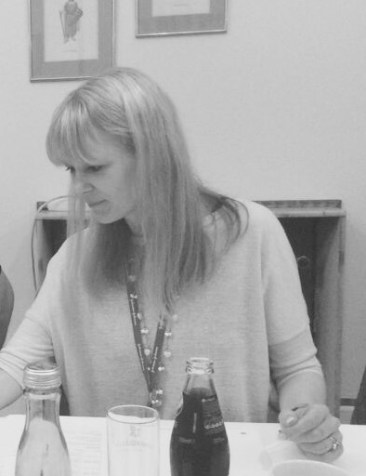
The wonderful Annie (who will possibly want to shoot me and make me return my wonderful gift for posting this photo of her).
Until I was given insulin, I never fully understood how powerful drugs could be.
I had walked into the endocrinologist’s office carrying a bottle of water I needed to refill every 15 minutes which coincided with how frequently I needed to find a loo so I could pee. I could barely see – I was always squinting, trying to focus the constant blur through half-open eyes.
That evening, I was given my first insulin injection. And the following day, I learnt how to do it myself.
Within 24 hours, the thirst had gone as had the need to constantly ‘mark my territory’. My vision was already starting to return to normal. The lethargy that had crept over me for the previous week was lifting and I wasn’t falling asleep every time I sat down.
My body, which the day before had been slowly, painfully, dying, came back to life.
I was given a prescription for a couple of different sorts of insulin and got them filled at our local pharmacy. I was given a list of things to buy and I walked into Diabetes Australia and bought them. Both these purchases were heavily subsidised by our Government.
And over the last almost-seventeen years, every time I’ve needed insulin, or strips, or pump consumables or anything else to do with diabetes, it has been as simple as that – a phone call, a pop into a shop or even, a mail delivery.
This is what living with diabetes in a developed country looks like.
It’s not perfect; some people struggle to cover costs despite the subsidies, but insulin is available, consumables are available. And there is assistance to help people as much as possible.
Around there world, there are many places where this is not the case.
I have written about Spare a Rose, Save a Child many, many times over recent months, and I am doing it again today. Because we can do something to address the need for diabetes medicines and supplies in places where access is difficult – and sometimes almost non-existent.
We don’t need to feel guilty about having easy access to insulin and diabetes supplies – that’s not the aim of this campaign. All we are doing is acknowledging that there are places in the world where it is not as simple to access what is needed to manage diabetes, and that we can do something to help level the playing field.
Six dollars. One month. More if you can.
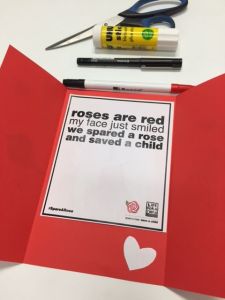
Getting my craft on!
Harry Connick Jr. and a Big Band. What more do you need for a Friday afternoon?
This morning, just before stepping into the shower, I pulled out my cannula planning to resite once I was dried off.
I got in the shower, a million things going through my mind: (How is it Monday? I feel like I’ve hardly had a weekend. Oh, that’s right; I’ve hardly had a weekend- I worked Friday night and all-day Saturday. What does the kidlet have on at school today? Is it art? We need to buy dog food. Did I organise for the kidlet to sleep over at my parents tomorrow when Aaron and I see Sting? STING!!!!! I love Sting. How AWESOME was it to see Sting last Thursday night at Bennett’s? I want coffee. What’s the weather going to be today? I should download ‘Mozart in the Jungle.’ Sting tomorrow – yay! Oh – I need to keep promoting Spare a Rose, Save a Child this week because it’s Valentine’s Day on Saturday. Sting tomorrow night….)
And then I looked down and saw that the water pooling at my feet was bright, bright red. It took me a moment to realise what was going on – my head was still thinking Spare A Rose and Sting – and in that time, I watched the swirling pattern the red water was making as it moved around me and made its way down the drain.
Involuntarily, my right hand flew to my right side. I looked down and saw the blood gushing from where, just a few moments ago, I’d removed the cannula.
I pressed hard to stem the flow of blood, my hand getting covered with red.
The blood stopped pretty quickly. The water at the bottom of the shower turned from the Russian Red colour of the MAC lippie I wear most days, to pink, to clear again.
Of course, I didn’t lose all that much blood. But it looked pretty impressive. And I thought about how nonchalant and calm I am when things like this happen.
I continued with my shower, my mind drifting again, thinking about how the word ‘sting’ is frequently used in diabetes marketing materials. And then thinking about the Sting gig tomorrow night. And then thinking about blood. And the slight sting I could feel where I’d been bleeding. And roses. My thoughts were all muddled. But I knew that there was something tying them all together. I just couldn’t work out what it was.
It wasn’t until I was standing at the café near work waiting for my morning coffee that it hit me. I remembered an obscure Sting song from a compilation album of pirate songs and sea shanties. Sting sang one song on there. And it was called Blood Red Roses. I’ve not heard that song for years and as soon as I got to work I found it on YouTube and played it.
Sting and roses. That pretty much sums up this week.
Only a few days until Valentine’s Day, but plenty of time for you to Spare a Rose and Save a Child. Remember, for the price of one little rose, you can provide a month’s worth of insulin and save the life of a child.

Sting with Jo Lawry at Bennett’s Lane last Thursday night.
Things I know to be true:
- It’s February already.
- Melbourne seems to have misplaced its Summer.
- As much as I loved being in New York and had the best holiday ever, it’s always swell to come home.
- And having Melbourne coffee running through my veins is making me a happy chicken.
- Being at work is not the worst thing, especially when there is a year of really exciting things on the horizon.
- I am confused that my computer does not recognise the word Nutella and wants to correct it to Nigella. Which is equally awesome and sexy.
Also – the internet never disappoints.
Frocking brilliant
Sometimes it’s tough for a dame to find a place for her insulin pump. Bra? Good in theory, but what if you’re not wearing a bra? Or your bra is being uncooperative? Thigh strap? Again, great idea, but not great if the thigh strap comes loose and starts rolling down your leg and you end up in the Ministry of Silly Walks. Also, it can look like you are packing heat. Or you end up using ugly (although effective) Tubigrip. Pocket? Usually produces an unsightly bulge that may have people searching for a matching Adam’s apple.
What’s the solution?
Read here about some clever folk who have come up with a rather dashing frock with a secret little place to hide a pump.
And who doesn’t love a LBD? Can’t wait to get my hands on – and body into – one of them! Available soon – keep an eye out here.
Two spreads in one
There are many tough decisions in life. Lennon or McCartney? Coffee or tea? Jaffas or Malteasers? (Both, obviously.)
And the most difficult: peanut butter or Nutella? Can’t decide? Then have both! In domestic goddess mode on Sunday (full skirt, frilly apron, high heels and tiara) I made these.
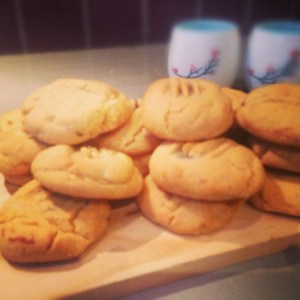
And they are were good. And totally bolus worthy!
Here’s the recipe. (And here’s a tip. When freezing the Nutella before making the biscuits, do half on one baking sheet and half on another. Take out one baking sheet, make half the biscuits. THEN take our the second baking sheet and make the second half. Otherwise the Nutella starts to melt and ends up all messy and all over your fingers and you have to lick it off your fingers and then freeze more.)
Oh, and while we’re talking Nutella, let me introduce you to my happy place:

Support DA-Vic and enjoy the Melbourne Food and Wine Festival (WIN WIN!!)
This year, Diabetes Australia – Vic (disclaimer: my place of employment, but I am writing about this because I want to, not because I was asked. Also it is about food. And wine. So there’s that too.) is the charity partner for the Melbourne Food and Wine Festival. Some people may think that this is an odd partnership, but actually, the messages of both DA-Vic and MFWF are strongly aligned. It’s all about people taking an active role in managing their health – regardless of if they are living with diabetes or not. And having a good understanding of the food we choose to eat is part of this.
It’s also a great opportunity to raise awareness of diabetes, reaching people we may otherwise not reach.
Now, everyone knows that I am not really an exercise fan. However, I can definitely get on board this. It’s literally a moveable – well moving – feast where participants take a walk around the Tan, stopping at stations for a delicious five course brekkie. And better yet, 5 per cent of ticket/registration fees will be donated to DA-Vic.
Noteworthy connections
Many of you may not know that in a former life I was a classically-trained musician. That ship sailed a long time ago and I no longer play music. However, my husband is a musician and music is a huge part of my family’s life.
I have always been interested in the link between music and health. The Greek God, Apollo, was God of both healing and music, so the connection has been around for a long time!
Music has been used as therapy in a variety of medical conditions from Parkinson’s Disease to recovery from stroke. I am not going to say the healing powers of music can cure diabetes (although I’m pretty sure some fool will tell you that). But, music can be a stress reliever. And for me, reduced stress means less erratic BGLs.
There are also strong links between music having positive effects on mental health as discussed in this information sheet from ReachOut.
I love this so much
I’ve shared this blog before here, but this post from Annabel over at The Understudy Pancreas is one of the most beautiful pieces of writing. Full stop.
I can’t begin to imagine what parenting a child with diabetes would be like, but Annie does such a wonderful job of explaining how her family do it.
The thing that I probably admire most is how Annie never, ever makes her daughter’s (Pumplette) diabetes about herself. She supports her daughter in the best ways possible, encouraging her independence, and being there for her – with what Pumplette needs. Great parenting advice all ‘round, really.
I wish I could reach into my computer and give you a huge hug, Annie. Your darling girl is so great.
Radio Deluxe
When we were in New York, we spent a very pleasant evening at Birdland listening to John Pizzarelli and Jessica Molaskey perform. It was a gorgeous gig, made even more wonderful when they dedicated a song to the ‘family from Australia’.
Each week, John and Jessica have a syndicated radio show (they claim it is ‘live from high above Lexington Avenue in the Deluxe Living Room’, and while I suspect it is actually recorded in a studio, I like to think of them in their living room at home, gazing out over the New York skyline, casually chatting into a couple of vintage microphones) and it is an absolute treat to listen to.
Check it out here. It makes a great soundtrack to the workday!
What do ‘patients’ really think? (Maybe stop using the word ‘patient’ to begin with…..)
British medical journal The BMJ has started a fascinating new series called Do you know what your patient is thinking? This is part of their patient partnership strategy and will hopefully help HCPs better understand all aspects of life with a chronic health condition – not just what …..
The first in the series, Why there’s no point telling me to lose weight, can be read here. New submissions will be published monthly.
Living Vertical
Steve Richert has lived with diabetes for 17 years. A couple of years ago, Steve wanted to show that diabetes hasn’t stopped him from doing what he wants, so he and his wife, Stefanie, travelled across North America and climbed for 365 consecutive days. Just like with diabetes, there were no days off.
I absolutely love the catalyst for this project. This is what Steve writes on the Glu website:
‘In 2011, I had lived for almost 13 years with type 1 diabetes, and despite the normal ups and downs, seasoned with occasional close calls, it had never stopped me from being me. In fact, it made me who I was. When I was on a trip to visit friends, Stefanie and I drove past a billboard aimed at fundraising for diabetes research. It made my blood boil.
It was a smattering of grim statistics and stock imagery geared to promote the idea that life with diabetes was no life at all—that we are weak and helpless victims of this condition. Before this point it hadn’t ever occurred to me that the message of being empowered had any place in diabetes. I didn’t know anyone else with type 1 diabetes and I assumed everyone just came to terms with it as I did. Seeing this billboard made me aware for the first time of how we are portrayed—and how that can impact someone.’
A film has been made of Steve and Stefanie’s adventure. You can read about and watch Living Vertical: Project 365 here.
Save a child…..
Thinking about Valentine’s Day? Don’t forget to Spare a Rose, Save a Child.
No four words sum up this campaign better than this ‘Flowers die. Children shouldn’t’.
Please donate. Remember the equation: One rose = insulin for one month. Multiply as many times as you can.
That’s all for now, folks. Happy Tuesday.





 Diabetogenic