
You are currently browsing the category archive for the ‘Diabetes’ category.
How do you describe diabetes? I vary from ‘an inconvenience’ to ‘an effing pain in the arse’ and lots in between.
I’m all about words. Language is very important to me and I spent a lot of time crafting messages about living with diabetes that balances the ‘this is shit’ component with the ‘this is just life’ side of things.
One of the reasons that getting the language right is actually not so much for the people living with diabetes – we know the details and we know the words we choose to describe it. No; it’s for others. Because when we get the language wrong, we start to open ourselves up. To discrimination, stigmatisation, misinformation and negative perceptions.
It’s for this reason that I refuse to use the word ‘disability’ when talking about MY diabetes. There is much written about and debating ‘is diabetes a disability’ and I am definitely not qualified to really enter this discussion in any other capacity other than ‘this is my opinion’. And my opinion is coming from someone who has 16 years of diabetes under her belt with no significant physical or mental complications because of diabetes.
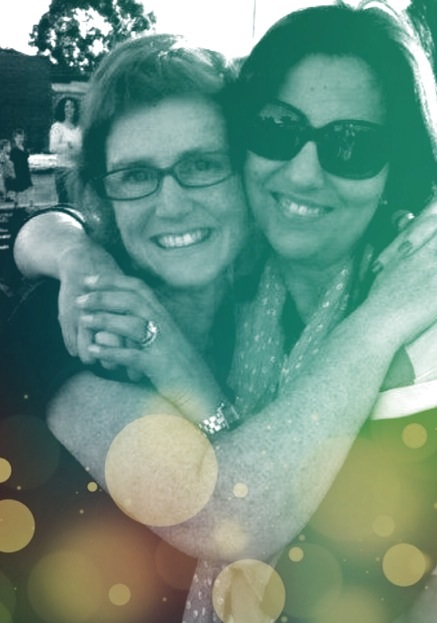
However, my beautiful, gorgeous friend and neighbour Jo is an expert here, so I called her and yelled ‘help me understand this!’ Jo has type 1 diabetes (believe me – there is a blog somewhere about two people with type 1 living two doors down from each other….) and is a speech pathologist who has worked in the area of disability for a long time. She’s clever, compassionate, direct and doesn’t mess around with words. Jo will hate me for saying this, she has recently been recognised with a nomination for a life-time award for working in the field of disability. She’s more than kind of awesome.
Jo suggested I start by having a look at the World Health Organisation’s definition of disability. This sent me into a world of pain because there were words I simply didn’t understand when put with other words and you know, comprehension.
So, I yelled at her some more (it’s what people do when they don’t understand) and here’s what Jo said that made sense to a fool like me:
JO: Renza (you stupid chicken who may make decent brownies but you’re pretty bloody simple, really). What I’m trying to say is that the social model of disability says the disability doesn’t belong to the person with the condition (that would be considered the disability) – let’s say someone with cerebral palsy, for example. It belongs to the environment. The environment doesn’t allow for the disability to be accommodated. People with diabetes can accommodate themselves – carry or buy sugar if they are low is a basic example of accommodation.
RENZA: So, is it like this? The environment accommodates my particular needs. If I was sitting an exam, I could take time to check my BGL or treat a low or take an extra loo break if necessary. But if I had a condition that didn’t allow me to physically or mentally sit for the three hours required to do the exam or have the capacity to understand the questions being asked then I’d be considered as having a disability?
JO: You’re simple, but yes. Now go make me some brownies.
Of course, diabetes throws all sorts of things into the mix including complications that may result in disability. But for me as diabetes affects me now, there is no reason that I consider the fact that my beta cells decided to shut up shop and move to the tropics as a disability.
I see diabetes as a ‘delayer’ at times. There are times that RIGHT NOW it stops me doing what I want, but this is generally remedied quickly (sometimes, not-so-quickly) and I can do whatever it is I planned to do.
The reality of life is that people face challenges of varying degrees. I’m leaving the last word to the clever Jo who says: Some people have challenges that can relatively easily be overcome and others (perhaps someone with a profound and multiple physical and intellectual disability), can’t live, without considerable effort from their environment to keep them alive, and if they are lucky have some kind of quality of life. It’s all relative!
I’m very interested to hear what others think about this. Where do you stand? Do you have an opinion? Do you consider or refer to your diabetes as a disability?
Sophia Loren is said to have once quipped ‘Everything you see, I owe to spaghetti’. Well today, the morning after a hypo that woke me at 3.15am and didn’t let me fall back asleep until after 6am, everything you see, I owe to coffee. I’m on number four.
Have a great weekend! A reminder to check out the Diabetes Stigma Project and consider making a donation.
And for your Friday listening pleasure, here’s some Keith Jarrett with ‘Long As You Know You’re Living Yours’.
I stick needles into my skin, I shove insulin pump infusion sets into my sides, I rocket-launch CGM sensors into my stomach, I jab my fingers, I unflinchingly hold out my arm for blood to be taken and I roll up my sleeves for my annual fluvax without batting an eyelid.
Needles don’t scare me one little bit. I don’t even feel my heart rate speed up when a needle is coming at me, and although I’ve never checked, I’m sure that if wearing a blood pressure monitor while waiting for a needle to break the skin, there wouldn’t be a blip on the graph.
But other pain? Other pain I don’t deal with quite so well.
This morning, I stubbed my toe on the end of the bed. I collapsed onto the mattress, yelling ‘shit, shit, shit’ ‘ouch, ouch, ouch!’ and then grabbed my foot, expecting to see blood, swelling and possibly a bone sticking out of the skin. The pain was excruciating and clearly, I was about to die. Nope. Nothing. Now, four hours later, there is no sign of this injury that caused tears and swear words that made my daughter give me a warning about using the ‘S-H word, mum’!
I don’t ever recall having been scared of needles, so I don’t think that it’s diabetes that has desensitised me to the ‘pain of the prick’ (not a euphemism). But other pain is another thing altogether. Mouth ulcers reduce me to tears; a sore throat can have me whimpering in pain and headaches make me cover my eyes and swear that I have a tumour because of the agony I’m experiencing. I jammed my finger in the car door not long ago and was convinced that I was going to need reconstructive surgery. (Didn’t even bruise.) Whenever I’m asked what I’d rate the pain from something I always say ‘Ten. At LEAST ten. Does the scale go to eleven? ‘Cause then I’m at eleven’.
So with this in mind, you would think that I demonstrate great sympathy for others when hurt or in pain. But I don’t. I have no compassion for people who complain about discomfort, unless I can see a lot of blood, a cast, crutches, or my mum just after she’d had a double knee replacement (although the feelings of sympathy only lasted a couple of days.) Anyone else; no sympathy whatsoever. Once, after tripping and scraping her knee, my daughter looked at me through her tears and said ‘Just once I’d like you to be sympathetic when I fall over, mum’ in response to my ‘Oops; you’re okay. Up you get!’ (Mother of the year award in the post.)
I wonder if living daily with things that cause pain – even if I don’t flinch – has rendered me completely unsympathetic without an ounce of compassion when others complain. And do I feel that I can overreact when something hurts because I don’t complain about the diabetes stuff?
Whatever it is, I don’t know. But I can’t see myself becoming more tolerant of pain and I certainly don’t think I will ever be caring and kind to others in pain. Instead, I’ll keep moaning and complaining about how much a paper cut hurts me all the while telling others to take a spoonful of cement and toughen the f#@k up. I never promised to be consistent.
At last year’s World Diabetes Congress (WDC), it was terrific to see a significant number of ‘consumers’ attending. For the first time in Australia, people with diabetes were directly encouraged to attend a scientific conference.
However, there was much disappointment that people living with diabetes who had registered to attend were unable to access the Exhibition Hall.
Expo Halls at conferences are an endless source of interest and excitement. I am usually registered as a speaker so I have full access to conference Expo Halls and it is during my wanderings that I find out about the latest and greatest in technology and treatment therapies. I get to speak with reps from the companies and ask questions that are usually not addressed in the glossy brochures, and, most importantly, I get to pick up and handle new devices to see how they feel in my hands, fit in my handbag (always returned!) or sit in my bra (it’s where I wear my pump; not trying to steal anything!).
The frustration at WDC was that as well as hosting the displays for pharma companies, the Expo Hall also accommodated device companies. Consumers couldn’t get in there to see the latest meters or pumps.
And here is the problem. In Australia, we have the Therapeutic Goods Act 1989 (the Act) which states that advertising of prescription-only medications to consumers is prohibited. However, it is okay for devices to be promoted directly to patients.
The Act is out-dated and it’s time that we revisit the current ban on promotion of drugs to people with health conditions. Why, as a person living with diabetes, can I not speak with the pharma company releasing a new insulin? Why can I not ask their reps about side effects and drug profiles and why the new medication is better or how it is different to what is already on the market?
The truth of the matter is I can find this information anywhere I want. A quick visit to Professor Google will provide me with the answers to any questions; patient blogs will explain the consumer perspective and an image search will even show me the packaging of the medication. When the Act was written, it was 1989 and the internet was not in the palm of everybody’s hand.
But today? Today such restrictions are ridiculous and only promote the idea that the people actually living with whatever health condition the medication has been designed to treat are too stupid/too ignorant/can’t be trusted with this hallowed information.
The ridiculous thing is that even if I can see and read about and ask questions to do with drugs and new therapies, I can’t simply go and buy them. I can’t rock up to Mae, my gorgeous pharmacist, and ask her for the large pack of whatever new drug I’ve just read about.
There is still the ‘middle (wo)man’, the doctor. But what is so terrible about me going to see my doctor and asking about a certain therapy? How is saying ‘I’ve read about this newly listed medication and I was wondering if it is something that would work for me?’ going to do anything other than empower me and encourage a balanced and consultative relationship with my HCP?
The current system reinforces all the things that patient advocates are trying to break down: out-dated ideas that the keepers of knowledge must only be healthcare professionals and that patients will be told what to do. And then do it. It forgets who is actually driving the bus that is my healthcare. Me!
Additionally, the Act as it stands now only serves to hold back real consumer involvement and engagement at scientific conferences. I don’t subscribe to the archaic ‘conferences aren’t a place for patients’ attitude held by many out-dated HCPs. We should be looking to events such as Doctors 2.0 and You for how to bring together patients and HCPs. We should be looking to the ADA conference which has a significant number of consumers in attendance – all of whom are freely permitted to wander the Expo Hall. We should be moving away from the ‘us and them’ approach so entrenched in Australia.

A montage by photographer and Marios waiter Massimo di Sora.
Today, my all-time favourite café turns 28 years old. Marios café (named for its two owners, Mario Maccarone and Mario De Pasquale, hence no apostrophe) is celebrating its birthday and remains the ultimate in Melbourne café culture. It’s unapologetic (still doesn’t serve skim milk, although did succumb a couple of years ago and started to offer soy) and reliable (never had a bad coffee!).
I’ve been going to Marios for pretty much all of its 28 years – first with my parents and then with friends. Once I left school, meeting up with people at Marios was the epitome of cool! Great jazz on the stereo, a gorgeous changing art display showcasing local talent, and the best coffee in Melbourne. Plus tablecloths on the tables, smartly dressed waiters and breakfast served all day. There have been many times that I’ve ordered scrambled eggs or a blueberry bagel at 10pm!
Back in my uni days, it was the location for many first dates and I could always tell if there would be a second date by whether or not the guy knew of Marios when I suggested we meet there. In any relationship break up in the division of cafes and pubs and places we’d hung out, I always got Marios!
Marios is where I take overseas friends when I want them to have a truly Melbourne café experience. DOC friends from home and abroad have been taken there and just a couple months ago, a group of us got together to catch up. It’s where I meet up with friends who have moved overseas when they come home for a visit. My beautiful friend Shannon who moved from Melbourne to Hong Kong and then the UK over 15 years ago and I have a standing date any time she’s in town so she can get a fix of Marios lasagne! Recently, I caught up with a long-lost friend and there was no doubt about where we would meet.
There have been many memorable visits to Marios including the night before my daughter was born, where I checked my watch every ten minutes, counting down until the time I would meet her, and the day she came home from hospital, where a pit stop was made to show her off to the waiters.
I’ve laughed, cried, and had some of the most serious conversations of my life in Marios. I’ve said goodbye to friends and welcomed them back into my life. I’ve met up with people for difficult, heartbreaking chats because it’s always felt safe.
I can still remember my first trip to Marios after I was diagnosed with diabetes. It was only a week or two later and it was the first time I was eating out. It was where I did my first ‘public injection’ and I can remember my heart racing as I pulled my insulin pen out of my bag and tried to jab my stomach secretly. I was sure everyone was watching me, judging me, waiting to jump on me and tell me to put it away. No one noticed and if they did, said nothing. I searched the menu for food that the ridiculously old-school dietitian I had seen would approve of and I wondered if it would be okay for me have chocolate sprinkled on top of my cappuccino. I fought back tears as I asked the waiter for sugar substitute and then explained why I was asking. My coffee was on the house that day.
Now, I don’t hide away my BGL checks or pulling my pump out from under my clothes when I am out, and it was at Marios that I realised that I had nothing to be ashamed about when it came to ‘public displays of diabetes’. Marios normalised eating out with diabetes – the new reality of my life.
I felt safe there. I knew I would not be questioned. I knew that I would still be the old me there and Marios would never change. It felt like it always did. It felt like home.
Marios Cafe
303 Brunswick Street Fitzroy VIC
(03) 9417 3343
http://www.marioscafe.com.au

Cherise
I was diagnosed with Latent Autoimmune Diabetes in Adults in June 2004.
I’ve learned….
- I cannot blame myself for the inconsistency of diabetes.
- Breath. Pray. Relax.
- Leave diabetes at the altar.
Cherise is the founder of Diabetes Community Advocacy Foundation. Each Wednesday at 9pm (US EST) she can be found hosting the DSMA tweetchat. Follow Cherise on Twitter here.
Want to feature on Diabetes Tales? If you’re interested in taking part, let me know!
I stood in the bathroom this morning as I got out of the shower and stared at myself in the mirror. I don’t like what I see. There is a pump infusion set, probably almost ready for a change due to the slightly turned up edge of the tape holding it in place; a new-ish sensor makes me feel like a cyborg and tiny red and black dots covering my middle.
There are so few days when I get to step in and out of the shower truly unencumbered by some sort of diabetes device being stuck to me. All my planets have to be aligned for a day where I am changing my CGM sensor and pump line at the same time and I get to rip them out before stepping into the shower, spending the time actually aware that there is nothing attached to me. Truly nothing. Ridiculously, it’s the only time I feel truly naked.
Diabetes has left its mark all over me. Fully clothed, I can hide it, but undressed, there is no getting away from what it has done. There are scars all over my abdomen and hips from old infusion sets and Dexcom sensors. There’s a nasty red and black bruise from a failed infusion set change three days ago which resulted in blood spurting everywhere. No matter how much I scrub away the residue from tape, there is usually still some clinging desperately to my skin. My fingers have tiny marks all over them from where I jab in a lancet several times a day.
On days where my BGLs have been higher than I’d like, my skin looks slightly dehydrated. On nights where I have been awakened by hypos there are dark circles under my eyes.
There are scars and marks and bruises there to remind me of how invasive diabetes is in a literal as well as figurative sense.
The only scar I look at with any fondness is the caesarean scar across my lower belly. I trace the line and am taken back to the operating theatre the day my baby was delivered from me. Some scars form the basis of beautiful memories.
While the diabetes scars are many they do disappear. They heal. They vanish. Only to be replaced by more. Many more.
At this time of year, lots of chocolate may come into your life. This is to be celebrated – diabetes or no diabetes.
I don’t hand out advice, but I do share things I’ve learnt. And I’d like to share this: sugarfree chocolate is the work of the devil. It does weird things to your insides, leaves an odd metallic coating in your mouth, will make you spend a lot of time in the loo and basically tastes like crap a little unsavoury.
Eating the real thing is far better and definitely bolus-worthy. My favourite chocolate to eat at Easter is in the form of a dark chocolate Lindt Gold Bunny. I’m also partial to anything from Haigh’s chocolate.
I read the other day that if you crack open your eggs (Bunny) before eating, all the calories fall out.* So smash the bejeezus out of your chocolate before eating it, make it dark chocolate and I think that you’ve pretty much got a health food in front of you.**
Also, there is to be no guilt associated with eating any said chocolate.
Enjoy the next couple of days and I’ll see you next week with a belly full of real chocolate!

*Not proven by science.
**I’m not a dietitian and this bit could be made up.
REBECCA
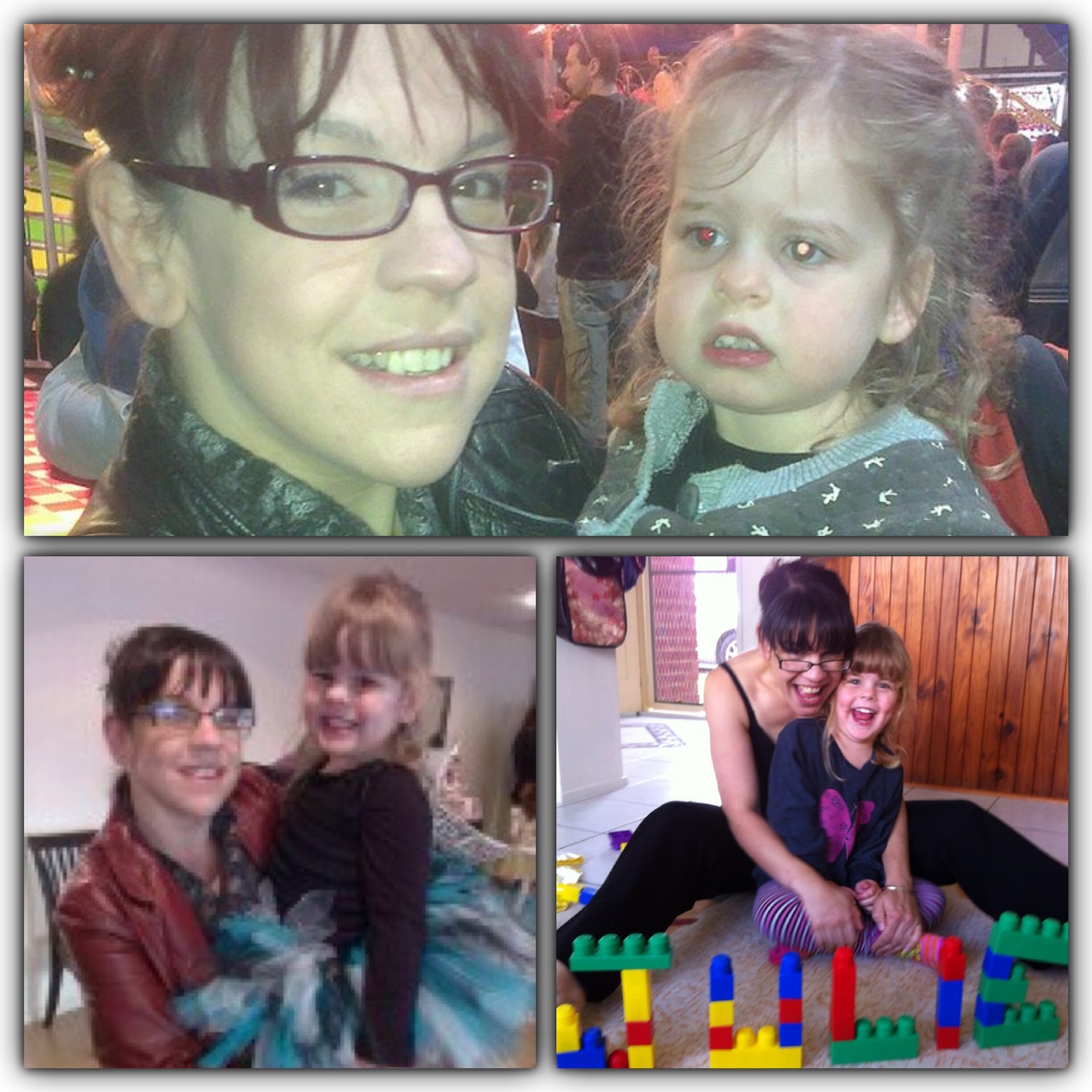
Being a single mum is a lot like living with Diabetes – yes it can be tough, but also very rewarding – especially when you are in control!
Being both has certainly proven to be challenging – but if anything – 28 years of T1D has been a great training ground in showing me what I am capable of, and giving me the resilience I have needed lately. I know what I am capable of – and I know I can conquer this too.
You can follow Rebecca on Twitter here.
Diabetes Tales is a new thing I’m trying out at Diabetogenic. If you’re interested in taking part, let me know!





 Diabetogenic