
You are currently browsing the category archive for the ‘Diabetes’ category.
On the second day of National Diabetes Week, I’m having a smile, giggle, laugh out loud moment(s) and grimace. At these things:
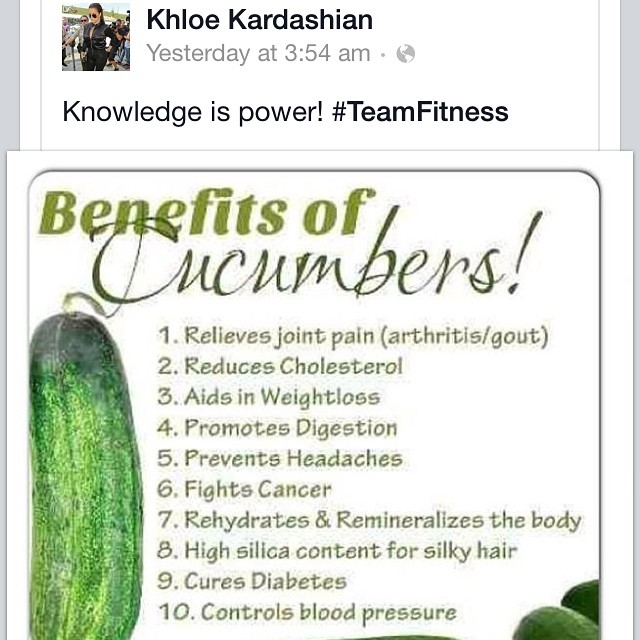
Grimacing at Khloe Khardashian who says kukumbers kure diabetes. How kompletely kool!
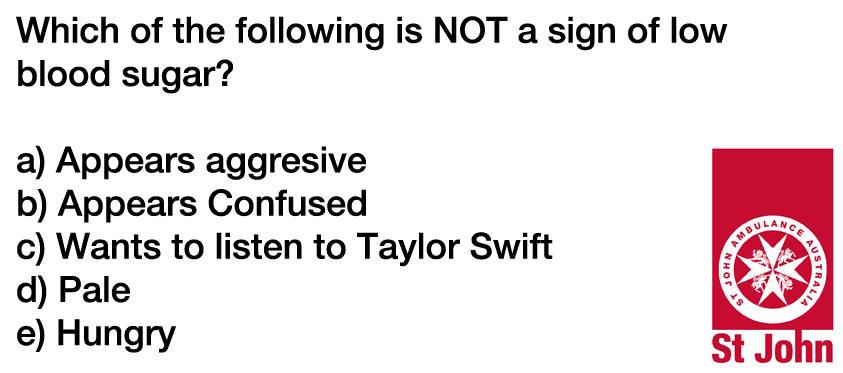
Giggling at this very well-played post from the Queensland branch of St John Ambulance.
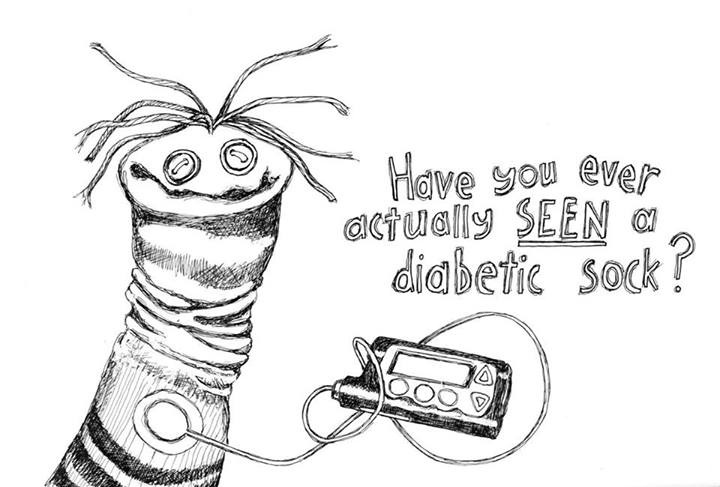
Laughing out loud at this cartoon (and pretty much everything on Bird Wing Press).
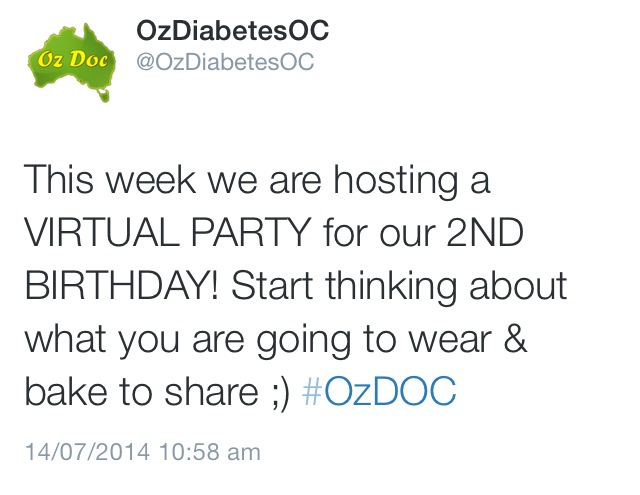
Smiling – really widely – at the thought of the OzDOC two year anniversary virtual party that’s taking place tomorrow night on Twitter. BYO cupcakes!
Hope you’re all buckled in – the week is just beginning! Follow #NDW14 to keep up with National Diabetes Week.
What’s got your attention?
It’s the Friday before National Diabetes Week here in Australia. Over the next 10 days, diabetes will be in the press. A lot. And that means a lot of misreporting and a lot of people saying the wrong things about diabetes.
So, here are some of my thoughts about how to address this:
- Stay calm. If you hear or see or read something about diabetes that is incorrect, don’t get angry. Send a balanced, calm response to the journalist, radio/TV station/person talking with CORRECT information. Be brief, use facts – dot points are good.
- Know your facts! And that means no perpetuating other myths to bust the one that’s pissed you off.
- Get over the type 1 versus type 2 thing. Seriously. Don’t bash the ‘other’ diabetes.
- I send the Diabetes Australia Language Position Statement out to any journalist who uses damaging language when writing about diabetes. I tweet the link directly to journos all the time!
- Naming and shaming is okay if you’re nice and polite about it.
- Don’t engage. Make your point and walk away. There is no need to enter into an argument that will most likely get heated and result in abuse. Grace and dignity are amazing qualities; demonstrate them in spades!
- Action! If you’re going to complain, make sure you actually do something meaningful with it. It’s all very well to bitch and moan amongst your peers, but find the source of whatever has upset you and write to them directly. (See point 1 for the tone to use.)
- Follow up. And if you do take the time to write, you should expect a response. If you don’t get one within a reasonable time, re-send your correspondence.
- Pick your battles. I can tell you now that no one has bucket loads of money to spend on diabetes campaigns, so no matter how much you want the government or diabetes organisation in your state to run a full-blown campaign explaining the difference between type 1 and type 2 diabetes, it’s not gonna happen. Accept it!
- Remember that you know a lot about diabetes out of pure necessity. Don’t expect that same level of knowledge from everyone. Most of the stupid things people say are out of sheer ignorance or bad manners. Politely correct and move on.
- There are some great resources out there that can help. Check out this and this.
The primary aim of National Diabetes Week is to raise awareness of the condition – specifically awareness about prevention of type 2 diabetes. Consider any misreporting or silly comments an opportunity to provide information and education in the hope that the people perpetuating the myths won’t do it again. And as your (and everyone’s) grandmother would say: Keep yourself nice.
It’s Friday! And it’s freezing here in Melbourne. I’m trying to imagine warm sun on bare skin, so here are The Beatles with ‘I’ll Follow the Sun’.
Next month the annual ADS-ADEA Scientific Meeting will be held in Melbourme. This is the leading diabetes conference in Australia and attracts diabetes healthcare professionals from all over the country and boasts a program of outstanding local and international speakers.
This year, for the first time, there will be a consumer stream as part of the conference. This is really exciting because it seems that finally, after many years of petitioning (by petitioning, I mean whining), people with diabetes are actually involved and encouraged to attend.
Details of the Consumer Outreach day are below.
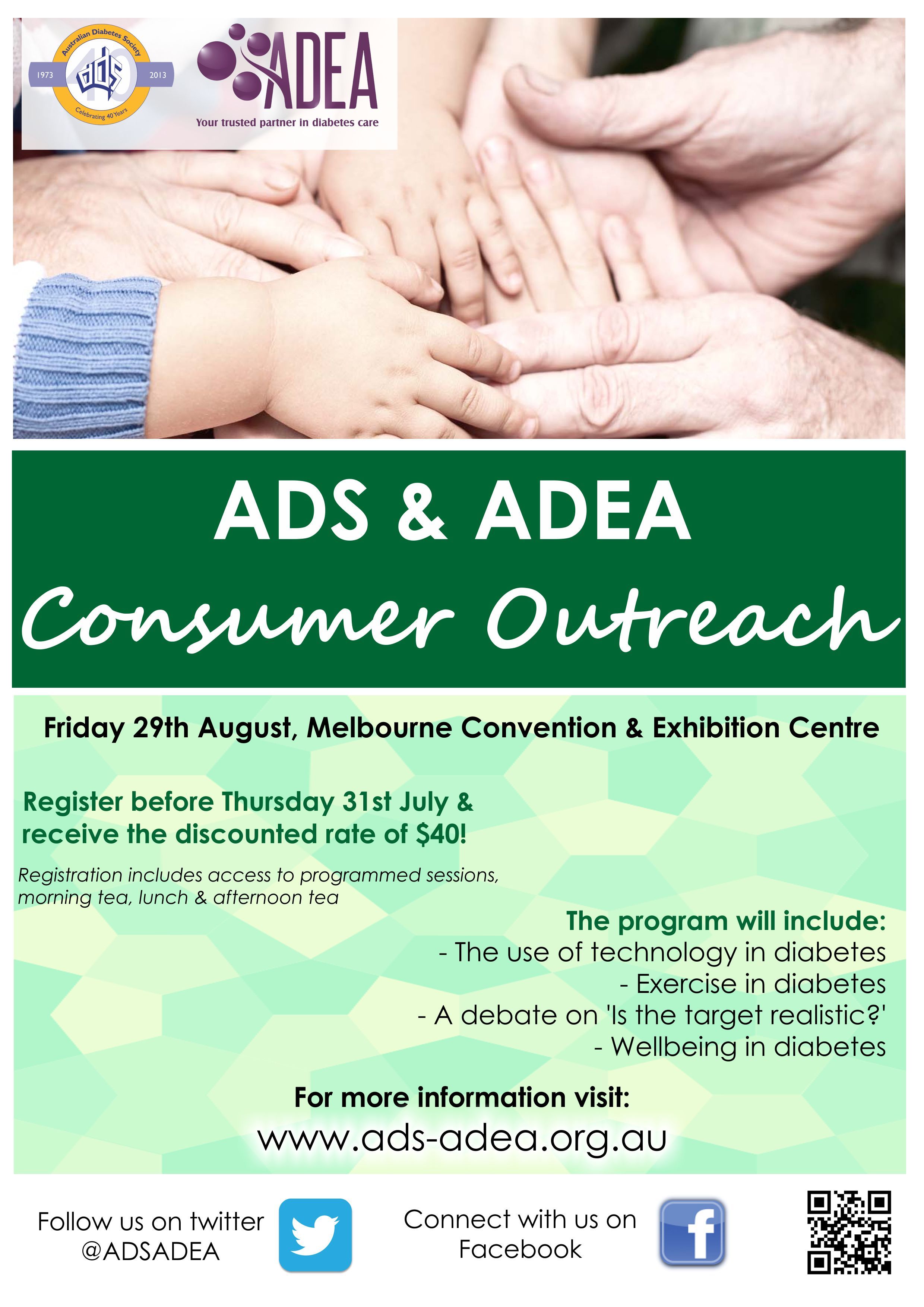
Someone has commented to me on Facebook that registration should be free for consumers and whilst I understand the reasoning behind that, I also know the costs involved in putting on a conference of this magnitude. I also know that sponsorship dollars are tight at the moment. I would urge anyone who wants to attend, but cannot afford it, to contact their local diabetes organisation and see if there is any way they can contribute to the costs.
I also know that having an event during the day on a Friday may not be ideal for many who work. But that’s the reality – conferences are held during the week. If you have any time in lieu owed, or an annual leave day you are prepared to take, this is a great way to spend it! Not only will you get to hear some interesting presentations, but it will be an opportunity to hang out with some incredibly awesome diabetes people.
Peer support for the win!
SCHOLARSHIPS AVAILABLE
#OzDOC will be providing two scholarships to cover the cost of registration for the event. To apply, jump on Twitter and send a direct message to @OzDiabetesOC. Make sure you include your email address in your message. You’ll then receive an application form. See you there!
DISCLAIMER
I am on the organising committee for the Consumer Outreach program. I am not receiving any payment for my involvement in this committee; however, my registration fee for the entire conference has been covered. I am also an invited speaker at the ADS-ADEA conference (at both the healthcare professional and consumer sessions and I have been involved in the submission of two abstracts that have been accepted for presentation at the conference).
 I’ve always believed that when you’re onto a good thing, stick with it.
The other day, I was shopping with the kiddo (she is definitely my daughter – loves a good afternoon of shopping!) when I picked up a striped dress. ‘More stripes, mum?’ she said.
In my cupboard, I have no fewer than 10 striped dresses, countless striped tops and several striped skirts. There are scarves, bangles, bags, purses and even underwear with stripes. Our kitchen contains stripy cups and mugs – all the better from which to drink a morning coffee! And my phone cover is also a fabulous clash of red and hot pink stripes. Admittedly, the situation has gotten a little out of hand – I have a friend who refuses to let me buy another striped t-shirt when we are shopping together.
But I love stripes – I love the way they look and I feel good in them. I can team them with jeans for the weekend or high heels for work. Easy!
So is it a matter of ‘if it ain’t broke, don’t fix it’? Or is it more of a rut?
I’ve been feeling like I’m in a diabetes rut at the moment. The days are the same and the results pretty average, to be honest. I’m feeling unmotivated and if I’m being completely frank, I’ve been like this for almost 12 months. In fact, since I miscarried.
It’s not that I’m not ‘taking care of my diabetes’, it’s just that I’m doing as little as possible to get through the day. I have bursts of micro-managing where I step up a little and do more. I look for patterns and contemplate basal rates. I do more correction boluses and focus on post-prandial numbers. But these periods have been short lived.
My A1c hasn’t been dealt too hard a blow, and if that was how we were measuring my diabetes, then I guess no one should be complaining. But I know (and you know) it’s more than that. The average means nothing.
But for this is it a matter of if it ain’t broke don’t fix it? Is this rut a problem that I should be looking for ways to overcome, or is it enough for the moment? And what will it take for me to decide that I need to step up and do more?
One thing I recommend to people who are feeling they need some motivation, is to invest in some new tech. If it’s time for a pump upgrade, get onto it. Or call your diabetes educator and ask for a new (FREE!!) meter. I’ve always found something new tends to inject (not funny) a bit of energy into my diabetes management. Maybe that’s what I need to do.
Or, maybe I just need to accept that this is one of those times when plodding along is enough.
Or perhaps it’s as simple as getting a new purse to house my existing meter. Perhaps something with stripes…
This week, I had conversations with two women who were embarking on something new and feeling overwhelmed. One situation was far more welcome than the other, but I couldn’t help draw parallels between the two.
Last night, we visited dear friends and their brand new baby boy. He is the picture of perfect health – tiny and round and pink. He has cheeks made to be kissed and a head of soft hair that frames his perfect, gorgeous face.
I spoke with the new mum about the delivery and her first few days with her beautiful little boy. I could hear in her voice confusion as she related stories of being told different things by different people. Who should she listen to? Was the midwife right? Or friends with kids? What about her mum?
Earlier in the week, I had a call from a woman who had recently been diagnosed with type 1 diabetes. She was about three weeks in and confused, stressed and scared. She felt that everything she was doing was wrong and was being given different advice from, it seemed, everyone she spoke with. Who should she believe? Her doctor? Her diabetes educator? Her friend who’d lived with diabetes for the last 26 years?
I listened to both these women and heard what they were saying. I had no advice for either of them – I just listened, and nodded and acknowledged the confusion. I didn’t want to add to their uncertainty by throwing my thoughts into the ring.
But I did try to reassure both of them. I wanted them to hear that they would be okay. I know that it sounds a little Pollyanna-ish to say that, but I really meant it. I pointed out that everyone makes mistakes or tries one thing and then another and then another until they find what works for them. That’s okay. And if the thing that works is different from what everyone around them suggests, that is perfectly fine.
I tried to acknowledge that their lack of confidence is understandable, but that as each day passes, and they work out their situation, they will start to feel more secure in their choices.
The thing I’ve learnt when it comes to peer support is that often, it’s not about just sharing your story. Although that’s a big part of it, the other side is listening and reassuring. People want to know that they will be okay.
Happy Friday – enjoy your weekend. Kick it off with David Sanborn. Bang Bang! (If this doesn’t get you up and dancing and clapping your hands, nothing will.)
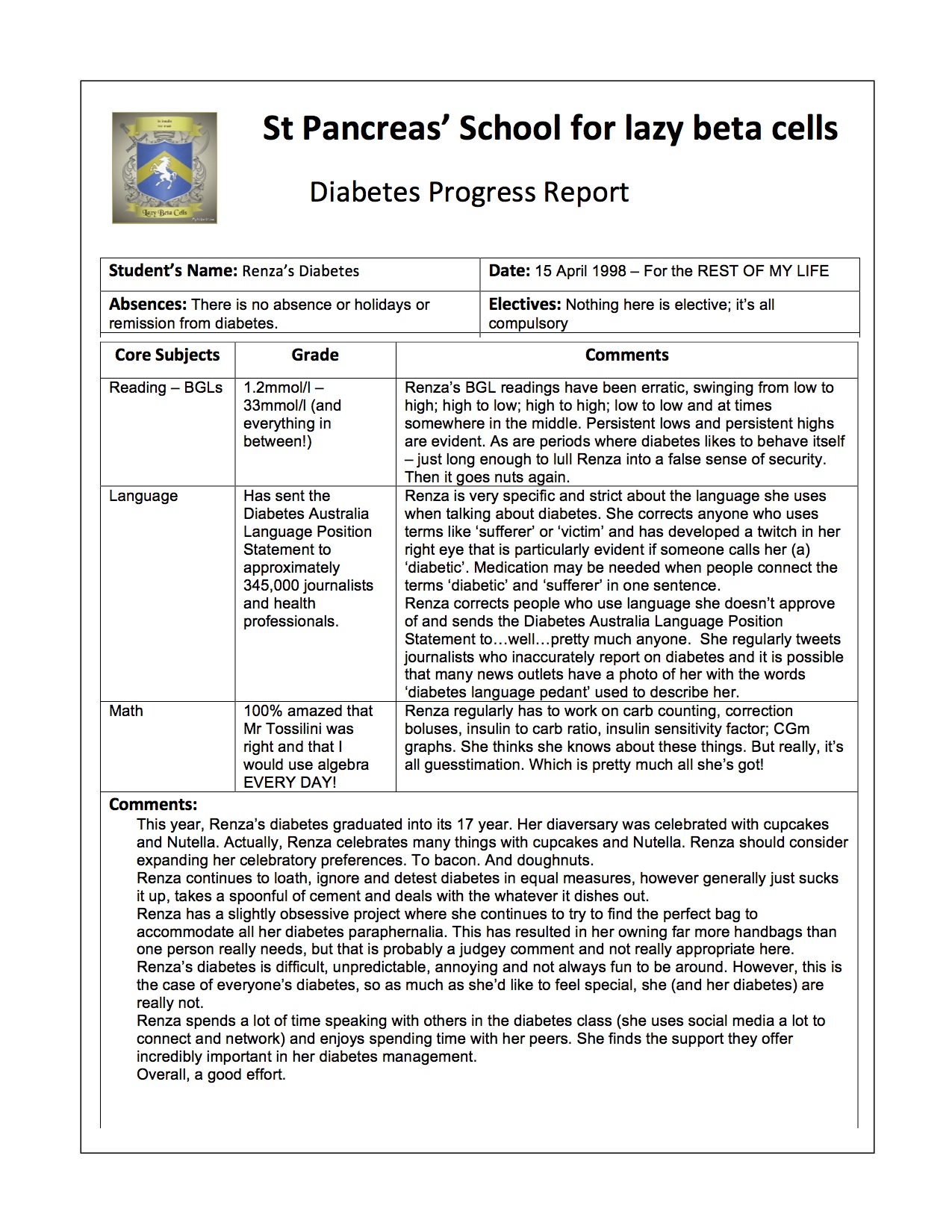
It’s report writing time. I know this, because I can see it in the faces, Facebook status updates and blogs of the many, many teachers I know.
In my former life when I was a teacher, I loathed this time of year. There are only so many ways to say ‘Little Lassie needs to do more flute practice at home’.
How terrifying would it be if we got diabetes report cards?…..
Do a Google search of the term ‘empowered patient’ and you will be inundated with thousands and thousands of links defining the empowered patient, instructing how to be an empowered patient or advising how to deal with an empowered patient (run for the hills and refer them on to another HCP). Health conferences have sessions dedicated to patient empowerment, there are countless social media sites and blogs on the topic, and there are many journal articles – written from the perspective of both the patient and HCPs about what patient empowerment means in healthcare. It could be considered a buzz term, even though it’s been around for some time.
Health organisations for conditions from diabetes to Sjögren’s syndrome(look it up!) dedicate pages of their websites, events and resources to guiding people to become empowered and ‘own’ their condition. It’s not a new thing, and while embraced my many, is still treated with some scepticism and nervousness by some and dismissed by others.
I am what I (and most) would call an ‘empowered patient’. Whilst, I acknowledge that the term is widely understood, I’m not sure that it really is a term with which I’m comfortable. Perhaps because the empowered patient can be considered difficult and annoying – a know-it-all who is there to try to take over the expertise of their HCP. That’s absolutely not what I am trying to do with my healthcare. When it comes to diabetes, I am the first to say I know nothing about diabetes – that’s why I see an incredible endo. But MY diabetes? I am the Universe’s leading expert in that!
For me, being an empowered patient simply means that I am in the driving seat as well as being navigator of my health issues– primarily diabetes, but also other things as well. (Last year, I demanded that I have a D&C following a miscarriage despite the OB wanting to just ‘wait and see’. Waiting and seeing for me would involve horrible pain; excessive bleeding and dealing with the miscarriage whilst on a long haul flight back home from NYC. Previous experience told me that. So I made sure that my wishes were not only known, but also carried out.)
In sixteen years managing diabetes there have been very few instances where I have blindly followed medical advice without asking questions, weighing up all possibilities and talking with others about their experiences.
But I wonder how much being empowered about my health condition and active in decision making is simply because that’s the sort of person I am. When planning for anything, I am organised and informed. I seek out the right people to speak with, I consider options, I ask a lot of questions. I make decisions based on what I have learnt and what I think will be best for me. Whether it is planning a holiday, choosing a contractor or looking after my health, I empower, educate myself. It’s my personality; it’s how I roll.
So does it mean that people who are not naturally like this miss out on the choices and options afforded to people who seek them? Does it mean that if someone is unable to empower themselves (perhaps because of language or cultural barriers, their personality or a lack of understanding of, or an inability to navigate the system) they wind up with substandard care?
Being an empowered patient isn’t at the expense of the expertise and knowledge of the HCP experts we’re working with. It helps form a partnership. I honestly do believe that it is because of our empowerment – our demands and expectations – that we receive better care, better options and, possible, achieve better outcomes. We make our HCPs accountable and answerable, but more than that, we make ourselves accountable and answerable. Sharing in the decision making means we also have to take responsibility when a medical treatment doesn’t necessarily work out the way we hoped. But I’m willing to take on that responsibility.
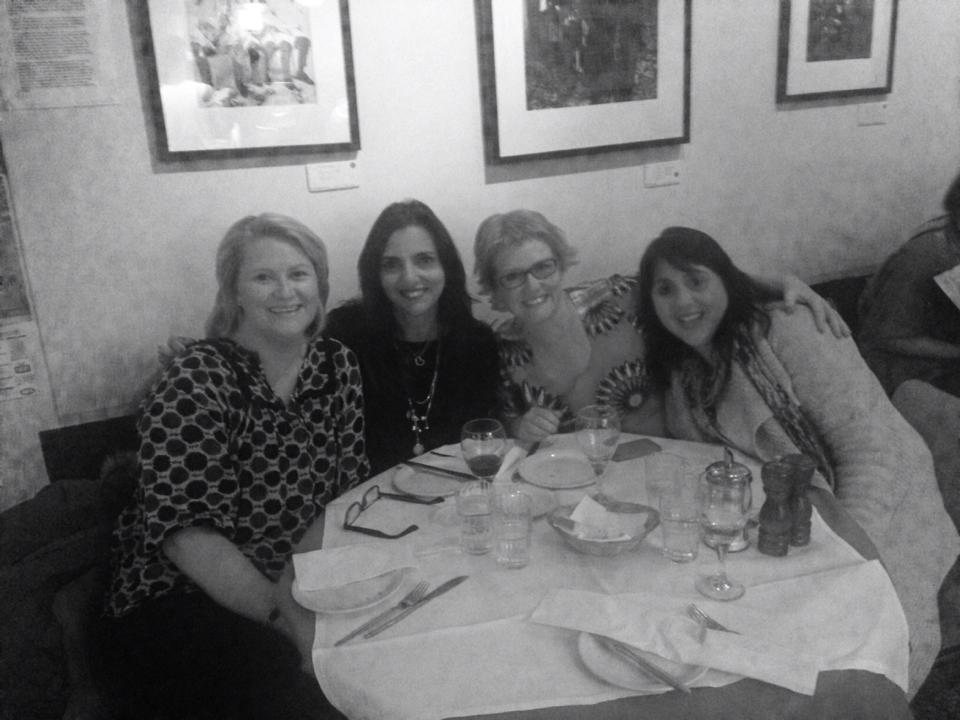
Last night was dinner with the ‘D girls’. These three women are some of my most treasured friends, and we have come together over the years because we have external pancreases. (Pancreata?)
They have been a part of my life for over ten years now. I met them all through my work (another reason to be grateful for this job!) but the reason that we’re friends reaches far beyond diabetes.
A night out with these lovely women generally involves much raucous laughter, a lot of inappropriate comments (we think the people at the next table left the restaurant because they were so disturbed by our conversation at one point) and plotting to fix all that is wrong with the world. We share photos of our gorgeous kids – all born around the same time – and talk about our families and friends and work.
Somewhere in there, we reach into our clothes and pull out insulin pumps, or reach into our bags for BGL meters. Talk of diabetes is scarce, but there may be an occasional comment or question. It certainly doesn’t dominate our conversation though.
As it turns out, some of my nearest and dearest friends do have diabetes. But that is not the reason for the friendship. Whilst it can be acknowledged as why we met in the first place, the reason for our enduring friendship is far more than beta cells that ran out on us. The reason I am friends with these three women is because they are smart, funny, beautiful and incredibly talented. I am honoured to call them friends. I love them to pieces and admire their strength, tenacity and protectiveness.
I see the way they deal with diabetes – the complete and utter ‘eff you’ attitude and acknowledgement that it sucks, but it won’t beat them – and know that I need to be surrounded by people like this.
The commonality that brought us together may be completely and utterly crap at times. But when we’re sitting at Marios catching up, laughing, supporting each other, talking a million miles a minute, we don’t care. Because really, it’s just four girls catching up.
It’s Friday; get your weekend started with some New Orleans funk. Here’s Trombone Shorty. (Swoon!)





 Diabetogenic