
You are currently browsing the category archive for the ‘Diabetes’ category.
I’m on holidays and enjoying winding down from what can only be described as a crazy-busy year. We’re hosting Xmas lunch tomorrow, so there is a lot of prepping going on right now.
Thanks to everyone who has popped into Diabetogenic this year. You have no idea how much your love and support means as I try to navigate diabetes and all that it throws at me. I started this blog to connect with people and I am so lucky to have achieved that.
While it has been a tough year in some ways, it’s also been a wonderful one. I realise each and every day how fortunate I am to be constantly delighted and challenged and surprised by the work I do. The diabetes world is indeed diverse and I really love getting to play in this space.
I’ll be in and out for the next few weeks – mostly out. I am looking forward to spending time with my beautiful family, trying to stay cool in what looks to be a blistering summer and recharging my somewhat exhausted batteries.
But I’ll be back in full swing in 2016. May your festive season be truly magical and bright. My love and wishes to you all.
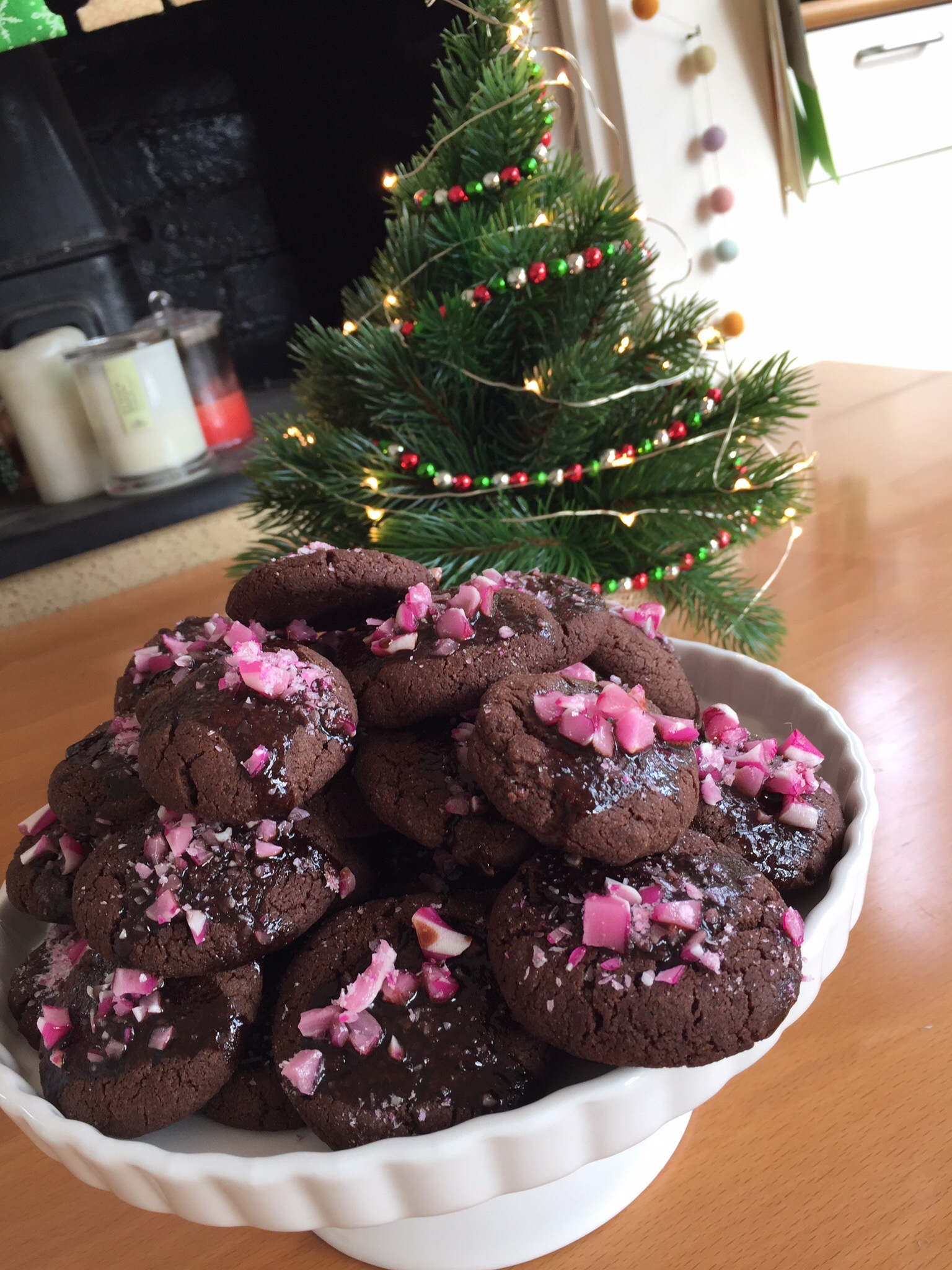
At the risk of sounding Grinch-like, there is one thing about Xmas that really, really annoys me. It’s Kris Kringle (sometimes called Secret Santa). We also do a version called ‘Bad Santa’ which is unusually cruel in that people are able to steal gifts they prefer from others.
I find them all a complete and utter waste of time and, quite frankly, money. All up, we (Aaron and I) spend about $120 on KK gifts each Xmas – four KK gifts at the limit of $30 per gift. Please understand it is not the total cost that annoys me. It’s the total waste of it.
At the risk of sounding ungrateful, I don’t need anything. And for $30 I struggle to find something that is fun (and different from the bottle of wine/designer tea/candle that I usually buy).
I have made this very clear to my family who, if reading this, please ignore my Scrooge-iness and let’s all have a nice Xmas dinner!
For a few years now, I have suggested that instead of buying gifts for each other, we pool our $30 each and make a donation to a charity. It actually would add up to a decent amount and has the potential to make a significant difference in the lives of people far less fortunate than us.
Of course, for me, there would be no better way to spend this money than on a charity that is improving lives of people living with diabetes. With the $120 that just Aaron and I spend on KK presents, we could provide life-saving insulin for two years for a child in a country where medication is prohibitively expensive.
I am sure that I will love the bowl or bottle of champagne or colouring-in book I receive from my KK this year. But really, it will make no difference in my life. It will not improve it. Again, I get that I sound ungrateful to the cousin or aunt who has purchased this gift for me, and while I don’t mean to, it is the way I feel.
It feels wasteful. And there are so many ways that the money could be better spent.
So, today I have made a couple of donations. I have made a donation to Spare a Rose, Save a Child, adding to the monthly contribution I already make. The money I have donated will go to the IDF’s Life for a Child program and provide insulin or BGL strips for 12 months to a child who would not otherwise be able to access these supplies.

And I am also making a donation to Type 1 International to help their work in ensuring people with type 1 diabetes around the globe have access to insulin, diabetes consumables and medical care.

If my KKs are reading this, please feel free to give me a handmade card with a little note telling me you have donated the amount of my gift to either of these charities – or another one that you support. I promise that I will think it the best KK present under the tree, and I also promise to stop being a Grinch!
Our Xmas album collection is eclectic. One album that is on frequent rotation in the silly season is Bela Fleck and the Flecktones and their version of The Twelve Days of Christmas is different to say the least! Enjoy if you can.
Eleven days out from Xmas and I have done hardly any gift shopping. I managed to get online and do a few things the other day, and then spent the rest of the week patting myself on the back and not doing anything more. So, as it stands there are two presents wrapped under our tree, two things in transit….and a list as long as my arm of gifts still to buy.
But! I have found something so special for any of you reading this. (To be honest, it was handed to me from a work colleague, so I can’t even take credit for being thoughtful and finding it myself.)
So, enjoy! Or don’t.
(To make up for that, listen to this.)

I was pulled up yesterday for getting things wrong about the discovery of insulin. We were asked in a meeting why World Diabetes Day is celebrated on 14 November, and like the nerdy-goody-two-shoes I am, my hand shot in the air and I was called on. It was like being in year 8 again.
‘It’s Frederick Banting’s birthday. Banting, along with Charles Best, is credited with discovering insulin.’
‘Stop,’ I was told. ‘Before you keep getting things wrong.’
I was then given a history lesson and told that while Banting and Best were responsible for isolating insulin, it was actually Edward Albert Schafer who discovered it.
So have Banting and Best been heralded all along for something they didn’t deserve? Was it in fact Schafer who should be credited? Well, no. Not really.
It is true; Schafer – actually Edward Albert Sharpey-Schafer – did have a role in the story of insulin. But so did others. Many, many others.
I couldn’t sleep last night, so searched on our bookshelves for my copy of The Discovery of Insulin. I remember reading it years ago and found the history of the little hormone that could absolutely fascinating. As with many discoveries, it was a combination of years of work by many researchers and also, some luck thrown in!
It was German medical student, Paul Langerhans, who first identified the clusters of cells – islets – in the pancreas, however could not determine their function. This was in 1869.
A French physician, Etienne Lancereaux confirmed through his research that the cause of diabetes was something to do with the pancreas – in fact, he published a paper coining the term diabète pancréatique (published in 1877). It is Lancereaux who defined two forms of diabetes.
In 1889, two German scientists found that if the pancreas was removed from dogs, the animals developed symptoms of diabetes – excessive thirst, increased urination, weight loss – and died before long. However, these researches – Oskar Minkowski and Josef von Mering – were unable to find the specific chemical responsible for the elevated glucose levels.
This is where Edward Sharpey-Schafer joins the story. Schafer’s experiments – from as early as 1894 – identified that in people with diabetes there was one chemical missing from the pancreas. In lectures at Stanford University in 1913, he named this chemical ‘insuline‘ taken from the Latin word for island ‘insula‘. (Langerhans, in his 1969 dissertation, had referred to the islets in the pancreas as ‘islands of clear cells’.)
However, someone had already beaten Schafer to it. Belgian clinician and physiologist Jean De Meyer is actually credited with coining the term ‘insulin’ in 1909 where he noted: ‘the internal secretion of the pancreas (not as yet named) and which, if derived, as we believe, from the islets of Langerhans, could be called insulin’. Schafer denied any knowledge of de Meyer’s earlier work.
This was all before Banting and Best, in their experiments, discovered exactly what insulin did and how to isolate the hormone. This was in 1921 and it was this work that led to injecting insulin into dogs with diabetes, and in January 1922, the first insulin injection was given to a person with diabetes.
It is Banting and Best’s work that is responsible for me being alive today.
As with any good story, there is controversy and intrigue. Nicolae Paulescu, a Romanian physiologist, is thought by some to have been the real hero in the discovery of insulin. In his experiments, Paulescu showed that a chemical he called ‘pancreine’ clearly lowered blood glucose levels in animals. However, in 1916 when Bucharest was occupied, his experiments were abruptly stopped and he was unable to publish the results of his experiments until August 1921.
I am Australian, but that doesn’t mean I think it’s okay to discriminate against people from other countries.
I am a woman, but that doesn’t mean that I think it is okay to be sexist to men.
I am of no particular faith, but that doesn’t mean that I go around discriminating against people who are.
I am a mother, but that doesn’t mean I think it’s okay to be nasty to women who are not.
I am a straight woman, but that doesn’t mean I discriminate against anyone who is of a different sexual orientation.
I have type 1 diabetes, but that doesn’t mean I stigmatise those with type 2 diabetes.
So when I saw this initiative from JDRF, I immediately ‘blue-ified’ a photo and stuck in on Twitter and Facebook and Instagram. Because it’s true. T1D DOES look like me.
And then I was kinda baffled at the storm that started brewing because this campaign was considered to be dividing the community.
I had to stop and think about that for a moment. As someone who is rather vocal about how destructive the ‘type wars’ can be, I wondered if this campaign was also contributing to the ‘us and them’ rhetoric.
But I really, really struggled to understand why there was the angst.
There are differences between the diverse types of diabetes. But that absolutely does not mean one is better or worse than the other. It doesn’t mean that one is more serious than the other. It doesn’t mean that one is more deserving of sympathy, or research funds, or attention.
Diabetes awareness is important for us all. And this campaign is brilliant in showing that type 1 diabetes doesn’t have a ‘look’ or a poster child. In fact, it shows that type 1 diabetes is not all about children, which is often how it seems. It presents the diversity of the community and it shows that assuming everyone is the same is a mistake.
T1D looks like me. And like 118,000 other people around Australia and a hell of a lot more around the world.

T.S. Eliot, in a poem, once wrote:
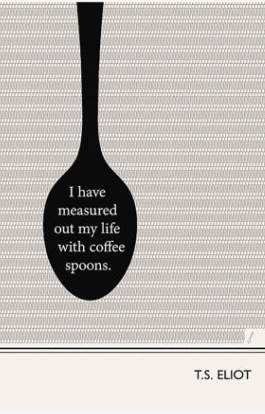
While this could also be true for me, it could also be said that I measure out my life in glasses of juice. Lots of juice.
Unfortunately, I couldn’t find any lovely literary quotes to accompany this sentiment. Except this.

Yesterday, I wrote about a Facebook post that I came across which I felt was powerful and showed the value of social media and support. I shared that post here.
And yet, with one hand, Facebook giveth; and the other it taketh away.
Because then I came across an article about diabetes that make my blood boil. I clicked on the link (which I reluctantly share here) as I stood waiting to board my flight to Brisbane and actually said ‘Oh, for f*ck’s sake’ out loud, impressing the guy in front of me and earning me a dirty look from the woman standing next to me.
The article is actually from the beginning of the year, however, thankfully, I have somehow managed to avoid it for the last 10 months. But yesterday, there it was. Sprouting misinformation about the health condition I live, most reluctantly, alongside.
I only have myself to blame. What did I expect reading the Daily Mail? Certainly not anything resembling decent journalism. And certainly not something based in fact.
The title of the article was the first thing that had me scoffing: ‘I’m scared to go to sleep’: Mother’s 24/7 struggle to keep her daughter alive as they battle form of diabetes that could kill the 15 year-old in minutes.’ (Emphasis all mine.)
Now I am the first person to say that I certainly don’t know everything about diabetes. I’ve never ever claimed to, but I am pretty sure that there is no form of diabetes that can kill someone in 15 minutes. And yet, according to the article, Grace, the fifteen year old in the article, ‘could die within minutes without insulin injections.’
Again, I am no expert. But I know that fifteen minutes without insulin isn’t going to kill me. Or anyone. Even if I ate a whole pavlova washed down with a bottle of full-strength Coke.
But there was the Daily Mail claiming that death would eventuate if there was a quarter of an hour delay in insulin administration. (This bodes most poorly for me and my ‘shit-I-forgot-to-bolus’ days that seem to plague me when there is something more interesting than pinging insulin into my body.)
Apparently, this form of diabetes was caused when …’the disease caused her immune system to eat her own pancreas…’
I understand the need to use language that makes sense to people when it comes to describing what diabetes is all about. But suggesting that diabetes causes our body to ‘eat’ vital organs is the stuff of horror movies, not autoimmune conditions. Surely, the general public can understand the explanation that ‘type 1 diabetes means the pancreas is no longer able to produce insulin’, or something similar that doesn’t suggest some sort of extraterrestrial being has moved in and is feasting on our insides.
I find articles like this frustrating on a number of levels. It is such a melodramatic and false description of type 1 diabetes that it amazes me that anyone could consider this enlightening or educational in any way whatsoever.
This is a perfect example of misreporting of type 1 diabetes, but the voices of OUTRAGE that accompany the potential confusion of type 1 and type 2 diabetes, or the ‘people don’t understand what it is like’ are missing here, instead many are saying that it is a good representation of what it’s really like. And this confuses me greatly.
Because all I see us an article with a lot of incorrect information.
How anyone could consider this article as anything other than disempowering, stigmatising and downright damaging to those of us living with diabetes is beyond me.
I’m not really all that upset that I didn’t fly my car to work today, or jump on a hoverboard. I don’t mind that I wasn’t wearing a weird silver hat or tie my shoes using a pair of power laces. It’s okay that the clothes I put on this morning are not self- adjusting. I’m not sad that I am yet to traverse the space-time continuum in a DeLorean (or souped up Fiat 500).
This is how 2015 was imagined in ‘Back to the Future’ back in the mid eighties. The future was full of whizz-bang technology and most of it just didn’t play out as was imagined.
They got it really, really wrong. But that’s kind of okay.
What’s not okay are all the promises and predictions about diabetes being cured. Five years. Ten years. Whatever we have been told – it has all been wrong. Just as wrong as Robert Zemeckis, Doc and Marty McFly.





 Diabetogenic