
You are currently browsing the category archive for the ‘Diabetes’ category.
Usually, as February comes to a close, there is a flurry of excitement in the diabetes online community as the final tally for the annual #SpareARose campaign is announced.
This year is different. With war breaking out in Ukraine, it didn’t make sense to end the campaign at the exact moment that many in the diabetes community were wondering how to help our brothers and sisters affected by the war.
And so, after a frantic 24 hours of emails, text messages, phone calls and people doing things, #SpareARose for Ukraine was launched.

It’s live. Right now. And you can be part of it.
The colours may have changed a little, but the campaign remains that same: a donation – not matter how big or small – will help people with diabetes living in challenging situations. All funds are donated directly to Insulin for Life, a charity that has years of experience working providing insulin and diabetes supplies to under-resourced countries and responding to emergencies. This is an emergency.
Insulin for Life will be earmarking funds donated in March for their efforts supporting people with diabetes affected by the war in Ukraine. They are part of an international consortium, with partners in Ukraine, and they have supplies ready to go if, when and where they are needed.
You can help by sharing details of how to donate to #SpareARose for Ukraine with your networks. Speak with your workplace to see if they will support the campaign by matching employee donations. You can connect with the campaign online (Twitter, Facebook, Instagram) and share what we’re posting. Remember to share outside as well as within the DOC to reach as big an audience as possible.
And, of you can, you can donate.
#SpareARose for Ukraine builds on what has always been a community campaign. It was started by diabetes advocates, it continues to be coordinated by diabetes advocates, all on a volunteer basis. It is underpinned by the philosophy ‘BY the community, FOR the community’. Please support any way you can.

Gosh, it’s been a hot minute since I last did one of these. The whole point of Interweb Jumble posts on Diabetogenic is to highlight anything that has caught my interest in the online diabetes world, write about initiatives I’ve been involved in, and, most importantly, to elevate the great work being done by others living with diabetes. Building folks up and promoting their amazing efforts has been at the heart of what I do, so I’m always happy to share what others are doing.
Grab a coffee, tea or shandy, (Don’t. Don’t grab a shandy), and read on.
Diabetes Chat
YES!! There is a new place to congregate online, in a different format, and with this one, you get to hear people’s voices. (Sorry to everyone who had to endure my 7am Aussie accent last Tuesday!). This is a new initiative that’s been set up by three DOC folks – Tom from the UK, and Chris and Sarah from the US, utilising a new feature on Twitter called Spaces. It’s a terrific way to host an online peer meeting, creating yet another time and place that is BY people with diabetes, FOR people with diabetes. There is a weekly guest who gets put through their paces with terrific questions from the hosts and those listening in, and an open mic chat time as well.
It’s super impressive to see people from all over the globe participating. It reminds me a little of the DSMA tweetchats which are very welcoming and open to all, regardless of where you live around the world.
Search #DiabetesChat on Twitter for more.
dStigmatize
The team at diaTribe has once again tapped into one of the important issues, and much spoken about topics in the diabetes community and developed a terrific new website addressing diabetes stigma. It’s called dStigmatize and you can find it here.
I’m delighted to see Diabetes Australia’s work on stigma and language highlighted so prominently on the site (disclosure: I work at Diabetes Australia and have been involved in this work), including the videos from last year’s Australian National Diabetes Week campaign, which have been viewed hundreds of thousands of times.

Seasons of…diagnosis
New research out of Finland asked if more people were diagnosed with type 1 diabetes during colder months. You can read the paper here.
And a discussion on Twitter about it here.
HypoRESOLVE podcast
The HypoRESOLVE comms team created a new podcast to showcase the incredible work of this researchers involved in the project, with a strong emphasis on how people with diabetes are involved in the project. I was delighted to host this podcast and speak with some truly remarkable clinicians and researchers as well as other people with diabetes who are on the projects Patient Advisory Committee. (Disclosure – I am on the HypoRESOLVE PAC. PAC members are now paid an honorarium for our time working on this project, however we were not at the time of recording or working on this podcast.)
Here is the most recent episode (on Spotify).
Better engagement with PWD = better services
Great paper from a team out of the UK looking at how connecting with the lived experience expertise of people with diabetes, health professionals and diabetes health services can improve service delivery.
One of the co-authors is one of the GBdoc OG, Laura (@Ninjabetic1 on Twitter), and it’s great to see her name back in the diabetes world, contributing to this important discussion.
And the DDA podcast…
The Danish Diabetes Academy developed a podcast out of their Winter School that featured Postdocs who had participated in the academy speaking with others in the diabetes world to discuss who academic researchers work to ensure their research reaches and benefits those they are researching. I was so honoured to be invited to be interviewed for their first episode and answered questions about how communication is important when engaging people with diabetes to be part of the research process. You can listen here.
Language Matters for Portuguese speaking friends with diabetes!
The latest in the Diabetes #LanguageMatters stable is this document out of Brazil. Always terrific to see more and more statements coming out, highlighting the importance of language and communication in diabetes.
Thinking of starting on an insulin pump?
If so, the awesome Grainne at Blood Sugar Trampoline has you covered with this post. It is truly one of the most measured pieces I’ve read about things to consider if you are on the path to starting an insulin pump. The gushiness and superlatives that many of us resort to when banging on about how much we love our pumps are replaced with sensible, and practical advice and suggestions. If this is where you’re thinking of taking your diabetes management, Grainne’s piece is a must read.
Who doesn’t want to come to ATTD!?
#dedoc° voices is back and heading to ATTD in April this year, and applications are still open if you would like to be considered as part of the program. Successful applicants will be granted access to the entire ATTD program, giving them an opportunity to share what they see and learn with their networks. Make your submission count – this is a competitive process and success is more likely for those who take the time to provide details of how they will be involved in the program. Details here.
(Disclosure: I am an advisor to the #dedoc° voices program. I do not receive any payment for this role.)

World Health Organisation
In March, the World Health Organisation, through the Global Diabetes Compact, is hosting a two-day focus group for people with lived experience of diabetes. If you’re interested in getting involved, there is an expression of interest process you can complete here.
Also from WHO is this survey which is asking people with diabetes how to improve messaging and communication. You only have until 28 Feb, so get onto it now! (Disclosure: I was a volunteer consultant in the development of this survey)
Massive kudos to the Global Diabetes Compact team who are doing an absolutely stellar job engaging with the community. Always so terrific to see!
A diabetes sea shanty…
You’re welcome.
(Follow @TypeWonDiabetes on Instagram here.)
People with diabetes and their involvement in research
An end of year delight was this article that I co-authored making it to publication. The article is about how to better involve people with health conditions in research (which really seems to be something I’ve been very focussed on recently!).
Spare a Rose – last push
February still has a last few days which means that Spare a Rose isn’t over yet. You can still donate and contribute to this year’s total and support people with diabetes in under-resourced countries through the Insulin for Life program.

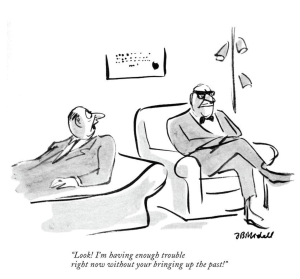
It seems that in diabetes, we spend a lot of time looking back.
But there is nothing we can do about what has happened before this moment. There is nothing we can do about days, weeks, years, decades of doing less diabetes than we would like to. There is nothing we can change about using less advanced tech, or less sophisticated insulins. There is nothing we can do about years of not seeing diabetes healthcare professionals, or seeing health professionals who weren’t giving us the best care. There is nothing we can do about missed screening appointments. There is nothing we can do about forgotten boluses and the days of above range glucose levels.
There is nothing we can do about the time before a diagnosis of a diabetes-related complication, and equally, there is nothing we can do about the time before a diagnosis of type 2 diabetes.
That time is behind us, and no amount of regret, or wishing we’d done things differently, or even ambivalence about it, can change where we are right here, right now.
Perhaps that is one of the reasons that the blame and shame that is intrinsically tied up in proclamations of ‘If only you had <insert whatever in the past we didn’t do>’ are so damaging. Because instead of focusing on what can be done now, and in the future, we are dragged back to what we didn’t do earlier.
Those myriad inspirational quotes and memes we see on every social media feed and in posters on office walls about not being defined by the past don’t seem to have made their way to diabetes thinking. Instead, we are faced with heads shaking, fingers pointing, and knuckles being rapped for what are considered failings of our diabetes-past. And our own judgement as well of our own shortcomings.
Of course, we can learn from our history – we can reach back and remember things that we know work and things that don’t, and use those moving forward. But living with regrets will not change the outlook. And regrets will not help with our diabetes present, and how it might shape our diabetes-future.
Dealing with today’s diabetes is already a lot. A. Lot. Looking backwards and seeing a shopping list of missteps just adds extra burden. Really, all we have in our arsenal is what we can do right now, and perhaps the hope of what might be around the corner. That’s what we have. And that’s what we can do.
February 1 and Spare a Rose. The two go hand in hand in my mind. It’s when the diabetes community comes together to support a campaign that gives back in the most fabulous way. For anyone who is new here, or who isn’t sure why the DOC takes on a fetching red hue for the month of February, let me explain.
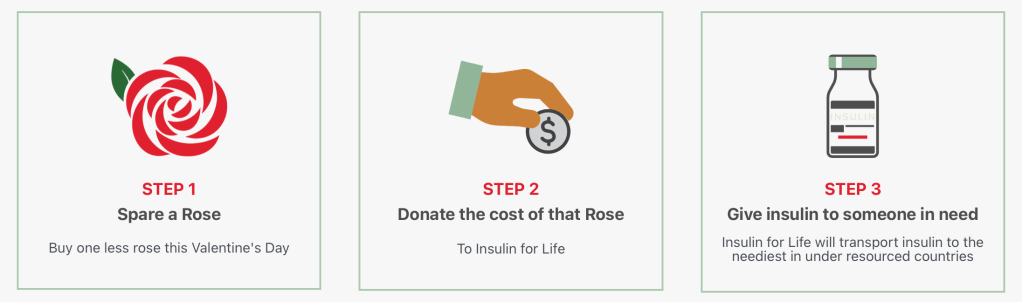
#SpareARose is a beautifully simple idea that asks people to forgo one rose in the bouquet to their love on Valentine’s Day, and instead, donate the saving from that one rose to a charity that supports people with diabetes in under-resourced countries. That one rose (about $5/£5/€5) covers the monthly cost of insulin.
Since 2013, the campaign has been known as Spare a Rose, Save a Child, and the charity that has received all donations has been Life for a Child. Over those nine years, the diabetes community – people with diabetes, people affected by diabetes, diabetes organisations and diabetes industry – has raised close to US$400,000, providing months and months of insulin to children in under-resourced countries. Plus, it’s raised the profile of the charity. Back when it started, very few people in the diabetes community knew about Life for a Child. Now, it’s supported financially by many, and recognised by even more.
For 2022, the campaign is doing something different and broadening its outlook to support people with diabetes diagnosed as adults, or who ‘age out’ of programs that have an upper age limit. Life for a Child supports people up to the age of 26 years. But of course, type 1 diabetes is for life, as is the need for insulin, diabetes supplies and healthcare.
With this in mind, #SpareARose has changed to Spare a Rose, Save a LIFE to recognise how the campaign will be helping adults with diabetes now, and the new charity partner – Insulin for Life.
Insulin for Life is a global charity and supports people with diabetes in many of the same countries supported by Spare a Rose. It’s so wonderful to know that these people will continue to receive insulin and other diabetes supplies, even once they hit 26 years of age, and beyond. You can read more about the important work done by Insulin for Life here.
Despite these changes, the campaign remains the same. One rose = one month of life. It’s a fabulously simple equation. What also remains the same is that it is a campaign BY the community, FOR the community. Every single person in the Diabetes Online Community can be a part of #SpareARose. We’ve seen tweetchats hosted by people across the world, we’ve seen fun challenges on twitter (remember #SpareAFrown?), we’ve seen videos and vlogs and lots and lots of blog posts. #SpareARose is on Twitter, Facebook and Instagram.
Of course, it’s not just financial contributions that make #SpareARose the success it is. It’s also about the community raising its voice to a veritable roar, and elevating the campaign and its charity partner. If you can donate, please do. If you can share, please do. Every time you share, someone might be click on the donate button, or the share button.
#SpareARose to Save a Life. Is there a more meaningful gift to make in the name of a loved one, a friend, a colleague, or in your own name? I really don’t think so.
DISCLOSURE
I’m so honoured that I get to be involved in this campaign by sharing and promoting it as widely as I possibly can. I have spoken about #SpareARose across the globe and written dozens of pieces to raise awareness of this fabulous grassroots campaign, and anyone and everyone can do the same thing. Really, I have no disclosure. I volunteer my time, along with a number of other diabetes advocates from around the world who drive socials to talk up #SpareARose. We also work with diabetes organisations and industry to encourage donations. If you would like to get involved, please reach out. The more the merrier!
Sam Seaborn : You wrote a concession?
Toby Ziegler : Of course I wrote a concession. You want to tempt the wrath of the whatever from high atop the thing?
Sam Seaborn : No.
Toby Ziegler : Then go outside, turn around three times and spit. What the hell’s the matter with you?
This is from a scene in an episode of the West Wing, one of my all-time favourite TV shows. It’s election night, and President Bartlet’s staff are waiting for the call to be made. His communication director, the ever-curmudgeonly Toby Ziegler, is admonishing his deputy, Sam Seaborn, for making any sort of prediction or assumption about the outcome of the election, even though the President is a shoo-in for his second term.
I get it – the idea of jinxing things is one of those superstitions that many of us hold close. I believe in science and evidence and research and nothing else, but even so, I throw salt over my shoulder, tap the table (or my head) and say ‘touch wood’ anytime I predict or claim something positive is going to happen.
This introduction is purely to lay the foundations for a lot of tapping on wooden doors and tables, throwing salt over my shoulder, wearing an evil eye charm, and making the ‘cornuto’ sign (Italians will know…) at my laptop at the end of each sentence, because I am sure that by the end of the week (if not sooner), this post will not have aged well at all.
But anyway, here goes…
COVID has made its way to Casa Diabetogenic. We’ve spent the last two years desperately doing all we could do avoid it, obsessively following health orders to the letter, being super cautious about being in crowds, amassing a huge collection of masks (and wearing them any time we left the house), and being a pin-up family for vaccinations, getting our jabs the minute we could, and boosted to boot.
Despite that, COVID announced itself on Sunday morning after a round of RATs. In the olden days, we would go out to brunch. In the present days, we do a saliva test to see if we have the plague.
Two of the three inhabitants of the house were positive. The one with diabetes (me!) was not. And I remain that way (salt over shoulder) forty-eight hours later, (touch wood).
The positive tests became hour zero and from then on, we were in full isolation mode. Aaron was confined to our bedroom, the kidlet to her own. If either of them need to leave their room for any reason, they send out an alert, and mask up, and wipe down any surface they’ve as much as looked at sideways, and empty half a can of Glen20 in their wake.
I prep and deliver all food and drinks to rooms and am at the beck and call of the infirm. We Facetime each other throughout the day to chat and check in on symptoms. I bossily remind them to keep up fluids and eat the segmented oranges I’ve delivered to them. I am annoying myself, so can’t even being to imagine how much I’m annoying them. We haven’t been in the same room as each other at all, and only see each other in the flesh when we are eating meals in the garden – sitting away from each other, necessitating speaking in very loud voices, giving our poor neighbours unwanted insight into our conversations.
It’s slightly absurd. Until those two lines appeared on those two tests on Sunday morning, we had been carrying on as normal and not giving a thought to needing to isolate from each other. I’d just gotten out of bed, a bed I’d been in for eight hours with my COVID positive husband lying right there. I’m pretty sure the night before I’d handed him my fork so he could have a taste of something I was eating. While we were super cautious about being around others, we didn’t for a second think that we needed to worry about our little unit. Home was meant to be a sanctuary. Now I’m trying to elude the little virus that could from inside our own home. It’s the shittiest game of dodgeball I’ve ever played.
My anxiety has remained mostly in check. I’ve gone into fight mode as I desperately try to disinfectant spray any hint of the virus. I only care that my family is okay and not feeling too poorly or taking a turn for the worse in any way. I’m worried that they won’t recover easily and quickly. I can’t stop thinking about long COVID.
And then there are the flashes of terror (like the middle of the night when I’m lying awake) and I wonder how my body WILL behave when (if?) it gets COVID and then, for a few moments in the cover of darkness, I find myself becoming a statistic, explained away by my underlying condition. They’re the words that ring in my ears thanks to every single presser from the NSW government. It’s so bleak and terrifying in those moments, and all I can do is remind myself that even though there are no guarantees, I am doing all I can.
I’m obsessively checking my CGM because if ever there was an early warning alarm system, it’s my glucose levels. It’s a reliable tell to let me know that an infection is brewing. Straight, steady, in-range numbers greet me in the mornings, insulin doses not needing to be superpowered by Loop to keep me that way.
All the while, I’m trying to understand how it is possible that I remain COVID free (cornuto sign). Because that makes no sense at all. Other than to believe I am some sort of extraordinary, turbocharged powerhouse of immunity (I mean, the vaccines and boosters probably have something to do with it too…)
Friends and family keep checking in and I boast about how, for once, my broken body is being legendary. ‘Are we…superhuman,’ asks my friend Georgie who has also managed to remain COVID-free despite being exposed left, right and centre, even though her immune system and mine match in their hopelessness. (Georgie, I just waved my evil eye charm around for you.)
I have developed this ridiculous superiority complex that is bound to be my downfall. Is it possible that my stupid, fucked up, overactive immune system that hasn’t shown any reason for me to believe it knows what it’s doing and keeps killing off things it shouldn’t has decided to be overactive in the right way, destroying COVID as it’s tried to move in? Do I have an invisible protective shield around me that has transformed me into some sort of crusader, fighting the evil coronavirus and winning? (There is a small salt mountain now behind me. Also, I’m an idiot.)
But then I remember that pride comes before a fall, and that this body of mine and this immune system of mine are not the sharpest tools in the shed at the best of times. And that thinking, let alone writing for anyone to see, that perhaps I might escape this round of COVID is only going to come back to bite me. And I think that I really should listen to Toby Zeigler, because truly, the last thing I want to do is to tempt the wrath of the whatever from high atop the thing. Probably best I don’t hit publish in that case…
Christmas eve and Melbourne is turning it on. Gorgeous sunshine and divine mid-twenties temperatures. It seems perfect and would be if it weren’t for the C word’s new O variant that is looming heavily. I went to the Queen Vic Market this morning with my sister for our traditional oyster breakfast, and kept having to talk myself off the ledge of overwhelming anxiety at the thought of being amongst far more people than I’ve grown comfortable.
But amongst it all, Christmas is here. A huge jar of buttery shortbread stars sits on the kitchen counter, grabby hands reaching in anytime we walk by. Crostoli have been made, eaten and more made. The Christmas tree is decked and glittery, wrapped gifts strewn. There is freshly assembled tiramisu in the fridge, time doing its magic so that when it’s served up tomorrow, it will be a perfectly pillowy delight of coffee and mascarpone. There is lasagna ready for this evening’s small gathering here. Tomorrow will see another two family get togethers and Boxing Day will be the final of the family assemblies.
I feel oddly relaxed, which is lovely because often at this point of the game, I’m a stressed mess with a list the length of all the versus of the 12 Days of Christmas, wondering where I can still find wrapping paper, and hopeful that the local bookshop will still be open for those last minute presents I forgot.
And so, I’m signing off for a few weeks as I enjoy some time off, dappled sunshine to light my days, memories to be made with my beautiful family, a new kitten cuddle, pups to take to the park, friends to hang out with, including some I’ve not seen in two years who somehow miraculously booked tickets on flights that actually made it to Australia. There will be walks along the beach, afternoons languishing on the back deck with my Christmas books (presumptuous of me, but it’s a good bet), outdoor tables at cafes where I’ll sit for hours, alternating between hot and iced lattes, and lots of food. And as little time as possible dedicated to dealing with diabetes, because I am so lucky that Loop has been part of my life
Two years ago, I was wrapping up one of the busiest advocacy years I’d ever had. My passport had been stamped well over twenty times as I flew in and out of countries across the world, presenting, running workshops, sitting in ad board meetings, fighting the good fight. It was exhilarating, exhausting, exciting. And 2020 started off in the same way. Until the world changed. But the advocacy efforts haven’t stopped. In fact, this year was probably my busiest ever. 2022 is already shaping up to be just as involved as this year, more so probably. I’m already scared to look at some months on my calendar, as dates are filling fast. I wouldn’t want it any other way. But that’s next year.
Thanks to everyone who has stopped by this year. I’ve had the most gorgeous messages from people – words of support, asks for help, messages of solidarity. I’m always so grateful to people when they reach out. And I’m grateful to everyone who has taken the time to read my words. I’ve always said that hearing the stories of others helps me make sense of my own diabetes. I hope that perhaps my stories here have helped others in similar ways.
And so, there is only one thing left for me to do before I close my MacBook and let the battery run flat over the next couple of weeks. And that’s make a donation to Insulin for Life’s Secret Santa campaign. Thanks to everyone who has already donated to #IFLSecretSanta this year. Hundreds of dollars of donations followed my earlier post about it. If you’ve been meaning to make a donation, please do. It is truly one of the most important things you can do at this time of the year.
I’m dedicating my donation to diabetes friends who have been incredibly important to me over the last year. Peer support continues to be a cornerstone of my diabetes management – I can’t see that changing any time soon. And I can’t see a better way to say thank you to those who have helped me by supporting a charity that helps others with diabetes.
Last year, facing the first Christmas in the times of COVID meant that for many people, celebrations were very different to other years. Our huge Italian family gatherings were put on hold because the idea of sharing food around a table, sitting in close proximity, and basically bringing together thirty or so loud Aussie-Italians, all shouting, because we all believe we need to be heard over everyone else, was considered not especially COVID-safe. Instead, we met in parks for catch ups, physically distanced and masked up.
We also waived gift giving for the year. Instead, I made donations in the names of all my cousins’ kids, and for the Secret Santa gifts we (thankfully) didn’t have to buy. (I remain especially Grinch-like about this particular Christmas activity and you can read all about why here.)
Charities are continuing to do it tough. Not only are fewer people able to donate, but more and more people are relying on their services to get through.
Insulin for Life is once again running its Secret Santa campaign and what a great way to share some love this festive season! All donations make a difference, but to give you an idea, if you can spare $5, you’ll be providing a week worth of diabetes supplies – insulin, syringes, and glucose strips – to someone with diabetes in an under-resourced country.
There’s lots of information available on the Insulin for Life website, but this one statement certainly brings home just how dire the situation is for so many of our diabetes brothers and sisters around the globe: For every two people alive with type 1 diabetes, one person has died prematurely due to lack of basic care.
Let me just share that again: For every two people alive with type 1 diabetes, one person has died prematurely due to lack of basic care.
Even though I have been volunteering for years now for different diabetes-related charities that support people with diabetes in under-resourced countries, I haven’t become immune to feeling shock when I see the stark truth written out in such simple terms.
Every single person can make a difference and improve the situation for people with diabetes in these situations. Donating is not possible for everyone, but there are other ways to help. If you are on social media, you can amplify the cause and share this blog post, or the donation link with a few words explaining how impactful donations can be (use the hashtag #IFLSecretSanta). You can organise a fundraiser at work, school or with friends – doing the legwork to make things like that happen are important and make a huge difference too. You could do a Facebook or Instagram fundraiser. You can pass a hat around at Christmas drinks and ask people to throw in any loose change they have. No amount is too small. Every contribution matters.
I was just chatting with some of the amazing people from the Insulin for Life team, and I was thrilled to hear donations are already coming in from the community. Of course, I’m not surprised. The diabetes community has always been amazing at giving back, as evidenced by the amazing efforts seen over the years with Spare a Rose.
Insulin for Life’s Secret Santa campaign is just getting started. Last year was the first year, and the community stepped up. And in 2021, even after the absolutely horrendous year so many have had, there are people in the DOC showing up to support the campaign once again. That’s what this is all about. It’s what it’s always about.

The very first time I ever saw or heard anyone speaking of an insulin pump was about 14 months after I was diagnosed. It was National Diabetes Week in July 1999, and I attended an event organised by Reality Check, and supported by Diabetes Vic. Reality Check was a support group of young adults with type 1 diabetes. I don’t remember much from the program at the event, but I do remember a woman called Cheryl Steele. Cheryl was living with type 1 diabetes, and she was sharing her story of using an insulin pump and how it had completely revolutionised her type 1 diabetes management. Three moments from Cheryl’s talk stood out for me: the first was that she was able to be more flexible with what she was eating, the second was that a pump gave her more flexibility with being able to sleep in. And the third was that she loved her pump so much that she threatened to cut the arms off anyone who tried to take it away from her.
The first time I heard about CGM was years before we had the devices here in Australia. I read about them in online blogs and in support groups led by PWD in the US. I read stories about how this technology was changing the way the managed their diabetes in ways I could only imagine. I heard about Libre for the first time a number of years later when I met Claudio Pelizzeni at EASD, and he shared his experience of using the device as he travelled the world (without taking planes).
The first time I heard about DIYAPS was at an informal lunch thrown by Medtronic (I think) in 2015 (I think) in Boston (I think). I’m sketchy about the details, but I do remember with great clarity that at the other end of the table was a woman called Dana Lewis who I had seen online and read about, and knew to be amazing, but not yet met in person. She was talking about…well, to be honest, at the time I had no idea what she was talking about. All I could see and understand was that she was doing something that sounded like science fiction. She had a number of devices linked together and there was something totally magical happening.
The first time I heard about Loop (the DIYAPS I went on to use) was on a rainy New York night in January 2017 at a pub in the financial district. I was having a drink with a friend and just as he was taking the first mouthful of his stout he said, ‘Hang on, I need to bolus’, and he pulled his phone from his pocket and pressed some buttons. ‘What the what?’ I asked and he proceeded to explain Loop, how it worked, how he’d woken at between 80 and 100 (4 & 5) every single morning for the three months he’d been using it, and how he was sleeping better than he ever had.
When it comes to technology, it has always been up to me to first raise discussions about different devices or options. After seeing Cheryl talking about her pump, I asked my endocrinologist about getting one and his opening line (and closing line, as it turned out) was ‘They kill people; I’ll never allow one of my patients to use one’. That was the last time I saw him, and I went on the hunt to find an endocrinologist who would support my choice. I started on CGM because I enrolled myself in a trial. I was given my first Libre at a blogger event. I cobbled together my DIYAPS after sourcing what I needed. As brilliant as my HCP team is, they have not been especially proactive about suggesting, or even introducing the idea of, different diabetes technologies. It’s been learning through others with diabetes that has set me on that road.
When I talk about what peer support means to me, it goes beyond moral support and shared experience. It has been the driving force behind much of the way I choose to manage my diabetes. It has been the impetus for investigating if something new might be right for me. It has paved the way for me to start conversations with healthcare professionals to make access happen.
Peer support is absolutely essential for the mutual understanding and the tips and tricks for making day-to-day diabetes easier. And I’ve always said that hearing others’ stories help make sense of my own. But it is about much, much more. I’ve detailed the ‘first times’ when it comes to tech, but there have been so many more moments – moments that have helped make that tech work for me in ways I’d not thought, and certainly not had discussed with me by HCPs.
When I speak with newly diagnosed PWD I ask if they know others. I gently suggest that it may be a good thing to think about – not necessarily straight away, but certainly at some point. I can never repay the debt of gratitude I have for people who steered me in the direction to the tools that make my diabetes life that little bit easier, but I can do all I can to give back and try to do that every day.
Over the last two days (or last two middles of the night if you’re perpetually in the wrong part of the world as it seems I am), I participated in the excellent first World Health Organisation Global Diabetes Compact Forum. (You can read the Compact which was launched earlier this year here.)
Once again, the WHO team had brought together stakeholders, including diabetes advocates, from across the world to talk about some critically important challenges facing people living with diabetes. These included access to insulin, research and innovation and prevention, health promotion and health literacy. The Forum was definitely not a ‘sit and be lectured to’ event. It was interactive, with everyone having the opportunity to participate and share their experiences and perspectives. The chat function was open and there was a constant stream of engaging, energetic discussion and sharing.
The final session was about prevention and in his introduction, James Elliot, who expertly moderated the event, laid the foundation for the discussion. As with the previous sessions, there were no pre-conceived ideas or narrow focus about the topic.
Prevention isn’t just about prevention of type 2 diabetes. There is a lot of work also going on looking at prevention of type 1 diabetes. And also, once living with diabetes, looking to do what we can to prevent diabetes-related complications.
When I spoke, the first thing I wanted to highlight was the problem I feel with the word prevention, and I revisited previous discussions in which I’ve been involved which highlight the struggle I feel with the word prevention. For too many people it is a word that offers a promise – a promise which guarantees that we can prevent aspects of diabetes that are often well beyond our control. I presented my case for instead focusing on how reducing risk is a far more accurate description of what efforts are truly about, a perspective that I have noticed is being used more and more.
The discussion pivoted to being about complications and associated stigma. Thankfully, this is not the start of the conversation about diabetes-related complications and the way people see them. When I wrote this piece back in 2013, I wrote about the way complications were presented to people with diabetes and how non-modifiable factors such as genetics, are rarely part of the conversation. There seemed to be a very one-dimensional presentation of diabetes-related complications: ‘take care’ of yourself, and you won’t get them.
With communication around complications starting to be included in the language matters movement, I could see that too many people had been told that over-simplistic tale.
It all got taken up a very significant notch when there was a concerted effort in the DOC to encourage dialogue about diabetes-related complications in a non-judgemental and safe way. Suddenly, we were seeing the hashtag #TalkAboutComplications accompany people’s stories, or questions others might have. This led to a real shift, as more and more people shared their experiences, with many saying that it was the first time they had seen others being so open about what was often considered a taboo topic. Starting to peel away the shame and secrecy of what can be a scary part of life with diabetes allowed many people to seek support from peers and help from health professionals.
The legacy of the #TalkAboutComplications idea is that is that there are far more conversations today about diabetes-related complications. There is also a plethora of blog posts, podcasts, journal articles and conference presentations about the topic. I know that there is still significant stigma that we need to chip away at, but actually being able to easily find places online where conversations about complications are normalised and being part of those conversations is contributing to reducing that stigma.
The session at the Global Diabetes Compact Forum was terrific because it tied together diabetes-related complications and stigma. With the theme of access this World Diabetes Day, perhaps we need to think about what that means when it comes to diabetes-related complications. While we absolutely do need to think about all factors at play when it comes to the development of complications, we also need to acknowledge that access is a factor when it comes to outcomes. Access to the right information, including information about risk reduction, access to insulin, access to glucose monitoring devices, access to complications screening, access to early diagnosis and treatment, access to peer support, access to stigma-free treatment, access to mental health support…all these have the very real potential to influence outcomes.
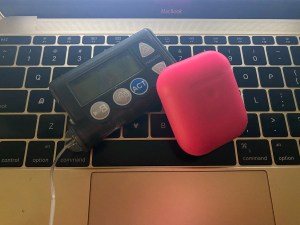
It’s been a while since my last diabetes in the wild encounter. It makes sense. I’ve barely left my house for the last 20 months and I’ve not really been frequenting the places where I would usually have those happenstance meetings – cafés and airports. Gosh, remember airports? Remember the queuing and the waiting and the frustrations and the delays and the cancellations? Anyway, I digress…
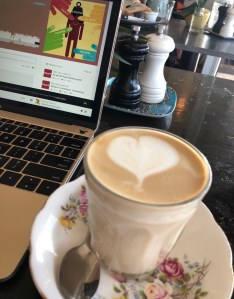
It shouldn’t surprise me that it was a café that provided the setting for my accidental encounter with another person with diabetes. I was working away, happy to not be in my house, even happier that someone kept bringing me outstanding caffeine. Happiest because I knew that every single other person sitting there was fully vaccinated.
I was doing the sort of work I do best in a café – editing. I get into a zone, concentrate on the task, and just read and edit in a super-efficient and fixated way. I don’t get distracted by anyone around me, and the noise becomes a reassuring beat that I work to. I completely block out anything on around me.
Including the fall rate alert on my Dexcom app. Anyone who uses Dexcom knows that this is a particularly urgent, loud and unforgiving wail. It cuts through absolutely everything. I absentmindedly nodded in the general direction of my phone when I heard it, but didn’t make a move as I was totally focused on rewriting a particularly sticky sentence. (Probably like every bloody sentence in this post…)
And so, I didn’t notice a woman sitting nearby get up from her chair and walk in my direction. I didn’t notice her stop right at my table. In fact, it wasn’t until she cleared her throat and said ‘Excuse me’ that I looked up, realising there was someone right there. She was fixing her mask behind their ears at the moment I looked up at her, my eyes focusing away from my MacBook. I blinked a few times and smiled, and then reached for my own mask before realising it was already on my face. I exaggerated my smile, so I was smiling with my eyes.
There was a slightly awkward moment as I waited, because, look, I’ve forgotten how to engage with people. I probably should have said ‘hi’, but I’ve really lost the art of chatting with people. How do conversations start? So, I was thankful when she introduced herself. And then she asked, ‘Are you okay? I heard your Dexcom a couple of times. I just wanted to check you are okay.’
And that was how I broke my streak of having conversations about diabetes with other people with diabetes I’ve never met before.
Turns out, I’ve missed it. Really, missed it.
We spoke for a while, sharing the usual things, comparing notes about which HCPs we see, and talking about which tech we are using. She is about to start looping, so I answered a heap of questions, remembering that I need to not be too evangelical and gushy about it. I toned down my ‘It’s the best thing I’ve ever done for my diabetes’ (because it is) by adding ‘But, of course it’s a learning curve and can be tricky.’
We told self-deprecating stories about how crappy our attitudes to diabetes have been at different periods. We shared our Covid-19 vaccination stories and compared when we’d be getting boosters. And we spoke about how we felt every time diabetes was mentioned in connection to Covid-19.
Through it all my Dexcom kept squealing and I ignored it because I just wanted to slurp up a diabetes conversation with someone in real life, where all we really had in common was diabetes. It felt like a therapy session, a confession, and catching up with a long-lost friend all in one fifteen-minute encounter.
When our conversation ended, she turned to return to her seat, and I settled back, searching for the sentence I’d been working on. But before I could do that, she turned back towards me and said, ‘I read your blog. I’ve seen you here before…well, used to see you here before Covid…and I wanted to say something. It’s really lovely knowing that there is someone like me who comes here.’
And then I cried. Because I remembered just what it is to connect. How real it feels. It’s why I started this blog in the first place – because I wanted to meet others just like me. Well over ten years of writing about diabetes, twenty years of diabetes advocacy, and that feeling of connecting never gets old.
Lots more diabetes in the wild stories on this blog post from earlier this year.




 Diabetogenic