
You are currently browsing the category archive for the ‘Communication’ category.
Today, my social media feeds are full of this screaming headline:

(Click for article)
As soon as I saw this, I threw my phone away from me and put my head back under the doona. Aren’t Fridays meant to be about celebrating a week well done and looking forward to the weekend?
Instead, I woke to far too many notifications about diabetes and death – words I really don’t like to see together, especially not so early in the morning. Fortified with coffee, I took a deep breath and in I went, reading the article from top to bottom.
I’ve had a knot in the pit of my stomach all week. It moved in and made itself comfortable when the Australian PM started talking about easing lockdown restrictions. I’ve spent the last few days trying to work out how I can manage this anxiety in a sensible way, and not do what I really want, which is to build a cellar under our house, stock it with coffee, prosecco and Nutella, and move in there until sometime in 2030.
This article and the subsequent commentary twisted that knot tighter and pushed it in deeper. ‘I live here now,’ it seemed to be saying. And then added, ‘Get better WIFI; it’s patchy in here.’
The fact that the article raises more questions than it actually answers hasn’t helped. More details – details that may help to better understand exactly what is going on – won’t be published until next week. And so, without enough content to provide explanations, advice and information that might help PWD feel that perhaps it’s not all hopeless. Instead, The Guardian offered some throw-away lines about the associations and causes of type 1 and type 2 diabetes:
‘NHS England’s breakdown, published for the first time on Thursday, did not specify how many of the 5,873 diabetics who died had type 1 diabetes, an autoimmune condition not related to lifestyle, and type 2 diabetes, which is closely linked to being overweight. Fuller details will be published in an article in a medical journal next week.’
This just seems like an opportunity for people to appease people with type 1 diabetes, and point the finger and further stigmatise people with type 2 diabetes, instead of acknowledging that people with ALL types of diabetes might possibly find this news confronting. What is the relevance here to being overweight? If there is a correlation, please let us know and does it impact people with type 1 diabetes who are also overweight?
I am not for a moment saying that this sort of information should be hidden away or swept under the carpet. Of course, I want to understand how diabetes and COVID-19 interact. But there has to be a better way to get information to the masses without adding to the anxiety and worry. And definitely in a way that doesn’t sensationalise, point fingers and add to social stigma.
The article goes on to highlight the link between Alzheimer’s disease and deaths due to COVID-19, and as I read the quote from Alzheimer’s Research UK’s director of policy and public affairs, Samantha Benham-Hermetz, I wanted to reach into my MacBook and give her a metaphoric, and therefore socially distant, hug. She said:
‘This shocking news will no doubt bring even more worry and fear to people affected by dementia and their loved ones, during an already challenging time.’
I know that I and so many of my friends living with diabetes, and their loved ones, have been feeling worried and scared since this all started, and this article has the potential to add a lot more. The fact that this response was acknowledged out loud (and I think it’s fair to say that people affected by diabetes would be feeling the same as those affected by dementia) made me feel so grateful and heard.
Statistics are statistics, and data are important; I know that. But sharing data with the masses only works if it is done effectively and communicated in a way that doesn’t leave people feeling hopeless, but rather empowers us to make decisions that contribute to minimising risk.
My heart breaks for my friends with type 2 diabetes, and their families, who not only have to digest this headline and information, but also need to consider how the cavalier and simplistic definition of type 2 diabetes will now be interpreted by the general population who already are so quick to blame and stigmatise.
I live with diabetes, and I understand that I am high risk of complications, and so it seems, death if I get COVID-19. But mostly, more than anything else, I am a person trying to make sense of all of this and stay safe, healthy and sane – just like everyone else.
P.S. Hey – Guardian UK – I fixed this para for you:
‘NHS England’s breakdown, published for the first time on Thursday, did not specify the type of diabetes with which the 5,873 people who died were diagnosed. Fuller details will be published in an article in a medical journal next week.’
Tuesday last week, I woke up to find this message in my Twitter DMs. I read it and read it again. It accompanied a tweet or two to me about my blog post from the previous day.
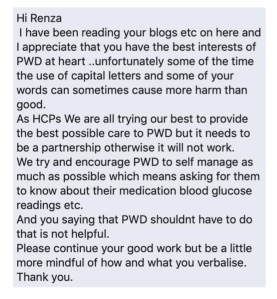
I debated about whether or not I should share this publicly. I wrote some words, walked away, came back to them, walked away, asked a few friends their thoughts, walked away, wrote a bit more and walked away again. I posted it to my closed Facebook page to get some feedback from others and wondered if that was enough.
But then remembered this blog post. #StandUP.
So, here I am, standing up. Because I am upset and angry.
I am not upset and angry that someone didn’t like or disagreed with what I wrote. It would be frightfully boring if we always all agreed with each other and loved the same things.
I am not upset and angry that this message was unsolicited. I believe that people don’t need an invitation to comment when I write and publish things on a public forum. I invite all feedback – good and not so good.
I’m not even upset or angry that I don’t understand what was being referred to in the message. I re-read and re-read and re-read my post, and I can’t see where I ever, ever said that people with diabetes shouldn’t self-manage, or know what meds they’re taking or what their glucose readings are. I couldn’t find it in there. But, people interpret things differently and perhaps my writing wasn’t as clear to them as I thought it was.
I’m not here today to defend the content in that blog post, because that’s not what this is about.
I am upset and angry that I was being told to ‘be mindful of what and how I verbalise’. This is called tone policing. It is telling me that I should moderate the way that I talk and think about my own diabetes. This was an opinion piece. My opinion. People don’t need to agree with it – and they can tell me they don’t. But telling me to moderate the way that I communicate is a very different thing.
I will forever call out and stand up to anyone who tells me, or others with diabetes, to restrain our feelings or opinions, and that is why I am writing this post. Because more than anything, I believe that we have a right to express how we feel about diabetes, in the way we want to, especially when we are sharing our own opinions or experiences. When we are told to be mindful of what and how we are writing/speaking it is a step on the way to censoring and silencing us. We already do that enough.
Often, in clinical settings, we moderate the way we speak. We might minimise how tough things are, or don’t speak out about the way we are treated or the judgement we face. When we are told that we’re not doing enough and are failing, we look down, afraid to stand up for ourselves.
And so, we created spaces where we could be free to share and rant and cry in a way that gave us some comfort. We turned to others who are likely to have had similar – if not identical – experiences. We share our opinions, some of them unpopular, thought-provoking and challenging of the status quo because we feel we have the liberty to do just that.
We have had to be quiet for too long. But that should never be the case in our own space.
The diabetes online community is that space. Twitter, when we use our #xxDOC (or #DSMA) hashtags is that space. Other online and offline support opportunities and groups we have created is that space.
And this blog (and others written by PWD) is that space.
So, back to the message I received last week. I did ask for clarification, and for examples of where I’d used capital letters or words that could be considered harmful, but I didn’t get a response.
Just this message:

No answers, just a threat to mute me. To silence my voice. Sure, it is only being silenced on this one person’s twitter stream, but that was the response to me refusing to be ‘compliant’ and agree with a healthcare professional’s demands that I tone down the way I write about my own opinion. I had not been aggressive, abusive or rude. I had just shared my own opinion and thoughts in my own voice. In my own space.
Recently, the Australian of the Year was announced. This year, the gong was awarded to Dr James Muecke, an eye surgeon from South Australia, who was acknowledged for his work raising awareness of type 2 diabetes and its links to preventable blindness.
I didn’t really know of Muecke before the announcement, but clearly, he is very accomplished, and his work reaches beyond Australia’s borders. He co-founded social impact organisation, Sight for All, which raises funds to deliver vision-saving programs and eye health projects to people in under-resourced countries.
However, it is Muecke’s work in linking type 2 diabetes and blindness that received the majority of the media coverage, with (as can always be relied upon) some pretty average reporting. Interviews with and soundbites from the newly crowned Australian of the Year did focus on a simple and incorrect equation of sugar equalling diabetes, and this certainly did seem to concern a lot of people responding to what they were seeing online.
I sighed as I read through a lot of that commentary, dismayed as the calls to differentiate between the types of diabetes drowned out Dr Muecke’s award, with repeated bleats that ‘Sugar didn’t cause my/my child’s type 1 diabetes’.
Sugar didn’t cause anyone’s diabetes – it’s just not that simple. I appreciate wanting people to understand that drinking too much Coke isn’t why type 1 diabetes develops. But equally, I want people to understand that it isn’t why type 2 diabetes develops either.
Asking for clarification of the different types of diabetes isn’t always necessary because it doesn’t always matter. You bet that it does matter at times, but other times, it really doesn’t.
We see this time and time again. Think about the time that café in Sydney thought they were being cute by calling a dessert ‘Diabetes’, or the time that guy on that UK cooking show referred to something as ‘Diabetes on a plate’. Was this really the time to get all uptight because the difference between type 1 and type 2 diabetes were not specified? Were the calls to stop stigmatising type 1 diabetes by not clarifying that ‘our’ diabetes isn’t because we ate that dessert? Does it matter in these moments if the person stigmatising and misrepresents diabetes doesn’t point out which sort of diabetes?
It really doesn’t. If the dessert was called ‘type 2 diabetes’ or the recipe was ‘type 2 diabetes on a plate’, it still would have been wrong. It still would have been stigmatising.
And yet, every time another lousy comedian, or celebrity or chef makes a diabetes joke, or the media gets diabetes wrong, or the Australian of the Year explains diabetes in the wrong way, the predictable cries, and rapid soundbite responses only feed into the stigma, prejudices and misconceptions of type 2 diabetes.
We can do better – we need to do better. And we can, by being more thoughtful in our response to correct people getting diabetes wrong.
I should point out that this goes beyond people with (or parents of children with) type 1 diabetes. Lots of other diabetes stakeholders get into it too. Some health professionals trip over themselves in their endeavour to speedily demand clarification of type, (even when it is not necessary). This has always left me somewhat befuddled and wonder if they think this will win them brownie points with the cool kids on Twitter. Surely HCPs working in diabetes understand that sometimes putting ‘type 2’ before diabetes is not actually rectifying what is factually incorrect in the original statement. And that should matter, a lot more than the ‘likes’ from the type 1 diabetes Twitterati they seem so eager to impress!
We can get it right, and get it right quite easily. When the Australian of the Year announcement was made, the comms team at Diabetes Australia absolutely nailed the messaging, striking a balance between commending Dr Meucke for his award, acknowledging how wonderful it was to see the Australian of the Year platform being used to highlight the link between diabetes and diabetes-related eye disease (with a plug for KeepSight!), and adding a note to clearly and eloquently explain the complexities of type 2 diabetes, the role that genetics and other non-modifiable risk factors play in its diagnosis, and reminding people that type 2 diabetes is not caused by eating sugar.
I think the team got it right – the information was correct and accurate and did not in any way add to the stigma of diabetes. (Disclaimer: I work for Diabetes Australia and I’m talking about my colleagues. Whilst I sometimes work with the comms team, they are all far smarter and better at communicating than I could ever hope to be. Which is possibly why they won’t let me near any of our socials. That, and they worry I’ll swear, or share an Effin’ Birds cartoon…)
Each type of diabetes – and there are many! – has its own complexities and some of the time we need to make sure that it is clear which diabetes we are talking about. But next time you find yourself about to take to the keyboard to correct some misinformation, ask if you are actually adding to that misinformation. And if you see someone demanding such clarification, ask them if they are aware they are contributing to type 2 diabetes stigma. Because I think a lot of the time that is exactly what is happening.

Complete digression, but the title of this post reminded me of these books, which anyone who has been around kids in the last 15 or so years would know about!
I wrote a post a while ago called ‘You Do You’, (and revisited and expanded on it here). It’s where I wrote about how everyone should have the freedom to do diabetes whichever way they see fit. I’m pro-choice in all aspects of life*, especially when it comes to PWD choosing their own management tools.
And I think that people with diabetes should have the choice to BE the people we need to be. And the people we are. I touched on this on my post on Monday when I spoke about how I felt intimidated online because my opinions and thoughts, and the way I addressed issues, were not everyone’s cup of tea. I felt that I was being called out for being myself. And that wasn’t okay.
No two people with diabetes are the same; no two people with diabetes will have precisely the same management ideas and preferences, and no two people with diabetes will react and respond to situations in exactly the same way.
THAT IS OKAY.
Diabetes is messy, frustrating, weird, annoying, amusing (rarely, but sometimes), scary, boring and a whole lot of other adjectives. And how we react and respond to it is our own business and no one else’s. You BE you, because you have the right to do that.
You have the right to be as loud or as quiet as you want.
You have the right to be as bitter and angry as you need to be in the moment.
You have the right to celebrate and be joyful about your diabetes.
You have the right to call out things that upset you just as much as you have the right to commend the things that make you satisfied.
You have the right to step away from groups, situations, people who upset you.
You have the right to disagree with others. Having an opposing view does not mean that you are attacking another person.
You have the right to have an opinion on what you see in the world of diabetes – even if it is happening on the other side of the world. I was incredulous when it was suggested that I shouldn’t question something happening in a healthcare system of which we are not a part. (I may not use the healthcare system in the US or the UK or Italy or anywhere other than Australia, but I am allowed to comment on what I see being done in those places.)
You have the right to be passionate and not be told that is a character flaw.
You have the right to be emotional because diabetes is real in a way that only makes sense to those of us who are living with it or have a loved one living with it. I don’t know how to take the emotion out of this, so you bet I will be emotional at times. I don’t get to clock off at the end of the work day and not think about it.
You have the right to use the words and language that works for you when talking about your own diabetes and if anyone tells you that #LanguageMatters is actually preventing PWD from doing that, tell them to fuck right off. It’s not. It never was. It never will be, and anyone who says it is has missed the point of the whole movement.
You have the right to use the word ‘fuck’ or whatever else you want to use. Profanity helps some people and we shouldn’t be told to wash out our mouths if others don’t like us using those words. (Sorry, dad.)
You have the right to be the sort of advocate you want to be. Or to not be an advocate.
You have the right to share your experiences – even the ones that don’t shine a particularly positive light on health systems or HCPs. No one – NO ONE – should silence us when we turn to our peers to seek support, or talk about what is going on in our diabetes lives.
You have the freedom to talk about your own diabetes, especially in the diabetes online community which we created for this very reason – to be able to share our experiences, learn from each other, support our peers and build each other up.
So, this? This is me being me. This is me standing up and not going quietly. This is me saying that I will be the person with diabetes I need to be, because it’s the only way I can be true to myself and true to my community.
*Except vaccinations. I don’t believe in choice there.
Each year, as we stop, look back and take stock, the reason that we are feeling so tired becomes apparent. This year is no different for me; my work travel calendar was the most intense it has ever been, with nine long haul trips, some for only a day or two. Combined with regular domestic travel, I can truly say that I have seen the inside of airports far too much. I stopped adding up the trips I did once I passed 100 walks down airbridges to board planes because it was making me weepy.
But on top of the usual exhaustion this year, there seems to be an extra element of fatigue that goes beyond what I’ve experienced before.
But first, let’s talk highlights, because there have been many of them.
The year kicked off with Spare A Rose and whoa, did we start the year with a bang! With the true philosophy of SaR at the forefront (an initiative for the community, by the community), we not only reached our rather audacious target, we smashed it! A cheeky and opportunistic little extra push saw a smiling Grumpy Pumper unleashed to the whole world for just a moment The DOC didn’t break, but the final tally of for the campaign meant that 939 kids in under-resourced countries would be receiving insulin for a year. Amazing!
My favourite issue, #LanguageMatters, only went from strength to strength, and the publication of this piece in BMJ, followed by this podcast, was a brilliant way to get it outside of the diabetes echo chamber. The importance of language featured on the programs of major conferences such as ADA and #IDF2019 with stellar panels speaking about why it really does matter.
My diabetes turned 21 and tied up in all the emotion of that, my pancreas’ performance review didn’t go all that well. Maybe next year? (Unlikely.)
Possibly the most exciting, heart-warming, rewarding and humbling thing I did this year was co-facilitate a workshop in Manila with some of the most dynamic, compassionate and enthusiastic young diabetes advocates I have ever met. I’m thrilled have had a chance to catch up with a couple of the people from this meeting and can see the wonderful work they are doing in more than trying circumstances.
Peer support was never far away. One of my favourite digital campaigns came from Diabetes Australia (remember – I work there so consider my bias) with our The Lowdown campaign. What a brilliant way to showcase how a digital campaign can reach and connect people from all over the world, and encourage them to safely speak about a topic that doesn’t seem to get anywhere enough coverage. I spoke about the campaign’s success in a number of places this year.
My own personal peer support experiences happened all around the globe at conferences, advisory board meetings and other opportunities to see friends and colleagues with diabetes. These moments ground me and help me make sense of what I am seeing and hearing, and are critical for keeping me balanced.
A special shout out to these two peers and dear, dear friends: Bastian and Grumps. We saw each other an inordinate number of times this year, literally all over the globe, travelling on planes, trains and automobiles for our #DiabetesOnTour. I do think we should launch a calendar of the 2020 pics. (Admittedly, we may be the only ones remotely interested in that idea.) When I talk about my diabetes tribe, it’s friends like these two. We’ve celebrated through some pretty amazing things this year, stood up to elevate the lived experience over and over, and also counselled each other through the tough bits. We’ve held post-mortems of long days, sitting in hotel foyers and bars, trying to make sense of what has happened, working out how to always improve, and plotting and planning more and more and more. I am so grateful to them for being the scaffolding holding me up when I’m away from home and feeling overwhelmed.

So, now the reason for that elevated exhaustion…
When I first wrote about advocacy burnout back in January this year, I had no idea at the time that it would set the scene for a difficult and sometimes troubling theme for the year. I get tired and overcome at times throughout the year, but 2019 was different and I’m not really sure why.
There were moments this year where I did honestly wonder how much more energy I have to stand up over and over again to a lot of what I was seeing. I don’t like using war and battle analogies in diabetes, but I did feel that I was fighting a lot of the time. Diabetes advocacy is a tough gig to begin with. Adding burnout on top of it makes it seem shattering.
Being attacked by HCPs for daring to voice my thoughts and challenge their behaviour, or getting it from certain, more confrontational parts of the diabetes community, or having industry reps tell me I don’t know what I’m talking about for daring to suggest that maybe their lame attempts to simulate diabetes in gameshow-style gimmicks at conferences could be better directed at actually engaging and listening to PWD all added up.
Or perhaps it was the repeated examples of ‘diabetes for laughs’…and realising that we are a long way away from HCPs truly being allies in our daily encounters with stigma.
Or perhaps it was feeling that we needed to justify just how important the #LanguageMatters movement, and the decade of work we’ve done really is. I can’t even begin to tell you how upsetting this little incident was.
It added up and several times I’ve felt overcome. I feel like that today. Which is disappointing because on measure, the highlights, the positives and the amazing community should overshadow the negative encounters.
And that is why I’m taking a break from Diabetogenic. I need some time away from feeling as though I want to analyse what is going on and comment on it. I have a wonderful holiday planned with my gorgeous family where we will see friends and wander wintery streets, rugged up in pompom hats. And then, will warm up once back in Australia to finish recharging my seriously diminished batteries, ready for a new year that’s already shaping up to be so, so busy.
Until then, I hope you have a wonderful holiday season, celebrating however you see fit. Thanks for popping by. And I’ll see you in 2020, clapping my hands and raring to go!
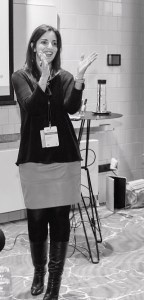
A few weeks ago, I saw this tweet:

(click to be taken to original tweet)
Clinical psychologist, Dr Rose Stewart, was giving a presentation where she highlighted that the power imbalance we experience between HCPs and PWD carries through to online spaces. (Thanks to Mark Guyers for live tweeting Rose’s talk.)
The diabetes online community (DOC) was a space created by people with diabetes for people with diabetes. It’s been around for many years. Australian-based site, Reality Check, had an active online forum back in the 1990s. Diabetes blogs led by DOC pioneers such as Kerri Sparling and Scott Johnson (and others) were around in the early 2000s. I wrote a weekly pregnancy blog for a diabetes peer site when I was expecting our kid in 2004 (which I republished a number of years later on Diabetogenic here).
Twitter chats (starting with #DSMA) followed. The chatter of the community goes where the community congregates; different groups use different forums to meet and chat. Kerri wrote this brilliant report on the history of the DOC. It’s a great read to learn from those who were instrumental in bringing together the community online.
I agree with Rose: Our community is better because it includes stakeholders from all corners of the diabetes community including HCPs and researchers. Jane Speight and the ACBRD team; Deb Greenwood, Hope Warsaw and other shining stars from the AADE; and clinicians and researchers from projects such as HypoRESOLVE contribute to DOC discussions and make them far richer and more rounded. That’s just the way it is when we hear the perspectives of all people living with, affected by, working in, and researching diabetes.
Some of the great outputs of these collaborative efforts include research projects, conference presentations and, of course, the development and production of this wonderful #LanguageMatters video.
Our community is not better when PWDs’ personal experiences or feelings are challenged, and unfortunately, that seems to be the default of some non-PWD and HCPs in the community. I’m not for a moment suggesting that PWD don’t challenge each other’s ideas and opinions. (Yes, I’ve read Bernstein. I’m just not that into him, but you do you.) But it is undeniable that there is a difference when it is PWD challenging each other as compared with when HCPs challenge us. There is power at play in the latter. And that is important to remember.
The spectrum of this is from the downright abusive (such as a doctor’s now-deleted response to this twitter thread I shared), to defensive: what I call the ‘Yes, but…’ response. In some ways, it is this particular reaction that is more difficult to deal with.
I find it really problematic when someone speaks about a horrible situation only to be challenged by HCPs. Responses such as ‘Yes, but we’re trying,’ or ‘Yes, but things are better than they used to be,’ or ‘Yes, but we’re not all like that,’ are defensive and don’t acknowledge or respect the experience being shared by the PWD.
When HPCs make these sorts of comments in response to someone sharing their less than ideal experience, it shifts the discussion from the PWD (and that experience) to broader interactions between HCPs and PWD. At its very worst, the discussion moves to how HPCs are challenged by ‘misbehaving PWD’. Live tweeting from the sex and diabetes session at the IDF Congress got messy when it skidded into commentary about how difficult ‘patients’ were and that if only they did what they were told, HCPs would have a much easier job. It was clear from the online commentary that HCPs’ agendas are more important than PWD, and sure, sex and sexual health is one of the things that isn’t addressed, but what of it? HCPs are already too busy doing other things (things, incidentally, that they have deemed important).
So, what happened? Well, in this instance at IDF2019, I shut down and stopped engaging, as did other PWDs. We shouldn’t need to argue and fight to defend what we think is important in diabetes care. And we shouldn’t be made to feel that our thoughts and feelings about diabetes need justifying. Or that we are the problem in a health system at breaking point.
The power imbalance – and yes, that is very, very real, even for bolshy advocates like me – comes to the fore when this sort of thing happens. It can feel as though we are being reprimanded or told off or tone policed for the way we are telling our own story or for daring to suggest that we have experienced troubles and distress in healthcare.
I have recently taken a couple of breaks from SoMe because of this sort of stuff. I don’t feel that I should ever need to rationalise my own experiences or how I feel as a person with diabetes. And yet, there have been numerous times where HCPs have made me feel that I do, or that my thoughts are not as valid or significant as theirs. I’m getting far better dealing with these situations. I’ve started using the unfollow and mute buttons in a way that is constructive and results in a far gentler Twitter feed!
So, back to Rose Stewart’s presentation. She is certainly right. That power imbalance does travel from the clinic environment to the online space and it can be damaging to PWD. HCPs are part of the fabric of the DOC and their contributions are important. But not ever at the expense of the comfort and safety of PWD.
P.S. No, I am not saying PWD get free rein to say and do whatever we want just because the DOC is by and for us. Basic manners don’t get thrown out the window just because it is our space. Being rude, nasty, aggressive, dismissive or impolite to anyone online is not okay. Being angry when we write about crappy situations is not being rude, and it is a perfectly understandable and acceptable response to what we have all faced at one time of another living with diabetes. (And that’s got nothing to do with #LanguageMatters – that’s just basic courtesy that we should all know and understand!)
My first endocrinologist was a really nice man. He was very kind in the way that he acknowledged that I was dealing with something quite scary – a new diagnosis of type 1 diabetes.
I remember he was nice. In fact, when people asked me what my new doctor was like, it is highly likely that I actually used that word to describe him.
What I remember more was the way that he told me about diabetes-related complications, and the way that he told me that if I didn’t look after myself, and follow his instructions to the letter, that I would get those complications. If I was a good girl and did as I was told, I would be right. If I didn’t, every one of those terrifying, horrible, distressing complications would occur and it would be my fault.
Now, he didn’t say this in an ‘un-nice’ way; he wasn’t mean, he wasn’t cruel, he didn’t yell. He was saying it as if it was an absolute, and I quickly came to understand that being compliant was what was expected, and that there was a good and bad way to behave in diabetes, and that resulted in good and bad numbers. If I did what he said, I was good; if I didn’t, I was bad. And if I was bad, terrible things would happen and I would have no one to blame but myself.
That was twenty-one and a half years ago, and I can still hear those words in my head. The language he used set me on a course of not coping with my diagnosis and feeling intense fear about my future – a fear that sometimes paralysed me into inaction.
This week, there has been discussion on Twitter about what the #LanguageMatters movement is all about. It started with this tweet from a diabetes consultant in the UK, which suggests that it is ‘..mostly about being nice…’.
Eight years ago, when Diabetes Australia launched the first language position statement, the response from many was that this was not an important issue and that perhaps we should put our efforts into other things; things that matter. This was seen as a little bit of fluff that was a waste of time. It’s political correctness gone mad, was the reaction from many.
We’ve become smarter at showing the evidence to support just how destructive words and language can be. We hear stories from people who explain how damaging language resulted in them not seeking help when needed, and how the fear of being blamed kept them away from their healthcare team. We can show that diabetes gets fewer research dollars; that it’s harder to get people to put their hands in their pockets to donate to a diabetes charity, and that the general community does not understand just how serious diabetes is.
The timing of things is interesting, and it seems that last night someone on the TV show The Great British Bake Off referred to a dish as ‘diabetes on a plate’. The host’s reference to the sugary confection in that way wasn’t about him not being nice. It was about him using a phrase that has been thrown around by many for years, because it is accepted that diabetes is something to make fun of.
Now sure, the way people responded to this incident could be termed as nice and not nice. Nice would be ‘Please don’t refer to my health condition like that’; not nice would be ‘Don’t be an arse’. Obviously, I lean towards the latter. (Also, not especially nice is using an example like this to explain the different types of diabetes, because it is not relevant to the discussion and only adds stigma to type 2 diabetes. Don’t do that!)
As I read the tweets responding to this tired ‘joke’ from people in the diabetes community, what I saw was not people urging the TV host to be nice. It was for him to understand the seriousness of diabetes, to stop shaming people with diabetes, to not fuel the misconception that sugar causes diabetes, to not make diabetes a punchline.
People make diabetes ‘jokes’ because the words and language used around diabetes for years has given them permission to do so. And with that, attitudes were formed and the construct that diabetes is self-inflicted and free game for comedians and TV hosts became accepted.
And that’s where we are now and what we have to undo.
Perhaps part of the problem is that we don’t have an ‘ist’ or ‘ism’ word that we can attach to the language matters movement. We understand that when we challenge racist or sexist conduct, we are not asking people to simply ‘be nice’. We are trying to make a culture shift away from such damaging attitudes and to change behaviours. When I call out a bloke for making a sexist comment, I’m asking him to reconsider the way he thinks about women, change his behaviour and be respectful. I’m not asking him to ‘be nice’. I’m asking him to stop being sexist.
When someone makes a comment about someone based on the colour of their skin or the country they were born, we don’t dismiss it as them not being nice. We (rightly) expect them to stop that rhetoric because it is wrong and no acceptable.
So, I’m making up a word (and I hate made up words…). If you use words and language that judges, shames, blames, and stigmatises people with diabetes, you are being diabetesist. Diabetesism is not okay and should not be tolerated, and we need to challenge people behaving in that way. Perfectly nice people could still be diabetesist; their attitudes are long-held and seemingly socially acceptable. It’s what they have heard all their lives. We need them to stop doing that.
Here’s the thing: I don’t actually consider myself as being a particularly nice person a lot of the time. Nice people are agreeable, and don’t challenge others or their ideas; they accept them. They don’t call people out on Twitter. They’re not the person who rocks the boat. I am the boat rocker, and I do that because I believe that there are institutional, systematic problems that need to be changed in diabetes and diabetes care, and one of those is the way that the language used around diabetes.
So, back to where this all began and this tweet. I agree that berating HCPs is not the way to get the message through. #LanguageMatters is not only looking at HCPs attitudes and behaviours, anyway. My strongest criticism has been aimed squarely at the media and industry. I also believe that it works best when all stakeholders are involved.
But while I accept that there are different approaches, I don’t accept – and really don’t appreciate – that all the work, the research, the education and the efforts about this issue can be distilled into the concept of good manners and niceness.
I also believe in taking a harder line. That doesn’t mean haranguing or being aggressive. But it does mean understanding that there is a (real or perceived) power imbalance in healthcare, and those with influence should be held to account when it comes to the way they speak to and about people with diabetes. It means calling out HCPs and researchers when they stand up at conferences use language that hurts us by reinforcing wrong attitudes; correcting the media when they get it wrong, and calling out industry when their marketing teams misfire.
And I also believe that this is personal. Living with diabetes is not a bit of ‘fun stuff’ or something that we chose to do. It is incredibly personal for me and every single person with diabetes who has been made to feel not enough, or blamed or shamed, or judged or mocked due to beliefs about diabetes – beliefs that have been formed and accepted over time because of the language and attitudes about our health condition. The concepts of non-compliance, of good and bad numbers, of ‘bringing this on myself’, of ‘diabetes on a plate’, of grading A1cs have all been thrown at me, and affected me in ways, varying from feeling a little annoyed right through to deciding diabetes care was an exercise in futility so I was simply not going to bother anymore.
That is why #LanguageMatters and I would ask – and urge – everyone working in this space to listen to those of us living with diabetes, hear us. And sit down and learn. Sure, we can all be nice, because being nice is a good thing to aim for (and I promise that I will endeavour to do better there, too), but accept that language matters much, much, much more than that.

I’m back from two-and-a-half days in Copenhagen where I was invited to give a talk about diabetes and language matters, and to run a couple of workshops about creating social media content for the 2019 DEEP Summit (please see my disclosures at the end of this post). Lots and lots and lots to write about and share once I’ve been back on Australian time for more than 18 hours, and my brain is less jet lagged and more focused.
But I wanted to share this slide from one of the other presenters because it resonated in more ways than one. I’m interested to know others’ thoughts on this, because mine keep flipping back and forwards.
I’ll be writing about this next week (hopefully), and about how I went from my initial reaction of wanting to cheer #NothingAboutUsWithoutUs, to being a little more considered at just what it is saying when we see it through a lens of inclusion and diversity of voices of lived experience.
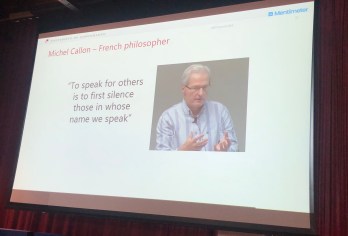
Slide shared by Anna Birna Almarsdottir in her talk about about what it means to be person-centric from the viewpoint of a researcher.
DISCLOSURE
I am a member of the DEEP Program and was invited to participate in the 2019 DEEP Summit. My flights, three nights’ accommodation and other costs were covered by Novo Nordisk. As ever, I have not been asked to write or share about my experience at the DEEP Summit or as a DEEP member. The decision to do so is my own, as are the jumble of words above this disclosure.
Once or twice in the years I’ve been working in the diabetes advocacy space, I have spoken and written about diabetes and language. And by once or twice, I mean rarely a day goes by when I don’t hashtag language matters somewhere on some social network.
You can call me a one trick pony (or Blossom), but I don’t mind, because I think that trick is pretty bloody important, and for the last eight years, I have been more than happy to highlight why the words we use when speaking about diabetes is critically important.
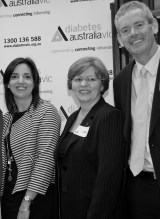
The first time I spoke about this was at the launch of the Diabetes Australia position statement, ‘A New Language for Diabetes’. I stood on stage at the Victoria State Library alongside Diabetes Australia CEO, Greg Johnson and ACBRD Director, Jane Speight as we started what has become a movement, supported by the diabetes community around the world. This was in September 2011 and this photo is from that day.
Now, eight years later, it’s time to revise the statement the started the #LanguageMatters juggernaut, and that’s where you come in.
Diabetes Australia is inviting people living with diabetes, their friends and families and HCPs to complete a survey about to have their say about the words and language used when speaking and writing about diabetes. This is your chance to share what is important to you, what really matters and what doesn’t really bother you at all. We know that the way we communicate about diabetes does matter, but we need your help to shape our revised survey.
Click on the word cloud below to be taken to the survey, and please share in all your networks. We need to hear from you to help build the evidence for why this continues to be a critical issue in diabetes care and communications. Please help us do that!

DISCLOSURE
I work for Diabetes Australia and am on the working group reviewing the Language Position Statement. I was also involved in the development of the initial statement. I have not been asked by Diabetes Australia to share details of the survey which will be used to inform the revision, but of course I am, because how could I not?!
Sometimes, something happens at a diabetes conference that I need to sit on for a while before I can write or talk about it. At ADA this year (almost six weeks ago now), there was a moment that has stuck with me and I think it’s time to talk about it.
I was sitting in the front row of the language session – because, of course I was – eager to hear from the all-star panel that was going to be looking at the language issues from the perspective of the PWD and HCP, as well as look at the role HCPs play in addressing diabetes stigma and how they can improve communication. I loved the well-rounded approach the session was taking, and settled in for a couple of hours of discussion.
The line-up was a veritable A-list of the best voices in the space. We had ‘Jane squared’, with Dickinson and Speight book-ending the program, Joe Solowiejczyk giving the consumer side and Kevin Joiner providing strategies for dismantling stigma.
Jane Dickinson has been an absolute champion of the diabetes #LanguageMatters movement in the US. And it was in her introductory session that the moment of today’s post happened. Jane was speaking about how HCPs see diabetes and people living with the condition. And she showed this slide:

I can’t remember if Jane read out the quotes. But I do remember how I felt as I read them and took in what they meant. I felt beaten.
As people living with diabetes, so many of us have firsthand experience of hearing these sorts of comments directed to us. Or we have had friends with diabetes tell us their tales. Or we have heard passing comments from HCPs expressing similar sentiments. The idea that we don’t care, have brought it all on ourselves, deserve what we have coming – and conversely, don’t deserve care – us pervasive through the diabetes landscape.
This is how diabetes and those of us are living with it are perceived. And it is heartbreaking.
There is no consistency as to who is making these comments – healthcare professionals from all different disciplines, at different stages of their careers, with different experiences. Some work in tax-funded settings, others in private settings. They are considered the best in their field, they are held up as examples of excellent care. Other HCPs refer PWD to them.
Often, I hear people say that these attitudes are really only ever the thoughts of ’old school’ HCPs who have been around for a long time; it’s a throwback to the patriarchal attitudes of healthcare – to days when doctor or nurse knows best and ‘patient’ does what they are told, and if they don’t, they get told off, while being written off as not caring for themselves.
But that assessment is actually not true at all. Some of the most sensitive and tuned-in HCPs I know have been working in diabetes for many, many years.
And some are yet to have even started their career. In exactly the same way that diabetes doesn’t discriminate, it seems that these horrid attitudes and stigmatising comments can come from people at every stage of their career.
Here is the whole slide.

That’s right. These comments came from future nurses. They hadn’t even set foot on the wards yet as qualified HCPs. But somehow, their perceptions of people with diabetes were already negative, and so full of bias. Already, they have a seed planted that is going to grow into a huge tree of blaming and shaming. And the people they are trusted to help will be made to feel at fault and as though they deserve whatever comes their way.
This – THIS – is why I am not stopping banging on about language and diabetes. THIS is why I get frustrated when someone responds to – and reduces – a discussion about this issue with ‘But I/my kid is happy to be called (a) diabetic’. THIS is why I constantly highlight when people or organisations or people in the media are using stigmatising or negative language.
The words we use shape the attitudes we have, and the attitudes held by many about diabetes are disgraceful. Imagine if instead of mindsets like this, HCPs came out of their training with the idea that people with diabetes need support, education, information, compassion and skills to best manage a condition that no one, but no one, ever asked for Just think about how different – and better – that could be.
The ADA session ended perfectly – with Jane Speight (my personal diabetes #LanguageMatters hero) playing the Mytonomy ‘Changing the Conversation’ video. So, here’s that video again. Watch it. Share it.





 Diabetogenic