
You are currently browsing the category archive for the ‘Babies’ category.
So often, there is amazing work being done in the diabetes world that is driven by or involves people with lived experience. Often, this is done in a volunteer capacity – although when we are working with organisations, I hope (and expect) that community members are remunerated for their time and expertise. Of course, there are a lot of organisations also doing some great work – especially those that link closely with people with diabetes through deliberate and meaningful community engagement.
Here are just a few things that involve community members that you can get involved in!
AID access – the time is now!
It’s National Diabetes Week in Australia and if you’ve been following along, you’ll have seen that technology access is very much on the agenda. I’m thrilled that the work I’ve been involved in around AID access (in particular fixing access to insulin pumps in Australia) has gained momentum and put the issue very firmly on the national advocacy agenda, which was one of the aims of the group when we first started working together. Now, we have a Consensus Statement endorsed by community members and all major Australian diabetes organisations, a key recommendation in the recently released Parliamentary Diabetes Inquiry and widening awareness of the issue. But we’re not done – there’s still more to do. Last week I wrote about how now we need the community to continue their involvement and make some noise about the issue. This update provides details of what to do next.
And to quickly show your support, sign the petition here.
Language Matters pregnancy
Earlier this week we saw the launch of a new online survey about the experiences of people with diabetes before, during and after pregnancy, specifically the language and communication used around and to them. Language ALWAYS matters and it doesn’t take much effort to learn from people with diabetes just how much it matters during the especially vulnerable time when pregnancy is on the discussion agenda. And so, this work has been very much powered by community, bringing together lots of people to establish just how people with diabetes can be better supported during this time.
Congratulations to Niki Breslin-Brooker for driving this initiative, and to the team of mainly community members along with HCPs. This has all been done by volunteers, out of hours, in between caring for family, managing work and dealing with diabetes. It’s an honour to work with you all, and a delight to share details of what we’ve been up to!
Have a look at some of the artwork that has been developed to accompany the work. What we know is that it isn’t difficult to make a change that makes a big difference. The phrases you’ll see in the artworks that are being rolled out will be familiar to many people with diabetes. I know I certainly heard most of them back when I was planning for pregnancy – two decades ago. As it turns out, people are still hearing them today. We can, and need to change that!
You can be a part of this important work by filling in this survey which asks for your experiences. It’s for people with diabetes and partners, family members and support people. They survey will be open until the end of September and will inform the next stage of this work – a position statement about language and communication to support people with diabetes.
How do I get involved in research?
One of the things I am frequently asked by PWD is how to learn about and get involved in research studies. Some ideas for Aussies with diabetes: JDRF Australia remains a driving force in type 1 diabetes research across the country, and a quick glance at their website provides a great overview. All trials are neatly located on one page to make it easy to see what’s on the go at the moment and to see if there is anything you can enrol in.
Another great central place to learn about current studies is the Diabetes Technology Research Group website.
ATIC is the Australasian Type 1 Diabetes Immunotherapy Collaboration and is a clinical trials network of adult and paediatric endocrinologists, immunologists, clinical trialists, and members of the T1Dcommunity across Australia and New Zealand, working together to accelerate the development and delivery of immunotherapy treatments for people with type 1 diabetes. More details of current research studies at the centre here.
HypoPAST
HypoPAST stands for Hypoglycaemia Prevention, Awareness of Symptoms and Treatment, and is an innovative online program designed to assist adults with type 1 diabetes in managing their fear of hypoglycaemia. The program focuses on hypoglycaemia prevention, awareness of symptoms, and treatment, offering a comprehensive range of resources, including information, activities, and videos. Study participants access HypoPAST on their computers, tablets, or smartphones.
This study is essential as it harnesses technology to provide practical tools for better diabetes management, addressing a critical need in the diabetes community. By reducing the anxiety associated with hypoglycaemia and improving symptom awareness and treatment strategies, HypoPAST has the potential to enhance the quality of life for individuals with type 1 diabetes.
The study is being conducted by the ACBRD and is currently recruiting participants. It’s almost been fully recruited for, but there are still places. More information here about how to get involved.
Type 1 Screen
Screening for T1D has been very much a focus of scientific conferences this year. At the recent American Diabetes Association Scientific Sessions, screening and information about the stages of T1D were covered in a number of sessions and symposia. Here in Australia. For more details about what’s being done in Australia in this space, check out Type 1 Screen.
And something to read
This article was published in The Lancet earlier in the year, but just sharing here for the first time. The article is about the importance of genuine consumer and community involvement in diabetes care, emphasising the benefits and challenges of ensuring diverse and representative participation to meet the community’s needs effectively.
I spend a lot of time thinking a lot about genuine community involvement in diabetes care and how people with diabetes can contribute to that ‘from the inside’. And by ‘inside’ I mean diabetes organisations, industry, healthcare settings and in research. I may be biased, but I think we add something. I’m grateful that others think that too. But not always. Sometimes, our impact is dismissed or minimised, as are the challenges we face when we act in these roles. I don’t speak for anyone else, but in my own personal instance, I start and end as a person with diabetes. I may work for diabetes organisations, have my own health consultancy, and spend a lot of time volunteering in the diabetes world, but what matters at the end of the day and what never leaves me is that I am a person living with diabetes. And I would expect that is how others would regard me too, or at least would remember that. It’s been somewhat shocking this year to see that some people seem to forget that.
Final thoughts…
Recently when I was in New York at Breakthrough T1D headquarters, I realised just how many people there are in the organisation living with the condition. It’s somewhat confronting – in a good way! – to realise that there are so many people with lived experience working with – very much with – the community. And it’s absolutely delightful to be surrounded by people with diabetes at all levels of the organisation – including the CEO. But you don’t have to have diabetes to work in diabetes. Some of the most impactful people I’ve worked with didn’t live with the condition. But being around people with diabetes as much as possible was important to them. It’s really easy to do when people with diabetes are on staff! I first visited the organisation’s office years ago – long before working with them – to give a talk about language and diabetes. One of the things that stood out for me back then was just how integral lived experience was at that organisation. From the hypo station (clearly put together by PWD who knew they would probably need to use the supplies!) to the conversations with the team, community was in the DNA of the place. As staff, I’ve now visited HQs a few times, and I’ve felt that even more keenly. Walking through the office a couple of weeks ago, I saw this on the desk of one of my colleagues and I couldn’t stop laughing when I saw it. IYKYK – and we completely knew!

DISCLOSURES (So many!)
I was part of the group working on the AID Consensus Statement, and the National AID Access Summit that led to the statement.
I am on the team working on the Language Matters Diabetes and Pregnancy initiative.
I was a co-author on the article, Living between two worlds: lessons for community involvement.
I am an investigator on the HypoPAST study.
My contribution to all these initiatives has been voluntary
I am a representative on the ATIC community group, for which I receive a gift voucher honorarium after attending meetings.
I work for Breakthrough T1D (formerly JDRF).
Eleven years ago on Mother’s Day, my friend Kerry started something on her socials. Kerry’s mum sadly died when Kerry was just six years old. She doesn’t have a single clear photo of the two of them together. And so, Kerry has urged her mum friends to make sure they take a photo with their kids – a really simple and special way to make sure that memories are recorded. (You can search for #KTPhotoForMum to see some lovely shared posts.)
We’re not short of photos in our household – who is in the age of smart phones? – but I especially love the album that I have of Mother’s Day photos of me and our girl. Seeing her on this day for the last eleven years brings a special feeling of joy.
But there’s another feeling in there that I want to recognise, and that’s how proud I am. Of course I’m proud of her – she’s a marvel (excuse my bias). But I’m talking about hoe I feel about myself as a mother living with diabetes. Because pregnancy and parenting with diabetes is not an easy gig.
I struggle with this sometimes. I don’t want to be defined by being someone’s mum. I achieved a lot before I became a mother and have done plenty in the last (almost) 20 years that I am so very proud of. There’s travel and a career, and media work, lots of published writing and a whole lot of standing on stages talking diabetes advocacy. These are usually the things that I point to when thinking about my achievements. For some reason, I’ve felt it’s diminishing to point to motherhood as an achievement.
But the truth is, that motherhood with diabetes is an achievement and it is defining in some ways. Conceiving, growing a baby, bringing her into this world, and getting her to adulthood is something that carries a huge sense of pride. Because, damn, diabetes made that hard. Every stage of it.
I get it: pregnancy is natural and it’s been happening forever and there are bazillions of people who have done it for a bazillion years, but there is absolutely nothing natural about taking on the role of a human organ. Seriously! It’s hard at the best of times. Being pregnant adds a degree of difficulty that is incomprehensible until you’re in the midst of it. Even today with tools that are far more sophisticated than the basic pump that saw me through my pregnancy, it’s still not easy. (And I utterly recognise how lucky I was at the time having a pump. The women sitting next to me at the Women’s Hospital diabetes & pregnancy clinic on Wednesday mornings who weren’t using a pump were real magicians.)
At that time I was just so in the weeds of dealing with all that came with a diabetes-complicated pregnancy that I never thought what an incredible job I was doing just getting through it. After all when was I meant to cheer myself for the remarkable effort? Was it before or after the 20+ finger prick checks I was doing each day? (CGM wasn’t around then.) Or alongside the complex calculations that I needed to complete before pre-bolusing the right amount of insulin at the exact right time? It certainly wouldn’t have been during the thirty percent of the day I was below target because in those moments, I was too busy worrying about starving my brain (and baby) of oxygen.
And then there was no time after she came along, because babies are all encompassing and take up every moment of the day. And diabetes can also be all encompassing and is incredibly demanding.
I had no time to be a cheerleader for myself because every single part of me was focused on making sure my baby’s elbows were growing properly, and stressing about how any out of range glucose level was harming her growing organs. Any spare brain bandwidth was taken up feeling guilty because I never felt I was doing enough. I felt that I was probably already failing my child. Even though her elbows are beautiful (and her organs seem fine), I still carry that guilt. Almost twenty years later.
These days, as more people with diabetes share their pregnancy and parenting stories, I DO cheer. Every time I hear about chaotic first trimester hypos, and managing glucose levels around second trimester cravings, and third trimester insulin-resistance frustrations, I know they deserve a loud ‘Hurrah!’ and so I cheer. Because look at these amazing people! Look at what they are doing – the work, the emotional rollercoaster, the determined effort they are putting in to keep themselves and their baby safe! Diabetes never plays nice, and for so many, pregnancy is the most difficult time in someone’s diabetes life.
Yesterday morning, I looked at our daughter as we had our Mother’s Day breakfast in the sunshine. Having her is the hardest thing I have ever done – the hardest, the most emotionally challenging, the scariest – but also the absolute best and I am so very proud that I did.
This post is dedicated to my dear friend Kati who I am cheering for every day!

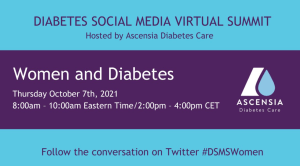
I facilitated an event for Ascensia (disclosures at the end of this piece) last night/early morning and the crappy time was partly (mostly) my fault, because although I sacrificed the Aussies and suggested we draw the short straw in the time zone lottery, I forgot that daily saving would have kicked in for us meaning kick off time was 11pm and not 10pm. That may not seem much – I mean, what’s an hour? – but there is definitely a psychological barrier about doing work after midnight. (Anyway, I digress, and that paragraph has just about put me to sleep).
The reason for last night’s adventures after dark was a facilitating gig for Ascensia’s latest Diabetes Social Media Summit (DSMS). The thing I love about (and why I am so keen to be involved) in these Summits is because they have tacked some difficult topics that are often hidden away.
This one was no different in that we looked to address something that needs more attention – diabetes and women’s health. In my introduction, I wanted to make the point that diversity and inclusion is important when speaking about any aspect of diabetes, and that for us to be truly inclusive in a discussion about women and diabetes, we needed to hear from women who represent all corners of the diabetes world. I particularly referred to needing better representation from women in the LGBTQIA+ community.
The other thing that we had wanted to make sure that we didn’t focus too much on diabetes and pregnancy, because so often that is the only easily information about women’s health and diabetes that can be easily found (and saying that, there does seem to be a bias towards women with type 1 diabetes). Of course, understanding and being aware of how diabetes can impact on pregnancy is important, but it is certainly not the only issue that women with diabetes want or need to know about.
In fact, one of the discussion points was that for some women, pregnancy is not a topic they want discussed. There is the assumption that all women of childbearing age need information about having a healthy baby when that is not the truth. Contraception discussions do not necessarily equal an invitation for pre-pregnancy counselling, and there needs to be some sensitivity in how healthcare professionals in particular raise the topic, and rid themselves of the belief that all women want to have kids.
There is so much more to talk about. So, so much more.
We touched on how much our cycles can impact and influence glucose levels (and a very amusing tangent where we joked about how when we see monthly perfect glucose patterns, they clearly don’t belong to people who menstruate – or people who understand the absolute havoc hormones can wreak on CGM traces).
We spoke about birth control and how the OCP can also make a significant difference to glucose levels, yet many of us were not told about that.
Of course, we spoke of menopause, but only briefly; briefly not because it’s not an important topic (or a super relevant topic), but because we just got caught up talking about other things (and perhaps my facilitating skills weren’t as tight as usual).
And we spoke about how cultural gender issues need to be shown and understood so that the experience of privileged white women with diabetes are not seen as the only experiences.
For me, the central message that I heard time and time and time again was that topics about the very things that occupy a lot of the headspace of women with diabetes are simply not discussed with us. And there is little research to inform our decision making, or even to help us form the right questions to ask. At best, we are given some piss-weak explanation that points a finger at diabetes being to blame. At worst, we are dismissed.
I do wonder when research and diabetes education will catch up. I know that there are some wonderful researchers doing some important work here, but we are so far from normalising discussions about women’s health and diabetes as part of our typical healthcare routines. We’re miles away from getting rid of the preconceived and outdated ideas about women’s sexual health.
Beyond discussing different women’s health matters, we also spoke about just how these discussions fit in the diabetes community. This was a completely unplanned turn for the summit (it was not a topic on the agenda), but I’m glad we had it and I’m glad that I am writing about it. Because of the nature of women’s health, sex and diabetes, there is a lot of taboo, shame, fear, and vulnerability. I know that some of the rawest and most open I’ve been in my writing has been when I have been dealing with moments in my life that were so, so hard and I was so, so vulnerable. When I look back, I sometimes wonder if I was right to hit publish after writing, and perhaps I should have tucked away the paragraphs until I was feeling stronger. Or not published at all. While I have been told that my words have provided some comfort to others facing similar challenges, it left my gaping, open wounds very public and visible.
After writing about miscarriages, I’ve been called selfish for wanting to have a child and potentially passing on diabetes to them. Writing about my fears of passing on diabetes to my child I’ve been told that perhaps I should have thought of that before I got pregnant. Speaking about body image concerns, I’ve been told to toughen up and stop being so shallow. I’ve seen and watched other women with diabetes experience the same thing, and I feel their pain as I watch them navigate the muddy, and sometimes distressing waters.
We spoke about how women are treated in the diabetes community, particularly when we write about struggles and difficulties, and the words and terms that are thrown our way when we dare to share how we are feeling. The ‘angry woman’ trope that I’ve written about before has been directed to many others too.
These discussions are real, and they are necessary. I am one of the loudest, most vocal supporters of peer support and have spoken about the value and importance of diabetes peer support and the online community on stages literally around the globe. Peer support saved me at times when I thought I was broken beyond repair. But it also can be a source of pain and bullying and nasty confrontations, and perhaps we need to have those discussions too so that when someone decides that they are ready to share and be especially vulnerable that they look out for themselves as much as looking out for the community. It’s all very well to want to share to connect and help with our own and others’ isolation but leaving ourselves exposed isn’t easy.
One of the attendees last night reminded us that we could share with selected friends in the community, still allowing for that peer support but under the protection of a safe space. It’s interesting, because until maybe two years ago, I had never experienced how unsafe the community can be to individuals. I’d not felt that before. While I still share a lot, these days I’m more inclined to turn to those trusted friends in the DOC who I know will be honest, open, but never nasty or judgemental.
Online spaces are different for women than they are for men. The misogyny that is inbuilt to even those that we think are allies comes out, often surprising us, as throwaway comments about a woman’s age or appearance. It is ever present in the diabetes community too. I’ve rolled my eyes as some of the most vocal advocates who have loudly aligned themselves as being supporters of women, revert to type, with snide sexist commentary. I’ve seen people in the DOC referred to as ‘angry old women’ for daring to be furious, older than 25 and a woman! I roll my eyes now when I know someone has called me angry. I also know that they’ve just announced to everyone how threatened they are of women who dare to not go quietly, and how they expect us to remain in our place!
There was so much more that we could have spoken about last night. We didn’t touch on body image and disordered eating (and yes, I know that this is not the domain of women only, but this is about us!), we didn’t talk about sex all that much either, even though it is often highlighted as an issue that needs more coverage and information. Again, it’s not because they are not important topics; it was because the fluid conversation took a feminist turn that highlighted a highly biased social and healthcare environment where it is seen as perfectly fine that the needs, and concerns of fifty percent of the diabetes community are barely considered.
Perhaps if we had a more feminist approach to, and model of, healthcare, the misogyny that has meant the topics important to us have not been researched, and are not discussed, could be eliminated. And women with diabetes would not be feeling ignored.
Disclosure
I was invited by Ascensia to help plan the agenda for #DSMSWomen and facilitate the discussion. I have been paid an honorarium for my time.
When I was planning for pregnancy, and while I was pregnant, I read everything I could about how pregnancy might impact on diabetes (and vice versa). There is a lot of information out there about pregnancy and diabetes (especially pregnancy and type 1 diabetes) I wrote this online diary sixteen years ago, with weekly updates throughout my pregnancy. Heaps of new parents with diabetes share their early parenting stories – with great tips about managing glucose levels during those new days of having a small person completely reliant upon you, while having to manage a health condition that is also reliant upon you!
But what happens when your kid is older and the impact of diabetes on a daily basis seems to be less? It doesn’t seem all that relevant really, but I do wonder if there is a long-lasting impact that I don’t consider. Just how has diabetes influenced the way I parent? Indeed, has it impacted at all? And has diabetes affected my relationship with my daughter? What does it mean for her to have a parent with diabetes?
It’s not my story to tell from the perspective of my 16-year-old daughter. I have asked her many times what it’s like having a mum with diabetes; what it’s like having been around diabetes all her life. One day, she might like to share her feelings with others, but they are her feelings and experiences and I completely respect that it is not my job to share her thoughts. Plus, my interpretation will always be clouded by my own version of events, and my own fears and biases.
When she was younger, my diabetes and its impact on my daughter caused me a lot of unease. I have never stopped worrying that I have passed on my messed-up DNA to my daughter, but it was more of a regular concern (panic?) when she was small. I spent a lot of time with a psychologist learning how to rein in those feelings because they spilled out a lot into anxiety and fear. I had to understand that those worries were about me and my feelings of guilt, not about her – something she told me without hesitation one day when I wanted to check her glucose (for probably no good reason).
These days, I rarely find myself questioning how much water she is drinking or wondering if she seems to have visited the loo more frequently than usual. Perhaps it’s because I feel confident enough that she knows the four Ts – of course she does – and if she ever were concerned, she would come to me. Or make an appointment to take herself off to the GP. (In those moments when I have noticed that I am starting to get really concerned about this again, I make an appointment to see my psychologist, because sometimes I do need help to keep things in perspective and keep the dread at bay.)
One way that diabetes has definitely clouded the way I parent is how I respond and react to times she is feeling poorly. I am not a sympathetic parent – mostly because diabetes has taught me to just get on with things – even when it is being a royal pain in the arse. I jump to a diagnosis of hypochondria any time she says she’s not feeling well. (To be fair though, that is my diagnosis for anyone claiming to feel unwell, not just my own child).
I was not a parent who, when the kidlet was an accident-prone toddler, jumped at every tumble or scratch. Sympathy is hard to come by with me – a point she made keenly when she was about three years old and tripped as we wandered down the street. She responded to my ‘Oopsie, up you get,’ with a tear-stained, overly dramatic ‘Just once I’d like you to ask me if I’m okay.’ I promised that if there was gushing blood or a visible bone sticking out that I would ask her if she was all good. But otherwise, up you get and off we go to the park.
Living with diabetes and the needles that come with it has meant that she doesn’t even get to voice any nervousness when it’s vaccination time. My ‘toughen up princess’ approach to even the start of a frown because a needle is imminent has taught her to not even go there! That sympathy will need to come from persons who do not jab themselves on a daily basis.
My Italian mamma tendencies do show up with bowls of steaming chicken soup for runny noses, and pastina con burro for tummy aches. But once they are prepared and consumed, there is an expectation that life goes on without moaning or much downtime. I think my own parents find me a little mean, but they more than make up for it by piling on sympathy and compassion, while muttering about what a cruel and indifferent mother she has.
Understanding my need for the right HCPs at the right time has meant that I’m more inclined to outsource than do things myself. I can’t count the number of times I’ve asked if she would like to see a psychologist because surely, the angst of the tween years or the teen years, or any of the obviously nightmarish parenting she has had to deal with is far better dealt with by a professional. But instead, she has seemed mostly happy enough to chat over homemade cookies and a cup of tea when she has needed to talk something out, so I guess that my nasty, unsympathetic ways haven’t resulted in her thinking that she can’t confide in me when she wants.
I write a lot of this very tongue in cheek, but I do believe that it is impossible to live with a chronic health condition like diabetes and not have it somehow impact on all relationships, including those with our children. Having diabetes and getting pregnant – and then holding on to that pregnancy – was probably the hardest thing I have ever done, but it is also the most wonderful, incredible, important and worthwhile thing I have done. Fertility difficulties before and after that one successful pregnancy have made me acutely aware of just how fortunate I am, and not a day goes by where I don’t, at some point, think that, and marvel at the amazing human I have a front row seat watching grow into a truly remarkable person.
Because in amongst it all, I also wonder if diabetes will rob me of some time with my beautiful girl. Will it cut short the number of years I get to be with her? What will I see? How much of how her life turns out will I be witness to?
These days, I think that is probably what scares me most about diabetes – that I won’t get to have as many of those years and see as many successes and struggles as I hope to. Which makes me horribly sad, because the first sixteen years have been nothing but a delight. Of course, I love her – I adore her! But also, I really like her. I want to be around for as long as I can and to see as much of that as possible. I fear that diabetes will be limiting – limit what we can do together, and simply minutes, hours, days, years together. It’s these thoughts that are locked away in the dark parts of my mind and don’t get to see the light of day much. Because when they do, I feel a sadness like no other and a terror far bigger than anything I have ever had to face.

Last Friday night, I sat around with three other women with type 1 diabetes and we had a chat. When I say ‘sat around’ I mean Zoomed, but other than the fact that we were seeing each other through computer screens, it could have been any other time I was meeting up with women with diabetes for a casual chat.
The reason for this gathering was so that I could be interviewed for a new Australian podcast. Mamabetes was launched just last week, and is a project by three amazing Aussie advocates, Ashleigh, Rachel and Carleigh, all who are living with type 1 diabetes.
I was a little surprised when they reached out to me. My kid is fifteen and my experience of pregnancy and diabetes is a little old now. But they wanted to speak with me about stigma and language, and how that can impact on all sorts of diabetes experiences – including pregnancy.
I’d never met any of the women before and other than a short conversation with Ashleigh a couple of days before, the first time we chatted was when Zoom brought their gorgeous faces and happy smiles into my study at home. I’d been sent a brief outline of what they hoped to get from our discussion and a few broad questions for me to consider before we got started. We were going to chat for about fifteen minutes and see where our conversation took us.
I’m sure that we could have stuck to that timeframe if we really wanted, and to the questions I’d been offered as a guide. But an hour later, we were still chatting, and we’d taken off on some wonderful tangents, as happens when people with shared interests and experiences come together.
The podcast episode with our chat dropped this morning and I’ve been listening to it in bits and pieces in between the Zoom existence so many of us seem to be living at the moment. We cover lots, so do have a listen! Click on the image below to go to the podcase, and the Mamabetes other socials are listed for you to follow along.
Asheigh, Rachel and Carleigh are creating something really important here, and providing women with diabetes a place to learn and connect – around an issue that is relevant and important to many. Thanks to these three dynamic women for doing this, and for inviting me to be a part of their second podcast episode.
Go follow…
 Today is Pregnancy and Infant Loss Remembrance Day. For many, it’s an occasion to mark the babies that we never got to know and watch grow up. It’s the hugs we never gave, the stories we never got to share, the first days we never got to celebrate. Those of us living with chronic health conditions have an extra level of complexity to deal with, as we wonder if our own bodies were partially (or completely) responsible for those losses. Sometimes, we never know.
But we hold close those losses and all that comes with them, carrying them quietly. Until the roar back into our consciousness.
Just a couple of weeks ago, I went to the GP because I had a UTI. (One day, the oversharing will stop. Today is not that day.) As the gift that keeps on giving, diabetes means that UTIs are more common in women with diabetes than those without. This is another reason that diabetes is so, so much fun.
My new GP asked if I’d noticed an increase in insulin needs because of higher glucose levels due to the infection. She then asked some general questions.
‘Is your period regular?’ she asked.
I nodded. ‘Like bloody clockwork. 28 days to the minute! Where was that when I was trying to have a baby?’ I remembered the desperation of wanting a reliable period to signal some sort of regular ovulation and the relief when I started on fertility treatment to make that happen.
‘Could you be pregnant?’ she then asked.
Could I be pregnant? Well, technically, I guess I could. ‘Jesus! I hope not!’ I exclaimed, wondering how my almost 46-year-old body would cope with such an assault! And then, because I catastrophise everything, I started to imagine first trimester blood sugars and hypos and climbing insulin requirements and all the other things that mammas with diabetes have to think about every second of a pregnancy.
I nearly threw up. Which I attributed to morning sickness. Obviously.
She handed me a jar and sent me to the bathroom for a sample.‘We’ll do a pregnancy test here now and also send the sample away to make sure the infection you have is going to respond to the antibiotics I’m prescribing,’ she explained to me.
I’m not pregnant. I breathed a sigh of relief when she told me that, flashing back to the complete opposite feeling I used to have each month when I realised that was the case. And to the literal and figurative emptiness I would feel when I realised another month had passed and I was not pregnant. And how that emptiness would increase exponentially after each miscarriage.
At the time, I didn’t have anyone to really talk to about how I felt. I had the support of my family, but there was no one who could understand the shame I felt, or the blame I was attributing to my diabetes – and therefore to myself. It’s only since speaking about it that I realised that so many other women feel the same way. And friends with diabetes have similar stories to share. We just needed an opportunity and a space to talk. And listen.
Today is a chance to do that. My love goes out to all of you who have lived through pregnancy loss, or who have lost a baby. I hope that you have a safe place to tell your story. And to my friends with diabetes who have experienced pregnancy loss: be kind to yourself. Sometimes the path we walk is lonely, and littered with too many times when we blame ourselves, when instead we should be kind and gentle. Today is a really, really good day to remember to do that.
Some more stories to read…
I wrote this for Mamamia just after my last miscarriage.
Kerri Sparling wrote this about her own experiences of infertility, and shared this guest post about pregnancy loss.
Anna Floreen’s story of pregnancy loss is heartbreaking, but I am so grateful to her for sharing it.
I spent a lot of the weekend feeling a little sentimental. Our beautiful girl turned 14 and as usual, we reminisced, telling the story of the day she was delivered. And I reread my pregnancy diary, the feelings of intense excitement, anxiety, fear and anticipation flooding back. I remembered how, 14 years ago, the only way to check glucose levels was to do blood glucose monitoring. And I was doing that up to twenty times a day. My poor, poor fingers.
While I was remembering all this ever the weekend, I was holding onto an embargoed secret, knowing that an announcement about the expansion of the current NDSS CGM funding program was about to made. In between organising a weekend of birthday celebrations and wrapping gifts, I was also planning for the media announcement which would be taking place early on Sunday morning at a local women’s hospital. I took breaks in preparing food for Sunday’s birthday lunch and read running sheets, familiarised myself with the ‘talent’ who would be explaining what the new funding meant to them, and made sure that I knew where I had to be at 8.30am the following morning.
And amongst all that, I prepared myself for what I knew would be coming: disappointment. There would be a lot of disappointment because the funding package was not going to include everyone, and those who missed out would be upset.
This is my personal blog, and although I work for Diabetes Australia, this is about my own life with diabetes, and to a degree, my life around diabetes. I write a lot about what is going on in the ‘diabetes world’ – both in Australia and more broadly. Sometimes what I write is directly applicable to me; other times, it’s not.
Today, I am writing about the announcement that was made yesterday and I guess that the line between personal and professional is potentially going to get a little murky. Please read my disclosures at the end of this post carefully, because my bias needs to be strongly acknowledged – by anyone reading this piece… and by me while writing it. But I hope that also, people understand that I need to write about this personally too.
In a nutshell, yesterday’s announcement delivered an extra $100 million dollars to fund CGM to women with type 1 diabetes planning for, during and after pregnancy; people aged 21 years and over who hold a concession card (and meet clinical criteria); and children and young people with ‘other insulin-requiring diabetes’ (for example, cystic fibrosis-induced diabetes). This is all on top of the current $54 million funding which provides free CGM products to children and young people up to the age of 21 who meet the clinical criteria. Also, Flash glucose monitoring has been added to the list of products available, meaning more choice for people with diabetes.
This is good news.
And yesterday, as I chatted with women with type 1 diabetes who had just had babies and were planning more, or were currently planning for a pregnancy, I knew just how much of a difference having access to this technology would mean to them.

Kelly and baby Grace with Health Minister, Greg Hunt, and CEO of Diabetes Australia, Greg Johnson.
I thought back to when I was pregnant and how it would have been so much easier had CGM been available then.
How wonderful that these women, and thousands of other women like them can breathe just a little easier knowing that they will be supported with this tech while planning and during their pregnancies – and the period afterwards. Oh – and then I remembered breastfeeding hypos, the jars of jelly beans on every flat surface in our house – including the back of the loo – and how, when home alone, I used to feed our baby girl on the floor in case I had a bad low and dropped her. CGM alerts and alarms would have been so brilliant then!
CGM is out of reach for so many people. It is expensive technology and I know there are people making sacrifices to be able to afford to use it. I know what that is like – back before pump consumables were on the NDSS, we had to budget $300 per month for lines and cartridges, tightening our spending on everyday items, forgoing holidays, meals out and other things we wanted to do so that I could continue to drive my pump.
Is it fair that the technology we use to keep us alive means we need to make such sacrifices. It certainly doesn’t seem so. And I know that is how people are feeling after the funding announcement was revealed yesterday.
Am I disappointed? To a degree, yes, I am. I believe that I, and other people with diabetes like me are every bit as worthy as women with T1D planning for to have a baby, and kids and young people with type 1 diabetes, and adults on healthcare cards. I completely disagree that type 1 diabetes is harder for kids than it is for adults, because actually, type 1 is tough at any age, and each age and stage of life has its own particular challenges.
But I refuse to see yesterday’s announcement as anything other than a positive step in the right direction, just as I saw the initial funding for children and young people a good thing.
People have missed out; people who will still not be able to afford CGM; people who desperately need this technology to live the best diabetes lives they possibly can. And that’s why yesterday is not the end to the CGM funding story. In fact, it’s a new beginning.
Also, I think it is important to point this out: An announcement like this does not happen quickly. It comes from years and years and years of work. CGM has been in Australia for over ten years now. Yes – that’s right. Over ten years. So when you hear people referring to this as new or emerging technology, or saying it wasn’t around five or six years ago, that’s rubbish.
I can remember that pretty much as soon as CGM was launched into Australia, Diabetes Australia and JDRF Australia started to fight, lobby and advocate for this to be funded. How do I know this? Because I sat in meetings back then as we tried to nut out just how to approach the government for funding. What would work? What sort of model was achievable? How would the people who were most at need benefit? There are no easy answers to these questions. All we have to rely on is evidence and what the evidence shows is that there are some groups that benefit most from CGM technology.
Diabetes Australia, JDRF Australia, the Australian Diabetes Society (ADS), the Australian Diabetes Educators Association (ADEA), the Australian Paediatric Endocrine Group (APEG), and the Australian Diabetes in Pregnancy Society (ADIPS) have worked together to form an alliance to provide evidence-based submissions and information around CGM technology (amongst other issues). Why is this important? Because bringing together the peak consumer bodies with the peak professional bodies means that all stakeholders are represented, and it’s pretty hard to disagree when we combine PWD sharing our own stories for why this tech matters alongside HCPs talking about the clinical benefits.
At no time has this alliance ever pushed for anything other than funding for those with high clinical need. The idea of an upper age limit was never, ever promoted by this group – we never fought for access to be only for children and young people. Our original funding submission is a matter of public record and can be seen here and you can clearly see that we were advocating for what the evidence pointed to.
I am proud to have been a part of this work – for over ten years now. It is the very definition of ‘slow burn’. This slow burn is not all about being in the public eye and yelling about what we do. In fact, it is all very much out of the public eye. It’s monotonous at times; it can be repetitive and it takes time.
Yesterday we celebrated. Today we’re back at work, looking to how we get the next bit of funding secured.
And finally, we can yell and stamp our feet and say that we should have fully funded CGM for all people with type 1 diabetes. But that is never going to happen. If we look to other countries where there is funding available to people with diabetes of all ages, there is still clinical criteria that must be met in order for people to access reimbursed sensors and/or transmitters. Nowhere has a policy where anyone and everyone with type 1 diabetes can simply show up, put out their hand and be given a CGM. Instead, clinical need is used to determine who has access. I think that we need to be realistic about expectations of what funding will look like in the future.
DISCLOSURES
I have worked for Diabetes Australia since January 2016, and prior to this role, worked at Diabetes Victoria for over fourteen years. I have been involved in CGM funding submissions from Diabetes Australia and the alliance which includes JDRF, ADS, ADEA, APEG and ADIPS. I was also on the Department of Health’s implementation Committee after the initial $54 million CGM funding was announced. I have been involved in writing information and education resources about CGM and hosted a number of national webinars after CGM products were first listed on the NDSS. I have spoken at technology events held at Parliament House, sharing my personal experience of why I use CGM, and, more broadly, why this technology is beneficial to many people living with diabetes.
I use CGM full time. I do not receive any subsidy or discounts for using CGM, and fully fund transmitters and sensors myself. I am fortunate to have friends in Europe who have occasionally provided me with sensors when they have spares, and I am currently using a re-batteried Dexcom G5 transmitter. At the beginning of November, I spoke at a health professionals workshop for ADS where I demonstrated how to use the Dexcom G5, and was provided with one sensor for this demonstration.
The cutest baby ever.
I may have mentioned before that I use an app called Timehop. It cleverly collects photos and posts from Facebook, Instagram, Twitter and other social media platforms, and serves them up to me as an account of what I was up to on this day over the last ten or so years.
Mostly, Timehop is a source of great joy. It shows photos of lovely family and friends moments, exciting things happening at work and our travels. Or it shares tweets that make no sense in isolation, but if I click on link, am taken back to long-forgotten discussions that made complete sense at the time. It’s fun and each day, makes me smile a I remember some pretty great moments.
But around this time each year, I am reminded of what was going on a the end of July 2013. And I don’t smile fondly. Because it remains one of the most difficult times of my life, and remembering it so clearly stirs up a lot of sadness.
This time five years ago, I had miscarried a much-wanted baby. The miscarriage (and D & C) happened while we were on holidays in New York, but I needed another surgery once I returned home.
Had the pregnancy gone to plan, there would be a little four year old in our life. I can’t really imagine it, to be honest. I think of everything that has happened since July 2013 and wonder how different life would be today if there was a little one running around. We’d be thinking about a school start in the new year and all that comes with it.
But, life doesn’t always go to plan. This particular derailment can’t really be explained – it was just one of those things. Twenty years of diabetes has taught me that there will be occasions where I will face curve balls. Sometimes over and over again. But even with the understanding that diabetes brings about expecting the unexpected, there is little solace in dealing with pregnancy loss.
It’s five years ago now. It feels as though a lifetime has passed. And at the same time, it feels no more than a baby’s heartbeat ago.
I like to celebrate anniversaries. Diaversaries are given the fanfare they deserve around our place, with high fives and pats on the back as another year of dealing with diabetes is ticked off an imaginary calendar.
This anniversary doesn’t get celebrated. But it does get acknowledged. This week, I’ve been imagining four year olds who remind me of our darling girl when she was a cheeky four year old. But I know this one would have had a personality all of its own, and been a force to reckon with in different ways. And I am thinking about what life would like with two kids, and how our daughter would have adjusted having a younger sibling following her around. I wonder how our house would breathe differently, reflecting a little one’s existing, picture books that have been put up on high shelves once again scattered around the floor.
These thoughts do make me smile.
But my smile when I think of these things is not a happy smile. It is a smile of regret, loss and grief.
I will buy some white flowers for the kitchen table today, and watch them as they bloom. And remember. Remember the time when I thought that we would be bringing home the baby growing inside me to add to – and complete – our little family. And how sad I am that we never did get to meet.

Recently, I was slightly shocked at a comment made while I was enjoying a pleasant lunch.
‘A is pregnant,’ came the announcement.
‘Oh, that’s lovely,’ I said. Although I don’t really know A, I was still very pleased for her.
‘Really? I’m not sure if that’s such a good idea considering her health condition. What if she passes it on?’
Now, if I had any sense of decorum or tact, I would have stopped right there and changed the subject. Or left the table, suddenly desperate to visit the bathroom. Or become focussed on the pattern on the table cloth. Or thought about the dessert that was about to be served. I would have done anything other than say something.
I am not that person.
‘You’re kidding right?’ I said, prickly with anger. ‘Do you know how many times I’ve been told that? Do you know how many times people have inferred that I am selfish for having a child – and trying to have more – because of my diabetes and the possibility that I could have passed on my crappy genes?’
I was annoyed at myself for saying anything. My kid was sitting opposite me, listening to every word I said. She may not have joined the dots between how A’s health condition could impact her a baby, and me with my health condition impacting my baby (i.e. my kid). I’d just made it abundantly and painfully clear, however.
‘I’m sure that she’s getting really good advice and that she is on top of it. But I’m thrilled that she is having a baby if that’s what she wants and it sounds like it is. Not that long ago, she wouldn’t have been able to. Just like women with diabetes couldn’t. I really hope she is feeling well and has lots of support around her.’
This conversation happened a number of weeks ago and it is only now that I am ready to speak about it; to write about it. I was terribly upset at the time – the topic is very sensitive and clearly, more than 12 years after our girl was born, I still struggle with the perception that others may have: I was selfish for having a child because I could pass on diabetes to her.
But the more I thought about it, the more I realised my feelings are very mixed up. Along with the anger flashing in my voice, there is guilt. I have so much guilt about the chances of passing on diabetes to our daughter. It terrifies me, and the fear can be overwhelming.
Living with diabetes meant having a baby was not a particularly straight forward matter. The decision to actually go ahead took a lot of soul searching and discussion. The actual getting pregnant took time, effort – and great pain as I lost babies. Yet, I never had a baby because I was being selfish. I did it for a lot of other reasons, but being selfish was not one of them.
And rarely a day goes by when I don’t consider the impact my decision could have on our girl. Perhaps I don’t like to be reminded of it which is why I reacted so stormily. Or perhaps I am still just really, really scared.
Our beautiful girl turns twelve years old today. It’s both a lifetime and a minute in time and I sometimes look at her and still cannot believe that she is here.
When I was pregnant, I kept an online diary for a diabetes website. That site is no longer there, but I still have the diary and have been waiting for the right moment to publish it here on my blog.
Today is that day. It’s a long read – a short entry for each week of the pregnancy – but it takes me back to exactly how I was feeling and coping throughout the pregnancy. My favourite part is the last part – our baby’s arrival – which I wrote when she had been home for only days and my head was in a new-parent fog and I was desperate to try to put in words what had happened and how I felt on the day. It’s funny, because it was starting to get murky then, but today, I can remember everything about it.
We tell our daughter her birth story occasionally – often around her birthday. And in there amongst the way we felt when we first heard her cry and saw her face for the first time, is the story of how much she is wanted and the path we took to actually make that happen.
It’s all here, so please have a read if you’d like. Yesterday, when giving my talk to some healthcare professionals one of them asked if I would mind sharing how I felt when pregnant and what a diabetes pregnancy is like.
And I said: It was the most difficult thing I have ever done emotionally. It was the most intensive time of diabetes care I have ever experienced. I saw my healthcare professionals more frequently than I saw my friends and family. I was checking my BGL over 20 times a day – there was no CGM here then. I had never felt such anxiety or fear as I did at that time. But equally, it was the most magical time because in amongst all the diabetes stuff, was my daughter and now – now all I think about is how it was the best thing I could ever have done.
Twelve years old and growing up into such an amazing young woman. I could only have hoped on the day she was born that she would be as wonderful as she is today. Happy birthday to our magical girl. I never thought I would be able to love her more than I did the day she was born and yet, somehow, that love just keeps growing. We’re so excited to see what you do next darling. And we’ll be right there alongside you, continuing to cheer you on.





 Diabetogenic