You are currently browsing the category archive for the ‘Awareness’ category.
Let’s start with the ridiculous. This found its way to me yesterday:
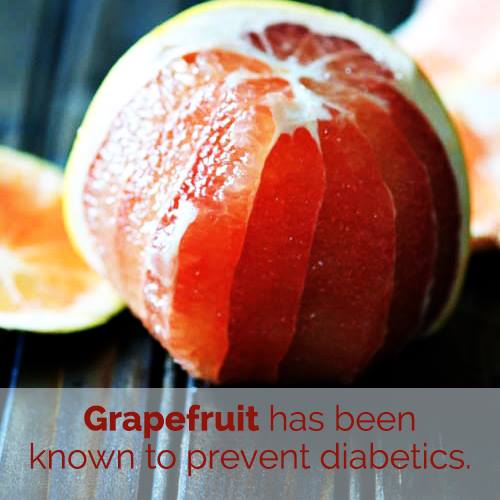
What? Grapefruit has been known to prevent ‘diabetics’ from what? If anyone can explain that to me, please do so in the comments below. (And yes, it originated in some ridiculous we-can-cure-you-of-everything site that promises the world and delivers nothing. Except bad grammar.)
Thankfully, it was balanced by this:
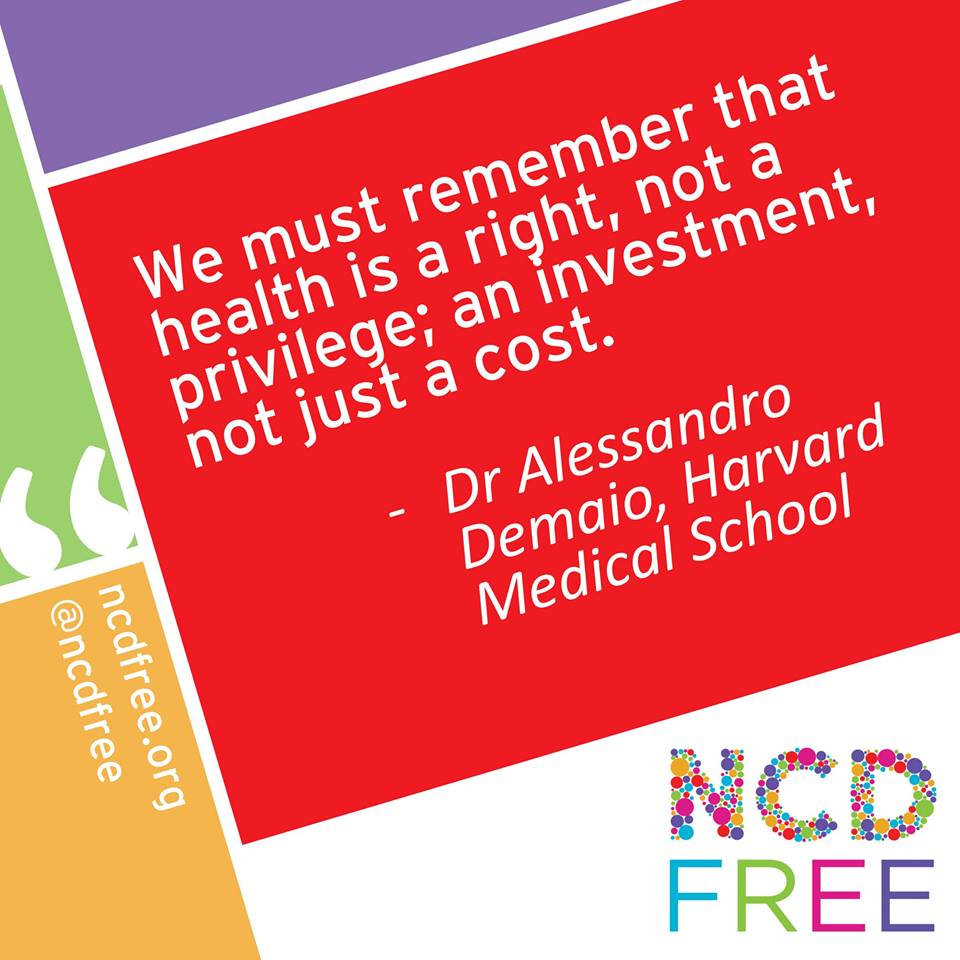
Sandro Demaio and the team from NCDFree are bright, sharp, and looking at public health in innovative ways. Check them out. (Don’t bother checking out the wellness idiots though. Grapefruit is a yummy fruit – delicious in a citrus salad, great mixed with vodka and blood orange juice. But it won’t prevent anything.)
‘We had diary today,’ said the kidlet. We were all sitting at the table having dinner. This, I have come to understand, is one of the times we learn most about what the kidlet is thinking and what she is up to.
At the beginning of the year, all the kids were given diaries. Each night they are meant to fill details of the the book they are reading and the page numbers they have read for the day. I get why this is important. It allows the teachers to see just how much the kids are reading and the sorts of books on their reading lists. It teaches discipline and it provides a record.
Now, we have a reader. She is one of those kids who reads under the covers with a torch after lights out. When I call out to her and she doesn’t answer, it’s because she is most likely sitting somewhere outside, puppy at her feet with her nose in a book, so engrossed that she doesn’t hear my increasingly-annoyed voice calling her name.
For the first week, the kidlet was a little obsessive about her diary. Every night when Aaron and I went in to tell her to turn the light out, she would say she had to fill in the details. So, she would climb out of bed to find her diary and dutifully write in it.
I started to get annoyed. It was messing with our hard-worked-for bedtime routine with a kid who is the master of delay-tactics. She just had another thing added to her arsenal to delay going to sleep. And this time it was school-sanctioned!
The diligence lasted a couple of weeks. And then, it stopped. I completely forgot about it, so didn’t ask her.
So when she told us that she had ‘diary’ today, I realised that I’d not seen her filling it in much recently.
‘Do you still complete that every day? I’ve not seen it at home.’
‘Nope,’ she said. ‘I fill it in at the last minute while I’m sitting in class. I write down the books I’ve been reading and guess the number of pages. I know that I’ve been reading; I read every day. Heaps! Why do I need to write it down in a diary? That doesn’t show how good my reading is, does it?’ She said this without a hint of sheepishness.
I smothered a smile.
I knew I should tell her that she needs to do what she is asked to do by her teacher. I knew I should say to her that there is a reason for keeping the diary. I knew I should mention to her that it is something all kids are required to do and that she is no different from the other kids.
I knew that.
But I also knew how hypocritical it would be for me to tell her that. If she asked me what was being achieved by filling in the diary each day – how it would improve her reading or learning skills – I couldn’t give her an answer.
There is no way I would fill in a log book of my BGL levels just as a matter of course. If there was a reason for it – checking basal rates, trying to deal with pesky lows (or highs) – sure, I can see why.
But if the reason is just ‘its’s-what-we-get-all-people-with-diabetes-to-do-just-because-we-do’, I’s refuse. I can’t see the point.
Later on, I suggested that the kidlet have a conversation with her teacher about the diary and to talk about ways that she could use it that are meaningful to her – such as listing all the books that she finishes reading, or listing books she would like to read. She considered my ideas and said she’d think about it. (Possibly ten year-old speak for ‘If I say okay, will you stop talking about it, mum?’)
I thought about her sitting there in class just before she was to show her diary to her teacher. I thought about her frantically writing down the books and guesstimating page numbers. I wondered if she was using different coloured pens, so it looked like she had filled it in each day rather that in one hit. And I smiled. Because that’s exactly what I would do. That’s exactly what I did do.
Like mother, like daughter. And then I stopped smiling. Those teenage years are gonna be a nightmare!
Two and a half minutes. I reckon that’s how long it took before the tears started.
I walked into my endo’s office and we exchanged pleasantries. I’ve been seeing her for over thirteen years now and there is an easy banter that we fall into.
I sat down and said, ‘I’m going to need tissues. Where are the tissues?’ And that was all it took. No one had even said the word ‘diabetes’ yet.
‘I’ve got no idea where to start. Things have been terrible. I’m all over the place. I feel like I have dropped the ball – really dropped the ball and I don’t know what to do to get back on top of things.’ I briefly explained the burnout, the rough couple of years, the grief I still feel shrouded in at times following the miscarriage. ‘Even when I feel like I am seeing some light, I fall too easily back. My self-care gets forgotten very easily. Very quickly. I can’t seem to get over my miscarriage and there are days that I feel so weighed down by the loss.’
She listened without interrupting, letting me blurt out what I needed to, sniffling my way through grottily. And then she waited. So I filled the silence.
‘I know that I am being too tough on myself,’ (there was a tiny, barely noticeable nod from her at this point). ‘And I know I would be quick to point out to anyone else saying these things that they need to be a little kinder to themselves. But I don’t give myself the same breaks. I feel like I’m letting myself down.
‘I don’t know where to begin. I didn’t get my blood work done before coming here. I just didn’t have it in me. I don’t want to see any results. But I am so angry at myself for not having it done and for not keeping on top of my complications screenings – I have never, ever been behind on this before. I’m even scared to have my BP taken because I am terrified that it is going to be high. And then I’m catastrophising that into equalling kidney problems, and eye problems. Even though I know my eyes are fine. That is one thing that I am up to date with. But I am anxious about my kidneys. I don’t know why.
‘I wrote about this yesterday on my blog. I don’t want to be here. I don’t want to see you. And I really like you! But I don’t want to be here and having to think about my diabetes – and how little I’ve been thinking about my diabetes.’
The words dribbled out of me, sentences running into each other. Until I stopped. I wiped my eyes with a tissue and took a deep breath. We spent a while not talking about diabetes – instead discussing other things. We chatted about our trip to New York, the kidlet, my work. My tears had dried, the scrunched up, soggy tissue deposited into my bag.
‘Okay. Jump up on the bench and I’ll just check your BP,’ she then said. And I did. And it was fine. In fact it was better than fine. I asked her to repeat the numbers to me and a lump formed again at the back of my throat, and tears pricked my eyes, but I wiped them away. They’re just numbers. I know they’re just numbers. But they were not scary numbers. They were numbers that gave me a little confidence to find out more.
‘I suppose I should get weighed,’ I said. ‘Actually, do I need to?’
‘No. Not unless you want to.’ This led to a discussion about being weighed and how fraught that is. I decided that I wasn’t really ready to get on the scales. There was nothing I needed to know or do about my weight and it would make no difference to anything.
‘I need an A1c. And a coeliac screening too,’ I said.
‘We’ll run all the usual things and take it from there,’ she said.
When I walked out of her consultation room, I felt relieved. The insurmountable ‘I need to get back on track properly’ that had been my mantra in the lead up to the appointment had subsided and was replaced with a gentle list of a few things that I could do in the short term. I had some goals, I have some plans. I have another appointment in four weeks.
I drove home and walked into the house. ‘How was your appointment?’ asked Aaron. He knew how anxious I had been feeling about it. ‘It was good. My BP is awesome. I’m going back in four weeks.’ I changed the subject. That was all I needed for today. I didn’t want to speak about it anymore.
I like to think that I am not one of those parents who is always banging on about how perfect their little precious is. My kid, love her as we do, can be a little devil. She is wonderful and gorgeous and clever and kind. But she is not perfect.
However, one of the things that I am incredibly proud of – and brag about like one of those parents – is her good manners. Aaron and I have had a no tolerance policy since before she could speak about the importance of saying please and thank you. She knows to say excuse me (as in: ‘Excuse me, can I please pat your dog?’ – the words she has possibly uttered more than any others in her ten short years) and she knows how to behave in a café, (as in: don’t speak to mummy until she is at least half way through her first coffee).
She doesn’t get it right one hundred per cent of the time, but she is pulled up every time she forgets.
The thing that amazes me is how frequently she is commended on being polite, just because she has said please or thank you. Surely this is simply something that people just do, but I am assured by many that hearing a young child using her manners is not a given.
I probably shouldn’t be surprised by this. Each day on my Facebook feed, there are articles such as ‘Things not to say to a pregnant woman’ or ‘Five questions to never ask someone in a wheelchair’. Apparently, people still need to be reminded to never ask a woman if she is pregnant. (Here’s an easy rule for that one: Do you see a baby coming out of the woman’s vagina? No? Is there a surgical team performing a C-section removing a baby from the woman’s uterus? No? Then do not ask. You’re welcome.)
There are about a trillion blog posts about the frustrating things that we get asked about living with diabetes.
We need these things to be written, because people seem to have bad manners. That is what it all comes down to.
We can say this is ignorance and that people need to be reminded that there are some issues that are a little sensitive. But I don’t think that is the case.
I think it is just bad manners.
I would never begrudge anyone for not understanding what life with diabetes is about. Unless they are living with it themselves, why would they know?
But asking inappropriate questions or saying silly things is not excused by a lack of understanding. It is explained by a lack of manners though.
Asking someone ‘should you be eating that?’ is just plain rude. And thinking that sharing the story of someone you know who has died a painful, horrific death because of diabetes is not a bonding exercise. It is scary and nasty. Just don’t do it.
Now, I don’t want to be all negative Nancy. No; I’m all about solutions! If you have a friend or loved one with diabetes and want to make conversation about their diabetes, here are some ideas to demonstrate your exceptionally good manners and show how much you understand:
Replace ‘Should you be eating that cupcake?’ with ‘Oh, there’s a Nutella cupcake over there. Can I get you one?’
Replace ‘Does giving yourself a needle hurt?’ with ‘Oh, there’s a Nutella cupcake over there. Can I get you one?’
Replace ‘I once knew someone who died because of diabetes. It was terrible. Are you scared that will happen to you?’ with ‘Oh, there’s a Nutella cupcake over there. Can I get you one?’
Replace ‘I could never give myself a needle.’ with ‘Oh, there’s a Nutella cupcake over there. Can I get you one?’
Replace ‘Did you eat too much sugar as a kid? Is that why you have diabetes?’ with ‘Oh, there’s a Nutella cupcake over there. Can I get you one?’
Replace ‘I saw on A Current Affair last week that if you drink a kale smoothie for breakfast every day, you could cure your diabetes. Have you tried that?’ with ‘Oh, there’s a Nutella cupcake over there. Can I get you one?’
Replace ‘Cinnamon. Cinnamon cures diabetes. Did you know that?’ with …. Actually, this is acceptable as long as you accompany the question with a cinnamon-infused baked good.
There you go. Not too hard at all. And that ends today’s lesson of Manners with Renza.
I’m home today with a bug. Bored out of my brain, I’ve spent too much time scrolling mindlessly through Facebook. This is never a good idea when I have time on my hands.
Usually when using Facebook, I don’t click through on things that are either stupid, or about the colour of a dress. (#TotallyTeamBlueAndBlack) I have learnt that looking at anything that is going to trigger eye rolls and anger in me is better left alone.
But today, with wasting time being about as much as I can manage, I saw something flash up on one of the pages that I follow that I ordinarily would not have clicked on. Ordinarily, I would have muttered under my breath about lunatic posts and moved on.
The post was extolling the evils of coffee. Now, caffeine is my drug of choice. I can’t live without it. Wait, that should probably read insulin. INSULIN is my drug of choice and I can’t live without it.
But coffee is my heart starter; it’s lure is what gets me out the door in the morning. The first sip of coffee each day is a jolt that kick starts me into a functioning, coherent human being. Or, at least the illusion of one.
So, I don’t take kindly to anyone telling me that it is the root of all evil.
This is where the ‘time on my hands’ thing went wrong. I clicked through to the source of this information and found myself in the middle of a site dedicated to telling the world – nay, lying to the world – about how pretty much everything is killing us.
In addition to caffeine being the reason for our untimely deaths, here are just a few other things that are sending us to early graves:
- Vaccines (especially the HPV vaccination)
- Medications
- Antibiotics
- Red meat
- Dairy foods
- Doughnuts
- Gluten
- Caesarean births
- Doctors and other health professionals
- Hospitals
- Sugar (of course)
- Grains
When I got to a lovely poster that the site encouraged we print out and stick on our (nothing but organic kale and kumbucha tea containing) refrigerator, I knew it was time to throw my iPad across the room. The poster claimed that that ‘food is healthcare and medicine is sickcare’.
Every day, more and more of these sites crop up. Once the domain of pseudo-healthcare professionals, now anyone with a green smoothie maker and Internet access can set themself up as a ‘wellness consultant‘, create a website and convince readers of the credibility of the lunacy presented.
After losing about 30 minutes of my life clicking through the site, I put my iPad down. I thought about what I need in my life to feel well and healthy. I thought about how lucky I am to be able to access medication and devices and coffee and fresh food and doughnuts and a flu shot later this month and our healthcare system.
These are the things that are well-making. All these things. The choices I make, the decisions I make, the things I do. Nothing is killing me, there is no conspiracy by anyone to make me sick. It’s just common sense. Something that is sadly lacking from any of these so-called wellness sites.
Although diabetes is not all about numbers, sometimes, numbers tell an interesting story.
TYPE 1 IN AUSTRALIA
Each quarter, the NDSS releases a snapshot of diabetes in Australia.
And each quarter, even though I know it to be true, the numbers referring to people living with type 1 diabetes in Australia astounds me. Type 1 is considered by many as a childhood health condition. But look at this:

National Diabetes Services Scheme stats – 31 December 2014
Only 11 per cent of the almost 118,000 people living with type 1 in Australia is 20 years or under. In other words, over 104,000 people with type 1 diabetes are 21 years or older.
We need to remember this when we are talking about diabetes in the media and to policy makers. Kids with type 1 diabetes grow up to be adults with type 1 diabetes, so for every support service or program focused on children, we need to think about what adults with diabetes – at every age and stage of their lives – will need.
And we need to think about painting the whole picture when advocating for people with type 1 diabetes.
ROSES SPARED; CHILDREN SAVED
Here are some feel good numbers for you. The 2015 Spare a Rose, Save a Child campaign has wrapped up and a total of $24,229 was raised. This equates 401 children kept alive this year.
This campaign is coordinated and run using social media. THIS is how social media is used for good. THIS is why social media is about a lot more than Kim Kardashian’s latest haircut. THIS is what people with diabetes do when we come together. THIS is what online communities are about.
DID I TAKE MY INSULIN?
It’s been a long time since used insulin pens, but I can still remember the number of times I would look at my pen with a puzzled look on my face trying to remember if I had bolused for the meal I was eating, or if I’d taken my long acting insulin.
Timesulin is a nifty little device that simply snaps onto your insulin pen, replacing the cap you are currently using. Every time you replace the Timesulin cap, it resets to let you know when you last took your insulin.
And the great news is that it is now (finally!!) available in Australia. Details here.
IF DIABETES WAS A COUNTRY….
This is an oldie, but a goodie. The IDF released this really simple infographic that tells the story of the number of people with diabetes across the world.
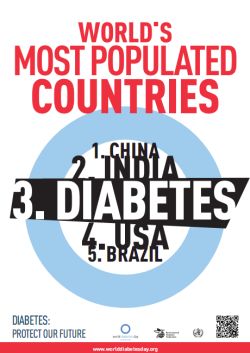
That’s right: the People’s Republic of Diabetes is the third most populous country in all the world! Can we get a flag please? And a national anthem?
THE NUMBER 1
But you know what? Using numbers to explain the diabetes epidemic or pandemic or whatever other word we use to try to convey the magnitude of the issue is a little irrelevant if you are one of those people actually living with diabetes.
Because sometimes seeing how big the issue is only makes us (and everyone else in the world) want to bury our head in the sand, afraid that we can’t deal with a problem so bloody big.
While it’s important to know just how many people are affected by diabetes and what that means, it is also important to remember that it’s individuals, with individual needs, living with this day in and day out.
Sometimes, it’s okay to say ‘it’s all about me.’ Because when living with this condition, it really is.
MY FAVOURITE NUMBER

Ha! Oh, and I checked three times and each result was the same. Which is really important, because while numbers may not matter, accuracy does!
Most days, I wear bangles. Today, I am listening to them too.
A couple of weeks ago, I met a young child with diabetes. This was one cute kid who was clearly going to be boss of the world when she grew up. And a zoo keeper. I know this because she told me as much.
She has lived with type 1 diabetes for over half her life – she told me that too. And she also told me that now, as a big grade one kid, there were things that she was doing to take care of her diabetes on her own.
‘Want me to show you?’ She asked me.
‘You bet!’ I said
She checked her BGL for me, talking me through it. ‘I use this to get the blood out of my finger. And then the blood goes here. Did you hear that beep? And here is the number. It says 8. That means I don’t need to do anything right now.’
Then she went off on a tangent and counted to 125 for me, which I told her was very impressive.
She showed me her pump and was very excited when I showed her mine, although disappointed that mine was boring and charcoal while hers was covered in a bright pink skin. ‘You should buy one for your pump. Your pump is not very interesting. It would be much nicer if you looked at something bright instead of boring. And more fashionable.’ I think she tut-tutted me as she shook her head at my lack of inventiveness when it came to pump decoration.
I won back some points when I showed her the bright purse I keep my meter in. ‘I guess that’s nice,’ she told me, and then found something else to show me.
‘I eat these lollies sometimes when I am low. My teacher has a big jar of them in the cupboard in the classroom. She has to keep them on the top shelf because I caught Matty eating them one day. He got in trouble, but it’s not his fault that he doesn’t know that I need them when I go low. Where do you keep your lollies?’
I told her that I have them in my bag, usually. And on my bedside table. ‘In a jar with a blue lid’, I explained, suddenly desperate to win some cred with this kid!
She nodded and seemed to approve of this answer. ‘Blue is okay,’ she announced.
‘Do you know that I am going to be a zoo keeper when I grow up?’ She asked me.
‘That sounds like a great idea and a very cool job,’ I said, and I told her that I have always wanted a pet tiger.
‘You can’t have a pet tiger,’ she said, sternly. ‘They are not good pets. You should know that.’
I told her she was right.
‘If I’m not a zoo keeper, I might be a doctor. I’ll help kids with diabetes. That would be good too.’
‘Sure,’ I said. ‘Maybe you might find a cure for diabetes.’
She looked at me with what I can only describe as the sassiest look I have ever seen.
She shook her head. And spoke to me very slowly, like I was a bit simple, staring at me straight in the eye.
‘Why does everyone think that a cure is the best thing? As long as I can be a zoo keeper, I don’t care about having diabetes. Tigers don’t care if I have diabetes.’
This kid? She is 6 years old. And she has it together more than most adults I know.
I read this piece by Mike Hoskins (mate, fellow coffee addict, all ‘round good guy) over at Diabetes Mine yesterday where he looked at the use of the word ‘diabetic’. The piece is actually from December last year, but I missed it in the excitement that was New York in December.
I don’t use it. I don’t refer to myself as ‘diabetic’ or ‘a diabetic’. I am a person with diabetes. As far as economy of language goes, it’s a pain, especially when you only have 140 characters to play with. But PWD seems to be pretty widely recognised in my circles.
Perhaps it’s been drummed into me at work, perhaps it’s political correctness gone mad. Regardless, you will not read or hear me use the word diabetic as a label for myself or others with diabetes.
Mike’s article was quite timely as last week I had a little incident that got me more than a little heated.
I was on the phone with VicRoads. This was not an enjoyable experience by any means. I was cut off four times; the four people who answered my call(s) gave me incorrect information and then, when I asked to speak with a medical review case worker, I had someone return my call who was incredibly rude, aggressive and disrespectful. She constantly interrupted me and refused to answer my questions. And gave me the wrong information.
(For context – I was trying to get some clarification as to why I was required to submit an eye exam report along with my medical review.)
‘I was wondering why I am required to submit an eye exam report,’ I explained as the reason for my call.
‘Insulin-dependent diabetics have to must submit a biennial eye exam,’ was the response.
I asked where this is stated in the Guidelines. She would not (could not?) answer this question. She just kept saying (very aggressively) ‘It is a requirement for all insulin-dependent diabetics.’
Now, I am willing to concede that I was pissed off and that if I didn’t have my back up I probably would have let things slide and been happy to continue the discussion about our differing interpretations of the Guidelines.
But I was pissed off. I was annoyed that the medical officer was being rude and patronising and not being helpful. And I was annoyed that she was giving out false information – information that if people didn’t know better could cost a lot of time and (potentially) money for no reason.
So I stopped her.
‘Excuse me,’ I said (and I promise I was being polite and not patronising). ‘Please don’t use the term diabetic. I don’t like it. I would prefer if you used person with diabetes.’
Yes, okay. I know how prissy this sounds. I know how pedantic and, quite frankly, nit-picky I was being. I really do.
But she was being rude and she was spitting out the word as though it was something dirty – that there was something wrong with me.
Without missing a beat, she replied with ‘But you are. You are a diabetic.’ She almost yelled it at me.
The conversation didn’t get any better.
I have diabetes. I own it. I am out, loud and proud about it. But it’s my diabetes and my rules. And my rules include how people speak about me and about my diabetes. They do it with respect, they do it politely and they show courtesy. None of these things were demonstrated. The word ‘diabetic’ was being used here spitefully, and as a label that I felt diminished me.
I don’t care if people with diabetes refer to themselves as (a) diabetic. And I don’t even really mind when other people with diabetes refer to me as (a) diabetic. But it is never done with any judgement. It never pigeon holes someone. And it is never done disrespectfully.
Words matter. I say it all the time and I realise it more and more each day. While it’s a highly personal choice as to the words we each use to describe our ‘diabetes-selves’, using language that is accepted by everyone – and doesn’t have the potential to insult – is clearly a better way.
And here it is. Again. The Diabetes Australia Language Position Statement. And yes, I sent a copy of this to VicRoads as soon as I got off the phone.
This morning, just before stepping into the shower, I pulled out my cannula planning to resite once I was dried off.
I got in the shower, a million things going through my mind: (How is it Monday? I feel like I’ve hardly had a weekend. Oh, that’s right; I’ve hardly had a weekend- I worked Friday night and all-day Saturday. What does the kidlet have on at school today? Is it art? We need to buy dog food. Did I organise for the kidlet to sleep over at my parents tomorrow when Aaron and I see Sting? STING!!!!! I love Sting. How AWESOME was it to see Sting last Thursday night at Bennett’s? I want coffee. What’s the weather going to be today? I should download ‘Mozart in the Jungle.’ Sting tomorrow – yay! Oh – I need to keep promoting Spare a Rose, Save a Child this week because it’s Valentine’s Day on Saturday. Sting tomorrow night….)
And then I looked down and saw that the water pooling at my feet was bright, bright red. It took me a moment to realise what was going on – my head was still thinking Spare A Rose and Sting – and in that time, I watched the swirling pattern the red water was making as it moved around me and made its way down the drain.
Involuntarily, my right hand flew to my right side. I looked down and saw the blood gushing from where, just a few moments ago, I’d removed the cannula.
I pressed hard to stem the flow of blood, my hand getting covered with red.
The blood stopped pretty quickly. The water at the bottom of the shower turned from the Russian Red colour of the MAC lippie I wear most days, to pink, to clear again.
Of course, I didn’t lose all that much blood. But it looked pretty impressive. And I thought about how nonchalant and calm I am when things like this happen.
I continued with my shower, my mind drifting again, thinking about how the word ‘sting’ is frequently used in diabetes marketing materials. And then thinking about the Sting gig tomorrow night. And then thinking about blood. And the slight sting I could feel where I’d been bleeding. And roses. My thoughts were all muddled. But I knew that there was something tying them all together. I just couldn’t work out what it was.
It wasn’t until I was standing at the café near work waiting for my morning coffee that it hit me. I remembered an obscure Sting song from a compilation album of pirate songs and sea shanties. Sting sang one song on there. And it was called Blood Red Roses. I’ve not heard that song for years and as soon as I got to work I found it on YouTube and played it.
Sting and roses. That pretty much sums up this week.
Only a few days until Valentine’s Day, but plenty of time for you to Spare a Rose and Save a Child. Remember, for the price of one little rose, you can provide a month’s worth of insulin and save the life of a child.

Sting with Jo Lawry at Bennett’s Lane last Thursday night.