
You are currently browsing the category archive for the ‘Awareness’ category.
In my alternate reality, the alternate fact is living with diabetes is easy-peasy-lemon-squeezy.
In my alternate reality, the alternate fact is living with diabetes is affordable.
In my alternate reality, the alternate fact is everyone around the world can access free insulin and other diabetes supplies.
In my alternate reality, the alternate fact is there are enough HCPs who understand diabetes.
In my alternate reality, the alternate fact is that person-centred care is real, not just three words in a row.
In my alternate reality, the alternate fact is that diabetes stigma does not exist.
In my alternate reality, the alternate fact is diabetes technology never, ever fails.
In my alternate reality, the alternate fact is fresh, healthy foods are easily and affordably accessible for all.
In my alternate reality, the alternate fact is everyone with diabetes has the support they need.
In my alternate reality, the alternate fact is that nobody dies from diabetes.
In my alternate reality, the alternate fact is there is no judgement in diabetes. Ever.
In my alternate reality, the alternate fact is diabetes is not a punchline on SNL.
In my alternate reality, the alternate fact is reported accurately and sensitively by the media.
In my alternate reality, the alternate fact is diabetes is spoken about with inclusive, empowering language.
In my alternate reality, the alternate fact is coffee is a food group. And so is Nutella.
In my alternate reality, the alternate fact is my favourite DOC people lived on the other side of the street, not the other side of the globe.
In my alternate reality, the alternate fact is diabetes conferences are organised by people with diabetes.
In my alternate reality, the alternate fact is true engagement with people with diabetes is not tokenistic, but rather intrinsic, coordinated and meaningful.
In my alternate reality, the alternate fact is insulin pump lines never fail.
In my alternate reality, the alternate fact is children with diabetes have the same opportunities as children without.
In my alternate reality, the alternate fact is my CGM always reads 5.5.
Actually, in my alternate reality, the alternate fact is that I don’t have diabetes.
Alas, there is no alternate reality. And there are no alternate facts.

Brilliant! From illustrator, Tim O’Brien (click image for details).
With millions of people across the globe, I marched for women’s rights on Saturday. Alongside my beautiful daughter – who is growing into a fearless and fierce activist herself – I stood in solidarity with my sisters from all continents of the world, as we called for protection of our rights.

Solidarity Sisters!
It was beautiful in Melbourne – a true mid-Summer day with stunning clear blue skies and a hot sun overhead. We stood on the steps of the State Library – my favourite place in the city – and listened as women from all walks shared their stories and urged us to stand up, rise up and never give up.
After a while, the kidlet and I walked to the back of the crowd, looking for some shade. We found a park bench and she looked for a vantage point to get a look at the rally and wander around to take some photos as I sat down at the other end of the bench to calibrate my CGM.
I quickly pricked my finger and squeezed blood onto the strip. When the number came up, I entered it into the Dex app on my phone.
The woman sitting next to me on the park bench smiled over at me. ‘Me too,’ she said, holding up the bag of jelly beans she was eating.
I beamed back at her. ‘Are you okay? The heat isn’t helping, is it?’
‘I’ll be fine. Just need a few minutes before the march starts. I’ll be okay.’
I smiled again and stood up. ‘We always are, right? Enjoy the march.’
‘I will,’ she said. ‘And you too. One foot in front of the other.’
I nodded. ‘It’s the only way.’
I walked over to the kidlet and we made our way back through the crowd.

#WomensMarchMelbourne
Back in 2012 when we were thinking of starting the #OzDOC weekly Twitter chat, Kim, Simon and I were committed to making sure that it was a safe place, welcoming to all who wanted to use it. We encouraged people to actively participate, lurk in the background, jump in and out as they needed.
I had always been so impressed with the non-toxic and inviting place the #DSMA chat was, welcoming people with all types of diabetes as well as a few health care professionals, and I hoped that we could replicate this environment, albeit on a smaller scale, with #OzDOC.
Pleasingly, that’s the way it started and now, it continues to be that way. While I’m no longer involved in the running of OzDOC, or moderating its weekly chats, whenever I do drop by to participate, it is clear that the safe and inclusive model that formed its foundation continues.
It has been great to see that the encouragement of healthcare professionals to join in – lurk at first to get the idea and then respectfully participate – has continued, and frequently, a DNE or dietitian or endo will pop in and contribute.
But last night, during the chat, there was an intrusion that was not respectful. In fact, I likened it to someone bursting, uninvited, into my house and yelling that they didn’t like the way we’d decorated it and then offering to fix it as long as I paid them. I bristled immediately. And felt protective of the people in the #OzDOC room who had been so candidly and honestly sharing their thoughts.
This was a particularly delicate chat. Ashley had more than expertly navigated the sometimes tricky waters of a discussion about the place diabetes fits in our lives, and ended the chat with a question about burn out. It is a testament to the space that is #OzDOC to just how candid and honest people were in their responses.
So, the idea that someone tweeted something about how so many participants were clearly living with ‘out of control’ diabetes and then linked to her fee-for-service website, was not only inappropriate, but also insensitive, thoughtless and showed a true lack of understanding of what people with diabetes are dealing with.
My mother hen instinct kicked in. I had just laid myself bare as I used words that describe burn out to me, and others had as well. This was absolutely not the moment to promote a business and, at the same time, tell people they were doing a crappy job at managing their diabetes. And there is no place for judgement in this chat, especially from someone so clearly out-of-touch.
While my response was somewhat reflexive and probably could have done with a moment away from the keyboard before hitting the ‘tweet’ button, I don’t regret that I did it. And the responses from others in the chat suggested they too were feeling uncomfortable about the intrusion to the discussion.
I was furious that someone had so aggressively and judgementally invaded the safe space that has been so carefully cultivated. ‘Out of control’ diabetes? Really? Fuck off. (Actually, that was the response I wanted to type, but kept myself nice, so maybe I wasn’t as harsh as I thought.)
My concern about this intrusion was twofold. Primarily, I would hate for any person with diabetes to feel afraid of participating in any sort of peer-based activity for fear of being judged. We get enough of that outside of the spaces we create for ourselves and certainly shouldn’t have it forced upon us in our own groups.
But also, I would hate for any HCPs to think that they are not welcome to participate. They most certainly are, however the respect, lack of judgement and kindness expected by participants is expected of everyone. If they are unable to demonstrate that, stay away.
I’m not naming and shaming the person who tweeted last night. The tweet has been removed anyway. But, I would absolutely encourage them to come back next week and the week after and the week after that to learn. Watch what goes on in these chats, listen to what people are saying, understand the real-life sensitivities of diabetes.
And then, feel free to softly, softly join in. Respectfully ask questions (after asking if it is okay to ask questions) if there is something that needs clarifying. Gently share ideas that may be of benefit. But absolutely do not try to sell something. And check your judgement at the door.
Today is my first day back at work. I spent the weekend preparing for the day by sitting in the sunshine, drinking coffee, deadheading rose bushes and switching back on the part of my brain that thinks about work. And remembering how to walk in high heels.
The new year looms ahead. It’s huge. There are things to finish from last year and lots of new projects waiting to begin. And starting fresh with a clean slate and thinking strategically about how to get things done is important.
I don’t really do New Year’s resolutions. I’m lousy at committing to anything remotely healthy, so there is no point in trying to promise to do something that I’ll do for two days, then stop doing and then feel bad at myself for not doing it anymore.
I don’t really want to use the New Year to focus on diabetes by concentrating on particular tasks or specific measures. Outcomes seem to be organic and setting goals, while a noble gesture, often lead to disappointment. Feeling like a failure is not how I want to begin the year!
But I do like the idea of embracing the New Year and cracking open its spine, revealing clean pages and new beginnings.
Australian writer and publisher, Mia Freeman, shared that last year, she came up with a word that would help draw her attention to her plans for the year ahead, and has done the same for this year.
I like this idea – the thought of having some sort of directive that would be an overarching theme for decision making and planning, and would, hopefully, mean that I ended the year feeling a success rather than just a shattered and weary mess.
Because I have found myself pretty exhausted at the end of the last few years. I know everyone is – we get to a point where we are just done and need a break. I felt as though I was burnt out with life when I went on leave, and the much needed holiday was about getting back to a place where I felt I could tackle what lay ahead.
With this in mind, I wanted my word to help me avoid that burn out, so that come the end of the year, the exhaustion I felt was not so overwhelming.
So, I spent some of the time we were in New York auditioning words, trying them out, rolling them around on my tongue and hearing them in my mind, thinking what they could mean for me throughout 2017. As I walked around the snowy streets, I projected how I wanted to feel at the end of this year and what I would need to get there.
The word I have settled on is pause.
As soon as I said it, I knew it was the right word. I wrote it down, over and over, thinking about how it could shape and help plan my year. I wrote it on scraps of paper and shoved them into my purse and handbag to remind me. And the minute I walked into my office this morning, I wrote it on a post-it and stuck it to my wall.
Pause doesn’t mean that I will be stopping anything I’m doing. It doesn’t even necessarily mean I’ll be cutting back. But it does mean that before committing to anything new, continuing with something old or exploring different ways of doing things, I will pause and think about why and how I am doing it.
The tendency to simply say yes to everything serves no one – the results are me not doing things as well as I might like or feeling disappointed with the end result.
I also am seeing how I can adapt the word to suit my diabetes management. I think that too often, I am on autopilot, not really thinking about what it is that I am doing. To pause means giving meaning to actions, attention to decision making and focus to the way I choose to manage my diabetes. Jumping on a bandwagon because it has been written up in a few different diabetes magazines – without pausing to consider if it is right for me – really makes no sense. I am very guilty of wanting, needing the latest toy without necessarily stopping to think if it will serve any purpose.
There is already a lot in the calendar for 2017 – all the way through to its end with the IDF’s World Diabetes Congress rounding out the busy year in December. I’m the Deputy Stream Lead for the Living with Diabetes Stream, so there is no chance of slowing down as the year winds down.
So, with all this in mind, my word for the year is going to help shape how I approach things. I’ll have to see how it goes and I expect I’ll need to pull myself back at times, reminding myself to stop, think and, perhaps, wait. And then, as I pause, take the time to let things sink in, catch up and take shape.
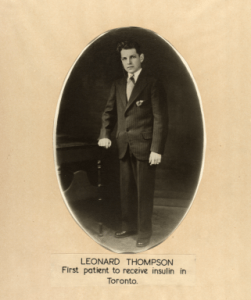
On 11 January in 1922, a 14-year-old boy in Toronto was given the first insulin injection to treat diabetes. His name was Leonard Thompson, and he lived for another 13 years, before dying of pneumonia when he was 27 years old.
When he was given insulin for the first time, Leonard was on the only treatment available at the time for those diagnosed with type 1 diabetes. He was on a starvation diet, and he was close to death, drifting in and out of a coma because of diabetic ketoacidosis.
There are dates each year that trigger reminder lessons in the discovery of insulin. On those days, I say a silent thank you to Banting and Best for their work, grateful to them for my life and I peek into my refrigerator at the vials of insulin within easy reach for when they are needed.
But I also feel a great sense of sadness and frustration, because today, ninety-five years after Leonard Thompson was given his first insulin injection, this miracle drug is still inaccessible to so many people with diabetes. And people are dying, suffering in the way that Leonard was before he was given the drug for the first time.
Yes, I said ‘suffering’. And I don’t use that word. I don’t suffer from diabetes – I live with it. But make no mistake, someone who cannot access insulin and is dying from diabetic ketoacidosis is suffering. They are in pain; their body is in distress. They are dying.
The playing field is so un-level and that is simply not fair. So if you are able to – if you are one of the fortunate ones with insulin in your fridge, please do consider donating to those who are not.
Insulin for Life Global needs donations to fund transport costs for delivering insulin to those most in need. AUD$12.50 will cover the cost of sending two weeks’ worth of insulin.
Around Valentine’s Day each year, Spare a Rose suggests sending 11 instead of 12 roses. The AUD$6 saved provides insulin for a month to child with diabetes through the IDF’s Life for a Child program.
And for AUD$10, T1 International will send out their advocacy toolkit to five people with type 1 diabetes, providing information about how they can stand up for their rights.
 (Click image for source)
It’s day four of holidays for me. Already lazy mornings, easy days and gentle plans to meet up with friends and family are clearing my mind, and I can feel the backlog of stress and exhaustion – the things that are part of everyday life – start to make way for sharp thinking and smarter decision making.
And in terms of diabetes this means more attention paid to alarms and alerts on my various devices: the calibration alert on my phone for my CGM gets attended to immediately, the low cartridge reminder on my pump is heeded at the first warning. I stop and think before blindly acting, and calmly troubleshoot as I go along.
My head is clearing. I am starting to think about diabetes the way I like, at a level that feels safe and sensible and manageable. I make rational decisions; I take the time to fine tune what I am doing. Diabetes has a place that is comfortable, I feel better overall and far more capable of ‘doing diabetes’.
 Earlier this week, the findings from the Diabetes MILES-2 study were launched. (Quick catch-up: MILES stands for Management and Impact for Long-term Empowerment and Success and is the work of the Australian Centre for Behavioural Research in Diabetes (ACBRD). The first MILES survey was conducted back in 2011, with over 3,300 Australians with diabetes taking part. The MILES Youth Report was launched in 2015, reporting the experiences of 781 young people with type 1 diabetes and 826 of their parents. This study formed part of the NDSS Young People with Diabetes Project for which I am the National Program Manager.)
The MILES reboot (Diabetes MILES-2) once again provides a snapshot of the emotional wellbeing and psychosocial needs of Australian adults living with diabetes. Over 2,300 people participated in this study and the results are comparable to those from the first MILES study. The Diabetes MILES-2 survey included the addition of some issues that had not been investigated in MILES, such as diabetes stigma.
Some key findings from the report include:
- 17% of survey respondents had been diagnosed with a mental health problem at some point of their life
- The respondents most likely to experience moderate-to-severe depression and anxiety were those with insulin treated type 2 diabetes
- The respondents most likely to experience severe diabetes distress were those with type 1 diabetes
- The aspects of life reported by all respondents as being negatively impacted by diabetes included emotional well-being (for those with type 1 diabetes) and dietary freedom (for those with type 2 diabetes)
- More stigma was experienced by people with type 2 diabetes using insulin as compared with people with type 2 diabetes not using insulin
Anyone affected by diabetes knows that the psychological and emotional side of diabetes is as much a part of the game as the clinical tasks. In fact, for me, it is the most difficult to deal with. What’s going on in my head directly affects how the I am able to manage the practical side of the condition.
When my head is clear – the way it is slowly, but surely becoming as I settle into holiday mode – and I have time and space to rationally think about, and focus on diabetes, the routine tasks seem manageable. The numbers present as nothing more than pieces of information: they allow me to make decisions, act, or not act. I am able to be practical and seem to have my act far more together.
But for the most part, diabetes is not like that for me. I don’t manage my diabetes the way I want and that is mostly because I am simply unable to due to the distress and anxiety I feel about living with a chronic health condition that terrifies me a lot of the time. I feel overwhelmed and, in the mess of life, diabetes becomes impossible. I am not proud of this – but I am honest about it.
If I am perfectly truthful, there is nothing in this report that surprises me. But it does provide validation for how I am feeling – and how many others with diabetes are feeling too. And I am so pleased that there is evidence to support what so many of us who live with diabetes feel.
It’s no secret that I am a very big fan of the ACBRD’s work. Diabetes MILES-2 once again shines a light on the ‘other side’ of diabetes and serves as a reminder that unless the psychosocial side of living with this condition is addressed, we simply can’t manage well the physical side. And it forces those who want to believe that diabetes is a matter of nothing more than numbers and mathematical equations to consider the emotional wellbeing of those of us living with diabetes each and every day.
The MILES 2 report can be read online here.
Last week, my Timehop app reminded me of this snapshot in time.
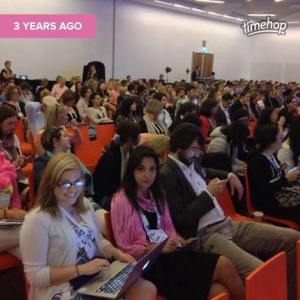
This photo was taken at the 2013 International Diabetes Federation’s World Diabetes Congress in Melbourne, and that look on my face is of pure anger. I was listening to a speaker – a doctor – referring to ‘non-compliant diabetics’ as he was telling of the ‘poor outcomes’ of ‘patients’ in his practise.
The old language chestnut came up again on the second day of the #MayoInOZ conference during the innovation showcase was held. In this session, nine speakers were each given five minutes to present how they are using social and digital tools to improve healthcare. (This is where Kim spoke about #OzDOC and how healthcare professionals use the hourly tweetchat as an opportunity to engage and learn from people with diabetes.)
The final speaker in the innovation sessions was a late addition and it was great to see diabetes again being represented. I know I am biased, but I do always get excited when I see diabetes on the program!
Andy Benson from Coffs Endocrine and Diabetes Centre presented on the project she has been working on: telling the story of diabetes in a series of documentaries to be screened on the BBC.
So, first things first. I love this idea. I am a huge fan of having diabetes out in the ‘public’ space, pulling it out from diabetes groups and diabetes-specific forums, because in most of these cases, we’re preaching to the converted. It’s one of the reasons I love writing for Mamamia Women’s Network where I know that most of the readers probably don’t already have a connection to diabetes.
If these documentaries are screened on the BBC, imagine the audience! It is so refreshing to see people thinking outside the box and looking for ways to present to a new audience – and to tell stories, real stories of real people who actually live each day with diabetes.
Andy showed two short video clips from the still-in-development documentaries. As healthcare professionals on screen spoke about diabetes, I automatically prickled, my language and stigma sensors being alerted straight away.
I wasn’t the only one. In a room with two other diabetes advocates – Kim, Melinda Seed (Once Diabetes), as well as several very vocal health advocates and activists, there was a sense of discomfort at what we were seeing.
I inhaled – maybe ‘gasped’ is a better word – when one of the HCPs used the words ‘diabetes plague’ in his introductory words. There was an undeniable sense of blaming the person with diabetes in the words being used and the sentiments being expressed.
The Twitter conversation from both people in the room and those following along was honest and candid. And, quite frankly, it was uncomfortable too. Andy had disclosed that she has type 1 diabetes, and I didn’t want to be actively criticising the work of a fellow PWD.
However, I could not keep quiet either. When Andy came over to chat after her talk, we had a very open discussion. I was probably quite blunt in my comments.
It is not okay to use language that is stigmatising. The format of the information being presented (i.e. unscripted interviews) doesn’t preclude anyone from being courteous and respectful, and I don’t believe that PWD were being treated either courteously or respectfully in the way about which we were being spoken.
I understand that there is a desire for authenticity and genuineness when interviewing documentary ‘talent’, however it is possible to be clear from the outset that language needs to be respectful at all times. Not sure where to begin with this? How about the Diabetes Australia Language Position Statement which actually provides suggestions for inclusive, non-stigmatising language?
I think it is really important to acknowledge that the road to satisfaction in the way we use language that is inclusive and non-stigmatising is a very, very long one. Also, I genuinely don’t believe that there was any malice intended on the part of the film makers or the interviewees.
We also need to acknowledge that the language used in what has been (and many would argue continues to be) a patriarchal health system is entrenched in the thinking of many – it was part of their training and is a habit that will take time to break. But by acknowledging it, we are not saying it is okay.
As I said, I love the idea that diabetes is a topic for a documentary that is being made for a non-diabetes-specific audience. However, if those people walk away thinking that my healthcare condition is a burden to society (and therefore I am too!) or that they believe it is okay to continue to use words that stigmatise, then there is the potential for this work to do more harm than good.
And finally, a call to not only the coordinators and owners of this work, but to all who are developing any sort of health information using any sort of platform: talk to people with the condition. Lots of them. It is not okay to have one token consumer representative; there should be many – as many as (if not more than) any other expert being consulted.
A couple of weeks ago now, I was incredibly fortunate to win a scholarship to attend the Mayo Clinic’s Healthcare and Social Media Summit in Melbourne. I’m a little slow in getting anything out about it, because…well because November. But November is over! And finally, the first of the few posts I’ve started is here and the others are coming. #Tardy
Five scholarships were offered for consumers to attend, and I was encouraged to apply. So, I diligently filled in my application, hitting ‘submit’ moments before the deadline. (Not to self – always have an up-to-date bio available!) And then, the week before the conference, I squealed aloud in a meeting when I received the email, letting me know my application was successful.

The scholarship recipients. (Click photo for source.)
Before the event even started, there was online chatter about making sure the consumer reps in the room connected. Which we did! Before and throughout the conference, calls to ‘find your tribe’ resonated, and I certainly felt I had found mine! It was an absolute delight to meet and an honour to wave the consumer flag alongside Carly, Mel, Liat and Belinda.
And others in the tribe made me realise just how high the bar is set! Lisa Ramshaw, event organiser, is a force of nature. There is no other word for her enthusiasm and dedication to healthcare social media. I suspect Melissa Cadzow has #patientsincluded tattooed on her body somewhere so great is her commitment to the inclusion of consumers in all activities that affect us!
Kim giving her talk
And of course, the five-minute presentation in the innovation showcase from Kim Henshaw about OzDOC presented another strong consumer voice to the event. Kim spoke about how healthcare professionals use the weekly tweetchat as a platform to learn and engage with consumers. Kim did the OzDOC community proud with her talk, using her time to accurately crystalise the very essence of the power and influence of an online network.
It’s these people that are the reason I love these sorts of conferences – and their like-minded attitude, and endless promotion of the importance of the consumer voice and the value of using social to connect, inform and support. This is mostly a huge positive, but it does get me thinking that the people who should also be in the room probably aren’t. Organisation CEOs need to be better represented to be taken on the journey of why HCSM cannot be dismissed as ‘the way of the future, so we’ll get to it soon’, but rather ‘It’s here. We need to Do.It.Now.’ This would inform a true real top down / bottom up approach to embracing healthcare social media within their organisations.

The diabetes contingent: Me, Kim and Mel
The underlying message of the conference – at least for me – was reinforcement of something that I have known and promoted for a long time: health social networks bring people together. Before online social platforms, we did it face-to-face. The message of the ‘modern day kitchen table’ was brought home to me again and again and again, and I understood that the barriers to using social are absolutely not insurmountable – despite feeling that way at times with all the justifying we seem to have to do.
And the message of ‘Connected communities get more done’, rang so true. I thought to the first morning of the conference when I was late because I’d been moderating an hour of the 24 hour World Diabetes Day tweetchat, talking diabetes stigma with people from all over the world, affected by diabetes. I thought to the Spare a Rose; Save a Child campaign. I thought about #DSMA and #DeDOC and #OzDOC and all the ways that our own diabetes community connects to get things done.
My conference fees for the two days of the #MayoInOz conference were covered through the consumer scholarship program. I was not expected to write anything in exchange for the scholarship. Thank you to the organisers of the event, Consumer Health Forum Australia and Melissa Cadzow for the scholarship. You can read more about the conference by clicking on this link for tweets.

I’m reading a fabulous book at the moment. It’s called In Other Words, written by one of my favourite writers, Jhumpa Lahiri. My sister introduced me to her writings a couple of years ago, and I have read most of what she has written now.
The backstory to the book is quite lovely: the writer wanted to learn Italian – really learn Italian – and after years of study, moved her family to Rome. While there, she started writing only in Italian, retraining her brain to speak and think in Italian first.
The book is presented in both Italian and English. When the book is open, the left-hand page is in the original Italian and the right-hand side is in the translated English. As someone with basic Italian, I’ve been enjoying reading the Italian words, saying some of them out loud to feel them roll around on my tongue.
I start by reading the Italian side and work my way through, understanding as much as I can. What I find is that I get the general gist of what is going on, but there are gaps. The detail is completely lost at times, but I am able to piece the story together and understand what is going on. When I read the translation, all the gaps are filled in, the detail is there – adjectives provide description and narrative and help round out the story.
I cover up the English page so that I can only read the Italian, but try as I might – as I rack my brain to remember what a word means – there ends up being a lot missing from the story. But there is the safety net of being able to remove the paper hiding the translation when I simply can’t work out the holes in the story, resulting in a satisfying – and full – understanding of the beautiful story.
Yesterday, I spent the whole day feeling like I was living in the Italian side of my book. I trudged through, with a general idea of what had happened overnight, but there was a lot missing. I’d had a hypo in the middle of the night – a terrible, terrible low. I can’t really say much more because I don’t know what happened. Parts of it are really clear, but a lot of the particulars are completely missing.
Aaron has filled in some of the gaps – how he knew I was low from the way I was moving around in my sleep; how he managed to get me to drink some juice, and then some more before I was fully able to understand him and the situation; how when he reached out to me I was drenched in sweat.
I’ve filled in the gap of the no sensor alarm – problems with the Dexcom app at the moment meant that when I grabbed my phone, angry that we had both missed the alarms, I was greeted with the message ‘Transmitter not found’. That explained why I’d not been alerted to the impending low, allowing me to treat before things turned nasty.
Because of the app problems, there is no data showing how long I’d been low, or the trajectory of my glucose levels. I know that I was sitting in range when I went to bed, and had been for some time. But that was at 10.30pm and this was three hours later. A lot can happen in three hours.
My bedside table was littered with three empty juice boxes and a couple of other wrappers in the morning, letting me know exactly what was consumed until I felt safe again.
I have a pain in my ribs. When I stood up and felt the painful twinge, I thought perhaps I’d had a seizure during the hypo, but Aaron was able to assure me that didn’t happen. The reason for the pain is a mystery, but I know it wasn’t there when I went to bed, yet was when I stood up to change out of my sweat-soaked t-shirt.
I’ve spent the last couple of days trying to piece together what I do know as I endeavour to search for the missing parts of the story. I close my eyes, desperately searching in my mind for a little hint as to what happened before Aaron realised I was low and sprang into action. Or the way I moved that now means it hurts when I breathe. I wish I could pull away a curtain – or piece of paper – and that would expose the full story.
But there is no safety net here. All I have is what I can remember and what Aaron has been able to tell me. The gaps cannot be filled in; the detail is completely lost. I feel incredibly unsatisfied, and the uncertainty also means that I am feeling very vulnerable and exposed. If I don’t have the full story, how do I understand it all?
And how can I possibly stop it from happening again?





 Diabetogenic