
You are currently browsing the category archive for the ‘Awareness’ category.
Last week, at the ISPAD Meeting in Lisbon, I was lucky enough to catch up with remarkable diabetes advocate Jazz Sethi and together, we launched a new resource about #LanguageMatters and women with diabetes. Jazz and her team from Diabesties conceived this idea and worked with a number of women in the diabetes community to bring this resource to life and add it to the ever-growing stable of #LangaugeMatters resources. I was one of those women.
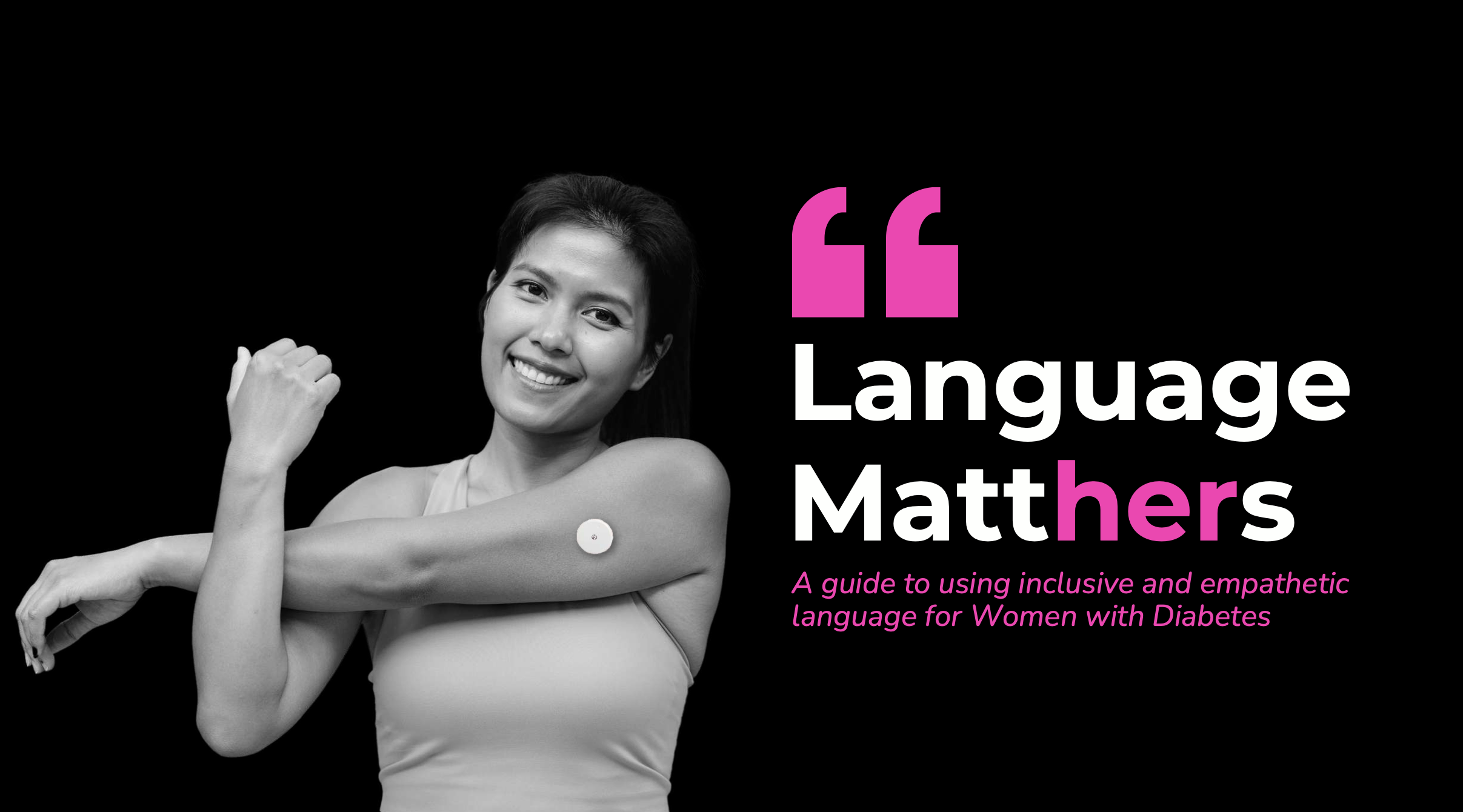
So, why do we need a specific document highlighting the challenges faced by women with diabetes, and how language can be used to help overcome these challenges?
Let’s talk about gender bias in healthcare.
Anyone who has even a mild interest in healthcare knows that gender bias is very real, and women do indeed face specific challenges. The situation is worse for women from different backgrounds, sexual orientations and gender identities.
This was the reason behind the International Diabetes Federation focusing World Diabetes Day activities on women and children back in 2017.
Here is just some of the information from that campaign, explaining issues faced by women:
- As a result of socioeconomic conditions, girls & women with diabetes experience barriers in accessing cost-effective diabetes prevention, early detection, diagnosis, treatment & care, particularly in developing countries.
- Socioeconomic inequalities expose women to the main risk factors of diabetes, including poor diet & nutrition, physical inactivity, tobacco consumption and harmful use of alcohol.
- Stigmatisation & discrimination faced by PWD are particularly pronounced for girls & women, who carry a double burden of discrimination because of their health status & the inequalities perpetrated in male dominated societies.
- These inequalities can discourage girls & women from seeking diagnosis and treatment, preventing them from achieving positive health outcomes.
Beyond diabetes, and more generally in the healthcare world, women’s health concerns are frequently denied, minimised, ignored or not believed. Women are gaslit into believing that symptoms are not real, pain is imagined and that we are overreacting. These attitudes can have serious consequences. Here’s just a sprinkling:
- This year, findings of the Australian-first #EndGenderBias survey found 2 out of 3 women experience discrimination in healthcare.
- A Danish study of 6.9 million people showed that diagnoses for diabetes came four-and-a-half years later for women than men; cancer is diagnosed in women 2.5 years after it is diagnosed in men.
- This World Economic Forum article about the women’s health gap highlights how far more women than men are not diagnosed for common health conditions.
- This McKinsey Report showed that when it comes to gender-specific health conditions, diagnosis rates differ. Eight out of ten women are undiagnosed with menopause, and six out of ten are undiagnosed with PCOS. Meanwhile, only three out of ten men with erectile dysfunction remain undiagnosed.
- Want more? Okay, here’s something from the UK showing that women are underdiagnosed, undertreated and under-represented in clinical trials directed at management strategies for cardiovascular disease, making their results less applicable to this subset.
Pivoting back to diabetes, this from a Lancet editorial:
- Compared with men, women with diabetes are disproportionately affected by depression and anxiety & have a lower quality of life, which can negatively affect attitudes towards self-management &, in turn, disease outcomes
- Women with type 1 diabetes have a 40% higher excess risk of premature death than men with the disease, and those individuals with type 2 diabetes have up to 27% higher excess risk of stroke and 44% higher excess risk of coronary heart disease.
- Women from high income countries are less likely than men to receive the care recommended by guidelines
And a recent study published out of Canada reported:
- Women with diabetes may face additional challenges related to gender-based discrimination and its impact on depression symptoms
- Stigma was more significantly perceived by women compared to men
None of this will be a surprise to anyone who is familiar with gender bias in medicine. Actually, none of this will be remotely surprising to anyone who has listened women share their experiences in healthcare.
And so, anything that can be done to address this is surely a good idea, right?
Well, IDF Europe thinks so! In this article, one of their recommendations for addressing gender equality in diabetes is: The development of specific approaches to diabetes prevention, education and care for women and girls. In other words, targeted, specific, tailored information is frequently needed to ensure that messages get through and issues are addressed.
Which brings us full circle to the #LanguageMatters and women with diabetes resource launched last week. A resource specifically for women with diabetes, by women diabetes. It identifies the issues and provides practical solutions to address them and shines a light on gender bias in diabetes care, asking that women are treated with respect and all our concerns are believed.
You’ll see that nowhere in this article have I denied that men with diabetes face challenges, or that men with diabetes could benefit from focused information and resources. And the new language resource for women doesn’t say that either. And yet, that was an accusation on the cesspit that is Twitter after a video was tweeted, where Jazz and I excitedly launched this new resource. Because ‘whataboutism’ is never far away.
Diabetes MattHERs has been widely shared on social media, with overwhelmingly positive responses. But here’s the kicker: the only backlash? Aimed at a woman. Men who shared it? Nothing but praise. Funny how that works. It’s almost as though there’s a different standard for women. Perhaps… I don’t know… could it be bias?

The accuracy of the ‘180 decisions a day’ stat is somewhat questionable. Once, a long time ago in diabetes land, a blog post from Stanford University claimed a study showed that people with diabetes make that many health-related decisions each day. And it stuck and became folklore. It gets thrown around a lot! I’ve used it. Whole diabetes awareness campaigns have been built around it (guilty! I’ve co-designed them). And I couldn’t start to count the number of times I’ve seen the stat flash up in a presentation slide deck.
But, where is the evidence behind this specific number? Who knows‽ It’s murky.
While it does matter, it kinda also doesn’t. Accuracy is important (and no one knows the importance of accuracy more than someone dosing insulin). But so is the framing of what the number tells us. It says that people with diabetes face so much each and every day of our lives and with that, we are forced to make many decisions that people without diabetes simply don’t have to consider. Whether it’s 180 extra decisions, 120 extra decisions, 50 extra decisions – the number is … extra.
And while we could count and keep a tally of the specific decisions we make each day – the decisions of what, when, where, why, how to do things that impact our diabetes – there are decisions that go beyond being counted. Like the constant, underlying decision we make every single minute of every single day.
Everyday we make the decision to live. We do the things, we take actions that mean that despite what has been thrown at us we decide – deliberately – to live. We choose to live. Sometimes, things get in the way that make that choice almost impossible – the expense of diabetes, the lack of access to care, tech, medication and support all make it more difficult. But despite that, every time we do something to manage our diabetes, to treat our diabetes, to think about our diabetes, we are making the decision to live with diabetes using whatever is available to us.
The privilege to not have to make these choices is not available to people with diabetes. And because it is just what we do, it becomes normalised and becomes part of the fabric of our everyday. But I think it is worth recognising. The effort of making the decisions that mean we choose our life over and over and over again is quite remarkable. We may not really know exactly how many decisions it is each day, but, really, who cares.
After all, diabetes is about more than numbers. We keep telling you that!
I’ve been wondering how different diabetes would be if all we needed to worry about was the actual tasks of doing diabetes. ‘All’ doesn’t sound right, because I know it would certainly still be a lot. Diabetes tasks are many and constant. But if the noise disappeared and with it all the other factors that made diabetes more difficult, how much easier would it be?
If the gatekeeping disappeared and we could have access to what we need without having to jump through hoops to prove ourselves worthy, wouldn’t that make it easier?
If we had access to the best technologies and drugs when we need them, and could change as we needed, wouldn’t that make it easier?
If the judgement disappeared and we weren’t worried about how others perceived our efforts, wouldn’t that make it easier?
If the stigma vanished and we weren’t concerned about what others thought about diabetes in general, or felt that they had the right to comment on our diabetes, wouldn’t that make it easier?
If the shame and the blame wasn’t there, and we didn’t have the fingers pointing to us for getting diabetes or our diabetes outcomes, wouldn’t that make it easier?
If scare tactics were no longer deployed and we weren’t constantly being warned about all the things that could go wrong and how, if they did, it was our fault, wouldn’t that make it easier
If the fear arousal disappeared along with the numbers warning us that diabetes increased our chances of getting everything bad in the world or that we were burdening the health system, wouldn’t that make it easier?
If the not believing disappeared and we were listening to and believed and respected, so we didn’t feel that we were begging for what is even just basic care, wouldn’t that make it easier?
If the minimising of how we felt and what we were experiencing stopped, wouldn’t that make it easier?
If the grading A1Cs disappeared, so we weren’t being told that we were failing diabetes, or acing it, or oscillating between the two, wouldn’t that make it easier?
If mental health care was diabetes care and diabetes care always included mental health care, wouldn’t that make it easier?
If the idea that someone needed to speak for us and ‘be our voice’ was replaced with people with diabetes being platformed and amplified instead of silenced, wouldn’t that make it easier?
If peer support was routinely encouraged and peer-led education was normalised, wouldn’t that make it easier?
If the language around diabetes fostered attitudes of care and support, rather than bias and battles, wouldn’t that make it easier?
If claims of community engagement were real instead of nothing more than window dressing, wouldn’t that make it easier?
If we traded in hope rather than doom, and didn’t position diabetes as a battle or never-ending exhausting fight, wouldn’t that make it easier?
Because as it stands, diabetes is hard enough, but all the other things make it even harder. But the good news is that these things are often simple enough to address, simple enough to remedy, simple enough to change.
I do wish that these were the things that were front of mind when strategies developed, campaigns designed, and policies changed. That’s actually an easy part. When people with diabetes drive the diabetes agenda, everything is better. And easier for us.
So, ask yourself, are you standing in the way of making it easier for us?

So often, there is amazing work being done in the diabetes world that is driven by or involves people with lived experience. Often, this is done in a volunteer capacity – although when we are working with organisations, I hope (and expect) that community members are remunerated for their time and expertise. Of course, there are a lot of organisations also doing some great work – especially those that link closely with people with diabetes through deliberate and meaningful community engagement.
Here are just a few things that involve community members that you can get involved in!
AID access – the time is now!
It’s National Diabetes Week in Australia and if you’ve been following along, you’ll have seen that technology access is very much on the agenda. I’m thrilled that the work I’ve been involved in around AID access (in particular fixing access to insulin pumps in Australia) has gained momentum and put the issue very firmly on the national advocacy agenda, which was one of the aims of the group when we first started working together. Now, we have a Consensus Statement endorsed by community members and all major Australian diabetes organisations, a key recommendation in the recently released Parliamentary Diabetes Inquiry and widening awareness of the issue. But we’re not done – there’s still more to do. Last week I wrote about how now we need the community to continue their involvement and make some noise about the issue. This update provides details of what to do next.
And to quickly show your support, sign the petition here.
Language Matters pregnancy
Earlier this week we saw the launch of a new online survey about the experiences of people with diabetes before, during and after pregnancy, specifically the language and communication used around and to them. Language ALWAYS matters and it doesn’t take much effort to learn from people with diabetes just how much it matters during the especially vulnerable time when pregnancy is on the discussion agenda. And so, this work has been very much powered by community, bringing together lots of people to establish just how people with diabetes can be better supported during this time.
Congratulations to Niki Breslin-Brooker for driving this initiative, and to the team of mainly community members along with HCPs. This has all been done by volunteers, out of hours, in between caring for family, managing work and dealing with diabetes. It’s an honour to work with you all, and a delight to share details of what we’ve been up to!
Have a look at some of the artwork that has been developed to accompany the work. What we know is that it isn’t difficult to make a change that makes a big difference. The phrases you’ll see in the artworks that are being rolled out will be familiar to many people with diabetes. I know I certainly heard most of them back when I was planning for pregnancy – two decades ago. As it turns out, people are still hearing them today. We can, and need to change that!
You can be a part of this important work by filling in this survey which asks for your experiences. It’s for people with diabetes and partners, family members and support people. They survey will be open until the end of September and will inform the next stage of this work – a position statement about language and communication to support people with diabetes.
How do I get involved in research?
One of the things I am frequently asked by PWD is how to learn about and get involved in research studies. Some ideas for Aussies with diabetes: JDRF Australia remains a driving force in type 1 diabetes research across the country, and a quick glance at their website provides a great overview. All trials are neatly located on one page to make it easy to see what’s on the go at the moment and to see if there is anything you can enrol in.
Another great central place to learn about current studies is the Diabetes Technology Research Group website.
ATIC is the Australasian Type 1 Diabetes Immunotherapy Collaboration and is a clinical trials network of adult and paediatric endocrinologists, immunologists, clinical trialists, and members of the T1Dcommunity across Australia and New Zealand, working together to accelerate the development and delivery of immunotherapy treatments for people with type 1 diabetes. More details of current research studies at the centre here.
HypoPAST
HypoPAST stands for Hypoglycaemia Prevention, Awareness of Symptoms and Treatment, and is an innovative online program designed to assist adults with type 1 diabetes in managing their fear of hypoglycaemia. The program focuses on hypoglycaemia prevention, awareness of symptoms, and treatment, offering a comprehensive range of resources, including information, activities, and videos. Study participants access HypoPAST on their computers, tablets, or smartphones.
This study is essential as it harnesses technology to provide practical tools for better diabetes management, addressing a critical need in the diabetes community. By reducing the anxiety associated with hypoglycaemia and improving symptom awareness and treatment strategies, HypoPAST has the potential to enhance the quality of life for individuals with type 1 diabetes.
The study is being conducted by the ACBRD and is currently recruiting participants. It’s almost been fully recruited for, but there are still places. More information here about how to get involved.
Type 1 Screen
Screening for T1D has been very much a focus of scientific conferences this year. At the recent American Diabetes Association Scientific Sessions, screening and information about the stages of T1D were covered in a number of sessions and symposia. Here in Australia. For more details about what’s being done in Australia in this space, check out Type 1 Screen.
And something to read
This article was published in The Lancet earlier in the year, but just sharing here for the first time. The article is about the importance of genuine consumer and community involvement in diabetes care, emphasising the benefits and challenges of ensuring diverse and representative participation to meet the community’s needs effectively.
I spend a lot of time thinking a lot about genuine community involvement in diabetes care and how people with diabetes can contribute to that ‘from the inside’. And by ‘inside’ I mean diabetes organisations, industry, healthcare settings and in research. I may be biased, but I think we add something. I’m grateful that others think that too. But not always. Sometimes, our impact is dismissed or minimised, as are the challenges we face when we act in these roles. I don’t speak for anyone else, but in my own personal instance, I start and end as a person with diabetes. I may work for diabetes organisations, have my own health consultancy, and spend a lot of time volunteering in the diabetes world, but what matters at the end of the day and what never leaves me is that I am a person living with diabetes. And I would expect that is how others would regard me too, or at least would remember that. It’s been somewhat shocking this year to see that some people seem to forget that.
Final thoughts…
Recently when I was in New York at Breakthrough T1D headquarters, I realised just how many people there are in the organisation living with the condition. It’s somewhat confronting – in a good way! – to realise that there are so many people with lived experience working with – very much with – the community. And it’s absolutely delightful to be surrounded by people with diabetes at all levels of the organisation – including the CEO. But you don’t have to have diabetes to work in diabetes. Some of the most impactful people I’ve worked with didn’t live with the condition. But being around people with diabetes as much as possible was important to them. It’s really easy to do when people with diabetes are on staff! I first visited the organisation’s office years ago – long before working with them – to give a talk about language and diabetes. One of the things that stood out for me back then was just how integral lived experience was at that organisation. From the hypo station (clearly put together by PWD who knew they would probably need to use the supplies!) to the conversations with the team, community was in the DNA of the place. As staff, I’ve now visited HQs a few times, and I’ve felt that even more keenly. Walking through the office a couple of weeks ago, I saw this on the desk of one of my colleagues and I couldn’t stop laughing when I saw it. IYKYK – and we completely knew!

DISCLOSURES (So many!)
I was part of the group working on the AID Consensus Statement, and the National AID Access Summit that led to the statement.
I am on the team working on the Language Matters Diabetes and Pregnancy initiative.
I was a co-author on the article, Living between two worlds: lessons for community involvement.
I am an investigator on the HypoPAST study.
My contribution to all these initiatives has been voluntary
I am a representative on the ATIC community group, for which I receive a gift voucher honorarium after attending meetings.
I work for Breakthrough T1D (formerly JDRF).
‘A fire has been lit.’ They were the words I wrote in my first post about AID access in Australia earlier this year.
There are some truths about grassroots advocacy that I have always known to be consistent. It has to come from community. If the issue isn’t important to a significant number of community members, nothing will happen. Advocacy efforts are truly organic. To be real and honest to the consultation process, there cannot be any pre-conceived ideas about the results of that consultation. Or rather, there needs to be an acceptance that agility and swift pivots are necessary if that is what the community directs. And there needs to be meaningful engagement every step of the way, with a genuine belief that expertise lies with all stakeholders, in particular people with lived experience. I am so pleased that this was the foundation and ran through every single step of the way with our AID grassroots advocacy over the last few months.
After months of working and meeting with the community, it was time to bring all stakeholders together. In May, I was so honoured to co-chair the National AID Access Summit with Professor Peter Colman. Again, this was always part of the plan – a clinician and a person with lived experience chairing the meeting to signpost how critical it is to have input from different cohorts. Unashamedly, we had almost as many people with lived experience as others in attendance, because that’s the way to centre people with diabetes. We also had independent facilitators directing traffic. This was important because we didn’t want there to be ownership of this work by any individuals or organisations. This wasn’t anyone’s show; it wasn’t anyone’s vanity project. This was a community endeavour. You know, with and by for people with T1D, not for us!
The outcome from the Summit, and the work that led to it, is a consensus statement that offers clear, concise recommendations. Stars aligned, and the statement was completed the same week as the Parliamentary Inquiry into Diabetes report was tabled. And that alignment was even more significant, when our recommendations neatly mirrored those in the report.
The consensus statement can be accessed and shared here, as well as from the survey for equitable access to AID that has been signed by almost 6,000 people.
Now, it’s over to the community. We have recommendations from the parliamentary inquiry, but that’s not enough. It’s now time to do the work to turn that into policy. And that’s where people in the community come to the fore once again. Today, I wrote to my local MP to ask for a time to meet with him, sharing with him the consensus statement. I am going to highlight just how important this tech is and how it’s not fair that only those of us who can afford it have access. The better outcomes AID delivers should be available to everyone with T1D, not just those who can afford private health insurance, or meet the eligibility for our Insulin Pump Program.
If you’re interested and able to get involved, please do. It is the groundswell of community efforts that has in the past seen some truly remarkable results. If we look back to the path to CGM access for all people with T1D, the community stepped up in truly remarkable ways. It took time, and it took energy, but we got there because people with diabetes never stopped pushing for it. Being able to access CGM really mattered to people with T1D and their families and that drove the ‘never give up’ attitude to get it done.
Now, it’s time for all Aussies with T1D to have access to AID if they choose. This update from the Access to AID Survey has some great ideas about how you can get involved. And reach out to me if you want any ideas.

It’s never hard to find a source of diabetes stigma. Because sadly, it’s all around us. And right now, the source seems to be much of the discussion about the report from the Australian Parliamentary Inquiry into Diabetes.
Yes, I was very excited about the report last week when I was writing about the recommendations and accompanying content about increasing access to pumps and AID systems. That was incredible news, and it was terrific to see that the community-led efforts were met with such a positive outcome.
But the messaging more broadly hasn’t been so great and it’s very disappointing.
Disappointing, but not surprising really. After all, the inquiry was for diabetes and obesity. Last week, I said that people with T2D deserve the same attention as people with T1D when it comes to advocacy efforts and campaigns. Well, so do people living with obesity. When the inquiry was first announced, I remember reading through its terms of reference and feeling my heart sink. These are two separate and equally important health issues that need focused attention. And within that, diabetes itself comprises different types; again, all equally important and requiring specific attention.
But instead of giving diabetes the attention it deserved with an inquiry purely focused on highlighting what is needed to improve outcomes for those of us living with the condition and enhancing the health system to better serve us, we were given an inquiry that conflated two separate and significant health conditions. Something was going to get lost in this. And it seems that is diabetes.
Since the report was launched on Wednesday, a lot of media coverage has focused on one specific recommendation: the sugar tax. That was what was on the front page of The Australian, a segment on the Project and in a number of radio interviews. Also mentioned in this coverage was the recommendation about junk food advertising to children. As you can imagine, the commentary from the community has been pretty horrid and completely misinformed. If ever there was a time for not reading the comments, this is it.
I completely agree that a sugar tax is a good idea and have been saying so for years. I also believe that junk good advertising should be banned completely, especially for children, starting with TV and online advertising and extending to sponsorship of children’s sporting activities. Again, I have been involved in initiatives involving this for years. One of the reasons these measures are important is that they make healthier choices more accessible, which can reduce the risk of people developing obesity. And yes, obesity is a risk factor for T2D. However not everyone who is obese will develop T2D and not everyone who has T2D is obese. Yet this nuance is missed completely with simplistic messaging and grouping the two together.
And this nuance is important. As is pointing out that obesity is also a risk factor for many other conditions as well such as several types of cancer, liver disease, heart attack and stroke, high blood pressure, high cholesterol, osteoarthritis, sleep apnoea, mental health conditions, fertility problems and pregnancy problems. Not only T2D, so why is it included in an Inquiry about diabetes?
I shouldn’t be surprised by the media missing the mark completely, but that doesn’t mean that it doesn’t anger and upset me. Because efforts can be made to try to minimise harm and stigma from misreporting. I was asked to contribute to a media release this week about the AID work and I made it very clear that I would not be involved in anything where messaging could be seen as stigmatising. I provided a copy of language position statements and asked to see the release before it went out to make sure that it all aligned. I pointed out to the PR agency that I would publicly call out any media that came from this release if it was in any way stigmatising about any type of diabetes. Sadly, I don’t think there has been that level of care across PR and media groups. Without that care and attention the stigmatising tropes about diabetes, in particular T2D, are in overdrive.
But it’s not just the media. In the report itself, there is this statement: ‘There is a huge burden being placed on health resources by people with Type 2 diabetes’, a statement that clearly blames people with T2D for needing to use our underfunded, under-resourced, understaffed healthcare system. Absolutely no recognition of non-modifiable risk facts or social determinants of health. More stigma. More misinformation. More throwing people with T2D under the bus. And this impacts on all types of diabetes, whether we like it or not.
I really wish that as we are all tripping over ourselves to highlight this Inquiry report, we also stop to think about the messages about diabetes we are setting free into the world. So far, very little of what I have seen hasn’t made me cringe. Far too much has been stigmatising and harmful. We all have a role to play in ensuring that we do not contribute to diabetes stigma, especially when participating in commentary about and the media circus of a new shiny report being launched.

Yesterday, the Australian parliamentary Inquiry into Diabetes report was launched. After eighteen months of countless submissions, interviews, and meetings with diabetes stakeholders from across the country, the report has been handed down with 23 recommendations aimed at improving the lives of Australians living by diabetes. There was much discussion and celebration among those of us advocating for increased access to Automated Insulin Delivery (AID) systems, particularly with the recommendation to expand funding for insulin pumps, which would increase the number of people using AID. Inquiry Chair Mike Freelander expressed strong support for this initiative in his report foreword.
It truly has been remarkable to see the community advocacy seed that was planted back in March in Florence absolutely flourish. Being involved with a dedicated group of people who have worked tirelessly, all volunteering our time to develop a single-issue advocacy movement is a wonderful demonstration of community commitment. We were clear from the beginning about what our aim was – equitable access to AID for Australians with T1D, with a specific focus on addressing the AID component that wasn’t already funded: insulin pumps. With the voices of people with lived experience centred in this work, a survey was launched, community discussions ran wild, a summit was convened and run and very soon a consensus statement will be launched to assist with the next steps of lobbying to have the inquiry recommendation transformed into a policy decision. This was for the T1D community, with the T1D community and by the T1D community. Focused and tailored.
Many of the recommendations in the report focus on Type 2 diabetes (T2D), and people with T2D deserve the same focused and tailored attention. This isn’t about separating the types of diabetes and dividing advocacy efforts. It’s about targeted and impactful initiatives that highlight and address the unique challenges faced by people with T2D. There are undoubtedly considerations specific to T2D, and they should receive the attention and expertise they deserve – not be treated as an addendum to T1D efforts.
And it needs to be driven by the community. I know how difficult it can seem to find adequate representation and advocacy for T2D. When we look at the #dedoc° voices scholarship program, the number of people with T1D far outweighs the number of people with T2D. If we examine other community groups and initiatives, we see that T1D is overrepresented. But there are remarkable advocates with T2D out there already. I met some incredible advocates when I was involved in the DEEP network. There is a T2D community out there, and there will be people who not only rise to the occasion but will drive it with their passion and lived experience expertise. They may not congregate or use the same channels that the T1D community uses, or they may be less visible, but that doesn’t mean they are not there. It’s laziness on behalf of all of us who have said we can’t find people to speak or be involved in T2D community efforts. We have expected them to be in the same place that people with T1D are. Look further. Look harder. Look better. Remember what Chelcie Rice says ‘You can’t just put pie in the middle of the table. Deliver the pie to where they are.’ Deliver the pie to where they are.
This is an opportunity to move the discussion about T2D beyond personal responsibility, which is what public-facing campaigns have largely focused on to date. The stigma and blame these campaigns generate are often harmful. And one result of that stigma is community members who are reluctant to come forward. I mean, would you like to be a spokesperson for advocacy efforts about T2D if messaging has blamed you for getting T2D in the first place? I know I certainly wouldn’t.
This is an opportunity for real, meaningful systemic change that addresses failures in healthcare access, education, and prevention. Junk food advertising to kids, sugar taxes, and finding ways for the healthier choice to be as easy as the less healthy choice are all critical steps. Addressing food insecurity, socio-economic disparities, and providing better healthcare access are also necessary. All of these measures address the root causes on a large scale, rather than pointing the finger at individuals and telling them it’s their fault.
We can do hard things and be bold. But it will need a collective effort and strong leadership.
And while we’re at it, remember where to look for the innovation and advocacy that has driven change. The community. Access to continuous glucose monitors (CGMs), insulin pumps, and other advancements has all started in the community and been picked up and run with by other stakeholders to make things happen.
People with T2D deserve the same level of advocacy and support. Now seems like a fine time to do that. And as a person with T1D, I am here to support and be led by my T2D peers.
There are different types of burnout. Diabetes burnout, advocacy burnout, and just plain life burnout.
Diabetes burnout rears its ugly head for many of us living with the condition – sometimes starting as diabetes distress before building and building.
Advocacy burnout seems inevitable the more I discuss it with advocate friends. The living with, working in, supporting others with, diabetes becomes a lot. Too much. So much.
And life burnout seems to be inevitable in the fast-paced, never-pause-for-a-breath, always-switched-on lives we live.
When the three collide it’s a triple threat burnout. Welcome to mine.
The white noise hum of diabetes burnout – always there – slowly, but surely had become amplified. It was little things – I was regularly forgetting to bolus when I ate. Not immediately replacing CGM sensors when one fell off. Ignoring making the follow up diabetes appointments I needed to make, the pathology visit I needed to schedule, the supplies stocktake I needed to do to make sure I didn’t run out of anything.
I’ve been hovering on the edges of advocacy burnout for some time and found myself plunged into it earlier in the year dealing with the complexities that played out as I offered my help and support in some volunteer grassroots advocacy here in Australia.
And life burnout suddenly appeared in the form of exhaustion, but an inability to sleep soundly, and a brain fog that I explained away as a perimenopause symptom. Except it was more than that. It was getting to four in the afternoon before realising I’d not eaten a thing all day. And not remembering if I’d showered, or how many days had passed since I last washed my hair. It was a lethargy that gnawed at me all day long.
I focused on plans for a conference in the US, followed by a few days at work headquarters, knowing that it would be a busy and wonderful time, with a lot of interesting work. I could do it. And I did. The conference was excellent. The diabetes advocates there shone so brightly. And every meeting was a huge success.
Smile. Breath. Smile. Breathe.
Until I couldn’t. That moment hit like a tonne of bricks last week.
I’d spent a day in the office at the job I adore, speaking with incredible people doing so much work. I’m inspired daily by the people I work with and learn so much. There were plans set in motion for exciting things to come and I sat in the meeting room I had set myself up in for the day, feeling satisfied and pleased. The workday done, I packed up and stepped out into the street.
And then, a flash, an instant. Suddenly, the pressure bearing down and around on me was so intense and I felt my chest constrict. I struggled to breathe, and my vision blurred. The sounds on the New York streets suddenly seemed to be coming from under layers of concrete, muffled and hushed and yet piercing at the same time. The bright sunlight seared around me, causing me to shield my eyes from the glare.
‘Breathe. Breathe.’ I felt the rising fright of what I know to be a panic attack, and knew I needed to safely just ride it out. ‘Focus. Focus.’ I looked for something I could hold on to. There it was, a small dog, sitting still, staring dotingly at its human seated at an outdoor café, drinking an iced tea. I stood there, slightly hunched over, my arms wrapped around myself, watching this little dog sitting still. I started to count back from 50, getting to 34 before the dog moved, jumping onto its hindlegs, and resting its front paws on its person’s knee.
It was though the crush from the last few months had all converged. I’d tried in small ways to stem it. I limited my time online, muting more terms and accounts that sought to do nothing but argue and inflame. I welcomed the calmness that descended when my Twitter feed was devoid of people yelling about food choices, and when my Instagram feed only showed me the images of my nearest and dearest. I focused my outside of work advocacy efforts to AID access, specifically on the helpers. I threw myself into my job because it allowed me to focus and celebrate the work of others. I amplified the #dedoc° voices and other advocacy to keep my own away from the spotlight. I thought these things worked.
But at that moment, on the streets of lower Manhattan, those attempts didn’t matter or help. ‘But you seemed fine last week,’ said a friend I’d spent time with at ADA a few days earlier. I had been. I was. I thought about how I appear to others. ‘Sometimes, it’s too much. Right now, it’s too much. Forever… it’s too much.’
I felt the uptick in my heartrate. And realised that had been happening constantly. It had happened after the first difficulty with the grassroots advocacy work, and any time I had to face the source of that stress. Sometimes ‘facing’ meant a comment on a LinkedIn post. Sometimes, it meant a somewhat nasty direct message or, even worse, comments that came to me via others. I realised it had happened every time there was some nastiness or other on Twitter. It happened if there was a confrontation of any time around me, even when I wasn’t involved. Anywhere I saw conflict was enough to kickstart an anxiety response.
‘I’m okay’, I said to my friend. And then, ‘It feels too much.’ I felt myself and my mind and the space around me shatter into a million sharp, craggy pieces. And felt my skin being cut against each and every one of those shards.
This is burnout. This is what it feels like. And with it is anxiety and stress and feeling overwhelmed. We all get it to some degree. Diabetes makes it harder. Diabetes advocacy compounds the whole thing even more. Jet lag doesn’t help. Plus there’s a sprinkling of perimenopause over it all. The culmination is a fragility that scares me a bit and leaves me feeling vulnerable. ‘But you seemed fine…’ my friend had said. And I was. Until the burnout took over. And then I wasn’t anymore.

Poo, poop, crap, shit – whatever you want to call it, it’s not really a topic for polite dinner table conversation. So, if you’re at a polite dinner table, bookmark this and come back later. If you’re, say, on a flight to Orlando, stick around. I’m writing this on a flight to Orlando. The topic feels somewhat appropriate, but I digress.
This is the one about bowel cancer screening.
It all started back at the end of last year. I turned fifty and was suddenly on government watch lists for screening different parts of my ageing body. I wrote about my breast cancer screening a couple of months ago. Bowel cancer screening was next. I’m writing about this because I know people around my age have been putting off doing this. I get it. This sort of stuff scares the shit out of people, so I’m writing about my experience and hope that might encourage others to stop avoiding things.
Let me tell you something about the people who run the Australian bowel cancer screening program. They are stalkers. They start by sending you a letter. It’s friendly enough, just a little heads’ up (tails up?) that you should be on the look out for their next correspondence: a bowel cancer screening kit to do in the privacy of your own bathroom. Sure enough, it arrived a couple of weeks later, just as the silly season was in full swing and we were planning a trip to Italy.
The kit sat on my desk for a couple of months, and I kept meaning to do it, but travel, work, life and an utter lack of desire to actually collect samples of my poo meant that the kit taunted me every time I sat at my desk. During that time, I received reminders from the bowel screening program. Eventually, I got my shit together and stopped putting it off.
It was all very easy: you run a swab over your stool (which is sitting in the toilet on a piece of biodegradable, flushable paper) and then shove the whole swab in a little container with fluid and cap it tightly, pop the sample in a zip lock bag and then into a padded envelope. Probably the worst thing about it is that you need to send in two samples, from two different trips to the bathroom meaning you have your sample in your fridge until you next need to take a crap. (Because I’m germ phobic, I wrapped the padded envelop in three more zip lock bags, shoved into a brown paper bag. Totally unnecessary.)
The next day after collecting the second swab, I posted my sample and rewarded myself for being compliant (ha-ha) by having a massage.
About two weeks later, my stalkers friends from the screening program sent me another letter. There was blood in my sample, and I needed to urgently go see my GP. On the same day, my GP started sending me text messages and emails urging me to go see him. Now. Today. I was, of course, panicking because of course this meant THE WORST, even though the screening program letter assured me that in most cases there was nothing to worry about. BUT SEE YOUR GP NOW.
In Australia, we have an awesome public health system, but I decided to go private because it meant that I could see the gastroenterologist my GP referred me to, and I got an appointment within a week. I want to check my privilege here, because this option means there is a co-pay. I don’t know the time frame to see someone in the public system. (My breast cancer screening was all done through the public system and that was super quick, so that may be the case with bowel cancer screening too, but I can’t speak to that.)
The gastroenterologist was delightful. He apologised for being exactly seven minutes late. I laughed in diabetes and with the experience of someone who has spent too many hours in doctors’ waiting rooms told him he was, in fact, early. He looked all of about seventeen years old, but I could tell immediately that this was a doctor who knew his shit. And mine too, based on the report he had in front of him.
This was the sort of consultation that goes perfectly. Sensible questions about diabetes; super clear explanations about what was going to happen, and he did all he could to alleviate my concerns, reiterating what my GP and the screening letter had said – in most cases, a positive result is nothing. But blood in a sample will always trigger follow up, and that means a colonoscopy. He scheduled one for three weeks later. I had it on Monday.
It’s hard to put a positive spin on needing a colonoscopy, but I tried. I told myself that I would be getting an excellent afternoon nap on a Monday, and I could pretend I was a rubbish influencer doing some rubbish detox. After twenty-four hours of colonoscopy prep, I was reassured that I am no rubbish influencer and rubbish detoxes are, well, rubbish.
If you’ve not had a colonoscopy, or not familiar with how the prep works, let me explain: The week before the procedure, I was told to stop eating nuts, seeds, beans and red meat, and aim for a low fibre diet. Two days before, my food choices were limited further to white bread, eggs and grilled, skinless chicken and fish. The morning before, I could have breakfast of white bread and then nothing solid after that. But lots of clear fluids including tea and coffee (no milk), lemonade, apple juice, and jelly (but not red or purple). My mum, ever the Italian mamma, made me chicken broth, strained a million times so it was clear and full of nutrients, and that sustained me while I couldn’t eat.
I started taking the preparation at 4pm the day before the procedure. I mixed the first sachet into a glass of water and drank it down over about 10 minutes. It tasted like a fizzy orange drink. I put on some elastic-wasted trousers (I was warned that I didn’t want to be fiddling around with a belt or buttons), sat down in front of episodes of Grand Designs and waited. ‘You will experience extreme diarrhoea’ said the information leaflet. No shit, Sherlock. (Except, lots of shit. Obviously.) The solution kicked in after about forty-five minutes.
At 8pm, I mixed up the second sachet in a litre of water and drank that over an hour. I spent about six hours all up needing to head to the loo very quickly as everything was flushed out of me. Unpleasant, but exactly what was meant to happen.
By 10pm, I felt that I was going to be okay going to bed without having to keep running to the loo, and I slept through until my alarm went off at 7 the next morning. I made up the final prep sachet (same as the first), skulled it and, fasted from 8am until the procedure at 1pm.
Through it all, my diabetes was perfectly behaved. I increased my glucose target on my AID from 5.0mmol/l to 7.5mmol/l and entered a slightly reduced temp basal. My glucose levels remained steady the whole time. There were a couple of instances when there was an arrow trending down, but nothing that a couple of sips of clear lemonade couldn’t fix.
At midday on Monday, we headed to the hospital for what was an exceptionally positive experience with wonderful encounters the whole way through from the admission staff and all HCPs. I laughed at the amazed reaction from the anaesthetist when I handed him my iPhone with the instructions, ‘Swipe right to see my glucose levels’.
I walked into the procedure room, climbed on the table, chatted with what seemed like a cast of thousands and the next thing I knew, I was in recovery waking up. The gastroenterologist popped by to tell me everything went well. I love that he didn’t bury the lede: ‘Renza, you don’t have cancer. It all went well. There was one polyp that we removed and have sent away for pathology. I’ll call you in a couple of weeks, and you’ll need another colonoscopy in three years’. He commended me on the way I’d diligently followed the prep instructions. Apparently, I can be deliberately compliant!
The anaesthetist came by too, still slightly enthused with my tech and told me that my glucose levels were steady throughout the procedure. Diabetes was the least of my concerns and, as I do daily, I thanked the very clever people behind Open-Source AID for making things just a tiny bit easier.
And so, that’s the tale of my bowel cancer screening and subsequent colonoscopy. Absolutely something I would have preferred to not do, but glad that I did. How lucky we are to have these screening programs! It’s the same equation as with diabetes-related complications screenings: early detection, early treatment, best possible outcomes. Plus, peace of mind that comes with knowing there isn’t anything to worry about right now. And isn’t that a really good thing?
Shit yeah!

Details on this post
There’s been a lot said about AID equity over the last few weeks. Actually, way longer than that. The momentum may have ramped up since a meeting at ATTD in Florence, but this has been something that the community has been speaking about for ages. In fact, I found a policy document advocating for pump access for all people with T1D from ten years ago, and I spoke at its launch in Parliament House . In there is a direct quote from me: ‘I decided to start using an insulin pump because my husband and I wanted to start a family. I knew of the importance of tight diabetes management prior to and during pregnancy. Insulin pump therapy gave me the ability to tailor and adapt my insulin doses to provide me with the best possible outcome – a beautiful healthy daughter.’
For the last six years I’ve been talking about how transformative AID has been with quotes like this: ‘Short of a cure, the holy grail for me in diabetes is each and every incremental step we take that means diabetes intrudes less in my life. I will acknowledge with gratitude and amazement and relief at how much less disturbance and interruption there is today, thanks to LOOP (AID).’
But enough from me. This is an issue that the T1D community owns and is engaged in. Last week at the #dedoc° symposium at the Diabetes UK Professional Conference, brilliant diabetes advocate Emma Doble spoke about patient and public involvement, highlighting how it refers to being with or by the community, not to, about or for them. The AID equity work underway is definitely with and by. It’s something community is calling for as a priority. A visit to any online T1D group will demonstrate that, and spending any time speaking directly with community will provide insight into the number of people who simply cannot access AID because they cannot afford an insulin pump. This is standard T1D care. The evidence is clear.
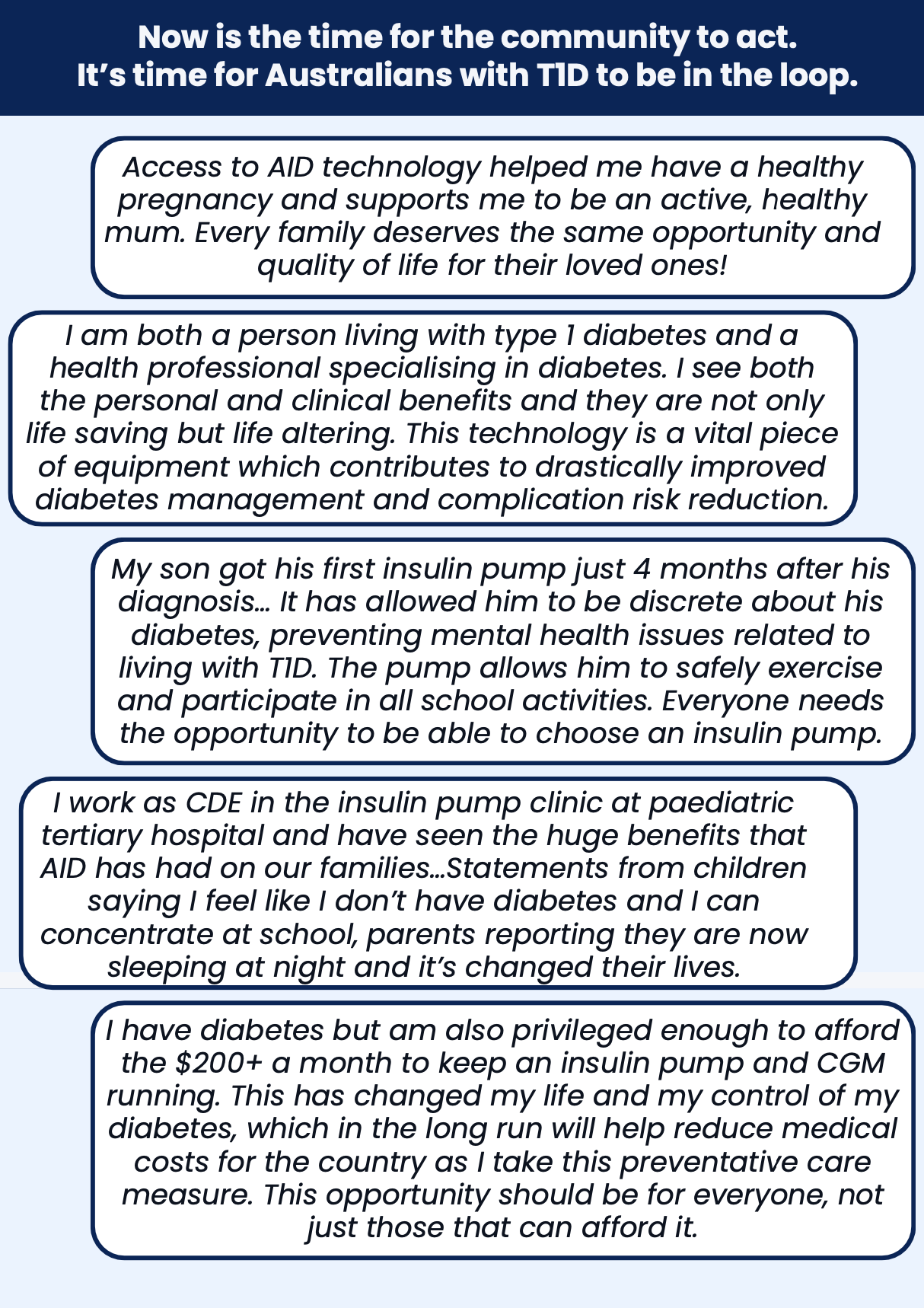
To get an idea of just how the T1D, and broader diabetes community feels, have a read of their own words. These comments are from the Make Automated Insulin Delivery affordable for all Australians with type 1 diabetes petition. They’re all publicly available, so you can click here to read the comments I’ve shared and many, many more.






 Diabetogenic