
You are currently browsing the category archive for the ‘Advocacy’ category.
The TGA has, once again, advised that Ozempic shortages in Australia are ongoing and in their brief statement they say this:

Sounds easy enough and it would be if only the issue of Ozempic prescribing was black and white and supremely simple which, sadly, it isn’t. There is confusion and frustration as people using Ozempic – both who do and don’t meet the criteria – find it difficult to maintain supply. People who don’t meet the criteria are sometimes being shamed for trying to access it and told that they are not deserving.
Firstly, let’s get the disclaimers out of the way: I am not a healthcare professional. I am not providing medical advice. I am not endorsing any sort of therapy or treatment (on- or off-label.) I am a person with T1D who is inherently interested in access to technologies and medicines that make our lives better. And I am interested (and believe) in off-label use of technologies and drugs because my diabetes life and overall health have been greatly improved by using different therapies off label. Also, in case you need a reminder, pretty much all people with diabetes behave off label in some ways, and if you don’t believe me, just ask someone with diabetes when they last changed their lancet.
And a little reminder that I don’t work for any Australian-based diabetes organisations, so this is not in any way aligned, or affiliated with what organisations are saying, or not saying. This is me, an Aussie punter with T1D, sharing my thoughts. (As I have done in the 2,000 plus posts on here already.)
Okay, with that out of the way, here are my thoughts – and my frustrations – with the latest on the Ozempic shortage saga.
In Australia (and in other places, but I live here and therefore am confined by Australian prescribing rules), the TGA has indicated Ozempic is use for the following (and excuse the language – the TGA needs me to come back and give them a little #LanguageMatters update):
‘the treatment of adults with insufficiently controlled type 2 diabetes mellitus as an adjunct to diet and exercise:
- as monotherapy when metformin is not tolerated or contraindicated.
- in addition to other medicinal products for the treatment of type 2 diabetes.’
For people who meet these criteria, Ozempic is prescribed using a PBS prescription which means that the cost will be $31.60 (or $7.30 for concession card holders) for one pen.
Does this mean that ONLY this cohort can have Ozempic prescribed for them? No, no it does not. Off label prescribing is not all that uncommon (not just for Ozempic, I’ll add). For people who do not meet the eligibility criteria, Ozempic is prescribed using a private prescription and the cost will be around $140 for one pen.
Is Ozempic being prescribed off-label? Of course it is. Increasingly so.
Anecdotally, I hear from many, many friends with T1D in Australia, but especially in the US, who are also using Ozempic in their diabetes management arsenal. I have heard dozens of talks at conferences in the last couple of years where T1D management is moving further and further from being gluco-centric with an approach that looks at drug combinations that address insulin resistance, lipids, blood pressure, heart and kidney health. It makes sense. As people in higher income countries have access to highly sophisticated hybrid-closed loop systems which significantly increase our TIR, and have us easily reaching HbA1c targets, many of us are looking to see what adjunctive therapies can support our broader health. GLP-1s are shown to have CVD and kidney protective benefits – something that many people with T1D are keen to access. In a talk at the Australian Diabetes Congress this year, head of EASD, Professor Chantal Mathieu said: “These medications are organ-protecting agents”.
The TGA announcement fails to recognise in any way that Ozempic is being used for other purposes than weight loss, and that it can be beneficial to people with T1D.
But let’s look beyond my own T1D bias for just a moment. There are many people with T2D who don’t meet the criteria set out by the TGA, yet who benefit greatly from Ozempic. Not only have they been denied accessing the drug at the PBS price but are also being denied supply completely for not meeting the criteria. Yet, many fear if they stop using Ozempic, they will find themselves meeting the criteria because their glucose levels will go out of range. This cohort feels like they are in complete and utter limbo and not being supported to use the medication that is drastically improving their glucose numbers and their overall health. A quick look in any online diabetes group will see conversations about this – because they are happening every day.
And if we step out of the diabetes sphere, people living with obesity who have been told time and time again to lose weight to improve their health have found Ozempic to be hugely successful in addressing one of the modifiable risk factors of T2D. This is a prime example of damned if they do, damned if they don’t. This cohort is told to lose weight, but then the tools which support that are snatched away from them, and they are rapped over the knuckles for trying to access them.
I understand that there are shortages and with that, there will be priority groups. But completely ignoring that there are other groups who are benefitting from Ozempic and not even acknowledging them seems odd. As does ignoring the difficulties – including stigma, shame and judgement – that these groups are facing when it comes to trying to access medication that has been prescribed by their healthcare professionals. In fact, some might suggest it shows a glaring lack of understanding of community needs and experiences.
Postscript
I am aware that Wegovy is available in Australia and can be used by people for whom Ozempic is not indicated. Wegovy costs are at least double than Ozempic which means that it will be out of reach for people who are already being expected to pay private prescription prices for Ozempic.
It’s also perhaps worth mentioning that the use and endorsement of adjunctive therapies – including GLP-1s – in T1D is not new and is detailed in the Consensus report by the ADA and EASD about the management of adults with T1D. As is often the case, regulatory bodies are taking their time in catching up to medical consensus.
Last week, at the ISPAD Meeting in Lisbon, I was lucky enough to catch up with remarkable diabetes advocate Jazz Sethi and together, we launched a new resource about #LanguageMatters and women with diabetes. Jazz and her team from Diabesties conceived this idea and worked with a number of women in the diabetes community to bring this resource to life and add it to the ever-growing stable of #LangaugeMatters resources. I was one of those women.
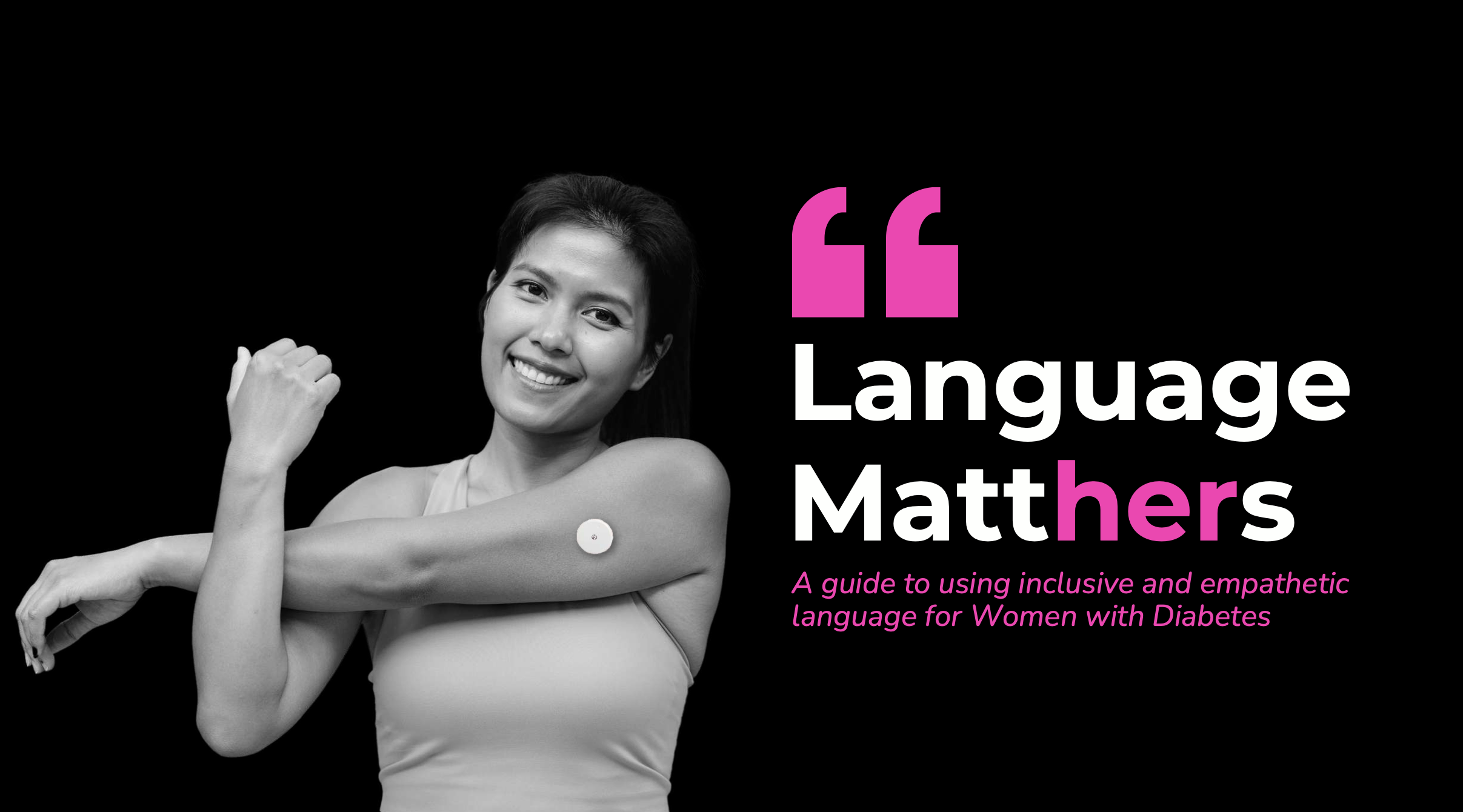
So, why do we need a specific document highlighting the challenges faced by women with diabetes, and how language can be used to help overcome these challenges?
Let’s talk about gender bias in healthcare.
Anyone who has even a mild interest in healthcare knows that gender bias is very real, and women do indeed face specific challenges. The situation is worse for women from different backgrounds, sexual orientations and gender identities.
This was the reason behind the International Diabetes Federation focusing World Diabetes Day activities on women and children back in 2017.
Here is just some of the information from that campaign, explaining issues faced by women:
- As a result of socioeconomic conditions, girls & women with diabetes experience barriers in accessing cost-effective diabetes prevention, early detection, diagnosis, treatment & care, particularly in developing countries.
- Socioeconomic inequalities expose women to the main risk factors of diabetes, including poor diet & nutrition, physical inactivity, tobacco consumption and harmful use of alcohol.
- Stigmatisation & discrimination faced by PWD are particularly pronounced for girls & women, who carry a double burden of discrimination because of their health status & the inequalities perpetrated in male dominated societies.
- These inequalities can discourage girls & women from seeking diagnosis and treatment, preventing them from achieving positive health outcomes.
Beyond diabetes, and more generally in the healthcare world, women’s health concerns are frequently denied, minimised, ignored or not believed. Women are gaslit into believing that symptoms are not real, pain is imagined and that we are overreacting. These attitudes can have serious consequences. Here’s just a sprinkling:
- This year, findings of the Australian-first #EndGenderBias survey found 2 out of 3 women experience discrimination in healthcare.
- A Danish study of 6.9 million people showed that diagnoses for diabetes came four-and-a-half years later for women than men; cancer is diagnosed in women 2.5 years after it is diagnosed in men.
- This World Economic Forum article about the women’s health gap highlights how far more women than men are not diagnosed for common health conditions.
- This McKinsey Report showed that when it comes to gender-specific health conditions, diagnosis rates differ. Eight out of ten women are undiagnosed with menopause, and six out of ten are undiagnosed with PCOS. Meanwhile, only three out of ten men with erectile dysfunction remain undiagnosed.
- Want more? Okay, here’s something from the UK showing that women are underdiagnosed, undertreated and under-represented in clinical trials directed at management strategies for cardiovascular disease, making their results less applicable to this subset.
Pivoting back to diabetes, this from a Lancet editorial:
- Compared with men, women with diabetes are disproportionately affected by depression and anxiety & have a lower quality of life, which can negatively affect attitudes towards self-management &, in turn, disease outcomes
- Women with type 1 diabetes have a 40% higher excess risk of premature death than men with the disease, and those individuals with type 2 diabetes have up to 27% higher excess risk of stroke and 44% higher excess risk of coronary heart disease.
- Women from high income countries are less likely than men to receive the care recommended by guidelines
And a recent study published out of Canada reported:
- Women with diabetes may face additional challenges related to gender-based discrimination and its impact on depression symptoms
- Stigma was more significantly perceived by women compared to men
None of this will be a surprise to anyone who is familiar with gender bias in medicine. Actually, none of this will be remotely surprising to anyone who has listened women share their experiences in healthcare.
And so, anything that can be done to address this is surely a good idea, right?
Well, IDF Europe thinks so! In this article, one of their recommendations for addressing gender equality in diabetes is: The development of specific approaches to diabetes prevention, education and care for women and girls. In other words, targeted, specific, tailored information is frequently needed to ensure that messages get through and issues are addressed.
Which brings us full circle to the #LanguageMatters and women with diabetes resource launched last week. A resource specifically for women with diabetes, by women diabetes. It identifies the issues and provides practical solutions to address them and shines a light on gender bias in diabetes care, asking that women are treated with respect and all our concerns are believed.
You’ll see that nowhere in this article have I denied that men with diabetes face challenges, or that men with diabetes could benefit from focused information and resources. And the new language resource for women doesn’t say that either. And yet, that was an accusation on the cesspit that is Twitter after a video was tweeted, where Jazz and I excitedly launched this new resource. Because ‘whataboutism’ is never far away.
Diabetes MattHERs has been widely shared on social media, with overwhelmingly positive responses. But here’s the kicker: the only backlash? Aimed at a woman. Men who shared it? Nothing but praise. Funny how that works. It’s almost as though there’s a different standard for women. Perhaps… I don’t know… could it be bias?

I’ve been wondering how different diabetes would be if all we needed to worry about was the actual tasks of doing diabetes. ‘All’ doesn’t sound right, because I know it would certainly still be a lot. Diabetes tasks are many and constant. But if the noise disappeared and with it all the other factors that made diabetes more difficult, how much easier would it be?
If the gatekeeping disappeared and we could have access to what we need without having to jump through hoops to prove ourselves worthy, wouldn’t that make it easier?
If we had access to the best technologies and drugs when we need them, and could change as we needed, wouldn’t that make it easier?
If the judgement disappeared and we weren’t worried about how others perceived our efforts, wouldn’t that make it easier?
If the stigma vanished and we weren’t concerned about what others thought about diabetes in general, or felt that they had the right to comment on our diabetes, wouldn’t that make it easier?
If the shame and the blame wasn’t there, and we didn’t have the fingers pointing to us for getting diabetes or our diabetes outcomes, wouldn’t that make it easier?
If scare tactics were no longer deployed and we weren’t constantly being warned about all the things that could go wrong and how, if they did, it was our fault, wouldn’t that make it easier
If the fear arousal disappeared along with the numbers warning us that diabetes increased our chances of getting everything bad in the world or that we were burdening the health system, wouldn’t that make it easier?
If the not believing disappeared and we were listening to and believed and respected, so we didn’t feel that we were begging for what is even just basic care, wouldn’t that make it easier?
If the minimising of how we felt and what we were experiencing stopped, wouldn’t that make it easier?
If the grading A1Cs disappeared, so we weren’t being told that we were failing diabetes, or acing it, or oscillating between the two, wouldn’t that make it easier?
If mental health care was diabetes care and diabetes care always included mental health care, wouldn’t that make it easier?
If the idea that someone needed to speak for us and ‘be our voice’ was replaced with people with diabetes being platformed and amplified instead of silenced, wouldn’t that make it easier?
If peer support was routinely encouraged and peer-led education was normalised, wouldn’t that make it easier?
If the language around diabetes fostered attitudes of care and support, rather than bias and battles, wouldn’t that make it easier?
If claims of community engagement were real instead of nothing more than window dressing, wouldn’t that make it easier?
If we traded in hope rather than doom, and didn’t position diabetes as a battle or never-ending exhausting fight, wouldn’t that make it easier?
Because as it stands, diabetes is hard enough, but all the other things make it even harder. But the good news is that these things are often simple enough to address, simple enough to remedy, simple enough to change.
I do wish that these were the things that were front of mind when strategies developed, campaigns designed, and policies changed. That’s actually an easy part. When people with diabetes drive the diabetes agenda, everything is better. And easier for us.
So, ask yourself, are you standing in the way of making it easier for us?

‘A fire has been lit.’ They were the words I wrote in my first post about AID access in Australia earlier this year.
There are some truths about grassroots advocacy that I have always known to be consistent. It has to come from community. If the issue isn’t important to a significant number of community members, nothing will happen. Advocacy efforts are truly organic. To be real and honest to the consultation process, there cannot be any pre-conceived ideas about the results of that consultation. Or rather, there needs to be an acceptance that agility and swift pivots are necessary if that is what the community directs. And there needs to be meaningful engagement every step of the way, with a genuine belief that expertise lies with all stakeholders, in particular people with lived experience. I am so pleased that this was the foundation and ran through every single step of the way with our AID grassroots advocacy over the last few months.
After months of working and meeting with the community, it was time to bring all stakeholders together. In May, I was so honoured to co-chair the National AID Access Summit with Professor Peter Colman. Again, this was always part of the plan – a clinician and a person with lived experience chairing the meeting to signpost how critical it is to have input from different cohorts. Unashamedly, we had almost as many people with lived experience as others in attendance, because that’s the way to centre people with diabetes. We also had independent facilitators directing traffic. This was important because we didn’t want there to be ownership of this work by any individuals or organisations. This wasn’t anyone’s show; it wasn’t anyone’s vanity project. This was a community endeavour. You know, with and by for people with T1D, not for us!
The outcome from the Summit, and the work that led to it, is a consensus statement that offers clear, concise recommendations. Stars aligned, and the statement was completed the same week as the Parliamentary Inquiry into Diabetes report was tabled. And that alignment was even more significant, when our recommendations neatly mirrored those in the report.
The consensus statement can be accessed and shared here, as well as from the survey for equitable access to AID that has been signed by almost 6,000 people.
Now, it’s over to the community. We have recommendations from the parliamentary inquiry, but that’s not enough. It’s now time to do the work to turn that into policy. And that’s where people in the community come to the fore once again. Today, I wrote to my local MP to ask for a time to meet with him, sharing with him the consensus statement. I am going to highlight just how important this tech is and how it’s not fair that only those of us who can afford it have access. The better outcomes AID delivers should be available to everyone with T1D, not just those who can afford private health insurance, or meet the eligibility for our Insulin Pump Program.
If you’re interested and able to get involved, please do. It is the groundswell of community efforts that has in the past seen some truly remarkable results. If we look back to the path to CGM access for all people with T1D, the community stepped up in truly remarkable ways. It took time, and it took energy, but we got there because people with diabetes never stopped pushing for it. Being able to access CGM really mattered to people with T1D and their families and that drove the ‘never give up’ attitude to get it done.
Now, it’s time for all Aussies with T1D to have access to AID if they choose. This update from the Access to AID Survey has some great ideas about how you can get involved. And reach out to me if you want any ideas.

It’s never hard to find a source of diabetes stigma. Because sadly, it’s all around us. And right now, the source seems to be much of the discussion about the report from the Australian Parliamentary Inquiry into Diabetes.
Yes, I was very excited about the report last week when I was writing about the recommendations and accompanying content about increasing access to pumps and AID systems. That was incredible news, and it was terrific to see that the community-led efforts were met with such a positive outcome.
But the messaging more broadly hasn’t been so great and it’s very disappointing.
Disappointing, but not surprising really. After all, the inquiry was for diabetes and obesity. Last week, I said that people with T2D deserve the same attention as people with T1D when it comes to advocacy efforts and campaigns. Well, so do people living with obesity. When the inquiry was first announced, I remember reading through its terms of reference and feeling my heart sink. These are two separate and equally important health issues that need focused attention. And within that, diabetes itself comprises different types; again, all equally important and requiring specific attention.
But instead of giving diabetes the attention it deserved with an inquiry purely focused on highlighting what is needed to improve outcomes for those of us living with the condition and enhancing the health system to better serve us, we were given an inquiry that conflated two separate and significant health conditions. Something was going to get lost in this. And it seems that is diabetes.
Since the report was launched on Wednesday, a lot of media coverage has focused on one specific recommendation: the sugar tax. That was what was on the front page of The Australian, a segment on the Project and in a number of radio interviews. Also mentioned in this coverage was the recommendation about junk food advertising to children. As you can imagine, the commentary from the community has been pretty horrid and completely misinformed. If ever there was a time for not reading the comments, this is it.
I completely agree that a sugar tax is a good idea and have been saying so for years. I also believe that junk good advertising should be banned completely, especially for children, starting with TV and online advertising and extending to sponsorship of children’s sporting activities. Again, I have been involved in initiatives involving this for years. One of the reasons these measures are important is that they make healthier choices more accessible, which can reduce the risk of people developing obesity. And yes, obesity is a risk factor for T2D. However not everyone who is obese will develop T2D and not everyone who has T2D is obese. Yet this nuance is missed completely with simplistic messaging and grouping the two together.
And this nuance is important. As is pointing out that obesity is also a risk factor for many other conditions as well such as several types of cancer, liver disease, heart attack and stroke, high blood pressure, high cholesterol, osteoarthritis, sleep apnoea, mental health conditions, fertility problems and pregnancy problems. Not only T2D, so why is it included in an Inquiry about diabetes?
I shouldn’t be surprised by the media missing the mark completely, but that doesn’t mean that it doesn’t anger and upset me. Because efforts can be made to try to minimise harm and stigma from misreporting. I was asked to contribute to a media release this week about the AID work and I made it very clear that I would not be involved in anything where messaging could be seen as stigmatising. I provided a copy of language position statements and asked to see the release before it went out to make sure that it all aligned. I pointed out to the PR agency that I would publicly call out any media that came from this release if it was in any way stigmatising about any type of diabetes. Sadly, I don’t think there has been that level of care across PR and media groups. Without that care and attention the stigmatising tropes about diabetes, in particular T2D, are in overdrive.
But it’s not just the media. In the report itself, there is this statement: ‘There is a huge burden being placed on health resources by people with Type 2 diabetes’, a statement that clearly blames people with T2D for needing to use our underfunded, under-resourced, understaffed healthcare system. Absolutely no recognition of non-modifiable risk facts or social determinants of health. More stigma. More misinformation. More throwing people with T2D under the bus. And this impacts on all types of diabetes, whether we like it or not.
I really wish that as we are all tripping over ourselves to highlight this Inquiry report, we also stop to think about the messages about diabetes we are setting free into the world. So far, very little of what I have seen hasn’t made me cringe. Far too much has been stigmatising and harmful. We all have a role to play in ensuring that we do not contribute to diabetes stigma, especially when participating in commentary about and the media circus of a new shiny report being launched.

Yesterday, the Australian parliamentary Inquiry into Diabetes report was launched. After eighteen months of countless submissions, interviews, and meetings with diabetes stakeholders from across the country, the report has been handed down with 23 recommendations aimed at improving the lives of Australians living by diabetes. There was much discussion and celebration among those of us advocating for increased access to Automated Insulin Delivery (AID) systems, particularly with the recommendation to expand funding for insulin pumps, which would increase the number of people using AID. Inquiry Chair Mike Freelander expressed strong support for this initiative in his report foreword.
It truly has been remarkable to see the community advocacy seed that was planted back in March in Florence absolutely flourish. Being involved with a dedicated group of people who have worked tirelessly, all volunteering our time to develop a single-issue advocacy movement is a wonderful demonstration of community commitment. We were clear from the beginning about what our aim was – equitable access to AID for Australians with T1D, with a specific focus on addressing the AID component that wasn’t already funded: insulin pumps. With the voices of people with lived experience centred in this work, a survey was launched, community discussions ran wild, a summit was convened and run and very soon a consensus statement will be launched to assist with the next steps of lobbying to have the inquiry recommendation transformed into a policy decision. This was for the T1D community, with the T1D community and by the T1D community. Focused and tailored.
Many of the recommendations in the report focus on Type 2 diabetes (T2D), and people with T2D deserve the same focused and tailored attention. This isn’t about separating the types of diabetes and dividing advocacy efforts. It’s about targeted and impactful initiatives that highlight and address the unique challenges faced by people with T2D. There are undoubtedly considerations specific to T2D, and they should receive the attention and expertise they deserve – not be treated as an addendum to T1D efforts.
And it needs to be driven by the community. I know how difficult it can seem to find adequate representation and advocacy for T2D. When we look at the #dedoc° voices scholarship program, the number of people with T1D far outweighs the number of people with T2D. If we examine other community groups and initiatives, we see that T1D is overrepresented. But there are remarkable advocates with T2D out there already. I met some incredible advocates when I was involved in the DEEP network. There is a T2D community out there, and there will be people who not only rise to the occasion but will drive it with their passion and lived experience expertise. They may not congregate or use the same channels that the T1D community uses, or they may be less visible, but that doesn’t mean they are not there. It’s laziness on behalf of all of us who have said we can’t find people to speak or be involved in T2D community efforts. We have expected them to be in the same place that people with T1D are. Look further. Look harder. Look better. Remember what Chelcie Rice says ‘You can’t just put pie in the middle of the table. Deliver the pie to where they are.’ Deliver the pie to where they are.
This is an opportunity to move the discussion about T2D beyond personal responsibility, which is what public-facing campaigns have largely focused on to date. The stigma and blame these campaigns generate are often harmful. And one result of that stigma is community members who are reluctant to come forward. I mean, would you like to be a spokesperson for advocacy efforts about T2D if messaging has blamed you for getting T2D in the first place? I know I certainly wouldn’t.
This is an opportunity for real, meaningful systemic change that addresses failures in healthcare access, education, and prevention. Junk food advertising to kids, sugar taxes, and finding ways for the healthier choice to be as easy as the less healthy choice are all critical steps. Addressing food insecurity, socio-economic disparities, and providing better healthcare access are also necessary. All of these measures address the root causes on a large scale, rather than pointing the finger at individuals and telling them it’s their fault.
We can do hard things and be bold. But it will need a collective effort and strong leadership.
And while we’re at it, remember where to look for the innovation and advocacy that has driven change. The community. Access to continuous glucose monitors (CGMs), insulin pumps, and other advancements has all started in the community and been picked up and run with by other stakeholders to make things happen.
People with T2D deserve the same level of advocacy and support. Now seems like a fine time to do that. And as a person with T1D, I am here to support and be led by my T2D peers.

There’s been a lot said about AID equity over the last few weeks. Actually, way longer than that. The momentum may have ramped up since a meeting at ATTD in Florence, but this has been something that the community has been speaking about for ages. In fact, I found a policy document advocating for pump access for all people with T1D from ten years ago, and I spoke at its launch in Parliament House . In there is a direct quote from me: ‘I decided to start using an insulin pump because my husband and I wanted to start a family. I knew of the importance of tight diabetes management prior to and during pregnancy. Insulin pump therapy gave me the ability to tailor and adapt my insulin doses to provide me with the best possible outcome – a beautiful healthy daughter.’
For the last six years I’ve been talking about how transformative AID has been with quotes like this: ‘Short of a cure, the holy grail for me in diabetes is each and every incremental step we take that means diabetes intrudes less in my life. I will acknowledge with gratitude and amazement and relief at how much less disturbance and interruption there is today, thanks to LOOP (AID).’
But enough from me. This is an issue that the T1D community owns and is engaged in. Last week at the #dedoc° symposium at the Diabetes UK Professional Conference, brilliant diabetes advocate Emma Doble spoke about patient and public involvement, highlighting how it refers to being with or by the community, not to, about or for them. The AID equity work underway is definitely with and by. It’s something community is calling for as a priority. A visit to any online T1D group will demonstrate that, and spending any time speaking directly with community will provide insight into the number of people who simply cannot access AID because they cannot afford an insulin pump. This is standard T1D care. The evidence is clear.
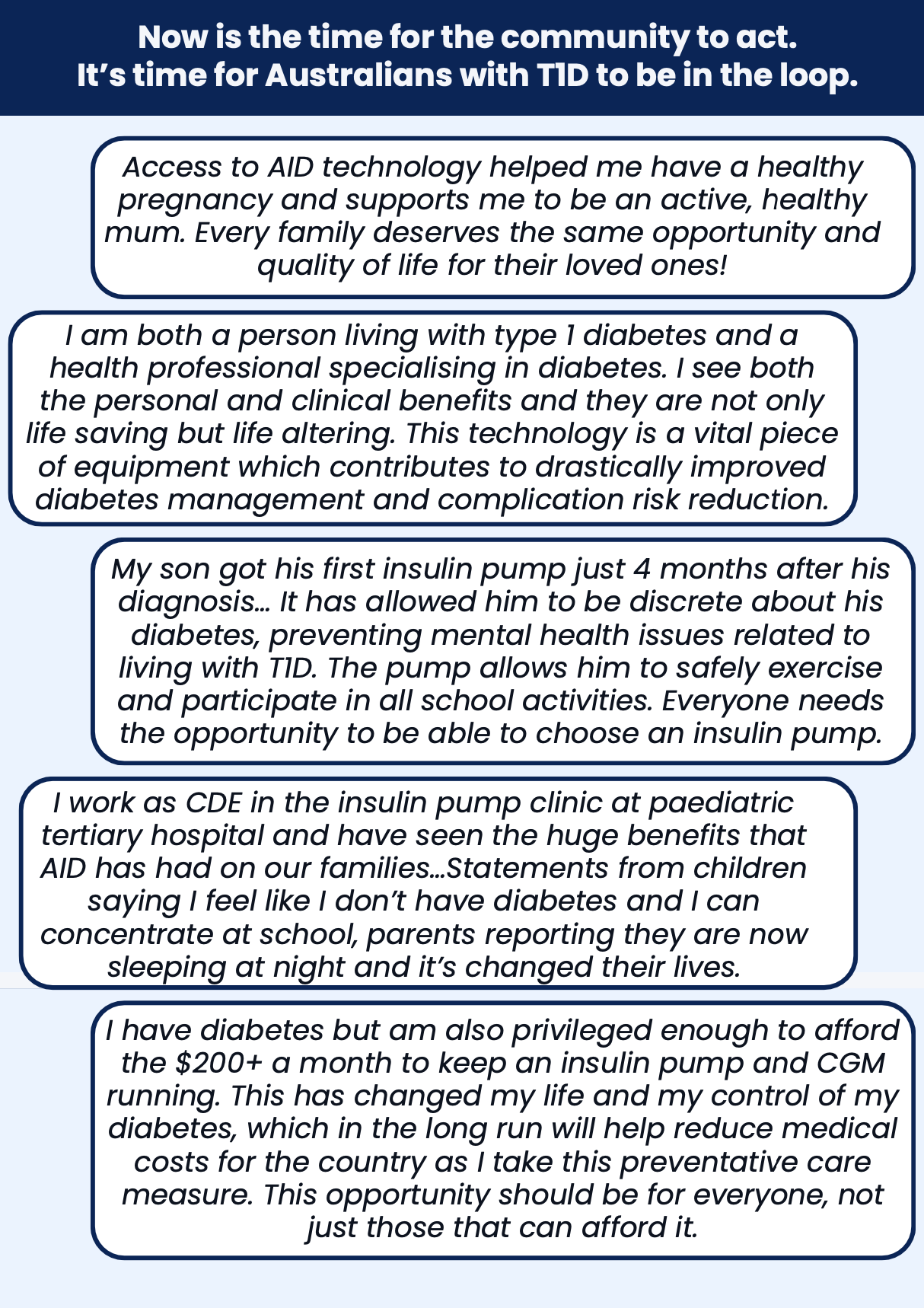
To get an idea of just how the T1D, and broader diabetes community feels, have a read of their own words. These comments are from the Make Automated Insulin Delivery affordable for all Australians with type 1 diabetes petition. They’re all publicly available, so you can click here to read the comments I’ve shared and many, many more.

‘Why would you bet against the type 1 community?’ That was a question asked in a session at the ISPAD conference a couple years ago. It wasn’t someone with T1D drawing attention to the community. Instead, it was said by someone working in global health who had seen the remarkable efforts such as the #WeAreNotWaiting movement and grassroots, peer-led education initiatives in low-income countries. These efforts have driven change and improved lives of people with diabetes. They have been led by those with lived experience and supported by other diabetes stakeholders. But the starting point is people directly affected by diabetes identifying a problem, solving it and leading the way. In the history of diabetes – from the first home glucose meters, to building systems leveraging off existing technologies, to global advocacy movements – community powered initiatives have been a driving force for change.
And so, here we are today, coming together once again to advocate for better equity and fairness for all people with type 1 diabetes, this time in Australia, and this time advancing access to automated insulin delivery devices (AID).
Insulin pump funding is broken. AID is standard care and yet far too many people are left unable to use the tech because of how pumps are funded in Australia. Right now, unless a person with T1D has the right level of private health insurance, or meets the criteria for the Insulin Pump Program, they must find the funding for an insulin pump. That needs to change.
We know how to do this in Australia. The reason that pump consumables are on the NDSS is thanks to community advocacy efforts back in the early 2000. And more recently massive community noise helped to get CGM onto the NDSS for all Australians. Of course, these wins worked because everyone was involved in advocacy: people with lived experience of diabetes, healthcare professionals and HCP professional groups, researchers, diabetes community groups and organisations and industry. What a lot of noise we can make when we’re singing from the same song sheet!
Right now, attentions are razor focused on improving access to automated insulin delivery systems because the evidence is clear: AID reduces diabetes distress, improves quality of life, and (for those who like numbers!), help with glucose levels. And as an added bonus for the bean counters – it’s a smart, cost-effective investment for our health system.
If AID is standard care, financial barriers preventing people from accessing it need to be eliminated.
And that’s where we would love your help.
Please sign and share the petition that has been started by Dr Ben Nash and supported by a group of people with T1D (including me). Petitions are a great way to get people talking and interested in a topic. It builds momentum and helps contribute to whole of community conversations. While we know the T1D community is already on board, we’ve now seen a number of HCPs, community groups and diabetes organisations share and promote the petition and are keen to get involved with broader advocacy efforts. That’s pretty cool!

Postscipt:
Understandably, there are questions about why this work is specific to T1D technology access. That’s a fair question and I think that our very own Bionic Wookiee provided an excellent explanation of that when he said this in a social media post earlier this week:
‘AID systems were developed for T1D (where they can track all the insulin going into the system without having to cope with the body’s variable insulin generation). So right now they mainly apply to T1D…
Expanding CGM and pump access to people with other forms of diabetes than just T1D is important for the future. Having wider access to AID for the T1D population will be a beach-head for that.‘
And in a conversation I had about this with UK diabetologist Partha Kar yesterday he cautions that there needs to be a starting point because the sheer numbers of diabetes can be daunting and tend to scare policy makers. He also points out that when it comes to outcome modifying interventions, technology is THE thing in T1D, whereas in other types of diabetes there are other options. I’ll add that those other options often have stronger evidence which is why they already have funding.
Hasn’t it been terrific this week seeing a couple of great news stories in the T1D tech world? Our friends across the ditch in NZ have welcomed an announcement from medical regulatory board Pharmac that all people with type 1 diabetes will have access to CGM and automated insulin delivery devices (AID). Meanwhile, this week saw the start of a five-year national roll out of AID in England and Wales which recommends access be granted to children and adolescence (under 18 years) with T1D, pregnant people with T1D and adults with T1D with an A1c higher than 7%.
So, where is Australia when it comes to people with T1D being able to affordably access automated insulin delivery devices?
Let’s start by highlighting the positives. There’s so much to be grateful for here in Australia. The NDSS continues to be a shining light for Australians with diabetes. Syringes and pen tips are free at NDSS collection points and BGL strips are subsidised. Since 2004, insulin pump consumables have been on the NDSS, CGM sensors and transmitters have been subsidised since 2022. Insulin is heavily subsidised by the PBS.
But even with these benefits diabetes remains costly, and the playing field isn’t level. Pumps remain out of reach for many Australians. Without private health insurance or meeting eligibility to apply for the government funded Insulin Pump Program, people with T1D are required to find up to $10,000 for an insulin pump. That’s simply not affordable and it means that Australians with T1D can’t access AID.
With AID providing real life-changing benefits and significant reduction in diabetes burden, now is the time to ensure that the tech is available to everyone with T1D who wants it – not just those who can afford it. And that means that it’s time to equitably fund the missing piece of the AID puzzle: Pumps.
A fire has been lit. From a small meeting at ATTD in Florence to catch ups, coffees and phone calls back home, the groundswell has well and truly started. People with diabetes are central to this, working closely with motivated and determined HCPs and diabetes community organisations. There is a united focus on what needs to be done: affordable insulin pumps so AID is a reality for every Australian with type 1 diabetes who chooses. And excitedly, there seems to be an appetite for this from policy makers.
So what can we learn from the recent successes in NZ and the UK? Well, it’s exactly what we know from our previous advocacy experiences and wins here in Australia. A united stakeholder approach is critical with everyone from individuals with diabetes, community groups, diabetes organisations, professional bodies, researchers, industry all being clear and consistent about the ask. Simple and effective communication about the issue is needed. Community drives the momentum – it always does and recognising that is essential. Using evidence to support why AID must be available to all with T1D is important, and goes perfectly with sharing examples of lived experience to highlight the benefit of the technology. Hearts and minds.
With the push already well established and a number of people powering the charge, it’s inevitable that the diabetes world in Australia is going to be hearing a lot about equitable AID and pump access in coming months. Keep an eye out on community groups for grassroots efforts to elevate the issue and for calls to get involved. We know that we can get this done – just as with getting CGMs funded for all people with T1D, for finding a novel way for Omnipod to be funded, and for Fiasp remaining on the PBS. (And, if we look further back, for getting pump consumables on the NDSS.)
Community will be critical to getting this across the line. Once again, we’ll need people with diabetes to step up and write letters, meet with local MPs, make noise, and show why this is necessary. Every single person with T1D and their families has a role to play here. If you’re already fortunate to be using AID, meet with your local MP and tell them how it has changed your life. If you haven’t had access, write about why you know it will help. For me, I’ll be talking about how much time I have grasped back not needing to do diabetes, how I have far fewer hypos, how I have an A1c in the ‘non-diabetes’ range which evidence suggests reduces my risk of developing costly complications. But most importantly, it has reduced my diabetes burden so much and that makes me a far happier, more productive person. And I want that for everyone with T1 D.
Postscript: a quick word (or two) about language. Media reports, especially in the UK, have incorrectly referred to the technology as an ‘artificial pancreas’. What we are talking about is automated insulin delivery devices (or hybrid closed loop systems). It’s important to get the language right for a couple of reasons: Artificial pancreas is simply not the correct term for what the technology is. It overstates what it does and potentially leads people to think the technology is a cure for T1D. Additionally, it underestimates the work that PWD do to drive the technology. More detail about why getting the terminology right is important can be found in this piece I wrote back in 2015 about the same issue and then again here from almost exactly two years ago.)
I’m introduced most generously by Adrian Sanders, Secretary General of the Parliamentarians for Diabetes Global Network.
The #dedoc° symposium kicked off ATTD 2024 in the most powerful way. Four community advocates from across the globe presented on a variety of topics including access to insulin during humanitarian crises, access to diabetes care and technologies in low income settings, accessibility of technology for people with diabetes also living with disabilities, and access to research findings. You can hear the brilliant talks from #dedoc voices Leon Tribe, Tinotenda Dzitiki, NurAkca and Asra Ahmed here.
During the panel discussion, there was an important discussion about how and why it is critical for people with diabetes to be included in all conversations about diabetes. Meaningful consultation is the golden ticket here, and there were some valuable comments and suggestions about how that happens. Someone asked the question about reimbursement for lived experience expertise, an often ignored issue when it comes to people with diabetes being involved in research, programs, committees and anything else that takes our time. Our unique perspective cannot be provided by anyone else, and yet there is rarely budget to cover the costs of our participation. Sadly, it’s not routine to offer payment for our time, instead we are often made to feel that we should be grateful for a seat at the table. It’s worth reminding those who don’t value us in a financial way that WE ARE THE TABLE and without us, there wouldn’t be a place setting for anyone else.
It was clear from the conversation that diabetes advocates – even those sitting on stage at International scientific conferences – find it difficult to ask for their valuable expertise and time to be reimbursed.
I jumped off stage and made a bee line for Jazz Sethi. We do this thing at conferences that I’ve started referring to as the ‘Jazz and Renz conference special’. (You can see previous efforts here and here.) Within five minutes we’d hatched a plan for our next project, and today, we’re so excited to share it. It was clear that we need some ‘Rules of Engagement’ that provided a clear and easy way for people with diabetes and those seeking to work with us to understand not only why engagement and consultation is essential, but why it’s also essential to pay for our time.
It’s not just about reimbursement though. It’s also about recognition for that work in a multitude of ways including being included as a co-author on publications, included on programs giving presentations and having our expertise acknowledged as just as important as all other diabetes stakeholders.
And so, here are some simple guidelines that can be used by people with diabetes when working with organisations, researchers, healthcare professionals, industry and anyone else who wants out expert knowledge. Use them in your discussions with anyone who invites you to be involved in diabetes work. Print them out and take them with you when you’re meeting with anyone running a project or convening an advisory group. Share them in your networks so as many people as possible can use the information to guide discussions about ensuring our value is truly acknowledged. We hope that this will make those discussions just a little easier.
And for those who wish to work with us, have a read. If you still think that our time isn’t worth your budget, or our expertise worth real recognition, then it can only be considered that you are doing the very least to include people with diabetes. That’s tokenism. We’re not here for that anymore.


Disclosure
I was an invited speaker at ATTD 2024 where I presented on the T1D Index in my capacity as Director Community Engagement and Communications in the Global Access Team at JDRF International. I also chaired a session on access to research. ATTD covered my registration costs. My travel and accommodation were covered by #dedoc° where I am Global Head of Advocacy. I chaired the #dedoc° symposium at the conference.





 Diabetogenic