
You are currently browsing the category archive for the ‘Advocacy’ category.
Today, Australia has a new National Diabetes Strategy. I would be lying to you if I said that I had read every single word of the document (but, hey, knock yourself out and have a read here). I have had a skim. Now, every part of this Strategy is important – of course it is – but today I want to highlight type 1 diabetes in the document.
A lot of the Strategy crosses the boundaries of all types of diabetes, for example in the priority groups such as ATSI peoples, CALD communities, and those living in rural and remote areas. Attention to complications screening, recommending mental health screening at diagnosis as well as including regular monitoring in the Annual Cycle of Care, including diabetes-specific education and training to hospital staff. Services for women with pre-existing (types 1 and 2) diabetes planning and during pregnancy are considered with particular emphasis on pre-pregnancy planning and access to expert education.
While this is understandable – and there are many similarities in the way that these issues are addressed – there does need to be attention to the complexities type 1 diabetes brings. (Equally, the complexities of type 2 need to be tackled!)
But how is type 1 addressed?
Firstly, yay for a concise and accurate definition of type 1 diabetes. In fact, these 50 or so words could be used by any media outlet next time they need to define the condition! Also, well done to Sussan Ley (and her advisors) at this morning’s media briefing for giving such an articulate and well-informed summary of the diabetes situation in Australia.
 Very pleasingly, early diagnosis of diabetes is one of the key goals (Goal 2), and type 1 diabetes is given its own treatment, including potential areas for action and measures of this progress. The Strategy acknowledges that 20 % of people newly diagnosed with type 1 diabetes present to hospital in DKA. This needs to change. Better awareness and recognition of type 1 symptoms to improve early detection are flagged as potential action areas.
Type 1 diabetes in the school setting is mentioned, specifically looking at better supporting families, and children to participate fully and safely at school.
In the piece about transition from adolescent to adult healthcare settings, access to psychological services is emphasised.
Could there be more? Well, of course there could. Diabetes is such a huge issue; there can always be more. So, what would I like to see that hasn’t made the cut?
Well, I would have loved there to be something about diabetes technology, specifically around pathways for approval and access of emerging technologies, as well as sorting out issues with access to currently-available tech.
I would have loved for the early diagnosis topic to be broken down a little more. It’s an issue at all stages, but poses a particularly significant challenge for adults with type 1 who are often misdiagnosed based on their age. It can take a lot of time – and a long period of poor health – before they are correctly diagnosed and treated as necessary.
More attention to structured education programs (such as DAFNE and DESMOND) and their value. And how new programs, such as the valuable POSH program (addressing impaired hypo awareness), could be funded.
Breaking down the section on healthcare access for Australians in rural and remote areas and focus on particular problems faced by those with type 1 in those areas. Specialist diabetes care in these areas is minimal; type 1 specialist care is even harder to find
The same could be said when addressing the management and treatment of type 1 in hospital and aged care setting. Type 1-specific education is essential so we stop hearing people getting lousy treatment.
Of course, this is a high level document and the detail is simply not in there. No dollars have been allocated to the strategy. The devil is in the detail – and we just have to see how that plays out.
Finally, I’m not surprised to say that already the naysayers are out complaining about the Strategy. It’s the usual thing with the usual suspects complaining amongst each other and not offering any suggestions or looking at the positives. I wonder how many of the people complaining actively participated in the consultation stages of the development of the Strategy. I am just stating this here because really, it’s tiresome hearing the same complaints about the same issues. I have some concerns too but I am also willing to acknowledge this as a progress and a step in the right direction.
Happy World Diabetes Day to everyone for tomorrow. Shine a (blue) light on diabetes.
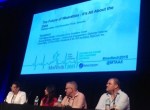
Panel at MedTech
I’m in Sydney today for the MedTech conference (follow along at home #MedTech2015) and also swamped with the usual World Diabetes Day happenings. Which I love, because it is a chance to speak about diabetes more than usual.
On my flight up here today, I re-read some of the things I’ve previously written about World Diabetes Day – and, more broadly, Diabetes Awareness Month – and thought I’d revisit some of them today.
Like this from the first year of writing Diabetogenic. (Contains lightsabers.)
And this, where I admit to wearing blue mascara, but thankfully the photographic evidence is poor!
This post tells of a crazy 2 days which kicked off with research awards, moved on to a very early morning flight to Sydney so I could do some diabetes myth-busting on a morning television show and ended with me participating in a 24 hour tweet chat. With lots more in between!
With so many different World <insert cause here> Days, explaining why we need one for diabetes (or anything else) can be tough. But here, I justified the need, sharing my own story of a hypo that wouldn’t quit and the advocacy that came after it.
And one of the proudest mum moments I’ve had is in this post when I wrote about how our daughter became my favourite diabetes advocate with her impromptu awareness raising activities at school on World Diabetes Day.
It’s always a busy, blue-tinged time.
I speak a lot about the challenges of living with diabetes. Sometimes, the challenges don’t directly relate to me, but I can still see and understand that the diabetes experience is different to anyone and one person’s easy-peasy-lemon-squeezy is another person’s anxiety- and stress-inducing concern.
One of the things that perplexes and annoys me is people who are unable to see diabetes outside of their own bubble. Frequently these people fail to see that just because they don’t need information about <insert topic here> that doesn’t mean everyone has access to or an understanding of it.
Sometimes, when we are running an activity or speaking about a topic at one of our events, people say that they have never had any problems with that, so why would we speak about it – completely ignoring the fact that we have surveyed lots of people living with diabetes and this is one issue that is of concern to many others.
I ‘work in diabetes’ (which sounds ridiculous, but you know what I mean) and the last person’s diabetes that gets considered when I am at work and we are developing programs is my own. If I thought, for one minute, that my experience of living with diabetes mirrors most others, then I’d be utterly naïve and not doing my job. That’s why working and engaging with, and listening to as wide a range of people affected by diabetes as possible is critical to delivering services that are of use.
(Because, let’s be honest, if it really were all about me, I’d spend lots of time and effort working with the leather crafters at Hermes to help me design a perfect diabetes bag. Because: shallow. And lots of stuff.)
And you know if you just rolled your eyes at that last comment because you have found (or designed) the perfect bag and think it is waste of time to speak about it because it doesn’t affect you, then a) stop it and b) can you tell me where to get one? Thanks.
With World Diabetes Day this week, it’s a great time to think about how others deal with diabetes, what they know, what they don’t, what their concerns may be.
If I only cared about what was going on in my diabetes bubble, I wouldn’t write so much about campaigns like #Insulin4All. You can read all about the campaign here, and my post about it during the lead up to last year’s WDD. And watch this video!
I have never had trouble accessing insulin. But that doesn’t mean that I don’t care about those who do.

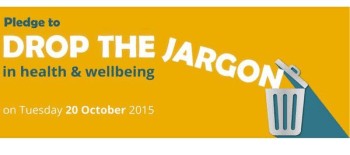
Tomorrow is Drop the Jargon day here in Australia. According to the campaign website, the aim of the day is … for professionals in Australian health, community services and local government to challenge themselves to use plain language.
People working in the health space are being urged to take a pledge to assist Australians who have low literacy make sense of health information and help them navigate our health system. Six out of ten people in Australia have low health literacy, so there is a real need to make sure our messages and information are presented in a way understandable to everyone.
The pledge asks people to:
- Use plain language in all communication
- Not use acronyms
- Explain medical and other technical terminology
- Check that information has been understood by your clients
- Work with a professional interpreter when necessary
- Politely point out when your colleagues use jargon
Diabetes is a condition rife with jargon. I’ve said before: it is like another language. I am as guilty as anyone when it comes to popping in acronyms, technical terminology and assuming everyone knows what I am talking about.
The website includes a link to a handy Plain Language Thesaurus to assist with finding simpler, clearly and less ‘jango-istic’ words when writing health information.
When considering writing in this manner, a lot of sensitivities and intricacies about different conditions are lost. For example, the thesaurus suggests replacing ‘diabetes’ with ‘elevated sugar in the blood’. (Amusingly, the same document suggests – just a page or two down – to replace ‘elevate’ with ‘raise, lift, make higher’.) Obviously, this doesn’t provide a particularly rounded definition or explanation of diabetes, and those of us who ‘get’ this space and understand the words we use when talking about it could criticise the ‘dumbing down’ of what diabetes is all about.
But think about it. If you were new to the diabetes game – just diagnosed or a family member was just diagnosed – and your health literacy was considered low, then this is probably a good starting point. It is certainly better than ‘a touch of sugar’, which are the words used by some healthcare professionals STILL when telling people what diabetes is.
I guess the dilemma for me – as someone who does a lot of writing about diabetes – is that I know that there are some people who want and need more information. Frequently, I write for people whose health literacy is of a higher standard, and there is a need to write at an appropriate level for this target group too. They want – and are able – to read technical and quite difficult jargon.
But I can never ever assume that is the case for everyone. When writing for this blog, I use language very much the way I speak – whatever comes into my head, thoughts going at a million miles an hour, lots of jargon and, if my hands weren’t flying across the keyboard, they would be flying around the air. It’s not really great for people whose health literacy is not high.
However, when writing for work, I am far more conscious of not doing those things. But I suspect, I am not conscious enough. Which is why I will be taking the pledge, and why I think this is a terrific initiative for those of us working in the health space.
On Monday evening, diabetes got a mention on the ABC’s Q&A program. Read all about it over at the Diabetes Victoria blog today.
After writing on Monday about the confusion I feel when I complain about the lack of CGM subsidies in Australia and my out of pocket expenses when considered against countries where insulin is out of reach of many people with diabetes, this piece is about changing the landscape here in Australia. Write a letter, make an appointment to see your local MP, tell your story.
And if, just like me, you feel conflicted about the inequality of health care around the globe, think about making a monthly donation to the Spare a Rose, Save a Child campaign, raising money for Life for a Child. I just did it now – incredibly easy to do.
Also, read about T1 International’s efforts and take part in their We Are The WORLD in World Diabetes Day campaign.
Around $80 bucks. That’s how much it costs for a CGM sensor in Australia. It’s expensive and it is completely out of reach of most people living with type 1 diabetes. There is no subsidy: you want it, you pay for it yourself.
I have been wearing a sensor on and off for the last eight or so years, as long as CGM technology has been available in Australia. In the last two and a half years, it’s been on more than off. And recently, I have found myself feeling completely lost without it.
I know how fortunate I am to be able to afford it, I really do. And yet, after I called the company to make my last order, and read out my credit card details, I heard myself complaining about the cost – to pretty much anyone who would listen.
And there, in my world, seemingly oblivious to anyone living outside it, my indignation at having to fork over well-over $300 to pay for the device that I need/isn’t a privilege/keeps me alive/keeps me out of hospital/is necessary for me to be well/helps my quality of life/reassures me/reassures my family (or whatever lame-ass reason I was sprouting) was being repeated ad nauseam.
But sometimes, this privilege is brought home in ways that make me feel shamed and ashamed.
At ISPAD + APEG last week, I attended the IDF Life for a Child update. I make sure that I go to all the sessions run by the LFAC team at any conference I go to because I want to support the program in any way I can.
Many people will have heard of the Life for a Child program. I’ve written about it before – specifically when promoting the very valuable Spare a Rose, Save a Child campaign.
17,000 children from 47 countries benefit from the program. The focus and vision of LFAC have shifted slightly in recent years. It has moved from keeping children and young adults alive to improving health outcomes and quality of life.
The education and training initiatives developed by LFAC are making sure that there is sustainable impact being made to the lives of people living with type 1 diabetes. Much of this work is done through strengthening existing centres, which means more money going towards actually helping people, rather than the establishment of new institutions.
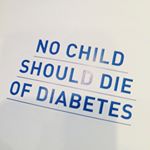 Each time I hear about LFAC, I walk away with a mixture of feelings – most of them associated with guilt.
I feel guilty at what I have, when so many have so little. But more so, I feel bad complaining about what I have. Feeling like a spoiled ‘but-I-want-a-pony’ kid is pretty confronting. And disgusting!
I feel inspired by the kids benefitting from the program. I hear their stories and I can’t help it but feel inspired. And then I hear Stella Young’s word in my head and know that they are not there to inspire me. They are just living. And then I don’t know what to do or how to feel. (And while Stella Young may have been referring to images of people with a disability when she coined the brilliant term ‘inspiration porn’, it works just as well when referring to these kids with diabetes.)
I don’t know how I go about acknowledging my privilege and not feeling guilty about it. I don’t know how to complain about some if the things that piss me off about diabetes without thinking ‘but it could be worse’.
I get mighty peeved when I hear people say ‘At least it’s not cancer’ because it starts to make different health conditions a competition. So is it okay to say ‘stop complaining – at least you don’t live in <insert country name> where you wouldn’t even have insulin and would be dead in a year’?
Diabetes is crap – it is a terrible condition, there is no doubting that. And I think it is fair to say that for some people, it is more difficult and it is more unfair. The things that make it harder for some are so beyond anyone’s control, which probably makes it even more difficult. But is acknowledging that enough?
One of my (very frequent) criticisms of diabetes conferences – especially here in Australia – is that there is not enough input from people with diabetes. The very people who are the reason that these conferences exist are largely silent and very, very invisible.
This year, however, I am so pleased to say that even though there may not be many of us storming the halls of the Adelaide Convention Centre, the voices of people with diabetes are being heard very, very loudly.
The day kicked off with a breakfast celebrating the 10th anniversary of the OzDAFNE program. There, in between discussions about the program was a video showing people who had completed DAFNE sharing their thoughts about the course.
I then headed to an often-challenging session on hypoglycaemia, where Dr Christel Hendrieckx from the ACBRD, in her session about the emotional and behavioural consequences of hypoglycaemia, dedicated a slide to quotes from this Diabetogenic post about the language we use when referring to mild and severe hypos. I am not sure that I have ever been prouder. (I also completely broke the no photos rule with this, but they are my words, so I thought I would be safe!)

In the next session , diabetes educator, Virginia Hagger (also from the ACBRD), spoke about the TEAM T1 Program. Once again, interspersed between stats and explanations of the program, quotes from teens who had attended TEAM T1 were read out, highlighting how the course helped them.
Virginia spoke again later in the day, this time about the Diabetes MILES Youth report and played the video used at the launch of the report (and shared on this post) for the audience. The words used to explain how young people feel about living with diabetes are powerful and their impact is significant.
Amelia Lake from the ACBRD (you’ve noticed the common theme here, right?) spoke about the development of a resource about young people with type 2 diabetes and retinal screening. She too provided great insight into how young adults with type 2 diabetes feel about eye checks by sharing quotes of their experiences.
While it would indeed be wonderful to have people with diabetes sitting in sessions, and standing on the podium lending their voice to provide the practical side of the theory often being discussed, incorporating the words of many into talks is a powerful and effective way to hear from us. Plus it means that there is never only one voice – which can at times seem tokenistic – being heard. Instead there are many – every single one important as the next.
 ‘Got your lunch?’
‘Yep.’
‘Got your jumper?’
‘Yep.’
‘Got your homework?’
‘Yep.’
‘Okay. Grab your bag and let’s go!’
And that is how we walk out the door in the morning – after eating breakfast, getting dressed for school and brushing hair and teeth.
I then drop the kidlet at school and make my way to work.
I don’t think about what her BGL is doing throughout the day. I don’t think about what time her PE class is and if she ate all her morning tea beforehand. I don’t think about anything to do with numbers – other than knowing that she has her maths homework.
Kids have a lot to think about in their day. Kids with diabetes – and their parents and their teachers – have more to think about.
Jump over to the Diabetes Victoria blog where you can reads about the fabulous new resource launched today. It’s called Mastering Diabetes and it is going to help all children at school and childhood settings in Victoria.
It may have been a while ago, but I do still Remember the Days of the Old Schoolyard!
Following the announcement at the end of last week from Diabetes UK that a new CEO had been appointed, there was much chatter online about whether or not the best person had been selected for the role. I have no opinion on this. I do not necessarily agree that you need a person with diabetes to be the CEO of a diabetes organisation – there are many other ways that meaningful engagement can take place ensuring that the organisation is representing the needs of people with diabetes.
What I was far more interested in was the direction the discussion took – specifically about the inclusion – or, as was being discussed, not – of consumers/patients/PWD/whatever you want to call us at professional conferences.
I watched on in silence as healthcare professionals, PWD and consumer groups all weighed in on the subject.
I am rarely a fence sitter, and on this issue, my position is very clear. Very, very clear.
I have yet heard a good argument as to why PWD should not attend diabetes conferences. In Australia, just as in the UK, we have the same limitations about people with diabetes having access to drug-branded information. This is archaic because, well, the internet. But whatever. (Read more here.)
Notwithstanding these code regulations, there is no reason that a PWD should not be welcome at a professional meeting about diabetes, hearing about diabetes research, learning about diabetes medications and technology and talking with the healthcare professionals working with people with diabetes. And if it is deemed that we are not fit to see the brand names of drugs, then keep us out of the exhibition spaces, but allow us to attend information and networking sessions. (For the record, I don’t support that idea either, but if that is what is necessary for us to be able to attend the sessions, then so be it.)
I would go one step further. PWD should be involved in the planning of these meetings. Why? Because surely if HCPs working with PWD are hoping to improve their knowledge and understanding of diabetes, a big part of that is gaining a better understanding of people with diabetes. And there is no one who gets that more than those of us living with diabetes.
I absolutely do not subscribe to the ‘why can’t we have a professional conference for health care professionals’ viewpoint. Well, of course you can. But there is no reason that PWD should not be involved in this and attend alongside healthcare professionals.
I’ve been more than a little vocal on this in the past. Search ‘consumer involvement’ or ‘PWD at diabetes conferences’ on this blog and you might just come up with a few things. I’ve given talks both here in Australia and overseas about it. I constantly expound the value of the consumer voice and consumer participation and consumer involvement.
The thing that interested me in the discussion I was following was just how hostile it was at times. With 140 characters or fewer at our disposal, we can’t always be as tactful as we might be in person. Sometimes, being direct is the only way. And knowing a few of the people involved in the discussion, tact is perhaps not a characteristic that they generally employ. I say that without any snippiness at all – it is part of the way they get their point across. I get it – I am often accused as being like that and I wear it as a badge of honour. As far as I am concerned, the involvement of PWD is non-negotiable and if I sound pissed about it, I probably am!
But being hostile and aggressive is not likely to result in a favourable resolution.
Working for a diabetes organisation puts me in a unique position. As part of my work, I get to attend the very conferences from which other PWD are excluded. Plus I am frequently invited to speak and this privilege is due to a combination of my diabetes org work and also my work as a blogger and diabetes activist that I do outside of paid employment. It’s a sticky situation that I manage as best as possible. There are disclaimers everywhere and even the whiff of a conflict of interest is declared.
However, there is one thing that I have learnt from ‘being on the inside’ and that is working collaboratively is highly likely to produce results more than being combative. There is a lot of negotiating required at times and an understanding that things take time. Sometimes lots of it. It’s taken me a lot of time to understand that!
Call me – and those who are trying for a more collaborative approach – political or bureaucrats. You can think we’re sell-outs. We’re not. At all. We actually have a seat at the table and are working for people with diabetes. And you want us sitting at that table! Come join us.
So, think you want to get involved, but not sure how? There are myriad ways that you can try to work with organisations. If paid employment is not what you are looking for, there are many volunteering opportunities including Boards (some may be paid positions), advisory panels, expert reference groups or simply, pick up the phone and pitch your idea!
I am always interested to hear from friends overseas about how they access their diabetes supplies. In some places, discussions, negotiations and, it seems, arguments with insurance companies are required before product is delivered; in other places, people with diabetes require a prescription from their HCP to purchase consumables as well as medications. And, in other places, access is so limited and sporadic there are no processes in place to guarantee supply of the things we need to manage diabetes.
In Australia, the process is actually quite simple. A diagnosis of diabetes means that a person is eligible to be registered on the National Diabetes Services Scheme (NDSS). Once registered, PWD can use the NDSS to access most diabetes (non-drug) consumables.
The supply of insulin (or other diabetes medication) here is part of the Pharmaceutical Benefits Scheme (PBS). A prescription is required from a doctor and that is taken to a pharmacy to be filled.
In my experiences, insulin is not always kept in stock, so I make sure to call ahead and have it ordered in for me. Most people with diabetes I know do the same thing – many have been caught out thinking that we could simply show up, hand over our prescription and be given the insulin (after being warned about how it needs to go into the fridge NOW – RIGHT NOW).
The NDSS is an initiative of the Australian Government. Diabetes Australia has, for the last 28 years, administered all aspects of the NDSS, which apart from product supply and delivery also includes information and support services for people registered on the Scheme.
When I need BGL strips or pump supplies or needles, I can access whichever products I choose to use by either ordering over the phone, online, or at an NDSS outlet, which could be downstairs at work (see disclaimer), at a hospital, community health centre or, most commonly, a pharmacy.
Sounds easy-peasy-lemon-squeezy, and for me, generally it is.
The NDSS rules and regulations are all set out by the Department of Health and then carried out by those actually distributing products. It’s for that reason that there are limits on the quantity of product you can purchase in one hit. Again, I’ve not had a problem with that. I had a form filled in by my endo a number of years back that stated I use above the upper limit of strips. I am therefore able to order more than the 900 strips per 180 days that is standard. (For those doing the maths at home, that is five strips per day. This is what is recommended as a guide by many HCPs. Of course, diabetes does not operate to a guide, which is why there is the flexibility to order more if required.)
I have recently noticed quite a few people online complaining that they are having difficulty accessing the quantity of product they require.
So, what do you do if you have this problem? The first thing to do is to remember where the rules and regulations come from. Of course it is frustrating to be faced with someone telling you that you are unable to have as much product as you need – especially if you are ordering within the limits, but even if you are ordering outside of that quantity. But don’t shoot the messenger. A pharmacy assistant telling you that you can only order 180 days of strips or needles is just doing their job. (It’s a completely different issue if they are telling you that they will only give you one or two boxes – that is not okay!)
You can write directly to the NDSS or even better, to the Commonwealth Minister of Health. Be clear and concise about why you need to be able to order the quantity you require.
This is also the time to remember that your local member is there to serve you.
Remember that if you are writing to an MP, they may not have the understanding of diabetes that you do, so use generic terminology – and don’t use ‘diabetese’. Keep it simple and try not to get bogged down in detail.
If you believe that you are not able to access what you need – the actual product and/or the product in the quantity you require – there is something you can do about it. That something is not bitching and moaning on social media, by the way. It’s taking action and actually doing something that will result in change.
I have written before that there are going to be some changes in the next twelve months with NDSS product supply. There is absolutely no reason to believe that the subsidised scheme is under threat, however the changes will certainly mean that the way we have accessed diabetes supplies in the past will change.
FUN BIT! Disclaimer
I work for Diabetes Victoria and Diabetes Australia. The majority of the work I do is funded from the Registrant Support Services part of the NDSS. This is a different funding stream to Product Supply and Delivery.





 Diabetogenic