
You are currently browsing the category archive for the ‘Advocacy’ category.
Tuesday last week, I woke up to find this message in my Twitter DMs. I read it and read it again. It accompanied a tweet or two to me about my blog post from the previous day.
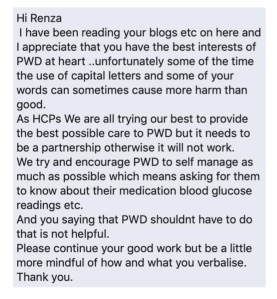
I debated about whether or not I should share this publicly. I wrote some words, walked away, came back to them, walked away, asked a few friends their thoughts, walked away, wrote a bit more and walked away again. I posted it to my closed Facebook page to get some feedback from others and wondered if that was enough.
But then remembered this blog post. #StandUP.
So, here I am, standing up. Because I am upset and angry.
I am not upset and angry that someone didn’t like or disagreed with what I wrote. It would be frightfully boring if we always all agreed with each other and loved the same things.
I am not upset and angry that this message was unsolicited. I believe that people don’t need an invitation to comment when I write and publish things on a public forum. I invite all feedback – good and not so good.
I’m not even upset or angry that I don’t understand what was being referred to in the message. I re-read and re-read and re-read my post, and I can’t see where I ever, ever said that people with diabetes shouldn’t self-manage, or know what meds they’re taking or what their glucose readings are. I couldn’t find it in there. But, people interpret things differently and perhaps my writing wasn’t as clear to them as I thought it was.
I’m not here today to defend the content in that blog post, because that’s not what this is about.
I am upset and angry that I was being told to ‘be mindful of what and how I verbalise’. This is called tone policing. It is telling me that I should moderate the way that I talk and think about my own diabetes. This was an opinion piece. My opinion. People don’t need to agree with it – and they can tell me they don’t. But telling me to moderate the way that I communicate is a very different thing.
I will forever call out and stand up to anyone who tells me, or others with diabetes, to restrain our feelings or opinions, and that is why I am writing this post. Because more than anything, I believe that we have a right to express how we feel about diabetes, in the way we want to, especially when we are sharing our own opinions or experiences. When we are told to be mindful of what and how we are writing/speaking it is a step on the way to censoring and silencing us. We already do that enough.
Often, in clinical settings, we moderate the way we speak. We might minimise how tough things are, or don’t speak out about the way we are treated or the judgement we face. When we are told that we’re not doing enough and are failing, we look down, afraid to stand up for ourselves.
And so, we created spaces where we could be free to share and rant and cry in a way that gave us some comfort. We turned to others who are likely to have had similar – if not identical – experiences. We share our opinions, some of them unpopular, thought-provoking and challenging of the status quo because we feel we have the liberty to do just that.
We have had to be quiet for too long. But that should never be the case in our own space.
The diabetes online community is that space. Twitter, when we use our #xxDOC (or #DSMA) hashtags is that space. Other online and offline support opportunities and groups we have created is that space.
And this blog (and others written by PWD) is that space.
So, back to the message I received last week. I did ask for clarification, and for examples of where I’d used capital letters or words that could be considered harmful, but I didn’t get a response.
Just this message:

No answers, just a threat to mute me. To silence my voice. Sure, it is only being silenced on this one person’s twitter stream, but that was the response to me refusing to be ‘compliant’ and agree with a healthcare professional’s demands that I tone down the way I write about my own opinion. I had not been aggressive, abusive or rude. I had just shared my own opinion and thoughts in my own voice. In my own space.
In a couple of weeks, the diabetes conference juggernaut will descend on Madrid for ATTD.
This one is all about new treatments and technologies in the world of diabetes and, in its thirteenth year, looks to once again be a busy and enlightening meeting.
There is so much on the program that focuses on user-led technologies and initiatives. I think it’s fair to say that PWD have long recognised that technology in diabetes is more than just the devices we wear on our bodies. We have long used technology for support and to connect to others who help us manage the day-to-day life of diabetes, and to learn and share. DIYAPS may be about the systems, but grasping the role of online platforms and support is essential in understanding the #WeAreNotWaiting movement as a whole.
 It’s great that a number of PWD already know that they will be part of ATTD this year, attending satellite events run by different device and drug companies. Some are on the program and some will be there through other opportunities and work.
The more the merrier, I say! Different voices with different experiences sharing and learning is always a great thing. And having the opportunity to meet people in real life after only seeing them online adds another dimension to our peer support networks.
For European diabetes friends yet to secure a place at ATTD, there is another possible avenue in, but you need to be quick. Launching at ATTD is the new #dedoc° voices program. Although #dedoc°has its foundations in Germany it is truly an international community, involving people from all over the world. #docday° events (always a highlight at these conferences) involve diabetes advocates from across Europe and the US, and even the odd Australian, too. It’s great to see this new initiative is helping more advocates get a seat at the diabetes conference table as active participants.
APPLY NOW
If you want to be considered for the #dedoc° voices program, you need apply, which is super simple – just go here, where you will find out all about the program and how to throw your name in the ring! Applications close on Friday, so chop chop!
Successful applicants will have their travel and accommodation costs reimbursed, and will receive full registration to the conference.
Good luck. And hope you see you there.
Disclosure
I am an advisor to the #dedoc° voices program. I do not receive any payment for this role.
I am an invited speaker at ATTD 2020. Lilly Diabetes is covering my travel and part of my accommodation so I can participate in the DOCLab advisory group meeting held during ATTD.
So, this is 2020? How are you going? I returned from overseas to a country literally burning and choked in smoke; a government that is refusing to accept that climate change is real; and a news organisation making up the narrative to suit themselves (arsonists are everywhere, apparently).
Bet you didn’t expect me to get so political before midday on a Monday!
Today is my first day back at work after three weeks of holidays in New York with my family. We spent the time basically relocating our Melbourne life to New York: finding a favourite café that served decent coffee, drinking great quantities of said coffee, wandering the streets, playing with (other people’s) dogs, warming up in bookstores and catching up with friends. It was the perfect way to farewell 2019 and welcome 2020.
As I have mentioned a million times before, I don’t do resolutions. You may not know this, but I live with diabetes, and that in itself gives me enough reasons to not reach goals and targets. I don’t need to add another list of things of which to fall short.
For the last three years, I’ve chosen a word that I’ve hoped would oversee and direct my way of thinking and acting for the year. As it turns out, that was a load of rubbish. Because each time, as I searched for the word that I wanted to guide me, the one I settled on went against the very grain of who I am.
The words were pause, focus and reset – and behind them was the idea that I would respond in ways that were really out of character; words that would silence or calm my natural responses.
But that’s not me. I walk towards things (usually at pace), I’m impulsive, I’m reactive. Sure, these may not necessarily be the best traits for a mindful, calm existence, and they can be exhausting, but welcome to my life: Hi, I’m Renza.
This year, I’m ditching the word idea, and using a phrase that better suits me, and that phrase is Stand Up.
We are living in a world that does not need people to be silent. Manners are all very important, but it is very possible to have manners and be polite, but still challenge things that we see as not right. We don’t need to be told how to think, how to feel, how to respond to something that upsets us. We don’t need to tone police ourselves – or others. We don’t need to accept what we are given.
And in the diabetes space, we don’t need people to be meek and mild. We need people who are disrupters and who speak their minds and who call out the bullshit. We definitely need to make sure that the voice of PWD is the loudest in the room, and that anyone who tries, even for a second on any platform, to tell us to pipe down is called out for it.
We do not need people to go quietly, and I am somewhat horrified that I did just that at the end of last year when I was feeling intimidated and vulnerable online. If I’m honest, I don’t recognise the person who switched her Twitter to private and wrote this thread to explain it to the people who were asking why.
Being angry is okay because there is a lot to get angry about in diabetes care. Not standing up means that we accept the situation for how it is. We can do it in a way that is nice and friendly, but sometimes it takes more than that. And that is okay.
I have never cared about being popular in the DOC or being considered one of the cool kids. I have never worried about follower numbers. I searched for this community because I needed support and I needed to feel part of something amongst people who were just life me. Other people with diabetes.
When I re-read my twitter thread from before Xmas, my heart broke NOT at what had happened; but at how I felt that the only way for me to stop feeling so unsafe was to turn away from the community – MY community. It was this tweet that set my tears running again:
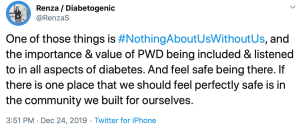
I thought that if I had wandered into the DOC for the first time instead of the welcoming place it was, I saw PWD being challenged, I would have run away. THAT was what broke my heart – the very idea that I would not have discovered people like Kerri, Georgie, Cherise, Melissa, Mike, Dana, Grumps, David, Manny, Jeff, Mel, Frank, Alanna, Kelly, Ashleigh, Scott, Annie, Alecia, Bastian, Daniela and so, so many others. I don’t know how I would have navigated the murky waters of life with diabetes without those people: MY people for whom diabetes actually invades our DNA and the DNA of our loved ones. People there for the right reasons – not for the accolades, not for increasing follower counts. They are community-minded, open to opposing ideas and thoughts, and don’t consider themselves superheroes.
If I had have gone quietly, I would never have learnt from them; never had the support of people who understand; never had people like that at my back when I do stand up.
So, I don’t go quietly ever again. I stand up as I always have. I accept that doing that will send me into periods of advocacy burnout; I’ll deal with that when it happens, surrounded my friends and peers who get it.
So yes, this is 2020. I’m back. It’s really nice to see you here.

Each year, as we stop, look back and take stock, the reason that we are feeling so tired becomes apparent. This year is no different for me; my work travel calendar was the most intense it has ever been, with nine long haul trips, some for only a day or two. Combined with regular domestic travel, I can truly say that I have seen the inside of airports far too much. I stopped adding up the trips I did once I passed 100 walks down airbridges to board planes because it was making me weepy.
But on top of the usual exhaustion this year, there seems to be an extra element of fatigue that goes beyond what I’ve experienced before.
But first, let’s talk highlights, because there have been many of them.
The year kicked off with Spare A Rose and whoa, did we start the year with a bang! With the true philosophy of SaR at the forefront (an initiative for the community, by the community), we not only reached our rather audacious target, we smashed it! A cheeky and opportunistic little extra push saw a smiling Grumpy Pumper unleashed to the whole world for just a moment The DOC didn’t break, but the final tally of for the campaign meant that 939 kids in under-resourced countries would be receiving insulin for a year. Amazing!
My favourite issue, #LanguageMatters, only went from strength to strength, and the publication of this piece in BMJ, followed by this podcast, was a brilliant way to get it outside of the diabetes echo chamber. The importance of language featured on the programs of major conferences such as ADA and #IDF2019 with stellar panels speaking about why it really does matter.
My diabetes turned 21 and tied up in all the emotion of that, my pancreas’ performance review didn’t go all that well. Maybe next year? (Unlikely.)
Possibly the most exciting, heart-warming, rewarding and humbling thing I did this year was co-facilitate a workshop in Manila with some of the most dynamic, compassionate and enthusiastic young diabetes advocates I have ever met. I’m thrilled have had a chance to catch up with a couple of the people from this meeting and can see the wonderful work they are doing in more than trying circumstances.
Peer support was never far away. One of my favourite digital campaigns came from Diabetes Australia (remember – I work there so consider my bias) with our The Lowdown campaign. What a brilliant way to showcase how a digital campaign can reach and connect people from all over the world, and encourage them to safely speak about a topic that doesn’t seem to get anywhere enough coverage. I spoke about the campaign’s success in a number of places this year.
My own personal peer support experiences happened all around the globe at conferences, advisory board meetings and other opportunities to see friends and colleagues with diabetes. These moments ground me and help me make sense of what I am seeing and hearing, and are critical for keeping me balanced.
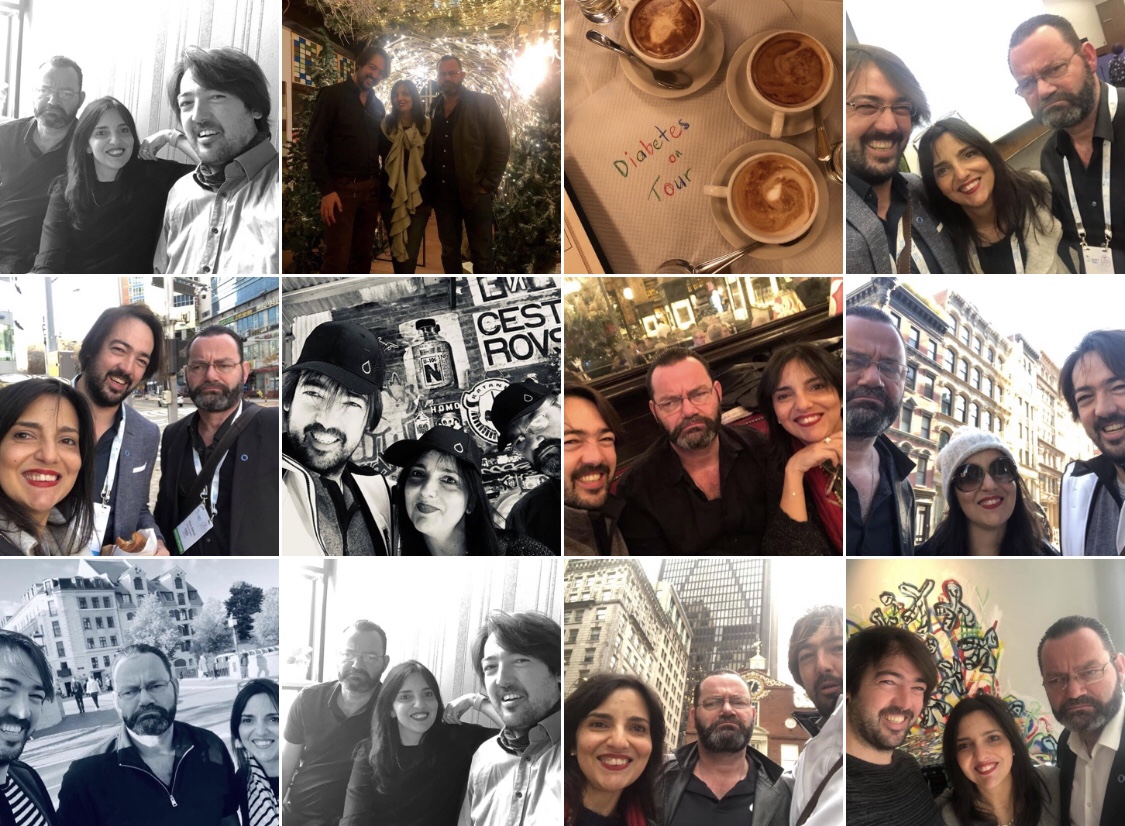
A special shout out to these two peers and dear, dear friends: Bastian and Grumps. We saw each other an inordinate number of times this year, literally all over the globe, travelling on planes, trains and automobiles for our #DiabetesOnTour. I do think we should launch a calendar of the 2020 pics. (Admittedly, we may be the only ones remotely interested in that idea.) When I talk about my diabetes tribe, it’s friends like these two. We’ve celebrated through some pretty amazing things this year, stood up to elevate the lived experience over and over, and also counselled each other through the tough bits. We’ve held post-mortems of long days, sitting in hotel foyers and bars, trying to make sense of what has happened, working out how to always improve, and plotting and planning more and more and more. I am so grateful to them for being the scaffolding holding me up when I’m away from home and feeling overwhelmed.
So, now the reason for that elevated exhaustion…
When I first wrote about advocacy burnout back in January this year, I had no idea at the time that it would set the scene for a difficult and sometimes troubling theme for the year. I get tired and overcome at times throughout the year, but 2019 was different and I’m not really sure why.
There were moments this year where I did honestly wonder how much more energy I have to stand up over and over again to a lot of what I was seeing. I don’t like using war and battle analogies in diabetes, but I did feel that I was fighting a lot of the time. Diabetes advocacy is a tough gig to begin with. Adding burnout on top of it makes it seem shattering.
Being attacked by HCPs for daring to voice my thoughts and challenge their behaviour, or getting it from certain, more confrontational parts of the diabetes community, or having industry reps tell me I don’t know what I’m talking about for daring to suggest that maybe their lame attempts to simulate diabetes in gameshow-style gimmicks at conferences could be better directed at actually engaging and listening to PWD all added up.
Or perhaps it was the repeated examples of ‘diabetes for laughs’…and realising that we are a long way away from HCPs truly being allies in our daily encounters with stigma.
Or perhaps it was feeling that we needed to justify just how important the #LanguageMatters movement, and the decade of work we’ve done really is. I can’t even begin to tell you how upsetting this little incident was.
It added up and several times I’ve felt overcome. I feel like that today. Which is disappointing because on measure, the highlights, the positives and the amazing community should overshadow the negative encounters.
And that is why I’m taking a break from Diabetogenic. I need some time away from feeling as though I want to analyse what is going on and comment on it. I have a wonderful holiday planned with my gorgeous family where we will see friends and wander wintery streets, rugged up in pompom hats. And then, will warm up once back in Australia to finish recharging my seriously diminished batteries, ready for a new year that’s already shaping up to be so, so busy.
Until then, I hope you have a wonderful holiday season, celebrating however you see fit. Thanks for popping by. And I’ll see you in 2020, clapping my hands and raring to go!
Busan is a very different city today than it was last week. There won’t be warmly dressed people hurrying into BEXCO with IDF2019 lanyards around their necks, eager to learn about diabetes. The word ‘diabetes’ won’t be uttered in almost every language of the globe. There won’t be Melbourne diabetes people loudly lamenting that Starbucks seems to be the coffee of choice in the city.
And you won’t see groups of people from all around the world standing together talking about what it’s like to live with diabetes. Most of us have gone home to our respective corners of the world, back to our families, back to our jobs, back to our real lives. But we will always have Busan and the incredible week of the IDF Congress.
By the time I arrived in Busan on Monday, the IDF was already a different beast. There was a new President and Board in place and some of the concerns that we’d had about the handover had melted away to nothing. This paved the way for what we really there for: a week of learning, networking, hearing different perspectives and truly uniting for diabetes.
We did that.
Was it a perfect conference? Of course not; they never are. There were hiccoughs and AV fun. There were controversies that played out online very differently to the way they actually happened in real life. There were sessions – critically important and brilliant sessions from all streams– with disappointing turnouts.
But these are all minor concerns that are the reality of every conference I have ever attended. There will be a time for post-mortems and evaluations and planning for improvements to future conferences. That time, however, is not now. Now is the time to celebrate.
IDF 2019 was a brilliant showcase of diabetes from around the globe. As expected, I only attended sessions from the Living with Diabetes stream and every single story was beautifully presented, and enhanced by the professional expertise of the HCPs who shared the stage. Amongst the incredible tales were moments of discomfort. It’s challenging to hear of the struggles many of my sisters and brothers with diabetes face in their day to day lives. I was forced to confront my privilege in a way that demands more than just acknowledging it there.
Also, difficult to accept is realising that sometimes the chasm between what people living with diabetes want and need and what HCPs and researchers think we want is gulf-like. For every HCP who ‘gets us’ and understands the value of lived experience in the healthcare space dialogue, there are many others who just don’t accept it, and, despairingly, don’t want to listen.
But more on that another day. Because for now, I’m focused on the people who did such a stellar job. So here are just some of them!

Two hours after touching down in Busan, and we kicked off the sixth Ascensia Social Media Summit with these gems.
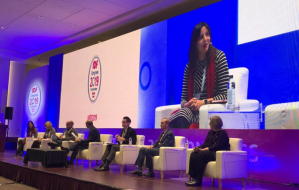
Bright and early on day 1 of IDF2019, and the auditorium was packed to hear about diabetes and tech.
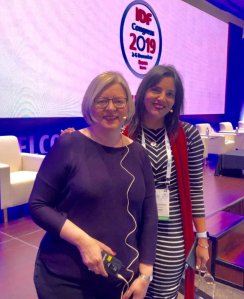
Always, ALWAYS, pleased to share the stage with Jane. Here we are just before the panel session.

Georgie excited to TALK ABOUT HYPOS! (We couldn’t understand why there was an explanation mark at the end of that sentence.)

Manny Hernandez gave the LWD Stream Award Lecture and there is no one more qualified to talk about the importance of diabetes community. How honoured I was to introduce him!

Celebrating Manny! (Photo courtesy of Boudewijn Bertsch)
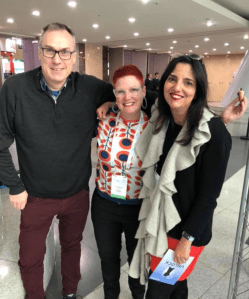
From Melbourne to Busan. Neighbours at IDF2019. Jo was speaking about living with a rare type of diabetes and Andy was there for support (and photos from rooftops).

This woman! Sana, deputy lead of the LWD Stream and a bright, fierce force.
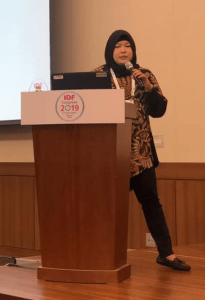
Anita eloquently explaining the challenges of living with diabetes-related complications in Indonesia.
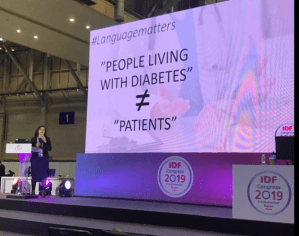
Apoorva highlighting #LanguageMatters in her talk.

Some of the most dynamic young people I have ever met at the Young Leaders in Diabetes Training Summit.

Cherise can always be relied upon to ask thoughtful questions.

I’ve lost count of the cities we’ve done our #DiabetesOnTour this year, but these blokes have made all my travel so much better! Thanks Bastian and Grumps.

My favourite people at IDF2019? The two baristas running this uber-hipster coffee van.

We were all surprised to see the room packed full at 8.30am on the last day of the Congress. Sex sells. Or people just want to talk about it…
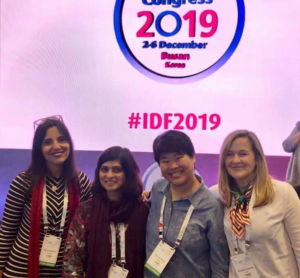
One of the best pieces of advice I was ever give was this: surround yourself with smart women. This is the LWD stream from IDF2019. I truly was surrounded by the smartest of women! Thank you Sana, Pei Yan and Elizabeth.
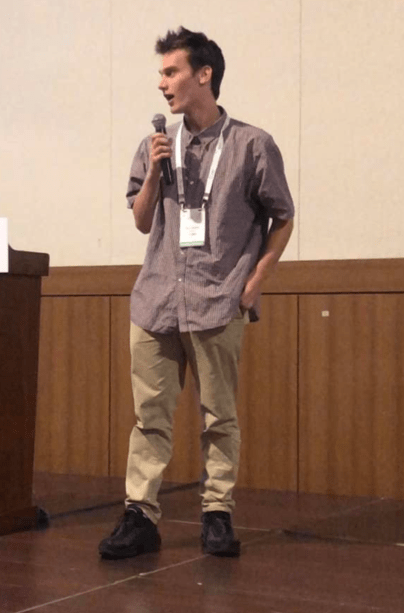
The final session in the LWD and my highlight of the whole congress was my neighbour, Sol, talking about living with MODY 3. We could not have scripted a closing remark better than his: ‘Being at this conference has made me feel part of something and with people that understand.’ Welcome to the world of diabetes peer support, Sol. You are so, so very welcome here.
DISCLOSURE
I was the Chair of the Living with Diabetes Stream at the IDF Congress in Busan. My flights to Busan were covered by Ascensia Global (in order for me to get to Busan in time to co-facilitate their Social Media Summit). Flights home and accommodation were covered by the IDF.
Jeez, burnout sucks. And boy, was I feeling it last week. My blog post from last Friday accurately summed up the exhaustion, stress, feelings of defeat and the heaviness I was feeling as I flew back home. I didn’t even have the energy to yell ‘Bullshit!’ during the part of the safety video when the guy claims lies that there is great coffee to be had on the aircraft. That is just not true, Qantas.
Thanks to everyone who reached out – to everyone who Tweeted, Facebooked, Instagrammed, commented, texted and emailed. I did take a few days off SoMe, but when I logged back on, I read absolutely everything that was sent to me, and I am overwhelmed (but in a really good way) by everyone’s support.
I participated in yesterday’s #DSMA chat because the awesome Cherise thought that a community chat about advocacy burnout was a good idea, and as is Cherise’s way, she was right. I learnt a heap about how others manage the inevitable feelings of overwhelm that affect so many of us at one time or another.
I am incredibly fortunate to work in a place that truly values the lived experience. As I wrote in this piece after the Ascenisa #OzDSMS, my CEO has always not only valued my role in the organisations he has led, but has championed the importance of lived experience. I’m really glad he was able to speak to some of Australia’s most impressive advocates (all of whom he already knew) to continue to explain just how important the work they/we all are doing truly is. I held on to that for a lot of last week and over the weekend too.
But it was the support of those with diabetes that helped me dig deep to find the way out of the dark space; those who understand that special brand of burnout that we feel when not only has our own body done its best to undermine us, but others and circumstances around us pile on, making things just so damn hard.
There is an ever-increasing body of evidence that shows peer support is helpful to people living with health conditions. But there is so much more to why we become parts of these communities than to just improve our health and wellbeing, or to connect with others who ‘get it’.
In these communities, those advocacy efforts we are working on in our own little corners of the world become real and big. Heather Gabel wrote this awesome Twitter thread about frustrations I share with her about how we need to focus on the social change our communities create. I will always need the tea and sympathy, but I also need the connections with those world-changing folks whose drive, determination and dedication help me thrive.
I would be naïve to suggest for a moment that the devastating and crushing burnout I was feeling last week has disappeared. It’s still there, and I suspect it will be for some time, and I’m going to keep taking time out, and stepping back for a little bit longer. But I am far more motivated now, and the crappy things that culminated in feeling overwhelmed are starting to look like blips rather than insurmountable peaks. Thanks to everyone who helped me step back and refocus.
Window seat on a Qantas flight back to Melbourne after a busy few days at #ADC19 and to say that I am exhausted doesn’t touch the sides of how I am really feeling. It’s been a busy conference, but then, when are conferences not busy? I’ve spoken to a lot of people, sat in a lot of meetings, heard a lot of sessions. But that’s just the usual way conferences go.
My exhaustion started before I even got in a cab to the airport on Monday. And really, that exhaustion isn’t just about the sore legs, the lack of sleep or the mental overload of trying to digest stats and presentations, or wandering around a huge conference centre.
I’m so burnt out right now. Not diabetes-wise; advocacy wise. I’m weary. And I feel so, so beaten that I almost ache. I feel like I am at the edge of tears a lot of the time because everything feels like such an effort.
This is a challenge when working in, while living with, diabetes. Even when my diabetes is impacting as minimally as I could ever hope it to (thanks to the Loop god/esses again), the big world of diabetes is there in a way that, at times, crushes me. I used to feel like this a lot more when I had to spend so much time justifying to co-workers the value and importance of the work I and my team were doing. That’s not the case now, but there are still times that it all does feel like it is too much.
And when I feel like this, things that usually would barely be a blip on the radar are weighing me down. I usually am ready to take on whatever is thrown at me, or whatever I see that needs the PWD voice to interject, but right now that actually feels like a burden. A relentless burden where my efforts are misfiring or yielding hardly any benefit. The fire that is usually ignited in my belly feels like instead of fuelling my enthusiasm and passion is instead giving me heartburn.
Right now, being in this advocacy space is making me feel hopeless. I know that there are always allies that truly do believe in what I believe in – the value of the PWD, the need for us to be heard, the value and vastness of our experience and expertise.
But the voices of those who don’t necessarily feel that way are especially loud at the moment. It’s the HCPs who still (STILL?) question the right for PWD to be wandering around and on the stage at diabetes conferences, the comments about how the value our lived experience doesn’t equal the weight of scientific evidence, the messaging that I keep seeing everywhere I turn that misrepresents diabetes and actually does PWD a disservice. It’s the idea that others think they can dictate to PWD how we need to see the safe places we have created, or tell us that because they can’t back up with data when we say a technology, or a service or a program helps us, it is not valid or deserves funding. It is being confronted constantly online and offline and at every opportunity, when really, if we say we feel a certain way about living with diabetes, we actually do have the right to have that unchallenged.
And right now, I don’t seem to have the energy to try to counter that.
I tried to explain to someone the other day why I rarely let something that I see as being negative towards PWD go by. I know that it would be easier to ignore a lot of the crap and let it just slip by. I know that being angry is tiring. But that isn’t enough for me to not respond.
Usually, I have the resilience and robustness to address whatever the issue, and then whatever gets thrown back at me. I don’t think that I am the only one who can do this, but I do know that often I am one of the few people who actually is at the table while it is happening. Once, where I was the only PWD in a meeting of HCPs someone told me that I didn’t need to have an opinion on everything and I pointed out that actually, as the only PWD in the room when others were making negative comments, I actually do. And that it was in my position description, so I was simply doing my job.
I am tired. I really am.
Having my tribe around me this week has helped – it always does. But even with this support, and the laughs and the knowing looks and the understanding, I’m feeling beaten. (I am so grateful to have had them around this week…I’m not sure how I would have otherwise coped…)
I know it’s a phase but this time I don’t know how to locate the strength I need to get back to where I like to be. Or to push down the doubt and imposter syndrome that shoots up alongside this sort of advocacy burnout. That’s what happens – just as with diabetes burnout – we start to second guess out efforts and wonder if what we are doing is enough or really has any point. There is a point – I know that. There has to be. Because the personal investment is vast and really, there is no other choice but to keep on keeping on.

Grateful for my tribe.
Sometimes, something happens at a diabetes conference that I need to sit on for a while before I can write or talk about it. At ADA this year (almost six weeks ago now), there was a moment that has stuck with me and I think it’s time to talk about it.
I was sitting in the front row of the language session – because, of course I was – eager to hear from the all-star panel that was going to be looking at the language issues from the perspective of the PWD and HCP, as well as look at the role HCPs play in addressing diabetes stigma and how they can improve communication. I loved the well-rounded approach the session was taking, and settled in for a couple of hours of discussion.
The line-up was a veritable A-list of the best voices in the space. We had ‘Jane squared’, with Dickinson and Speight book-ending the program, Joe Solowiejczyk giving the consumer side and Kevin Joiner providing strategies for dismantling stigma.
Jane Dickinson has been an absolute champion of the diabetes #LanguageMatters movement in the US. And it was in her introductory session that the moment of today’s post happened. Jane was speaking about how HCPs see diabetes and people living with the condition. And she showed this slide:

I can’t remember if Jane read out the quotes. But I do remember how I felt as I read them and took in what they meant. I felt beaten.
As people living with diabetes, so many of us have firsthand experience of hearing these sorts of comments directed to us. Or we have had friends with diabetes tell us their tales. Or we have heard passing comments from HCPs expressing similar sentiments. The idea that we don’t care, have brought it all on ourselves, deserve what we have coming – and conversely, don’t deserve care – us pervasive through the diabetes landscape.
This is how diabetes and those of us are living with it are perceived. And it is heartbreaking.
There is no consistency as to who is making these comments – healthcare professionals from all different disciplines, at different stages of their careers, with different experiences. Some work in tax-funded settings, others in private settings. They are considered the best in their field, they are held up as examples of excellent care. Other HCPs refer PWD to them.
Often, I hear people say that these attitudes are really only ever the thoughts of ’old school’ HCPs who have been around for a long time; it’s a throwback to the patriarchal attitudes of healthcare – to days when doctor or nurse knows best and ‘patient’ does what they are told, and if they don’t, they get told off, while being written off as not caring for themselves.
But that assessment is actually not true at all. Some of the most sensitive and tuned-in HCPs I know have been working in diabetes for many, many years.
And some are yet to have even started their career. In exactly the same way that diabetes doesn’t discriminate, it seems that these horrid attitudes and stigmatising comments can come from people at every stage of their career.
Here is the whole slide.

That’s right. These comments came from future nurses. They hadn’t even set foot on the wards yet as qualified HCPs. But somehow, their perceptions of people with diabetes were already negative, and so full of bias. Already, they have a seed planted that is going to grow into a huge tree of blaming and shaming. And the people they are trusted to help will be made to feel at fault and as though they deserve whatever comes their way.
This – THIS – is why I am not stopping banging on about language and diabetes. THIS is why I get frustrated when someone responds to – and reduces – a discussion about this issue with ‘But I/my kid is happy to be called (a) diabetic’. THIS is why I constantly highlight when people or organisations or people in the media are using stigmatising or negative language.
The words we use shape the attitudes we have, and the attitudes held by many about diabetes are disgraceful. Imagine if instead of mindsets like this, HCPs came out of their training with the idea that people with diabetes need support, education, information, compassion and skills to best manage a condition that no one, but no one, ever asked for Just think about how different – and better – that could be.
The ADA session ended perfectly – with Jane Speight (my personal diabetes #LanguageMatters hero) playing the Mytonomy ‘Changing the Conversation’ video. So, here’s that video again. Watch it. Share it.
Last Thursday morning, still wracked (and wrecked) with jet lag from having just returned from ten days in Europe, I boarded a flight to Manila. I would be co-facilitating a workshop for people with diabetes from across the Philippines about how advocacy, community and engagement. If I’m completely honest, I had no idea what was in store for me.
I knew that the PWD who would be attending had all been through a diabetes camps program in the Philippines. They were all young and very eager to step up as advocates. They were the reason the workshop was happening – they realised it was time to elevate the PWD voice in advocacy efforts in their country and they wanted some help in doing just that.
And so, the idea of a workshop was conceived, and the two facilitators were flown in from opposite sides of the planet to pull it all together. Enter me and the Grumpy Pumper (who for once had to travel further than me and was more jet lagged than me).
As the facilitators, we were there to talk about some examples of effective grass roots advocacy, talk about how engagement with other stakeholders is important, and highlight just why the voice of those living with diabetes is critical when it comes to lobbying. We had an vague outline of just how we thought the workshop would run, but we really wanted to ensure that the attendees could shape it the way they wanted, asking relevant questions and walking away with information that would help them.

Once the workshop started, it was very, very quickly apparent that we already had a thriving, dynamic and enthusiastic community in the room. They just weren’t seeing themselves that way. Over the course of the workshop, we saw the ten PWD realise that their own stories and voices are important and have real currency, and they are an unstoppable force when they came together. If ever I needed a reminder of the power of community, I’d have found it there in that room in Manila!
There will be a lot more about the weekend workshop in coming days. I’m still getting my head around it all and am not really sure what to write just yet. It may take me some time. What I do know is that the DOC now has some new voices. Their perspectives will be different to those we often hear about, and that diversity is always good in a community.
So, while I’m getting my words together, get to know these amazing young advocates. They’re on Facebook here; Twitter here; and Instagram here.
DISCLOSURES
Novo Nordisk covered costs for the advocacy workshop. Grumps and I were invited to facilitate the workshop as part of our involvement in the Novo Nordisk DEEP Program. Novo covered by flights, accommodation and ground transfers.
Language matters. I feel I’ve said it so many times, and yet I still have people asking me why it is so important. So, I’m revisiting this post from just over twelve months ago which explains just how the words we use to talk about diabetes has an incredible flow on effect. Read on…
I had a great conversation the other day with someone who was interested to talk about diabetes and language with me. ‘I’m trying to get a better grasp of why it’s something so important to you, because, quite frankly, I couldn’t care less what people say about diabetes.’
This isn’t the first time people have asked me this. And it’s certainly not the first time I’ve been asked why I spend so much time speaking about diabetes language matters.
I know the reasons, but to be perfectly honest, I’m not sure that I have them especially well mapped out when I need to explain them. So, let me try here.
There is a tangled and complicated link between the words used when talking about diabetes, and how we feel about it and how diabetes is perceived by others. That link then goes off on all sorts of LA-freeway-like tangents to include diabetes and stigma, and discrimination.
The effects of how we frame diabetes can be felt by us individually. But they can also be far reaching and affect how others feel about diabetes.
We know that language has the potential to make people with diabetes feel judged and stigmatised. In fact, most PWD I know have at some time or another faced someone speaking to them using Judgey McJudgeface words. Of course, we all respond differently to this. For some people, it’s water off a duck’s back. They couldn’t care less what people say and just ignore it. For others, it’s almost a challenge – they use it as motivation to prove that they ‘won’t be beaten’.
But that’s not the case for everyone. For some people, it can be absolutely paralysing.
Fear of being judged and shamed may lead to some PWD to not wanting to attend HCP appointments and, as a consequence, falling behind on complication screening. Some PWD may not even tell their loved ones they have diabetes for fear of being judged. I have met PWD who made the decision to keep their diabetes a secret and for years, not telling another person. This can add to feelings of terrible isolation.
When diabetes is spoken about in stigmatising and demeaning ways, this leads to the spreading of misinformation. And this can have far reaching consequences.
We know that kids with diabetes may be teased by their schoolmates. Their teachers may not respond appropriately to diabetes because of the way diabetes is framed in the media or by others. We can’t really blame teachers. If diabetes is punchline fodder for every B-grade comedian, or an excuse to point fingers at those living with it by every tabloid news outlet, how can we expect anyone to take it seriously?
(And if right now you are thinking ‘This is why we need to change the name of type 1 diabetes’, stop it! People with type 1 diabetes shouldn’t be teased or mocked or judged, but neither should people with type 2 diabetes. This isn’t about people understanding the differences between type 1 and type 2 – this about understanding diabetes.)
The language we use when talking about prevention in diabetes – whether it be preventing type 2 diabetes or preventing diabetes-related complications – means that there is an underlying idea that developing type 2, or complications must be the fault of the individual. ‘If you can prevent it and haven’t, it’s your fault. You obviously lived an unhealthy lifestyle/are lazy/didn’t listen to your doctor/failed to follow instructions/refused to do what you were told etc.’.Can you imagine hearing that, or feeling that is what people think about you – all the time? This is the language – these are the words – used to talk about diabetes.
A couple of weeks ago in the UK, it was Prevent Diabetes Week. I saw countless tweets from people urging, begging, pleading with others to remember that type 1 diabetes can’t be prevented and the week refers only to type 2 diabetes. I wonder if those tweeting realised that comments such as these actually contribute to the stigma associated with type 2 diabetes? Of course type 1 diabetes can’t be prevented. But in many cases, neither can type 2 diabetes. There are so many non-modifiable factors associated with a type 2 diagnosis – factors beyond the control of the individual.
But let’s look beyond individuals, the health system and the education system for a moment. What else happens in other settings when diabetes is spoken about in stigmatising ways?
Health organisations, including diabetes organisations, frequently seek donations from the public to continue the important work they do. There is only so much money in the donation pie, and yet there are more and more competing organisations representing people with different health conditions wanting a piece of that pie.
Donations are harder to come by from the general community when there is the idea – the wrong idea – that diabetes is a largely preventable lifestyle condition that is the fault of those diagnosed. There is not the idea that people who have developed cancer brought it on themselves, even though we know that some of the risk factors associated with a breast cancer diagnosis are the same as for type 2 diabetes.
Research dollars for diabetes are far less than for other health conditions. We see that every year when successful NHMRC grants are announced. Diabetes is the poor cousin to cancer research and CVD research.
Diabetes is just as serious as any other condition that is worthy of research dollars and fundraising dollars. Yet because of the way we speak about it and the way diabetes as a condition has been framed, there is a perception that perhaps it isn’t.
Words matter. Language matters.
So, what I want to say to people who think that talking about language and words is a first world problem that only occupies the minds of the privileged is this: I acknowledge my privilege. But this isn’t simply about words. It’s about perception.
Until diabetes is considered the same way as other conditions that are taken seriously and thought of as blameless, the trickle-down effect is people with diabetes will continue to feel stigma. Diabetes will continue to be the poor cousin of other health conditions and diseases because there is the misconception it is not as serious. People will not as readily make donations towards fundraising initiatives. Research dollars will continue to fall short, instead going towards ‘more worthy’ conditions.
That’s why I care so much about diabetes language. Because, language matters… so much.




 Diabetogenic