
You are currently browsing the monthly archive for January 2016.
A couple of weeks ago, I sat in a packed Melbourne Town Hall. And there, on the stage, was Nigella Lawson. It is possible that I have never been so excited in all my life – the original and greatest domestic goddess in all the lands was sitting about five metres from me, sharing the same air! She is every bit as poised and elegant in person as she is on screen and her beauty is startling. I certainly squealed when she walked onto the stage!
So, was the hour or so that Nigella was sitting on the stage worth the time and money? Well yes. And no.
I have been to a number of these ‘in conversation’ events before and they can be hit and miss. Largely their success is dependent on the person asking the questions, or rather, guiding the conversation. And that was the frustration with Nigella’s session. Food writer and restaurant critic, Jill Dupleix, was a little clumsy in her attempts to steer the conversation. It probably didn’t help that she started with a dud question that I am sure was meant to break the ice, but had the complete opposite reaction. Nigella looked positively uncomfortable. Perhaps asking someone who has recently gone through a very public and awful relationship breakup about her sex life wasn’t very well considered.
But even after that, I felt that Dupleix was not a great choice of interviewer. She interrupted and gave her opinion about the audience questions. She was clearly afraid of silences!
Everyone in the room had come to hear from Nigella. We wanted to hear the secrets to her success and about her every day life. For me, I wanted to hear about how she had turned something she was so passionate about into a successful career. I had the kidlet with me, and she was enthralled as Nigella shared stories of how she got her start as a journalist and how she built an empire as a food writer.
When given the chance, the Domestic Goddess, using language in a way that was both beautiful and mesmerising, shared snippets into her life that were amusing and telling. (She keeps condiments such as mustard and soy sauce in little jars on her bedside table for when she is eating in bed so she doesn’t need to climb down the stairs, back to the kitchen, for them. Brilliant!)
Where the discussion worked was when Jill shut up and Nigella could speak, uninterrupted. Unfortunately, too often she was cut off, or the silences – probably where Nigella was trying to formulate her next thought – were cut short and we never got to hear the titbit of information that she was finding the right words to disclose.
I left feeling elated that I had been in the same room as Nigella, but disappointed that I had not heard more. Several people I spoke with afterwards said the same thing.
This is the power of effective communication. Whether it is in a room like that, or as a one on one consultation, the most important person in the room is the one who needs to be heard most, be given the most time to speak, and have the opportunity to set the agenda and direct the conversation. And this is the case in a formal interview, health appointment or even a conversation with a loved one at the kitchen table.
I have really kept this in mind recently. Yesterday was the first day of school and over the last week or so I have frequently checked in with the kidlet about how she is feeling as the holidays come to an end. As with any eleven year old, she moved between being excited and nervous. Some of the things taking up her attention were hilarious (how will I wear my hair on the first day, mum?) but as they were her concerns, they are legitimate. It wasn’t my place to tell her that no one would care if she was wearing a high or low ponytail, and she should be concentrating on important things like revising her times table.
No, my job is to shush and listen and ask gentle questions to get more out of her and then try to make her feel as calm and happy as I can.
It’s the same with the way that diabetes consultations are very frequently criticised for not allowing the PWD the opportunity to use the forum for what they need, instead, going through a tick-box exercise of what the HCP needs and wants. Surely the HCP should shush and listen.
I think that often we like to think that we are the most important person in the room; the our opinions count for more; that our voice should be the loudest; that anything we don’t like should be defended. But most of the time, unless we really are the most important person in the room (i.e. in the case of a HCP consultation, or if we are Nigella in a Town Hall full of people), we need to just shush and listen.
Because if we did that, just imagine how much more we would hear and learn.

Nigella Lawson in Melbourne last week.
I am always interested in seeing the sorts of campaigns other health organisations come up with – especially when trying to adequately express to people what it is like to actually live with whatever condition they represent.
In the diabetes world, we often focus on the debilitating complications when trying to communicate with the broader community, but that is really only one aspect of diabetes. There is so much more that we could talk about – the relentlessness of the condition, the fear we may feel, how our mental health and diabetes are intrinsically linked, the relationship we have with food and the increased rate of eating disorders, how diabetes impacts those around us. So, so much.
But what doesn’t get done all that well, is trying to actually explain the physiological side of living with diabetes. Our invisible illness makes it difficult to point to a bruised arm or a bandaged head to ‘show where we hurt’.
Diabetes is not alone here. Multiple sclerosis is another condition that is complex and has little community understanding. I know I for one have no idea about what living with this particular autoimmune condition would be like. So I was really interested to see how the campaign from MS Australia, which uses an interesting analogy to explain what life with MS, is all about. Have a look at This Bike Has MS:
Now I don’t live with MS, so I can’t say if this is in any way an accurate representation of the physical issues which impact on day-to-day life. Does it provide a true portrayal of some of the problems faced by people living with MS?
I know that I was quite scathing a few years ago when describing what I considered to be a well-meaning, but pretty useless simulation of a hypo. Perhaps people living with MS are echoing my criticism of the hypo simulator, claiming that this ad really doesn’t explain much. There may be ways to try to demonstrate – or even allow someone to experience – some of the physical aspects of a health condition. But they only go a little way to explaining the real life, day-to-day, emotional and psychological pieces that make up chronic health conditions.
But however flawed these attempts may be, I still think that they are important, because they go some way to explaining – or at least illustrating – the condition in a physical way. Getting on that bike will give someone a sense of the physical side of MS, just like the hypo simulator demonstrated some of the physical symptoms that accompany a low.
And any efforts that results in less stigma, more compassion and better understanding of why we need to continually lobby and advocate for more – for better – is a good thing.
Almost fourteen and a half years ago, I took up a very part time job at Diabetes Victoria.
The diabetes world was a little different back then and today, as I packed up my office and was farewelled by a group of amazing women I have been honoured to call my team, I reflected back over the years.
- I had been using a pump for about five months when I started working there. It was the first time that many people in the organisation had ever seen one and there were a lot of questions.
- The pump situation in Australia was a little different to today. If you wanted a pump, you had a choice of a Medtronic 507C or a Disetronic DTron.
- Smart pumps were not a thing yet!
- There was no DAFNE yet either.
- The few of us who were pumping had to self-fund the consumables to the tune of about $300 per month.
- It was in May 2004, after a lot of lobbying, that the Government announced that pump consumables would be listed on the NDSS, reducing their costs to about $30 per month. This was the first taste I ever had of political lobbying and advocacy and I loved it!
- Within my first three weeks of being in the job, about half a dozen different women called saying they wanted information about diabetes and pregnancy. We didn’t have anything, so together with some like-minded groups, we set about developing a resource that provided all the information women wanted in a format they liked. That was my first taste of realising how important it was to listen to the ‘consumer’ and it became the overarching philosophy of my work.
- No one was talking prevention of type 2 diabetes. And when that started, it started a discussion about a huge issue.
- No one was talking about diabetes and mental health – except those of us living with the condition. We knew that it was real; we knew that burnout was debilitating; we knew that our mental health directly correlated with our ability to manage our diabetes. Seeing the Australian Centre for Behavioural Research in Diabetes become a real thing has been a game changer for people with diabetes as it has opened the discussion in ways we could only have imagined!
- People with diabetes at diabetes conferences? Not really, but we have made some strides there! (Psssst….but not enough!)
- Social media? Not a thing back in 2001. Now, online support, which was fledgling to say the least back in 2001, is everywhere and accessible by many, many people.
What a change a (almost) decade and a half makes! The diabetes landscape is very different. I’m glad I get to still be a player in this space in my new national job.
But today, it’s about saying goodbye.
And with that, I want to acknowledge a group of women. These women:
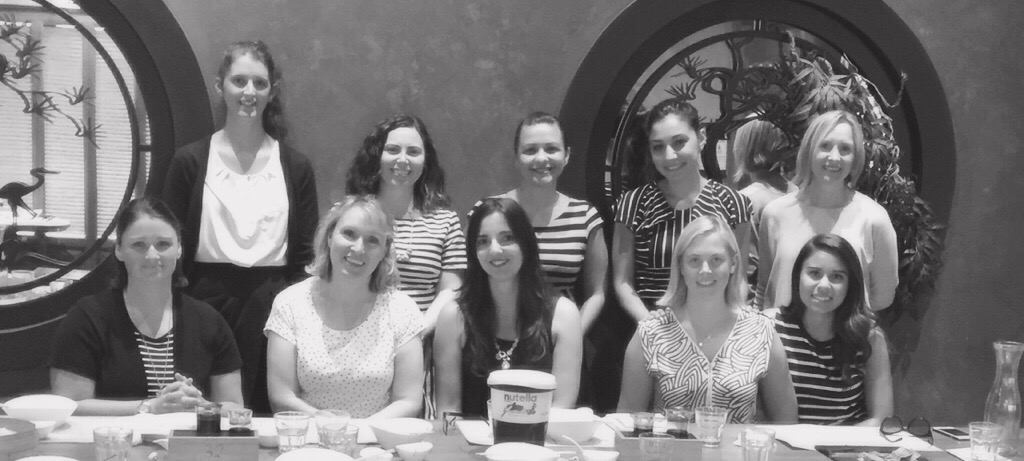
To (in alphabetical order), Alice, Angela, Anika, Carolyn, Elise, Elizabeth, Jane, Kelly, Kim and Kristina: thank you for making my last day so lovely. But more so, thank you for being the people who ‘do’. Each and every day, you come into work and do things alongside – in partnership – with people affected by diabetes to improve their lives in some way. Your commitment to people living with diabetes is second to none, there is no other team like this one in Australia and the work that you do each and every day is, in fact, life changing. We hear that frequently.
I am so fortunate that I got to lead you in my clumsy and sometimes ranty way, and I thank you all for indulging me as you have. I wish you all the best and will be watching – very closely – all your future successes.
With a mixture of sadness and excitement in equal measure, next week I am leaving Diabetes Victoria after over fourteen years. It was a difficult decision to make – I resigned from a job that I genuinely love and from working with a team of women I greatly admire. But fourteen years is a long time to be in one place and the time felt right.
I resigned just before going on three weeks of leave, and even though I didn’t really have any plans beyond finishing up at the end of January, I felt a great sense of calm.
As one of those people who likes to plan everything, have to-do lists and know what is around the corner, this was incredibly out of character for me. What was I thinking leaving one job without having another lined up? And what was I doing leaving something that I love so very, very much? This was nothing short of madness. Where was the plan? Where was the pros and cons list? Where was the back up? (Actually, now I am hyperventilating….)
I’ve always thought this control freak tendency is a response to living with a health condition that doesn’t actually allow you to plan all that much. It also laughs in the face of to-do lists, probably because my to-do list would look like this:

Living with diabetes has meant that I really like to have a safety net in place when I can. So, jumping from one job without another to go to was a huge, huge decision and quite unusual. I did know that I wanted to stay working in the diabetes space, but that was pretty much it.
As it turns out, the planets aligned and I am not going all that far. I will be taking up a national role with Diabetes Australia which is terribly exciting. It’s a part time job, meaning that I will have more time to dedicate to writing – for myself and others – as well as doing some consulting work.
I feel that it’s the right time in my life to broaden what I do, and I feel very fortunate that I will be working in job with a focus on diabetes advocacy and activism. I love change – one of the reasons I stayed so long at Diabetes Victoria was that my role continually evolved and transformed – so I am really excited to see what happens next. Come along with me for the ride!
For work, I signed up to a new healthcare app that would magically and algorithmically measure my health. Health apps frequently annoy the bejeezus out of me. You can tell the ones that have never met a real person and that the boffin who is developing the app lives a lonely life in a cave without regular contact with anything with heartbeat. (Shout out five million to my fave app, MySugr, because it is developed BY people with diabetes FOR people with diabetes so it, you know, works.)
Anyway, to sign up for this one, I had to fill in a few details about my health and wellbeing and then I got a final health score. It was pretty thorough. I added things like my most recent blood pressure, cholesterol reading, height, weight, food (which, despite ridiculously frequent mentions of cupcakes and doughnuts on this blog is mostly fresh, home-cooked and healthy), exercise (ha!) and health conditions. I ticked the ‘no’ box for every single one of those, except, of course, type 1 diabetes.
My overall score came back at 65%. I then was given a list of measures that I could take to increase my health, most of which I already do (other than exercising to which I am a conscientious objector).
I decided to test this little app and re-entered all my data with one little change. This time, I ticked the ‘no’ box for every single health condition.
The magic little algorithm spat out a new result. Suddenly, I was now 90% healthy. The suggestions to improve this number focused solely on doing more some exercise.
So, here’s the question. Am I significantly less healthy because I have type 1 diabetes?
My answer to that question is no. When I consider the level of attention I give to my health today as compared with before being diagnosed with diabetes, I would say that I am a lot more in tune and interested in my health now. I couldn’t tell you what my blood pressure or cholesterol was before I was diagnosed. Can now! I have regular check-ups and screening for things that probably would have slipped under the radar before.
And when I think about friends the same age as me – an age where we start to be reminded of the sorts of things about which we might want to speak with our doctor – I know that I definitely more on the ball than most of them.
Perhaps I have had to reshape what being healthy really means. Maybe pre-diagnosis I would have considered needing to medicate myself each and every day while monitoring my health closely would equal being unhealthy. But that’s not how I think. I think that I am healthy – and part of that is because I do those things. I am not ‘healthy even though I have diabetes.’ I am just … ‘healthy’.
Am I in denial? Have I rewritten what healthy means to accommodate my health condition?
Or is it true. I am healthy. And sure, I could be healthier, but that has to do with laziness and I don’t mean the laziness of my beta cells.
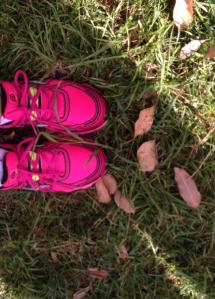
That time I exercised.
Last night, Aaron and I joined a group of friends at the beautiful Sun Theatre in Yarraville for a ‘cinematic experience’. Harking back to the ‘good ol’ days’, we saw a film shot in 70mm Ultra Panavision with an overture at the beginning, an intermission of exactly 13 minutes in the middle and a souvenir program to take home at the end. (We’ll ignore the fact that rather than watching Ben Hur, introduced by Bill ‘Golden Age of Hollywood’ Collins, we were watching Quentin Tarantino’s eighth movie, ‘Hateful Eight’ (H8ful Eight??? Hateful 8???) with all the gore and violence – yet surprisingly still so much grace and beauty – one has come to expect in a Tarantino film.)
Often, there is much chatter about the ‘good ol’ days’. I get it. It was a time where things seemed simpler: kids were kids, adults were adults and everyone knew where they belonged. Milk came in bottles with cream on top….And I walked ten miles to school and twenty miles home, all uphill.
We can look back nostalgically at different periods in history. And it’s funny how history repeats itself. I remember hearing my father telling me how lousy the 1980s music I loved was compared to the music he loved. And yet his favourite music – the Beatles, Frank Sinatra, Simon and Garfunkel – would have had the same said about them. I try to catch myself before I criticise the trash music daughter is listening to now, because I remember how annoying it was (and how distressed I was) when my dad criticised Morten Harket.
Last week, Aaron got into a Facebook discussion that started off being about music and somehow ended up not being about music. The person he was ‘speaking’ with was saying that everything was better in the ‘olden days’.
‘Everything?’ asked Aaron
‘Yes,’ she replied. ‘Everything!’ She then went on to explain what she included in her ‘everything’ – music, food, medicine…
He quickly jumped in and pointed out that thanks to advances in medicine, his wife is still around. The olden days were really not all that great for those living with a health condition such as type 1 diabetes.
Perhaps because I am a beneficiary of all that the ‘modern era’ has to offer, I have no nostalgia or desire to go back in time. Because for me, along with sentimental thoughts of kids playing in the streets until dusk – and playing meant being outside, not sitting in front of a console – and cooking meant making foods from scratch and a telephone call was something made from a phone with a chord, there would be the practicalities of boiling syringes and sharpening needles and an inability to accurately measure BGLs and a life without diabetes technology. Bygone era? No. Be gone!
I would take the modern era and all its so-called short comings in a heartbeat over the ancient era of medicine! Through our rose-coloured glasses we forget that there were days before vaccines and days when life expectancy was shorter. We forget that there were not tests or screening to identify different conditions, that mental health was rarely, if ever, discussed. We forget that only 94 years ago – not that long ago – there was no medication to treat someone with type 1 diabetes.
So with all this in mind, read what is coming next. Here is an update on a couple of the many artificial pancreas projects happening today.
I want a cure as much as the next person. But in the meantime, keep the DTech coming. Please.
Hot sticky days equal revolting sticky hypos and leave me wondering if a move to the tropics would equal a partial diabetes cure.
I’ve mostly been sitting at 30 per cent basal for the last couple of days and not bolusing. At all. But even with that, I’ve been mainlining hypo foods to keep my BGL above 4. Low, low, low.
Until I’m not. Until I am sitting up in the 20s and struggling to manage the nausea and the hypo hangover and the thirst.
As my pump shows double up arrows, I snap into action. I up my basal rate again and bolus, slowly, carefully. And then rage bolus because, for fuck’s sake, at 20 I feel like there is tar in my veins and my head won’t think straight. And eventually, it turns and heads downwards further and further and further. And too far. Where it sticks; for hours and hours.
My CGM trace is a mess, and hard as I try, I can’t make sense of it. There are no patterns. Just long straight lines of low, with a stubborn refusal to respond to any of the juice or glucose I consumer. And then a blip where suddenly, after a couple of hours, it all is absorbed in one hit. And then crashes back down to low, low, low.
I’m not over treating. I only have 15 grams of carbs at a time. I wait 15 mins before checking again. And I force myself to not binge on anything because I know I need to give the glucose time to respond. I talk myself down from the ledge of consuming everything in sight and breathe deliberately, willing my heartbeat to slow down.
But stubbornly, the numbers don’t move up yet and the line stays the same and the alarms wail and I feel like I am going to pass out.
This mess of numbers and I am attached to devices that cost thousands and give me so much information. Makes me wonder how I would ever cope – and how much worse it would be – if I didn’t have the tech.
Fun fact – the beep on my Vibe to tell me that I am low (a noise I have heard A LOT over recent days) is the exact same beep as the pagers used by Foreman, Cameron and Chase on House.
I made a commitment to do the #30DaysOfDex challenge at the beginning of the year. Actually, I have been wearing a sensor continually since the beginning of December; so really, I am at about day 45 now.
I have a love/hate relationship with CGM technology. I adore it far more than I dislike it, but still, there have been times that when I simply can’t face wearing it. But that actually has nothing to do with the actual tech. I wear a device that I truly believe I can rely on – and I know that because calibrations are spot on. Even though I’ve been using this particular type of CGM for about 3 years now, I am still surprised at just how accurate – just how often – the results are.
No, the reason I don’t wear it all the time is because I have found it too burdensome when headspace is not right. When there is too much else going on or I am feeling overwhelmed, I just can’t face alarms and numbers and a machine that demands I be responsive to it.
But through some trial and error, I have found ways to lessen those demands, yet still use the device effectively.
Firstly, I’ve had to identify what I hope to achieve from wearing a CGM. Really, there are two aims: have fewer wild BGL swings and pick up hypos as early as possible with a hope of avoiding.
I also identified what I didn’t really care about and that included having a BGL sitting at 5.5mmol/l the whole time. In fact, I am not even aiming for BGLs between 4 and 8 the whole time. I raised the upper limit to avoid some alarms. I don’t want to hear screeching every time I hit 7 or 8mmol/l. At this stage, I am not interested in that. I don’t mind if I hit 10 or 11 after a meal, as long as it doesn’t sit there all day.
It’s not about the number values – for me it’s about fewer variables, because when I am all over the shop, I feel like crap.
So what have I found after a month and a half with this attitude? By and large, it’s been a successful experiment – am far more responsive to the alarms that sound now and I don’t feel frustrated. And I am able to find patterns. It is incredible how I was low or high at the same time each day without knowing it. Or rather, I probably did think it was the case, but with the data and graphs, there is no way of hiding it. I don’t log – it’s been a long time since I had – so I was relying on memory. ‘Was I low at 3pm yesterday as well? Maybe…. Was I? Or was I high?’
The thing that I have come to understand about CGM (and I may be a little slow to the party here) is that the ability to customise it means that I can find a way to benefit from it, even when I am feeling totally burnt out and can’t be bothered with the minutiae of my diabetes.
I don’t need to have a perfectly straight line for CGM to be considered successful. It’s not a waste of a sensor (and therefore a waste of money) if my BGLs do hit and play around at 10 or 11 for a while. This is kind of a breakthrough for me – I’m feeling quite proud!
Something else that has become clear while wearing CGM is that my BGLs are actually not as unstable as I think they are. Oftentimes, I am sure that I am really high, or moderately high or really high. I know that if I wasn’t wearing CGM and was feeling unmotivated, I would use that as an excuse to not check. ‘I know I am high. I don’t want to see a high number because it will make me feel worse. So I am going to bury this head of mine in this sand over here and forget about diabetes.’ Diabetes? What diabetes? Let’s build a sandcastle!
The reality is that of course my numbers are not perfect, but they are actually, most of the time, okay-ish. And I am generally okay with okay-ish! Okay-ish keeps me sane and keeps me happy.
CGM makes me think about my diabetes more. It makes me in tune with it more and it does make it easier for me to manage. Perhaps I have taken a long time to work out how CGM works for me – maybe I have wasted some time or not worn it when I could have benefitted. But for now this is what works really well. And it’s a really good way to start the year.
When I look back at the numerous (i.e. far too many) encounters I have had with healthcare professionals, some stand out. Fortunately, a lot of the time it is because the care I have received has been outstanding and delivered by wonderfully caring and respectful professionals. But there have been times where the experience was no so good.
One of the stories I tell when speaking to medical students about what makes for good communication comes from a very difficult time. I was in hospital with terrible stomach issues. A new doctor had been referred to me and for the ease of this tale, we will call him Professor Poor Communication Skills – Prof PCS for short.
Prof PCS was an expert in his field and by the end of my time in hospital, I actually quite liked him. He was loud and direct and I appreciated his no-messing-around attitude. Plus, he worked out what was wrong with my stomach, stopped the pain and got me out of hospital.
However, it took a while – and a little bit of coaching – for me to come to like him.
When Prof PCS came to see me for the first time I had already been in hospital for about a week. I went through what had been going on and he ordered a few blood tests and x-rays. With that, he promised to return the following day with the results. I didn’t really mind the way that he blustered in and out in a flash and didn’t explain anything because really, there was nothing to explain! I didn’t mind that he didn’t give me details of the tests he was running because I could kind or work them out and figured I could ask questions the next day.
I didn’t really care for the way he had stormed in and not introduced himself. Or the way he didn’t make eye contact when he spoke.
The next day came and I waited for him to do his rounds. Late in the afternoon, I heard his booming voice in the corridor. I remember thinking that he was speaking terribly loudly to his patient about their test results and that everyone could hear.
As he rounded the corner into my room, I realised that he had been talking about my test results. By the time he was standing at the end of my bed, he was halfway through a sentence and announcing all sorts of things that didn’t make sense because I had kind of missed the beginning of what he had been trying to say.
I looked at the nurse who was standing slightly behind him. I was confused. And I was actually a little angry.
‘Excuse me,’ I said to him. And then repeated myself. ‘Excuse. Me.’
‘Yes?’ I don’t think he was used to being interrupted because he looked a little surprised.
‘Hi,’ I said. ‘Can we just stop for a second?’ I took a deep breath, collected my thoughts and started.
‘For this to work,’ I waved my hands between the two of us. ‘I need you to be in the same room that I am in. I need to be able to see you when you speak. I need to be able to ask you questions and be clear that you are speaking to me. I need to see your body language and your eyes and be clear about what you are saying. I do not want you to start your consultation with me whilst you are still in the corridor. Is that okay?’
He looked stunned and completely lost for words. The nurse smiled.
I can’t believe that I was the first person to have ever pulled him up on this behaviour, but when he left the room (after explaining things very clearly, answering my questions and telling me what I could expect next) the nurse said that she had never seen him look stunned before. She also said that other patients had commented on how uncomfortable they were with his ‘bedside manner’, but no one had ever commented on it directly to him.
I was reminded of this encounter the other day when I was reading about Kate Granger and her #HelloMyNameIs campaign.
Kate is a doctor – a geriatrician and a writer. She is also has terminal cancer.
When she was an inpatient, she noticed that many of the healthcare professionals looking after her did not introduce themselves. She had no idea who was speaking to her about her care. She (and her husband) decided to do something about it. This from the #HelloMyNameIs website:
‘…we decided to start a campaign to encourage and remind healthcare staff about the importance of introductions in the delivery of care. I firmly believe it is not just about knowing someone’s name, but it runs much deeper. It is about making a human connection, beginning a therapeutic relationship and building trust. In my mind it is the first rung on the ladder to providing compassionate care.’
It’s incredible how such a simple idea has taken flight. Events have been held throughout the UK and there have been over 800 million impressions on social media. The more I have read, the more amazed I am at just how far-reaching this initiative is and how entrenched it has become in some places.
It is indeed wonderful.
However it is also kind of shocking that we need a campaign to remind people to introduce themselves and remember the importance of taking the time to connect with people at a time where they are possibly feeling very vulnerable and scared.
The next time I speak with medical and nursing students about effective communication, I will be holding up #HelloMyNameIs as an example of doing things right. And it will be the perfect anecdote to balance out the Prof PCS story.

Yesterday, we took the kidlet to her new orthodontist. We had been referred from her dentist and this was going to be the first discussion about the kid needing braces. She had a bit of nervousness about the whole process and wasn’t feeling all that great. She was also concerned that there would be pain involved. But, as I explained, this was just a chance for us to hear what was ahead and hopefully be able to ask any questions we might have. Plus she could meet the people at the clinic who she would be seeing regularly. And I also reminded her several times that if she didn’t feel comfortable with what she saw and who we met, we could go elsewhere.
The second we walked in, I knew that we would be staying with this clinic. The first thing we noticed on the wall was a white board which said ‘Welcome to today’s new patients’ and we spotted our kid’s first name up there with a few other names. The kidlet felt pretty good about that!
We walked to the front desk, and a lovely woman smiled at us all and turned her attention straight to the kidlet, saying hello and welcoming her to the clinic and introducing herself. She made eye contact the whole time with the kid before turning to hand me a clipboard. ‘Would you mind filling this in please? And, if it’s okay with you,’ she said turning back to the eleven year old, ’I’d like to show you around.’
The two of them went on a little tour of the practise and I heard them chatting away, the kidlet asking questions as each different space was introduced. When the kid returned to us in the waiting room, she was holding a clipboard of her own. ‘I need to fill this in,’ she said, and took great care answering questions about her likes and dislikes and interesting things about herself.
A short while later, the dental nurse came into the waiting room and, again, went straight to the kid. ‘Hi, I’m K,’ she said holding out her hand. ‘Is this mum and dad?’ She asked turning to us.
‘Now, I need to take some photos – just in that room over there. The room is tiny – are you okay to come by yourself? Or you can bring mum or dad if you’d like.’ The kidlet jumped up and smiled, clearly very pleased at being asked directly what she wanted. ‘I’ll be fine,’ she said.
The rest of the appointment continued the same way. When we were shown into the treatment room, K explained exactly what would happen once the orthodontist entered the room. The orthodontist welcomed the kidlet first and then introduced herself to us. The kidlet was asked regularly if she had any questions and anything she did ask was answered efficiently and clearly. She was congratulated on asking smart questions (mostly different versions of ‘is it going to hurt’) and no one tried to rush through things or to dismiss any of our questions.
The practical side of things – i.e how we would need a second mortgage to afford the treatment – was explained clearly to the grown-ups in the room and the ‘rewards’ system (a points program which earned gift vouchers) was explained to the kid. She looked delighted!
We left the clinic feeling very well informed. All our questions had been answered and we knew exactly what was going to happen next. The kidlet felt really positive about the whole experience too.
This is ‘patient-centred’ care at its best. It’s not just lip-service – it was far more than the staff all being overwhelmingly lovely. They were genuinely focused on ensuring that everyone knew what was going on and that the kid understood that this was all about her. She was given options – each of them explained to her – and then we were asked to think about them and make decisions, with the option of being able to ask further questions if needed.
So what does this level of care and attention take? It certainly took no more time that would be expected of a first consultation. There were no more staff members involved than at any other clinic offering the same service.
But what it did take is care and attention and an understanding of the ‘customer’. And respect. A lot of respect.





 Diabetogenic