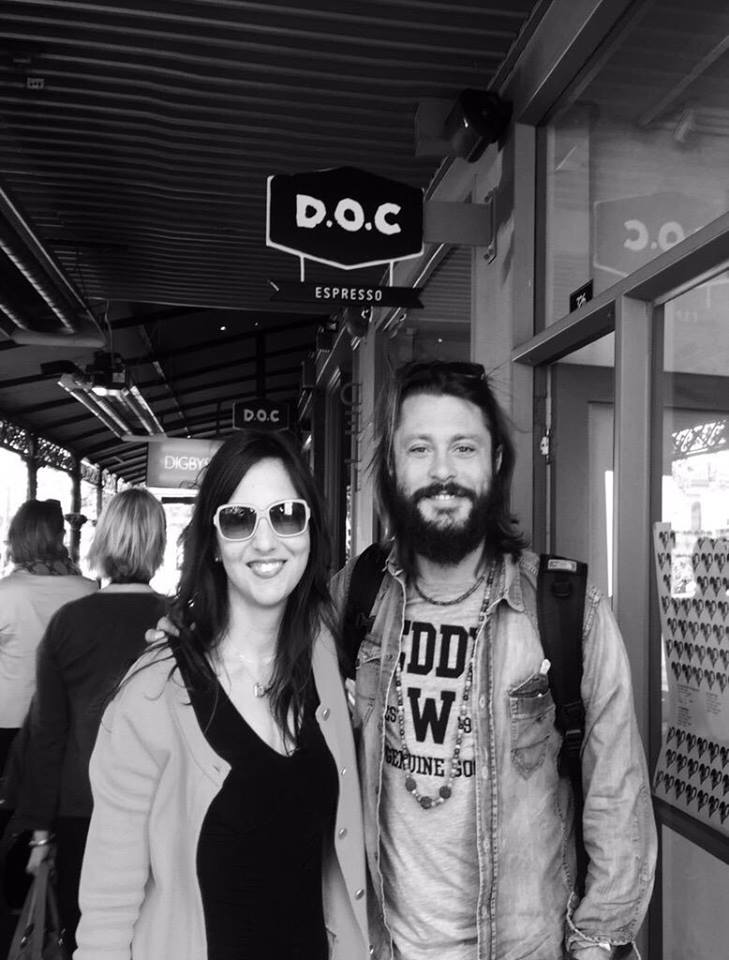
Yesterday I spent the day with this guy:
And you can read all about it over at the Diabetes Australia – Vic blog.
So, so glad it’s Friday! Some Miles Davis was suggested. So here you go:Sketches of Spain.
real life with diabetes
Yesterday I spent the day with this guy:
And you can read all about it over at the Diabetes Australia – Vic blog.
So, so glad it’s Friday! Some Miles Davis was suggested. So here you go:Sketches of Spain.
One night, when the kidlet was three years old, we heard her cry out. She had been in bed for an hour or so and we thought it was simply one of her usual I’m-not-tired-so-I-will-try-every-trick-in-the-book-to-not-have-to-go-to-sleep tactics. She is extraordinarily good at these!
We went into her room to find her crying – whimpering, really.
Parents: ‘What’s wrong, darling?’
Kidlet: ‘I stuck a pebble up my nose.’ (It actually sounded like ‘I stuck a pebble up my dose’ because her nose was, of course, blocked. She helpfully illustrated her story by pointing to her left nostril.)
Parents: ‘What?’
Kidlet: ‘I stuck a pebble up my dose.’
Parents: ‘Darling, what? Why did you do that?’
Kidlet: ‘To keep it safe.’
I had a look and sure enough, a pebble was firmly wedged up her tiny left nostril. I knew that the worst thing would be to try to get it out with a pair of tweezers – I would only push it further up, making it even harder to remove.
‘I guess we’re going to the hospital.’ I said to Aaron. Now, we’re like pretty much any other parents. We would avoid a trip to A & E at all costs. But we knew that there was no escaping this one!
So, we bundled the kidlet into the car and headed to the hospital, fortunately less than a ten minute drive from home.
As we walked up to the triage desk, I could see that it was definitely a REALLY busy night. There were parents and kids everywhere; kids that looked really, really sick. We walked in with our skipping, bright, happy three year old. Who had a pebble stuck up her nose.
‘Hi,’ I said to the triage nurse. ‘Our three year old stuck a pebble up her nose. It’s stuck there now.’
The triage nurse didn’t even look up. Clearly this was not a rare occurrence.
We gave all our details and were told to head to the waiting room.
‘How long’s the wait?’ I asked, knowing full well that this is the question that triage nurse’s despise because the answer they want to give is ‘How long is a piece of string’ but they have to be polite.
‘A while. About four hours. Maybe a little more.’ She said. Again, she barely looked up. I guess that it must be soul destroying to repeatedly see that look on the faces of parents who have just been told that they will not be sleeping, possibly ever again.
By this stage, the kidlet had turned into the happiest and most social kid in the world. Sure she had a pebble stuck up her nose, but it was night-time and dark and she was out and there were people around. ‘I have a pebble stuck up my dose,’ she told anyone who would listen, pointing to her nostril.
We asked her to sit with us. ‘Sweetie,’ I said. ‘Everyone else in here has come to the hospital because they are really, really sick. That is usually why kids have to get out of bed and come to the hospital. They have things that it would be better if you don’t catch. So please sit here with us. And absolutely do not speak to anyone holding a bucket. We do not want you to get gastro. Daddy and I do not want to get gastro. Got it? Don’t. Talk. To. Anyone. With. A. Bucket.’
We settled in for what we were expecting to be a long wait, so were very surprised when after about 10 minutes, a nurse called out to us.
‘Now,’ she said to the kidlet. ‘What do we have here?’
‘I have a pebble stuck up my dose/nose.’
‘Hmmm, let me see.’
She had a look and then turned to us. ‘Okay. That’s really stuck in there! I think she’s going to need to see the doctor, so I’m afraid you are in for a long wait. But let’s just try something; it may work. It may not.’
We were prepared to try anything to avoid a four hour wait with all the bucket children back in the waiting room!
She turned to the kidlet. ‘I want you to lie down on the bed, and open your mouth, okay?’
And then she turned to me. ‘And I want you to block her right nostril – the one without the pebble. Then, I want you to blow into her mouth, really hard. It may dislodge the pebble making it possible for me to remove it.’
‘Really?’ I said.
‘It may work, it may not,’ said the nurse. ‘Let’s try it.’
She explained what we were about to do to the kidlet who immediately asked, ‘Is it going to hurt?’
‘Not at all,’ promised the nurse.
I pressed the kidlet’s right nostril, blocking it tightly and leant down over her. ‘A really deep breath – hard!’ the nurse instructed.
I did as I was told and blew into the kidlet’s mouth.
And sure enough, the pebble not only became dislodged, but shot out of her nose. And across the room.
Apparently, the look of shock and surprise on both my and the kidlet’s face was hysterical because the nurse and Aaron burst out laughing.
I recovered from my surprise, stood up and threw my arms around the nurse. And then the kidlet. We couldn’t get out of the hospital fast enough!
I was reminded of this story the other day when I was speaking to a parent who had spent the evening before in A & E with her daughter, who has type 1 diabetes. Thanks to a tummy bug, her daughter was seriously dehydrated and dealing with very high BGLs.
The conversation shifted to the amount of time she has spent in doctors’ offices, hospitals and at the GP in the 12 months since her daughter’s diagnosis. It amounted to hours and hours and hours and hours. Her daughter had missed days of school because it had taken so long for a correct diagnosis (their GP kept telling them it was just a virus and her daughter needed rest). After a couple of weeks of this, she was rushed to hospital in an ambulance, drifting in and out of consciousness, before they were told she had type 1 diabetes.
‘I’m so sorry,‘ she said to me after we’d been speaking for about an hour. ‘I sound like I’m whinging.’
‘You absolutely don’t!’ I said. ‘And even if you did, I think you have something to whinge about.’
The truth is that she really wasn’t whinging. She was being very matter of fact about her daughter’s diabetes journey so far. She didn’t complain about any of the HCPs she had seen – although it would have been completely warranted if directed towards the bloody GP and his misdiagnosis.
She asked me about our kid and if she had ever been taken to A & E. ‘Only once,‘ I told her. (Actually, there was a second time when she was about 4 and had a really high fever, but we ended up at the GP clinic at the Children’s instead of having to deal with the three hour wait of the emergency department.)
‘Really? Wow! Lucky you!‘ she said. ‘Was it for something serious.’
‘Um, no. Not so much.’ I said and I told her the pebble up the nose story. She loved it – she thought it was hilarious.
But that was it; one visit to the hospital with a perfectly healthy kid who wanted to keep a pebble safe so she hid it. Up her nose. And we were out in less than an hour thanks to a superhero nurse called Nicole!
Kids with diabetes learn early on that they will be spending more than their fair share of time visiting HCPs. Their visits to A & E are often for much nastier things than a stuck pebble. Their visits last much longer than an hour.
I thought about this after I had said goodbye to the mum I’d been chatting with. In fact I thought about if for a long time. One A & E visit, appointments for her immunisations and maybe one, two at the most GP visits per year. That’s our kid’s encounters with doctors.
The mum called me the next day and asked if it would be okay to tell people the ‘pebble up the nose’ story.
‘Absolutely!’ I said. I asked her if I could write a little about our chat.
‘That’s fine,’ she said. ‘We all learn from each other. I really learnt a lot from you yesterday. Talking to adults with diabetes is really helpful for me.’ Then she paused. ‘Although, really, that trick about how to dislodge a stuck pebble from a kid’s nose is probably the most useful thing I’ve ever heard.’

This is me in a Nutella t-shirt.
Did you send it to me? It arrived on Monday, sent to me at work with a lovely ‘Royal Mail’ stamp on it, suggesting that someone from the UK popped it in the post.
I would love to be able to say thank you to the person who sent it to me, so if it was you, please let me know so I can send you a virtual (Nutella) cupcake!
It takes me somewhere between 12 and 25 minutes to drive to work in the mornings. I drive down a terribly busy road which carries trams, cars, trucks and bikes. People dash across the road whenever they can. It is hectic!
Yesterday morning, I was sitting in traffic, mentally counting down how long it would be before I got to my morning café for my take away coffee.
I yawned. ‘Need coffee,’ I thought. I yawned again. And again. ‘Oh, shit,’ I thought. Even though I felt fine, the incessant yawning gave it away. I was low.
I reached into my handbag and pulled out the pink and red Marimekko purse and, taking advantage of the banked up traffic, pushed a strip into the bottom of the meter, pricked my finger and wiped the drop of blood across the strip.
2.8mmol/l.
I swore. Loudly. So loudly that the woman in the car next to me looked over at me. We both had our windows closed.
The road is a clearway in the mornings; I couldn’t pull over. I put on my indicator, silently begging the traffic to move so I could turn left into the street ahead.
I grabbed a handful of jellybeans from my bag, and shoved them down my throat, chewing furiously as the cars in front of me inched forward.
Finally I could turn left. I pulled into the side street and parked. Turning off the engine, I sat there chewing and gulping.
How had this happened? I scrolled back through my meter and saw that less than 20 minutes earlier, just before I left the house to drop the kidlet at school, my BGL was 5.9mmol/l.
My eyes filled with tears at this point – typical response when I think about how diabetes impacts on those I love. I swiped my hand across my eyes, cursing (again) as I saw my mascara had run.
Involuntarily, my hand moved to my stomach where my CGM was fastened. As I was rushing around getting ready that morning, my pump pulsed and squealed, telling me that the sensor was dead after having been in for seven days. I knew I just needed to reset it – it was still reading beautifully.
But I didn’t. I didn’t restart it. I just shoved my pump away, thinking that I’d maybe, maybe, not sure, perhaps start it later in the day. If I felt like it.
I swore again – this time at myself.
I need this. At the moment, I need this. I am already feeling so lousy at diabetes – second guessing everything – I need whatever help I can to help me.
I looked at myself in the rear-view mirror. ‘I need this,’ I told myself, tears welling again.
After about ten minutes, I rechecked my BGL and it was back up over five. I was good to drive and make my way to work.
I went to start the car and stopped. I pulled my pump out from my bra and scrolled through the menu until I found what I was looking for. ‘Start CGM Sensor Session’.
I pressed start.
There are some weeks that goals are kicked, to do lists get ticked and I feel a sense of great achievement and success.
And then there are weeks where stuff just gets done – nothing major, nothing particularly significant, but still good.

Things I have not achieved and had hoped to:
It’s Autumn here in Australia. We have the most beautiful Japanese maple in our front garden and the leaves are just starting to turn a stunning deep red colour. So, here’s a seasonal song from Eva Cassidy for today’s Friday listening. Have a lovely weekend.
Last night, I rather smugly put this picture up on my Instagram:

‘Look at me,’ the picture screams. ‘I am winning at diabetes!’
And then, this morning, after eight hours of uninterrupted sleep, this was how my pump screen looked:

W.I.N.N.I.N.G.
So, riddle me this, why did I wake – after eight hours of uninterrupted sleep – feeling so completely and utterly exhausted? I wasn’t up overnight to go to the loo or let the dog out or deal with a low blood sugar. I just slept. Peacefully.
There was no explanation.
Until I looked at this:
And this:

And this:
And then it all made sense. Except it didn’t. How had that happened? Had I sleep-walked into the kitchen, sleep-baked a pavlova and sleep-eaten it? Had I reached over in my sleep and eaten some of the jelly snakes on my bedside table?
The answer is no. All I had done in those eight hours was sleep.
Without my CGM on, I would have had that pre-bed BGL and the morning BGL as the only pieces of information. And it would have looked damn pretty. I would have spent all day thinking about how lovely and pretty and stable by BGLs had been overnight.
But with my CGM on, I know a lot more.
Which is great, except I’m not sure that I want to know. Because now I feel like I have to do something about it and quite frankly, I am still not in the headspace to be analysing glucose levels and making basal changes and being all diabetes-smart.
My CGM is on this week as a security measure. I really didn’t feel like putting it in, but I knew that I needed to. I am counting down until I can rip it out on Friday morning, which is a far cry from trying to get as many days as possible out of each sensor as a cost-saving measure.
I now know why I am not feeling particularly rested, but I feel even less rested with all this information at hand. THIS is when data is paralyising – when we just don’t have the ability – for whatever reason – to do anything with it and all it does is overwhelm us. Ever more.
I’ve been thinking about the word chronic recently. It’s a word that gets thrown around a lot in health. Simply put (although there is nothing simple about it!), when used in relation to health conditions, it means ‘ongoing or constantly recurring’.
Diabetes fits quite nicely into the definition. It’s a bit of both – and ongoing component with a constantly recurring nature too. As far as I’m concerned, the ‘ongoing’ part of diabetes is a given.
Undeniably, it gets me down; of course I get sick of it. But to a degree, I just have to accept it. It’s there and it’s not going anywhere.
The real issue – the thing that makes it extra rough – is the ‘constantly recurring’ side of things. I am really not so good at this stuff; the things that go away and then reappear. That is the part that makes it difficult.
With diabetes, those recurring things – whether it be a round of nasty hypos or high BGLs that won’t go away and are really tough to understand or explain – are always harder for me to manage after a period of diabetes just chugging along.
Perhaps I get lulled into a false sense of security and the sudden ‘crap-ness’ throws everything into chaos. Perhaps I have this ridiculous idea that with almost seventeen years under my belt I should be better at diabetes than I am. Perhaps it’s the fact that I like routine and once I’ve settled into one, I don’t like to have to change for any reason. (Perhaps that last sentence could be condensed into two words: ‘I’m stubborn’.)
I’m not sure, but what I do know is that, in amongst the crap, I can – at least, I need to – summon up an attitude of ‘this too shall pass’. Because I know it will. It may take longer than I’d like, it may be harder to get through. But I know that it will pass.
And then, I will be left with the ongoing stuff. The life-long, never-ending, forever nature that is a chronic health condition like diabetes.