There is so much around at the moment that I wanted to write about properly. But it’s holidays and there is champagne and my kid made brownies with toffee popcorn on top and the neighbours came over for drinks and didn’t leave and I need to pack to go to New York.

So here are some links for some holiday reading.

THIS piece

The title of this piece sure seems to have riled up some people, but bloody hell, just read it. Anna Floreen, who is pretty damn awesome, has written this fabulous piece, sharing her experiences of going through the teen years with diabetes. A must read for parents of kids with diabetes to get some insight into what young people think about dealing with diabetes.

THESE biscuits

These have become my holiday favourites this year and I’ve made about 4,326 batches of them! Four ingredients, super-dooper easy, delicious and look impressive. Plus, they are gluten free, so great as a gift for friends with coeliac disease. What more could you want?

15391413_10154776945485789_3581103733379342503_o

I’ve had the recipe for them scrawled in my recipe book for years – I can’t remember where I first copied it down from – and this from the New York Times is pretty much how I have been making them.

THIS news

Great update about the work Ed Damiano is doing on the Bionic Pancreas just published in The Lancet. The study has shown some pretty exciting results. It’s getting close – really close – and that is just so damn exciting! Maybe we can out one on our Xmas lists next year…

THIS study

If you are a young woman (aged between 16 and 25 years) living in Victoria, Australia, you can take part in a women’s health study, which is looking at the relationships between lifestyle behaviour, physical health and mental wellbeing.

You’ll be reimbursed for your time, so get involved! All the details are here.

THIS poorly worded sign

For the love of all that is good: proof read, people. Please, proof read!

15541918_10154822954295789_2465972373535370648_n


THIS good news

Great news from the Australia Diabetes Society who has just released a new position statement about scuba diving and diabetes, recognising that motivated individuals with well-controlled diabetes (both insulin-requiring and non-insulin requiring), may be able to safely participate in recreational diving.  

THIS story

You know, there are some people in the DOC world who are worth their weight in gold. Lou Vickers is one of them. Read her story here.

THIS (slightly old) article

This piece, from Dr Katherine Barnard and Dr Jill Weissberg-Benchell, was published just after ATTD this year (back in Feb) and provides comment on the relationship between diabetes technology and psychosocial aspects of diabetes. A very interesting read, especially considering the way DTech is moving!

THIS position statement

 The National Health and Medical Research Council and the Consumer Health Forum of Australia have released a revised statement about the involvement of consumers in health and medical research. 

THIS time of year

So, we’re heading off for a couple of weeks and I’ll occasionally be checking in, but probably not much as we’ll be spending a lot of time trying to keep warm on the cold streets of New York.

Thank you so much for reading, commenting and sharing Diabetogenic this year. The love and support I constantly am afforded by people who read posts here is astounding and makes living with diabetes that little bit easier. I wish I could adequately say just how grateful I am.

I’m looking forward to an exciting 2017 – there is already so much on the horizon with exciting projects, collaborations, activities and plans being hatched. It’s shaping up to be a very busy year, so I’m looking forward to a little downtime over the holiday time.

Season’s greetings to you all. I hope you manage some rest, relaxation and quiet reflection in the coming weeks. I’ll see you in the New Year.

Season’s greetings from my clan to yours.

It’s day four of holidays for me. Already lazy mornings, easy days and gentle plans to meet up with friends and family are clearing my mind, and I can feel the backlog of stress and exhaustion – the things that are part of everyday life – start to make way for sharp thinking and smarter decision making.

And in terms of diabetes this means more attention paid to alarms and alerts on my various devices: the calibration alert on my phone for my CGM gets attended to immediately, the low cartridge reminder on my pump is heeded at the first warning. I stop and think before blindly acting, and calmly troubleshoot as I go along.

My head is clearing. I am starting to think about diabetes the way I like, at a level that feels safe and sensible and manageable.  I make rational decisions; I take the time to fine tune what I am doing. Diabetes has a place that is comfortable, I feel better overall and far more capable of ‘doing diabetes’.

miles-study-2-logo-hires-land-colour-e1426127802906Earlier this week, the findings from the Diabetes MILES-2 study were launched. (Quick catch-up: MILES stands for Management and Impact for Long-term Empowerment and Success and is the work of the Australian Centre for Behavioural Research in Diabetes (ACBRD). The first MILES survey was conducted back in 2011, with over 3,300 Australians with diabetes taking part. The MILES Youth Report was launched in 2015, reporting the experiences of 781 young people with type 1 diabetes and 826 of their parents. This study formed part of the NDSS Young People with Diabetes Project for which I am the National Program Manager.)

The MILES reboot (Diabetes MILES-2) once again provides a snapshot of the emotional wellbeing and psychosocial needs of Australian adults living with diabetes. Over 2,300 people participated in this study and the results are comparable to those from the first MILES study. The Diabetes MILES-2 survey included the addition of some issues that had not been investigated in MILES, such as diabetes stigma.

Some key findings from the report include:

  • 17% of survey respondents had been diagnosed with a mental health problem at some point of their life
  • The respondents most likely to experience moderate-to-severe depression and anxiety were those with insulin treated type 2 diabetes
  • The respondents most likely to experience severe diabetes distress were those with type 1 diabetes
  • The aspects of life reported by all respondents as being negatively impacted by diabetes included emotional well-being (for those with type 1 diabetes) and dietary freedom (for those with type 2 diabetes)
  • More stigma was experienced by people with type 2 diabetes using insulin as compared with people with type 2 diabetes not using insulin

Anyone affected by diabetes knows that the psychological and emotional side of diabetes is as much a part of the game as the clinical tasks. In fact, for me, it is the most difficult to deal with. What’s going on in my head directly affects how the I am able to manage the practical side of the condition.

When my head is clear – the way it is slowly, but surely becoming as I settle into holiday mode – and I have time and space to rationally think about, and focus on diabetes, the routine tasks seem manageable. The numbers present as nothing more than pieces of information: they allow me to make decisions, act, or not act. I am able to be practical and seem to have my act far more together.

But for the most part, diabetes is not like that for me. I don’t manage my diabetes the way I want and that is mostly because I am simply unable to due to the distress and anxiety I feel about living with a chronic health condition that terrifies me a lot of the time. I feel overwhelmed and, in the mess of life, diabetes becomes impossible. I am not proud of this – but I am honest about it.

If I am perfectly truthful, there is nothing in this report that surprises me. But it does provide validation for how I am feeling – and how many others with diabetes are feeling too. And I am so pleased that there is evidence to support what so many of us who live with diabetes feel.

It’s no secret that I am a very big fan of the ACBRD’s work. Diabetes MILES-2 once again shines a light on the ‘other side’ of diabetes and serves as a reminder that unless the psychosocial side of living with this condition is addressed, we simply can’t manage well the physical side. And it forces those who want to believe that diabetes is a matter of nothing more than numbers and mathematical equations to consider the emotional wellbeing of those of us living with diabetes each and every day.

The MILES 2 report can be read online here.


Christmas is a mere week and a half away and as I write and rewrite my list of gifts that need buying (seriously – you’re all getting book vouchers!), I’ve decided to think about what gift I’d like for myself. (Apart from a skirt I impulse bought the other day, justifying the purchase by calculating cost per wear, the number of times I would wear it between now and the New Year and how it is totally trans-seasonal. And now I hate myself for being a person who says ‘trans-seasonal’.)

Anyway, here’s the letter I’m writing to the diabetes god…angel…devil…Santa…Satan… whatever, with a list of all the things s/he could rustle up for me.

Dear Diabetes Deity

So, with Xmas looming, I thought I’d make it easy and write to you with a list of exactly what I need. Don’t bother wrapping any of them. Just deliver under the tree (or as required) on Xmas morning for squeals and girly-claps of excitement and gratitude.
Also – what do you like to eat? Help yourself to the cookies, milk and carrot sticks. But I figure that you would probably like something more difficult. Like, I don’t know, the flesh of a recently risen from the fire phoenix marinated in the tears of a newborn unicorn. Please send me:

  • Working beta cells. Look, if you could manage to just deliver me a small packet of rejuvenating beta cells that will make their own insulin, that would be awesome. And some easy, DIY way to get them situated into my body – maybe think Alice in Wonderland for inspiration.
  • Also – I’ll need some ‘turn off immune reaction serum’ (happy to take it in tablet form, or even an injection because I’ve become accustomed to sticking needles into my skin) to stop my stupid body from attacking the new working beta cells.
  • As the first two are completely unlikely (which would suggest your ‘deity’ status is completely unworthy), a gift from the fairies at Poppy Medical would be most welcome. And then maybe I’d start wearing a medic alert bracelet, although no promises. (For the record, this is the one I like best…)
  • I found my last bottle of Glucolift glucose tabs hiding in a drawer the other day and nearly wept. It’s my last bottle and I need more. Please send more.
  • This necklace, because I reckon just the thought of the sugar in a slice of fairy bread, a Bubble-o-Bill ice-cream, Golden Gaytime ice-cream and iced vovo biscuit will save me from ever going low again. (Disappointingly it’s currently out of stock, but I found this one. And you bet I bought it…)
  • A personal diabetes fairy/assistant to take care of scheduling all appointments, health checks, purchasing of diabetes supplies, ensuring prescriptions are up-to-date and current, ordering and collecting insulin, reminding me when I need to to a set change, refilling low supplies and any other ‘I have to do this for the rest of my life’ diabetes tasks for…well…for the rest of my life. Or until there is a cure. Either / or.
  • My low symptoms. It would be really, really, really, really awesome if you could find where they’ve been hiding and return them to me so they can get back to alerting me of impending hypos.
  • The correct carb count for every single food I ever intend to eat for the rest of my life. And the insulin dose to match it perfectly each time!
  • Sleep. Uninterrupted.

I think that’s it.

Oh wait. There is one more thing: Insulin. Lots of it. But that’s not for me, actually. It’s for all the people around the world who cannot access and afford it. Could you just bundle up a year’s worth for everyone and leave it in an insulated pack for them to find. In fact, if you can manage that one, don’t worry about the rest of the list.

Except maybe that necklace

Much love and festive cheer,

Renza signature

I picked up my phone for the fourth time in about three minutes before I realised I was doing it. The reflex-like action was a command from my mind, telling me it was time to check my Dex app. And so, quite dutifully, I was. I picked up the phone, opened the app and looked at the number staring back at me. But the number was not registering at all.

I was distracted and in the midst of editing an article at work, but knew that I should get a look at what my number was at that moment.

After the fourth time of checking, but the number not sinking in, I paused, shook my head and focused: phone on, app open, look at number, register. Nice steady line, steady in range number. No action required. I put down my phone and went back to my editing.

I look at my phone dozens of times a day for diabetes purposes. I look at the number and most of the time, I think about what it means and then either act, or don’t. At the moment, it’s not registering a lot of the time. I’m tired, it’s the end of the year and my thoughts are drawn a lot to the Wintery Streets of New York where we’ll be in two short weeks. I’m frantically trying to tie up loose ends so I can start the work year afresh.

I’m missing the occasional bolus for the same reason, my preoccupied mind not remembering to give a little insulin for my morning coffee or the (significant amount of) icing I licked off my fingers after decorating Xmas cookies. And it’s taking longer than usual to register this forgetfulness, meaning numbers higher than I’d like for longer than I’d like.

We’re all weary now. The year is long and by December many of us feel like we are barely limping to the finish line. I am in denial about how few days there are until Xmas because the number of presents under the tree can be counted on one hand…and I am from an Italian family with a million or so gifts needing to be purchased. (At least the tree is up and the house looks festive…)

But the diabetes tasks are always there and always need to be done – all the time. The relentlessness of what needs to be done doesn’t increase in December, but for some reason, the way I respond has become less meaningful. There is a level of mindfulness missing from my diabetes thinking. I don’t think I’m being complacent – it’s not that I’ve stopped any of the self-care – but I am certainly less attentive.

It’s like when you walk into a room and can’t remember why you’ve gone in there, or open a cupboard and have no idea what you wanted to grab from the shelf, staring at the jars and tins clueless-ly – a kind of mindless and mechanical action, knowing there was a planned outcome, but you’ve no idea what it was anymore.

I’ve been reaching for a name for this feeling. It’s not as overwhelming or scary as the burnout I’ve experienced in the past. It’s distraction and boredom, my mind quick to dash to other thoughts, forgetful and absentminded.

Maybe inertia is the word. Or torpor. Or perhaps ennui. Yes! Ennui! Is diabetes ennui a thing, because that is exactly how I am feeling today as I reach for my phone. To check my number…Again…

You may not have noticed, but the festive season is upon us. (Actually, according to Woolies, the festive season has been upon us since the first week of September which was when I first saw mince pies on their shelves. And as Louden Wainwright III says ‘It’s a season, it’s a marathon….’ Sorry; digression.)

Anyway, it’s the festive season and with it comes lots of messaging about eating with diabetes during this time of the year. Now, I’d like to leave my diabetes behind whilst eating during the holidays, but I’ve come to learn that diabetes is a shit and doesn’t work that way. Because, diabetes IS for Christmas….and every other bloody day of the year as well. Happy holidays!

I saw an article this morning about how to keep your eating and drinking in check during Xmas and other parties, and by the time I finished reading, I was weeping uncontrollably and wanted to shoot myself. (Except not really because I’m a huge supporter of gun control and don’t own a gun.) I also wanted a drink, but it was 6.45am and I was feeling the judge-y eyes of the writer staring at me and the Moscow Mule I was about to make for breakfast.

All articles about diabetes and festive-season-eating demand limiting everything – alcohol, food, happiness. Quite frankly, limiting alcohol at family gatherings is not an option for many people, which seems to be lost in the horrific and laughable suggestion of taking your own water to water down drinks. (I lost the will to live at that suggestion.)

Obviously, a blow-out is best avoided, but that is wise even if you don’t have diabetes. There is nothing worse than feeling as though you literally cannot move from the sofa – mostly because it means you could be stuck sitting next to a distant relative who wants to tell you, in detail, about their recent adventure in passing kidney stones, or (worse) about their neighbour who died from diabetes complications. Diabetes – the gift that keeps on giving.

So, here are some of the things I’ll be doing to survive the next few weeks.

  • Acknowledge that this time of year is about food and that is okay. This is definitely the case for my family, and I am already counting down the days until I gorge myself on my mother’s freshly made zippoli.
  • Throw any thoughts of guilt out the window (along with suggestions of BYO H2O).
  • Make a game out of my CGM by seeing if I can spell out any swear words in the ain’t no mountain high enough/valley low enough trace.
  • Remember that even though I have diabetes, I have every right to enjoy whatever I feel like eating. Or don’t feel like eating. The low(er) carb thing may or may not stick over the festive period. Obviously, my mother’s zippoli are carb- and fat-laden parcels of perfection, so the low(er) carb thing can fuck right off once they are set down in front of me, but I probably will still avoid other carb-y things because dealing with high glucose levels or inadvertently overdosing on insulin does not a festive occasion make.
  • Seriously, give me a huge bowl of cherries for dessert and I am a happy chicken. (The non-watered-down alcohol has probably helped get me to that state, but cherries also make me undeniably happy.)
  • Brush up on my responses to ’Should you be eating that?’, which (thankfully) I probably won’t need to use anyway. Funny how I only ever needed to hit someone once over the head with a spoon after they asked me that…
  • Find red and green Sharpies and write ‘My Diabetes; My Rules’ in festive script on the inside of my hand to remind me to do whatever works for me. And to shove in the face of anyone who does actually ask ‘Should you be eating that?’
  • Thank the Xmas angels that Brunetti in Carlton is open on Xmas morning, meaning that we can make the ten-minute dash there, drink coffee and eat pastries before the onslaught of family, food and festivities.
  • Make a donation to a diabetes-related charity because not everyone gets to decide if they will use extra insulin to cover the second slice of passionfruit pav. Here are three ideas:

Spare a Rose, Save a Child

T1International

Insulin for Life Global

This blog is not about giving advice, but I am going to give some now as I believe this is possibly one of the best ways to survive until the end of the year:

Don’t read any articles telling you to eat nothing but cardboard or watered-down grog. Or suggesting you take your own plate of crudités to parties. I don’t care that it’s a French word, it just means carrot sticks. And having spent the festive season in France, I can tell you no one was serving carrot sticks for the family Xmas dinner. Plus, if I’d taken my own, I probably would have been mocked in French, and not been allowed to drink any of the delicious non-watered-down red wine or bûche de Noël for dessert.

Here’s some Louden Wainwright III. He makes everything better. (Bonus points if you know his character in M*A*S*H…without consulting Dr Google for the answer!)

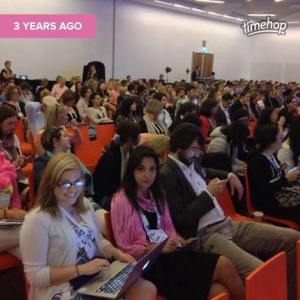
Last week, my Timehop app reminded me of this snapshot in time.

15327315_10154763151845789_470477467457476464_n

This photo was taken at the 2013 International Diabetes Federation’s World Diabetes Congress in Melbourne, and that look on my face is of pure anger. I was listening to a speaker – a doctor – referring to ‘non-compliant diabetics’ as he was telling of the ‘poor outcomes’ of ‘patients’ in his practise.

The old language chestnut came up again on the second day of the #MayoInOZ conference during the innovation showcase was held. In this session, nine speakers were each given five minutes to present how they are using social and digital tools to improve healthcare. (This is where Kim spoke about #OzDOC and how healthcare professionals use the hourly tweetchat as an opportunity to engage and learn from people with diabetes.)

The final speaker in the innovation sessions was a late addition and it was great to see diabetes again being represented. I know I am biased, but I do always get excited when I see diabetes on the program!

Andy Benson from Coffs Endocrine and Diabetes Centre presented on the project she has been working on: telling the story of diabetes in a series of documentaries to be screened on the BBC.

So, first things first. I love this idea. I am a huge fan of having diabetes out in the ‘public’ space, pulling it out from diabetes groups and diabetes-specific forums, because in most of these cases, we’re preaching to the converted. It’s one of the reasons I love writing for Mamamia Women’s Network where I know that most of the readers probably don’t already have a connection to diabetes.

If these documentaries are screened on the BBC, imagine the audience! It is so refreshing to see people thinking outside the box and looking for ways to present to a new audience – and to tell stories, real stories of real people who actually live each day with diabetes.

Andy showed two short video clips from the still-in-development documentaries. As healthcare professionals on screen spoke about diabetes, I automatically prickled, my language and stigma sensors being alerted straight away.

I wasn’t the only one. In a room with two other diabetes advocates – Kim, Melinda Seed (Once Diabetes), as well as several very vocal health advocates and activists, there was a sense of discomfort at what we were seeing.

I inhaled – maybe ‘gasped’ is a better word – when one of the HCPs used the words ‘diabetes plague’ in his introductory words. There was an undeniable sense of blaming the person with diabetes in the words being used and the sentiments being expressed.

The Twitter conversation from both people in the room and those following along was honest and candid. And, quite frankly, it was uncomfortable too. Andy had disclosed that she has type 1 diabetes, and I didn’t want to be actively criticising the work of a fellow PWD.

However, I could not keep quiet either. When Andy came over to chat after her talk, we had a very open discussion. I was probably quite blunt in my comments.

It is not okay to use language that is stigmatising. The format of the information being presented (i.e. unscripted interviews) doesn’t preclude anyone from being courteous and respectful, and I don’t believe that PWD were being treated either courteously or respectfully in the way about which we were being spoken.

I understand that there is a desire for authenticity and genuineness when interviewing documentary ‘talent’, however it is possible to be clear from the outset that language needs to be respectful at all times. Not sure where to begin with this? How about the Diabetes Australia Language Position Statement which actually provides suggestions for inclusive, non-stigmatising language?

I think it is really important to acknowledge that the road to satisfaction in the way we use language that is inclusive and non-stigmatising is a very, very long one. Also, I genuinely don’t believe that there was any malice intended on the part of the film makers or the interviewees.

We also need to acknowledge that the language used in what has been (and many would argue continues to be) a patriarchal health system is entrenched in the thinking of many – it was part of their training and is a habit that will take time to break. But by acknowledging it, we are not saying it is okay.

As I said, I love the idea that diabetes is a topic for a documentary that is being made for a non-diabetes-specific audience. However, if those people walk away thinking that my healthcare condition is a burden to society (and therefore I am too!) or that they believe it is okay to continue to use words that stigmatise, then there is the potential for this work to do more harm than good.

And finally, a call to not only the coordinators and owners of this work, but to all who are developing any sort of health information using any sort of platform: talk to people with the condition. Lots of them. It is not okay to have one token consumer representative; there should be many – as many as (if not more than) any other expert being consulted.

One of the discussions at #MayoInOz turned to the divide between personal and public social media use – especially relating to our loved ones. ABC National Medical reporter, Sophie Scott, explained the rules she’s put in place to define her professional and personal life, trying to keep the two distinct to protect her children.

It’s something I frequently think about. I use social media a lot. But despite possibly appearing to be a (social) media whore, I have rules about how I use it when it comes to my family – especially our child. The first photo I posted of her was when she was three years old. She is standing in the front garden of our old house, under the weeping silver birth tree, dressed in one of the fairy dresses that was on frequent rotation at the time. She has a cheeky smile on her face and looks quite delicious. I’ve since posted baby photos of her – usually around her birthday and on the pregnancy diary I recently published.

These days, she gets to veto whether or not I post a photo of her. If she is happy for me to share, I do. If not, I don’t. She often asks who will be able to see the photo before deciding if it is okay for me to share it.

But when she was wee, I had a very easy rule for sharing photos of her. If I wouldn’t share a photo of me doing something, I wouldn’t share a photo of her doing the same thing. So, no photos of her in the bath, naked on the floor on a towel, throwing a tantrum, crying, when she was sick, doing something embarrassing or looking grumpy. I don’t want photos of me in any of those situations online, so how could I justify it as okay for me to post photos of her like that – even if she is a kid?

This isn’t necessarily about me being worried that someone is going to do something nefarious with the photos. It’s about how she’d feel knowing others have seen her like that.

The same goes for sharing stories about her. I would never tell a story that would embarrass her – now or later in life.

The discussion at the conference turned to how parents of children with health conditions and disabilities share photos and stories of their child, perhaps not thinking about the repercussions for their child. I have commented on this in the diabetes world, and been told in no uncertain terms that I don’t get a say in this discussion as my child does not live with diabetes.

I understand that my perspective on diabetes – diagnosed as an adult – is very different to that of a child’s or the child’s family. But I am an adult with diabetes. And when I see a photo of a kid in hospital with tubes coming out of them because they are in DKA, all I can think about is how that child is feeling at that exact moment.

I’ve had a couple of DKA hospital admissions thanks to gastro bugs. I am not being melodramatic when I say that I felt that I was about to die. Between the throwing up, unstoppable nausea, desperate need to quench my thirst, weakness, rapid heart rate and feeling terrified, all I wanted to do was curl up and feel better. Or die. I would be horrified if someone shared photos of me at such a vulnerable time. I don’t want anyone to see me like that – ever.

The same goes for when I am having a weepy hypo, unable to stop the tears or the unintelligible stream of consciousness babbly coming from my mouth…or a giggly hypo where I am borderline hysterical. I don’t want that recorded for all to see. (I once filmed myself having a scary low and when I watched it back a couple of days later, it was truly shocking. I deleted the video, terrified that it would somehow find its way onto YouTube or Facebook – probably posted by me when I was next low!)

When I’ve asked parents of children with diabetes about this, they say that they do it as an awareness-raising opportunity. By showing their kid during the more serious diabetes times, they feel they can give an accurate picture of life with diabetes. It shows the pain and the fear and the relentlessness of it. I understand that – trying to tell the story of diabetes in a way that resonates with those not actually living with it is important. It’s one of the reasons I share my story.

But how do we do that without it seeming almost exploitative – especially if the story or photos we are sharing is actually not directly ours?

I was glad for the discussion at #MayoInOz, because I’ve started several posts about this issue, but have always felt clumsy and as though I am overstepping. I still hear the words ‘You don’t get a say’ and delete whatever I have written for fear I will be chastised and told to step away.

But after the conference, I decided I did want to write about it and, perhaps, start a discussion that points specifically to the diabetes world. Where is the line drawn between showing the world what diabetes is about and exploiting or exposing our loved ones? And who gets to decide? Is consent an issue here? Or is the child’s story inextricably tied up with their parents and therefore there is no line?

Thankfully, someone has written about this in a far more eloquent and elegant way! One of the other scholarship winners at the conference was Carly Findlay. Carly is a well-known blogger, writer, speaker and appearance activist, and this piece she wrote last year is definitely worth reading. (She’s also a genuinely nice person who didn’t even flinch when I once accosted her in Lygon St, almost yelling at how beautiful she looked at her recent wedding because she absolutely did and I just needed to tell her, in a ridiculously excited and animated manner. She was most gracious to this bumbling mess!)

Postscript

I don’t think I have really done this issue justice. I do know that some of my favourite bloggers are parents of kids with diabetes and I think that is possibly because I have never felt uncomfortable about what they have written. While Annie Astle is a very, very, very good friend of mine and my family’s, she is also a brilliant writer and when she shares her family’s story, it is never at the expense of Pumplette’s dignity. (Annie’s own dignity is often given a bashing because she is so bloody self-deprecating!) I recommend her blog to every parent with a newly diagnosed child because her posts are beautiful, honest and never manipulative.

A couple of weeks ago now, I was incredibly fortunate to win a scholarship to attend the Mayo Clinic’s Healthcare and Social Media Summit in Melbourne. I’m a little slow in getting anything out about it, because…well because November. But November is over! And finally, the first of the few posts I’ve started is here and the others are coming. #Tardy

Five scholarships were offered for consumers to attend, and I was encouraged to apply. So, I diligently filled in my application, hitting ‘submit’ moments before the deadline. (Not to self – always have an up-to-date bio available!) And then, the week before the conference, I squealed aloud in a meeting when I received the email, letting me know my application was successful.

The scholarship recipients. (Click photo for source.)

Before the event even started, there was online chatter about making sure the consumer reps in the room connected. Which we did! Before and throughout the conference, calls to ‘find your tribe’ resonated, and I certainly felt I had found mine! It was an absolute delight to meet and an honour to wave the consumer flag alongside Carly, Mel, Liat and Belinda.

And others in the tribe made me realise just how high the bar is set! Lisa Ramshaw, event organiser, is a force of nature. There is no other word for her enthusiasm and dedication to healthcare social media. I suspect Melissa Cadzow has #patientsincluded tattooed on her body somewhere so great is her commitment to the inclusion of consumers in all activities that affect us!

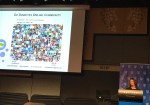
Kim giving her talk

And of course, the five-minute presentation in the innovation showcase from Kim Henshaw about OzDOC presented another strong consumer voice to the event. Kim spoke about how healthcare professionals use the weekly tweetchat as a platform to learn and engage with consumers. Kim did the OzDOC community proud with her talk, using her time to accurately crystalise the very essence of the power and influence of an online network.

It’s these people that are the reason I love these sorts of conferences – and their like-minded attitude, and endless promotion of the importance of the consumer voice and the value of using social to connect, inform and support. This is mostly a huge positive, but it does get me thinking that the people who should also be in the room probably aren’t. Organisation CEOs need to be better represented to be taken on the journey of why HCSM cannot be dismissed as ‘the way of the future, so we’ll get to it soon’, but rather ‘It’s here. We need to Do.It.Now.’ This would inform a true real top down / bottom up approach to embracing healthcare social media within their organisations.

The diabetes contingent: Me, Kim and Mel

The underlying message of the conference – at least for me – was reinforcement of something that I have known and promoted for a long time: health social networks bring people together. Before online social platforms, we did it face-to-face. The message of the ‘modern day kitchen table’ was brought home to me again and again and again, and I understood that the barriers to using social are absolutely not insurmountable – despite feeling that way at times with all the justifying we seem to have to do.

And the message of ‘Connected communities get more done’, rang so true. I thought to the first morning of the conference when I was late because I’d been moderating an hour of the 24 hour World Diabetes Day tweetchat, talking diabetes stigma with people from all over the world, affected by diabetes. I thought to the Spare a Rose; Save a Child campaign. I thought about #DSMA and #DeDOC and #OzDOC and all the ways that our own diabetes community connects to get things done.

My conference fees for the two days of the #MayoInOz conference were covered through the consumer scholarship program. I was not expected to write anything in exchange for the scholarship. Thank you to the organisers of the event, Consumer Health Forum Australia and Melissa Cadzow for the scholarship. You can read more about the conference by clicking on this link for tweets.


I’m reading a fabulous book at the moment. It’s called In Other Words, written by one of my favourite writers, Jhumpa Lahiri. My sister introduced me to her writings a couple of years ago, and I have read most of what she has written now.

The backstory to the book is quite lovely: the writer wanted to learn Italian – really learn Italian – and after years of study, moved her family to Rome. While there, she started writing only in Italian, retraining her brain to speak and think in Italian first.

The book is presented in both Italian and English. When the book is open, the left-hand page is in the original Italian and the right-hand side is in the translated English. As someone with basic Italian, I’ve been enjoying reading the Italian words, saying some of them out loud to feel them roll around on my tongue.

I start by reading the Italian side and work my way through, understanding as much as I can. What I find is that I get the general gist of what is going on, but there are gaps. The detail is completely lost at times, but I am able to piece the story together and understand what is going on. When I read the translation, all the gaps are filled in, the detail is there – adjectives provide description and narrative and help round out the story.

I cover up the English page so that I can only read the Italian, but try as I might – as I rack my brain to remember what a word means – there ends up being a lot missing from the story. But there is the safety net of being able to remove the paper hiding the translation when I simply can’t work out the holes in the story, resulting in a satisfying – and full – understanding of the beautiful story.

Yesterday, I spent the whole day feeling like I was living in the Italian side of my book. I trudged through, with a general idea of what had happened overnight, but there was a lot missing.  I’d had a hypo in the middle of the night – a terrible, terrible low. I can’t really say much more because I don’t know what happened. Parts of it are really clear, but a lot of the particulars are completely missing.

Aaron has filled in some of the gaps – how he knew I was low from the way I was moving around in my sleep; how he managed to get me to drink some juice, and then some more before I was fully able to understand him and the situation; how when he reached out to me I was drenched in sweat.

I’ve filled in the gap of the no sensor alarm – problems with the Dexcom app at the moment meant that when I grabbed my phone, angry that we had both missed the alarms, I was greeted with the message ‘Transmitter not found’. That explained why I’d not been alerted to the impending low, allowing me to treat before things turned nasty.

Because of the app problems, there is no data showing how long I’d been low, or the trajectory of my glucose levels. I know that I was sitting in range when I went to bed, and had been for some time. But that was at 10.30pm and this was three hours later. A lot can happen in three hours.

My bedside table was littered with three empty juice boxes and a couple of other wrappers in the morning, letting me know exactly what was consumed until I felt safe again.

I have a pain in my ribs. When I stood up and felt the painful twinge, I thought perhaps I’d had a seizure during the hypo, but Aaron was able to assure me that didn’t happen. The reason for the pain is a mystery, but I know it wasn’t there when I went to bed, yet was when I stood up to change out of my sweat-soaked t-shirt.

I’ve spent the last couple of days trying to piece together what I do know as I endeavour to search for the missing parts of the story. I close my eyes, desperately searching in my mind for a little hint as to what happened before Aaron realised I was low and sprang into action. Or the way I moved that now means it hurts when I breathe.  I wish I could pull away a curtain – or piece of paper – and that would expose the full story.

But there is no safety net here. All I have is what I can remember and what Aaron has been able to tell me. The gaps cannot be filled in; the detail is completely lost. I feel incredibly unsatisfied, and the uncertainty also means that I am feeling very vulnerable and exposed. If I don’t have the full story, how do I understand it all?

And how can I possibly stop it from happening again?

On Saturday, we gathered the family for an afternoon tea to celebrate the kidlet’s twelfth birthday.

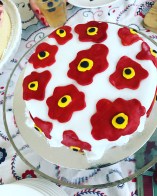
My sister arrived with the most beautiful and delicious cake. She always makes my kid’s birthday cake – has done for pretty much every party. Now, Toots has come up with some amazing cake creations over the years – 3D representations of Mary Poppins, Wizard of Oz, fairies under toadstools, teddy bear picnics, beachside parties. This year, the cake was decorated simply with the Marimekko poppy pattern – my daughter’s (and my) favourite design ever. It was the simplest, least elaborate cake Toots had ever made. But it was, in my mind, the most beautiful.
As I laid the cake on a platter, I was reminded that simple, most basic, things can have a huge impact.

Once, during a tough time, someone asked me if I was sleeping and eating, and I looked at them and shook my head. ‘Not much,’ I said. ‘It’s on the list, but there are two things ahead of it – I need to breathe and I need to hug my kid. I know that she is getting plenty of hugs so I feel that I am getting that right. And most of the time I don’t have to remind myself to breathe, although there are times that I find myself staring into space, holding my breath and I have to concentrate on exhaling. I eat a little; I sleep a little. But I breathe. And I hug her and that has to be enough. That is enough. There is no space for more.’

I have come to learn about finding space for the basics and not beating up myself for things that don’t get done. Of course, sleeping and eating matter, but I worked out that doing the minimum of those things got me through. I did what I could until I was at my limit. And then: there is no space for more. Six words of permission accepting I was full. Nothing fancy – just do the basics.

Understanding this has become essential to my survival – even when not going through a crisis period. I focus on what there is space for and that is usual the most basic and simple things. There is space for love and the people who support and value and encourage me. They understand the ebb and flow of what can be managed.

I have space for work that is fulfilling and enjoyable and challenging and I am fortunate that, almost twelve months into what I am still calling my new job, my work is all of these things; the decision to jump without a safety net is justified each and every day.

I have space for small things that bring great joy, remembering that it’s not necessarily the grand gestures or big events that necessarily have the greatest impact.

It was my birthday on Sunday and it was, quite possibly, one of the best birthdays I’ve ever had. It involved a sleep in, breakfast at our favourite place, a late lunch of dumplings, wandering around with my family and then sitting at home watching Gilmore Girls. It could not have been simpler or quieter. And it was perfect because it was exactly what I had space for.

Follow Diabetogenic on WordPress.com

Enter your email address to follow this blog and receive notifications of new posts by email.

Read about Renza

Archives