It’s day three of the eighth annual #DBlogWeek, created by Karen from Bittersweet Diabetes. This is the sixth year I’ve taken part and it’s a great opportunity to not only write about some truly interesting topics, but also a chance to read some blogs you may not otherwise. Here are the links to today’s posts.


Today’s prompt: Having diabetes often makes a visit to the doctor a dreaded experience, as there is invariably bad news of one kind or another.  And sometimes the way the doctor talks to you can leave you feeling like you’re at fault.  Or maybe you have a fantastic healthcare team, but have experienced blame and judgement from someone else in your life – friend, loved one, complete stranger.  Think about a particularly bad instance, how that person talked to you, the words they used and the conversation you had.  Now, the game part.  Let’s turn this around.  If you could turn that person into a puppet, what would you have them say that would leave you feeling empowered and good about yourself?   Let’s help teach people how to support us, rather than blame us!  

I’ve written before about difficult encounters with HCPs. There was this time and this time. And this time where it wasn’t even me who the HCPs were speaking poorly about! 

So, instead of doing that today, I’m going to talk (as in actually speak) about the the overall issue of blame and diabetes, and what can be said to address the blame game. (Apologies for the speed talking and hand waving.)

It’s day two of the eighth annual #DBlogWeek, created by Karen from Bittersweet Diabetes. This is the sixth year I’ve taken part and it’s a great opportunity to not only write about some truly interesting topics, but also a chance to read some blogs you may not otherwise.  Make sure you check out the list for today’s posts here.

Today’s prompt: Insulin and other diabetes medications and supplies can be costly.  In the US, insurance status and age (as in Medicare eligibility) can impact both the cost and coverage.  So today, let’s discuss how cost impacts our diabetes care.  Do you have advice to share?  For those outside the US, is cost a concern?  Are there other factors such as accessibility or education that cause barriers to your diabetes care?  

Diabetes is an expensive condition with which to coexist. Every now and then, I tally my annual diabetes expenses, at which point, the reason for my frequent flyer status at the pharmacy becomes more than apparent. Between insulin, insulin pump consumables and blood glucose strips, it doesn’t take long for the costs to add up.

Then I add the fees to see diabetes-related HCPs. I choose to see all my HCPs privately, so there is a gap (out of pocket) cost for all these appointments. Fortunately, pathology is bulk-billed, so I don’t pay to have my A1c checked or for any other blood work.

Private health insurance (PHI) is a significant cost each year. We pay about $450 per month to cover the whole family for top hospital and extras cover. PHI means that every four years, the full cost of my insulin pump replacement is covered, and it also means a choice of doctors if we’re in hospital, subsidised stays at a private hospital, and we claim optical, dental and orthodontic each year, plus other things as well.

I wear CGM every day of the year, which adds about $4,000 per year to the tally.

It’s a lot of money. Without factoring in incidentals such as hypo treatments and other things that just seem to come up, my out-of-pocket expenses for diabetes (excluding health insurance) would be about $6,500 per year.

And yet, I feel oddly fortunate, because there are few surprises – or changes – each year when it comes to my medical expenses. I know how it will all play out in the family budget each year.

I know the prices that I pay for all my diabetes expenses are pretty much set, and that means I can plan for them.

I know that every time I walk into the pharmacy to fill an insulin prescription, I will hand over $38.80 for five 10ml vials of insulin. We are never at the mercy of Big Pharma’s arbitrary price hikes. (Last week’s announcement from Lilly of a 7.8 per cent increase on the cost of Humalog – after years of substantial increases – has left me reeling and astonished at how my American friends can afford to just survive with diabetes, let alone live or thrive…)

I know that my diabetes consumables will be the same price every time I order them thanks to the NDSS. The National Diabetes Services Scheme (NDSS) is celebrating 30 years this year – that’s 30 years of subsidised diabetes supplies for all people living with diabetes.

I know how much my doctor will charge me and I know the Medicare rebate. And I know that if I was unable to afford to see my doctors at their private offices, I’d have access to the free diabetes clinic at the tertiary hospital less than 10 minutes from my home, and a bulk billing GP of my choice.

I know that if I couldn’t afford private health insurance, my ability to buy insulin, diabetes supplies or see healthcare professionals would not be affected.

I know that there is no time that I will need to ration insulin doses. I know there will be no time that I cannot afford to see a doctor. I know my pharmacy will always be able to provide me with the supplies I need to live with diabetes and drive the devices I use to manage as best I can. I know I am not really limited by maximum rebate amounts or that if I need more BGL strips, I can get them.

And I also know – and acknowledge – the privilege that allows me to afford health insurance that pays for my insulin pump, and to self-fund CGM, and to see the endocrinologist of my choice privately.

I know there are many other Australians with diabetes who are not as fortunate.

The outcomes for Indigenous Australians are worse – far worse. Poorer Australians have poorer health outcomes. People living in remote areas often struggle to access decent, timely and appropriate healthcare. Australians from CALD backgrounds may not understand a new diagnosis or the treatment being prescribed which affects how they manage their health.

Our system here in Australia is not perfect and we should be continually striving to do better. But it is certainly better than in a lot of other places. The thing about diabetes is that, as many of us wrote yesterday, we are wrangling a health condition that likes surprising us. We often feel we are fighting our own bodies. We shouldn’t need to fight to afford our care – and our health – as well.

The cards that cover my diabetes – and other health – needs. (Oh – and a credit card for all the out-of-pocket expenses…)

It’s day one of the eighth annual #DBlogWeek, created by Karen from Bittersweet Diabetes. This is the sixth year I’ve taken part and it’s a great opportunity to not only write about some truly interesting topics, but also a chance to read some blogs you may not otherwise.  Make sure you check out the list for today’s posts here.

Today’s prompt: Diabetes can sometimes seem to play by a rulebook that makes no sense, tossing out unexpected challenges at random. What are your best tips for being prepared when the unexpected happens? Or, take this topic another way and tell us about some good things diabetes has brought into your, or your loved one’s, life that you never could have expected?

There are things in this world that are predictable. The early evening darkness that descends as soon as daylight saving ends each April; the desserts of warm crumble in front of the fire as soon as the weather cools down; the taste and jolt of the first coffee of the morning; or the way the puppy runs around in circles for a good five minutes once she’s let into the house when her people arrive home after a day at work.

The predictability is comforting. I like comforting. I like predictable!

Because then…then there is diabetes. Diabetes doesn’t do predictable. In fact, my diabetes laughs in the face of predictable. It seems to take great delight in waiting until the exact moment that I start to feel comfortable and confident that something is sorted and working in a certain way, and then throws me a curve ball, messing up any notion of security.

Being prepared can help though, although if I were to truly be prepared for any and all possibilities diabetes has in store, I’d never leave the house – or only ever leave carrying a suitcase and medical team. However, there are some little things that I do routinely that do make those unexpected situations a little easier to manage.

My ‘diabetes spares bag’ is always in my handbag and is probably the thing that saves me most. I wrote about how it came to the rescue a few months ago when I got to work and realized I’d forgotten to attach my insulin pump (it turns out that sixteen years of pumping is no guarantee that I’d remember to actually connect the bloody thing in the morning). Again, this is what my spares bag looks like:

And that pretty much takes care of most contingencies for a device malfunction. Empty cartridge alarm? No problem – swearing and spare insulin vial and spare cartridge can take care of that. Pump line snagged on door handle and ripped from body? Swearing and spare infusion set can take care of that. Dead battery alarm? Swearing and spare battery has that sorted (and the five cent piece in there will open the battery cap without much effort). Insulin pump left on the bathroom vanity? So much swearing and spare insulin vial and syringe will take care of that.

This little bag has helped me out of diabetes messes more times that I care to remember.

I consider having a well-connected and easy-to-reach endo an absolute essential for the unexpected. I’d never call her out of hours for something trivial, but I have reluctantly used her mobile number in case of emergencies. For example – the time I was in hospital and the A &E staff wanted to take away my pump, blood glucose meter, insulin and dignity. Or the time I passed out from a hypo and I needed her to convince the paramedics that I didn’t need to be taken to A&E – and could manage at home myself. She’s an insurance policy like to other in those moments of desperation.

To be honest, the times that I am most surprised by diabetes isn’t when it does something unexpected. The unexpected is actually normal. The times diabetes surprises me is when it is just ticking along quietly doing its thing and letting me tick along quietly and get on with things. I become most suspicious and wary, waiting for it to get back to doing its thing: being an impulsive, random, fickle pain in the pancreas.

It’s Mother’s Day on Sunday. In recent years, as I have found aspects of the day challenging, I’ve really channelled my energy on Mother’s Day into what my own mother has given me.

I am willing to admit my bias, but I think my mother is the best Mum in the world. She’s very cool, and when I was growing up all my friends thought she was awesome. She was in her early 20s when she had me, and has always been a young Mum. That’s not to say that she always knows what the cool kids are talking about. We have many stories of absolutely hysterical things she has said and done in the belief that she was being oh-so-hip. My sister and I never stop making fun of her, which she mostly takes with good grace. Mostly…

When I was growing up, there was nothing that I felt I couldn’t talk to Mum about. She was very open and no subject was taboo. I felt comfortable speaking with her about pretty much everything, and when I had my own daughter, I knew that I wanted to have the same sort of relationship with her.

Mum instilled in me a love of food and cooking – something for which I am so grateful. Yet as great as the cakes are that I pull out of the oven, or the plates I serve up for dinner, nothing is as good as her food.

She showed me that chicken soup is truly all it takes some days to lift my spirits and fortify me for what comes next. I’ve not managed to always have a stash in the freezer for quick thawing, but I am always welcome to let myself into my parents’ house and help myself to whatever is in my freezer. And when I am under the weather – physically or emotionally – a text message of ‘I’m sending dad over with some chicken soup for you’ is an inevitability.

When I was diagnosed with diabetes, she was there, alongside me: a pillar of strength on the outside when, I knew, she would have been falling apart inside.

She taught me how to live with a chronic health condition. I have watched Mum deal with her own health conditions for over thirty years. She has done so with incredible grace, determination and resolve. Every time something new has been thrown at her, she’s rolled up her sleeves and taken it on. A couple of years ago she had a double knee replacement and the speed and intensity of her recovery was a marvel. She pushed and pushed through rehab, recovering far sooner than expected.

There may not be an instruction book for diabetes, but thanks to watching Mum live with lupus, rheumatoid arthritis and Sjögren’s syndrome meant I did sort of have a real-life manual for how to get on with life even with my new health challenge. I looked at her attitude and took it on as my own.

She’s shown me that even through the pain and fatigue and frustrations that seem to go hand-in-hand with life-long health conditions, laughing and carrying on in a silly way is absolutely okay.

But equally, she also taught me that it’s okay to cry and feel overwhelmed.

She helped me understand that even though there are times that the thought of another appointment with another doctor for another thing was just too much to deal with, it is okay to complain about it, but I just had to do it.

She taught me that self-care days that involved sitting on the couch under a quilt watching reruns of British cop shows is absolutely okay. But the next day, you get up and get back into it.

She taught me that even though there were times I didn’t want to, I had to show up – show up to my own care, to doctors’ appointments, to blood draws, to work. She might say ‘Diabetes is shit today,’ (she’s a trade unionist; my potty mouth came from her!), ‘But you have to keep going.’ She tells me all the time that life with chronic health issues is boring. And it is. It really is!

Every day, she’s made me see that even though something may look easy, living with a chronic health condition is simply not. She wears the invisibility of her health condition the way I do mine. We smile through the sadness of what could have been had we not had so many health challenges to manage.

She made me understand that not everyone is as fortunate as we are when it comes to health care accessibility and affordability. And that helping those less fortunate is a responsibility I must never shirk.

The unconditional love, support and pride she has demonstrated in spades is, of course, much appreciated. Having a prototype right there for the type of mother I want to be has been a blessing. But I appreciate so much more than that. Our health issues may be different, but it is my Mum who taught me how to thrive with diabetes. I would not be living the way I am now without her having gone ahead of me. Or without having her stand beside me, and hold me up when I’ve needed.

Happy Mother’s Day, Mum. Thanks for the chicken soup. And everything else.

Now we are six! Mum and me at my sixth birthday party.

The term ‘mansplaining’ has made its way into modern language – and with good reason.

But I’d like to get ‘diabetesplaining’ in there, too. Recently, I’ve had a few diabplaining episodes that have left me shaking my head (and making up words…).

In all of these cases, the person doing the diabetesplaining didn’t have diabetes. And yet, they felt that I needed their advice on how to live with, and how to feel about, the health condition that I’ve been managing for the last nineteen years.

I am always happy to speak about diabetes and answer any questions people have. (Provided, of course that people are polite and respectful.) But I don’t appreciate unsolicited advice and explanations, or someone thinking they know more about my diabetes than I know. (Spoiler alert: no one does.)

These are just some of the gems that have been fired in my direction recently:

‘You know, someone at my work has diabetes and they don’t seem to have all the things you have to manage it. Maybe you should try to simplify what you are doing. You don’t need all of those things.’

‘Diabetes is a really easy to manage condition if you just eat the right foods. Do you eat the right foods? Let me tell you the foods that are good for diabetes.’ 

‘You shouldn’t worry about diabetes. You look really healthy. There is no need for you to worry.’

‘Your preoccupation with how people speak about diabetes is ridiculous. There is no need to stress out about that. Do you think you really need to be so concerned about it? Instead, you should channel that energy into something else…’ (There was no suggestions as to what else I could channel all that wasted energy into…)

With diabetes being a health issue with considerable attention, it makes sense that people want to have a say. I am actually all for that! I think that we need to have people speaking about diabetes and hearing about it too.

But the best people to drive the conversation has to be people actually affected by diabetes – not those who only think they know about it, or have become armchair experts because they saw a Michael Mosley doco on the issue!

Plus, those of us who are living with diabetes who have concerns or fears or a focus on any particular issue, or are managing our diabetes in a certain way don’t need to be told that we are unnecessarily ‘overdoing it’ or could be doing it better.

So, how did I respond to these comments? Not as ferociously as I would like, to be honest. But equally, not in the manner in which I really would like. It’s bloody hard to keep myself nice when I feel that someone is trying to enlighten to me when I really just want them to shush. Because as arrogant as this makes me sound, the chance that someone has something new to tell me about how I could better think or deal with my diabetes is slim to none.

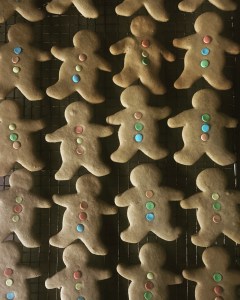
It’s actually very tiring being on the receiving end of these sorts of comments. I don’t always want to be in ‘diabetes education mode’. I don’t feel equipped sometime to have to defend the way I feel, or explain why I do something to keep myself as healthy as I can. Diabetes is hard enough without having to justify myself. And I don’t need anyone to explain the finer details of diabetes, especially when there are far more interesting things we could be talking about. Such as these awesome ninjabread cookie cutters.


I had an appointment with my endocrinologist the other day.

My appointments with my endo don’t really take a particular form, because she absolutely lets me drive the agenda.

Having said that, they do start the same way. She asks me how I am, and then sits, looking at me until I finish answering. My response may be ‘good thanks…’ and the off we go. Or it may be a much longer response. Or, it may involve me bursting into tears two and a half minutes after sitting down. But she never interrupts or looks away, instead, focusing on me and what I am saying. Occasionally she may make a note on the notepad in front of her (she doesn’t take notes on the computer during the consultation). I feel I have her full attention the whole time.

This week, as I was making my way to the appointment, I thought about what my attitude towards my diabetes has been recently, and the word that came to mind was ‘meandering’.

I’m not really in a diabetes rut, but equally, I don’t particularly feel like I have any goals that I am working towards. I’m just wandering around, doing what I need to, stopping every now and then to have a look around, maybe sitting down sometimes and admiring the view, and then getting back on my feet and heading back off in a different, or maybe the same direction. Drifting is probably the right word.

I don’t really feel bad about it – my CGM numbers don’t scare me too much. Hypos are manageable and not too frequent. I calibrate my CGM, I bolus insulin before or as I sit down to eat. Last week I started to think about basal testing in a burst of focus and dedication. Basically, I am just going along, albeit aimlessly.

While that’s okay, it kinda makes endo appointments difficult. I did have a few things I needed to get done: VicRoads were asking for my first born child medical review (again), and I needed my usual diabetes-related screenings done. It had been a rather long time since my last A1c. I wanted to know what my bloody pressure was. But that was really all the ‘tasks’ I had planned.

And I also wanted to have a chat about my new eating attitude. It’s been quite a while since I’ve been eating lower carb. Sometimes I am more commuted to it than other times. But generally, I know that I am eating between 50 and 80 grams of carbs a day.

While I wasn’t looking for approval, I certainly did want to hear what she had to say about my new approach to food and my diet. She listened to me explain the changes I’d made and the reasons behind them. And the results I was seeing. I explained that I felt better overall and was really pleased with what I was seeing in my CGM trace as a result of my decisions.

Our discussion was brilliant. She nodded at what I was saying and answered some questions I had about the science of low(er) carb eating. She drew me some graphs that really put into perspective some of the things I’d been wanting answers to. We spoke about where there was evidence, but also where the evidence was lacking. The thing I loved was that at no point was I made to feel that a lack of evidence means that I shouldn’t be doing what I’m doing, or that I am silly for even trying it.

There is a reason that I choose health professionals like my endo to be work with. I have heard many other HCPs absolutely reject someone’s treatment choices. Low carb eating is one of those choices that does seem to cause such dismissals! But our discussion was open, without any judgement at all.

I walked away from the appointment feeling that I was better informed about what I was doing and energised to keep going. I felt engaged and focused, armed with information to make smarter choices.

And I felt grateful (yet again) to have this particular health professional alongside me on this diabetes road, even if I am just meandering sometimes.

The other day, I walked into my local NDSS pharmacy and collected four boxes pump consumables and a couple of boxes of blood glucose strips.

I have a lovely pharmacist. She’s friendly and chatty and every time I visit, we catch up about how our kids are going and she comments on how I seem to spend a lot of time on aeroplanes and that I need to look after myself better. (She’s also my parents’ pharmacist, so I suspect that my dad asks her to say that to me.)

While we were talking, she was packaging up my supplies and came out from behind the counter to hand me a black bag. As I was paying for them, I had a really strong flashback to the days that I worked in a local pharmacy.

I was a pharmacy shop girl from when I was 15 until I was about 20. It was a convenient part-time job – a few hours on Saturdays and Sundays, and extra hours in the lead up to Xmas – and a great way to earn a little spending money.

I remembered that there was a customer who came in about once a month and that when he walked in, the pharmacist would step down from his little ‘stage’ with all the medications and bring out the customer’s order, wrapped up in a couple of paper bags. I had no idea what was inside them, and it took me a couple of years of wondering before I finally asked the pharmacist.

He has diabetes. It’s insulin and other things he needs for his diabetes,’ was the answer. ‘He doesn’t like to see the different products, so I wrap them up when I order them in for him and just pass them to him. That way, no one knows what’s in the bag.’

I knew nothing about diabetes back then. I just acknowledged what the pharmacist said with a nod of my head, and the next time I saw that customer, I handed him his package without a word.

I wasn’t working at the pharmacy anymore when I was diagnosed with diabetes, but it is where I picked up my first insulin prescription. I have never, ever thought to ask for my insulin to be hidden away, in fact, the only discussion I have is lying about promising that I am going straight home and don’t need a cool bag for the drugs. Pharmacists seem to worry that the hour or so the insulin is out of the fridge while I pop into a café to grab a coffee is going to send it sour.

But apparently the attitude of the customer at the pharmacy I worked at isn’t all that uncommon. Until the change in ordering from the NDSS, I used to collect my supplies from the NDSS shop downstairs at Diabetes Victoria. This was always fabulously convenient for me, considering I worked just upstairs. The products were always loaded into an opaque, black plastic bag. I remember someone saying those bags were used because a lot of people didn’t want others to know what was inside.

All mail being sent out by the diabetes organisation I worked at was sent in unbranded, plain envelopes. Apparently some people didn’t want their neighbours – or postie – knowing they were receiving mail about diabetes-related matters.

I’ve heard countless stories of people going to great lengths to hide their diabetes. I remember a case where a house was over-crowded with sharps and diabetes waste because the people in the house refused to throw out any packaging that might suggest someone living there had diabetes. They didn’t use sharps containers because they didn’t want to go to their local council for a free one because it might mean having to identify themselves as having diabetes. And they didn’t pay for a sharps container, because depositing it at a sharps collection point would also mean saying they had diabetes.

Another time, someone called me to complain because a letter sent out by the team I managed had slipped inside the plane envelope and the logo identifying the diabetes organisation was visible through the window. ‘I don’t want people knowing I have diabetes,’ I was told angrily.

This reluctance to let others know could be a matter of people simply not wanting to share their personal health with others, which is, of course, fine. But I suspect that it is more than just that. I think that in a lot of cases there is shame involved too. For every one of us who claims to be out, loud and proud about our diabetes, there are others who still want it hidden away – people who feel ashamed, and shamed, by their condition so much so that they don’t want others to know they are affected by diabetes.

I wear my diabetes very visibly and have never thought not to. I don’t feel shame about it at all. Diabetes is tough enough as it is without trying to conceal it from everyone as well. I just don’t have the headspace to think about how to hide it away.

There are lots of ways to discuss diabetes. Some people literally talk about it – in front of roomfuls of people or in the media or record little vlogs of things that they find particularly interesting. Others write about it for different media platforms. Some, you may have heard, even blog about it…!

And then others create comics about it.

Last December, I was sent a copy of Claire Murray’s first ‘Living with It’ comic and just last week, I was sent the second. I don’t actually know Claire (other than online), but I know her dad. And like all good dads, he is (quite rightly) very proud of his kid and wants to show off her brilliant work. So he kindly popped the comics in the mail for me.

There is much to love about Claire’s comics. They are very funny –  as in laugh out loud funny. I’m writing this in a local café and keep giggling as I flick through their pages. ‘Living with It’ chronicles the story of a kick-ass young woman with diabetes called Megan who just happens to have type 1 diabetes. Oh, and she’s a bona fide superhero.

A new diabetes superhero! Back cover of ‘Living with It’ #1 by Claire Murray.

Megan as a character is brilliant – the perfect mixture of snark and sass! She fights crime while managing to deal with diabetes in a most fabulous manner. I want to be friends with her so she can teach me her ways! (Plus she looks like a human, not a barbie doll, which is a nice departure from how women are usually drawn in comics.)

And you absolutely don’t need to have diabetes to get the story, which is why this is such an awesome channel for discussing diabetes. Claire hasn’t created a ‘diabetes 101’ story in a comic – this isn’t really about learning the ins and outs of diabetes. (Although the glossary at the beginning of the second comic is excellent in its straightforwardness and a perfect way to describe some of the basics of diabetes. Simple pictures, clear explanations.)

Glossary from the beginning of ‘Living with It’ #2, by Claire Murray

What Claire has done is shape a very clever and funny superhero story, and wound diabetes through it. Diabetes isn’t really the central theme – it’s just there and in the way. Kind of like diabetes in real life! She has managed to unmistakably show the disruption and irritation diabetes creates each and every day.

I love the idea of kids and teens with diabetes (and grown-ups with diabetes) reading these and sharing them with their friends. The gentle, funny and captivating tales are a terrific way to explain just how and where diabetes can get in the way of real life, yet, despite the mess of out messed up beta cells, those of us living with it just get on with things.

You can read more about Claire Murray and her work at her website, Tumblr and Instagram.

(For the record, I think Claire might be a bit of a superhero, too. I believe that she is on a panel this weekend at Supanova where she will be speaking about the Women in Comics Festival.)

It’s cold. And rainy. And miserable. And I have a sore throat that is making me whinge. All I want is soup.

Here are some things that are doing their best to brighten my day.

My Apple Watch works!!

Truthfully, my Apple Watch has always worked (both the first and second series watches I’ve owned). But it now finally working exactly how I imagined it.

The Dex 5 app update last week finally, oh finally, integrated with Apple Watches. So now this happens. (And I can stop needing to divide by 18 which is what I was doing after sneakily downloading the US version of the Dex 5 app last year…)

At this stage, ‘followers’ cannot see their friend’s/family member’s glucose readings on their watch, still needing to use the Share app on their phone. (But apparently, this functionality is coming soon).

You could win….

….a year’s worth of Freestyle Libre products. Just by entering this competition. Go!! (Only open to Aussie residents.)

Tell me a story, doctor…

As a huge promotor of listening to and sharing stories about health and healthcare, I was interested in this article from Stanford MedX.

As much as I love hearing the tales of those living with diabetes (and other health conditions too), I also want to hear the stories of healthcare professionals. Why do they do what they do? What drives them? What are some experiences that they always remember or wish they had done differently? What are their challenges and how to they manage the disappointments and frustrations? And celebrate the successes? I want to know these things to better understand what shapes them.

Bakers gonna bake

I’ve loved baking for as long as I can remember. My 30th birthday gift to myself was a firetruck-red Kitchen Aid stand mixer which gets a run at least a couple of days each and every week.

Baking makes me feel good. The predictability of results is wonderful. It allows me to showcase the foods that are in season at different times of the years. Being a regular baker means than anytime friends drop by for coffee, they’ll be offered a biscuit made a day or two earlier. And it means that I can easily give gifts to friends, family, colleagues, neighbours, the guys working on the building site across the road…

This piece in the Huffington Post explores why we feel so good when we bake for others.

Also, I think I need this.

Messed-up basals

I’m desperately trying to tidy up my basal rates which are clearly in need of a good shake up. I started Monday and straight away could see this was going to be a long – and probably painful – process. Watch this space…

#WorldImmunisationWeek

It’s World Immunisation Week this week, which is a perfect time to check if you are up to date with all your immunisations and book into get your flu vax if you’ve not already had it.

After I had my flu shot last week, I foolishly got into an argument with a couple of people who told me they ‘don’t belive in vaccinations’, to which I replied ‘You don’t get to ‘not believe’ in vaccinations. They are real. Vaccinations are not fucking Santa Claus’. Then someone suggested I should get that on a t-shirt, which I just might do. In the meantime. I made a poster, which you should feel free to share with fools.

Cold weather = hot books

With the rainy, grey days and nights ahead, it’s a perfect time to get comfy in front of the fire and get reading. I most sneakily used the ‘ice breaker’ at the Diabetes Advocates Day (#DAdvocatesAU) I facilitated a few weeks ago to get some new book recommendations from the attendees. That list is safely tucked away for …well, for a rainy day.

This weekend I rushed out to buy the book that just won the Stellar Prize (a literary award celebrating Australian women’s writing) and what a delight this book has turned out to be. It’s called Museum of Modern Love by Heather Rose. I’m rationing my reading of it – only a chapter each day; two at the most – to make it last. The writing is exquisite. It’s set in New York and is taking me back to wandering the streets and galleries of my favourite city. And desperately making me want to go back. Do look it up!

New diabetes book coming soon

While we’re talking books, Diatribe’s Adam Brown has written a new book that is due out soon. I’d probably read a shopping list Adam wrote because he is a fabulous writer and I always find something to take away for my own diabetes management in what he writes. So I’m more than a little excited that a whole book of this wisdom is due out soon.

Adam’s book is called Bright Spots and Landmines (with a subheading of The Diabetes Guide I Wish Someone Had Given Me). Generously, e-copies of the book are free – you can register to get yours here when it is launched in the coming months.

Also coming soon (but not soon enough) – new faster insulin

Novo Nordisk has launched its new ultra-fast insulin (Fiasp) into lucky selected markets.

Please can we have some here in Australia?? No news on that as yet…

Health Professional Grant

If you’re a healthcare professional member of Diabetes Victoria, you can apply here for this year’s Gwen Scott Grant.

Trolling is pure evil. Except for this…

Pete Souza was the official photographer for the Obama Whitehouse and took thousands upon thousands of photos during his tenure.

In recent months, he has been posting photos from the Obama Administration that are very clearly trolling Trump, comparing the new Administration’s blunders with the class and professionalism exhibited by Obama and his team. It is very cheeky and just so damn funny. This article explains more.

An honest weather app

And finally, have you installed the WTForecast app yet? You should. It gives authentic and accurate weather updates for wherever you are in the world.

Current situation here explaining current miserable mood:


A couple of days ago, I woke up at 5am low and stayed that way until about 12pm when I decided to have a sushi roll for lunch. My thinking was that if white rice didn’t solve this low, nothing would! I’d already thrown a lot at it – juice, black tea with sugar, jelly beans – sitting there watching my CGM trace stay in the red area apart from very occasional and very small rises before dropping back below that comfort line.

The rice did the trick. And then some. I watched the spike as the evil rice did its thing and sent me into the mid-teens. Thanks rice; thanks you very much. (I know, I know…we’re not supposed to think of food as good and bad, but rice is the freaking devil.)

I then watched the spike change direction and start to plummet. I’d done everything ‘right’… dosed at the right time, calculated the carbs, delivered the correct amount of insulin… Rice is my food nemesis. I’ve tried everything and just can’t get it to work which is why I rarely, if ever, eat it. But I was getting nervous at the non-budging CGM lows and knew that rice was a sure-fire way of getting me out of low-zone.

Rice: evil little grains of misery.


Everything fell back into place by the afternoon and then that night, dinner consisted of a low carb meal. The roasted cauliflower, warm salad of broccoli and green beans, avocado and cucumber salad with pepitas, and roast beef barely caused a blip on my CGM graph for the rest of the evening. The tiny bolus that accompanied the meal did its trick and the line stayed in-range and mostly flat. The dark chocolate and cup of tea I had before bed had no effect either.

Before I started using CGM, I had no idea just how different foods truly impacted my glucose levels. Carb counting can be pretty hit-and-miss, but I wasn’t too horrid at it – at least for most of the time.

Doing the recommended four or five checks a day hid most of the truth about what was going on for most of the time. Sure, my glucose levels may have been not too horrid when I checked before meals or before bed, but in between those random checks, there was A LOT happening to which I was completely oblivious.

CGM doesn’t necessarily need to translate to being more limited (or more boring) about food choices. But it does arm us with a lot of information about how our glucose levels react to certain things, which means that we can make more-informed choices about what we eat, and how we eat it.

Using CGM means that I can be much smarter about timings of boluses (and the types of bolus), and even the times I choose to eat different things. I know I am more insulin resistant in the mornings, so it’s a lot more difficult to manage with high carb foods at that time of day. I learnt that delaying my morning milky-sugar-added coffee by just half an hour results in less of a spike.

Of course, we need to remember that food is not the only factor that impacts our glucose levels. CGM has offered great insight into hormonal changes, effects of stress and different meds and eating a certain way cannot guarantee a flat CGM trace.

For the record, THIS is one of the main reasons I use CGM. I get a little tired of the constant focus there is on the technology ‘saving lives’. Do I honestly believe that my CGM has saved my life? Sure, it makes me feel safer – especially when travelling on my own – but for me, the real reason I use it, and its real benefit, is to be armed with information about how to best deal with diabetes.

DISCLOSURE

I probably just should mention that I generally self-fund all my own CGM costs. This includes the $540 I just spent on a new transmitter! When I’ve been given product while participating in trials, or in exchange for speaking gigs, I’ve always disclosed on this blog.  

I also have some very generous friends in the US who have most kindly given me sensors when they’ve had spares. They are wonderful, wonderful people and I am so grateful for their generosity!

Follow Diabetogenic on WordPress.com

Enter your email address to follow this blog and receive notifications of new posts by email.

Read about Renza

Archives