Before travelling to Adelaide for the Australasian Diabetes Congress, I had a couple of days in Sydney, and on one of those days, Grumps and I had two meetings that I’ve not been able to stop thinking about, because in both cases, they were about people with diabetes who we rarely get to hear from.

The first meeting was with some of the team at Life for a Child (LFAC). It was great to catch up LFAC General Manager, and meet Rachel who is the program’s Marketing Coordinator.

We then jumped in a cab and headed to Canterbury Hospital and met with a diabetes educator who spoke about some of the challenges she faces working in the diabetes clinic.

Since these meetings, I’ve been thinking a lot about the people with diabetes involved in these programs. For LFAC, it is young people unable to afford insulin and other life-saving diabetes supplies, living in developing countries. And at Canterbury Hospital, it is adults with type 2 diabetes from lower socio-economic and CALD backgrounds.

I want to know more about these people and I want to hear their stories. But I don’t want them told by, or from, the perspective of a supporter or a healthcare professional. In the case of LFAC, the story shouldn’t be about someone who supports the program or what they have discovered now they’ve read about it, worked with the staff, or even met with, and perhaps worked with the people supported by the program.

I do understand that there may be a place for hearing from those with a understanding of a program or service. Dr Fran Kaufman’s article after her travels to Ethiopia was enlightening. But honestly, I now want to hear directly from some of the 3,500 children with diabetes in Ethiopia who receive their supplies from LFAC.

And while hearing about the challenges Marita and her team face at Canterbury Hospital has provided me with some level of understanding about the how the hospital systems and structures impact on her ability to work as well as she can with the people with diabetes who use the service, I really want to hear from those people to truly understand their lives with diabetes and how those challenges affect them.

It is too easy for those of us who are comfortable and confident and already have a voice to tell the stories of others. Or, even worse, to eclipse their stories. That’s not okay because they are not our stories to tell. Our words are not their words. And their stories are the ones that matter here.

If we are in a position to support (financially or otherwise) services and charities, that is great, and it’s necessary in many cases for them to exist and carry on their important work. But if then all we are speaking about is how that contribution or involvement is affecting us, how has the person with diabetes – the one utilising the service/charity – truly been heard?

I got to thinking about this because Rachel from LFAC has been doing a wonderful job making sure that the people who have received insulin and other supplies from the program do have a voice. Their stories are the ones mostly seen on the social pages of LFAC.

And then, I mentioned how I was feeling and they used the term ‘charity (or poverty) porn’ to describe the way supporters speak about their involvement in different causes. They told me that often, the people being supported are presented as ‘needing saving’, and those donating are presented as ‘saviours’.

This sat a little uncomfortably with me, because I am pretty sure that I am guilty of having written about LFAC in those terms before. I am sure I have focused my involvement in LFAC on what I can do and have done to support it; what I have learnt about the people benefiting from the program; how I feel that because I live in a country that provides access to healthcare and I can afford what the system doesn’t provide me, I therefore feel obligated to fundraise and donate.

But when I do that, I make the story about me. And the voice being heard mine. I already have a platform to speak about my own diabetes. But the diabetes here isn’t mine; the stories are not mine; the words people hear should not be mine.

And so, here is Amita’s story:

To make a donation to support children just like Amita, go here.

(Aussie’s can donate at this link.)

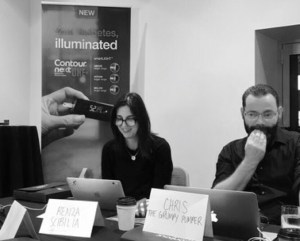
The day before the Australasian Diabetes Congress (ADC) started, Ascensia Diabetes Care brought together a number of Australian diabetes blogger and advocates for the Australian Diabetes Social Media Summit, #OzDSMS – an event that promised to tackle some interesting and difficult topics in diabetes. The social media component was relevant for a number of reasons: the #TalkAboutComplications initiative that The Grumpy Pumper would be speaking about had been (and continues to be) driven on social media; and we really wanted to share as much as we could from the day on different social media platforms to ensure that those not in the room had a clear picture of what was going on and were able to join the conversation.

This planning for the event happened after one of those brainstorming meetings of minds and chance that sometimes occur at diabetes conference. I caught up with Joe Delahunty, Global Head of Communications at Ascensia at ADA because he wanted to speak with me about the launch of their Contour Next One blood glucose meter into the Australian market. And from there, plans for the social media summit were hatched. Joe isn’t afraid to look outside the box when considering ways to work with PWD, and his idea of a blogger event tied in beautifully with the ADC which would already have a number of diabetes advocates in attendance. We both knew that we needed a drawcard speaker. So he sent us Grumps.

One thing was clear from the beginning of the event’s planning – we wanted this event to tackle some issues that aren’t always readily and keenly discussed at diabetes gatherings. It is often a frustration of mine when following along industry-funded advocate events that the topics can seem a little frivolous, and there is the risk that they can seem a little junket-like because most of what is being shared is selfies from the attendees in exotic locations. (For the record, I am always really proud of the Aussie DX events hosted by Abbott because the programs don’t appear as though we’ve been brought together to do nothing more than celebrate our lack of beta cell function while swanning around Australian capital cities.)

The #OzDSMS program was simple – three talks plus a product plug. The discussion was going to be led and directed by the PWD in the room, but the Ascensia team wanted to be part of that discussion, rather than just sitting and listening.

Grumps led the first session in a discussion about how the whole #TalkAboutComplications thing came about after being diagnosed with a foot ulcer. Although he had prepared a talk and slides, the conversation did keep heading off on very convoluted tangents as people shared their experiences and asked a lot of questions.

For the second session, Grumps and I drove a discussion  focused on decision making and choice when it comes to diabetes technologies, with a strong theme running through that while the people in the room may know (and perhaps even use) the latest and greatest in tech, most people using insulin are still using MDI and BG monitoring as their diabetes tech. (For some perspective: in Australia, there are 120,000 people with type 1 diabetes and about 300,000 insulin-requiring people with type 2 diabetes. Only about 23,000 people use insulin pumps as their insulin delivery method. And there would not be anywhere near that number using CGM.)
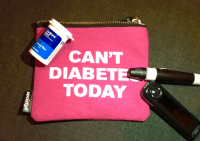
This certainly is interesting when we consider that most online discussions about diabetes technology are about the latest devices available. We tried to nut out how to make the discussion about the most commonly-used technologies relevant – and prominent too.

Also in this session was a conversation about back up plans. While this is one of Grumps’ pet topics (he wrote about it in one of his #WWGD posts here), I think he met his match in David Burren, our own Bionic Wookiee. Between the two of them, they have back up plans on top of back up plans on top of back up plans, and over the week came to the rescue of a number of us at ADC who clearly are not as paranoid well organised as them.

Yes, there was talk of product. Ascensia’s Contour Next One meter was being launched at ADC, so there were freebies for all and a short presentation about the meter. (For a super detailed review of the new meter and the app that accompanies it, here’s Bionic Wookiee’s take.)

It makes sense that device companies use these sorts of events as an opportunity to spruik product, especially if it’s a new product. I am not naïve enough to ever forget that we’re dealing with the big business of medical tech, shareholders, ROI and a bottom line. But as I have said before, I WANT us to be part of their marketing machine, because the alternative is that we’re not included in the discussion. I’ve not drunk the Kool Aid – I’m fully aware they know that we will have some reach if we write about their product. I’m also fully aware that even though our bias should always be considered, the words remain our own.

I was super pleased that during the small part of the day dedicated to talking about the device, the presentation wasn’t simply about trying to blind us with all the fancy bells and whistles included in the meter. Instead, the focus was on accuracy. As I wrote here, accuracy will always be king to me, because I am dosing a potentially lethal drug based on the numbers this little device shows me. (Well, these days, I need it for when I calibrate my CGM which will then inform Loop to dose that potentially lethal drug.) Accuracy matters. Always and it should be the first thing we are told about when it comes to any diabetes device.

We moved to the Adelaide Oval for dinner for a final presentation by CDE and fellow PWD, Cheryl Steele, who also spoke about accuracy and why it is critical (this went beyond just talking about the new meter). I walked away considering my lax attitude to CGM calibration…not that I’ve necessarily made any changes to that attitude yet.

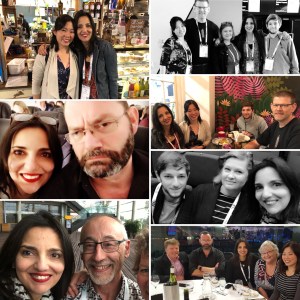
It was an exhausting day, but a very satisfying one. There was a lot of chatter – both on- and offline and it felt that this was just the start of something. Ascensia has not run an event like this before and hopefully the lively discussions and engagement encourages them to see the merit in bringing together people with diabetes for frank and open dialogue about some not-so-easy topics. While this event was exclusively for adults with type 1 diabetes, I think people with type 2 diabetes, and other stakeholders such as parents of kids with diabetes, would benefit from coming together to share their particular experiences and thoughts in a similar event setting, and potentially some events which bring different groups together to hear others’ perspectives.

As ever, I felt that this event (and others like it) go a long way towards boosting opportunities between PWD and industry, and I am a firm believer that this is where we need to be positioned. Thanks to Ascensia for allowing that to happen; thanks to others from far and wide who joined in the conversation – we were listening. And mostly, thanks to all the advocates in the room for contributing so meaningfully.

Disclosures

I was involved in the planning for the Ascensia Diabetes Care Social Media Summit and attended and spoke at the events Grumps attended. I did not receive any payment from Ascensia for this involvement or for attending the Summit. They did provide lunch and dinner, and gave me a free Contour Next One blood glucose meter. And an almost endless supply of coffee. Ascensia has not asked me to write about any of the work I’ve done with them. But I will, because I like to share and I know there are people who are desperate to know what was going on while Grumps was here!

Grumps was here as a guest of Ascensia Diabetes Care, who brought him to Australia to be the keynote speaker at the Ascensia Australia Diabetes Social Media Summit and to speak at other events about his #TalkAboutComplications initiative.

My travel and accommodation to ADC was funded as part of my role at Diabetes Australia. I would like to thank the ADS and ADEA for providing me with a media pass to attend the Congress. 

Last week, I spent a busy week at Australasian Diabetes Congress. I spent a lot of time with work colleagues, health professionals, the event organisers and researchers.

And I was fortunate because most of the time, I was around at least one of my peers. Between the #DAPeoplesVoice team, (Mel, Frank and David), other diabetes friends from home, (Ash, Kim, Gordon and Cheryl), and away (Grumps), there was always someone nearby who I could rely on to ‘get’ diabetes. (This is important always, but conferences have their own special challenges where diabetes mates are certainly appreciated to help keep some perspective!)

I have written countless times before about the power of peer support. I have also written that my peers have been the ones to have truly helped me through some of the most difficult diabetes situations I’ve faced – not necessarily with advice, but simply a knowing look, a nod of the head, or the words ‘me too’. Our peers help us make sense of what we are dealing with, provide us with endless support and help make us feel connected to others. And that’s important with a condition such as diabetes, because it is all too easy to feel that we are on our own.

Which is why I was so pleased to learn about ConnecT1ons, a new initiative from Diabetes Vic, which is looking to provide that support to another group within the diabetes world – parents of kids with diabetes.

It is undeniable that parents of children living with diabetes have their own brand of challenges. This was brought home to me again last week during the Diabetes and Schools Forum when parent of three children with type 1 diabetes, Shannon Macpherson, spoke about some of the difficulties she and her family have faced with her children in the school setting.

And again this morning, when I was speaking with a parent who is having a very tough time with her young, kindergarten-aged child. ‘Renza,’ she said to me, as she explained what was going on. ‘You have no idea. Having a child with diabetes is impossible because we cannot be with them when they probably need us the most.’  She’s right – I have no idea.

But other parents of children with diabetes would and do understand. And as they shared their empathy, they would also probably share some of the things they’ve done to help them through similar tricky situations.

Diabetes Victoria is looking to bring parents like this together for an event where they can meet other parents of children with diabetes. Plus, it’s a few days of respite from looking after their child with diabetes, while knowing their kid is safe (and having an absolute ball) at diabetes camp. What a brilliant idea all ‘round!

You can watch a video explaining the project here, and  hear from Jade, the mum of a young boy with diabetes share some of her experiences – and how parents just like her will benefit from ConnecT1ions.

As is always the case, finding funds for initiatives like this is a struggle, so today, Diabetes Victoria launched a crown funding campaign and is seeking to raise $15,000 to run ConnecT1ons. If more is raised, they can run additional events. The crowd funding is only open for a week, so please do consider making a donation – and doing it now! Click here to be taken to the Pozible page.

Congratulations to Diabetes Victoria for acknowledging that parents of kids with diabetes are a specific group that need support amongst their own peers. Extra huge congrats to Kim Henshaw who has spearheaded this project as part of her role as Children and Families Coordinator.

Please do donate. I returned home last week after spending time with my peers feeling refreshed, energised and connected. Parents of kids with diabetes deserve to feel the same by spending time with each other.

Not a functioning beta cell amongst us.

Disclosure

None! I was sent information about ConnecT1ons from the Communications Manager at Diabetes Victoria last week, but she did not ask me to write about it. I don’t work for Diabetes Victoria (I left there back in Jan 2016) and have had nothing to do with this new initiative. But you have to admit it’s a good one. Hence, this post.

Just over half way through the Australasian Diabetes Congress and after a massive few days, I’ve lost my voice, my way and, my ability to form coherent thoughts. Thank goodness for links and stuff.

Grumps Down Under

Before the Austalasian Diabetes Congress (ADC) even kicked off, our skies darkened, a final Winter cold-blast hit the east coast of Australia and The Grumpy Pumper arrived. Oh, and Melbourne lost our World’s Most Liveable City crown the day Grumps arrived in my hometown. I’m not necessarily saying these things are connected, but that’s a lot of coincidences…

Anyway, Grumps and I spent the next few days drinking Melbourne coffee and tackling the issue of language and diabetes, and Grumps spoke about his #TalkAboutComplications work. The ACBRD team has written about his visit last week here.

Coffee. Because: coffee.

Once Melbourne had enough of Grumps, we headed to  Sydney to do more work, including visiting the offices of Life for a Child and catching up with some of the team there.

#OZDSMS

After arriving in Adelaide, it was straight to the conference centre for the first gathering of Aussie diabetes advocates and bloggers for Ascensia Diabetes Care’s Social Media Summit.

Grumps was the special guest and as well as speaking about diabetes complications, he and I led a discussion about decision making in diabetes technology.

You can see what all the chatter was about by checking out the #OzDSMS tag on Twitter, (there was a lot of discussion!), and I’ll be writing more about it in coming days.

Hard at it!

DIYAPS at ADC

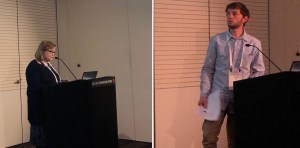
The next day, ADC kicked off with a symposium on the Brave New World of Diabetes Technology. Three early Aussie loopers – Cheryl Steele, David Burren and me – took to the stage and you can watch all our talks here:

New DIY Diabetes Technologies Position Statement at ADC

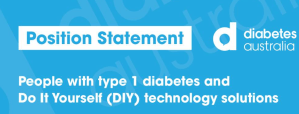
And if you make it all the way to the end (the symposium went for 2 hours all up), you’ll see Diabetes Australia CEO, Greg Johnson, launching Diabetes Australia’s new position statement about Do It Yourself Diabetes Technologies. I am so proud of this world first position statement, something that all diabetes stakeholders from all over the globe have been crying out for. (A reminder to anyone asking ‘Why don’t we have one of those?’: please don’t reinvent the rule. Adapt and use this for your jurisdiction and get it out there to start the conversation.

(Click link to go to position statement)

PWD on stage at ADC

Later in the day, the stage in Riverview 7, I was pleased to stand on a stage crowded with some wonderful diabetes advocates for an ADC first – a symposium on Co-design. More about this another time, but some familiar Aussie advocates shared their work which has really advanced the role of people with diabetes in the development and delivery of diabetes services, activities and resources. I was so pleased to be able to show the new Mytonomy ‘Changing the Conversation’ video as an excellent example of co-design.

Melinda Seed and Frank Sita at the co-design symposium

Sexy new pump hits Australia

And rounding out day one was the official launch of the Tandem t:slim pump which is making its way to our shores next month. This is a sexy, sexy little pump and I know there are going to be a lot of people very excited about it! (The pump is being distributed by AMSL Diabetes in Australia, so keep an eye on their website for more details.)

PWD at ADC

Pleasingly, there has been a presence of people with diabetes at ADC. Probably this is most visible when reading social media updates from the #DAPeoplesVoices. David Burren, Melinda Seed and Frank Sita have been invited by Diabetes Australia to provide updates and commentary of the Congress. They are tweeting machines and have been covering sessions, live-tweeting throughout. But that’s not all! Ashley Ng facilitated a Twitter workshop, encouraging HCPs at the event to get on Twitter and share what they were learning. Kim Henshaw is here from Diabetes Victoria; Tanya Ilkew from Diabetes Australia is also here. Grumps is here. And I’ve been doing what I can in between presenting and meetings.

I crashed last night with my voice gone, and fell asleep wrapped in the memory of a brilliant few days of impactful and meaningful advocacy efforts. There’s so much more to do. But these sorts of events, and opportunities to spend time with other people with diabetes who are certainly on the same wavelength and have the same commitment to bringing in the voice of PWD to all discussions, certainly help to advance our cause.

And one more thing

It looks like it’s that time again, Australia…

Disclosures

I was involved in the planning for the Ascensia Diabetes Care Social Media Summit and attended and spoke at the events Grumps attended. I did not receive any payment from Ascensia for this involvement or for attending the Summit. They did provide lunch and dinner, and gave me a free Contour Next One blood glucose meter. And an almost endless supply of coffee. Ascensia has not asked me to write about any of the work I’ve done with them. But I will, because I like to share and I know there are people who are desperate to know what was going on while Grumps was here!

Grumps was here as a guest of Ascensia Diabetes Care, who brought him to Australia to be the keynote speaker at the Ascensia Australia Diabetes Social Media Summit and to speak at other events about his #TalkAboutComplications initiative.

I’m popping back in from my blog break to share this wonderful video which premiered at the AADE conference in Baltimore over the weekend.

It’s a brilliant example of co-design, with the coordinator of the project, Deb Greenwood, working with people with diabetes, healthcare professionals, researchers and other key stakeholders to talk about the importance of language matters in diabetes.

The result is this three minute video which highlights how simple it can be to reframe the words we use, and to focus on empowering and supporting people with diabetes rather than judging and stigmatising us.

Please share this video. If you have diabetes, share it with your friends and family; if you are in a diabetes support group, share it with other group members and have a chat about it at your next meeting; I would urge (and hope that) diabetes organisations share the link on their socials and in newsletters and on websites; HCPs could watch and discuss during staff meetings; industry reps could also share through all their networks, and align their messaging with what they see and hear in this video. This is relevant to anyone and everyone affected by diabetes and/or working with people with diabetes.

We’ve been saying it for years: language matters. Let’s continue to improve the way we speak about and to people living with diabetes.

DISCLOSURE

Well done to the wonderful Deb Greenwood for coordinating this video and to Mytonomy for funding its development. I was invited by Deb to provide input in the script used in the video and then, while at ADA in Orlando, was filmed for it. I was kindly provided with a gift voucher for my efforts – and a makeup and hair stylist to make me look like a cable news anchor.

It takes effort to look at diabetes in a positive light. And sometimes, we need other people to shine that light for us. My husband changed a negative thought I had about an aspect of diabetes with one comment. And to this day, something that once filled me with sadness and dread, now makes me feel grateful and fortunate. 

__________________________________________

Living well with diabetes. That’s how I like people to think of me. And how I like to think of myself.

But there are occasions – rarely, although sometimes more frequent – where I do feel living with a life-long health condition that is there every minute of every day start to creep over me and a sense of dread and worry plant themselves at the back of my mind. For me, this is part of diabetes burnout. It’s a feeling of being overwhelmed by what diabetes is right now but even more, what diabetes could be in the future. How will my faulty pancreas and my autoimmune problems play out in my life?

And is there any point worrying? At the moment, things seem to be tracking along well. Annual complications screenings tell me that I am doing okay and I’ve read some research that shows people with diabetes are living longer and longer.

So why the dread and anxiety and is there any point? And even more, is it possible to change the way that we think about diabetes?

When I was first diagnosed, the smell of insulin would fill me with dismay. The very scent would remind me of the horrid, scary photos the doctor showed me within the hours of being told I have type 1 diabetes. An invisible force would reshape me from the vibrant 24-year-old I was at the time to a withdrawn, sick, shell of the person I really was. For months I felt this way and every time I gave myself a shot, it was like I was slowly drowning.

But that all changed one day. I drew up two units to squirt through the air before jabbing myself and said ‘Urgh. I hate the smell of insulin. It’s everywhere – I feel like it’s what I smell of now.’ Aaron who was sitting next to me looked up and said simply and matter-of-factly, ‘I don’t hate it. It’s the smell that keeps you alive.’

And just like that, the smell of insulin went from being a death sentence to life saving. It never bothered me again. Keeping the perspective of diabetes in its rightful place is not easy and there will always be times that we feel like it is heading in the wrong direction. We just need to find ways – and people – to say things to help us get back on track.

I still believe everything I wrote in this post from three years ago. And with the Australasian Diabetes Congress due to kick off next week, I thought it a good time to revisit.

People with diabetes have a place at diabetes conferences – even those designed for healthcare professionals. I truly believe that #NothingAboutUsWithoutUs needs to be the overarching philosophy when it comes to all diabetes activities, services and resources. Until we get to that place, I – and many others who feel the same way – will continue to plead our case for inclusion.

Put us on the program, on planning committees and at the front of your minds. 

_________________________________________________

Following the announcement at the end of last week from Diabetes UK that a new CEO had been appointed, there was much chatter online about whether or not the best person had been selected for the role. I have no opinion on this. I do not necessarily agree that you need a person with diabetes to be the CEO of a diabetes organisation – there are many other ways that meaningful engagement can take place ensuring that the organisation is representing the needs of people with diabetes.

What I was far more interested in was the direction the discussion took – specifically about the inclusion – or, as was being discussed, not – of consumers/patients/PWD/whatever you want to call us at professional conferences.

I watched on in silence as healthcare professionals, PWD and consumer groups all weighed in on the subject.

I am rarely a fence sitter, and on this issue, my position is very clear. Very, very clear.

I have yet heard a good argument as to why PWD should not attend diabetes conferences. In Australia, just as in the UK, we have the same limitations about people with diabetes having access to drug-branded information. This is archaic because, well, the internet. But whatever. (Read more here.)

Notwithstanding these code regulations, there is no reason that a PWD should not be welcome at a professional meeting about diabetes, hearing about diabetesresearch, learning about diabetes medications and technology and talking with the healthcare professionals working with people with diabetes. And if it is deemed that we are not fit to see the brand names of drugs, then keep us out of the exhibition spaces, but allow us to attend information and networking sessions. (For the record, I don’t support that idea either, but if that is what is necessary for us to be able to attend the sessions, then so be it.)

I would go one step further. PWD should be involved in the planning of these meetings. Why? Because surely if HCPs working with PWD are hoping to improve their knowledge and understanding of diabetes, a big part of that is gaining a better understanding of people with diabetes. And there is no one who gets that more than those of us living with diabetes.

I absolutely do not subscribe to the ‘why can’t we have a professional conference for health care professionals’ viewpoint. Well, of course you can. But there is no reason that PWD should not be involved in this and attend alongside healthcare professionals.

I’ve been more than a little vocal on this in the past. Search ‘consumer involvement’ or ‘PWD at diabetes conferences’ on this blog and you might just come up with a few things. I’ve given talks both here in Australia and overseas about it. I constantly expound the value of the consumer voice and consumer participation and consumer involvement.

The thing that interested me in the discussion I was following was just how hostile it was at times. With 140 characters or fewer at our disposal, we can’t always be as tactful as we might be in person. Sometimes, being direct is the only way. And knowing a few of the people involved in the discussion, tact is perhaps not a characteristic that they generally employ. I say that without any snippiness at all – it is part of the way they get their point across.  I get it – I am often accused as being like that and I wear it as a badge of honour. As far as I am concerned, the involvement of PWD is non-negotiable and if I sound pissed about it, I probably am!

But being hostile and aggressive is not likely to result in a favourable resolution.

Working for a diabetes organisation puts me in a unique position. As part of my work, I get to attend the very conferences from which other PWD are excluded. Plus I am frequently invited to speak and this privilege is due to a combination of my diabetes org work and also my work as a blogger and diabetes activist that I do outside of paid employment. It’s a sticky situation that I manage as best as possible. There are disclaimers everywhere and even the whiff of a conflict of interest is declared.

However, there is one thing that I have learnt from ‘being on the inside’ and that is working collaboratively is highly likely to produce results more than being combative. There is a lot of negotiating required at times and an understanding that things take time. Sometimes lots of it. It’s taken me a lot of time to understand that!

Call me – and those who are trying for a more collaborative approach – political or bureaucrats. You can think we’re sell-outs. We’re not. At all. We actually have a seat at the table and are working for people with diabetes. And you want us sitting at that table! Come join us.

So, think you want to get involved, but not sure how? There are myriad ways that you can try to work with organisations. If paid employment is not what you are looking for, there are many volunteering opportunities including Boards (some may be paid positions), advisory panels, expert reference groups or simply, pick up the phone and pitch your idea!

This is an edited reblog (with a few new bits!) of a post from the old, now defunct, WordPress version of the Diabetes Victoria blog. I may live with diabetes and diabetes may live inside me. But I don’t do diabetes alone and I have always been emphatic about acknowledging the support I am fortunate to have. I couldn’t live with diabetes as well as I do without the people living in the village around me. 

__________________________________________

I have type 1 diabetes… And the people I know with type 1 diabetes – in fact, all types of diabetes – who appear to manage best, do so with the support of many people, a veritable village made up of loved ones, friends, colleagues, extended families, health professionals. And the odd village idiot.

I have type 1 diabetes. Although my husband doesn’t, he knows a terrible lot about it. I’ve never seen anyone fly across a room to grab a jar of jelly beans the way he does when he sees that glazed look come over me. Or when I start to giggle uncontrollably for no apparent reason. Or when I begin to tear up for no apparent reason. Or when I start to act irrationally (he would perhaps suggest more irrationally) for no apparent reason. Aaron not only identifies when I am hypo before my meter has told me, he can also interpret my different hypo personalities, of which there are many. This, quite frankly, makes him brilliant. But the most wonderful thing Aaron does for me and my diabetes is that he recognises how crap it is sometimes. I love how he has learnt that trying to ‘fix’ a diabetes situation isn’t what I need; instead a nod of his head, a hug and the words ‘Diabetes sucks’ will more than suffice.

I have type 1 diabetes. Although my daughter may not, she understands just how it impacts on me. From when she was tiny to now, she has come to know that diabetes does impact on me at times and that will affect her. But she has never complained. Her advocacy efforts make me proud and pain me in equal measure, because diabetes has become her cause in may ways when I really wish it hadn’t.

I have type 1 diabetes. Although my endocrinologist may not, she has an uncanny ability to pinpoint the exact information I am looking for (often before I’ve asked). She knows about the dark side of diabetes and offers help working through it. And she listens, listens, listens.

I have type 1 diabetes. Although most of my friends don’t, (even though I seem to have a statistically significant number of friends with diabetes), they know that diabetes sometimes really pisses me off and that the way to offer help is not with unsolicited advice. However an offer to meet me for coffee, prosecco or chat or walk where I can vent about diabetes – or ignore it – will always be met with gratitude.  And those friends who do share my pancreatically-challenged existence offer support, humour, understanding – often without words.

I have type 1 diabetes and my parents don’t. My mother also lives with a life-long condition and although it’s different to mine, we have an unspoken understanding of the boredom and sheer frustration of such an imposition in our lives. And when she sees that I am going through a difficult period, she helps – but never, ever makes it about her. I was diagnosed as an adult, so my parents were never responsible for making diabetes decisions for me. But I know that they walk alongside me, keenly feeling my frustrations and anger, as well as the moments I celebrate. I’ve come to learn that’s what parents do for their kids – even when their kids are in their 40s.

It takes a village to raise a child and it takes a village to deal with diabetes.  When we try to do it all on our own, it can be overwhelming.  My village supports me, assists me, and reminds me that they are there to help. Not only in the times things are becoming too hard, but also in the times when everything is going well. They are part of the reason that the good times happen. They didn’t choose to live in this village and they could have moved anytime they wanted. But they haven’t. I don’t think they will never know how grateful I am to them, but I will try to tell them and explain how important they are.

Of course, the village idiots will always feature – those who think they found a cure in herbs they picked up in their recent travels. Or those who think that the best way to deal with me having diabetes is to pity me. But the village idiots can be a source of humour too, (see here). And laughing is important, so in their own little way, the village idiot is helping and I say thanks to them, too!

There is never a better time to employ the WAIT (Why Am I Talking) philosophy than when speaking with someone newly diagnosed with diabetes. Even if there is lots I’d like to say, as I wrote in this oldie from the archives.

________________________________________

She called me because someone had told her to get in touch. ‘Speak with Renza. She gets it.’ Is what she was told. She we organised a time to meet and over coffee we talked. And she searched my face for reassurance as she told me how scared she was feeling.

When I meet someone who has recently been diagnosed with diabetes, I say very little. I listen. I ask questions and gently try to find out what is going on in their head. I don’t say much about my own diabetes, because I don’t want to imprint my experience in their mind. Everyone feels different at the time of diagnosis and working out exactly what they are feeling needs some time.

I listen and sit there quietly and try to reassure and be positive. I nod a lot, and let them talk and vent and, if they need to, cry. Usually people cry. And I let them know it is okay. I did all of this with the woman who called me. She did cry and she did vent. And then she cried some more. And I said hardly anything.

But this is what I wanted to say:

  • It is okay to feel scared and uncertain. Or angry. Or completely and utterly ambivalent.
  • Because, you see, there is no right way to feel right now – or ever – about living with diabetes. And equally, there is no wrong way to feel.
  • You don’t have to work this all out this week. Or next week. Or next year. In fact, you never have to work it out.
  • But do work out what you can manage today and do that. And whatever it is, it’s enough. It. Is. Enough. And well done you for doing it!
  • Find your tribe. In fact, this is what I want you to know more than anything. Others who are also ‘doing diabetes’ will help you make sense of this new world. You have to be ready to do that, but do be open to the idea. I wish that someone had introduced me to others with diabetes when I was first diagnosed. It took me over three years to meet another PWD and I felt so alone in those three years.
  • And when you do meet people, don’t think that anyone has this diabetes thing worked out completely. Even those who say they do…
  • …because, there is always more to learn, which is daunting and exciting in equal measure.
  • I promise you – whatever you are feeling, whatever you are thinking, someone has had that same feeling and same thought. You are not alone. (Reading diabetes blogs will prove that to you!)
  • Diabetes may feel like it is about to take over your life and it probably will for a little bit. And there may be times that it does again. But it will not define you for the rest of your life or determine who you are. It can be as much or as little of your identity as you choose to let it.
  • You will be okay. You will be okay. You will be okay. (And, yes, I am saying that for your benefit as much as my own!)
  • There will not be a cure in the next five years. Or even ten. I am not saying that to be pessimistic, I just want you to understand that hope is really important in living with diabetes. But unrealistic expectations that won’t come true are not going to give you that hope; they will destroy it.
  • Ask questions. All of them! You may not like the answer (i.e. see previous dot point), but ask anyway. You will be amazed at the things you learn.
  • Your diabetes; your rules. This will become more and more apparent the longer you live with diabetes. You don’t need to explain, apologise or justify anything you do to manage your diabetes. Ever.
  • Anyone who makes you feel crap about your diabetes – whether it be the fact you have diabetes, or how you are living with it – needs to fuck off. (And if you can’t tell them that, find someone in your tribe who can! I am happy to be that person. Truly! I have the mouth of a trucker and I’m not afraid to use it.)
  • Do not watch Steel Magnolias. Ever.
  • Right now, this probably seems like it is the worst thing that will ever happen to you. This may sound odd, but actually, I hope it is. Because I know you can get through it.
  • You will laugh again. And smile and feel light. You will not think about diabetes for every minute of the rest of your life. It will be there, but it does not have to rule your very being. It certainly doesn’t rule mine. You will learn where to place it in your world, and that is where it will sit.
  • You do not need to feel grateful that you have been diagnosed with diabetes and not something else. Because it does suck. It’s good to remember that and say it every now and then. Or shout it out. While drunk.
  • Go buy a new handbag. Trust me! If you want, I can help you to justify it as needing a new bag to cart around all your diabetes crap, but just do it for yourself. And while you’re at it, a new pair of shoes. Just because!
  • Call me. Anytime. If you want. Only if you want. And even if it just to hear me tell you that you will be okay.

But I didn’t say those things. I only said this: You will be okay. I know this to be true because you are strong and resilient and capable. I know this to be true because many others have walked this path and worked out how to make it okay for them. You will do that too. It will be okay for you.

And I hope that was enough. Or, at least, enough to start with.

A new hipster cafe recently opened in our neighbourhood. We knew it has serious hipster credentials before we even walked in because it is housed in a warehouse which was once a printer, and it’s hidden away without any obvious signage.

Recycled plastic and coffee husk coffee cup.

When we stepped inside, we found the staff had appropriately ironic facial hair and tattoos. They were all cool and friendly. I felt old and decidedly uncool, but nonetheless, found a table down the back and sat down.

The menu was full of fermented goodies, organic kale, and a million varieties of kombucha. There is no smashed avocado on the menu here. Oh no, that’s too common. You want something smashed on your organic, ancient grain toast? They offer post-hipster smashed edamame.

Organic, fair trade coffee is served in cups made from recycled plastic and coffee husks. Because: of course.

And there is an indoor herb garden on the mezzanine.

This is exactly the sort of place that someone could brunch at, and then confidently fill in one of those newspaper ‘what I ate today’ surveys. And it would look like this one I prepared earlier (back in 2015).

__________________________________

Every Sunday, in the Life magazine of The Age newspaper, is a column where people (usually B to Z grade celebrities) are asked about what they eat on a given day.

They all seem to follow the same boring, unadventurous, ‘this-is-what-a-dietitian-wants-to-hear’ diet. Usually, they start their day with lemon water (to help kick start their metabolism or help with their bodies pH or boost their antioxidant intake or cleanse their liver – it depends which pseudo-science crap they have been reading up on that week), which I am reliably informed (by, you know, qualified practitioners) does nothing other than potentially erode tooth enamel.

Mostly, the foods consumed by those lying about reporting what they ate include a lot of kale, brown rice, kale, grilled salmon, kale, green tea, kale, organic vegies, and kale. Because, kale.

It was in such an article that I first heard of Pete Evans with his ridiculous claims of activating his nuts.

The dietitian – the very sensible and very lovely Dr Joanna MacMillan – then usually comments that even though the person had lied reported eating well, they should try to incorporate more grains/leafy green vegies/lean meat/low fat dairy etc. in their diet to ensure they are following evidence-based dietary guidelines. There is (thankfully) often a ‘stop believing the crap you are reading’ message in there – and a reminder to stop eroding their tooth enamel first thing in the morning.

So, I thought I would write down everything I consumed on a recent day. And then translate it into the language used in these articles.

Breakfast

Caffe latte

Single origin organic coffee grown by virgins on an Ethiopian hillside, reverse-osmosis filtered organic water, organic milk from cows grazing on organic kale while piped music is played to them, fair-trade, organic, raw sugar grown under the organic sun and picked by night under an organic full moon. 

Avocado toast

Two slices of artisan organic sourdough bread, evenly toasted by hand with a blow torch using organic butane, spread with organic avocado picked that morning, speckled with organic black sea salt from the organic Black sea.

Lunch

750ml pineapple juice (I had just mowed the lawn and was hypo. Really hypo.)

Pure filtered organic pineapple nectar, extracted by hand from an organic pineapple, naturally sweetened by smiling pineapple nectar extractor pixies. 

Afternoon tea

Caffe latte

As above, but this time sweetened with organic agave syrup from Mexico.

Dinner

Homemade pasties.

Ratatouille of organically-grown baby vegetables including organic peas, organic potatoes, organic green beans, organic corn, organic onion, organic celery, organic spinach, organic zucchini, organic eggplant, organic garlic, organic turnip with organic micro-herbs wrapped in organic butter-pastry, gently baked until organically golden brown.  

Salad of avocado, spinach leaves, sesame seeds and dressing

Avocado as above, organic baby spinach leaves picked just before becoming teenage spinach leaves, sprinkled with organic sesame seeds drizzled with a dressing of organic EVOO and organic balsamic vinegar. 

Dessert

Three gluten free chocolate chip cookies (gluten free because the only flour-like product in my house at the time I had a sudden urge to bake was almond meal. Strictly NOT for any health benefits.)

Trio of gluten-removed organic dark chocolate shard biscotti made with gluten-free organic almonds, crushed by hand, baked into organic orbs of goodness.

Basically, my diet that day involved a couple of coffees, three quarters of a litre of pineapple juice, two slices of bread with avocado, a couple of pasties and three chocolate chip cookies. Not great at all. But honest.

And it was a good day, a healthy day. Because with everything I ate, I bolused insulin for it (not the pineapple juice – that hypo was terrible!). I ate what I chose to eat and then did what I needed to do to manage my diabetes. I took insulin. Or rather, sub-cutaneously infused organic insulin made by the delicate hands of Celtic insulin faeries.    

Follow Diabetogenic on WordPress.com

Enter your email address to follow this blog and receive notifications of new posts by email.

Read about Renza

Archives