I read a powerful piece yesterday by Canadian writer, speaker and health advocate, Sue Robins. She has years of experience as a family advocate (her son has Down Syndome), and then, after being diagnosed with cancer, a patient in the health system.

Sue’s post was about her decision to withdraw from the world of patient engagement. Clearly, it was not an easy decision, but one that she felt she needed to make for her own wellbeing. No one could ever blame her.

So much of what I read in Sue’s piece resonated. The desperation she beautifully and eloquently outlined is something that I keenly have felt (feel?). And I know it’s not just me. I see that in the eyes of others trying to elevate the role of ‘patients’ and to ensure that we are truly listened to, and treated with the respect, compassion and kindness we deserve, all the time.

I get the constant battle that we have – and it does feel like a battle a lot of the time. On one hand we feel so invested in what is going on because it is happening to us directly. How can we feel any other way?

If we are living with the condition, it is personal beyond measure. If we are caring for someone and advocating for them, there is a different sense of pressure and investment. And if we decide that this is ‘a calling’ and do it professionally, there is a different again as we try to work within different parameters – the need to keep within the realms of what our work allows, and the less structured realities of actually living with a health condition.

For me, there is a mixture of the professional (because of my job) and the personal (because of my pancreas). I feel the push-pull of that daily.

I get tired. I get overwhelmed. I get discouraged. I get disengaged. I get disheartened.

I feel the system is broken and I feel how that goes on to break people. I have found myself at that breaking point on more than one occasion when the system is failing me, and equally, when I see it failing others and I can’t help.

Operating in a network with so many stakeholders is always difficult, but when each of those stakeholders seems to have a different mission, it becomes impossible. Because as much as we want to think that everyone’s mission is for the best outcome for the ‘patient’, I don’t know that that is necessarily true.

What I want when I walk into a hospital or a clinic appointment (or a GP appointment, pathology room, specialist check-up, operating surgery, or any other healthcare setting) is different to what the hospital administrators want, or the HCP, or policy makers, or any other stakeholder. Despite the claims of mission statements everywhere, it is undeniable that it is not the persons in the so-called person-centred care that direct outcomes.

Every single story we hear where someone is treated poorly, isn’t listened to, is blamed for their condition, is not given time or space to voice their needs, feels uncomfortable with how they have been spoken to, is another example of the system not being person-centred.

In diabetes, it could look like this:

  • A person not being given the option of using the device they want to manage their diabetes. I repeatedly hear people say that they were told they could not use the pump they want to use because their clinic doesn’t offer that one.
  • A person who is just diagnosed with type 2 diabetes, or needing to go on insulin to treat their type 2 diabetes being told that it was through their doing that this has happened.
  • It could be not being able to manage our diabetes as we do at home when we are in hospital – insulin is removed from us, pumps are taken away, we are not allowed to use CGM in hospital and must go back to using blood glucose monitoring, not being able to eat the foods that we want because we must have the ‘diabetic menu’.
  • A diabetes-related complication diagnosis is met with judgement instead of information about how to move forward.
  • A person with diabetes being denied the time they need to speak about what is really concerning them, instead appointments following a formula that is unable to be adjusted.

It also looks like being excluded from the consultation, development, coordination and evaluation of programs, services, activities and resources that we are meant to use and find useful.

I don’t say these things because I think HCPs are out to get us, or that hospital admin teams are trying to make our lives hell, or that policy makers don’t care. I understand that everyone is working in trying times with funding cuts that are crippling the system. I know there are guidelines that need to be followed.

But at the end of the day, diabetes is our life. Melinda Seed has said ‘We have skin in the game’, a term I use when talking about the safety of using DIYAPS. We mean it literally as well as figuratively.

Again – I am not in any way minimising the commitment and dedication that HCPs have to working in healthcare. I genuinely believe that almost all are there trying to improve our lives and help us make sense of what is going on in our bodies.

But our desired outcomes are different. My KPIs when I walk out of a HCP appointment include feeling positive, feeling listened to and knowing how to move forward until my next appointment. I need to feel that I am equipped, motivated and encouraged.

We can read stories like Sue’s and shrug and say that she is burnt out. Burn out is almost inevitable when living with, or advocating for someone, with a life-long condition. But we shouldn’t be getting burnt out by the system. We get that enough when our bodies decide to start working against us. We need the health system to be working for us. And with us.

Under a month to Valentine’s Day and that means the Spare A Rose, Save a Child campaign is kicking off soon. #SpareARose is a DOC-led initiative encouraging people to make a small – or large – donation to support Life for a Child.

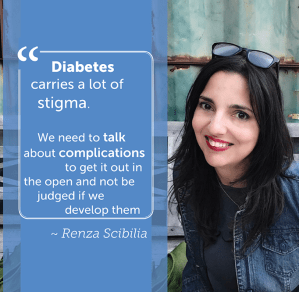
It’s really simple. In fact, as easy as…There will be more – lots more – in coming weeks, so stay tuned.
(By the way: the website you need for more info or to make a donation is THIS ONE.)

It’s hot in Melbourne today and it’s going to get warmer over the next few days. I’m loving the bone-warming sun that just makes everything look so sparkly and bright. So, I’m spending as much time as possible soaking up the rays (and adding to the ridiculous tan mark around my Dex), because the cooler weather will be here before I know it. I’m trying to build up those vitamin D stores to last me for when winter hits here and I’m reliant on quick trips to the northern hemisphere for work to see the sunshine and warmer temperatures.

Anyway, diabetes doesn’t take a break over the summer. Or winter. Which means, there is always lots to read and see about it. Here are some of the things I’m catching up on now.

Hospital life in pictures

This piece from the guardian will break your heart. Explained pictorially, it’s easy to see that the medical system is broken, medical education is broken, hospitals can be incredibly cold and anxiety inducing places, doctors are at breaking point. And patients in the system are left to deal with the fallout from the disarray.

IDF comps

The International Diabetes Federation is working to reduce the stigma association with diabetes-related complications, with a focus on how the language used can make people feel judged and stigmatised. Last year, they launched the #DiabetesComplicationsTalk Facebook page, encouraging people with diabetes to share stories and support each other.

It’s really great to see the IDF in the #LanguageMatters space, encouraging people to openly speak about diabetes-related complications to help reduce the stigma associated with them. More here.

Diabetes Voice

Still on news from the IDF, the organisation’s quarterly magazine is now available electronically. The first edition is an absolute cracker. Start with this incredibly powerful piece from editor, Elizabeth Snouffer, about diabetes-related stigma. Read it. Share it.

Patient Revolution

If you’ve not checked out the Patient Revolution website, now is a great time to have a look.

Start with this page, which is a library of stories you can click through, finding any specific topics that you are interested in.

Also, there is a Patient Revolution chat which uses the hashtag #WhyWeRevolt. To keep up to date with their chats, and to take part, follow @PatientRev on Twitter.

1,200 mason jars

Do you ever find yourself in the midst of a Twitter thread, wishing, in equal measure, that you hadn’t started, but can’t get enough of it? Sometimes these threads are diabetes-related; sometimes they’re not. Go here for one that is definitely not.

I have spent far too much time in the last week invested in this bizarre tale. There is a lot to take away from the whole saga – maybe starting with: don’t pay USD$169 to hear someone ‘teach’ you how to ‘be you’. And there are a lot of unanswered questions, such as what the hell is going to happen to the mason jars.

Happy reading. (You may need a drink …)

Diabetes in the US

I will never understand the US health system. My head and heart hurt as I hear the struggles of friends with diabetes, and the difficulties they have accessing insulin, and diabetes tech and supplies.

This piece from the New York Times talks about non-medical switching, where insurance companies decide which drugs (and devices) they will cover and subsidise. In Australia, the government decides which drugs will be listed on the PBS (Pharmaceutical Benefits Scheme). If a drug is on there, it is the same price for everyone who has a prescription. There are some drugs that require a special prescription to be provided at the subsidised price. But there is no extra negotiating or pleading, or any involvement, with insurance companies.

In a system that is broken beyond measure, this seems like one more roadblock to make just surviving with a condition such as diabetes impossible.

Going beyond

Beyond Type 1 has grown to include a new platform for people with type 2 diabetes. Check it out!

Real life Loop stories

The team at diaTribe has a new series of personal stories of people who have been using DIYAPS solutions. Adam Brown’s story was first, and Kelly Close has now offered her experiences. Such a great idea to get a number of different insights into what has worked, what hasn’t and hopes for the future of DIYAPS.

Sharing and caring

Also from diaTribe, this great piece from Kerri Sparling which provides her own and others’ perspectives on sharing of CGM data. There is no one way to share data – it is personal, individual and can change over time, depending on circumstances. Some choose to; others don’t. I love this piece because it is balanced and offers some interesting thoughts.

Ascensia and CGM

More tech choices for people with diabetes is always great to hear, so Ascensia’s recent announcement of their move into the CGM market has been met with enthusiasm from the community. Read their release here and Diabetes Mine’s take on the announcement here.

SoMe at conferences

I believe social media engagement and use at all health conferences is a critical and necessary part of any communication strategy. There is no better, easier or more effective way to share details of the conference that by encouraging the people attending to broadcast using their own social media networks.

This article explores that, referencing the ridiculous photo ban at ADA in 2017 (which thankfully was changed in 2018).

Menopause and T1D blog

Sarah Gatward is a blogger from the UK and she is writing a series sharing her experiences of living type 1 diabetes and going through menopause. Yes! And thank you, Sarah. Start here.

NDSS reminder

Now is a good a time as any to make sure your NDSS details are up to date. Remember – the NDSS is not just about subsidised diabetes supplies. It also provides information and support for people affected by diabetes.

Go here to make sure your registration details are correct.

Bin the fax

All my dreams came true when I read this article in the Limbic today! Finally calls to get rid of the archaic fax machine in health care. Halle-bloody-lujah!


Last November I spoke at the HIMSS (Healthcare Information and Management Systems Society) conference in Brisbane (and wrote about it here). I was only flying up for the day and my schedule had been diligently planned but the HIMSS team, utilising every single moment I was at the conference centre. I was in two sessions, but before that, I was to be filmed for HIMSS TV.

Best paid plans, and all that – my flight was delayed. By quite a bit. The interview would need to be rescheduled. I landed, unsure if I would make it in time for my first talk, and begged the taxi driver to do all he could to get me there on time. The man was a miracle worker, delivering me to the conference centre five minutes before my first session started, and I walked onto the stage with the sound guy’s hand halfway down my dress (the back of it, settle down), mic-ing me up as the chair was introducing the session.

As soon as the second session was done, I was whisked away for the interview. We were running through the conference centre halls (this time the sound guy was trying to retrieve the mic he’d affixed on me earlier – we’re now very good friends), to get to the interview area.

I had literally 15 minutes before I needed to get into a cab to head straight back to the airport for my flight home, but the HIMSS team was determined to get me chatting on camera. Good thing I talk so fast.

Also, good thing that I was asked to speak on a topic that I could happily blab on about for hours. While underwater. I was there to speak about person-centred care in healthcare.

I find it a little odd that the title of the interview is ‘Disrupting diabetes treatment with a person-centred approach’, because we have been talking about this for a long time. This isn’t new; it’s not disruptive. But clearly, it’s still something that we need to be talking about, because I think that there is far too much lip service and not enough action when it comes to patient-centred care.

I’d completely forgotten all about the interview until someone tagged me in a post on Twitter and LinkedIn when the interview was launched just after New Year. You can watch it by clicking on the image below. I talk very fast…I had a plane to catch.


So, who’s jumped on the Marie Kondo bandwagon and is in the midst of a massive clean-up and subsequent drop off at the local op shop?

I was all ready to roll up my sleeves and get dirty, until the bit about books. Thirty books? What kind of person only has thirty books? That was the point I decided there was nothing about Kondo that sparked joy and that she could fuck right off.

But, after opening my diabetes cupboard at the end of last year and half the contents falling to the floor, I decided that decluttering might be a good idea.

Here are some of the things that I found in there:

  • Eight different diabetes spares bags in different stages of disrepair.
  • Three brand new Casualty Girl bags, waiting to be used.
  • Seventeen (I am not exaggerating) meters that I have no strips for, have dead batteries and I wouldn’t even know if I could still order strips through the NDSS. One of them I am sure was so old that if I could get it working and had the necessary strips would take twenty seconds to do a reading. No one has time for that kind of messing around in 2019.
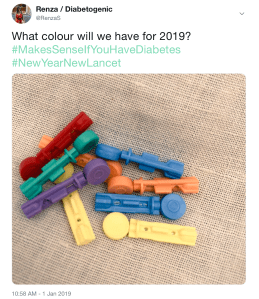
  • Some brightly coloured lancets (which actually looked so pretty, and almost – almost – made me change my lancet).
  • And enough boring white lancets to last me and all people with diabetes in Australia until the year 2456.
  • Some questionable looking glucose gel that was, apparently, grapefruit flavour. (That noise you hear is me retching.)
  • Far too many blood glucose log books which I picked up and laughed at. Such optimism to have kept them in there.
  • Pump supplies for my old Animas pump.
  • And my Animas Vibe pump – which is the back-up to my loopable backup pump. (Back-up to the back-up. Look at me growing as a person!)
  • My old Deltec Cozmo pump. (At this point, I may have teared up a little. And given it a hug. Because, damn, I loved that pump. So much joy was sparked just looking at the gorgeous little thing and remembering what a nifty little pump it was.)
  • Three boxes of syringes (clearly bought when I found myself desperately needing syringes for some reason and walked into a pharmacy only to be told I needed to buy them in bulk, because that’s how they come via the NDSS.)
  • Loose strips – dozens and dozens of them. Some of them may have been used. Some of them I can’t even remember ever having seen before. Some of them look as though they are from meters that we don’t even have in Australia. Is it possible that glucose strips can just apparate from someone else’s diabetes cupboard?)
  • Manuals for pumps (dating back to 2001) and meters and other long forgotten diabetes devices.
  • Crumpled up brochures about healthy eating with diabetes that had been annotated with comments including ‘As if!’, ‘YOU eat plain yoghurt’, and ‘This cereal tastes like gravel’.
  • And cables and cables. And cables.
  • Five empty Dex transmitter cases, with the date they were started scribbled in black Sharpie across their tops.
  • Programs from diabetes events past, including the first Six in the City series run back in 2006!
  • An iBGStar meter. Wasn’t that a fun little diabetes trend for about 25 seconds?
  • Cartridges for pumps I’ve never used.
  • Lanyards from a couple of conferences.
  • A few empty insulin bottles that I was going to use for a craft project until I remembered that I don’t do craft projects.

I threw out a heap of things, straightened up the rest and closed the cupboard door. I sat down on the bed and looked at my diabetes cupboard. I realised that trying to apply the Marie Kondo approach to cleaning up diabetes supplies has one major flaw. Going through all the things in there sparked a lot of emotions, but joy was not one of them. In fact, joy is not really ever an emotion that I would associate with diabetes. Frustration, anger, sadness, ambivalence, tedium, fear? They’re sparking all over the place. But joy? Not so much.

Thought about changing lancets. But the idea didn’t spark joy.

Welcome to January when suddenly the only thing that I seem to see on social media feeds, giant billboards around the city, and TV advertisements is details of weight loss programs. Because, of course, that’s what we should all be aspiring to, right? If we were happy to see the back of 2018 after a hard year, losing a few kilos will obviously set us on the track to eternal happiness in 2019.

Right?

Of course not.

Nevertheless, wellness gurus, celebrity chefs, local gyms, celebrity trainers, everyone who drinks green juice and has an Instagram account come into their own when January ticks over, heralding the birth of a new year and, while the fireworks are still bright in the sky, urging us to start a new (and completely unsustainable) diet, detox, and/or exercise plan to lose weight.

Under the guise of pressing us to be the best person we possibly can, they remind us that we have been slobs for all of December and need to shed weight because that will make us happy. Oh, and buy this teatox/12 week program/juice cleanse/lemon fast for a small monthly fee of $39. That’s not much, right? And what value can you put on your happiness, right? Lose weight; be happy. The equation is simple.

Except, it’s not. And when the emotional burden of diabetes is added to this – when there is something else that we are made to feel we need to fix – the start of the year suddenly doesn’t feel full of shiny and bright and new promise. It feels like we are about to fail. Yet again

I like the idea of stopping and hitting the reset button (oh – did you read yesterday’s post?) and if weight loss is your goal, then that’s fine. But we need to stop equating happiness and perfect health with a number on the scales. We need to stop being made to feel guilty because we may have eaten a little more than usual over the holiday period. And we need to stop being made to feel that we should be seeking redemption for our sins of enjoying the holiday period. We need to stop being sold the idea that the road to happiness and health is signposted by losing kilos

Because the reality is that all these messages actually add mental weight. And no one needs that shit in January. Or any time of the year.

But, I have found some ways to shed that weight.

You could start by getting of social media completely. But that’s as laughable to me as suggesting I should be running 5Ks a day and consuming only kale and kombucha. It is, however, worth acknowledging social media – actually, any media – is a fucking nightmare at this time of year, maybe even more so than at other times. But, there are some bright lights out there that, instead of suggesting that we are full of faults and problem areas that need fixing, encourage us to just damn well like (or even love!) who we are. Here are just some things you may want to check out:

Nina Mills is a Melbourne-based dietitian who just gets it. Her blog, Twitter and Insta feeds are well worth following for their no-nonsense approach to eating and anti-diet messaging. She nourishes the SoMe soul with delicious recipes and sensible ideas, and a healthy dose of self-deprecating humour too (her food fails posts are hilariously honest!). It is no secret that I have had very few positive experiences with dietitians – both personally and professionally – in my 20 years with diabetes, but had I met someone like Nina years ago, I would have a very different story to tell.

You can follow Nina at Feel Good Eating on Insta.

Body Posi Betes is run by my mate Georgie, who thankfully has returned from Paris and made Melbourne feel right again. The diabetes thread that weaves its way through her posts is life-affirming, as is the complete and utter refusal to subscribe to any sort of diet culture. She is sassy, sweary and fucking fabulous.

Start with Body Posi Betes on Insta.

Claire Christian is one of my kid’s favourite writers and her Insta stories are full of great ideas and strong feminist messages. She is a high school teacher as well, and if you have teenagers, (especially teenage daughters), check her out. (I have no issue with swearing…obviously…but if you do, you may find some of her posts a little confronting. But if you can push through that, she is just such a great role model for young girls, and 45 year old women too!)

Follow Claire on Insta here.

Watch Dumplin’ on Netflix. And then watch it again! It is so, so gorgeous. It’s completely PG, and totally appropriate for kids. Plus, Dolly!

It’s not hard to love Jameela Jamil, and her amazing #IWeigh campaign continues to remind women that we are so, so much more than a number on the scales. She tore strips through celebrity weight loss products at the end of last year with a hilarious video of her spruiking a (fake) detox program. Her posts are brilliant, she is brazenly feminist, and calls out any bullshit she sees.

Her Insta is here. And here’s what I wrote about the #IWeigh campaign last year.

Obviously, there are so many other great thing to check out, and if you have any suggestions, please share them in the comments. This is a great time to curate what and who we follow by removing anything that makes us feel that we have faults or need fixing. Because we don’t. There is nothing wrong with wanting to be better or to find ways to make ourselves feel happier and healthier. But shaming or guilting us into it, or focusing purely on how we look is not the way to happiness. That just weighs us down.

Ice cream is not a reason for guilt. Tastes good, though…

Well, hello! And happy New Year.

How has 2019 started for you? Have you bundled into the year following on from last year, or have you managed to stop for a bit and found yourself in the blissful state of not knowing what day of the week it is? I was like that until yesterday when I had to accept it was Sunday, the day before Monday…and Monday meant back to the grind.

After three weeks off, I’m back at work. Those three weeks were truly delightful – late nights, lazy mornings, limited plans, and topped off with a few days on the coast at a very quiet seaside town. There was bright sunshine – and I have Dexcom tan lines to prove it. The sun has warmed me through to my bones and recharged me.

Once again, I’ve not made a single resolution – because I’d have broken them all already – and trying to not look too far ahead into the year because the calendar is already looking slightly scary. I’m trying to preserve the relaxed, breezy feeling that has cocooned me. And not think about airports.

But I have been thinking about my word for the year. I still like the idea of this. I’m not sure exactly how successful I’ve been the last couple of years with my choice of words and what they were meant to represent, but I do like, if nothing more, that they helped me shape some of my plans for each of those years.

This year, I have decided that my word is reset. I feel that one of the things I do badly is get too caught up in what is going on, finding it difficult to see the wood for the trees. It’s easy to do – something happens and we become too invested in our own viewpoint that we actually lose overall perspective. Other times I get caught up and end up just being on autopilot, not really thinking about what I am doing. When these things happen, I need to stop, snap out of it. And reset.

So this year, that’s what I am going to try to do anytime that I find myself in the midst of something. Or when I feel that I am just coasting and not making any meaningful decisions.

I think I need to do that a little with my diabetes. I have settled into a comfortable, but not especially proactive routine with how I am managing my diabetes. It’s resulted in me being a little less engaged than I would like to be, and that leads to me starting to feel guilty. That bloody diabetes guilt is really hard to shake, but the best way I’ve found to keep it at bay is to think a little more about what I am doing.

There are no grand gestures or plans in this. It’s just about trying to be a little more meaningful and concentrated in my actions. And this intention feels good.

So, here’s to a happy 2019 to you all. Please feel free to remind me any time that I am getting a little ranty and ragey that I need to snap out of it. And reset. I would really appreciate that!

I wrote this post 2 years ago to commemorate an important date in diabetes history: the administration of the first insulin injection. Today, it’s 97 years since Leonard Thompson was given this life saving drug; the drug that keeps me and millions of others around the world alive each day.

And yet, 97 years later, insulin is not accessible to everyone who needs it and people continue to die because they cannot afford the same drug that those of us in Australia can easily and affordable find at any local pharmacy.

So today, as I remember Leonard and the significance of this date and reshare this (slightly edited) post, I’ll be making a donation to Life for a Child. Because no one – no one – should die because they cannot access a drug that has been around for 97 years.

___________________________

On 11 January in 1922, a 14-year-old boy in Toronto was given the first insulin injection to treat diabetes. His name was Leonard Thompson, and he lived for another 13 years, before dying of pneumonia when he was 27 years old.

Before he was given insulin for the first time, Leonard was on the only treatment available at the time for those diagnosed with type 1 diabetes. He was on a starvation diet, and he was close to death, drifting in and out of a coma because of diabetes-related ketoacidosis.

There are dates each year that trigger reminder lessons in the discovery of insulin. On those days, I say a silent thank you to Banting and Best for their work, grateful to them for my life and I peek into my refrigerator at the vials of insulin within easy reach for when they are needed.

But I also feel a great sense of sadness and frustration, because today, ninety-seven years after Leonard Thompson was given his first insulin injection, this miracle drug is still inaccessible to so many people with diabetes. And people are dying, suffering in the way that Leonard was before he was given the drug for the first time.

Yes, I said ‘suffering’. And I don’t use that word. I don’t suffer from diabetes – I live with it. But make no mistake, someone who cannot access insulin and is dying from diabetic ketoacidosis is suffering. They are in pain; their body is in distress. They are dying.

The playing field is so un-level and that is simply not fair. So if you are able to – if you are one of the fortunate ones with insulin in your fridge, please do consider donating to those who are not.

Around Valentine’s Day each year, Spare a Rose suggests sending 11 instead of 12 roses. The AUD$6 saved provides insulin for a month to child with diabetes through the IDF’s Life for a Child program.

Insulin for Life Global needs donations to fund transport costs for delivering insulin to those most in need. AUD$12.50 will cover the cost of sending two weeks’ worth of insulin.

(Click image for source)

Well, it’s been a year. It’s always the same. Come December, and as Mariah is blaring in every store I walk into, I start to feel exhaustion. But it’s not all bad news. Holidays loom ahead. Sunny weather means more time outdoors. And long, warm nights out with friends and family seem like the perfect way to spend my time away from work. Oh, and perhaps most excitedly, my mother is going to make her famous zippoli – my favourite Italian Xmas food.

The happiest time of the year is when mum serves up zippoli. What a time to celebrate being from an Italian family!

The diabetes world remains comfortingly – and frustratingly – static at times. There are constants that shape each year, but there are also changes. Some are positive, some lead me to wonder just who is making decisions that impact on PWD and why do they seem so far removed from the realities of living with this condition?

I’m ready to draw a line under 2018 – a bold, thick, solid line – farewelling the year with the knowledge that there will always be some things about diabetes I know to be true.

Diabetes is hard. The relentlessness of it doesn’t really subside. As much as we have tools to try to make things easier, it permeates, something I realised back in July when the wind was knocked out of me as diabetes unleashed itself into every part of me, taking hold and trying to pull me under.

There is no silver bullet. Loop does seem magical to me, but my diabetes is still there. It is just here in a different way – a new normal.

The inequalities of diabetes continue to be an important theme throughout our community and we can’t turn our backs to the fact that access to the most basic of diabetes medications and treatments remains out of reach to many. There is no one way to advocate for change, and I commend everyone working at the front line to improve the situation.

Which brings me to the point where I remind everyone that it is absolutely not too late to make a donation – however small or large – to Life for a Child. Saving the life of a young person at Xmas time seems like an absolute no-brainer to me.

Peer support remains a cornerstone of my diabetes management toolkit. Of course the shape of that support changes – I’ve met some incredible new people this year and been involved in some remarkable projects. At the same time, there have been some important collaborations with diabetes friends I’ve known for some time. It’s those diabetes friends that continue to help me make sense of my own diabetes, make me realise that my village is global, and know that wherever I turn, someone will have my back. I can’t explain just how reassuring that is.

Despite feeling that there have been times that the community has been splintered and a little disjointed, I still believe that the diabetes community is something positive. I also know that it can take time to find your tribe in there, and accept that not everyone has to be best buddies. But when you do find those people who you just click with (and that doesn’t mean agreeing on everything, by the way) you do everything you can to hold on to them, because that’s where the magic of working with peers happens.

While co-design seems to have become a bit of a buzz phrase, there are some examples of it that just make diabetes activities and projects so much better! This year, I’ve had some incredible opportunities to work on projects with a vast array of stakeholders and what can be achieved is incredible.

Sometimes, (a lot of the time?) we need humour in diabetes. And sweary birds. Finding Effin’ Birds earlier this year was a source of such joy and happiness, especially as I realised that (unintentionally) the clever folk behind it have made it all about living with diabetes. I cannot tell you how many moments I have come across one of their pics on my social media feeds and it has perfectly nailed my diabetes mood.

We can’t be afraid to have conversations that can be considered difficult. This was the foundation of the Australian Diabetes Social Media Summit this year, but it went far beyond that. Women, diabetes  and sexual health remains an issue that needs a lot more attention. And we need to keep talking about mental health and diabetes.

Language matters. Whatever people believe, the way we speak – and think – about diabetes has far reaching effects. It affects everything from the treatment we receive, the public’s perception of diabetes, where fundraising dollars are allocated and how governments fund diabetes.

And so, I think it is fitting that I round out the year and this post with one of the things I am so proud and honoured to have been involved in. It is one of the best examples of co-design; it involves diabetes peers, it acknowledges that diabetes can be a difficult monster to live with, and it holds people with diabetes up. Oh – and it reminds us that absolutely, completely, utterly, #LanguageMatters.

I’m taking a little break from Diabetogenic to do … well… to do nothing. That’s what I have ahead of me for the next three or so weeks. No plane travel, no speaking engagements, no media, no dealing with the diabetes things that get me down. Except, of course, my own diabetes thing. But I asked Santa for a pleasant few weeks of diabetes being kind to me. I’m sure that’s what I’ll be getting under the tree. As long has he can work out how to wrap it. 

I hope that everyone has a lovely festive season. I do know for many it is a really difficult time of the year. Thank you to everyone for reading and sharing and commenting. I’ll be back some time in January. Ready to go again, and to rant and rave, celebrate, and shamelessly talk about what’s going on in my diabetes world. I hope to see you then. 

It’s Research Wednesday again. Still not a thing, although Jane Speight from the @ACBRD disagreed with me after I said that last time, so maybe it is a thing?

Anyway, here are a few research studies you may be interested in getting involved in. Remember, participating in research is a great way to help contribute to and shape diabetes care, as well as provide insights that only those of us living with (or around) diabetes truly can. Please do consider getting involved if you can.

Women Loopers in Australia – we need you!

The Australian Centre for Behavioural Research in Diabetes is currently recruiting women for a research project on DIYAPS.

This one has been open for a while and for some reason lots of blokes have participated, but we need some women to get involved. Women are a truly significant part of the DIY world. I know that when I want information about DIYAPS, the first person I look to is Dana Lewis. And for Loop specific info, Katie DiSimone. I also know that there are a lot of women loopers in Australia. And we need you!

So – if you are female, living in Australia, aged 18 years or over, have had type 1 diabetes for at least a year, and using Loop, OpenAPS or AndroidAPS , please consider getting involved. This study involves a phone interview which will take 45 to 60 minutes, and you’ll be asked about your looping views and experiences.

CLICK HERE TO CONTACT THE PROJECT MANAGER FOR FURTHER INFORMATION

(Disclosure: I’m involved in this study.)

Loopers everywhere – we need you!

The OPEN project is a collaboration of international patient innovators, clinicians, social and computer scientists and advocacy organisation investigating DIYAPS. The first piece of work from this consortium is called DIWHY (get it?) which is looking to provide a better understanding of the reasons that people with diabetes decide to take the DIYAPS road, as well as examine barriers and motivators to building and using these systems.

You can participate in DIWHY by taking the online survey which is open to adults with diabetes as well as parents/carers of children with diabetes. The survey is available in English and German.

CLICK HERE TO FIND OUT MORE AND DO THE SURVEY

(Disclosure: I’m involved in this one too…)

Social media and diabetes care

Jacqueline, from the University of Hamburg, is currently looking for people to complete an online survey to help with her Masters thesis. She is looking at the importance and use of social media in diabetes.

The survey is anonymous and will take you about ten minutes to complete.

CLICK HERE TO TAKE THE SURVEY

Still open – new mums with diabetes

Women with type 1, type 2 or gestational diabetes who are either pregnant or have been pregnant in the last year are still needed for a survey from the NHMRC Clinical Trials Centre at Sydney Medical School (from the University of Sydney).

This is a twenty minute survey and the aim of the research is to better understand the glucose monitoring preferences and experiences of women with diabetes during (or planning for) pregnancy.

CLICK HERE TO TAKE THE SURVEY

Follow Diabetogenic on WordPress.com

Enter your email address to follow this blog and receive notifications of new posts by email.

Read about Renza

Archives