20121001-222819.jpg

It’s No D Day today. You can read all about it here, but basically, it’s a day where we don’t think, talk and write about diabetes. I love this idea because as a diabetes blogger who also works at a diabetes organisation, who also Iives with type 1 diabetes, who also spends a lot of time talking about diabetes in the social media (and ‘real’) world, I know how easy it is to become all comsumed by diabetes. But not today. Today it’s about Rome.

Jet lag is a bitch, but it does have its benefits. On our first full day in Rome we were out the door before 7am and watched the city wake up. Our apartment was a short stroll from the Spanish Steps. The afternoon before when we’d arrived, our driver had to battle his way throught the crowds to our tiny via. There were people everywhere – tourists with huge cameras, kids with gelati the size of their heads, locals pushing their way through the crowds and annoying men shoving roses into the faces of unsuspecting women and then demanding their partners hand over a few euro. It was chaos; it was loud; it is Italy and I love it.

But at first light, the area around the Spanish Steps was empty apart from a council worker hosing down the area, getting it ready for the onslaught. We saw a few nuns walking together, possibly on their way to an early morning service. The coffee bar owners were just starting to open their doors and set out the morning pastries.

We walked into the first open cafe we saw, stood at the bar and drank our perfect morning coffees and munched on crunchy cornetti filled with creamy custard.

Fuelled by caffeine and sugar, we walked. We started with the Trevi Fountain and were the only two people standing there. We snapped photos, read the signs and listened to the water flow. Together, we threw in coins – the legend promises we will now return to Rome.

We sat at the fountain, the spray from the water hitting our faces in the cool morning air. Slowly, other people started arriving, so we up and left and continued our walk. We wandered down little streets, stopped in different campi and watched as Rome woke up. We pointed out signs, statues and looked in closed shop windows.

And then, we turned a corner and before our eyes was the Colosseum.

It was after 9am by this time and the steets were starting to fill up again. The tables outside cafes were full. There was noise, laughter, talking.

I feel at home in Italy, which is ridiculous considering that I was born and raised in Australia by parents who moved here when they were tiny children. But it makes sense to me. The craziness of it and what looks like complete and utter disorganisation is actually ordered chaos. It works for the people who live there. Yes, it may take an hour to buy stamps at the post office (this did really happen – Aaron returned home to our apartment defeated, but at least our postcards home were mailed), and yes, it may take the woman at the gelati bar ten minutes to hand you your gelati because she’s talking to someone about her boyfriend and keeps walking away from the counter to tell her story, and yes, it is possible that you will get hit by a motorino scooting on the footpath.

But this is Italy. It’s beautiful. It’s crazy. It’s loud. And when I am there I feel my senses on fire and I am more alive than anywhere else. I just love being there. Love.

20121001-221827.jpg

The Spanish Steps as Rome wakes up.

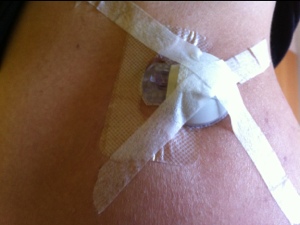
What do you do when you’ve left the CGM cover tape at home? Why, get creative with sticking plaster!

20120930-113212.jpg

Today is Diabetes Art Day. You can read about Leanne Thill‘s brilliant initiative here, but generally, it’s a day to be creative and do something artistic. All in the name of diabetes awareness. I love people who think outside the square and try to get diabetes front and centre by doing something different and a little ‘out there’.

So, I decided to celebrate Diabetes Art Day by looking at some incredible art. I’m in Rome at the moment with my husband for a week’s holiday before heading to Berlin for the European Association for the Study if Diabetes conference. I couldn’t think of a better way to mark the day than to visit the Sistine Chapel.

This was my first visit and I don’t think I was prepared for the sensory overload as we meandered through the Vatican and made our way into the Sistine Chapel. We walked in, surrounded by dozens and dozens of other people. And then, as if all overcome by a sudden force, everyone raised their heads to the celling. It was breathtakingly beautiful.

No photos are allowed in the Sistine Chapel, but here is the most famous fresco there.

Looking at such beauty on a day dedicated to raising diabetes awareness has given me tingles. I may have trouble drawing a stick-figure, but I’ve still celebrated this day, and once again feel part of the diabetes community that I know will be coming together to recognise the day in their own way.

And thank you, diabetes, for a lovely low whilst in one of the Vatican galleries. Diabetes has a way of making sure you remember it’s there. Every day.

I presented at an event on Saturday for Diabetes Australia – Vic. The topic was Access All Areas and I talked about making sure that people knew about (and knew how to access) health professionals, the healthcare system, online information and peer support. I ended with a brief discussion about language and ‘owning’ our diabetes.

I am not a fan of PowerPoint. I think it takes away from the presentation and discussion, and directs all focus onto a screen, rather than allowing people to interact with the group. But I’ve learnt that audiences expect something – anything – on a screen, and think I’ve been lazy if I don’t have slides for them.

So, I did what I usually do – I found pictures, used few words and showed a couple of short videos. And I asked the audience a lot of questions!  (Hey – it was Saturday morning and I’d had barely enough coffee to wake up. There was no way I could do all the work myself.)

As I was putting together my brief PowerPoint, I searched for some ‘Keep Calm’ posters that had something to do with diabetes. Who knew there were so many!  So, here are some of my absolute favourites (click on the poster to be taken to where they were found).

A good one to start!


This one? I want it on a t-shirt!


Being a huge pump advocate, I love this one!

From the very clever Karen Graffeo at Bitter~Sweet Diabetes. (And I need this engraved on my pump as a reminder!)

Yes, you can. And so can I.

A love a good play one words. Thanks to Mike Durbin from My Diabetic Heart who created this one.

Wear blue on Fridays has become a great habit! This one Sue over at RFamHere’s Ramblings,

Just. Do. It


And finally, and perhaps my favourite…..

Happy place…..

You can make your own ‘Keep Calm’ poster by clicking here.

I feel like I’m drowning at the moment as I try to catch up after almost a week away at the Australia Diabetes Educators Association (ADEA) conference and prepare for two weeks away: R&R in Rome (love a bit of alliteration!) for a week followed by the European Association for the Study of Diabetes (EASD) conference in Berlin.

But I do want to mention some of the highlights (of which there were many) from the ADEA conference on the Gold Coast.

So, here’s the dot-point (read, lazy) special!

  • It was refreshing, reassuring and may have made me yell out ‘FINALLY!’ several times to see some focus on diabetes wellbeing at this conference.
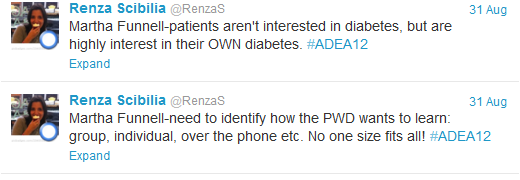
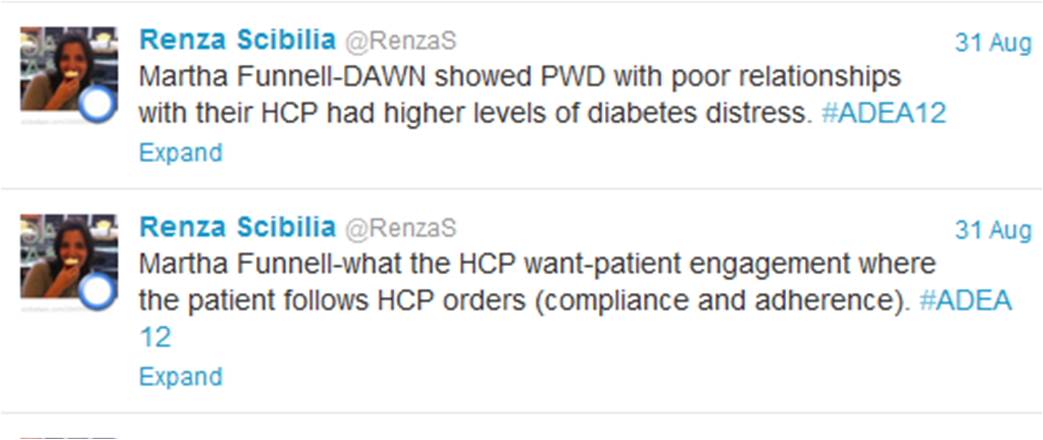
  • The plenary speech on the first day was given by Dr. Martha Funnell, MS, RN, CDE from Michigan Diabetes Research & Training Center. Let me begin by saying she’s amazing. Let me continue by saying that I saw all four of her presentations about patient engagement, patient-centred care and communication. If every health professional there could take on three of her key points I reckon there would be some pretty happy PWD!

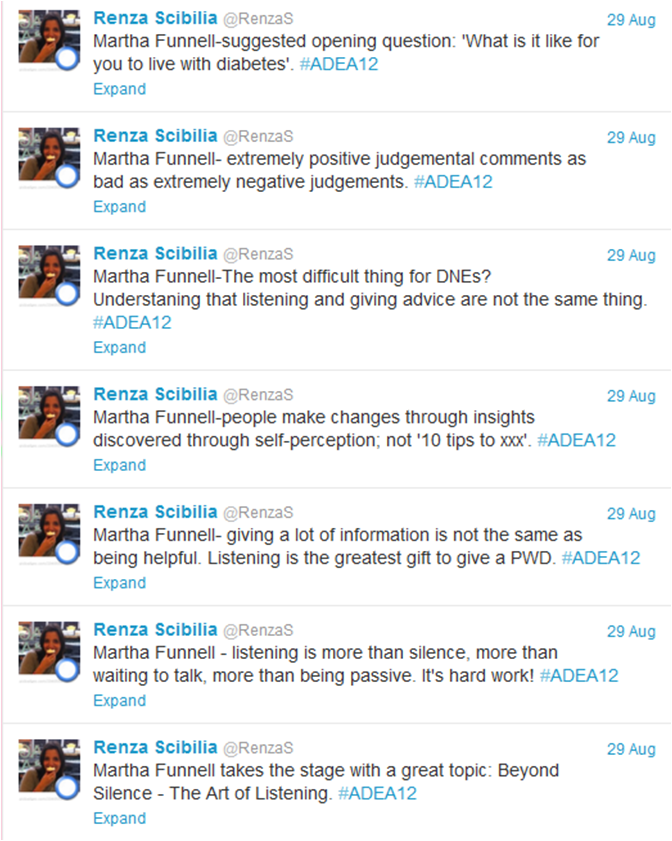
Here are some of my favourite Martha Funnell–focussed tweets:

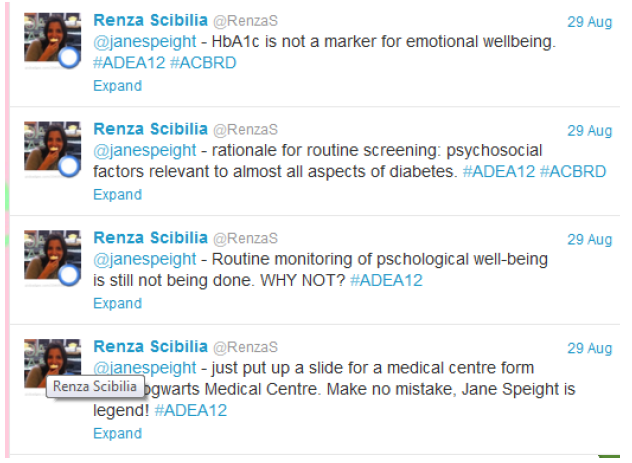
  • If there was an award for MVP, surely the Australian Centre for Behavioural Research in Diabetes (ACBRD) would have taken it out!  Ten posters, four presentations and their own symposium on the last day. And Professor Jane Speight gets extra points for including a Harry Potter reference in her presentation.

  • Dr Helen Murphy from the University of Cambridge Metabolic Research Laboratories gave a fascinating presention at an Australian Diabetes in Pregnancy Society lecture which focussed on technology used in diabetes and pregnancy. How’s this for an amazing concept: three BGL tests for the WHOLE OF YOUR PREGNANCY! That’s what was going on in the 1970s.
  • An incredible team from the Australian Diabetes Society (ADS) launched the  Enhancing Your Consulting Skills education resource for endocrinology trainees. This resource focusses on type 1 diabetes and will provide trainees with a balanced, informed and better understanding of type 1 diabetes. There’s much to love about this concept – not the least of which is that the project team consulted with people with diabetes. And have referenced consumer blogs (like this one!) and sites as places to get information.

OK – and now for the stuff that left me wondering….

  • How is it possible that with over one million Australians living with diabetes, I was the only consumer representative/advocate (who is not a health professional) at the event, which means that this consumer blog is the only one writing about it?
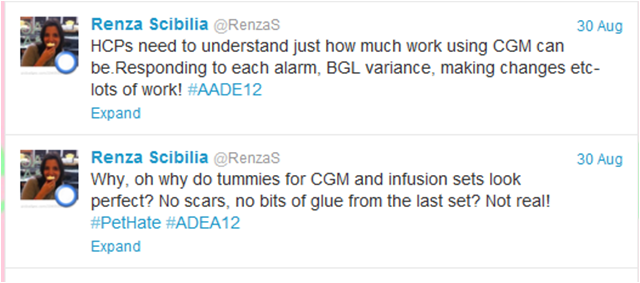
  • When will health professionals stop making sniggering comments about how people with diabetes ‘lie’, ‘make up’ or simply ‘refuse’ to fill in their diabetes log books? Surely the discussion is not so much about this happening, but rather why PWD feel they need to do this. Judgement much, anyone? Grumpy Renza tweet about it here:

  • I love technology to bits!  And diabetes technology makes me swoon a little.  BUT! The downside is that using new technologies can be A LOT OF WORK!  And this can lead to burnout. This needs to be addressed. It’s not.


  • I continue to find it frustrating and disappointing that consumers – people actually living with diabetes – generally don’t get to hear most of the international speakers. A big shout out to Medtronic ANZ for running consumer sessions with their international invited guest, Dr Steven Wittlin from the University of Rochester Medical Centre. And if there’s any doubt that people with diabetes are hungry for these types of sessions, perhaps knowing that 170 people braved the Melbourne cold to hear him speak at a DA-Vic/Medtronic co-hosted event will alleviate any concerns. It’s such a shame that Martha Funnell and Helen Murphy along with many others did not get to share their expertise with people living with diabetes.
  • After Helen Murphy’s brilliant presentation, I got up to leave, my head filled with hope and excitement only to hear this from two health professionals walking out ‘Really – it would just be easier if we could lock pregnant women with diabetes in hospital for their pregnancy so we can make sure they’re behaving.’ Cue – Renza hyperventilating as she tried to not explode.

You can catch up on a brief wrap-up here;


And watch all of Jane Speight’s interview here:


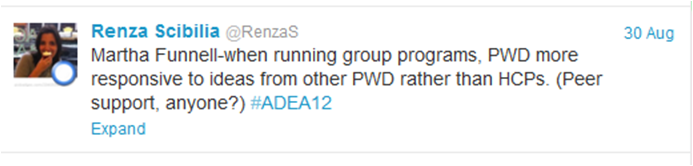
Overall, it was a great conference with many highlights. But I think I’ll finish this post with another tweet from one of Martha Funnell’s session:

My daughter is amazing. She is smart, bright, beautiful, funny and has an incredible sense of what is right. For an almost-eight year old, she is incredibly mature and, thanks to spending a lot of time with adults and travelling the globe, she has a pretty broad view of the world.

But today, she is sad and my heart is breaking at the reason for her tears.

She wants a brother or sister. Desperately. I am not surprised at her telling me this today; she has mentioned it on numerous occasions. Often as a throw-away comment, other times as a pleading question. Perhaps the way I’ve dealt with it has been too flippant, or I haven’t paid enough attention to just how much she is affected by our family situation. ‘Oh, mummy decided that after you came along she was perfectly happy and didn’t want another baby’ or ‘You have all our attention and love – that’s pretty special, isn’t it?’ or the more truthful, but not really complete ‘It was very hard for mummy to have a healthy baby. I am so lucky to have you’. The underlying story is that my diabetes is a reason that our daughter does not have a sibling.

And to a degree, that is true. But really, diabetes is not the reason that I didn’t have another child. Well, not the only reason. After finally getting pregnant (following fertility treatment and many months of trying) I had a miscarriage. It was the saddest, darkest period in my life. I mourned the loss of the baby I wanted so, so desperately but, at ten weeks, had died. I felt my body was useless – the same body that had taken me so long to get pregnant had not been able to carry a baby. Useless, hopeless and more broken than I could imagine.

My doctors assured me, reassured me and were certain that diabetes was not the reason for my miscarriage. I had achieved an ‘in-target’ A1c prior to conceiving, I monitored my BGL diligently and adjusted insulin accordingly, I ate well, I don’t smoke: I ticked all the ‘having a healthy baby’ boxes. And still something went wrong.

Today, with the benefit of time, I know that this was just ‘one of those things’. But at the time, I had a need to ‘blame’ something or someone. So I blamed diabetes.

And I made a deal – not sure with who; maybe myself. But I decided that one healthy baby was all that I would ask for. Once I was able to conceive, grow and deliver a healthy baby I would not ask for anything further; not be greedy; not push my luck.

It took another eight months for me to get pregnant and I spent the next 38 weeks waiting for something to go wrong. The fact that I delivered a healthy, wonderful, beautiful baby girl was nothing short of a miracle to me. It still is.

When our daughter was almost two, my sister-in-law had her second child and suddenly, I had a nephew. He was (he is) beautiful and I dared to think about having another baby. I once again did all the ‘right things’ – saw my ob/gyn, had all the pre-pregnancy tests done, made sure my A1c was under 6.5%. Tick, tick, tick. And then, first month of trying, I got pregnant. My husband and I could not believe our luck. We were having another baby. For a few weeks we planned, decided to renovate our house, wondered how we would love another child as much as the one we had, dreamed of what this one would look like.

But then I miscarried again. I was sad – I went home after the D&C and hugged my daughter closely to me – but certainly not as bereft as after the first miscarriage.  I once again felt that my body was broken and that I was not accepting its limitations. And I remembered the bargain I’d made. At that point, I knew that I would not try again and that I would be forever happy with our family of three.

By choice or by fate? Sometimes I feel that having only one child was not something I decided to do. My body has limitations and diabetes is one of them. Is it the reason that I have only one child? Probably not the only reason; but certainly, definitely, absolutely one of them.

So today, I explained this to my daughter. I spoke about the miscarriages in a way an almost-eight year old could understand; I told her how much her daddy and I wanted her; I explained that our family is perfect for us; I explained that she is loved . She took it in, thought about it and looked at me through teary eyes. ‘I really want a baby brother or sister,’ she said to me. ‘But more than that, I wish you didn’t have diabetes.’

My daughter is amazing.

Amazing.

20120822-163242.jpg

Back in March of this year, Austroads and the National Transport Commission released their updated Assessing Fitness to Drive; medical standards for licensing and clinical management guidelines. This document refers to commercial and private vehicle drivers, so the information is relevant to people living with diabetes that hold (or are planning to hold) a drivers’ licence.

I live in Victoria, so our licensing body – VicRoads – requires that I complete a medical review form every two years. This is done in consultation with my doctor, and the form asks about hypos, changes in eyesight and other issues that may impact on my ability to drive safely.

Because I’ve had few changes in my diabetes that have affected my driving, filling in and returning this form is a pretty straight-forward matter. As long as the completed form is returned to VicRoads by the due date, I’m given a ‘conditional licence’ and I’m good to drive for another two years.

So I was expecting that the new Assessing Fitness to Drive guidelines would not really need much consideration. The guidelines cover some important things about diabetes and driving. There’s information about hypoglycaemia and impaired hypo awareness and a rather confusing flowchart to explain the processes to getting a conditional licence.

But then, in the section titled Medical Standards for Licensing we come to section 3.3.2 Satisfactory control of diabetes which states:

When assessing whether the criteria for a conditional license are met, ‘satisfactory control’ of diabetes will generally be defined as a glycated haemoglobin (HbA1c) of less than 9.0% measured within the preceding three months, as against a general goal of less than 7.0% in people with diabetes.

Whoa! What? Does this mean that if for any reason an individual’s HbA1c is above 9%, their treating doctor may refuse to complete the review? Well, apparently yes. I have been contacted by several people with diabetes who have had their licence suspended because their treating doctor refused to fill in the review based only on their above 9.0% HbA1c.

Where is the evidence suggesting that an elevated A1c will negatively impact on driving ability? I have searched and simply cannot find anything. Some people may experience blurry vision with elevated BGLs, but that is usually short-term, and ‘fixes itself’ once BGLs lower.

I can find a lot of journal articles about the danger of driving for those experiencing impaired hypo awareness. But nothing, nada, not a thing about driving with an A1c of 9.0%.

I’d like to know where that magic number came from. How is 9.0% deemed unsatisfactory control of diabetes, but not 8.8%? It appears to be an arbitrary number value that is having considerable impact on people with diabetes holding a drivers’ licence.

Disappointingly, there was no consultation in the development of these guidelines. Yes, the diabetes chapter of the guidelines were reviewed by the Australian Diabetes Society Driving and Diabetes Working Party. There was absolutely no engagement with any Diabetes Australia body across Australia. Which meant that there was no one considering the consumer side of things. All input has come from clinicians who, at times, have little understanding of ‘real life’.

Diabetes Australia is seeking clarification of these guidelines and I’ll keep you posted with what I find out. But in the meantime, if you have been unable to get your licence renewed because of these new guidelines, let your local Diabetes Australia office know.

Have you been affected by the new Assessing Fitness to Drive regulations? I would be interested to hear from anyone who has.

Today I’m writing over at Diabetes Vic’s blog where I look at pump therapy in Australia.

Last week, I sat glued to my Twitter stream watching the tweets from two separate events that had a strong diabetes consumer (or, if you prefer, patient) presence. Firstly, there was the Roche Diabetes Summit (#RDS12) which brought together 34 diabetes bloggers from across the USA. You can read some terrific reports about the summit here and here.

Immediately following the Roche Summit was the American Association of Diabetes Educators (#AADE12) Conference. Once again, the Twittersphere was full of commentary about the different sessions, blogs were written and Facebook pages provided reviews and photos from the conference. I learnt a lot about what was going on, what new things were catching the attention of members of the diabetes online community (DOC) and I noted things that I want to speak with my endo about next time we meet.

Coming up later this month is the Australia Diabetes Educators Association/Australian Diabetes Society conference. I’m going which is pleasing on a number of levels, not the least of which is that it is on the Gold Coast which will mean some slightly warmer weather. The main reason I’m excited though, is because I will be able to ‘report back’.

How many consumer advocates will be attending the Australian conference next week? I’m guessing not too many.

You may ask why it’s important to have people with diabetes at these events. It’s a valid question. I mean, the events are for health professionals to do some professional development, some networking and find out the latest in the diabetes world. The sessions are not designed for consumers, really.

And that’s all relevant and true. But how does the information presented at these conferences then get filtered through to people living with diabetes?  How do we find out about the latest and greatest, the new research, the new studies? In all honesty, how many of us have health professionals who relay this information back to us?

My endo is one of the few that actually does. We speak about conferences she’s attended and new things presented. In fact, part of my screening (read: interviewing) process when I look for health professionals is to ask what conferences they’ve attended recently and what they’ve found interesting. It gives me an idea of how up-to-date their knowledge base is. But more importantly, it gives great insight into how well they then pass on that information.

So, let me ask again: Why is it important to have people with diabetes at these events? It’s critical, because it means that the information gets passed on to us – the people living with it. Which better informs us. Which helps us make decisions about our care to improve outcomes.

There needs to be a shift in Australia. People with diabetes need to be part of the planning of conferences.  If we are (or diabetes is) ‘the problem’ then we need to be part of – actually, leading – the road to the solution.  I wrote about this last year, but as each year passes, and as I see more and more evidence of consumer involvement in other countries, I wonder why we seem to be so behind the times.

We need to be there in numbers and we need to be recognised as a way to get messages out. It’s a revolution in terms of the place of consumers. But our rightful place is front and centre at information sessions talking about the condition with which we live. And the time is now.

So, with this in mind and knowing that I’ll be at the ADEA conference later in the month, what is it that you want me to report back? Have a read of the program and in the comments section below let me know if there is anything you want more information about. And I’ll try to get to the sessions, tweet and blog about it.

I’m an excited little chicken this week! You see, I’ve been playing with a new diabetes gadget. It’s actually an iDiabetesGadget. Yes, my iPhone has become an iBloodGlucoseMeter and I couldn’t be iHappier.

Many of you will have already heard about the iBGStar. This nifty little device was launched in the US earlier in the year and social media exploded with reviews, raves and excitement.

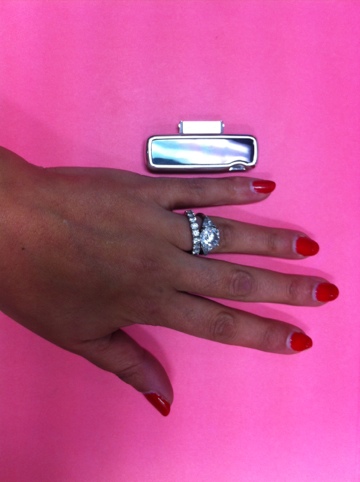
The meter is tiny – about the size of my pinky finger, to be exact. And it weighs next-to-nothing. It plugs into the bottom of an iPhone, and using the app (available now, free from the App Store) works as a BG meter. Or, use it without your phone and it works as a stand-alone teeny-tiny meter (and then downloads the results to the app the next time you connect the meter to your phone).

20120730-143334.jpg

The pinky-sized iBGStar on a pink background.

I am all for new gadgets. I believe that they inject (urgh!) a level of interest and increased focus in diabetes and that can only be good. This week, I’ve been checking my BGLs far more that I had been leading up to getting the iBGStar and have even managed to iron-out some post-meal highs.

And of course, there’s been lots of interest in the device from others with diabetes. There were oohs and aahs aplenty when I walked around the office showing off my new toy. It’s always amusing to hear grown people shouting ‘Get out!’ or ‘No way’ when shown something new!

What I wasn’t prepared for was the response from complete strangers. ‘That looks pretty high-tech’, a waiter in a cafe said as I stabbed my finger and checked my BGL. ‘Oh-it’s-a-BGL-meter-it’s-brand-new-I-think-this-is-the-first-one-in-the-country-I-have-an-app-on-my-iPhone-isn’t-it-brilliant-isn’t-it-isn’t-it?? His eyes kind of glazed over, but he smiled indulgently and said ‘That’s great’.

It wasn’t the first time. I’ve been stopped a couple of times in cafes (I spend a lot of time drinking coffee). One guy said ‘I want one! Where can I get one?’ He doesn’t have diabetes; he just thought it was cool.

The hype is one thing, but I’m pleased to say the device delivers on accuracy. I’ve done several side-by-side comparisons and the comparisons are good.

OK – so, clearly I love this meter and I’ve been telling anyone who cares to listen – and many who really don’t. But there’s something I love even more than the meter itself. And that is the way the meter is being promoted.

For the first time that I am aware, a new meter is being distributed to people with diabetes who are active on social media as part of its marketing strategy. I think that’s really smart Why? Well, because we like to talk. And tweet. And blog.

We are a little behind the times in Australia when it comes to using consumers (PWD or patients – whatever you prefer) to do some PR. I am not saying we sell our souls to do the work of the marketing divisions of device companies. We’re not doing that at all.

I have always been a little confused at why consumers are the last people to get their hands on a device rather than the first. I have never chosen a BGL meter or insulin pump based purely on advice from a HCP. Of course I want to hear their opinions. But really, I want to speak with people who are holding these things every day. The people who are wearing them. The people who are making decisions on how much insulin to inject into their bodies.

Surely it makes sense to have consumers involved in marketing strategies for new devices? Actually, surely it makes sense to have consumers involved in the development stage for new devices.

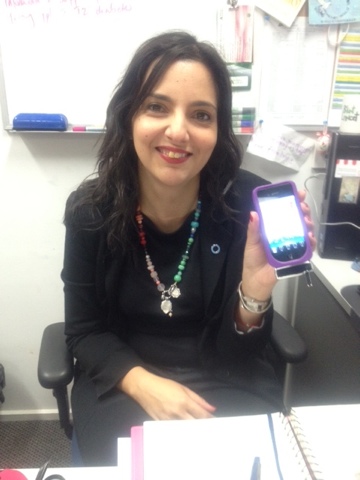
So – it’s after lunch and I’m going to check my BGL. On my phone. How freaking gadget girl is that?!?!

20120730-144027.jpg

Gadget girl!

DISCLAIMER: The iBGStar is distributed in Australia by Sanofi. The folks at Sanofi sent me a meter and strips for free. There was no expectation that I would like it, love it or write about it here. (Although they knew how excited I was about the device appearing in Australia because I’ve been tweeting about it since the US launch.)

The iBGStar will be launched here in Australia in the next couple of months – official word is in the Springtime.

Follow Diabetogenic on WordPress.com

Enter your email address to follow this blog and receive notifications of new posts by email.

Read about Renza

Archives