Dex

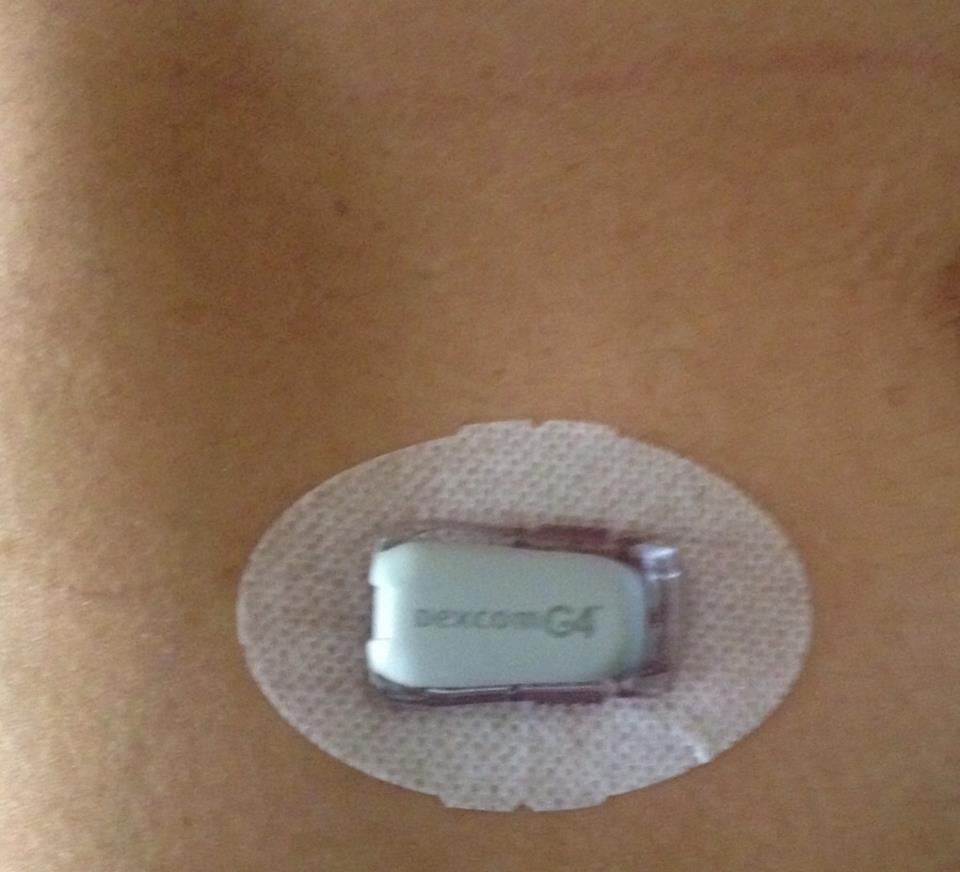
The Dexcom G4 attached sitting pretty on my abdomen.

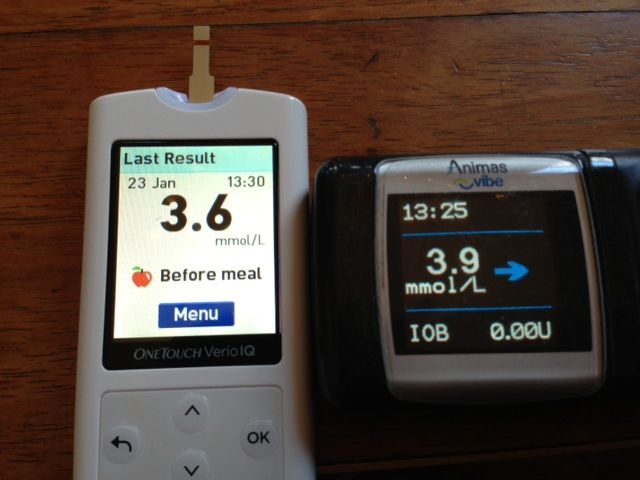
So, I’ve been trialling the Dexcom G4 CGM using an integrated Animas Vibe pump. This is week 7 of the trial and I am gutted that I only have one sensor left before I have to hand it all back.

To say that I love this CGM is an understatement. Actually, let me back up a minute. I love CGM full stop. Since being introduced into Australia about five or six years ago, I’ve used CGM sporadically. And there have been periods where I’ve used it full time. I love this technology for the information it provides me and the way it helps me fine-tune my diabetes management. It makes me feel safer about living with a condition that takes great delight in throwing a curve ball. Frequently. (Actually, I have no idea what a curve ball is. Sporting analogies and me = pffft. But I digress….)

But this CGM has blown me away. I’d heard great things about the Dexcom/Animas integrated system when I was in Berlin at the Euro Bloggers Summit at EASD last year. I hadn’t seen the system in real life, so it was great to hear from real people about everyday real living with it. Really. Overwhelmingly, they loved it.

Knowing that it was on its way to Australia, I couldn’t wait to see it in action for myself, so I was thrilled when I was asked to trial it for a couple of months.

Here’s the good stuff:

  • The accuracy is incredible. This is, of course, the biggest criticism of CGM. The lag time drives people nuts. We all know that it’s not about the actual number, it’s about trends. I get that. But to have a CGM with less lag time means that what we’re seeing is far closer to what is actually going on. The biggest difference I’ve had between the Dexcom and my meter has been 2.5mmol/l. That, my dear friends, is bloody impressive!
  • I can calibrate it at any time, no matter what my BGL is doing. Heading up, up, up or plummeting? Doesn’t matter – calibrate and away I go!
  • The alarms are sensible. I adore the ‘BGL dropping too fast’ alarm which has allowed me to catch more hypos that I can count. Love it, love it, love it!
  • Did I mention the accuracy?
  • The colour screen on the pump (or receiver if that’s what you are using) is brilliant. Honestly, I thought this was a bit of a gimmick until I actually realised how much easier it is to read the screen in low light, bright light, at the movies, when I wake up in the middle of the night and can barely register anything etc.
  • The sensors are meant to be used for 7 days. I got thirteen days out of the first one – which fell out because I didn’t use anything to reinforce the tape; 17 days out of the second and third died today on day 20.
  • And, oh, I know, the accuracy.

What don’t I like? Well, not much. I’m not overly keen on the inserter for the sensor. It looks like a giant syringe and the automatic spring-loaded bit doesn’t kick in until the needle has already made contact with the skin. I have absolutely no needle phobia whatsoever, but I wish I’d been told to push the plunger hard so as not to feel the tip of the inserter needle hit my skin before the automatic part does its thing.

The tape definitely needs reinforcing if you’re planning on getting more than 7 days out of each sensor. But, a quick Facebook post out to the DOC and I was using Opsite to secure the little thing to me. No problems, now. (Although, I was going to consider toupee glue as an option thanks to this blog from the clever and funny Scott Johnson.)

The cost. More on that in a minute.

The alarms don’t wake me up. And they don’t wake my husband up either. I have the pump on vibrate during the day, but at night turn on the sounds. Unfortunately, even when turned up as loud as possible, I still sleep through (a couple of mornings of three plus hours of 3.5mmol/l can attest to that).

I have a decision to make – my pump is out of warranty and it’s time for me to upgrade. I’ve been pumping for 12 years now and have tried every pump on the market (whether as a trial or as my own). The only feature that I insist on is that the pump must have CGM integration as an option, which obviously narrows the choice down to two pumps.

The main negative with the Dexcom is the cost. According to AMSL (distributors of Dexcom and Animas) the introductory cost of the transmitter is $595 and a box of four sensors is $396. However, a fifth sensor is thrown in. Prices rise by about 10% after the introductory offer ends on 1 April 2013 at which time, a box of 4 sensors (plus bonus one) will be $440 – $88 per sensor. Even if I manage to stretch out each sensor to two weeks, it’s still expensive – more expensive than its competitor.

My worry is that Dexcom is going to be priced out of the market. I know that the sensors are absolutely not this expensive overseas, so it is disappointing that the Australian consumer is getting slugged such a premium price. I understand that we’re a long way away and I also understand that there are distribution costs. But I still think that the cost we’re being charged is exorbitant and, frankly, that pisses me off.

But the accuracy really has blown me away. And made me realise that when it comes to diabetes management tools that this is, without a doubt, the most important consideration. I have one sensor to go before the trial is up and in that time will decide whether I can budget for the extra costs of this system. In my mind, it is worth it. I just need to decide if I can do with a couple of fewer pairs of boots this year to fund it.

Disclaimer

I have been on a trial sponsored by AMSL, distributors of Animas insulin pumps and Dexcom CGM in Australia. As part of the trial, I have had use of an Animas Vibe pump and a Dexcom G4 transmitter. I was also supplied with 4 sensors for the Dexcom and a limited number of consumables for the pump. I have no arrangement with AMSL to write about my experiences on the trial or review the devices. I’m just doing it because I’m happy to share my experiences of this new device on the Aussie market. Feel free to ask questions and I’ll answer them if I can. For information about this product, contact AMSL on 1300 851 056.
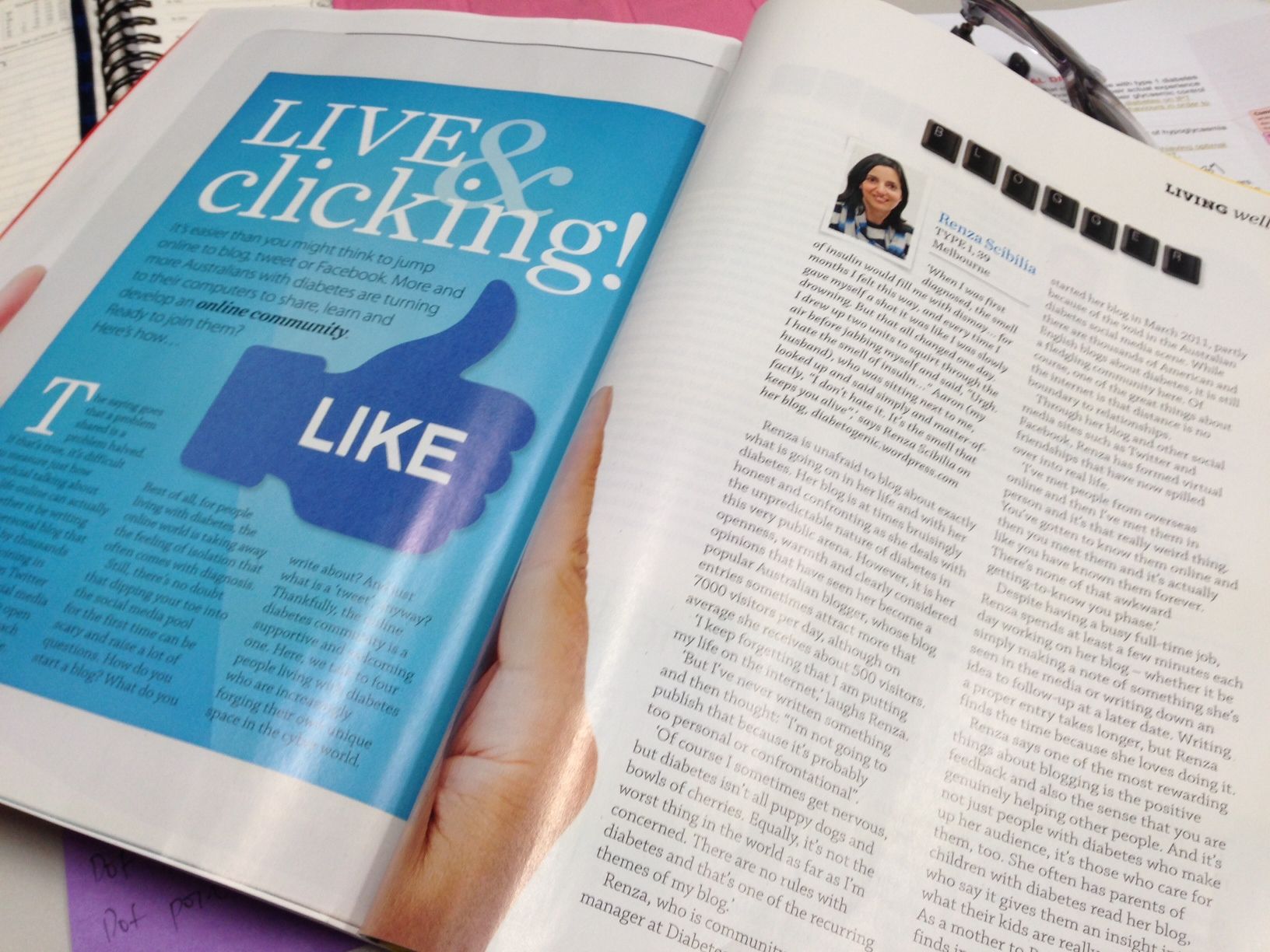
It’s always great when the diabetes online community gets a shout out in the media. So I was delighted to see this edition of Diabetic Living magazine which has a five-page spread on Australian bloggers and social media folk.

This article follows the hugely successful inaugural Australian Diabetes Social Media Summit held in Melbourne on WDD last November. Diabetes Living sent along a staff member and it was terrific that the magazine decided to write about some of the attendees.

So, get yourself down to your local newsagent, buy a copy and have a read about some amazing folk like Matt Cameron (and then read his blog!), Ashley Ng (and read hers too!) and Brent Salzmann (who you should then follow on Twitter).  I’m pretty honoured to have been profiled among this incredible and dynamic bunch.

And if you’ve been thinking that you’d like to give this blogging caper a go, or get on Twitter, there are some useful tips to get you started.

DLivingbloggers

Over the next couple of days, I am spending some time at the University of Melbourne talking with first year medicine students. It is their first week enrolled in this course and during this time, their focus is strongly patient perspectives.

One activity involves listening to a panel of people living with various chronic health conditions. We’re the ones they prepared earlier. And we’re the ones that are going to be an absolute nightmare for them when they finally become grown-up doctors. Why? Well, we’re selected because we are, what some cynically refer to, as professional patients. It’s a badge I’m willing to wear with pride, because knowing about my health condition doesn’t make me a pain in the arse. It makes me empowered.

As preparation for these sessions, we’re asked to think about stories of the good and bad experiences we’ve had with health professionals. We talk about what good communication looks and sounds like and really focus on the health professionals we love dealing with and why. I’m lucky, because I have mostly good stories to tell. I don’t like doctor (or nurse) bashing, so being able to praise the good ones is terrific!

There is no such thing as a poster child for a health condition, so I am always very clear when talking about my experiences with diabetes that I state (several hundred times) that I speak for me and me alone; for my diabetes and my diabetes alone. But even with that caveat, sharing my story provides these students with an inkling of what daily life with diabetes and our interactions with our health professionals is all about.

Sessions like these are really important because they get to hear about living with a chronic condition, but not in a clinic setting where there is noise, people interrupting and one eye constantly on the clock knowing that there are a herd more people outside to get through. They get to ask questions about how we felt about certain situations and why communicating effectively and listening attentively is important. And they get to see us as people, not as a health condition.

This is the third or fourth year I have done this. I feel privileged to be able to tell my story and I hope that at some point in their doctoring lives, the stories shared by the members of the panel will resonate. That as they walk in to see their 25th patient for the day, they remember to breathe, and ask questions that allow the patient to share important information. And that they listen.

When it comes to health care the patient perspective is the most important. How we interpret our appointments and the information we’re given, what we do afterwards and how we feel about living with our condition reflects how we manage our condition. I really applaud the University of Melbourne for including this program in the first week of studies for the med students. Now if only they could find time in the frantic timetable to do it each and every year of their studies.

A self-awareness exercise I came across recently had me facing some interesting facts. The idea is to list things that you regret having done or not having done and then seeing how you could address each regret. And also, to think about why you did or didn’t do the thing you regret doing. Or not doing. (Okay, those last sentences made way more sense in my head that it does on paper, but hopefully you get the idea.)

The regrets have to be things over which you have some control. So saying ‘I regret I’m not taller’ doesn’t count. Unless you deliberately made yourself shorter by sleeping in a shoebox. Or something.

So, I sat down, got honest and wrote down the things that I do regret and here are some of them:

  • I regret not having lived overseas
  • I regret giving up playing the flute completely
  • I regret not having another child
  • I regret not buying those red shoes I saw at Bloomingdales the first time I went to New York City
  • I regret waiting until I was 36 before visiting New York City for the first time
  • I regret getting a perm when I was in secondary school. What was I thinking?
  • I regret the times I ignored my instincts – they were always, but always spot on!
  • I regret not being able to speak Italian. (But I will continue to say that all it would take is six months in Venice for me turn my high-school skills into fluent Italian. And I have the hand movements down perfectly!)
  • I regret not telling my family that I love them more
  • I regret wearing white jeans. Ever
  • I regret not having seen Frank Sinatra sing live
  • I regret spending my teens, twenties and now thinking I was (am) fat and trying to hide my body when it is perfectly fine

You get the idea. I then tried to do the same exercise, but based on how I feel about my diabetes. Did I have any real regrets? My list looks like this:

  • I regret waiting three years before starting on a pump
  • I regret not finding my endo from the beginning of my diagnosis
  • I regret any and all of the guilt and shame I have felt about having diabetes
  • I regret not speaking with someone about diabetes sooner and understanding that it’s okay to grieve
  • I regret feeling the need to be stoic all the time and understand that sometimes it’s okay to say ‘this really sucks’.

I actually am quite proud of my diabetes list of regrets. So much of diabetes is out of our control. Whether we’re talking about our diagnosis or complications which we may or may not develop – sometimes despite our best (and worst) efforts – we sometimes still get dealt something that we hoped would not happen.

I guess for me, I don’t want to look back and say ‘I regret not having seen my ophthalmologist frequently’ or ‘I regret not having my kidney check done each year’, because if something happens, I don’t want to think that I could have prevented it.

Let me be clear. This is not a blame game. I know people who could make a list that would have no regrets at all because never did they miss a screening check, never did they see an HbA1c result above 7.0% and still have developed complications. I just want to be able to say I did everything I could to help. It’s as much control I can claim over this condition. A condition that really doesn’t understand what control is.

So, what are your diabetes regrets? 

Oh VicRoads, are you trying to destroy me? Really?

With all that has been going on with the issues surrounding the new driving and diabetes guidelines; with all the inconvenience you are causing for people who are living with diabetes each and every day – all the hoops you are making us jump through; all the bureaucracy you have built in for us to simply hold a drivers’ licence, wouldn’t it be nice that just for once you could be a little – just a little – accommodating?

And yet, when I jump through each and every hoop and call you to ask you for an extension on getting my eye review form in I am told no. An extension will not be granted because my medical review form (different to the eye review form) was one day late.

I am unsure as to why I have to submit an eye medical review – I’ve never had to do that before. My eyes have been stable for years. This was clearly documented on my medical review form.

The woman I spoke with at VicRoads told me that if they did not receive my report on time, I would be issued a letter the following day telling me my licence was suspended. However, according to her, I have a two week grace period in which I can still drive. So why not simply give me an extra week so that I can get the form in on time? I have made an appointment to see my ophthalmologist, but of course, could not get a time until the day after the report is due. (He’s away at the moment as is half of Australia ‘cause it’s – you know – Summer holidays).

My driving record speaks for itself as does my diabetes record. I know more about how safe it is for me to get behind the wheel of a car than most people. I check my BGL, I make sure I travel with food in case I go low, I wear a CGMS that alarms not only if I am low, but if my BGL is dropping too quickly so I can prevent a hypo.  

And never before have I been late with a review.

So – here’s some advice for everyone after the trials and tribulations I have dealt with in the last few months with Vic Roads:

  • Regardless of when you have an appointment with your health professional to fill in your medical review form, call VicRoads the second you receive your letter requesting a review and tell them that you need an extension. There are dozens of reasons that this may actually occur – appointment is cancelled, doctor takes extra time to send the report, you don’t make it to the post office on time etc etc.
  • If you do not get the report in by the due date, you will receive a letter from VicRoads warning you of the suspension which will take effect in two weeks. You cannot ask for an extension at this time; it’s too late. If you think you’ll need extra time, call BEFORE the due date of the original letter (usually 8 weeks from the date of the letter) and ask for the extension.
  • Remember that it takes time for the medical review team to process your review. So even if you do get it in on time, there could be a delay in you getting the ‘all clear’. Obviously, this isn’t a problem if you get it in way before the due date, but if you’re just sneaking it in on time, it could result in your licence being suspended. I actually took my last review form into VicRoads and asked to speak with someone from the medical review team and pretty much demanded that they approve it that day.
  • Off the top of your head, do you know the date your driver’s licence expires? No cheating – do you know? I had no idea and found out the hard way one morning when a police car pulled me over as I was driving to work. After they did a random number plate check and discovered my licence had expired I was fined $359. Great way to start the day!  I had absolutely no idea my licence had expired and was 100 per cent certain I had not received a reminder letter from VicRoads (actually, being paranoid every time I get a letter from them, I was more than 100 per cent sure). I went straight down to VicRoads to renew my licence and asked if they had my correct details because I had not received a reminder about my licence.  I was right – they had not issued a reminder because my licence had been suspended. Since November 2010. I nearly fainted. Long story short: apparently it was a clerical error with some smarty-pants at VicRoads indicating that I had not submitted my last review. Despite the fact that I had in my hand a letter saying it had been received and I was good to drive for two years before the next review.  As I found out, reminders are not issued if your licence is suspended. (The fine was overturned, but it took a lot of time, letter writing, and sitting on the phone for this to happen!)

Having a licence is essential for many – most – of us, and whilst a pain, I completely understand why I need to have a medical review form filled in every couple of years.

But making things difficult for us only makes us angry at the process and the inconvenience of it all. Anecdotally, I’ve heard of people who simply don’t tell the licensing authorities about their diabetes to avoid the rigmarole involved in having a conditional licence. This is far more dangerous, in my opinion and puts these people at significant risk because of insurance and legal implications.

And this brings us back to the whole driving and diabetes issue and the development of the new guidelines. How is it possible for licensing authorities to have any idea of the actual process and how it impacts on people living with the condition if we are not consulted? Had Diabetes Australia been given a seat at the table when the new guidelines were being developed, this would have been considered. Had consumer reps been invited to take part, this would have been raised as a concern. It’s not good enough. Because this isn’t a simply list of guidelines on a page of a website. This is about our lives.


silver 500

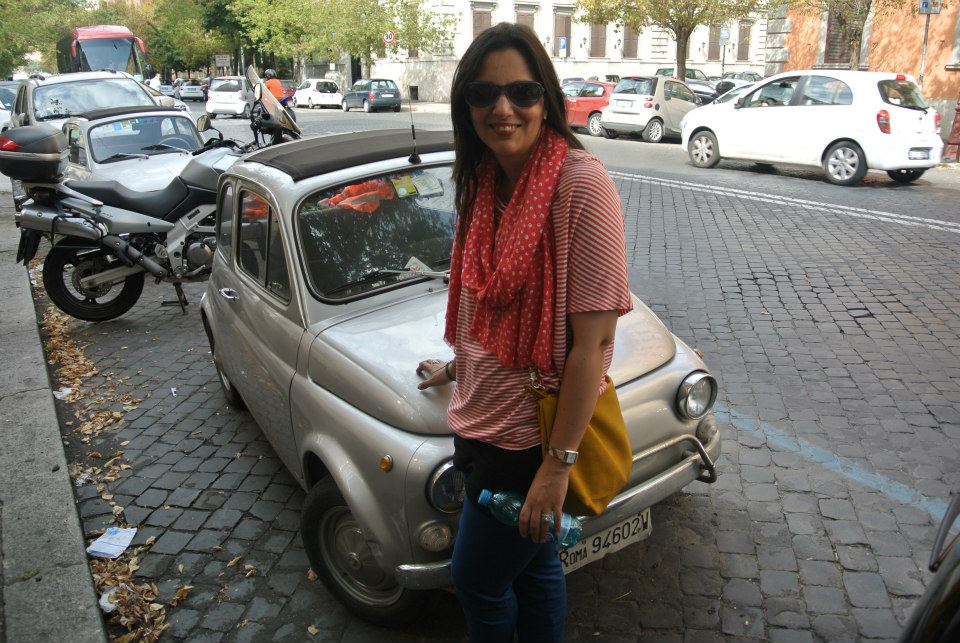
Obligatory photo of FIAT 500 that accompanies any driving posts. I may be a little obsessed. #dreamcar

On those days when diabetes plays nice:

diabetes playing nice


and I see things that make me happy:

Fiat500


and deliveries to work come in multi-coloured hues with beautiful notes from loved ones:

multi coloured hues


and little girls get to stare out to sea:

Looking


I smile.  Especially when the soundtrack to life is Dr John.

Back at work today and I was greeted by this.

 cupcake

Yes, in a moment of madness at the end of last year, I thought it a good idea to buy myself a 2013 calendar featuring a daily cupcake recipe. With accompanying photo.

So although the Chinese calendar tells me that this is the Year of the Snake and the United Nations has announced 2013 as the International year of Water Cooperation and also the International Year of Quinoa, the little calendar sitting on my desk tells me that this is, in fact, the year of the cupcake.

Totally bolus-worthy. And yes – I can eat that!

cupcake at magnolia 2

Cupcakes at Magnolia Bakery NYC
January 2012

Last week, on Melbourne’s 40 plus degrees (Celsius) day, I put on a pair of bathers and went to the beach. Big deal, I hear you all sigh. But it is! I can’t remember the last time that I wore bathers. I’ve written about my body image issues before, but this year, I decided to bite the bullet, buy a gorgeous new pair of togs and wear them to the beach or pool.

So, in my new, stripy bathers, on the beach, I frolicked and splashed in the water with my family. It was gorgeous and the ideal way to cool down from the scorching weather which, at 9.00pm was still sitting around 36 degrees.

I was having a fantastic time and feeling more than a little proud of myself for not being self-conscious and just having fun. The kidlet was having a ball and couldn’t get enough of splashing her parents. Fun. Fun. Fun. And then I have no idea what happened. No idea at all.

The next thing I remember is sitting on the sand with my daughter next to me. She was building a sand castle and smiled at me. ‘Where’s daddy?’ I asked her. ‘He’s gone to the car to get jellybeans. He’ll be back soon.’ ‘Okay,’ I said. I watched her.

‘Where’s daddy?’ I asked her. ‘Mummy! I just told you. He went to the car. He’ll be back soon.’

At that point, Aaron returned with jellybeans. He looked so concerned. ‘I didn’t know if I was doing the right thing. It was so hard to get you out of the water, I thought there was no chance getting you to the car. You were talking to me, so I thought it best if I quickly go’. ‘I don’t remember getting out of the water,’ I said to Aaron. Apparently I walked, but it took some time for me to agree to get back on the sand.

How this happened, I have no idea. I made the decision before I left home to leave my new pump on the kitchen table and pack a syringe and insulin with me for bolus top ups as necessary or if we decided to get an ice-cream. Before I disconnected my pump, the Dexcom was reading (on my pump) 8.2mmol/l with a nice flat arrow and a flat line preceding it. We’d eaten a low-carb meal, so there was only 0.6 units of insulin on board. I figured that I’d check my BGL when we got to the beach to see if I needed to top up. But I forgot to do that.

Most likely, it was a combination of the heat and the activity in the water (but let’s be honest; I was standing there splashing, not swimming against a current) or doing anything that would warrant the 1.5 mmol/l reading I discovered when I finally checked my sugar after downing a bag of jellybeans in record time.

These hypos make me hate diabetes like nothing else. And they make me hate myself for not doing the things that may have helped me avoid the situation. If only I’d checked my BGL before getting out of the car I would have known that I was dropping and dropping fast. If only I hadn’t left my pump at home, the Dexcom would have picked up my plummeting BGL and warned me. If only I’d packed jellybeans in the beach bag. If only my body did what it was meant to. If only I didn’t have diabetes. If only.

I wonder if my body image issues have anything to do with the fact that I feel like my body fails me constantly. Why would I think of my body as anything other than broken and why would I want to show that to anyone? Is that part of it, or is it just a matter of me being plain shallow, needing to get over it?

There will be many more beach days before now and the end of the sweltering season – a heat wave is on its way. I pushed away the thoughts of never putting on my new bathers again and not going to the beach again with my family. I can’t let diabetes dictate what I do. But I guess I must let it dictate how I do it. If only I’d remembered that before I walked onto the sand last week.

IMG_0204

IMG_0205

It’s early evening and a light breeze is coming in through the open window in our study making the sheer curtain flap gently. The occasional car drives by, birds are chirping (plotting against me) and I can hear kids playing in the streets. And there goes the gelati van that does its round about this time each night.

Yep – it’s holidays. I still have a couple of weeks before I return to work. This has always been my favourite time of the year when I’m not working. The craziness of Christmas and New Year is over; the streets are pretty empty as a lot of people are still away. The weather is gorgeous and I have nothing – absolutely nothing – on my calendar. I can’t remember the last time I was spending early January like this. We are often overseas at this time and miss out on the January shutdown. Or I return to work as soon as the New Year’s fireworks are finished.

My holiday is going to get exciting tomorrow when I start on a new pump and CGMS system. I am taking part in a trial of the new-to-Australia Animas Vibe/Dexcom system. I’m more than a little excited because, as mentioned before, I love new gadgets. Also, I had a lot of opportunities to speak with people using this system when I was in Berlin at the European Diabetes Bloggers Summit. Many from the Italian contingent were using it and had very positive things to say.

Apparently, a change is as good as a holiday. Given that I am on holidays I guess this means the next two weeks will be extra holiday-y (totally not even close to a real word). Having the time to actually get to know how the new system works, its quirks and tricks is a real luxury and I’m looking forward to seeing how different it is to the terrific system I’m already using.  Also, it means another player on the Australian market, which means more choice for people with diabetes. This is a huge win for consumers as far as I’m concerned.

For those of you on holidays – enjoy and make the most of it. I know that I certainly am!

DISCLAIMER

The trial is funded by AMSL – distributors of the Animas pump and the Dexcom CGMS in Australia. The pump and CGM are being loaned to me whist on the trial and I am being provided with some consumables for the pump and 2 months of consumables for the Dexcom. I am not receiving any payment for taking part in the trial. There is no arrangement for me to write about my experiences using this system, although I probably will. ‘Cause it’s how I roll.

Follow Diabetogenic on WordPress.com

Enter your email address to follow this blog and receive notifications of new posts by email.

Read about Renza

Archives