Living with diabetes is not always a solo exercise. At times, I wonder how it impacts on those around me. I asked my friend and colleague Michael about this last week. We work together every day and while we rarely (if ever) talk about my life with diabetes, he does see me managing things the way I do. These are his thoughts….

Michael. Sans hat.

Michael. Sans hat.

As a Director at Diabetes Australia – Vic, I have to deal with many different types of relationships, each requiring one of my many hats. (Ed. note: It’s true – he does wear hats around the office. Literally.) I work in an office dominated by very smart women and often find myself putting my foot in my mouth more than once or twice a day. This is no exception with Renza. (Ed. note: Yep!) Renza is a good friend, and the only real friend I have who is living with a chronic health condition. Throughout the life of our three year friendship (is that how long I have been working here?!) I have often found it difficult to decide on the appropriate level of support she needs from me.

I believe in natural justice – when something is wrong, all my sympathetic, problem-solving (buffoon male) triggers start coming alive. There have been times when I know Renza is hypo and I literally have to stop myself in my tracks to think, ‘Is that what she really wants, my sympathy?’ And the answer is no. Renza is a strong and confident woman who can handle anything that comes her way and she needs my sympathy about as much as she needs a bag of old potatoes.

What I have to remember is that, like many other people living with diabetes, Renza benefits more from my empathy than anything else. Simple understanding and acknowledgement of her condition rather than a patronising helping hand or, even worse, the use of apathy as a scapegoat. Yes, sometimes it’s easier to just outright ignore a topic to avoid your own inner anguish, but that’s just counterproductive (and pathetic)! Sometimes, asking a simple ‘Are you okay today?’ is all it takes.

As a friend of someone with diabetes, I know that diabetes is not a topic to be ignored or to be scared of. Yes, diabetes is a very real and serious. It should be recognised as such, but, at the same time, for Renza it is very manageable. I know this because in my friend is in control of her diabetes – there has never been a day when diabetes has controlled my friend.

Thanks, MG! You can read more from Michael over at the DA-Vic blog. That’s pretty much exactly how I hoped that I come across to others about my attitude towards living with diabetes. So, how do you think others see what your life with diabetes is all about?  


Each and every day I make dozens of diabetes decisions. I decide how many carbs I will eat and how much insulin I need to inject to cover those carbs; I decide how much glucose I need to treat a low BGL; I decide if it’s the day to change my pump line (or try to get an extra day out of it); I decide whether or not to eat something before taking a walk. All of these decisions impact on my BGL and my diabetes management.

And I prick my finger up to 10 times a day and based on the number displayed on my little machine I often decide how much of a potentially lethal drug I will inject into me.

That is the reality of life with diabetes. I say it not to be dramatic. It’s just part of what I do.

And I say it because if you ever think that the numbers displayed on that little machine are not important, think again. Close enough is not good enough.

In talks I give, I often say that how our diabetes paraphernalia looks is important and anyone who thinks that we are being shallow or vacuous because we want a pink pump or a pretty meter case doesn’t understand the monotony of life with diabetes.  The fact that my meter case is pink and red and has poppies all over it and is from a Finnish design company makes me less pissed off every time I have to reach for it to stab my finger and check my BGL.

BUT! The most important thing of all is that I can trust what the meter and strips housed in that bright case tells me. Because I make regular decisions based on the number on the screen. I treat low BGLs if the number is below 3.5mmol/l; I decide if I’m happy to go to bed and sleep without any carbs if the number is at or around my bedtime target; I decide if I need to eat some carbs before I exercise; I decide if I’m happy to get behind the wheel of my car and start to drive. I decide if I am going to give myself a correction dose of insulin. All of these things have the potential to go wrong if that number isn’t accurate.

I may want my new meters to come with a gorgeous case or to have a light where the strip goes in for ease of use for night-time testing. I like the idea of meters that tell me of daily BGL patterns or those that use cartridges of strips to help avoid the inevitable strip detritus that decorates every room I’ve been in. I like that it takes only 5 seconds to give me a result and that less and less blood is needed on the strips. All of these things are great, but pointless – completely pointless – if I can’t trust the result. Accuracy. THAT’S what’s important. Most important.

Have a look at what’s going on in the USA with the fabulously named Strip Safely campaign.

kellion bookletToday, things got a bit fancy with a visit to Government House for the annual Kellion Victory Medal Award Ceremony. The Kellion Medal celebrates people who have lived with diabetes for 50 plus years with awards given at 50 years, 60 years, 70 years and even 75 years. This year in Victoria, twenty-one people received 50 year medals and an additional fourteen were given their 60 year award.

I have written before that this is my favourite day of my work year and it really is! I am so honoured and privileged to be able to sit in a room with this remarkable group of people and hear their stories of long, full lives despite diabetes.

When it comes to diabetes, I am a mere teenager. With only 15 years under the hood, my Kellion medal is a long way off. But I love this day so much because I leave feeling positive and hopeful and encouraged.

If you’re looking for inspiration, this is the place to come.  Interspersed with tales of boiling glass syringes and sharpening needles are the attitudes and the approaches that have seen these people not only live, but live well with diabetes.

Here are just some of the things I heard today.

Marjorie (50 year recipient) has given herself over 50,000 injections in her lifetime.

Judy (50 year recipient) says ‘I don’t feel sorry for myself, but it makes me happier if I can say sometimes that it’s crap to have diabetes’.

Kevin (60 year recipient) says he’s ‘led a good normal life’ but is frustrated there is not yet a cure.

Plus some great tips such as the one from Guy who received his 60 year medal today. ‘Never give up your sense of humour!’

Garth (60 year recipient) believes that ‘Common sense and a positive attitude are invaluable tools. The best way to treat diabetes is to lead a normal life.’

And the fabulous Peg, who is a DA-Vic Board Member and has run a support group for people with diabetes for many years says, ‘Join a local support group so you can meet others with diabetes, to exchange ideas and experiences. Never let diabetes stop you from experiencing life!’

I also learnt that even though there has been amazing progress when it comes to diabetes management tools and technology, some things never change. At diagnosis 60 years ago, Kevin was told there would be a cure in 5 years’ time. That old chestnut seems to have been around for a long, long, long time!

A bit fancy? Maybe. But if anyone deserves a special morning tea and a bit of ceremony it is people who have lived with diabetes for so long. It is people like this who we should be celebrating and throwing ticker tape parades for (and I say this not only because in 35 years I’m expecting ticker tape!). We should be looking to these people and acknowledging that surviving diabetes for such a long period does deserve awards, tributes and accolades. I want to be just like them when I grow up!

At the beginning of the school holidays, we hugged our teary eight year old good-bye and left her in the more than capable hands of her grandparents. For two weeks, we would be overseas without her. Yes, I had a conference to attend, but her father and I willingly tacked on a week following the close of the conference to holiday in Morocco. Mother guilt? I’ve got it in spades.

Guilt. I feel enveloped by it at times. Add up the fact that I’m a mum, from an Italian background and was brought up Catholic and it’s no wonder I always feel guilty about something. Throw diabetes into the mix and there’s no escape.

Working mum, so I am always missing special events at my daughter’s school? Tick.

Regular overnight travel for work means bedtime stories are regularly missed? Tick.

Left home BEFORE I got married and lived with boyfriend, thus breaking every ‘good Italian girl’ rule in the book? Tick.

I don’t go to church (except for when being a tourist) and don’t really believe in what I was taught at Catholic school. I blaspheme constantly and leave the field blank when asked for my religion when filling in official forms. Catholic guilt? Huge tick!

That’s a hell of a lot of guilt to deal with before starting with the diabetes.

Out of range numbers; chocolate cake for breakfast; no breakfast apart from three coffees; half a block of chocolate after dinner; a day of few (or no) BGL checks; a feeling of being over it; fear I’ve passed on my defective immune system to my daughter. Tick, tick, tick, tick, tick, tick, tick!

One of the problems with diabetes is the word ‘should’. As in ‘You should check your blood sugar ten times a day’. Or ‘You should exercise for 60 minutes every day’. And my personal favourite, ‘Should you be eating that?’ The media loves to play the blame game – especially when referring to people with type 2 diabetes.

If we develop complications it’s because we didn’t do enough to prevent them. So, not only is it enough that we have to live with the complications of diabetes, we also need to feel guilty for letting it happen.

Everywhere we turn there is a finger pointed; a head shaken; a disappointed glance. It’s hard not to feel bad, to blame ourselves when things aren’t going to plan, to feel guilty.

A question I frequently ask myself (and pose when giving presentations) is ‘Why isn’t it enough?’ If we are trying the best we can – and that best will be different for each and every person and vary at different times in our lives – why can’t we say that it’s more than good enough? Why do we need to have the emotion of guilt to a situation that no one ever decided that they wanted to be in? No one wanted to develop diabetes – not matter what type. No one chose this as their lot in life. So instead of feeling guilty about how things are going, shouldn’t we just try to arm ourselves with the best resources at our disposal and do the best we can?

I struggle with this regularly and I wonder how I would cope if I actually did something questionable that may really warrant or even deserve feelings of guilt. Perhaps it’s one of the reasons that I have a strong moral compass. I don’t say that to sound ethically superior, it’s just that I have enough guilt in my life with the things that I didn’t choose, that I avoid knowingly doing anything that would make me feel like I am a bad person.

Putting guilt where it belongs is a constant battle in life with diabetes. Remembering that a messed up pancreas is something we are forced to deal with is the first step in learning to keep the guilt in check and not let it take over our life.

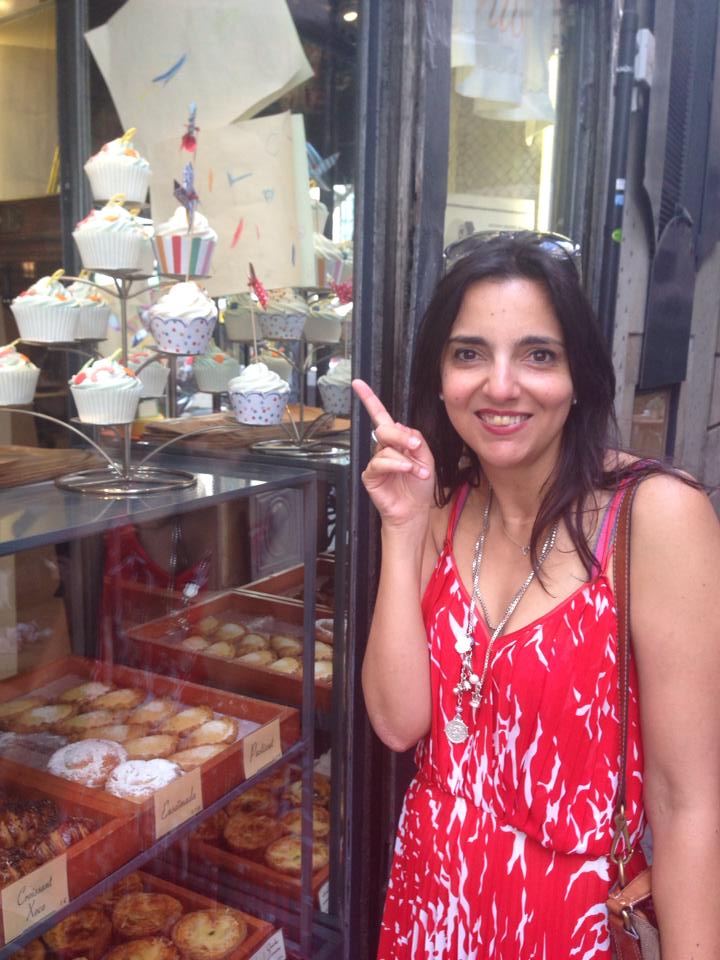
And it also helps to remember that life is far too short to feel guilty about eating a cupcake. Really.


Instructions. Eat cupcake Enjoy Do not feel guilty.

Instructions.
Eat cupcake
Enjoy
Do not feel guilty.


EFTPOSDiabetes Australia is in the running to receive funding from the EFTPOS giveback. Each year, EFTPOS provides funding to charities working with Australian communities.

Can you take a few moments to vote for Disease Prevention, Management and Medical Research, nominating ‘Diabetes Australia’ as your charity of choice?

Voting is easy!

Go to the EFTPOS Giveback site here, and follow the instructions. You can vote by either using your Facebook login or entering your email. All up, it will take three minutes. Remember to vote for Disease Prevention, Management and Medical Research. Don’t forget to write ‘Diabetes Australia’ in the text box.

And once you’ve voted, send the link to everyone you have ever met with the above instructions. It’s good karma folks and will held Diabetes Australia develop an exciting new online platform to help people better manage diabetes.


Disclaimer

I am employed by Diabetes Australia – Vic and also have a National Program Leader position with Diabetes Australia.

I missed No D Day (it was yesterday) so am playing catch up today. It’s a great initiative to get us thinking and writing about things other than diabetes. I hope Ninjabetic doesn’t mind me being a day late.

I’m back in Barcelona, a city I could quite easily call home for no other reason than the sangria. There is a gorgeous relaxed charm here, which I’m sure I see and feel because I am a tourist on holidays with few worries other than where to stop for my next sangria.

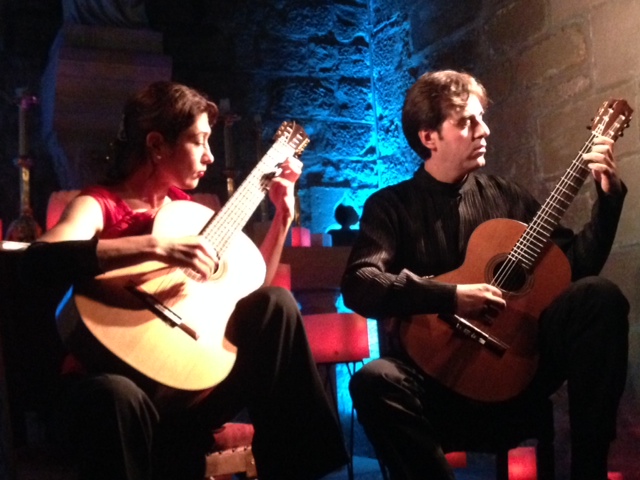
Tonight, after a meal of tapas (oh, and sangria) in a tiny bar we headed to the Santa Anna church to hear a classical guitar concert. It was a performance by husband and wife duo Joan Benejam and Ksenia Axelroyd who call themselves Barcelona Duo de Guitarra. The setting couldn’t have been more perfect – a corner cloister with a vaulted ceiling, lit only by candlelight.

It’s been a long time since I performed as a musician, but I still remember the exposure and vulnerability I’d feel when standing up in front of an audience to play. As the couple played this evening, there was an intimacy between them that was at times almost difficult to watch. They would search each other’s faces for cues, a small smile appearing on their faces. A couple of times their eyes met and they gave each other a secret look.

Their interaction was perfect. Sometimes Ksenia led the way, with Joan in a supporting role; other times it was he who had the melody, her harmony providing the background that allowed him to shine. They negotiated, took turns and looked to each other to make sure they were heading in the same direction. And at the end of each piece, they stood and together took a bow.

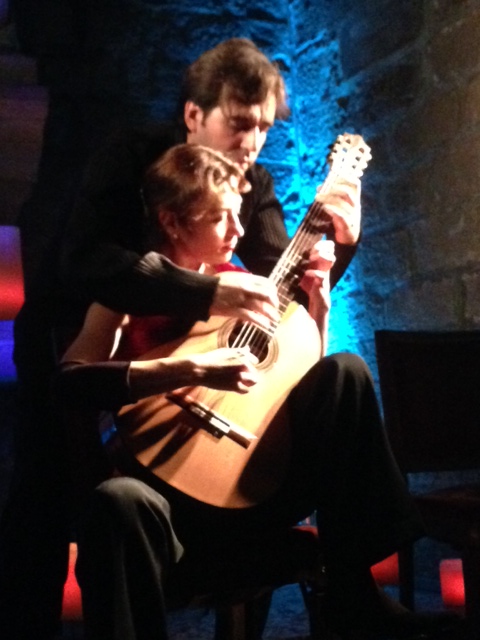
Their encore was a four handed guitar performance where they were both playing the same guitar. Their hands and fingers danced across the guitar strings and fingerboard, never getting in the other’s way. They finished and stood up, holding hands while the audience cheered our appreciation.

We spoke with them at the end of the concert, asking them to sign copies of the CDs we bought. We asked about their guitars and Ksenia made a joking comment about how many guitars Joan had. ‘Oh, I can relate to that!’ I said and we both laughed. I wanted to ask her how they managed to work and live together – what happened on stage if they’d had an argument about whose turn it was to take out the garbage? And I wanted to know what those secret looks meant – was it anything more than ‘Hey, we’re sounding great tonight’? But I didn’t.

We thanked them again and said good-bye and walked out of the church’s courtyard, back into the throng of Barcelona at night, the beautiful music still in our heads.

photo 1

Husband and wife team – Barcelona Due de Guitarra performing in St Anna’s Church.

photo 2

553167_10151884221685789_1746669457_n

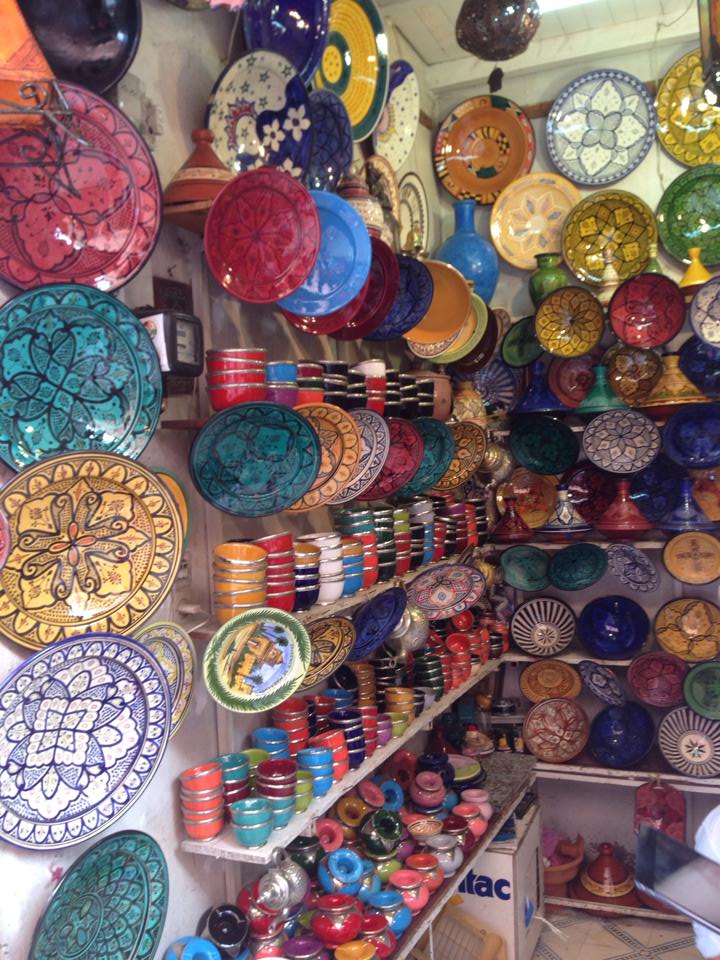
Spices in the souks.

If you ever want to do some people watching or get an idea about how efficiently a country runs, go to the post office. In Italy, it took Aaron a chaotic hour of being shuffled from window to window to buy stamps to send postcards back home; in Vienna everything is clearly sign-posted and people stand quietly in straight lines waiting their turn.

Today we’re in Marrakech and we’ve been standing in line now for 90 minutes to organise postage back home of an oud (homework: what’s an oud?) purchased in the Souks from a shop endearingly named ‘Bob Magic Music’.

11524_10151884223710789_1160023396_n

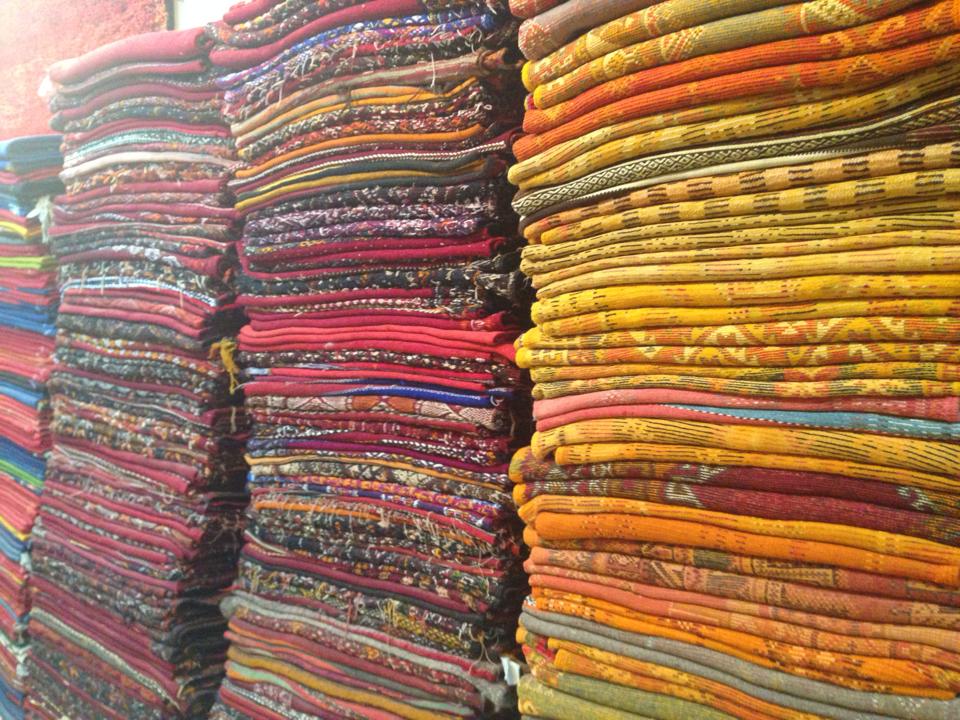
Magic carpets in every possible colour. I wanted one of each, but managed to select two to bring home.

We were told to get to the post office in the morning to avoid queues. I’m not sure what the queues are like during peak periods, but right now it’s crazy. There are makeshift lines, but no one seems too concerned about remaining in one queue. I believe there are five people working behind the counter at the moment, but their commitment to any one queue is also pretty ad hoc. I’m sure that by the end of the day everyone gets what they need, but right now, it looks incredibly disorganised.

So, I’ve had plenty of time to people watch and standing here waiting I’ve wondered, not for the first time, about diabetes in Morocco.

20131001-011047.jpg

Beautiful views around each bend on our tour of the Atlas Mountains.

Yesterday, we were in the Atlas mountains, eating lunch on the terrace of the house owned by the local imam. At the end of the meal, as we were served mint tea we were asked ‘Sugar okay?’ Aaron and I both nodded. ‘It’s because of diabetes that I ask,’ our tour guide explained. ‘Is there a lot of diabetes here?’ I asked, thinking of all the kids we’d seen playing out on the roads. And I thought of the examples of manual labour that were apparent everywhere here – men dragging carts full of vegetables; woman crouching by water holes washing clothes, goats being herded by old men. There didn’t seem too many opportunities for sitting back and doing nothing.

Our guide mentioned it was becoming a problem in the city, but up in the mountains where most families are self-sufficient and electricity is relatively new in some villages there is limited diabetes.

Last night, back in bustling Marrakech I became aware of the Coca-Cola signs everywhere – in the souks, out in the Jamaa el-Fnaa square, down the tiny alleyways.

I wonder how many people standing in the post office are living with diabetes and how they navigate their healthcare system. I wonder if we share stories of burnout and frustrations at numbers that don’t make sense. I bet we do. Afterall, diabetes is a universal language. 1381609_10151884222330789_1204779041_n

Down a narrow laneway in the Gothic Quarter of Barcelona is a shoe shop. Obviously, this was on my must-visit list whilst in the city. So with a spare couple of hours after a morning of meetings at the EASD conference, we set off to find it.

After wandering down winding alleyways, making pitstops for tapas and sangria, we found what we were looking for. The shop is tiny with racks of shoes lining the walls. Handbags swing from rails and there are shoes, shoes, shoes everywhere.

20130927-234014.jpg

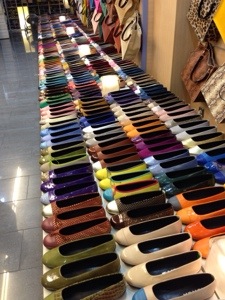
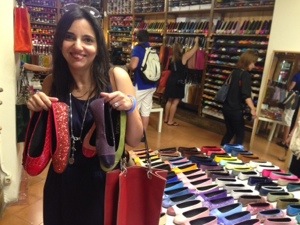
The catch is that they only come in one style. Every shoe is a beautifully constructed ballet slipper. But they come in each and every colour and colour combination you can imagine. The shelves look like rainbows with literally thousands of versions of the shoes in a variety of textures, materials and colours. They came in bright and muted colours, glittery, quilted, pony skin, two tone and polka dots.

One shoe; endless colours. As I stood in the middle of this gorgeous jewel of a store in Barcelona, I knew I’d found the perfect analogy.

We may all have a condition called diabetes, but each and every one of us has it in our own special way. While saying ‘I have diabetes’ connects me to a community made up of people from all over the world, my particular brand of diabetes is different to that of everyone else.

I left the store with a couple of pairs of shoes and a handbag. I walked away but turned to catch one last look. And then I realised. I could have bought dozens of different pairs. I loved them all. I wanted them all. They were beautiful, fun, whimsical. Unlike my diabetes.

20130927-234128.jpg

For the record – if my diabetes was a pair of these shoes, it would be the bright pink glittery pair I didn’t buy, but couldn’t tear my eyes away from.

20130925-092008.jpg

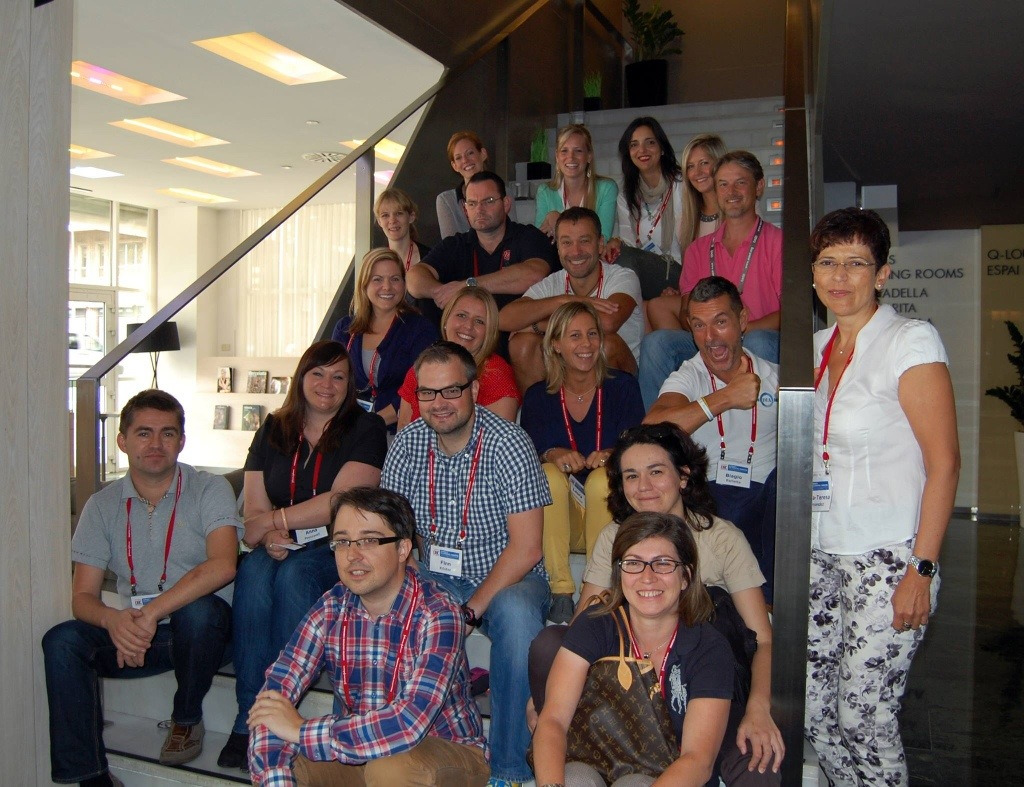
I’m in Barcelona for the 2nd Animas European Bloggers Summit. Diabetes bloggers from Italy, the UK, Germany and Norway as well as throw ins from the US and Australia have come together to talk about how we use our blogs to communicate with the diabetes online community.

Being surrounded by such an amazing crew of folks with diabetes is energising. Hearing about how we reach people, why we write and the value of peer support reinforces (yet again) the strength of this community.

Disclaimer
The Animas European Bloggers Summit is an initiative of Johnson & Johnson. J&J funded my travel and accommodation so I could attend the Summit as well as my registration to the EASD conference. There was no expectation from J&J that I would write about my attendance. But I will be because I’m a sharer!

Follow Diabetogenic on WordPress.com

Enter your email address to follow this blog and receive notifications of new posts by email.

Read about Renza

Archives