It’s report writing time. I know this, because I can see it in the faces, Facebook status updates and blogs of the many, many teachers I know.

In my former life when I was a teacher, I loathed this time of year. There are only so many ways to say ‘Little Lassie needs to do more flute practice at home’.

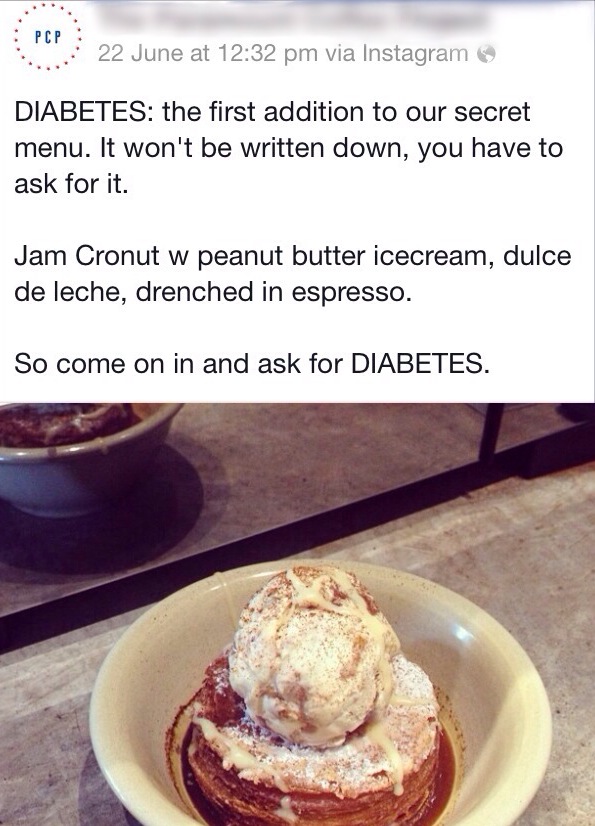
How terrifying would it be if we got diabetes report cards?…..

Report1

Do a Google search of the term ‘empowered patient’ and you will be inundated with thousands and thousands of links defining the empowered patient, instructing how to be an empowered patient or advising how to deal with an empowered patient (run for the hills and refer them on to another HCP). Health conferences have sessions dedicated to patient empowerment, there are countless social media sites and blogs on the topic, and there are many journal articles – written from the perspective of both the patient and HCPs about what patient empowerment means in healthcare. It could be considered a buzz term, even though it’s been around for some time.

Health organisations for conditions from diabetes to Sjögren’s syndrome(look it up!) dedicate pages of their websites, events and resources to guiding people to become empowered and ‘own’ their condition. It’s not a new thing, and while embraced my many, is still treated with some scepticism and nervousness by some and dismissed by others.

I am what I (and most) would call an ‘empowered patient’. Whilst, I acknowledge that the term is widely understood, I’m not sure that it really is a term with which I’m comfortable. Perhaps because the empowered patient can be considered difficult and annoying – a know-it-all who is there to try to take over the expertise of their HCP. That’s absolutely not what I am trying to do with my healthcare. When it comes to diabetes, I am the first to say I know nothing about diabetes – that’s why I see an incredible endo. But MY diabetes? I am the Universe’s leading expert in that!

For me, being an empowered patient simply means that I am in the driving seat as well as being navigator of my health issues– primarily diabetes, but also other things as well. (Last year, I demanded that I have a D&C following a miscarriage despite the OB wanting to just ‘wait and see’. Waiting and seeing for me would involve horrible pain; excessive bleeding and dealing with the miscarriage whilst on a long haul flight back home from NYC. Previous experience told me that. So I made sure that my wishes were not only known, but also carried out.)

In sixteen years managing diabetes there have been very few instances where I have blindly followed medical advice without asking questions, weighing up all possibilities and talking with others about their experiences.

But I wonder how much being empowered about my health condition and active in decision making is simply because that’s the sort of person I am. When planning for anything, I am organised and informed. I seek out the right people to speak with, I consider options, I ask a lot of questions. I make decisions based on what I have learnt and what I think will be best for me. Whether it is planning a holiday, choosing a contractor or looking after my health, I empower, educate myself. It’s my personality; it’s how I roll.

So does it mean that people who are not naturally like this miss out on the choices and options afforded to people who seek them? Does it mean that if someone is unable to empower themselves (perhaps because of language or cultural barriers, their personality or a lack of understanding of, or an inability to navigate the system) they wind up with substandard care?

Being an empowered patient isn’t at the expense of the expertise and knowledge of the HCP experts we’re working with. It helps form a partnership. I honestly do believe that it is because of our empowerment – our demands and expectations – that we receive better care, better options and, possible, achieve better outcomes. We make our HCPs accountable and answerable, but more than that, we make ourselves accountable and answerable. Sharing in the decision making means we also have to take responsibility when a medical treatment doesn’t necessarily work out the way we hoped. But I’m willing to take on that responsibility.

Last night was dinner with the ‘D girls’. These three women are some of my most treasured friends, and we have come together over the years because we have external pancreases. (Pancreata?)

They have been a part of my life for over ten years now. I met them all through my work (another reason to be grateful for this job!) but the reason that we’re friends reaches far beyond diabetes.

A night out with these lovely women generally involves much raucous laughter, a lot of inappropriate comments (we think the people at the next table left the restaurant because they were so disturbed by our conversation at one point) and plotting to fix all that is wrong with the world. We share photos of our gorgeous kids – all born around the same time – and talk about our families and friends and work.

Somewhere in there, we reach into our clothes and pull out insulin pumps, or reach into our bags for BGL meters. Talk of diabetes is scarce, but there may be an occasional comment or question. It certainly doesn’t dominate our conversation though.

As it turns out, some of my nearest and dearest friends do have diabetes. But that is not the reason for the friendship. Whilst it can be acknowledged as why we met in the first place, the reason for our enduring friendship is far more than beta cells that ran out on us. The reason I am friends with these three women is because they are smart, funny, beautiful and incredibly talented. I am honoured to call them friends. I love them to pieces and admire their strength, tenacity and protectiveness.

I see the way they deal with diabetes – the complete and utter ‘eff you’ attitude and acknowledgement that it sucks, but it won’t beat them – and know that I need to be surrounded by people like this.

The commonality that brought us together may be completely and utterly crap at times. But when we’re sitting at Marios catching up, laughing, supporting each other, talking a million miles a minute, we don’t care. Because really, it’s just four girls catching up.

D girls

It’s Friday; get your weekend started with some New Orleans funk. Here’s Trombone Shorty. (Swoon!)

Albert Einstein is a fraud. He may have worked out that E=mc2 thing and received a Noble Prize in Physics, but he got it all wrong when he defined insanity as doing the same thing over and over again and expecting different results.

Because anyone who has ever had to pretend to be a pancreas, (which, when working, is a magical, perfect organ), will know that the monotony of diabetes, which involves repeating the same things day in, day out, ALWAYS yields different results!

For people with diabetes, insanity is doing the same thing over and over again and expecting the same results. Just doesn’t happen.

This week, I had the same lunch on two consecutive days. Both days, my pre-meal BGL was in the mid 6s, I bolused the same amount of insulin and then sat at my desk for pretty much the next two hours writing and reading. How do you think that turned out?

DAY 1 – 5.6mmol/l (two hours after eating)

DAY 2 – 16.5mmol/l (two hours after eating)

Insanity would have been trying to work out why the hell that happened. Or being surprised at the difference. Sanity is saying ‘that’s diabetes’.

UPDATE

So, within 2 minutes of posting this on Facebook, a deluge of similar posts were listed. Here they are:

Glucolift (makers of the BESTEST glucose tabs in all the lands) have this brilliant infographic (about to be stuck up on my office pinboard)

Kerri at Six Until Me suggests that it’s perhaps diabetes that is the definition of insanity (she might be onto something)

And Sara from Moments of Wonderful wrote this as part of this year’s Diabetes Blog Week.

Great minds think alike?

I don’t consider myself a worrier. I never assume the worst, in fact, always assume things are NOT the worst. A cold is a cold – never pneumonia. I’ve had my thyroid operated on because of a benign lump, and when I’ve found subsequent lumps, have never thought it anything other than a pesky bit of rogue tissue. And I’ve always been right. ‘I’ve got this!’ I tell myself as I deal with pretty much any health stuff.

A headache is a headache – certainly not a migraine and definitely not a tumour.

But all of this is thrown out the window when it comes to how I behave about eye issues. I panic, I am paranoid and I expect to hear the worst.

I’m not sure why it is diabetes eye complications that cause me the most concern. I don’t seem to get as panicked when I have my annual kidney screening or have my cholesterol checked. It’s the eye thing that gets me each and every time.

Recently I had my post-cataract check-up. I was actually seeing the doctor because I noticed a slight change in vision and some pain in my left eye, but in addition to sorting that out, I would be having a full eye examination. My ophthalmologist would be making sure my new lenses had settled in okay and were doing whatever lenses are meant to do, and while I was there, he would be having a good look behind my eyes to check for any diabetic retinopathy. He would have a really clear view for the first time now that those pesky cataracts had been removed.

With this in mind, I was not thinking that everything would be clear and look fine. I was expecting to hear that the changes I’d noticed signalled some retinopathy and we would have a discussion about treatment. I did not think that all would be fine. I worried. I didn’t feel that I had this at all.

Following a routine distance vision and pressure check (all fantastic), my pupils were dilated and I was sent back to the waiting room. I concentrated on my vision getting blurry and felt my breathing quicken as I waited to be called back in.

My lovely ophthalmologist, now more than used to my histrionics, joked about how relaxed I was becoming seeing him. I twisted my mouth into what I hoped was a smile and told him that even after having cataract surgery, eye things still made me nervous as all get out!

He started by taking a look at the new lenses and was pleased to see that they were great. No problems post-cataract. There was a small scratch on my eye which explained the pain, but nothing else at all. And then he checked my retinas.

‘It just doesn’t make sense’, he said, snapping the light back on once he’d had a really good look at both eyes – checking and checking and checking again. ‘Those cataracts were pretty nasty and you got them very young. But there is absolutely no diabetic retinopathy in either of your eyes. Nothing at all! It looks really, really good, Renza.’

I could feel my shoulders relaxing and realised I’d been holding my breath.  He was watching me carefully. ‘I don’t need to see you for a year, Renza – unless of course you notice a change. Your eyes are great. But I think we need to talk a bit about you worrying so much about your eyes. You do everything right here. You come and see me regularly. You made the decision to have your cataracts removed at the right time. You may get some diabetic retinopathy, but we will pick that up early and treat it. Your worry is understandable, but not necessary. Are you speaking with someone about it?’

I started to tell him that I’m really not a worrier. I don’t get anxious about things. But my eyes….my eyes. I don’t know if it’s all tied up in the anxiety and fear I have of physically having my eyes checked or if it is something else. But I stopped myself, because he is right. I am a worrier about this.

I thanked him for being so kind – and for being the bearer of good news. I may have hugged him a little. And I left. I paid the bill and made an appointment for twelve months’ time. I clamped on my sunglasses and prepared myself for dealing with the bright Winter sunshine. And I breathed. No need to worry today. I’ve got this.


This week in the UK, it’s Diabetes Week. I’m always interested to see the focus of campaigns for awareness weeks and this has to be one of my favourites!

Having lived first hand through diabetes weeks that have involved ticking time bombs and threats of every single diabetes complication under the sun, I wish I could give a proverbial hug to the team at Diabetes UK who have put together an empowering, positive campaign. In lieu of that, I sent a tweet.

 D-UK tweet

Using the slogan ‘I Can’ the campaign acknowledges the difficulties people with diabetes may experience, but wants to focus on the things that we CAN do. I love this!

I’ll be keeping an eye on this week’s campaign. I’m interested to see and hear the stories of people living with diabetes and how they have managed to face challenges.

I hope that this year’s initiative is a positive one for Diabetes UK and we see more of these kinds of campaigns in the future.

Check out the Diabetes UK Diabetes Week campaign here.

And follow the #iCan tag on Twitter.

iCan

‘You do eat, don’t you mum?’ My nine year old had wrapped her arms around my waist this morning as I was fastening a clip in her hair. She squeezed tight.

I kissed her head and stepped back. She looked so concerned.

A couple of years ago, a friend of the kidlet’s had developed some disordered eating behaviours. Using age-appropriate explanations, we discussed what this meant for her friend, what we had to do when we were spending time with this friend and what was being done to help her friend ‘feel better.’ More broadly, I briefly explained that some people do have ongoing issues with how they think their body looks and tried to describe how this wasn’t necessarily about the food that they were eating, but had to do with their feelings and how they felt they looked. Trying to give the ‘eating disorders 101’ talk to a then-six-year-old possibly made my head explode with sadness.

This was a difficult conversation to have because I’ve always been concerned about how we discuss food and weight and body image. When I think about it, this was probably the first time that we’d ever had a discussion about food as being anything other than ‘Gee – that’s yum!’

The relationship between food and diabetes is mentioned occasionally – but again, usually because I’m low and need something to help get my BGL up.

As I’ve mentioned before, I’ve lost a bit of weight in recent times. This was not part of a weight-loss strategy. I wasn’t eating differently, or cooking different foods. I am a hobby baker and throughout this time, our bench top housed Tupperware containers full of cakes and cookies and slices. And I talk a lot about Nutella. Food is something that is celebrated in our house. Nothing is forbidden. We just eat a lot of fresh, healthy stuff with a decent splattering of (mostly home-cooked) treats.

We eat out regularly, but never at fast food restaurants. Our local café (a two minute walk away) is an extension of our kitchen; their coffee machine is our coffee machine!

But it seems that even though I’ve not discussed my weight loss with our daughter, she has noticed. Perhaps she hasn’t noticed that I look different, but, when she hugs me, I certainly feel different; when she wraps her arms around my waist, she knows that they go a lot further than they used to.

Should I be concerned at her concern? Does she equate weight loss with there being a problem? Is she worried that I have developed some of the eating problems her little friend had?

I dealt with this morning’s question by reminding her that we eat together at least one meal each day – more on weekends and holidays. I reminded her of the other night when we were toasting marshmallows by the fire as we watched a movie together. I pointed to a recent trip to the country where we ate pizza and shared doughnuts. We talked about the pasta dish I’d made the night before and how we sat at the dinner table eating it.

‘Okay,’ she said. ‘You just feel skinny when I hug you, that’s all.’ And then she changed the subject. I cringed at the word ‘skinny’ just as I would have if she’d used the word ‘fat’.

But perhaps I was making too much of it. Perhaps she was just stating a fact. Maybe using the word skinny was just an adjective that seemed appropriate, just as fat would have been in a different case. Maybe there was no judgement call attached. Maybe. Or maybe not.

I run on a double A battery. Yep, that’s what keeps me alive. My pump uses one single AA battery to deliver insulin throughout the day, receive information from my CGM and then report it back to me. The battery lights my pump, makes it vibrate and alarms when it needs me to look at it.

It doesn’t matter that AA batteries are easy to find, without the right tools, it’s not gonna work.

I learnt this last week when my pump battery was completely dead and I couldn’t for the life of me find a five cent (or ten) cent coin to open the battery cap of my pump, extract the spent battery and insert a new, fully charged battery to start giving me juice again.

I rummaged and searched for the right coin and then tried other things, getting more and more frustrated. (FYI – twenty cent coins don’t work, neither does a knife, my finger nail, a piece of cardboard or a pair of scissors). Nope. No luck. Eventually, at the bottom of my handbag, I found a lonely five cent piece and changed the battery, adding the coin to my ‘diabetes contingency bag’ for next time.

tiny hammer

Not the right tool.

I needed the right tool.

I was reminded of this yesterday afternoon when I tried to hammer a fallen picture hook back into the wall with a tiny hammer. Didn’t work. No matter how hard I bashed, there wasn’t enough weight in the hammer head to push the picture hook back in the wall.

Anyone else would have probably worked that out just by looking at it. But not me. Possible because I was being…. a right tool.

Am I the only one singing ‘If I Had a Hammer’ right now?

I’ve written before (here and here) about how the day we award Kellion Victory Medals to people who have lived with type 1 diabetes for 50, 60, 70 and even 75 years is my favourite work day of the entire calendar year.

Today was the first 2014 ceremony, and fifteen people were awarded medals, including three who received their seventy year medal.

The amazingness and brilliance and inspiration of these incredible people was captured in this one perfect tweet from Professor Jane Speight. I’ve nothing more to add:


Kellion14


In a dark jazz club in Melbourne, I had a diabetes ‘moment’ when I least expected it. It was ‘diabetes in the wild’, a term Kerri Sparling uses that perfectly describes these sorts of incidents.

This is a serious club. There’s a sign at the door that reminds you that talking during performances is frowned upon. Patrons are there to listen to the music, not the inane chatter of the person at the next table. A ringing mobile phone could result in public stoning. Well, not quite, but when someone’s phone did ring at this gig, the musician stopped playing until it was silenced.

I was sitting at the bar, watching and enjoying the music. Thanks to a pump line that really (really, really) should have been changed that morning, my BGL was a little high. I knew that I needed to do a correction bolus, so I pulled my pump from my top, pressed a few buttons and waited until I saw the insulin had been delivered.

Out of the corner of my eye, I caught the woman to my right surreptitiously staring at me and then looking at the pump in my hand. She looked away and leant towards her friend and, (breaking the rules of the club), whispered something. Her friend, just as stealthily, looked around her at the moment I was returning the pump to its place in my bra and then whispered something too.

What was the interest? Did they think it was a phone or a charger and were about to tell me off for not concentrating on the music? Were they wondering what the hell I was doing reaching into my top and pulling out a weird device the lit up?

I stopped wondering and went back to listening to the music.

About ten minutes later, I saw out of the corner of my eye, the woman take something from her handbag. It was a BGL meter. I swung my head around (clearly I’m not as cool or good at being covert as she was) and looked at her straight in the eye. I suddenly got flustered and looked away again, so thankful the ‘listening policy’ at the club meant I couldn’t do what I wanted to. Which was start a conversation with her (whether she liked it or not) and would have sounded like ‘YOU-HAVE-DIABETES-TOO-OH-MY-GOD-SO-DO-I-HOW-LONG-HAVE-YOU-HAD-IT-FOR-DO-YOU-WANT-TO-HAVE-A-COFFEE-AFTER-WE-FINISH-HERE-AND-TALK-TALK-TALK-TALK-TALK-TALK’. I would have stopped at some point to take a breath. Probably.

The music kept going and I tried to stare straight ahead, and not look over at her again. (Which, of course, I did. Several times.)

At the end of the gig as I collected my things, I turned to her and we looked at each other. I smiled; she smiled back. Diabetes in the club. I collected my bag and we walked out into the cool Melbourne night.

UPDATE

(My friend Kelly who writes at Diabetesaliciousness (read it – it’s great!) just sent me this wonderful diabetes encounter story. Contains cupcakes so it makes it even more awesome!)

The Melbourne International Jazz Festival is on now. Here’s the program – there are some great local and international acts playing.

Follow Diabetogenic on WordPress.com

Enter your email address to follow this blog and receive notifications of new posts by email.

Read about Renza

Archives