
You are currently browsing the category archive for the ‘Women’s health’ category.
Sunday is Feminist Christmas*. It’s the day that social media feeds turn pink and women get celebrated with morning teas (organised by women) and the lady folk are handed a cupcake (made by women) to shut us up and make us forget that women continue to live in a world designed and defined by patriarchy.
Isn’t that a joyful start to this article? I’ll wait while people shift uncomfortably and refer to me as an angry/difficult woman.
In the coming days in the diabetes world, you’ll see posts pointing to women in the diabetes landscape. These women are generally remarkable and doing great things. But oddly, rarely are the women whose faces appear on a social media carousel actually living with diabetes. A few years ago, I pointed out that while we should be recognising the clinicians and researchers improving our lives, women with diabetes are completely ignored.
So, a little hint to anyone who is putting together content for next week: don’t forget to also highlight the women with lived experience of diabetes who are actually doing so much of the work in our community. Those grassroots initiatives that continue to be life saving and life changing are very often powered by women with diabetes. And, as is often the case, these women do this work on a volunteer basis. All while managing a very demanding chronic health condition on top of all the other work women do.
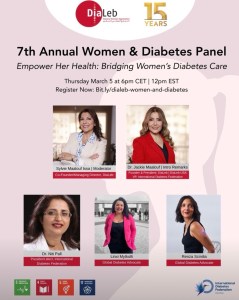
In the meantime, you should all register for this year’s DiaLeb Annual Diabetes and Women Panel. This is the 7th year and I’m very excited to be on the panel with two remarkable women living with diabetes, and another two women with loved experience of diabetes. Be quick! It’s tomorrow!
Seriously, women with diabetes are brilliant. we deserve way more than a cupcake. But I’ll take one all the same if some bloke would like to organise it.
More on International Women’s Day at Diabetogenic
2023 – Deserving more than a cupcake
2019 – Interweb Jumble #34 – The IWD edit
*The brilliant Wilhelmina Stracke coined this term. You should follow her on Instagram.
Last week, at the ISPAD Meeting in Lisbon, I was lucky enough to catch up with remarkable diabetes advocate Jazz Sethi and together, we launched a new resource about #LanguageMatters and women with diabetes. Jazz and her team from Diabesties conceived this idea and worked with a number of women in the diabetes community to bring this resource to life and add it to the ever-growing stable of #LangaugeMatters resources. I was one of those women.
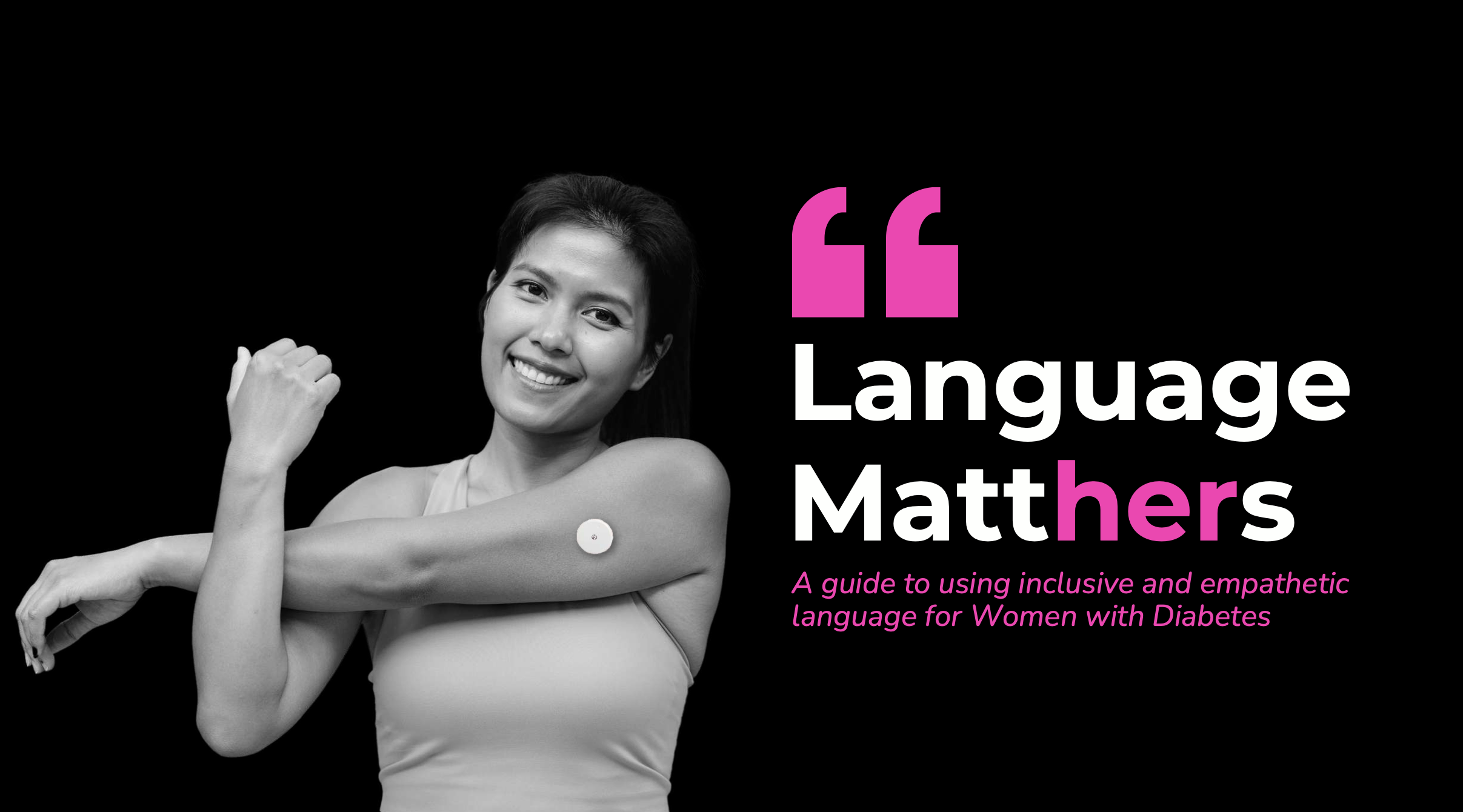
So, why do we need a specific document highlighting the challenges faced by women with diabetes, and how language can be used to help overcome these challenges?
Let’s talk about gender bias in healthcare.
Anyone who has even a mild interest in healthcare knows that gender bias is very real, and women do indeed face specific challenges. The situation is worse for women from different backgrounds, sexual orientations and gender identities.
This was the reason behind the International Diabetes Federation focusing World Diabetes Day activities on women and children back in 2017.
Here is just some of the information from that campaign, explaining issues faced by women:
- As a result of socioeconomic conditions, girls & women with diabetes experience barriers in accessing cost-effective diabetes prevention, early detection, diagnosis, treatment & care, particularly in developing countries.
- Socioeconomic inequalities expose women to the main risk factors of diabetes, including poor diet & nutrition, physical inactivity, tobacco consumption and harmful use of alcohol.
- Stigmatisation & discrimination faced by PWD are particularly pronounced for girls & women, who carry a double burden of discrimination because of their health status & the inequalities perpetrated in male dominated societies.
- These inequalities can discourage girls & women from seeking diagnosis and treatment, preventing them from achieving positive health outcomes.
Beyond diabetes, and more generally in the healthcare world, women’s health concerns are frequently denied, minimised, ignored or not believed. Women are gaslit into believing that symptoms are not real, pain is imagined and that we are overreacting. These attitudes can have serious consequences. Here’s just a sprinkling:
- This year, findings of the Australian-first #EndGenderBias survey found 2 out of 3 women experience discrimination in healthcare.
- A Danish study of 6.9 million people showed that diagnoses for diabetes came four-and-a-half years later for women than men; cancer is diagnosed in women 2.5 years after it is diagnosed in men.
- This World Economic Forum article about the women’s health gap highlights how far more women than men are not diagnosed for common health conditions.
- This McKinsey Report showed that when it comes to gender-specific health conditions, diagnosis rates differ. Eight out of ten women are undiagnosed with menopause, and six out of ten are undiagnosed with PCOS. Meanwhile, only three out of ten men with erectile dysfunction remain undiagnosed.
- Want more? Okay, here’s something from the UK showing that women are underdiagnosed, undertreated and under-represented in clinical trials directed at management strategies for cardiovascular disease, making their results less applicable to this subset.
Pivoting back to diabetes, this from a Lancet editorial:
- Compared with men, women with diabetes are disproportionately affected by depression and anxiety & have a lower quality of life, which can negatively affect attitudes towards self-management &, in turn, disease outcomes
- Women with type 1 diabetes have a 40% higher excess risk of premature death than men with the disease, and those individuals with type 2 diabetes have up to 27% higher excess risk of stroke and 44% higher excess risk of coronary heart disease.
- Women from high income countries are less likely than men to receive the care recommended by guidelines
And a recent study published out of Canada reported:
- Women with diabetes may face additional challenges related to gender-based discrimination and its impact on depression symptoms
- Stigma was more significantly perceived by women compared to men
None of this will be a surprise to anyone who is familiar with gender bias in medicine. Actually, none of this will be remotely surprising to anyone who has listened women share their experiences in healthcare.
And so, anything that can be done to address this is surely a good idea, right?
Well, IDF Europe thinks so! In this article, one of their recommendations for addressing gender equality in diabetes is: The development of specific approaches to diabetes prevention, education and care for women and girls. In other words, targeted, specific, tailored information is frequently needed to ensure that messages get through and issues are addressed.
Which brings us full circle to the #LanguageMatters and women with diabetes resource launched last week. A resource specifically for women with diabetes, by women diabetes. It identifies the issues and provides practical solutions to address them and shines a light on gender bias in diabetes care, asking that women are treated with respect and all our concerns are believed.
You’ll see that nowhere in this article have I denied that men with diabetes face challenges, or that men with diabetes could benefit from focused information and resources. And the new language resource for women doesn’t say that either. And yet, that was an accusation on the cesspit that is Twitter after a video was tweeted, where Jazz and I excitedly launched this new resource. Because ‘whataboutism’ is never far away.
Diabetes MattHERs has been widely shared on social media, with overwhelmingly positive responses. But here’s the kicker: the only backlash? Aimed at a woman. Men who shared it? Nothing but praise. Funny how that works. It’s almost as though there’s a different standard for women. Perhaps… I don’t know… could it be bias?

So often, there is amazing work being done in the diabetes world that is driven by or involves people with lived experience. Often, this is done in a volunteer capacity – although when we are working with organisations, I hope (and expect) that community members are remunerated for their time and expertise. Of course, there are a lot of organisations also doing some great work – especially those that link closely with people with diabetes through deliberate and meaningful community engagement.
Here are just a few things that involve community members that you can get involved in!
AID access – the time is now!
It’s National Diabetes Week in Australia and if you’ve been following along, you’ll have seen that technology access is very much on the agenda. I’m thrilled that the work I’ve been involved in around AID access (in particular fixing access to insulin pumps in Australia) has gained momentum and put the issue very firmly on the national advocacy agenda, which was one of the aims of the group when we first started working together. Now, we have a Consensus Statement endorsed by community members and all major Australian diabetes organisations, a key recommendation in the recently released Parliamentary Diabetes Inquiry and widening awareness of the issue. But we’re not done – there’s still more to do. Last week I wrote about how now we need the community to continue their involvement and make some noise about the issue. This update provides details of what to do next.
And to quickly show your support, sign the petition here.
Language Matters pregnancy
Earlier this week we saw the launch of a new online survey about the experiences of people with diabetes before, during and after pregnancy, specifically the language and communication used around and to them. Language ALWAYS matters and it doesn’t take much effort to learn from people with diabetes just how much it matters during the especially vulnerable time when pregnancy is on the discussion agenda. And so, this work has been very much powered by community, bringing together lots of people to establish just how people with diabetes can be better supported during this time.
Congratulations to Niki Breslin-Brooker for driving this initiative, and to the team of mainly community members along with HCPs. This has all been done by volunteers, out of hours, in between caring for family, managing work and dealing with diabetes. It’s an honour to work with you all, and a delight to share details of what we’ve been up to!
Have a look at some of the artwork that has been developed to accompany the work. What we know is that it isn’t difficult to make a change that makes a big difference. The phrases you’ll see in the artworks that are being rolled out will be familiar to many people with diabetes. I know I certainly heard most of them back when I was planning for pregnancy – two decades ago. As it turns out, people are still hearing them today. We can, and need to change that!
You can be a part of this important work by filling in this survey which asks for your experiences. It’s for people with diabetes and partners, family members and support people. They survey will be open until the end of September and will inform the next stage of this work – a position statement about language and communication to support people with diabetes.
How do I get involved in research?
One of the things I am frequently asked by PWD is how to learn about and get involved in research studies. Some ideas for Aussies with diabetes: JDRF Australia remains a driving force in type 1 diabetes research across the country, and a quick glance at their website provides a great overview. All trials are neatly located on one page to make it easy to see what’s on the go at the moment and to see if there is anything you can enrol in.
Another great central place to learn about current studies is the Diabetes Technology Research Group website.
ATIC is the Australasian Type 1 Diabetes Immunotherapy Collaboration and is a clinical trials network of adult and paediatric endocrinologists, immunologists, clinical trialists, and members of the T1Dcommunity across Australia and New Zealand, working together to accelerate the development and delivery of immunotherapy treatments for people with type 1 diabetes. More details of current research studies at the centre here.
HypoPAST
HypoPAST stands for Hypoglycaemia Prevention, Awareness of Symptoms and Treatment, and is an innovative online program designed to assist adults with type 1 diabetes in managing their fear of hypoglycaemia. The program focuses on hypoglycaemia prevention, awareness of symptoms, and treatment, offering a comprehensive range of resources, including information, activities, and videos. Study participants access HypoPAST on their computers, tablets, or smartphones.
This study is essential as it harnesses technology to provide practical tools for better diabetes management, addressing a critical need in the diabetes community. By reducing the anxiety associated with hypoglycaemia and improving symptom awareness and treatment strategies, HypoPAST has the potential to enhance the quality of life for individuals with type 1 diabetes.
The study is being conducted by the ACBRD and is currently recruiting participants. It’s almost been fully recruited for, but there are still places. More information here about how to get involved.
Type 1 Screen
Screening for T1D has been very much a focus of scientific conferences this year. At the recent American Diabetes Association Scientific Sessions, screening and information about the stages of T1D were covered in a number of sessions and symposia. Here in Australia. For more details about what’s being done in Australia in this space, check out Type 1 Screen.
And something to read
This article was published in The Lancet earlier in the year, but just sharing here for the first time. The article is about the importance of genuine consumer and community involvement in diabetes care, emphasising the benefits and challenges of ensuring diverse and representative participation to meet the community’s needs effectively.
I spend a lot of time thinking a lot about genuine community involvement in diabetes care and how people with diabetes can contribute to that ‘from the inside’. And by ‘inside’ I mean diabetes organisations, industry, healthcare settings and in research. I may be biased, but I think we add something. I’m grateful that others think that too. But not always. Sometimes, our impact is dismissed or minimised, as are the challenges we face when we act in these roles. I don’t speak for anyone else, but in my own personal instance, I start and end as a person with diabetes. I may work for diabetes organisations, have my own health consultancy, and spend a lot of time volunteering in the diabetes world, but what matters at the end of the day and what never leaves me is that I am a person living with diabetes. And I would expect that is how others would regard me too, or at least would remember that. It’s been somewhat shocking this year to see that some people seem to forget that.
Final thoughts…
Recently when I was in New York at Breakthrough T1D headquarters, I realised just how many people there are in the organisation living with the condition. It’s somewhat confronting – in a good way! – to realise that there are so many people with lived experience working with – very much with – the community. And it’s absolutely delightful to be surrounded by people with diabetes at all levels of the organisation – including the CEO. But you don’t have to have diabetes to work in diabetes. Some of the most impactful people I’ve worked with didn’t live with the condition. But being around people with diabetes as much as possible was important to them. It’s really easy to do when people with diabetes are on staff! I first visited the organisation’s office years ago – long before working with them – to give a talk about language and diabetes. One of the things that stood out for me back then was just how integral lived experience was at that organisation. From the hypo station (clearly put together by PWD who knew they would probably need to use the supplies!) to the conversations with the team, community was in the DNA of the place. As staff, I’ve now visited HQs a few times, and I’ve felt that even more keenly. Walking through the office a couple of weeks ago, I saw this on the desk of one of my colleagues and I couldn’t stop laughing when I saw it. IYKYK – and we completely knew!

DISCLOSURES (So many!)
I was part of the group working on the AID Consensus Statement, and the National AID Access Summit that led to the statement.
I am on the team working on the Language Matters Diabetes and Pregnancy initiative.
I was a co-author on the article, Living between two worlds: lessons for community involvement.
I am an investigator on the HypoPAST study.
My contribution to all these initiatives has been voluntary
I am a representative on the ATIC community group, for which I receive a gift voucher honorarium after attending meetings.
I work for Breakthrough T1D (formerly JDRF).
Eleven years ago on Mother’s Day, my friend Kerry started something on her socials. Kerry’s mum sadly died when Kerry was just six years old. She doesn’t have a single clear photo of the two of them together. And so, Kerry has urged her mum friends to make sure they take a photo with their kids – a really simple and special way to make sure that memories are recorded. (You can search for #KTPhotoForMum to see some lovely shared posts.)
We’re not short of photos in our household – who is in the age of smart phones? – but I especially love the album that I have of Mother’s Day photos of me and our girl. Seeing her on this day for the last eleven years brings a special feeling of joy.
But there’s another feeling in there that I want to recognise, and that’s how proud I am. Of course I’m proud of her – she’s a marvel (excuse my bias). But I’m talking about hoe I feel about myself as a mother living with diabetes. Because pregnancy and parenting with diabetes is not an easy gig.
I struggle with this sometimes. I don’t want to be defined by being someone’s mum. I achieved a lot before I became a mother and have done plenty in the last (almost) 20 years that I am so very proud of. There’s travel and a career, and media work, lots of published writing and a whole lot of standing on stages talking diabetes advocacy. These are usually the things that I point to when thinking about my achievements. For some reason, I’ve felt it’s diminishing to point to motherhood as an achievement.
But the truth is, that motherhood with diabetes is an achievement and it is defining in some ways. Conceiving, growing a baby, bringing her into this world, and getting her to adulthood is something that carries a huge sense of pride. Because, damn, diabetes made that hard. Every stage of it.
I get it: pregnancy is natural and it’s been happening forever and there are bazillions of people who have done it for a bazillion years, but there is absolutely nothing natural about taking on the role of a human organ. Seriously! It’s hard at the best of times. Being pregnant adds a degree of difficulty that is incomprehensible until you’re in the midst of it. Even today with tools that are far more sophisticated than the basic pump that saw me through my pregnancy, it’s still not easy. (And I utterly recognise how lucky I was at the time having a pump. The women sitting next to me at the Women’s Hospital diabetes & pregnancy clinic on Wednesday mornings who weren’t using a pump were real magicians.)
At that time I was just so in the weeds of dealing with all that came with a diabetes-complicated pregnancy that I never thought what an incredible job I was doing just getting through it. After all when was I meant to cheer myself for the remarkable effort? Was it before or after the 20+ finger prick checks I was doing each day? (CGM wasn’t around then.) Or alongside the complex calculations that I needed to complete before pre-bolusing the right amount of insulin at the exact right time? It certainly wouldn’t have been during the thirty percent of the day I was below target because in those moments, I was too busy worrying about starving my brain (and baby) of oxygen.
And then there was no time after she came along, because babies are all encompassing and take up every moment of the day. And diabetes can also be all encompassing and is incredibly demanding.
I had no time to be a cheerleader for myself because every single part of me was focused on making sure my baby’s elbows were growing properly, and stressing about how any out of range glucose level was harming her growing organs. Any spare brain bandwidth was taken up feeling guilty because I never felt I was doing enough. I felt that I was probably already failing my child. Even though her elbows are beautiful (and her organs seem fine), I still carry that guilt. Almost twenty years later.
These days, as more people with diabetes share their pregnancy and parenting stories, I DO cheer. Every time I hear about chaotic first trimester hypos, and managing glucose levels around second trimester cravings, and third trimester insulin-resistance frustrations, I know they deserve a loud ‘Hurrah!’ and so I cheer. Because look at these amazing people! Look at what they are doing – the work, the emotional rollercoaster, the determined effort they are putting in to keep themselves and their baby safe! Diabetes never plays nice, and for so many, pregnancy is the most difficult time in someone’s diabetes life.
Yesterday morning, I looked at our daughter as we had our Mother’s Day breakfast in the sunshine. Having her is the hardest thing I have ever done – the hardest, the most emotionally challenging, the scariest – but also the absolute best and I am so very proud that I did.
This post is dedicated to my dear friend Kati who I am cheering for every day!

Hey, do you remember a couple of weeks ago when it was International Women’s Day and women got a cupcake (probably baked by a woman) and a breakfast (probably organised by a woman) and then we all agreed that gender equality didn’t need to be spoken about for another year?
Look, I know I sound cynical. But that’s only because I am. Every year at Diabetogenic, I write a post celebrating the incredible women working in diabetes. Mostly I centre diabetes advocates who are generally donating their time – and emotional labour – to power advocacy efforts and make change. And if you look back at the history of the DOC, you will see that the majority of the work has been by women in the community. (Don’t @ me with your ‘But I’m a bloke and I’ve done this’ commentary. It’s not the time for #NotAllMen.)
This year, I started to write something, and then stopped, and started again. And then stopped. Anyone who is a frequent visitor to this site or follows any aspects of my personal advocacy knows that I celebrate the incredible work done by grassroots and community advocates (many/most of whom are women) throughout the year and I didn’t want to buy into the ‘It’s-IWD-here-are-the-womens-now-it’s-back-to-the-misogyny-we-usually-deal-with’ crap that seems to be the aftermath of each and every IWD.
So, I’m using today – this random day – to give a shout out to some of the great things going on that you may have seen, or you may have missed. These things are powered by women who, in most cases, are doing this as extra work on the side of their day jobs, and everything going on in their personal lives. But it’s undeniable that it’s this sort of stuff that is going on all the time, usually flying under the radar, but it’s making a difference to so many folks in the diabetes world.
And so…
There is some remarkable work out of India where the Blue Circle Foundation continues to make a mark in diabetes advocacy. On IWD, a team of women from the Foundation conducted an awareness program for 200 women inmates in Yerwada Jail in Pune, India. This is part of their ongoing Project Gaia which creates safe spaces for women with diabetes. Snehal Nandagawli is just one of the women involved in this work. You can hear more from her at this week’s #dedoc° #docday°.

From the UK, Mel Stephenson-Gray has been a brilliant force in the diabetes community for a number of years. She recently launched a fabulous new Insta page celebrating and empowering women with diabetes. It’s called Diabetes Women’s Health Club and the information she’s been sharing (accompanied by gorgeous graphics) is brilliant. I loved the profiles of some of women who were groundbreaking pioneers in diabetes research. Go give the page a follow now!
Dawn Adams hasn’t managed to convince me that she is only one person because the sheer volume of the work she is doing is immense and she’s bloody everywhere. Dawn continues to blaze trails in her research and writings about diabetes and menopause (follow @MenopauseMither on Twitter for great information and support), has been featured in a number of Diabetes UK publications, spoke at the recent #dedoc° symposium at ATTD, and continues to be a daily support and mentor to people across the global diabetes community. I’ve barely scratched the surface with this list. Someone please send Dawn a coffee and cinnamon bun so she can sit down for 30 seconds and recharge her batteries!
Another woman who is a human powerhouse and obviously works 23 hours a day (lazily, she sleeps for an hour) is Jazz Sethi whose work with the Diabesties Foundation continues to multiply exponentially. She’s also a brilliant speaker and gave an emotional talk at ATTD last month. Check out just some of what she is doing here (and stay tuned for something super exciting that we’ve been working on together!)
Also at the recent ATTD #dedoc° symposium, Hamidah Nabakka from the Sonia Nabeta Foundation captivated the packed-to-capacity room, sharing stories of children and young people living with diabetes in Africa. This was held on the first day of ATTD and for the rest of the week, I had people coming up to me and saying that it was their highlight of the whole conference.
I’m getting to this a little late because it was started last year, but Niki Breslin started a brilliant Insta page to build community called ‘My Type of Family’ for anyone with diabetes who is planning and trying to conceive, pregnant, recently had a baby and parenting. There’s lots of great information and encouragement for the community with this page and definitely worth a follow!

I was so excited to see some artwork by Miss Diabetes from New Zealand make it across the ditch Melbourne in an IWD street art exhibition. Her comic ‘Women and Diabetes’ was on show in our city’s iconic Hosier Lane! Miss Diabetes’ diabetes advocacy is super well-known in the community thanks to her tireless efforts supporting Insulin4All efforts and with work she’s done with the WHO diabetes team. You can see the artwork here.
Anita Sabidi in Indonesia continues to drive and build community with her advocacy work that shine very bright lights on issues such as emotional wellbeing and mental health, and women’s health. Anita is a regular speaker about these important topics, and also leads a number of community initiatives supporting women with diabetes in Indonesia. She’s also speaking at #docday° this week.
Dana Lewis never ceases to amaze. Last week she ran 100kms in a day, but unbelievably, it’s not her physical feats that make her name so well known in the diabetes world. It is, of course, her work in open source AID. Last month she gave two presentations at the Open Diabetes Closing Conference, and she has an upcoming session at the ADA Scientific Sessions in San Diego. On top of that, she continues to publish regularly and is a force for nothing but good!
Ashley Ng from Australia has been documenting life with two gorgeous little girls on her blog, opening up about some of the more difficult aspects of parenting while living with diabetes. I love Ash’s candidness and honesty and am always grateful for her ability to be so raw, but also hopeful. Read and subscribe to her blog here.
These women are just a few of the many who continue to make our community tick and flourish. There work is not only meaningful on 8 March: it’s making a difference every, single day. The very idea that women and their achievements get just one day of real celebration (albeit while battling the calls of ‘where’s International Men’s Day?’) is in equal parts frustrating and insulting. I celebrate the incredible work that women spearhead all the time because I know that alongside that work, they are dealing with patriarchal attitudes that make their successes all the more remarkable. That deserves far more than a cupcake!
Postscript
The UN theme for the day was DigitALL: Innovation and technology for gender equality, not the saccharine sweet ‘EmbraceEquity which means absolutely nothing and was created by some corporate machine that does nothing to advance equality in any way. So, if you spent IWD posting selfies of you hugging yourself, that’s great, but what did that really mean when it comes to advancing gender equality?
If you haven’t had a look at the website from the UN, it’s definitely worth it, even if it’s just to see the high-level details, one of which explains that online gender-based violence silences women and discourages their public participation. It may be odd to think this is a thing in the diabetes community when so much of what you see comes from women, but actually, it’s real. Harassment is a concern for many women, and I know of many women who have stopped sharing or locked down their accounts (permanently or temporarily), or deleted them completely, due to this harassment. I’m one of those women. This is something to be mindful of every day – not just a single day in March.
This week, my socials have been flooded with a topic that rarely gets much of a look in: menopause, and in particular diabetes and menopause.
It’s a welcome change! It was World Menopause Day on Tuesday, and with it came an avalanche of great content shining a light on this particular aspect of diabetes – something that really doesn’t get much coverage at all.
I shouldn’t be surprised that a lot of what I saw was people with diabetes sharing their own stories. These are the trail blazers who could see that there needed to be more awareness, more recognition, more attention to the issue and took matters into their own hands and shared their stories. (I’m looking at you Dawn Adams, you amazing woman!)
Here are just a couple of things that I’ve seen this week:
Dawn’s story at Diabetes UK about managing diabetes with menopausal hormone therapy (MHT, also known as HRT).
And Dawn again here at JDRF – UK with this gorgeous piece about how there are peer networks offering support for others going through perimenopause and menopause.
This Twitter thread from Diabetes UK, highlighting just how they’ve listened to the diabetes community and calls for more research and information about diabetes and menopause. Their Diabetes Research Steering Groups have made the topic a research priority in coming years. That’s what I call being led by the folks you’re representing!
Twitter has joined the chat with a new account focused exclusively on diabetes and menopause with this neat bio: Peer support for those with diabetes going through the menopause – all types of diabetes, all stages of menopause – we’re in it together. You can follow Menopause Mithers here.
Not diabetes specific, but worth a share, is this brilliant Instagram video from Dr Jen Gunter which looks at the origin of the word ‘menopause’ (of course I love this!). Oh, and there’s a whole chapter in her book The Menopause Manifesto about language.

I’ll be linking all of these to The Diabetes Menopause Project post as a one stop easy place for links about menopause and diabetes.
Let’s talk about perimenopause, periods, and diabetes. I’ll just wait a moment while a heap of people log off right now.
.
.
.
.
If you’re still here, hi! Shall we go on?
For the first, I don’t know, maybe 12 years I had my period, I had absolutely no regularity to it at all. I could never understand people who told me they got their period like clockwork, because for me the clock worked intermittently. It was less ‘that time of the month’ and more ‘that time of whenever’. Sometimes it came every three months. Sometimes every four and a half. It was a little surprise that showed up without warting when it felt like it, stayed for a few days, was minimally annoying (never particularly heavy and hardly any cramps at all), and then disappeared again, only to appear when it next felt like it. I spoke with my GP, and they weren’t concerned, and told me to celebrate the fact that I didn’t need to deal with period palaver each and every month.
This was all good and well until I was ready to have a baby. A regular period suggests that ovulation is happening regularly and that is kind of important if you need an egg to be fertilised. That wasn’t happening for me. Some fun fertility treatment (‘fun’, in this instance, means ‘frustrating, lots of tears, desperation and wondering why my body wasn’t doing what it was meant to do’), and I managed to get pregnant and have a baby.
And then, from six months or so after I had our daughter, my periods started happening regularly. Like clockwork. It was as though pregnancy had rebooted the reproductive bits of my body and for the last 18 years, I’ve been paying GST on period products every month.
During this time, I learnt that periods and diabetes don’t play nice. I’ve struggle to find patterns in my cycle so as to run different temp basal rates on my pump to accommodate. Anytime I’ve thought I’d nailed it and settled into a neat routine, the next month everything would go haywire. I guess I settled into another routine: a routine of no routine, where I just had to wing it at whatever time in my cycle things started to look a little sketchy. Loop certainly helped. I could see there were days each month when it was working overtime for no apparent reason, but those days didn’t correspond with the days the previous month. Or subsequent month…
And so, that brings us to present day when it’s time for another life transition or whatever euphemism you want to use to avoid using words that distract attention from hormones, uteruses, blood, and vaginas.
The pretty regular cycles have stopped. I’m not back to three or four (and a half) monthly, it’s more like six weeks or three weeks or some other weird timeframe. My period is on the most bizarre schedule now that is, quite frankly, bloody (yes, I know) annoying. And when it does deign to stop by, it either stays around longer (as in days…) or pops in for just a day or two. Or, even worse, seems to be done after a few days, only to return a day afterwards. Truly, it sucks!
I have made an appointment with my gynaecologist to check-in (it’s probably cervical screening time again) and for a check-up. I know that my experiences are in line with what heaps of other diabetes friends have experienced (yeah, we turn to each other because where else is there to go?), but I have a heap of questions to ask, and accept that there may not be answers.
And I’ve spoken with my endocrinologist. I think that I only ever think of my endo as my ‘diabetes doctor’ but really, her expertise in hormones is pretty bloody useful right now. And the fact that she does some work in a menopause clinic is hugely useful!
But here’s the thing. There are not pages and pages of information out there about diabetes and menstruation or diabetes and menopause. Or how diabetes affects your period during perimenopause. In fact, as with so many things that affect those of us dealing with periods (when they start, when they happen and when they stop), there is a dearth of information and very little research. I mean, it’s no surprise, because the patriarchy in health (as everywhere else) is all powerful. (Don’t believe me? Look at the number of resources about, and treatments for, diabetes and erectile dysfunction as compared with diabetes and menstruation or diabetes and menopause…)
Meanwhile, I just keeping trying to work it out, and speak with friends with diabetes to listen, learn and laugh as they share their stories. And watch as we start to open up more and write more and talk more in our own communities and advocate for more attention. Because that’s the story of diabetes community – we start the conversations that need to be had and that sets off a chain reaction where others get on board. So…get on board!

Diabetes and menopause – there are two things that have an image problem! Diabetes’ image problem has been discussed a bazillion times on here and is well documented by others.
And menopause? Menopause is middle-aged women; women who are past their prime and ready to settle down with a pair of slippers and a good book. Women who are a hot mess rather than just hot. Angry old women who are, at best, easily ignored, at worst, are given labels such as the incredibly sexist and derogatory ‘Karen’ thrown at us, especially if we dare demand attention for issues that are important to us. Oh, and we are invisible, apparently.
Well, fuck that. I am none of those things. I am as loud and out there and determined as I have always been. Sure, I like the idea of settling in for the night with a good book and a cup of tea, but I’ve been like that since I was in my twenties. And the anger isn’t new. Being radicalised as a kid does that to you, and I fairly, squarely, and gratefully credit my mother for it.
Turns out that my attention now is being turned to an issue that is one of too little research, too little attention, and too little available information that is relevant, evidence-based and engaging. And that is diabetes and menopause, and perimenopause.
Yes, I’ve written before about before. Missed it? Well, here you go: This time; this time and this time.
If you jump on Twitter now and search the words ‘diabetes’ and ‘menopause’ you’ll find a number of discussions which have been started by people with diabetes who are desperately looking for information to do with the intersection of these two topics. As well as information, people are asking to be pointed to examples of others who have been through it and are willing to share their stories. At the recent #docday° event, the inimitable Dawn Adams from IRDOC gave a rousing talk about why we need to focus more on this issue. (Follow Dawn on Twitter here.)
Here’s the thing: I still get diabetes and pregnancy reminders from my HCPs despite being 48 years old and very clear that having a baby right now (or ever again) is not on my to-do list. Been there, done that, bought the t-shirt and have an almost fully formed adult to show for it!
And yet despite that, I still get reminders about how important it is to plan for a pregnancy, take birth control to prevent it, and make sure that I take folate. Cool. That’s really important information. For women planning to get pregnant (and the birth control bit is important for women looking to avoid it).
But more relevant; more targeted; more person-centred for me is information about perimenopause and menopause.
Just over twenty years ago, when I was looking for information about diabetes and pregnancy, there wasn’t a heap of it. There was, however, a lot of research about it. What we really needed were resources for people with diabetes who wanted information that didn’t look as though it had been written and illustrated in the 1980s. We wanted the evidence-based materials that didn’t scare us. And so, working with other women with diabetes who were the same age as me, and looking for the same sort of information, we made it happen. The diary I published online when I was pregnant added to other stories that were already there. It was hugely reassuring to know that I could find others who were sharing stories that either mirrored my own or suggested the path that mine might follow.
These days, it’s super easy to find stories about pregnancy and diabetes. You don’t need to search too hard to find and follow diabetes pregnancies on Instagram, from pregnancy announcements through to delivery announcements and every twinge, craving and diabetes concern in between.
Less so menopause. Look, I get it. What’s the cute, good news story here? With pregnancy stories, there is a baby at the end – a gorgeous, cooing baby! There is nothing like that with menopause. Despite that, I think there are stories to tell and share. And a community to provide support and lived experience advice.
Right now, there is a chorus of people in the diabetes community who are calling out for this information and talking about the topic. I’m willing to bet that a lot of us were the ones who, twenty years ago, were calling out for decent diabetes and pregnancy info.
I’m not a clinician and I’m not a researcher. I don’t write grants for studies about menopause and diabetes that suddenly put this topic on the research agenda and start to help grow an evidence base. But what I can do is generate discussion and create a space for people to share their stories, or ask for information in the hope that others will answer the call.
The ‘The Diabetes Menopause Project’ isn’t really a thing. It’s a community cry to generate that discussion and some lived experience content. There are some great pieces already out there and I can’t tell you how many times I’ve pointed people to those blog posts and articles. But there needs to be more, and they need to be easier to find.
And so, to start with, here is what I do know is out there. If I’ve missed something, please let me know and I’ll add to it. At least then there is an easy one stop place to find the limited information that is out there. Get in touch if you have something to share.
The Big M – More Taboo Subjects, from Anne Cooper.
Type 1 and the Big-M – a five-part series from Sarah Gatward about her personal experiences of type 1 diabetes and menopause from Sarah Gatward
Managing Menopause and Type 1 Diabetes – also from Sarah Garward, published by JDRF-UK
Menopause + Type 1 Diabetes – Ginger Viera’s writing for Beyond T1
I hosted a Facebook live with endocrinologist, Dr Sarah Price where, amongst other issues, we discussed diabetes and menopause
Research!! This journal article looks at the age menopause occurs in people with type 1 diabetes
I facilitated an event for Ascensia (disclosures at the end of this piece) last night/early morning and the crappy time was partly (mostly) my fault, because although I sacrificed the Aussies and suggested we draw the short straw in the time zone lottery, I forgot that daily saving would have kicked in for us meaning kick off time was 11pm and not 10pm. That may not seem much – I mean, what’s an hour? – but there is definitely a psychological barrier about doing work after midnight. (Anyway, I digress, and that paragraph has just about put me to sleep).
The reason for last night’s adventures after dark was a facilitating gig for Ascensia’s latest Diabetes Social Media Summit (DSMS). The thing I love about (and why I am so keen to be involved) in these Summits is because they have tacked some difficult topics that are often hidden away.
This one was no different in that we looked to address something that needs more attention – diabetes and women’s health. In my introduction, I wanted to make the point that diversity and inclusion is important when speaking about any aspect of diabetes, and that for us to be truly inclusive in a discussion about women and diabetes, we needed to hear from women who represent all corners of the diabetes world. I particularly referred to needing better representation from women in the LGBTQIA+ community.
The other thing that we had wanted to make sure that we didn’t focus too much on diabetes and pregnancy, because so often that is the only easily information about women’s health and diabetes that can be easily found (and saying that, there does seem to be a bias towards women with type 1 diabetes). Of course, understanding and being aware of how diabetes can impact on pregnancy is important, but it is certainly not the only issue that women with diabetes want or need to know about.
In fact, one of the discussion points was that for some women, pregnancy is not a topic they want discussed. There is the assumption that all women of childbearing age need information about having a healthy baby when that is not the truth. Contraception discussions do not necessarily equal an invitation for pre-pregnancy counselling, and there needs to be some sensitivity in how healthcare professionals in particular raise the topic, and rid themselves of the belief that all women want to have kids.
There is so much more to talk about. So, so much more.
We touched on how much our cycles can impact and influence glucose levels (and a very amusing tangent where we joked about how when we see monthly perfect glucose patterns, they clearly don’t belong to people who menstruate – or people who understand the absolute havoc hormones can wreak on CGM traces).
We spoke about birth control and how the OCP can also make a significant difference to glucose levels, yet many of us were not told about that.
Of course, we spoke of menopause, but only briefly; briefly not because it’s not an important topic (or a super relevant topic), but because we just got caught up talking about other things (and perhaps my facilitating skills weren’t as tight as usual).
And we spoke about how cultural gender issues need to be shown and understood so that the experience of privileged white women with diabetes are not seen as the only experiences.
For me, the central message that I heard time and time and time again was that topics about the very things that occupy a lot of the headspace of women with diabetes are simply not discussed with us. And there is little research to inform our decision making, or even to help us form the right questions to ask. At best, we are given some piss-weak explanation that points a finger at diabetes being to blame. At worst, we are dismissed.
I do wonder when research and diabetes education will catch up. I know that there are some wonderful researchers doing some important work here, but we are so far from normalising discussions about women’s health and diabetes as part of our typical healthcare routines. We’re miles away from getting rid of the preconceived and outdated ideas about women’s sexual health.
Beyond discussing different women’s health matters, we also spoke about just how these discussions fit in the diabetes community. This was a completely unplanned turn for the summit (it was not a topic on the agenda), but I’m glad we had it and I’m glad that I am writing about it. Because of the nature of women’s health, sex and diabetes, there is a lot of taboo, shame, fear, and vulnerability. I know that some of the rawest and most open I’ve been in my writing has been when I have been dealing with moments in my life that were so, so hard and I was so, so vulnerable. When I look back, I sometimes wonder if I was right to hit publish after writing, and perhaps I should have tucked away the paragraphs until I was feeling stronger. Or not published at all. While I have been told that my words have provided some comfort to others facing similar challenges, it left my gaping, open wounds very public and visible.
After writing about miscarriages, I’ve been called selfish for wanting to have a child and potentially passing on diabetes to them. Writing about my fears of passing on diabetes to my child I’ve been told that perhaps I should have thought of that before I got pregnant. Speaking about body image concerns, I’ve been told to toughen up and stop being so shallow. I’ve seen and watched other women with diabetes experience the same thing, and I feel their pain as I watch them navigate the muddy, and sometimes distressing waters.
We spoke about how women are treated in the diabetes community, particularly when we write about struggles and difficulties, and the words and terms that are thrown our way when we dare to share how we are feeling. The ‘angry woman’ trope that I’ve written about before has been directed to many others too.
These discussions are real, and they are necessary. I am one of the loudest, most vocal supporters of peer support and have spoken about the value and importance of diabetes peer support and the online community on stages literally around the globe. Peer support saved me at times when I thought I was broken beyond repair. But it also can be a source of pain and bullying and nasty confrontations, and perhaps we need to have those discussions too so that when someone decides that they are ready to share and be especially vulnerable that they look out for themselves as much as looking out for the community. It’s all very well to want to share to connect and help with our own and others’ isolation but leaving ourselves exposed isn’t easy.
One of the attendees last night reminded us that we could share with selected friends in the community, still allowing for that peer support but under the protection of a safe space. It’s interesting, because until maybe two years ago, I had never experienced how unsafe the community can be to individuals. I’d not felt that before. While I still share a lot, these days I’m more inclined to turn to those trusted friends in the DOC who I know will be honest, open, but never nasty or judgemental.
Online spaces are different for women than they are for men. The misogyny that is inbuilt to even those that we think are allies comes out, often surprising us, as throwaway comments about a woman’s age or appearance. It is ever present in the diabetes community too. I’ve rolled my eyes as some of the most vocal advocates who have loudly aligned themselves as being supporters of women, revert to type, with snide sexist commentary. I’ve seen people in the DOC referred to as ‘angry old women’ for daring to be furious, older than 25 and a woman! I roll my eyes now when I know someone has called me angry. I also know that they’ve just announced to everyone how threatened they are of women who dare to not go quietly, and how they expect us to remain in our place!
There was so much more that we could have spoken about last night. We didn’t touch on body image and disordered eating (and yes, I know that this is not the domain of women only, but this is about us!), we didn’t talk about sex all that much either, even though it is often highlighted as an issue that needs more coverage and information. Again, it’s not because they are not important topics; it was because the fluid conversation took a feminist turn that highlighted a highly biased social and healthcare environment where it is seen as perfectly fine that the needs, and concerns of fifty percent of the diabetes community are barely considered.
Perhaps if we had a more feminist approach to, and model of, healthcare, the misogyny that has meant the topics important to us have not been researched, and are not discussed, could be eliminated. And women with diabetes would not be feeling ignored.
Disclosure
I was invited by Ascensia to help plan the agenda for #DSMSWomen and facilitate the discussion. I have been paid an honorarium for my time.
People with diabetes know that many times when we have a health concern it is dismissed with phrases such as ‘Oh, that’s more common in people with diabetes’ or ‘It’s part of living with diabetes’. Sometimes, that may be the case, but other times, it absolutely is not, and playing the diabetes card is like a get out of jail free card for HCPs to not do the investigations that they should to confirm diabetes is indeed responsible, and to eliminate anything else. Our concerns are ignored, and sometimes not believed. Not being believed is distressing in a particular way.
It is fair to say that while diabetes has the ability to creep its way into all sorts of places it doesn’t belong, it is also fair to say that sometimes it’s not diabetes.
I’ll say that again for the people in the back: SOMETIMES IT’S NOT DIABETES!
Women – with and without diabetes – have also reported, (and reported and reported) stories of not being believed, or listened to, or properly treated by healthcare professionals when we’ve fronted up to visit the GP or other health professional to discuss something worrying us. Women with painful, heavy, uncomfortable periods are told that it’s just part of being a woman. A diagnosis of endometriosis is not treated as something especially serious because it is common, and we’re told it’s just part and parcel of life for some women. And women going through menopause and perimenopause, are told just to accept it, that it will pass… and it’s just part of being a woman.
Put diabetes and women’s health together and there is a lot of dismissing, ignoring, diminishing, patronising, and belittling.
It needs to stop, and we need to be believed.
I am lucky that I haven’t experienced painful periods. To be honest, I barely even thought about periods until I was ready to try to get pregnant when I realised that my (up until then) good luck of only having a period 3 or 4 times a year wasn’t ideal for someone who needed to know when ovulation was occurring, and, to optimise the change of getting pregnancy, was occurring monthly. When I mentioned my irregular periods, the first thing I heard from most HCPs said was that it was because of diabetes. I wasn’t buying it. I’d started menstruating when I was thirteen. I had eleven years of sketchy periods before I was diagnosed with diabetes. And so, I asked for a referral to an OB/GYN and found one who was the sort of doctor who likes to solve puzzles rather than just ignore them.
He did a laparoscopy, a heap of other tests, and announced that I had PCOS. Not once did he suggest that my diabetes was to blame, but so, so many other HCPs did draw a line between the two. I do understand that there are links between type 2 diabetes and PCOS, and there is some research to suggest that there is a link between type 1 diabetes and PCOS, but thanks to an OB/GYN who wasn’t into making assumptions, I knew that there was more at play.
When I was ready to conceive, a regular cycle was easily achieved with a bit of Clomid. Since I had my daughter, my periods have been like clockwork. The arrive with a tiny bit of cramping that barely registers, and me being annoyed that I need to think about if I have what I need in the bathroom cupboard/work drawer/handbag. But not much else.
But I have friends who have such painful, uncomfortable, debilitating periods that have a really negative affect on their health and wellbeing each and every month. I know of people who miss days of school or work each cycle, who vomit at their period’s onset, and who cry in pain for days each and every month. These friends tell stories of how many HCPs simply shrugged their shoulders and said it was something they just needed to deal with, and perhaps some ibuprofen might help. They tell me that the severity of the pain is not believed. They are made to feel that bleeding through layers of pads, tampons and clothes shouldn’t concern them.
When I have needed to push and push and push to get answers, or to be treated seriously in the first place, or to reject the ‘It’s diabetes’ reasoning, I have been labelled difficult or challenging. When refusing to accept the ‘It’s just a woman thing’, I’ve felt the same way.
Dr Jen Gunter says it shouldn’t be an act of feminism to understand how our bodies work. In exactly the same way it shouldn’t be an act of defiance to demand answers. It also shouldn’t be an act of resilience. All too often, it is all these things.




 Diabetogenic