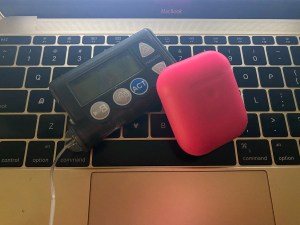
You are currently browsing the category archive for the ‘technology’ category.
Hasn’t it been terrific this week seeing a couple of great news stories in the T1D tech world? Our friends across the ditch in NZ have welcomed an announcement from medical regulatory board Pharmac that all people with type 1 diabetes will have access to CGM and automated insulin delivery devices (AID). Meanwhile, this week saw the start of a five-year national roll out of AID in England and Wales which recommends access be granted to children and adolescence (under 18 years) with T1D, pregnant people with T1D and adults with T1D with an A1c higher than 7%.
So, where is Australia when it comes to people with T1D being able to affordably access automated insulin delivery devices?
Let’s start by highlighting the positives. There’s so much to be grateful for here in Australia. The NDSS continues to be a shining light for Australians with diabetes. Syringes and pen tips are free at NDSS collection points and BGL strips are subsidised. Since 2004, insulin pump consumables have been on the NDSS, CGM sensors and transmitters have been subsidised since 2022. Insulin is heavily subsidised by the PBS.
But even with these benefits diabetes remains costly, and the playing field isn’t level. Pumps remain out of reach for many Australians. Without private health insurance or meeting eligibility to apply for the government funded Insulin Pump Program, people with T1D are required to find up to $10,000 for an insulin pump. That’s simply not affordable and it means that Australians with T1D can’t access AID.
With AID providing real life-changing benefits and significant reduction in diabetes burden, now is the time to ensure that the tech is available to everyone with T1D who wants it – not just those who can afford it. And that means that it’s time to equitably fund the missing piece of the AID puzzle: Pumps.
A fire has been lit. From a small meeting at ATTD in Florence to catch ups, coffees and phone calls back home, the groundswell has well and truly started. People with diabetes are central to this, working closely with motivated and determined HCPs and diabetes community organisations. There is a united focus on what needs to be done: affordable insulin pumps so AID is a reality for every Australian with type 1 diabetes who chooses. And excitedly, there seems to be an appetite for this from policy makers.
So what can we learn from the recent successes in NZ and the UK? Well, it’s exactly what we know from our previous advocacy experiences and wins here in Australia. A united stakeholder approach is critical with everyone from individuals with diabetes, community groups, diabetes organisations, professional bodies, researchers, industry all being clear and consistent about the ask. Simple and effective communication about the issue is needed. Community drives the momentum – it always does and recognising that is essential. Using evidence to support why AID must be available to all with T1D is important, and goes perfectly with sharing examples of lived experience to highlight the benefit of the technology. Hearts and minds.
With the push already well established and a number of people powering the charge, it’s inevitable that the diabetes world in Australia is going to be hearing a lot about equitable AID and pump access in coming months. Keep an eye out on community groups for grassroots efforts to elevate the issue and for calls to get involved. We know that we can get this done – just as with getting CGMs funded for all people with T1D, for finding a novel way for Omnipod to be funded, and for Fiasp remaining on the PBS. (And, if we look further back, for getting pump consumables on the NDSS.)
Community will be critical to getting this across the line. Once again, we’ll need people with diabetes to step up and write letters, meet with local MPs, make noise, and show why this is necessary. Every single person with T1D and their families has a role to play here. If you’re already fortunate to be using AID, meet with your local MP and tell them how it has changed your life. If you haven’t had access, write about why you know it will help. For me, I’ll be talking about how much time I have grasped back not needing to do diabetes, how I have far fewer hypos, how I have an A1c in the ‘non-diabetes’ range which evidence suggests reduces my risk of developing costly complications. But most importantly, it has reduced my diabetes burden so much and that makes me a far happier, more productive person. And I want that for everyone with T1 D.
Postscript: a quick word (or two) about language. Media reports, especially in the UK, have incorrectly referred to the technology as an ‘artificial pancreas’. What we are talking about is automated insulin delivery devices (or hybrid closed loop systems). It’s important to get the language right for a couple of reasons: Artificial pancreas is simply not the correct term for what the technology is. It overstates what it does and potentially leads people to think the technology is a cure for T1D. Additionally, it underestimates the work that PWD do to drive the technology. More detail about why getting the terminology right is important can be found in this piece I wrote back in 2015 about the same issue and then again here from almost exactly two years ago.)
I’m introduced most generously by Adrian Sanders, Secretary General of the Parliamentarians for Diabetes Global Network.
Australian airports seem to have become a battleground recently for travellers with diabetes. My own experiences since Australia opened back up to travel have been appalling and each week there are reports in online diabetes pages about some pretty horrendous experiences. Specifically, the problems are to do with full body scanners which have been rolled out across international security checkpoints nationally, and some domestic checkpoints.
This year alone in half a dozen international flights out of Melbourne Airports and a dozen or so domestic flights, all been much more difficult than any travel experience pre-COVID. I documented one particularly brutal encounter at Brisbane Airport last year in this Twitter thread. Sadly, since then, other instances have been just as awful.
It seems that the training modules for security staff have incorrect information about which scanning devices are safe for diabetes devices. In my experience, the messaging is consistent: staff have been told that the metal detectors (the older walk-through screeners) are unsafe while the newer full body scanners (the stand still and be scanned) are safe. This is at odds with information from device companies and health professionals and has resulted in a number of people reporting clashes at security checkpoints.
There’s so much discussion about this, as well as lots of confusion and some pretty dire misinformation across OzDOC socials, some of it coming from diabetes groups. Let me try to break this down with information that is based on advice from device companies and the Department of Home Affairs. This is what I have used to try to help me streamline my own travel experiences – with varying levels of success.
Firstly, let’s start with the Department of Home Affairs. This page has the information you need, but specifically, under the section Travellers who have a mobility aid, prosthetic, medical device or medical equipment is this: ‘If you have a medical device or medical equipment, it may streamline the screening process if you have a letter or medical identification card from your doctor or healthcare professional that describes the device or equipment. It is also recommended that you talk with your doctor, healthcare professional or check the manufacturer instructions for guidance on whether the medical device or equipment is suitable for screening by body scanner technology or X-ray technology, and if not, make the screening officer aware of any restrictions before beginning the screening process.’
Device companies all have their own advice, so familiarise yourself with what their recommendations. I wear a Dexcom, and carry a printed copy of security screening advice. At the end of this post you’ll find links and relevant information about the different devices available in Australia.
Knowing how tricky things are likely to be, I am super prepared for security checks now. I carry a letter from my endocrinologist that states I’m wearing diabetes devices that must not go through the full body scanner, and that my pump cannot be removed (not so relevant these days as I wear Omnipod). In a sign of just how much the times have changed, I now need to show that letter about 80% of the time at Australian airports. Pre-COVID I maybe needed to produce it twice in hundreds of journeys.
I always remain calm and clear about what I need: ‘I am wearing medical devices and cannot go through the fully body scanner. I can go through the metal detector, or I need a pat down. I’m happy to wait out of your way.’ I stand firm with this request, remaining polite and calm even when there is increasingly aggressive pushback. In most cases, security staff will tell me that the training says body scanners are safe and metal detectors are not. At this point, I offer the letter from my doctor and the printed out advice from Dexcom and mention the relevant information from the Department of Home Affairs. If there continues to be pushback, I’ll ask to speak with a supervisor. I truly hate doing this.
While this isn’t applicable to me now, at no point ever would I remove my insulin pump and hand it to security staff for inspection. Disappointingly, some of the device companies’ travel advice (and today I saw advice from a diabetes centre) suggests this. Don’t do it. I am happy for them to swab it while I hold it, but I won’t disconnect and hand it over. Items go missing and handed to the wrong person or could be damaged at busy security checkpoints.
I know others with diabetes are happy to go through whatever scanner they are directed to and have had no adverse issues and that’s great. But this isn’t about individual experiences so much as about how to manage situations according to manufacturers’ advice and knowing what official information from the relevant Government department is. It’s also about being treated respectfully and having our own lived experience and knowledge respected by security staff; something that sadly seems to be repeatedly forgotten.
If you’ve had a lousy experience and have the emotional labour to write a complaint to the airport, please do so. There are online forms you can use.
It would be really great if this additional work didn’t fall to people with diabetes. Device companies could step up here and provide cards to use at security checkpoints, similar to those that have been developed for people with pacemakers and knee and hip replacements. Simultaneously it would be great if there was a form that could be personalised and printed out or a card issued via the NDSS when people register for pump and/or CGM access (this wouldn’t serve people who are self-funding, but it would reach the majority of Australians affected). While I am sure that there are efforts underway to address it, there’s no time to wait and a temporary fix is needed immediately. And any other advocacy groups who are addressing this issue can make sure that the advice they are providing on behalf of their diabetes community is accurate and best serves the needs of people with diabetes.

Advice from device companies in Australia
AMSL has this advice for Dexcom users: ‘Use of AIT body scanners has not been studied and therefore Dexcom recommend hand-wanding or full- body pat down and visual inspection in those situations.’
Insulet Australia has this advice for Omnipod users: ‘The Omnipod DASH® PDM and Pods are safe to go through the x-ray machine and the Pods are safe to be worn through airport scanners.’
AMSL has this advice for Tandem T:Slim users: ‘your Tandem Diabetes Care insulin pump should NOT be put through machines that use X-rays, including airline luggage X-ray machines and full-body scanners.
Medtronic has this advice: ‘Your pump should not go through the x-ray machine that is used for carry on or checked luggage or the full body scanner.’
Abbott has this information for FreeStyle Libre wearers: ‘The FreeStyle Libre reader and the FreeStyle Libre sensor can be exposed to common electrostatic (ESD) and electromagnetic interference (EMI), including airport metal detectors. You can keep your FreeStyle Libre sensor on while going through these. However, the FreeStyle Libre reader and the FreeStyle Libre sensor should not be exposed to some airport full body scanners.’
Because our little diabetes community is about sharing and caring, a sharing and caring friend of mine gave me a few Omnipod Dash pods to try. I’ve been Open-Source looping with an old (small size) Medtronic for the last 6 years, and the recent news that the 1.8ml cartridges were coming off the market sent me into a spin of despair. I probably wailed ‘Why do things keep changing?’ at some point.
I am firmly of the ‘If it ain’t broke, don’t fix it’ school of thought, and needing to re-evaluate my current, very-not-broke Medtronic Loop set up was not something I was particularly keen to do. But it seemed that the decision was being made for me, and switching to Omnipod seemed to be a not-too-stressful way to keep using Loop.
Of course, between my panic, wailing and fury (alongside talking myself off the ledge of stockpiling every box of 1.8ml Medtronic cartridges available in Australia), a DIY fix was already being created that involved cutting down the larger 3.0ml cartridges to safely fit the smaller pump.
But the seed had been planted. Maybe Omnipod could be the easy solution. Pods are easily available. I have private health insurance that hasn’t been used to get a pump since 2013. And, most importantly, I won’t need to stop using Loop, or lose any of the beautiful ease it has brought into my life. This has been the reason I’ve not switched to a commercial system. I’m not willing to consider anything that requires what I consider to be a step back. Not being able to bolus from my phone or smart watch, needing to carry another device to drive whatever I’m using, and less customisation are all a step back in my mind.
So, I bribed my sharing and caring friend with lunch, and he came over my way to deliver some pods for me to try and since then I’ve been on and off Omnipod since the beginning of August, including for ten days travelling in India for work.
I’ve been pumping for over twenty-two and a half years. I’ve never taken a pump break. When I say having an insulin pump hanging from my body is my normal, I mean it. It was with me in the delivery room when my kid was born and has travelled the world with me. I have worked out how to tuck a tubed pump away in my clothes so that it doesn’t cause any sort of unsightly bump and other than my constant (sadly losing) battle with door handles, the tubing really hasn’t bothered me.
For these reasons, I’d never understood the deep-seated position some people hold at not wanting to use a tethered pump, or the overall appeal of a patch pump. That’s not to say that I don’t think they’re a good option. I just wasn’t drawn to one the way that I know others have been. To be honest, I’ve been kind of ambivalent about the benefits of no-tubing. That was all 15 pods ago ago, and now I get it.
Here are some of the thoughts I’ve had since using Omnipod:
⊙ Oh my Lordy! Phantom-pump is a real thing. I spent the first week of wearing a pod groping around for my old Medtronic pump. I’d go to grab my pump if I got up out of bed overnight, or first thing in the morning. One night, I thought I’d ripped out my pump and after groping around for a few minutes, woke Aaron, thinking it was under him. Half asleep, he said ‘It’s on your arm.’ I still do ‘the pat down’ before walking out of the house each day, gently tapping the middle of my chest to reassure myself that my pump is there. It’s redundant these days!
⊙ I don’t know why I thought it might be more complicated to use than it is, but I was really pleasantly surprised by ease of it all. The clunk of the cannula going in is slightly startling the first time, (but no more so than putting in a sensor). I’ve not found it painful at all.
⊙ That tape sticks! After three days, the tape has still been firmly adhered to my skin and looking pretty pristine. This was even in India where it was hot and humid. This bodes very well for the warm Aussie summer we’re being promised!
⊙ I thought that the Pod would feel more obtrusive on my body, but I have absolutely not once had a moment of ‘Ooh – that’s uncomfortable’ when I’ve rolled over in bed.
⊙ I’ve worn the pod on my right arm (Dex is always on my left), sides of my stomach (low and high), thighs (and didn’t rip it off when pulling down my jeans to race to the loo!), hips, lower back and all have been fine. No pain or discomfort at all.
⊙ Not needing to wear a bra if I don’t want to is liberating! Not needing to consider housing my pump and Orange Link is one fewer thing to think about!
⊙ I feel lighter because there is one fewer pieces of diabetes kit I need to worry about now that my Orange Link is redundant. This is a big win!
⊙ I’ve had two faulty pods which isn’t great really and the ‘replace pod’ alert came after three hours of inexplicable high glucose levels that were not responding to adjustment boluses. I’d really like to know if a problem is detected with the device before three hours of low teens numbers. The two faulty pods have happened in the last four days and I’m actually back on my Medtronic right now because I am a little thrown right now, but I’ll go back onto a pod later in the week when I head to Sydney for work.
⊙ Sorting our replacements with customer service has been a slight rigamarole, requiring far more calls and questions than seem necessary, and requiring a lot more emotional labour that, quite frankly, I don’t have to give.
⊙ Door handles are friends again. (Door jambs on the other hand, are now potentially double trouble if wearing a Pod on one arm and Dex on the other!)
⊙ I don’t love the waste and the thought that I am effectively using a pump every three days. Insulet offers a super neat recycling program which goes someway to alleviating my concerns about this. I love that my delivery came with a labelled box, zip log bag and clear instructions for the recycling program. This is outstanding and I wish other device companies could be this forward thinking.
⊙ The three-day hard cut off annoys the crap out of me. And yes, I’ve been using the 8-hour grace period every single time. I know that we are meant to change cannulas (tubed or otherwise) every three days, but many of us extend by a day or two when we know it’s safe to do so. And twenty-two years of pumping, not a single site infection, and knowing when I’ve extended to my limit would suggest that I am able to safely decide to keep a pump running for a few more hours without having it screaming incessantly at me. Alas, that’s not possible here. (And how has the DIY community not figured a work around this yet??)
⊙ Cost is, of course a consideration. I’ve not used my health insurance yet, so I have paid the NDSS + Insulet cost which is $29.30 (NDSS cost) + $168.27 (Insulet cost) per box. It works out to just under $20 per pod which is not cheap. If I make the decision to use my private health insurance and start using Omnipod on an ongoing basis, I will only have the NDSS contribution, bringing the cost down to $2.93 per pod – way nicer!
⊙ Omnipod currently has a new user deal on. You get 90 days of Omnipod for $149.40. Really annoyingly this is only available to new customers. I tried to see if I was eligible for this (after all, I’d consider having bought only one box would classify me as ‘new’ to Omnipod, but alas, I was not eligible). This is actually very disappointing. I’ll never understand why companies ‘punish’ their existing customers. But, if you’re brand new to Omnipod, this is a great deal and I’d encourage you to get onto it now! It’s a great way to try before you commit to using your PHI.
⊙ The best thing? Choice! Having a tubeless pump available here in Australia means Aussies with type 1 diabetes have another pump choice and that is only ever a good thing and should be celebrated. I now get why people are determined to only use a tubeless pump and if that is their choice, it should be available to them, and they should be supported to make that choice. I’m hearing that there are some centres that won’t use Omnipod and that’s absolutely not okay. If anyone is in that situation right now, reach out if you’d like some suggestions about advocacy to change the situation.
It’s exciting to try new things and this really is the first significant diabetes device change for me in some time. It is energising to have something different to play with. If you’ve been thinking of trying something new, this is a good thing to try!
DISCLOSURE
None! I was given a few pods to try from a community member (who has no affiliation with Insulet or Omnipod) and bought a box myself. I have done some consulting work with Insulet before, but not in the last two years.
My husband is a secondary school music teacher and it’s been fascinating hearing educators’ thoughts on using artificial intelligence (AI) tools in the classroom. I’ve generally heard two schools of thought about AI, such as ChatGPT. Some teachers identify how useful it can be and are excited about the myriad ways it can enhance education and support students’ learning in new and innovative ways; others see it as pure evil, signalling the end of education as we know it and will be exploited by pesky students. Thankfully, my husband is very firmly in the first group!
My daughter is a freshly minted university student, and of course, AI is front and centre of university faculty minds, with students receiving warnings about misusing the technology, and how assessors would be on the lookout for any assignments turned in that appear more ChatGPT and less CramGPT-AllNight. But again, it’s interested to hear about how some of her lecturers and tutors are using the technology to develop novel and engaging ways to learn. And students are finding ways to use AI tools to assess the work they are doing and pinpoint shortcomings to allow them to go back in and work on specific areas that might need attention.
But where are we in diabetes? What are we thinking about how AI could be useful in diabetes education and support? The ADA’s Diabetes Care journal weighed into the issue with this article published recently. The article provided a generally balanced view of what AI could do when it comes to providing diabetes education.
Some of the pitfalls noted include: inaccuracy in the information provided, (and limited updates on new evidence and developments) and the potential for presenting false information convincingly, leading to safety concerns due to factual inaccuracies. There is often a lack of nuance in differentiating insulin types and variation in blood glucose units. Obviously, it has a reliance on a general information database, not specific medical knowledge. There was also a comment about there being inconsideration for the needs and wishes of individuals (but then, I’m pretty sure some HCPs I’ve had to deal with could be accused of the same thing). The reliance at the end of almost every response to ‘consult your healthcare team’ is a helpful if people have access to such a team but could be problematic for those who don’t. The downsides it listed were fair, although I suspect most could be easily overcome.
And the advantages that were highlighted were also spot on, and included: increased access to information, and the provision of systematic, concise, well-organised responses, with clarity around any jargon used. The ability to augment basic levels of education and offer more detail if requested by the user means that people with diabetes can customise their education to suit their level of understanding, needs and interests and regional and cultural contexts, rather than be at the mercy of generic education models and information that is often all that is offered. Of course the fact that education can be on-demand – when and where people with diabetes want it – is hugely convenient! These certainly are all valuable and could address many of the frustrations experienced by people with diabetes when it comes to seeking and receiving diabetes education.
But there was one glaring omission in the advantages list. ChatGPT comes with neutrality and with that neutrality comes a lack of prejudice about diabetes and people with diabetes. It doesn’t judge and it doesn’t blame the person with diabetes either. At no time is ChatGPT going to accuse the person seeking education that they are lying about their glucose levels (yes, that happened to me), or imply they are in denial about their diabetes (yes, so did that), or suggest the person is simply not trying hard enough (yes, and that) or isn’t caring about their health (yep – on more than one occasion). AI bots in diabetes care, and health more widely, can be seen to create a supportive space where people can seek guidance without feeling self-conscious.
The fact that there is no emotion in an AI bot means that they come without the baggage of preconceived ideas and previous experience. And they come without human interaction, and yes, I realise that this is in direct contradiction with my frequent calls for HCPs to be more human and person-centred.
Before any diabetes educators come at me for trying to do them out of a job, please know that’s absolutely not what this post is about. Rather, I’m trying to highlight what it is that AI offers that could overcome some of the barriers (and those barriers can be mighty, mighty difficult to overcome!) that are experienced by people with diabetes when it comes to diabetes education.
I don’t think it needs to be said that this is a conversation that is going to be had more and more. AI isn’t in the scary future of diabetes education; it’s here and now, and smart CDEs will be the ones who work out how it can be used to enhance their work and be added as an additional tool to support people with diabetes. In fact, I would be looking for health professionals who are actively embracing this sort of tech rather than expressing scepticism about it.
Because here’s the thing: AI is going to put more control and power into the hands of people with diabetes. It’s already doing that and it’s only going to increase as AI models get smarter and can learn and adapt to each user, faster and more accurately. And this is going to mean less reliance on HCPs for aspects of diabetes care. But this is a great thing, in exactly the same way that diabetes tech such as home glucose monitoring, insulin pumps. CGM and automated insulin delivery have delivered similar outcomes.
The way diabetes care is evolving is at a crossroads. Better diabetes-specific technology, better drugs, ever-growing peer-led innovation, learning and support, all augmented by AI. The potential to create opportunities to better support people with diabetes and enhance our care is huge. I’m not for a moment suggesting that AI is a substitute for human interaction, but it undoubtedly has benefits over traditional healthcare approaches and offers new dimensions of support, in ways that can be customised and more relevant for people with diabetes. And if, at the foundation of all this, is the opportunity to remove stigma and help people with diabetes feel less blamed and shamed for their condition, that is a massive win!

Diabetes comes with a side serve of guilt in so many ways. Glucose levels above target? Guilty that I’m contributing to developing diabetes-related complications. Need to stop to treat a hypo? Guilty that I’m not participating fully in work, or focusing on family and friend. Forking out for diabetes paraphernalia? Guilty that the family budget is going to diabetes rather than fun stuff like (more) doughnuts from the local Italian pasticceria. Eating (more) doughnuts from the local Italian Pasticceria? Guilty that I’m not eating the way most diabetes dietitians recommend. Depositing the pile of diabetes debris on the bedside table? Guilty that I’m the reason the world is going to hell in a handbasket because of all the waste.
The other day, I did a show and tell of diabetes tech. I brought along all the things I use, and things I don’t use. I’d been asked to show and explain just how the tech I use works and what it all looks like, but I wanted to show that there were other options as well. The people I was speaking with had a general idea of what diabetes was all about but didn’t have the detail. So, while they understood what an insulin pump was, they didn’t really understand what it means when someone says, ‘I need to change my canula’.
I did a pump line change to show the process and all the components. I didn’t need to change my sensor, so I brought along a spare and a dummy kit that is used for demo purposes. I also had some disposable and reusable pens and pen tips, blood glucose strips and a meter, alcohol wipes and batteries for the devices that need them.
At the end of my demonstration and discussion, someone looked at all the debris. ‘That’s a lot of waste, isn’t it?’ I nodded. ‘It really is. And I think about that all the time. I hear people with diabetes lamenting just how much there is.’
‘It seems that what you use produces more waste than if you were using the reusable pens and a meter you showed us. Wouldn’t it be better for the environment if you did that?’
Yes, friend. Yes, it would. But it wouldn’t be good for me, my mental health or my diabetes. I was reminded of when our little girl was new and a man at the supermarket saw frazzled new-mum Renza covered in baby vomit and probably wearing my PJs, juggling baby and a box of Huggies and asked why I insisted on using disposable nappies rather than cloth. ‘Disposable nappies take 100 years to break down.’ In my new-mum fog, I looked at him, wondering what on earth I’d done to deserve this unsolicited approach, and said ‘Yes, I know. But if I had to deal with cloth nappies it would take me 100 seconds to break down.’ I blabbered on about other ways that we are more environmentally responsible, and then scurried away, adding environmental guilt to mother guilt and diabetes guilt.
Diabetes waste is horrendous. There’s a lot of it. And we should think about it. I love the work that Weronika Burkot and Type1EU led a few years ago. You can still find details of the Reduce Diabetes Technology Waste Campaign online. The project aimed to highlight the amount of diabetes tech waste one person with diabetes produces in 3 days, 1 week, 2 week and 1 month. It was startling to see the piles of trash accumulate.
But it can’t be solely the responsibility of the of us living with condition to address the issue. It’s brilliant that we talk about it – and we should do that. The Type1EU campaign got a lot of people thinking and talking about it for the first time. And we absolutely can and should do what we can to minimise our waste. I make sure that everything possible is recycled; I stretch out canula changes to four days when I feel it’s safe to do so; I restart sensors three or four times; I refill pump cartridges, sometimes to the point of them getting sticky; I use spent pump lines to tie the rose bushes in the garden; I’m using a fifteen year old pump – the last time I bought a new one was in 2013. I do all these things to try to reduce waste. I do what I can. I last changed my lancet one 2018. And, as an advocate, I have sat around tables with device manufacturers and begged that they consider how they can be more sustainable in their approach to diabetes tech, asking them what can be reused? What can be easily recycled? What can be removed from current packaging?
But the reality is, we don’t get a choice in how products are packaged. We don’t get to choose what the devices look like or the excess packages that surround them. We don’t get a say in the requirements of regulators who place stringent demands on manufacturers to make sure products meet safety obligations.
Laying into people with diabetes as needing to be more responsible without looking further upstream at just who is responsible for the product we pick up from the pharmacy, or have delivered to our door, seems unfair.
I gently pointed out to the person who was (most likely unintentionally) piling on the guilt with his comment about how I was contributing to the despair that is the condition of our environment, that his comment really was unjust and misplaced. To suggest that someone with a crappy medical condition that requires so much effort and attention, abandons the technology and treatments that go towards making it just a tiny bit less crappy is not really addressing the root problem. It can’t all be about individual responsibility. There needs to be scrutiny on everyone along the supply chain, but the least scrutiny and blame should lie at the feet of those of us with diabetes.

On the day I was diagnosed with diabetes I was given a blood glucose meter. It was a nondescript cream colour, came in a dark blue padded bag and took 20 seconds to count down before giving me a reading, as was norm back in 1998. I can’t tell you much more about it.
In 2001, I got my first insulin pump: a Medtronic 507C. I think it was black. That’s pretty much all I remember about it.
Sometime in 2004, I upgraded to a Deltec Cozmo pump as soon as it was launched in Australia. It was a beauty – a charcoal grey, wonderfully organic design that felt sublime to hold. It was smart and cute, with a heap of features my first pump didn’t have. I loved the bolus wizard, and credit it a lot with the incredibly tight glucose management I maintained while pregnant with my daughter. That was the pump that was in the operating room with me when she was first handed to me, and it was nestled down my bra for the two years I breastfed her. She would hold onto the pump tubing in her tiny baby paws while she nestled into me for a feed. I was heartbroken when Deltec went out of business because I knew I’d need to change pump brands when the warranty was up. My old Cozmo is in a box in my diabetes supplies cupboard, too precious to throw away. To this day I think of that pump fondly and get all excited when someone else mentions how they used one, reminiscing about their love for it.
Since then, there have been a couple more pumps and countless blood and continuous glucose meters. I have limited memories of any of them. Oh, except for maybe the pink MDT paradigm I rebooted when I started DIY looping and still use today. But my fondness for that particular device is mostly because it’s pink. There was the iBGStar – a fun little gimmick because it attached directly to the charging point at the bottom of an iPhone. Remember? It was around for all of about 15 minutes because the next gen iPhone used different chargers and iBGStars were relegated to the DTech museum.
Really, there has only been one piece of kit that stands there next to that Deltec Cozmo. And it’s this (slightly blurred) baby you see on my arm. My Fenix.

I have been using this same transmitter pretty much continuously since June 2018. It’s a rechargeable Dexcom G5 and has worked like a dream. Other than a few months where I was gifted some Dexcom G6 products, I’ve exclusively had this Fenix attached to my arm. It has worked like a dream and has saved me a fortune. How much?
The retail cost for Dexcom transmitters here in Australia is $540 (now available fully subsidised on the NDSS for people with type 1 diabetes). For the last four years, I’ve forked out exactly zero dollars. Had I been purchasing a new transmitter every 3 months, I would have paid $8,640. That’s a lot more than zero dollars. In fact, it’s about the price of a second-hand 2012 Fiat 500.
Where did I get this remarkable piece of kit? From a bloke called Simon who lives in rural Victoria and has been an absolute marvel in the way he has been providing affordable CGM kit for people with diabetes not just in Australia, but around the world, so they can use what they need at an affordable price. He re-batteries transmitters and forwards them on; answers questions about loopable pumps so that people can reap the rewards of DIYAPS. He is at the end of the phone or Facebook messenger to answer questions. He has also found a way to extend the use of G6 transmitters, with the Anubis.
My Fenix is one of the simplest, least fussy DTech devices I’ve used. It works the same way as any Dexcom transmitter, except that after about three months, instead of being thrown in the bin, it gets plugged into the wall for an hour to recharge. Simon created a super simple reset tool to override the factory-set cut-off timer built into Dexcom transmitters, so the ‘Transmitter expiring’ warning was just a reminder to reset it next senor change.
I’ve done this for over four years.
At diabetes conferences, after spying the slightly odd-looking device on my upper-arm, Dexcom reps have stopped me as I’ve been rushing by to ask about it. Most want to know if it’s ‘one of those rechargeable ones’ – they all knew about the mythical Fenix! – and were always interested to know just how it worked. I had dinner one night with a senior engineer from Dexcom who asked me dozens of questions and was delighted to hear about it. I only had one question: I wanted to know that if a bloke in Victoria’s High Country could make this happen and make this life saving tech cheaper for people with diabetes, why couldn’t a multi-million-dollar tech company do the same? I didn’t get an answer to my question.
My Fenix is retiring because I’ve worked my way through my G5 sensor tash. Even though Dexcom G6 was launched into the Australian market over 12 months ago, I have happily continued to use the earlier generation with sensors either purchased or gifted from friends overseas who have been forced to upgrade. I haven’t minded that the sensors have been out of date (sometimes by years!) because it was never an issue. Plus, it meant that I could continue to use my Fenix.
The ingenuity and generosity of people in the diabetes community will never stop to amaze me. I reckon Simon could charge a fortune for his inventions, but he doesn’t. He covers his own costs, (but only sometimes; he donates a lot to people who can’t afford to pay). He is another example of a remarkable person in our remarkable community trying to make diabetes a little less burdensome. And my Fenix has meant four years of that.
When I talk about the diabetes kit I wear each and every day, I am at great pains to point out just how important it is that it does a lot more than just simply work. It needs to be simple, accurate, and not cause more stress. Skin in the game is literal and figurative when I stand up and speak about this, including how we literally and figuratively get attached to the devices that we love. I’d keep using my Fenix forever if that was the only CGM technology available to me because not once did it cause me any stress. It just made my life simpler; it reduced my diabetes burden, saved me money, and helped me hate diabetes a tiny bit less. My Fenix rose for the last time a couple of weeks ago, and now retired, lying in the same box as my Cozmo – reminders of how great DTech can be.
There are days working in diabetes advocacy that are pretty special and today is one of those days.
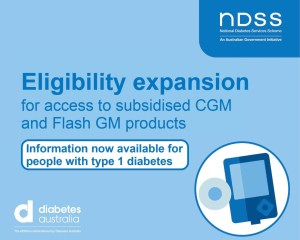
Because from today, all Australians with type 1 diabetes are eligible for subsidised CGM products. That means, all 130,000 Aussies with type 1 can access affordable CGM and Flash GM in the same way as all other diabetes supplies.
It’s July 1 and kick off is today, so there are likely to be some hiccoughs. And it’s going to take some time for everyone involved – from those of us with diabetes, our HCPs and pharmacies, plus anyone else – to become fluent in it all.
All the information is on the NDSS website, and I know it seems that there is heaps of detail (there is), but it’s worth taking the time to work out which group you are in and understand the process that will be required for you to access subsidised CGM.
I know that there are some people who are a little (a lot) annoyed that one of the regulations that has been put in place. Some people who are new to the NDSS CGM scheme won’t need to see a HCP before being eligible to access subsidised supplies. The rules to be in that group are as follow:
- Must be already using CGM or Flash GM
- Must have ordered CGM or Flash products from the supplier between 1 January 2022 and 1 June 2022
If this is you, there is an easy form to fill in, requiring just a few details including the product you intend to use so that the NDSS can validate that you have indeed ordered within the required timeframe. If you’ve ordered outside that timeframe, you’ll need to have your eligibility form completed by a HCP.
These rules will mean that some people with diabetes who have been using CGM for some time, but have not placed an order with a supplier between 1 Jan and 1 June, will not be fast-tracked, and will need to wait until they next see their HCP to fill in the required form (or have their HCP fill it in online before their next appointment).
I’m in that situation. Despite having used CGM for over 10 years (long before most diabetes HCPs even knew what CGM was!), I will still need to see a HCP to have my form filled in. I’ve been using expired G5 sensors or G6 sensors donated or purchased from pharmacies or others with diabetes for the last couple of years. I did place an order recently to take advantage of a super cheap offer that had been made to lure users, but that was after 1 June.
While frustrating (and I know a lot of people who have found themselves in the same situation), I do understand why it’s necessary. I have heard of dozens and dozens of people who have never used CGM or Flash, who jumped in to get the super cheap introductory offer AMSL were offering for Dexcom G6, and others who ordered a free Libre sensor.
Sure, we can argue that people with diabetes are able to work out how to use tech without HCP instruction, and that probably the case for most people. But there are some people who might find it difficult and that might mean they are not able to get the best out of the device. There is no point using any sort of diabetes technology if it’s not being used properly and I say that as someone who used a pump for the first three years without decent training and education and, because there were so few pumpers around at the time, no peer learning opportunities back then. I was self-funding in 2001 when I started, paying around $300 a month and getting absolutely nothing of value out of it. What a waste of money.
The NDSS is a taxpayer funded initiative and I guess, as a taxpayer, it’s reasonable to want to know that those accessing it are benefiting from it as much as possible.
If we can look beyond the initial teething issues that are inevitable and step back to look at the big picture, Australia’s entry into the #CGMForAll people with type 1 diabetes is incredible and stands up when compared with what is available elsewhere in the world.
There criteria is pretty broad meaning that absolutely no one with type 1 diabetes should miss out. And while initial forms need to be completed by a HCP for many, there isn’t an assessment process that becomes a barrier to access. I have friends with diabetes in other parts of the world where in writing there appears to be #CGMforAll, but the reality is that HCPs wield a lot of power before that becomes a reality. The hoop jumping here in Australia is relatively minor (even with the matter mentioned earlier in this post).
I certainly think that within a few months everyone who wants to access CGM through the NDSS will have been able to. And in a couple of years’ time, subsidised CGM access will just be part of what we get here in Australia, and will be expected. I suspect, however, that the ten plus years of advocacy I’ve been involved in won’t be forgotten. This win has been hard fought. But jeez was it worth it!
DISCLOSURE
I work for Diabetes Australia who administers the NDSS on behalf of the Australian Government. I do not work in the NDSS team. My access to the NDSS CGM initiative is the same as for every other person with type 1 diabetes in Australia – I’ll be seeing my endocrinologist at the end of July to get her to complete the relevant form so I can access subsidised product.
What were you doing 15 years or so ago? I can’t tell you what I was doing at exactly this moment back then, but I can tell you that it is when I started working on getting CGM access for all Australians with type 1 diabetes. Back then, CGM was relatively new here. It was only used by people with type 1 diabetes and, just as now, the out-of-pocket expenses were significant. But, we knew that there was emerging evidence to show that this tech was life-changing, and we knew that there was no time like right then to start discussions about what a funding scheme would look like.
When I talk about the slow burn of diabetes advocacy, this is what I mean. We’ve had wins along the way, but until this morning, it’s understandable that a lot of adults with type 1 diabetes felt quite forgotten with the subsidies that were available.
But today we’re celebrating. In a big way. We started working on the announcement yesterday when we heard that there would be an announcement today – #CGM4All was moving from just being a hashtag to a reality if the Coalition was returned to government. Within hours of this morning’s announcement, the ALP said they would match that promise.
Isn’t bipartisanship a beautiful word?
Breaking it down, what does this mean? It means that nothing changes for people who already have access to fully-subsidised CGM and Flash GM through the NDSS CGM Initiative. For those of us who have missed out up until now, the Initiative will be expanded; we will have access to the scheme, and there will be a co-pay. Details are sketchy around that, but the announcement is that the maximum out-of-pocket expense will be $32.50 per month. Right now, those on a subscription for Dexcom G6 would be paying $330 per month.
So, this is a lot less!
By the way, we’ve been here before. Back in 2016, we had bipartisan support for introducing CGM funding. At the time, the ALP promised funding for all people with type 1 diabetes who met the criteria which was firmly based on clinical need. The Coalition’s promise was for kids, which is exactly what happened when the first iteration of the NDSS GCM initiative became a reality in April 2017. There have been further expansions – for people with diabetes planning for pregnancy and while pregnant, and for those holding a healthcare card. But not for everyone.
Back to those first meetings fifteen years ago – this was the dream. #CGM4All.
With my Diabetes Australia hat on, I can say I am incredibly proud of our advocacy work. I look to the dedicated people who I’ve sat in meeting after meeting after meeting with, modelling different scenarios, workshopping proposals, celebrating the wins, and commiserating the frustrations.
And with my person with diabetes hat on, I can say that alongside the tears of joy I shed this morning when the bipartisan support was announced, there was relief and gratitude.
#CGM4All people with type 1 diabetes. Oh, happy day!

Comment: there are definitely others with diabetes who benefit from CGM technologies. I’m not done until access is equitable. Today I’m celebrating. But then…then it‘s back on the advocacy trail looking at how to support other cohorts.
Disclosure
I am the Head of Communities and International Affairs at Diabetes Australia.
I frequently say that these days, I do hardly anything when it comes to diabetes. I credit the technology behind LOOP for making the last four-and-a-half years of diabetes a lot less labour intensive and emotionally draining than the nineteen-and-a-half years that came before.
It’s true. Justin Walker’s assessment that his DIYAPS has given him back an hour a day rings true. (He said that in a presentation at Diabetes Mine’s DData back in 2018.)
The risk that comes with speaking about the benefits of amazing newer tech or drugs is that we, unintentionally, start to minimise what we still must do. I think in our eagerness to talk about how much better things are – and they often are markedly better – we lose the thread of the work we still put in. But our personal stories are just that, and we should speak about our experiences and the direct effect tech has in a way that feels authentic and true to us.
And that’s why accuracy in reporting beyond those personal accounts is important. Critical even.
Yesterday, the inimitable Jacq Allen (if you are not following her on Twitter, please start now), tweeted a fabulous thread about the importance of getting terminology right when reporting diabetes tech.
She was referring to a tweet sharing a BBC news article which repeatedly labelled a hybrid-closed loop system as an ‘artificial pancreas’. Jacq eloquently pointed out that the label was incorrect, and that even with this technology, the wearer still is required to put in a significant amount of work. She said: ‘…Calling it an ‘artificial pancreas’ makes it sound like a cure, like a plug and play, it makes diabetes sound easy, and while this makes diabetes less dangerous for me, adopting a term that makes it sound like it can magically emulate a WHOLE ORGAN is disingenuous and minimises the amount of time and effort it still takes to keep yourself well and safe.’
Jacq’s right. And after reading her thread, I started to think about the time and effort I had dedicated to diabetes over the previous week.
This weekend, I spent time dealing with all the different components of Loop. For some reason my Dexcom was being a shit and all of a sudden decided to throw out the ‘signal loss’ alert. After doing all the trouble shooting things, I ended up deleting the app and reinstalling it, which necessitated having to pair the transmitter with the app. This happened twice. I also decided it would be a good time to recharge my Fenix (Dexcom G5 transmitter) and reset it.
I ran out of insulin while at a family lunch, necessitating some pretty nifty calculations about how much IOB was floating around, and what that meant in terms of what I could eat from the table laden with an incredible spread of Italian food.
Saturday night, Aaron surprised me with tickets to the Melbourne Theatre Company and in our usual shambolic fashion, we were running late, which meant a little jog (don’t laugh) from the car park to the theatre. I was in high-heeled boots and a skirt that scraped the ground. The degree of difficulty WITHOUT diabetes was high. As I less-than-daintily plunked myself in my seat, I looked at my CGM trace, trying to decide if the 5.5mmol/l with a straight arrow was perfect or perilous, and did a bit of advanced calculus to work out if the audience would be serenaded by the Dexcom alarm at some point in during the 90-minute performance. I snuck in a couple of fruit pastilles under my mask, and surreptitiously glanced down at my watch every ten minutes or so to see if further action was needed. It was. Because that straight arrow turned into double arrows up towards the end of the play.
I spent two hours out of my day off last week for a HCP appointment, as well as several hours dispersed throughout the week trying to work out if there would be any way at all that I might be able to access a fourth COVID boosted prior to flying to Barcelona at the end of the month.
And that doesn’t include the time spent on daily calibrations required because I’m still using up G5 sensors, the pump lines that need replacing every three days (and checked on other days), reservoirs that need refilling (when I remember…) and batteries that need replacing. Or the time set allocated to daily games of ‘Where is my Orange Link’. And the brain power needed to guess calculate carbs in whatever I am eating. (And you bet there are clever people who no longer need to ‘announce’ carbs on the systems they’re using, but the other tasks still have to happen.) It doesn’t include the time out I had to take for a couple of so-called mild hypos that still necessitated time and effort to manage.
Short of a cure, the holy grail for me in diabetes is each and every incremental step we take that means diabetes intrudes less in my life. I will acknowledge with gratitude and amazement and relief at how much less disturbance and interruption there is today, thanks to LOOP, but it would be misleading for me to say that diabetes doesn’t still interfere and take time.
Plus, I’ve not even started to mention the emotional labour involved in living with diabetes. It is constant, it is more intense some days. There are moments of deep and dark despair that terrify me. It is exhausting, and no amount of tech has eliminated it for me.
The risk we face when there is exaggeration about the functionality and cleverness of diabetes tech is that those not directly affected by diabetes start to think that it’s easy. In the same way that insulin is not a cure, diabetes tech is not a panacea. Setting aside the critical issue about access, availability, and affordability, even those of us who are privileged to be able to use what we need, still probably find a significant burden placed on us by diabetes.
This isn’t new. Back in 2015 when Australia was the launch market for Medtronic’s 640G, it was touted as an artificial pancreas, and I wrote about how troubling it was. I stand by what I wrote then:
‘Whilst this technology is a step in the right direction, it is not an artificial pancreas. It is not the holy grail.
Diabetes still needs attention, still needs research, still needs funding, still needs donations. We are not there yet, and any report that even suggests that is, I believe, detrimental to continued efforts looking to further improve diabetes management.
All of us who are communicating in any way about diabetes have a responsibility to be truthful, honest and, as much as possible, devoid of sensationalism.’
It’s why I frequently plead that anyone who refers to CGM or Flash GM as ‘non-invasive’ stops and stops now. There is nothing non-invasive about a sensor being permanently under my skin and being placed there by a large introducer needle. Tech advances may mean we don’t see those needles anymore, and we may even feel them less, but they are still there!
We still need further advancements. We still need research dollars. We still need politicians to fight for policy reform to ensure access is easy and fast and broad. We still need healthcare professionals to understand the failings of technology, so they don’t think that we are failing when we don’t reach arbitrary targets.
We still need the public to understand how serious diabetes is and that even with the cool tech, we need warm hands to help us through. We still need the media to report accurately. And we still need whoever is writing media releases to be honest in their assessments of just what it is they are writing about.
Keep it real. That’s all I am asking. Because overstating diabetes technology understates the efforts of people with diabetes. And that is never, ever a good thing.

The very first time I ever saw or heard anyone speaking of an insulin pump was about 14 months after I was diagnosed. It was National Diabetes Week in July 1999, and I attended an event organised by Reality Check, and supported by Diabetes Vic. Reality Check was a support group of young adults with type 1 diabetes. I don’t remember much from the program at the event, but I do remember a woman called Cheryl Steele. Cheryl was living with type 1 diabetes, and she was sharing her story of using an insulin pump and how it had completely revolutionised her type 1 diabetes management. Three moments from Cheryl’s talk stood out for me: the first was that she was able to be more flexible with what she was eating, the second was that a pump gave her more flexibility with being able to sleep in. And the third was that she loved her pump so much that she threatened to cut the arms off anyone who tried to take it away from her.
The first time I heard about CGM was years before we had the devices here in Australia. I read about them in online blogs and in support groups led by PWD in the US. I read stories about how this technology was changing the way the managed their diabetes in ways I could only imagine. I heard about Libre for the first time a number of years later when I met Claudio Pelizzeni at EASD, and he shared his experience of using the device as he travelled the world (without taking planes).
The first time I heard about DIYAPS was at an informal lunch thrown by Medtronic (I think) in 2015 (I think) in Boston (I think). I’m sketchy about the details, but I do remember with great clarity that at the other end of the table was a woman called Dana Lewis who I had seen online and read about, and knew to be amazing, but not yet met in person. She was talking about…well, to be honest, at the time I had no idea what she was talking about. All I could see and understand was that she was doing something that sounded like science fiction. She had a number of devices linked together and there was something totally magical happening.
The first time I heard about Loop (the DIYAPS I went on to use) was on a rainy New York night in January 2017 at a pub in the financial district. I was having a drink with a friend and just as he was taking the first mouthful of his stout he said, ‘Hang on, I need to bolus’, and he pulled his phone from his pocket and pressed some buttons. ‘What the what?’ I asked and he proceeded to explain Loop, how it worked, how he’d woken at between 80 and 100 (4 & 5) every single morning for the three months he’d been using it, and how he was sleeping better than he ever had.
When it comes to technology, it has always been up to me to first raise discussions about different devices or options. After seeing Cheryl talking about her pump, I asked my endocrinologist about getting one and his opening line (and closing line, as it turned out) was ‘They kill people; I’ll never allow one of my patients to use one’. That was the last time I saw him, and I went on the hunt to find an endocrinologist who would support my choice. I started on CGM because I enrolled myself in a trial. I was given my first Libre at a blogger event. I cobbled together my DIYAPS after sourcing what I needed. As brilliant as my HCP team is, they have not been especially proactive about suggesting, or even introducing the idea of, different diabetes technologies. It’s been learning through others with diabetes that has set me on that road.
When I talk about what peer support means to me, it goes beyond moral support and shared experience. It has been the driving force behind much of the way I choose to manage my diabetes. It has been the impetus for investigating if something new might be right for me. It has paved the way for me to start conversations with healthcare professionals to make access happen.
Peer support is absolutely essential for the mutual understanding and the tips and tricks for making day-to-day diabetes easier. And I’ve always said that hearing others’ stories help make sense of my own. But it is about much, much more. I’ve detailed the ‘first times’ when it comes to tech, but there have been so many more moments – moments that have helped make that tech work for me in ways I’d not thought, and certainly not had discussed with me by HCPs.
When I speak with newly diagnosed PWD I ask if they know others. I gently suggest that it may be a good thing to think about – not necessarily straight away, but certainly at some point. I can never repay the debt of gratitude I have for people who steered me in the direction to the tools that make my diabetes life that little bit easier, but I can do all I can to give back and try to do that every day.