
You are currently browsing the category archive for the ‘Real life’ category.
How are you?
I’m fine. (I’m having a ‘diabetes day’ and I’m a little over it.)
You look tired.
Thanks. But really, I’m okay. (I am tired. I didn’t sleep because my BGL was high all night and I was up every ten minutes peeing and drinking water. Also, stop telling me I look tired!)
How is your diabetes going?
Fine. You know, up and down. Thanks for asking. (Still there. Still a pain in the arse. Still ….)
Did you have a bad night? You look like you haven’t slept much.
It wasn’t a great night. But I’m here! I’m okay. Thanks. (Enough with telling me how shit I look!)
Have you seen the doctor recently? I mean, if you are tired and not feeling great then maybe it’s time to see the doctor.
I’m okay. But thanks. (Seriously, you’re not going to acknowledge the ‘up and down’ comment? And no, I haven’t seen a doctor about the ups and downs, because if I was to do that every time I was low or high or low then high or high then low I would spend all my time in the doctor’s office and I have other far more fun things to do. Such as have this conversation.)
You know, sometimes you just need to take a break from things. Have you thought about that?
That’s a great idea. I’ll see what I can do. (I wish I could take a break from diabetes, but it doesn’t work that way. Instead, it’s about working out how to manage things the best I can.)
Or maybe stay home when you have had a not-so-great night.
Hmmm. That’s tough sometimes, but I will think about it. And I’ll just grab another coffee. (If I was to stay home after every not-so-great night, I would end up with a not-so-great work attendance record. Also, coffee. And more coffee.)
Are you sure you are okay?
Okay. The truth of the matter is that I am exhausted today. I had a lousy night and barely slept. Today, I feel like a bus has hit me, reversed and then hit me again. I would really like to curl up and catch up on the sleep I missed last night, but I had to get up to get the kidlet to school and then get to work because they expect me to show up – regardless of diabetes state – and then get home and parent a little more. But the truth of the matter is that I am tired, emotional and plain over it. Thank you for asking me. (You asked…..)
Um. Okay. Um. Let’s catch up soon.
Yes, let’s. (And let’s not talk about diabetes anymore!)
I frequently give talks about how to get the most of our healthcare professionals. One of the things I talk about is making sure that we find the HCPs that work best with us. I talk about interviewing doctors – something that I did years ago when I was looking for the right endo. It’s a two way street. One doctor told me that he didn’t think that we would work well together. He was completely right and I walked out of that appointment rather quickly!
I also talk about being really clear and upfront about things – what we need from our HCP, what we expect. And then give them the opportunity to do the same thing.
This is pretty much what I want to say to every HCP when I meet them for the first time.
Dear Doctor
Hi. You and I are on the same side. My side. We are both championing for me to be the best I can be with the cards I’ve been dealt.
I thought that we would start out by me telling you what I need from you and I would love it if you did the same. This is a relationship that works two ways. You need things from me and I need things from you. Let’s get all that out on the table from the beginning.
Mutual respect is really important. I come with mine ready to give to you. I won’t, however, be quite so generous if you don’t demonstrate the same thing.
Judgement is not welcome in our consultations. That message is actually for me as much as it is for you, because I am totally judging you. I expect you to be judgemental and not understand me or my condition. Show me that I’m wrong. And then don’t judge me for being such a pain in the arse!
My health condition is one that you know a great deal about. That is why I am coming to see you. I want to know everything thing you know that is relevant. But I need you to remember that I have a unique expertise in the field of Renza’s Diabetes. I am the world expert in this field and I will impart everything I have learnt and continue to learn about it to you. If you could then help me make sense of that, I’d really, really appreciate it.
I am not stupid. I have a really good understanding of the health system of which I am, unfortunately, a user. I also know a lot about the technical sides of my condition. I totally get that you need to make sure that I am clear about what you are saying, but please don’t dumb it down too much for me. I promise that I don’t care about looking stupid. I’ll ask if I don’t understand.
I use humour a lot to try to deal with what is, at times, a really scary thing to live with. Sometimes you may think that my humour is not particularly appropriate. A lot of the time you won’t find me funny (but for both of our sake, please pretend; I promise to ignore your fake laugh). I don’t make fun of the situation because I am making light of it. Or because I don’t care. I always care a great deal. But sometimes, it’s what I need to get me through.
I’m really not good at asking for help. But I am coming to see you because I need it. I may seem to be going the long way around getting to actually ask for what I need. Feel free to ask and prompt and even push a little.
I’ll say it again. I care a great deal about my health. I want to be healthy and well and on top of everything. There will be times – and they may be extended times – where it seems that I don’t care. The important word there is ‘seems’. I do care. Really. Sometimes though, it is just overwhelming and exhausting. But I really, really do care.
I have a beautiful family and a great job and a shoe collection that may make you jealous and really like to drink coffee. I bake a lot and love old black and white films. I have wonderful friends I spend time with – frequently over a meal somewhere. Exercise and I are not mates. I read voraciously and should probably seek some sort of therapy for my inability to stop buying books. I have a thing for bright red lipstick and have too many handbags. I love Nutella. And bacon. And doughnuts. You may wonder why I am telling you this. It’s because all of these things are part of my life. Just like diabetes. And it goes to explain why diabetes is not the most important thing in my life or the thing that I focus on all the time.
I’m terrified about my future. I am scared about diabetes complications, I lie awake at night worrying about the chance of my daughter getting diabetes and I fear becoming a burden on my loved ones. Diabetes is scary. It is not just a condition of numbers and lab results. It is (an unwelcome) part of my present and my future.
I solemnly swear that I will never, ever walk into your office asking you about some ridiculous cure I read about on the internet. Remember that bit about me not being stupid? But equally, the internet is where I get a lot of my support and information about living with diabetes. I have a support network of people living with diabetes from all around the globe. They build me up, tell me about new things, help me work through tough times. They are, to me, as important a part of my diabetes management as you are. Don’t treat them with suspicion.
So, did you know that cinnamon can cure diabetes? I’m disconnecting my pump and eating cinnamon doughnuts and nothing more for a week to see how it goes. Just kidding. (Pretend laugh. Now.)
And finally. I want you to remember all the time that I am doing the best I can at that very moment. It may not be as much as you would like, but this isn’t about you. It’s probably not as much as I would like either. Acknowledging what I am doing makes me feel really great. And frequently then makes me want to do better.
Thanks for reading. I really do hope this is the beginning of a beautiful doctor-PWD friendship.
Best
Renza
Friday tunes. Oh, Vinnie Barbarino!
I am always interested to hear from friends overseas about how they access their diabetes supplies. In some places, discussions, negotiations and, it seems, arguments with insurance companies are required before product is delivered; in other places, people with diabetes require a prescription from their HCP to purchase consumables as well as medications. And, in other places, access is so limited and sporadic there are no processes in place to guarantee supply of the things we need to manage diabetes.
In Australia, the process is actually quite simple. A diagnosis of diabetes means that a person is eligible to be registered on the National Diabetes Services Scheme (NDSS). Once registered, PWD can use the NDSS to access most diabetes (non-drug) consumables.
The supply of insulin (or other diabetes medication) here is part of the Pharmaceutical Benefits Scheme (PBS). A prescription is required from a doctor and that is taken to a pharmacy to be filled.
In my experiences, insulin is not always kept in stock, so I make sure to call ahead and have it ordered in for me. Most people with diabetes I know do the same thing – many have been caught out thinking that we could simply show up, hand over our prescription and be given the insulin (after being warned about how it needs to go into the fridge NOW – RIGHT NOW).
The NDSS is an initiative of the Australian Government. Diabetes Australia has, for the last 28 years, administered all aspects of the NDSS, which apart from product supply and delivery also includes information and support services for people registered on the Scheme.
When I need BGL strips or pump supplies or needles, I can access whichever products I choose to use by either ordering over the phone, online, or at an NDSS outlet, which could be downstairs at work (see disclaimer), at a hospital, community health centre or, most commonly, a pharmacy.
Sounds easy-peasy-lemon-squeezy, and for me, generally it is.
The NDSS rules and regulations are all set out by the Department of Health and then carried out by those actually distributing products. It’s for that reason that there are limits on the quantity of product you can purchase in one hit. Again, I’ve not had a problem with that. I had a form filled in by my endo a number of years back that stated I use above the upper limit of strips. I am therefore able to order more than the 900 strips per 180 days that is standard. (For those doing the maths at home, that is five strips per day. This is what is recommended as a guide by many HCPs. Of course, diabetes does not operate to a guide, which is why there is the flexibility to order more if required.)
I have recently noticed quite a few people online complaining that they are having difficulty accessing the quantity of product they require.
So, what do you do if you have this problem? The first thing to do is to remember where the rules and regulations come from. Of course it is frustrating to be faced with someone telling you that you are unable to have as much product as you need – especially if you are ordering within the limits, but even if you are ordering outside of that quantity. But don’t shoot the messenger. A pharmacy assistant telling you that you can only order 180 days of strips or needles is just doing their job. (It’s a completely different issue if they are telling you that they will only give you one or two boxes – that is not okay!)
You can write directly to the NDSS or even better, to the Commonwealth Minister of Health. Be clear and concise about why you need to be able to order the quantity you require.
This is also the time to remember that your local member is there to serve you.
Remember that if you are writing to an MP, they may not have the understanding of diabetes that you do, so use generic terminology – and don’t use ‘diabetese’. Keep it simple and try not to get bogged down in detail.
If you believe that you are not able to access what you need – the actual product and/or the product in the quantity you require – there is something you can do about it. That something is not bitching and moaning on social media, by the way. It’s taking action and actually doing something that will result in change.
I have written before that there are going to be some changes in the next twelve months with NDSS product supply. There is absolutely no reason to believe that the subsidised scheme is under threat, however the changes will certainly mean that the way we have accessed diabetes supplies in the past will change.
FUN BIT! Disclaimer
I work for Diabetes Victoria and Diabetes Australia. The majority of the work I do is funded from the Registrant Support Services part of the NDSS. This is a different funding stream to Product Supply and Delivery.
Despite my parents having been born in Italy, I can barely speak a word of Italian. I can order a coffee, ask for a size 38 shoe or boot, and enquire about where to locate a decent Nutella cornetto for breakfast. I also speak with my hands like a native, so I fool a lot of people into thinking that my Italian must be as good as my Italian hand-waving. Alas, it’s not.
It wasn’t until I was diagnosed with diabetes that I became bi-lingual. That’s right; I learnt how to speak diabetese.
When I am low, I become super fluent in diabetese. It is at that point that words I know to be correct in English completely disappear from my memory and are replaced with words that may or may not work. Frequently they don’t.
The other morning, I announced to the family that ‘I need fooding’. Hilarity ensued from Aaron and the kidlet while I looked on confused and annoyed at their laughter, trying to find the right word, and demanding they stop it and get me a freaking doughnut. Apparently it was so funny that it warranted a Facebook post, where someone kindly responded that I had spoken ‘like a true Calabrese’ (which actually isn’t too far off the mark when I think about some of the words that my grandparents turned from Italian to half-English. My mother still jokingly refers to the first meal of the day as ‘brekkafesta’).
On the same day, I couldn’t remember the word for a particular appliance. ‘Heat that up in the dishwasher…I mean washing machine…I mean microwave,’ I said, desperately searching for the name of the correct white good. (More laughter from the other inhabitants who reminded each other of my earlier ‘fooding‘ comment and laughing about that all over again!)
I don’t even need to be low for diabetese to fall into dialogue.
‘What was Amy Winehouse’s blood sugar level when she died?‘ I asked Aaron when we walked out of the movie the other night. ‘Huh?’ he asked, looking at me. ‘Blood alocohol?’
Of course there is the ability to have whole conversations in acronyms – ‘At the ADA conference I was at a session on IPT and CGM and a CDE pointed out that QoL is as important a measure as HbA1c.’ Makes perfect sense to me and my people.
Being able to speak a LOTE that may only be understood by a (very select, very intelligent) few is kind of special. But I would be more than happy not to have to ever, ever again.
‘Storytelling is the essential human activity. The harder the situation, the more essential it is.’
Tim O’Brien

Come fly with me…. (2015 to Orlando)
By the end of this year, I will have travelled overseas five times and interstate heaps more. And over the last few years, have done a lot of travel – for business and pleasure with my family. So with this recent experience under my belt, I decided to enter Diabetogenic into the Top Travel Tips competition run by Virgin Australia and ProBlogger with some tips and tricks that I have learnt on my travels.
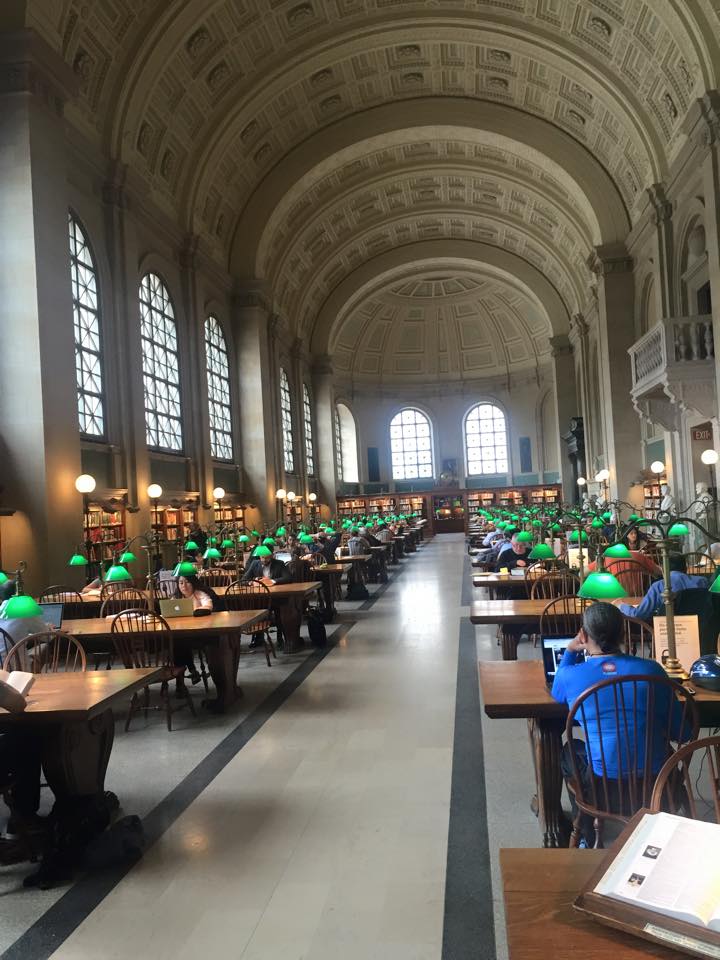
Always visit the city public library. (Boston 2015)
‘Travelling with diabetes’ is just ‘travelling’ for me. It’s not like I can leave the diabetes at home – I asked and it refused. I have never considered diabetes as being a reason to not travel. It just takes some planning. But then, so does travel in general!
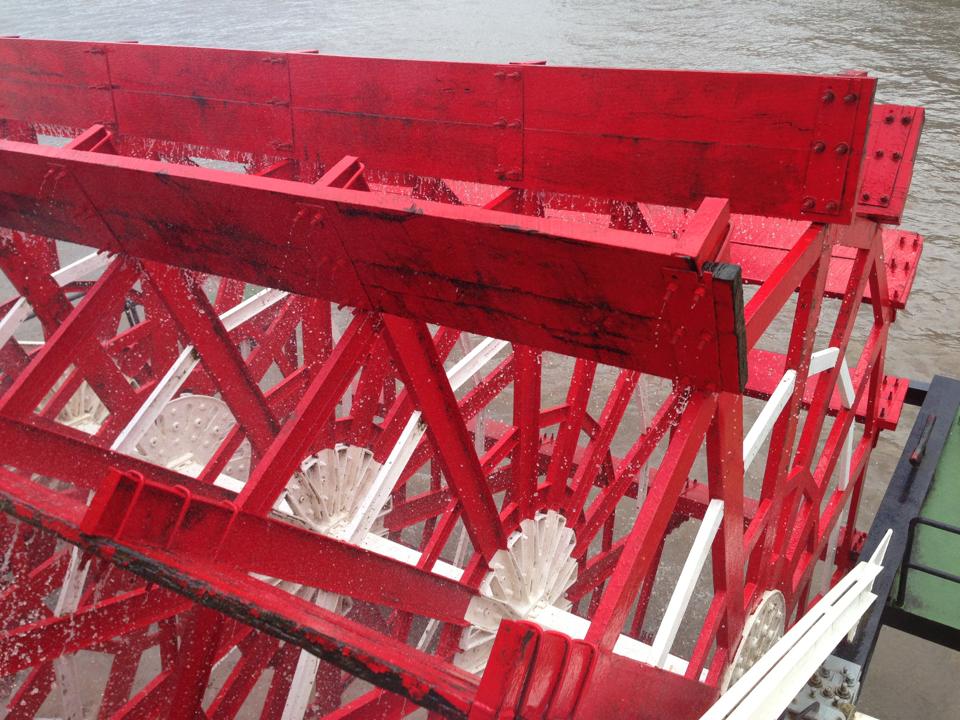
Steamboat Natchez (New Orleans 2013)
As I have said frequently, diabetes adds an extra degree of difficulty to life. And it is the same with travel. It’s not anything all that significant, just something to consider. So here are my fail-safe tips to travelling not only safely, but also ensuring that a wonderful time is had.
Camels in the Atlas Mountains (Marrakech 2013)
1. Have fun!

Lady Liberty (New York City 2010)
2. Don’t let diabetes be the reason that you don’t travel. And further to that, don’t let diabetes be the reason that you limit your travel to areas you consider ‘safe’.
Shoes in every possible colour combination. (Barcelona 2013)
3. Read points one and two again.

Ice skating in Central Park (New York City 2011)
4. Work out what diabetes supplies you need to take. And then double it. I know: diabetes paraphernalia add bulk and that is a pain – especially when you are trying to travel light (a concept completely alien to me, because: shoes). It is highly likely that you will end up coming back home with a lot of the extras, but that is a far better option compared with trying to work out how to access insulin/pump lines/BGL strips etc. when you are in the middle of a cooking with truffles tour of southern Italy. (Note to self: find and book cooking with truffles tour in southern Italy.)

The magic of a gondola (Venice 2009)
5. And again – I know it’s a pain, but carry things with you rather than packing them away with your stowed luggage. That way, you know where it all is, and the insulin won’t be subject to significant temperature changes. I do know of people who stowed their insulin and it froze, rendering it useless. And someone else whose luggage sat on the taxiway in direct sunlight for 6 hours cooking their insulin. It’s unlikely, but in rare cases, it can happen. You don’t want to be that person!

Mozart everywhere! (Vienna 2012)
6. To declare or not to declare? That is the question. I never walk up to security and announce that I have diabetes. But equally, if necessary, I am happy to answer any questions. I seem to set off security alarms with alarming (!) regularity. By the time my shoes have come off, and any jingly-jangly bracelets are removed, I still frequently set off the alarm. No idea why. At that point, with a pat down on the way, I do point out that I am wearing a couple of medical devices, pointing to them on my body. I am always relaxed about it and willing to pull them out for show and tell. It’s never ever been a problem. Ever. And I don’t assume that the security person will know what I am talking about, so I use simple terminology when explaining what they are for. Often, an interesting conversation ensues!

Dubai 2011
So on that: stuffed in with my travel documents is a letter from my endocrinologist stating that I have diabetes. That letter has never, ever come out – I’ve never been asked. However, it always there, because it is a piece of paper, weighs nothing and the day I decide I don’t need it will be the day I am asked for official documentation to prove my faulty beta cell status.
7. For pump users. Having an insulin pump undoubtedly makes travel easier. No need to do any sorts of tricky calculations for time zones and working out what time to take your long acting insulin. I always have the same procedure: once it’s wheels down at my final destination, I reach for my pump and reset to local time. That’s it! Done! I don’t do it earlier in case of any delays along the way.
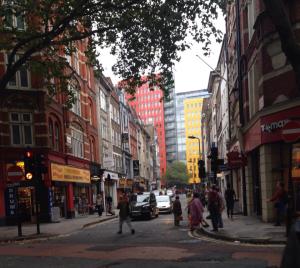
Denmark Street for music stores (London 2014)
TAKE A PUMP BACK UP. Most pump companies offer loan pumps. Just make sure you give yourself enough time to organise one.

Oh, Paris. (2008)
Write down your pump settings. I save the settings in my phone and save a copy in the cloud as well. Because I seriously couldn’t tell you my insulin sensitivity factor (or anything else) if my life depended on it. Which it kinda does!
Pumps fail. It’s a reality. It’s crap. And even back up pumps fail. I know the likelihood is small, but it can happen. And if it does, you’ll still need insulin – both basal and bolus. So with that in mind, don’t forget long acting insulin. You can get pre-filled pens if that is your preferred option (don’t forget you’ll need needle tips!). I take syringes because they are easy to use, light, and do the trick!
8. Travel insurance. Don’t leave home without it. And don’t forget to disclose diabetes.
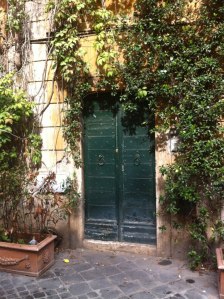
Apartment doorway. (Rome 2012)
9. Medical ID? Some people don’t go to the corner store without their medical ID. Other people rarely, if ever, wear something (guilty as charged). It is an incredibly personal decision as to whether or not you wear something identifying you as someone with a health condition. Think about where you are travelling, if you will be spending periods alone and if you think that having a medical ID would be the best thing for you.

Montmartre (Paris 2013)

The gorgeous seaside Honfleur. (Normandy 2009)
10. Frio packs are great if you are travelling to hot places and you are not sure the availability of a safe fridge. I have found (increasingly) that some hotel rooms don’t even have fridges in them anymore; in Boston, I spent 10 minutes looking for a cleverly hidden fridge in my room at the Hyatt only to realise that there wasn’t one! Having said that, insulin is a lot hardier than our pharmacists would like us to believe, and it won’t disintegrate before your eyes if it’s not refrigerated constantly.
11. One of the best things about travelling is exposure to new foods. Often what you are eating and its nutritional value are a complete mystery. Eat it anyway. You can always correct a high blood sugar or treat a hypo. Don’t let diabetes be the reason to not try the local delicacies.

So much delicious food. Carb counting is your friend!
And while we’re talking food – think about the food available while you are actually in transit. Aeroplane food will never be the best food you will eat. I have never, ever, ever ordered the meal for PWD, but I know others who do and say it’s fine. Don’t think you HAVE to order a special meal just because you have diabetes.

There seem to be some recurring themes in our travel photos. (Coffee everywhere)
I always make sure that I have my own hypo stash while on planes. But don’t worry if you don’t (or if you’ve already munched your way through). You can always get juice on flights. (Don’t forget – on some flights food and drinks are not included in the fee and you will have to pay on board.)

Ampelmann (Berlin 2012)
12. I don’t exercise, so when I travel, I spend the first couple of days low until I remember that I am walking miles and miles and miles. And then remember to alter my basal rates on my pump. (If I was smart, I would do this before the hypos start. I am hoping to become that person one day.) Same thing applies, of course, if you are usually super active and suddenly doing nothing but lying on a lounge chair, reading a book and doing nothing more than waving your hands at a waiter for another cocktail.
13. The Diabetes Online Community (DOC) is your friend! There are people with diabetes EVERYWHERE and we’re a helpful bunch! If you’re in a pickle, social media might just be the thing to connect you with someone to help you out. (And here is the famous Pumpless in Vienna story again.) And even if you are not having a diabetes crisis, travel is a great chance to meet up with people you’ve gotten to know in tweetchats and diabetes discussions online.

Bright (xmas) lights, big city (New York City 2014)
One of my favourite things when travelling is to do just that. I have spent countless hours all over the world getting to know people from the diabetes online community and they have moved from being wonderful cyber friends to truly wonderful in-real-life friends. Diabetes may have connected us, but there is much more that has secured that friendship!

Yankee Stadium (New York City 2013)
14. Shop for diabetes! (Yep, of course there is a shopping angle.) Shopping overseas gives you access to things you may not find at home – especially if you visit markets and fairs. I have found gorgeous little purses for my diabetes supplies while travelling and one of my favourite bags ever was bought on the Rialto Bridge in Venice from a man who makes all the bags in the store. (I justified the purchase by the size of the bag, telling myself it would carry everything I needed for my diabetes for the rest of the trip!)

Rijksmuseum Bibliotheca (Amsterdam 2014)
Travelling should be fun and exciting and enlightening and enriching. It’s a chance to spread your wings, find new places, meet new people and discover new things about yourself. It’s an awesome ride, and diabetes – whether you like it or not – is there with you. Most of all, remember what I wrote in this post here:
The theory of travelling and diabetes is different for every person and every trip. And every trip I learn something new – and not everything I learn is about diabetes!
We have made a point of visiting somewhere new each year over the last five years.
(Well, yesterday, but whatever.)
There has been lots of discussion about what happened 94 years ago yesterday – on 27 July 1921. University of Toronto scientists Fredrick Banting and Charles Best successfully isolated the hormone insulin. Today, that means that I am alive and kicking, 17 years after my islets stopped making any.
It means that type 1 diabetes treatment moved from being a starvation diet and not much else, to injecting a drug that was life giving and life saving.
It means that I take a drug that while giving me life, is also lethal and if not dosed carefully and with great consideration can cause terrible side effects.
It means that people with diabetes don’t die terrible, agonising deaths simply because they were diagnosed with diabetes.
It means that I need to be able to do crazy calculations to ensure what I put into my body completely and utterly imperfectly mimics what those with functioning islet cells do completely and utterly perfectly.
It means that there is a treatment therapy that gives us hope and life and allows us to live – sometimes very long, long lives.
It means that each and every day I feel fortunate to have been born when I was and not 100 years earlier.
It means I take for granted that I have access to a drug that keeps me going.
It means that there are far too many people around the world who still do not have access to the drug I take for granted. And 94 years later, that is not good enough.
It means that it was 94 years ago – 94 years ago – since the discover of insulin to treat diabetes and we are still without a cure.
And it means that I wonder when there will be the next breakthrough that is as significant and meaningful and life changing and life saving as what those two Canadian scientists discovered 94 years ago.
But mostly. It means that I live with hope. Hope that those scientists are somewhere working away, and perhaps – just perhaps – are about to find that next big breakthrough.
Any day that sees a BGL of 32.4mmol/l is not going to be fun.
It happened around midday on Saturday. It came from nowhere. In range BGLs at waking. Trip to a new café for a breakfast of delicious coconut-y porridge and milky coffee. A quick trip into the city to buy a birthday present for one of the kid’s friends who was having a party that afternoon.
So far, so fun.
And then, suddenly, nausea hit.
At that point, I realised just what a bad diabetes day it was about to become. I’d changed handbags that morning and my BGL meter hadn’t made the transfer. I was CGM-less as well, so apart from the nausea and a slightly dry mouth, had no idea if I was high – or just how high I was.
Thankfully, we live less than a ten minute drive from the city. We got home, me holding the bag that had contained the present close by in case the feeling of nausea became the real deal.
We made it home. I checked my BGL. Oh yes, I was high. So, so, so high.
I calculated a bolus does of insulin and used a disposable syringe to jab it into my stomach. I changed out my cannula, line, cartridge and insulin, inspecting the old one I’d just removed. It looked absolutely fine. And I’m sure it was fine. I set a slightly elevated temp basal, resisting the urge to set it at 200% – effectively giving myself double the usual dose – and sternly told myself that I needed to let the bolus do its thing. Slow and steady was the way!
Then the vomiting started. Then it ended.
And then I fell asleep. And a couple of hours later, I awoke feeling fine. Well – as close to fine as one can be after a couple of hours of unexplained, very high BGLs and the muscle pain that comes from throwing up.
My BGLs returned to range gradually. The nausea was gone. The mild ketones I’d had earlier disappeared, flushed out with lots of water.
Not fun. At all. But I did what I planned to do that night, brushing off the looks of surprise from my friends when I mentioned the day I’d had. They probably wondered why I was up and out and not curled up in a ball under the doona. There were moments I wondered that too.
If I was to stop every time I had a diabetes thing happen, I’d never get up I thought, but didn’t say it out loud because it doesn’t really make sense to people who don’t have diabetes.
It’s what we do. We get on with things. Because diabetes throws so much our way that we just learn to accept it and push forward. We do it without much fanfare. But sometimes – sometimes – I kinda do feel like I deserve a medal. And yesterday I got one after I did the 5km in Run Melbourne!

Medals for the family!
This time last week, I was sitting on a plane, flying back from Friends for Life. As we’d booked this trip at the last possible moment, I was not travelling the long LA – Melbourne leg with Aaron and the kidlet. We hadn’t managed to all get on the same flight and my trip (booked though work) and theirs didn’t coincide.
So I had a lot of thinking time and kept trying to put into words what the Friends for Life (FFL) experience was for me. I found myself tearing up quite a bit, and kept touching the green bracelet that was wound around my right wrist. It’s still there, and I find myself glancing at it when I am sitting in meetings, or as my fingers fly across the keyboard typing these words.
I had an idea of what I was going to experience at FFL. I have spent enough time with FFL alumni and read a lot about it to have formed an impression about what the week would hold.
I knew what to expect.
Excect I absolutely didn’t. I had no idea.
I expected it to be all touchy-feely. I expected lots of hugs. I expected a quiet understanding – of all and from all who were there. I expected to feel included and part of something and welcomed.
And those expectations were all met. Ten fold.
But what I didn’t expect was the sheer, overwhelming emotion of the conference.
And I didn’t expect the science.
Make no mistake. Friends for Life is a diabetes conference in the truest sense of the word. It is not a support group meeting – of course there is support, but it is much more than that – it is a scientific meeting with the focus very clearly on providing up-to-date, evidence-based, important information to people living with diabetes. It’s not dumbed-down – absolutely not! The information presented at FFL would not be out of place at the ADA scientific meeting I’d attended the month prior, or ADS-ADEA conference I am attending next month.
I didn’t expect an exhibition hall that was bigger than what I know I’ll see at the annual ADS-ADEA conference.
I didn’t expect that there would be announcements like the one Ed Damiano made about his work on the (brilliantly named, iLET) bionic pancreas. And when it was made, I didn’t expect the outpouring of emotion, of gratitude, of understanding, of hope.
And running alongside it – as part of it – are the sessions where you sit, and breathe and cry and nod and share your story. Or say nothing and just fill up.
This is not a cult-like gathering of the pancreatically-challenged and our support people. There is no sitting around feeling sorry for ourselves. Equally, it’s not a pep rally where we marched to the beat of the same drum, patting ourselves in the back. Every person at that conference has their own story and while there certainly are similarities, there are also differences.
Friends for Life challenged me. It made me feel uncomfortable at times. The discussions were not all easy and self-affirming. There were topics that I don’t regularly talk about, instead hiding them away in a chamber of my mind that I manage to keep locked away most of the time. I sat quietly in talks about how diabetes affects those around me. I struggled to share my story at times. But I did, often with hesitation, because talking about how diabetes impacts on Aaron and our beautiful girl hurts me in ways that make me feel like I am falling to pieces inside.
I didn’t walk out of all of those challenging sessions feeling great. But I felt validated and I felt less alone. And I understood better that it was okay to speak about those confronting issues, even if what I am feeling isn’t wonderful. I took away from those sessions the ideas and strategies other use and I feel better equipped to manage some of the more difficult aspects of living with diabetes in the family.
I attended FFL as a guest of Children with Diabetes (CWD). For years, I have been begging CWD President, Jeff Hitchcock to bring this event to Australia and while I did that with the idea that it would be great for people affected by diabetes to have the experience, I had no idea just what that experience would mean. I still am not fully cognisant of what the experience has given me.
My expectations weren’t met at Friends for Life. They were exceeded. And I hope that we can find a way to bring it to Australia so that as many people as possible can become part of the FFL family.
A huge thank you to Jeff Hitchcock and the CWD Board for covering my costs to attend Friends for Life 2015.
Standing at the counter of my usual morning coffee shop, I was flustered. I placed my order and stepped out of the way, juggling my phone, glasses, loose change and handbag. I’d been ignoring my vibrating pump since I’d walked into the café – I knew that it was telling me that my BGL was heading south. I knew that. I had it in control. I knew I wasn’t low yet – just headed that way. I knew I was still more than safe and there was no need to panic.
But my pump doesn’t understand the subtleties of diabetes. It works in absolutes and it was absolutely telling me that my BGL was dropping and dropping too quickly.
And then, because it thought that I was ignoring it or hadn’t realised it was trying to tell me something (it sits hard up against my sternum, held in place by the tight elastic of my bra – how could I not know?!) it started wailing. Well, maybe not wailing, but that is what it sounded like to me.
In a move completely devoid of any classiness or poise, I dumped everything in my hands on a nearby communal table, giving an apologetic –and grateful –glance to the office worker who managed to catch my phone before it crashed to the ground.
Continuing with the grace and polish I was exuding, I roughly reached down my top, pulled my pump out and silenced the wailing with a firm press of the ’ok’ button before, equally elegantly, depositing it back in my bra, tubing still poking out.
I took a breath, gathered my things and shoved them into my bag and turned to continue waiting for my coffee, the alarm now silenced. And caught the eye of a man who had just been handed his coffee.
Almost imperceptibly, he nodded at me; his head inclined downwards only a tiny bit. I must have looked puzzled. He placed his coffee down – also at the communal table I had just used as my dumping ground, and reached into his pocket where he pulled out the same pump as mine. He waved it at me, picked up his coffee and walked out.
‘Renza? Your coffee is ready, hon.’ The barista was calling my name. I thanked him and grabbed my coffee, walking into the cool morning air outside. I looked around for the man with the pump, but he was nowhere to be seen.
I seem to have had a significant number of diabetes in the wild experiences recently. Even though I am frequently around others with diabetes, I still get a thrill when I find myself seeing evidence of diabetes out of context or unexpectedly. When I am in a room full of others with diabetes, my experience is legitimatised and normalised. But perhaps that is the case even more so when I see someone just going about being themselves, doing their daily activities. With a little diabetes add on.
There’s no rhyme or reason why songs go through my head. Here’s one that has been on repeat in my mind for the last three days.





