You are currently browsing the category archive for the ‘Real life’ category.
Last night, Aaron and I joined a group of friends at the beautiful Sun Theatre in Yarraville for a ‘cinematic experience’. Harking back to the ‘good ol’ days’, we saw a film shot in 70mm Ultra Panavision with an overture at the beginning, an intermission of exactly 13 minutes in the middle and a souvenir program to take home at the end. (We’ll ignore the fact that rather than watching Ben Hur, introduced by Bill ‘Golden Age of Hollywood’ Collins, we were watching Quentin Tarantino’s eighth movie, ‘Hateful Eight’ (H8ful Eight??? Hateful 8???) with all the gore and violence – yet surprisingly still so much grace and beauty – one has come to expect in a Tarantino film.)
Often, there is much chatter about the ‘good ol’ days’. I get it. It was a time where things seemed simpler: kids were kids, adults were adults and everyone knew where they belonged. Milk came in bottles with cream on top….And I walked ten miles to school and twenty miles home, all uphill.
We can look back nostalgically at different periods in history. And it’s funny how history repeats itself. I remember hearing my father telling me how lousy the 1980s music I loved was compared to the music he loved. And yet his favourite music – the Beatles, Frank Sinatra, Simon and Garfunkel – would have had the same said about them. I try to catch myself before I criticise the trash music daughter is listening to now, because I remember how annoying it was (and how distressed I was) when my dad criticised Morten Harket.
Last week, Aaron got into a Facebook discussion that started off being about music and somehow ended up not being about music. The person he was ‘speaking’ with was saying that everything was better in the ‘olden days’.
‘Everything?’ asked Aaron
‘Yes,’ she replied. ‘Everything!’ She then went on to explain what she included in her ‘everything’ – music, food, medicine…
He quickly jumped in and pointed out that thanks to advances in medicine, his wife is still around. The olden days were really not all that great for those living with a health condition such as type 1 diabetes.
Perhaps because I am a beneficiary of all that the ‘modern era’ has to offer, I have no nostalgia or desire to go back in time. Because for me, along with sentimental thoughts of kids playing in the streets until dusk – and playing meant being outside, not sitting in front of a console – and cooking meant making foods from scratch and a telephone call was something made from a phone with a chord, there would be the practicalities of boiling syringes and sharpening needles and an inability to accurately measure BGLs and a life without diabetes technology. Bygone era? No. Be gone!
I would take the modern era and all its so-called short comings in a heartbeat over the ancient era of medicine! Through our rose-coloured glasses we forget that there were days before vaccines and days when life expectancy was shorter. We forget that there were not tests or screening to identify different conditions, that mental health was rarely, if ever, discussed. We forget that only 94 years ago – not that long ago – there was no medication to treat someone with type 1 diabetes.
So with all this in mind, read what is coming next. Here is an update on a couple of the many artificial pancreas projects happening today.
I want a cure as much as the next person. But in the meantime, keep the DTech coming. Please.
Yesterday, we took the kidlet to her new orthodontist. We had been referred from her dentist and this was going to be the first discussion about the kid needing braces. She had a bit of nervousness about the whole process and wasn’t feeling all that great. She was also concerned that there would be pain involved. But, as I explained, this was just a chance for us to hear what was ahead and hopefully be able to ask any questions we might have. Plus she could meet the people at the clinic who she would be seeing regularly. And I also reminded her several times that if she didn’t feel comfortable with what she saw and who we met, we could go elsewhere.
The second we walked in, I knew that we would be staying with this clinic. The first thing we noticed on the wall was a white board which said ‘Welcome to today’s new patients’ and we spotted our kid’s first name up there with a few other names. The kidlet felt pretty good about that!
We walked to the front desk, and a lovely woman smiled at us all and turned her attention straight to the kidlet, saying hello and welcoming her to the clinic and introducing herself. She made eye contact the whole time with the kid before turning to hand me a clipboard. ‘Would you mind filling this in please? And, if it’s okay with you,’ she said turning back to the eleven year old, ’I’d like to show you around.’
The two of them went on a little tour of the practise and I heard them chatting away, the kidlet asking questions as each different space was introduced. When the kid returned to us in the waiting room, she was holding a clipboard of her own. ‘I need to fill this in,’ she said, and took great care answering questions about her likes and dislikes and interesting things about herself.
A short while later, the dental nurse came into the waiting room and, again, went straight to the kid. ‘Hi, I’m K,’ she said holding out her hand. ‘Is this mum and dad?’ She asked turning to us.
‘Now, I need to take some photos – just in that room over there. The room is tiny – are you okay to come by yourself? Or you can bring mum or dad if you’d like.’ The kidlet jumped up and smiled, clearly very pleased at being asked directly what she wanted. ‘I’ll be fine,’ she said.
The rest of the appointment continued the same way. When we were shown into the treatment room, K explained exactly what would happen once the orthodontist entered the room. The orthodontist welcomed the kidlet first and then introduced herself to us. The kidlet was asked regularly if she had any questions and anything she did ask was answered efficiently and clearly. She was congratulated on asking smart questions (mostly different versions of ‘is it going to hurt’) and no one tried to rush through things or to dismiss any of our questions.
The practical side of things – i.e how we would need a second mortgage to afford the treatment – was explained clearly to the grown-ups in the room and the ‘rewards’ system (a points program which earned gift vouchers) was explained to the kid. She looked delighted!
We left the clinic feeling very well informed. All our questions had been answered and we knew exactly what was going to happen next. The kidlet felt really positive about the whole experience too.
This is ‘patient-centred’ care at its best. It’s not just lip-service – it was far more than the staff all being overwhelmingly lovely. They were genuinely focused on ensuring that everyone knew what was going on and that the kid understood that this was all about her. She was given options – each of them explained to her – and then we were asked to think about them and make decisions, with the option of being able to ask further questions if needed.
So what does this level of care and attention take? It certainly took no more time that would be expected of a first consultation. There were no more staff members involved than at any other clinic offering the same service.
But what it did take is care and attention and an understanding of the ‘customer’. And respect. A lot of respect.
The weather this weekend was punishing. Heat waves and diabetes don’t work together well at the best of times, and this was no different. It hit 42 degrees Celsius on Saturday (which translates to over 107 degrees for those of you who speak Fahrenheit).
My BGLs ranged from LO to 30mmol/l over the weekend. And today, with the temperature sitting in the far more respectable low 20s, I am drained, weary and exhausted.
I have started to really understand the way we deal with diabetes things changes over time. A weekend of horribly variable BGLs would always leave me feeling a bit battered, but not like this. Nasty hypos would need a little recovery time, but these days, that time stretches to longer and longer.
I am less able to bounce back feeling ‘back to normal’ takes considerably longer than it once did.
This is, I am sure, a combination of me getting older as well as my diabetes getting older. But when I feel my age most is when I am dealing with diabetes.
I’ve not had diabetes all that long – certainly not when measured against friends younger than me who have had it a lot longer – yet there is a change. Wide variability in my BGLs is draining, leaving me exhausted in ways I’ve never felt exhausted before. It is a bone-weary fatigue that overtakes my very being.
And the only way I know how to try to avoid those swings is to wear my Dexcom all the time. I have been really quite averse to this – I don’t like the constant alarms, I don’t like the look of the device on my body all the time and I don’t like having numbers available to me at all times. But it is the only way.
Because even when I am lacking motivation, I will do something – even something small – to respond to the alarms and the out of range numbers.
Tomorrow afternoon I head off on three weeks of leave and I will be wearing my CGM throughout that time. Having a break will mean that there is more of a chance for me to pay attention, respond to and catch rogue ‘excursions’ (sounds far more fun than they are!).
I know what will happen. I will see better numbers, which in turns makes me feel better, which in turn makes me feel more motivated, which in turn means that I take more care with everything; which in turn means I see better numbers, and Hakuna Matata, it’s the circle of diabetes.
The hot weather is only just starting here, opportunities for rollercoaster days will be many. But I have the tools at hand to try to stop them, or at least manage them as well as possible. And I’d be stupid not to.
We were a little excited the other day to discover that Kermit Ruffins has a holiday album. Disappointingly, it hasn’t been added to our collection yet, but here is a taste!
At the risk of sounding Grinch-like, there is one thing about Xmas that really, really annoys me. It’s Kris Kringle (sometimes called Secret Santa). We also do a version called ‘Bad Santa’ which is unusually cruel in that people are able to steal gifts they prefer from others.
I find them all a complete and utter waste of time and, quite frankly, money. All up, we (Aaron and I) spend about $120 on KK gifts each Xmas – four KK gifts at the limit of $30 per gift. Please understand it is not the total cost that annoys me. It’s the total waste of it.
At the risk of sounding ungrateful, I don’t need anything. And for $30 I struggle to find something that is fun (and different from the bottle of wine/designer tea/candle that I usually buy).
I have made this very clear to my family who, if reading this, please ignore my Scrooge-iness and let’s all have a nice Xmas dinner!
For a few years now, I have suggested that instead of buying gifts for each other, we pool our $30 each and make a donation to a charity. It actually would add up to a decent amount and has the potential to make a significant difference in the lives of people far less fortunate than us.
Of course, for me, there would be no better way to spend this money than on a charity that is improving lives of people living with diabetes. With the $120 that just Aaron and I spend on KK presents, we could provide life-saving insulin for two years for a child in a country where medication is prohibitively expensive.
I am sure that I will love the bowl or bottle of champagne or colouring-in book I receive from my KK this year. But really, it will make no difference in my life. It will not improve it. Again, I get that I sound ungrateful to the cousin or aunt who has purchased this gift for me, and while I don’t mean to, it is the way I feel.
It feels wasteful. And there are so many ways that the money could be better spent.
So, today I have made a couple of donations. I have made a donation to Spare a Rose, Save a Child, adding to the monthly contribution I already make. The money I have donated will go to the IDF’s Life for a Child program and provide insulin or BGL strips for 12 months to a child who would not otherwise be able to access these supplies.

And I am also making a donation to Type 1 International to help their work in ensuring people with type 1 diabetes around the globe have access to insulin, diabetes consumables and medical care.

If my KKs are reading this, please feel free to give me a handmade card with a little note telling me you have donated the amount of my gift to either of these charities – or another one that you support. I promise that I will think it the best KK present under the tree, and I also promise to stop being a Grinch!
Our Xmas album collection is eclectic. One album that is on frequent rotation in the silly season is Bela Fleck and the Flecktones and their version of The Twelve Days of Christmas is different to say the least! Enjoy if you can.
Right now, it’s 36.6 degrees Celsius in Melbourne. By the weekend, we’ll have hit 40 degrees Celsius, and if it the Australian Tennis Open was on now, some tool sports reporter would be frying an egg on the playing surface to show you just how hot it gets in this part of the world.
The warm weather is not a friend of diabetes and I have been really struggling to get myself sorted while dealing with the heat. It took me a few days to work out just where my basal rates should be sitting. This was certainly not helped by the fact that I returned from very cold Canada to warmish Melbourne, which then turned ridiculously cold (we had the fire going last Friday night confusing the hell out of everyone – Xmas tree, carols and a fire is not normal in this part of the globe!) and is now insanely hot, hot, hot. And looks to be staying that way for the next couple of days at least.
But it’s not just basal rates that are affected by the heat.
It can be tough to sleep in the warm weather which wreaks havoc on all aspects of life – diabetes included. Nights were the temperature barely drops below 30 degrees Celsius do not result in restful slumber!
Perspiration means that CGM and cannula tape doesn’t have the sticking power. My most recent sensor lasted three days before the tape started to fray, and because I didn’t attend to it fast enough, it fell out completely after five days.
Loose flowing dresses with little camisoles underneath instead of bras mean that pumps get shoved in the top of undies only to fall out and dangle around my ankles. Or, strapless dresses with little boob tubes underneath give the ridiculous impression of a single square boob. (Too much information. You can thank me for sharing the glamour of diabetes with you)
Concentration flies out the window, a combination of poor sleep and general lethargy – which often means that I am thoughtless about remembering to check my BGLs or make sure my pump is full of insulin (and that I have my spares bag with me). And long periods of being low mean a fried brain that just refuses to function properly at all.
And this is JUST the start of it. We’re only half way through December – the real heat hasn’t even happened yet.
But there are ways to manage.
Lots of cool iced water – lots and lots and lots! Grapes thrown into the coolest part of the fridge or even the freezer offer a quick cool snack and also help to keep BGLs above the low range. Same goes for watermelon which I only ever eat in hot weather when trying to combat nasty lows.
Iced coffee replaces my regular lattes. I am not really a fan of ice-cream, so I just have a latte over ice. (Which would taste a hell of a lot better if we had Half and Half in this country!)
Taping down cannula sites – only ever necessary in the hot weather – becomes the norm, and CGM sites get taped down as soon as the sensor goes in, not as the tape starts to wilt.
Afternoon naps under nothing more than a sheet with a gentle fan on help with the fatigue and makes up for sleep lost overnight.
And when all else fails, it’s tools down for ten minutes – which is just enough time to eat a Frosty Fruit icy pole!
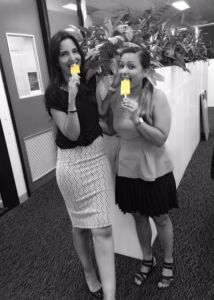
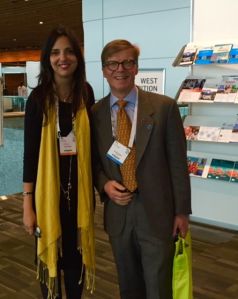
There were many highlights at last week’s World Diabetes Congress, but perhaps most impressive for me was the Living with Diabetes stream which sat proudly and comfortably amongst more traditional streams such as Basic and Clinical Science, Education and Integrated Care, Global Challenges in Health, Public Health and Epidemiology and Diabetes in Indigenous Peoples.
Including a consumer stream can be a tokenistic effort. I have seen that at conferences both here in Australia and overseas. But in Vancouver, the stream was completely embedded into the program and included outstanding consumer representation (from not only people with diabetes, but their loved ones too), as well as input from healthcare professionals, researchers and clinicians.
There were some real high points in the stream and over the next few days I will be exploring some of them in detail, but here is an overview of some of the killer sessions I attended:
- I sat in on two talks given by partners of women with diabetes. These were, in equal measure, beautiful and personally challenging for me to sit through.
- The session given by an adult daughter of a woman with diabetes was also difficult for me, but it looked at diabetes in the family from a very different – and rarely considered – perspective.
- Diabetes and the family dynamic was examined with sessions from parents and carers and two psychologists in a session I chaired that looked at how the age of diagnosis impacts someone with diabetes.
- The sessions on advocacy provided much food for thought as I heard about diabetes in places where things are really tough. (And although I didn’t hear her speak, I did meet with the inspirational Elizabeth Rowley from Type 1 International who is an advocate in every sense of the word. She is one of the IDF Young Leaders and is an example of the potential of this YLD Program. You can read more about Elizabeth in this interview she recently gave over at Six Until Me.)
- The light was shone – quite brightly – on diabetes organisations and how they can – and must – work more closely with people living with diabetes to ensure they are relevant. This was the focus of my talk and I will write about the soon.
- The power of social media and the DOC was given great attention with talks from some heavy weights in the community. Cherise Shockley from DSMA recounted the story of #Simonpalooza to illustrate how the community saves lives and Bastian Hauck from DeDOC spoke about an incredible initiative in Germany on World Diabetes Day and
- Peer support was also a focus with Ed Fisher from Peers for Progress speaking about the importance of peer support being included in national health policies and Jeff Hitchcock discussing the support offered by Children with Diabetes and Friends for Life.
(I’ll be writing lots more about each of these highlights over the next couple of weeks. Lots and lots more! Trying to get my head straight is proving to be a real challenge as it is completely and utterly full!)
The sessions in the Living with Diabetes stream were very well attended, and not just by the consumers at the conference. Several times, session chair, or the speakers themselves would ask for a show of hands to identify who was in the room. Diabetes educators were probably the most visible. It was terrific to have healthcare professional interest in this stream and I think that other conference organising committees could learn from WDC. While some conferences have a very clear remit as being aimed at HCPs, that doesn’t mean that consumers need to be removed from the conference. Teaming HCPs with PWD to illustrate certain issues is not only a great way to engage and involve consumers, but also bring home the ‘real life’, practical aspect of what is often being discussed at a very theoretical level. It makes it real.
Congratulations to Gordon Bunyon, Chair of the Living with Diabetes stream and his committee for pulling together such a fabulous program. I was honoured to be part of it.
On Sunday evening, I caught the last of the ABC miniseries ‘The Beautiful Lie’ – a modern day adaption of one of my favourite books, Tolstoy’s Anna Karenina. I didn’t love the series; in fact, I found it frustrating, and I distracted myself by reading excerpts from the book while watching the show.
But there, in the final episode, was a line that had me thinking. It came from Kitty, one of the characters who had lived with an eating disorder for much of her life. She had just given birth and was watching her beautiful baby boy and said to her partner: ‘You know, I spent so many years hating my body. All I could see was what it looked like and not what it could do.’
I wrote down her words quickly because they resonated so much. I too have spent a long time hating my body. As well as never being satisfied with how it looks, I focus on what it can’t do. I focus on the autoimmune mess that I’ve come to live with, and fertility issues and anything else that is wrong with it.
And in all that – in all the complaints and revulsion, I forget to acknowledge what it can do; what it has done.
When I complain about my faulty, broken body, or grumble about how I don’t like the way I look in a certain outfit, I am forgetting the good things it can do and that’s kind of disrespectful. Because it has done lots.
Today, our beautiful baby girl is eleven. I need to stop blinking, because each time I do, I look up and she is another year older and another ten centimetres taller. She is such a great kid and we are so utterly proud of her.
And my body conceived her and grew her and nourished her. And once she was delivered, it fed her, and it managed, through the lack of sleep and complete and utter new-baby fog, to look after her and keep her safe.
My body rolled around on the rug with her and together we rolled down grassy hills; it danced and we ran with scarves in our hippy creative dance classes at Mangala; it sat for hours on the floor of libraries and bookstores as we read; it chased her around playgrounds, pushed her on swings, caught her on slides; it climbed play equipment and trees; it’s answered a million ‘but why?’ questions; it walked for miles and miles and miles as we explored cities around the world.
And it has cuddled and hugged and kissed her beautiful little body, enveloping her in love.
Even with all the things that I complain about and the things that I hate – even with a health condition that sometimes needs immediate attention – my body has still done all those things. It doesn’t matter how it looks and it doesn’t matter about the things that it can’t do. I may not be able to make my own insulin, but I can act as a pretend pancreas pretty well and do a hell of a lot of other things too. It may not have given me as many children as I would have liked; but it did give me one wonderful little girl. And that is enough. So very, very much enough.

Birth day. So loved.
Last week, my body said ‘Stop’. Not in a friendly, ‘Hey, let’s sit down for a minute and maybe close our eyes and have a little nap’ way. No. This was a ‘You, you’re done. No more.’
There was no negotiating. No cajoling. My body just refused to body.
On Monday and Tuesday last week, I came into work and was back home by midday. (Staying home all day, both days would have been smarter.) My head felt like it was full of paraffin wax and I could barely concentrate. I had to stop on the landing halfway up the stairs up to my office to catch my breath. And when I finally made it to the top, I felt as though I had run a marathon. I dosed up on cold and flu meds to help with the low-grade fever and achy muscles. I felt pathetic. And frustrated and annoyed. And grumpy.
My BGLs were all over the place – high mostly, with the occasional crashing low after I rage-bolused because I was sick of the week being brought to me by the number 15.
On top of it all, I was trying to work with the kidlet to plan her birthday party which was last Saturday. In a moment of weakness (she knows how to pick it!) we agreed to a sleepover party and sent out invitations inviting the little munchkins to head over on Saturday afternoon and settle in for the night. And then, after sending out the invitations, did nothing until the day before the party. We started planning at 5.30 on Friday evening, exactly 24 hours before a drove of excited tweens would be descending on our house.
This is November exhaustion. It happens every year and every year I forget about it until I am in the middle of it. Most years, my body throws a tanty similar to the one it threw last week. Inevitably, there is a day or two where I just have to stop, take stock and recover. And more than that, I need to refocus on the health choices I am making and try to make better ones.
Because when I started to feel exhausted and poorly, I stopped making sensible diabetes decisions. Not enough BGL checks to really know what they hell was going on with the mild infection my body was trying to fight off; too lazy to reconnect a sensor after I ripped one out squeezing into my dress for the Research Australia Awards Dinner on Wednesday night; lousy food choices because I just wanted to grab whatever was easy and nearby, rather than planning and cooking foods that would nourish me while I was feeling below par; and not spending every spare minute asleep or resting, instead trying to catch up on all the things that had slipped while we were in the midst of World Diabetes Day festivities.
The thing is that what I perceive to be the easy way out ends up meaning that it takes longer for me to feel better. So, a week later, I am still feeling significantly worse than 100%.
This morning, I took stock. I am getting on a plane to Vancouver next Saturday for a very busy week of the World Diabetes Congress and realised that I really need to be better by then. I set alarms for regular BGL checks, I’ll put in a new sensor tonight when I get home and I’ve planned meals for the week. I hate that it takes a downward slide before I am jolted into doing what is best for me. But it just goes to show – yet again – that when the going gets tough, my health is the first thing to take a backseat. Until it can’t any longer.
I am a truly wonderful friend. You really want me around because I never make you do things that will in any way cause your body pain. With me, it’s all about sitting back, relaxing and being around food and drink.
The value of my friendship was once again proven last night when I was chatting with one of my nearest and dearest friends, Kath. We’ve known each other for nearly thirty years; we have a shared history of six years of Catholic school that bonds us in ways that only those taught by nuns will understand; we have lived through (and come out the other end of) bad haircuts and school formal dresses of the early 1990s.
Over the past few months Kath has had some issues with her hip and has had to see a few different health professionals to sort things out. Now, I always considered ‘hip problems’ to be in the same category as ‘cataracts’– things that happen to people waaaaaay older than us. But my eyes sport brand-new-non-cloudy lenses, and her hip causes her pain, so perhaps I need to reconsider my thinking. Or admit that we are not the same pre-teens we were when we met.
Anyway, Kath was telling me about the latest in her hip saga – and the good news is that she doesn’t need surgery as previously thought. We celebrated with Pimms!
The cause of her hip pain is, of course, exercise. Kath is a runner and plays golf and rows and does other things that make me twitch internally and run stroll screaming to a patisserie. She catches up with friends (who are not me) for a run around a park or a swim or some sort of non-sitting-in-a-café activity. She is super fit and I suppose that is admirable. And I expect her cardiovascular health is excellent. So, perhaps there are some benefits to this exercise thing she has going. Except, of course, she has a very sore hip.
‘See,’ I said to her. ‘This is why you need me as a friend. Nothing I do with you makes you hurt. Nothing I do aggravates your hip injury. In fact, nothing we do together has caused your hip injury. All we do is drink coffee, eat doughnuts, drink Pimms and have dinner at Marios. All of these are positive things. The Pimms probably numbs the pain, so really, our friendship CURES your problems.’
And then I remembered something.
‘Oh! When we did try to do something healthy, it ended badly. You had to call an ambulance and I was unconscious. And I am still worried that the incident has traumatised you for life. No good comes from exercising.’ I was referring to the short-lived thing we did, where we walked around Princes Park a few nights a week. Which was fun until a hypo knocked me out (and possibly made Kath question whether our friendship was worth the drama). After that, we went back to exercising our right to drink as much coffee as we wanted. And that was pretty much it.
See? This is why you want me around. I can’t promise to make you get fit. I can’t promise to help you beat your personal best in a half-marathon. But I can promise marathon chatting sessions and justifying anytime you want to eat a doughnut. That’s just the kind of friend I am. (And here’s some Randy Newman.)

We have a taqueria just around the corner from our place. As is the norm in our suburb, it’s very hipster – staffed by people far-cooler-than-I’ve-ever-been with bemusing facial hair that I understand to be ironic, but in my mind just reminds me of either a lumberjack, Salvador Dali or someone from a barber shop quartet.
But I can overlook all the posing, because they serve a kick-ass mojito and awesome tacos. Plus, it really is a three minute walk from our place.
We went there the other night. We were kid free (yay for camp!) and within minutes of jumping out of the cab after getting home from Brisbane, we were making our way there. I had been low for much of the two hour flight, my CGM emitting a piercing ‘You’re low, treat it’ alarm and me hissing ‘Shhh. Pay attention to the jelly beans I’ve just eaten’ at it, making me appear a slightly crazed women muttering to a box down her shirt. I also set a temp basal rate, certain that I’d regret it later and would be high as a kite by the time the plane landed. I was wrong.
I was still eating jelly beans in the cab, but at least my CGM line was steady and by the time I paid the driver, it was sitting at 3.9mmol/l and the arrow was straight across. So when we were walking to the restaurant and I could feel the low alarm continuing to vibrate, I was pretty confident that the sugar would kick in soon (like, now!) and all would be right. And the temp basal rate was still active, so not only didn’t I have any insulin on board, but I’d had hardly any basal insulin delivered for two hours.
 We threw our things down at a table and went to the bar to order. Thinking it better to be safe than sorry, I ordered an orange juice alongside my mojito and drank it quickly as soon as it was placed in front of me. I swilled the ice around, making sure I got every last bit of the available sugar.
I could sense that I was really low again, but even through the fog, I knew that a lot of glucose had been consumed in the last hour or so. I subconsciously reached under my top and disconnected my pump, and could feel my skin was slick with sweat.
At this point, I was feeling a little confused because at what I thought was the middle of a conversation, Aaron stood up and walked away from the table to the bar. I couldn’t work out what he was doing (my vision at this stage was unreliable at best). Eventually, he returned with another glass of juice – this time, no ice – and gently put it in front of me.
I drank it in one slurp (graceful) and sat back, reaching into my top to silence the alarm, which was helpfully telling me that I was still low. My mouth was buzzing, my lips and tongue feeling slightly numb.
‘You were really low,’ Aaron said to me later on.
‘Really? How could you tell?’’ I honestly thought that I was doing a perfectly good impersonation of carrying on a conversation, and the hypo was not on show for all to see.
‘You started a sentence five times. And never finished it. You just sat there in silence after saying a few words. And eventually would start another sentence. Or the same one. And not finish it.’
I had no idea.
I can’t pin point why I was so hypo. I didn’t ignore the impending low – as soon as my pump alarmed to suggest I was at the low limit (which is set above hypo level so that I do something before actually being low) I started treating. I continued to treat and monitor. I set a temp basal rate. I did everything by the book.
But still, it was a sticky low that wouldn’t quit. There was no shocking rebound – I reconnected my line when we left the restaurant and my CGM was reading 7mmol/l, and the next morning, I woke up feeling fine.
And when I think back to it now – and when I reviewed the CGM graph the next day – I am reminded just how crap diabetes can be at times. It’s certainly not the worst low I’ve ever had, but it was awful.