
You are currently browsing the category archive for the ‘Real life’ category.
Happy World Diabetes Day to you all. This year, the IDF is building on last year’s theme about diabetes and the family.
I wrote this last year, which explained how my diabetes family extends beyond my immediate family. It includes my friends living with diabetes – the diabetes tribe that I found and love so hard. I know that without them, there is no way that I would be living the diabetes life I have now. This tribe of PWD is spread across the globe, but is literally at my fingertips anytime I need them. A day does not go by when we are not messaging about the saucy goings on in the diabetes world.

Tribe
Everyone’s diabetes family looks different. While for some it is their partner, kids, parents and extended family, for others it may include their friends, healthcare team, local diabetes organisation or next-door neighbour. You do you when finding your tribe! Here’s a collage of just some of the tribe I’ve been lucky enough to see this year.
The greatest thing my own tiny little family unit – Aaron and the kidlet – have done for me with my diabetes is to let me do it my way. Aaron was there the moment I was diagnosed, and not once in the last twenty-one years has he tried to make diabetes about him. He will never know how grateful I am for that. Those middle of the night hypos where he was awake alongside me, toasting bread or pouring juice, or the hospital visits or the days interrupted by misbehaving glucose levels were done with not a single mention of how he has been impacted by my diabetes. I never heard him say how exhausted he was the morning after a particularly wakeful night, or how my diabetes has affected him.
But perhaps the greatest support that my family has given me is never making me feel limited by diabetes. Building independence when living with a chronic health condition isn’t only something that is relevant to children and adolescence. Last night, I slept alone in a hotel room and didn’t for a moment feel fear because of my diabetes. I travel the world alone for work – jump on long haul flights, spend twenty-hour days at conferences and day-long meetings – and I do that with complete and utter confidence that I can manage my diabetes alone.
I hear others with diabetes say that their loved ones are worried and fearful when they are away from them, and that in turn makes them feel nervous. I hear of struggles of how to share CGM data constructively and how much others get to be involved in the PWD’s diabetes life. It’s a delicate dance we do here, and Aaron and the kidlet have always been led by what I need. And what I need is not to feel fragile or as though I could break at any moment if they are not there.
I love that they don’t limit me in any way because of my diabetes. And I love that they trust me enough to know that I will reach out when I need to, and that when they ask and ask and ask, all that does is make me feel like a burden. And I love that they never, ever make diabetes about them.
So, they’re the stories that I’m looking for today – the stories of people with diabetes, showing how they have been supported to do their very best. And at the same time, I’m sending a thank you out to these two for supporting me in exactly the way I need.
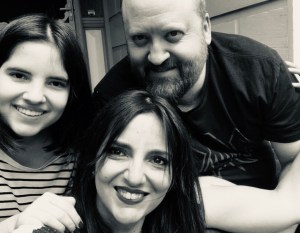
My people
Something flashed across one of my social media feeds the other day, and, had I been in a Looney Tunes cartoon, smoke would have come from my fingers as I screeched to a holt, scrolling back until I found it.
It said this:

Now, I generally hate stupid memes and inspirational quotes. In fact, if it’s not coming from Effin’ Birds, I rarely even pause to read the words.
But this one has had me thinking for a few days, because just a couple of weeks ago, someone on Twitter commented that my tweets were filled with angry emotion and that I should try to fix that. Now, three things: 1. This guy was an anti-vaxxer so he can go get fucked; 2. I wasangry because as well as saying that vaccines are unsafe (lie number 1), he was also claiming that type 1 diabetes doesn’t exist (lie number 2); and 3. I do not take well to being tone policed.
I do come across at times as being angry. But actually, a lot of times there is something more behind my anger. A lot more behind it.
When people see anger, it is the manifestation of 21 years of living with diabetes and 18 years of working in diabetes, and the experiences that have cut to the bone. For me personally, there have been such hurtful and damaging times where the result was for me to head so far underground with my diabetes that I thought I would never recover enough to dare to seek help again. I have heard those experiences mirrored in others’ stories, which we share to gather support and strength from each other. Sometimes, when we speak of our stories, the emotion that comes out appears to be anger. But often, it is actually grief.
When I see HCPs behaving badly online, I think about the times that this happened directly to me and how I felt in the moment, and in the hours and days afterwards. I think about how long it took for me to accept diabetes because it was introduced to me under veils of threats of the horrors I had ahead of me if I dared stray from the demands being placed on me.
All tied up amongst the angry confidence you see is a mess of other emotions, and when I stop and look, which I don’t really like to do, it is undeniable that grief is ever present. I grieve the life I had before diabetes, because even though it was over 21 years ago, I can still remember it. I remember the freedom and spontaneity that came with simply not having to think about glucose levels, carb counts and all the other things that diabetes requires. I grieve the times I didn’t need to think about my mortality. At almost 46, it’s one thing to think about getting older and dying. At twenty-four it was a mind-fuck I didn’t know how to manage.
I grieve the impact diabetes has had on my fertility, which is intrinsically connected to the grief of miscarriages. The anger that I feel about those experiences is especially strong here, but so is the grief, and to be honest, I’m not sure where one stops and the other one starts.
I feel grief for how diabetes has clouded the way my kid has grown up. A mum with diabetes may be the only mum she knows, but she has been forced to understand that sometimes she comes second to diabetes. That grief is tied up with sadness, as well as anger for robbing her of not needing to know what it’s like living alongside diabetes.
Grief is heavy. It weighs me down and has the ability to engulf me in darkness. I feel guilty when it overtakes me, because, didn’t you know, we’re meant to be superheroes. Positive, enthusiastic, shiny superheroes. People with diabetes are football legends, movie stars, marathon runners and we’re not meant to allow it to limit or overwhelm us. I feel guilty for feeling this way when my diabetes life is comparatively easy – access (to care, technology medications), affordability, health literacy are all challenges I don’t have. And yet, I still grieve that it is part of my life.
If I, or other people with diabetes, appear angry, we probably have reason to. But please consider what is behind that anger. I have learnt to sit with my anger comfortably and painfully in equal measure. And I have also come to understand it is rarely there alone.
Next month, I’m rounding out what has been a really busy year of conferences at the IDF World Diabetes Congress. One of the talks I’m giving is on the experiences of women with diabetes when it comes to sex. (*I was going to call this post ‘Sex on stage’, but then wisely thought better of it.)
The symposium will include a session about men with diabetes and their experiences, and a talk given by a healthcare professional highlighting some research in the area. (Spoiler alert: there is not much research when it comes to women, sex and diabetes.)
For my talk, I want to not only draw on my own experiences, but also bring together what I’ve heard from other women living with diabetes. Whenever I’ve written here about this issue, (including here and here and here) I’ve received lots and lots of private messages as well as some post comments – women want to talk about it!
The main themes that seem to resonate time and time again are:
- There is very limited education and information when it comes to women with diabetes and sex, sexual function and sexual health
- Many (most?) women with diabetes have never had a HCP talk to them, or ask them questions about their sexual health – other than contraception and the importance of planning for pregnancy
- Many (most?) women believe that diabetes does impact on their sexual function, and those diagnosed after they were already sexually active report that diabetes absolutely does impact on sex
- Lots of women say that the visibility of diabetes (devices on bodies, scarring etc) makes them feel self-conscious and impacts how they feel about themselves and about sex.
I know that when I spend time with my good women friends with diabetes, talk about sex and how we feel about it, and our bodies, comes up. It used to take a couple of glasses of wine to get us comfortable enough to start the conversation, but these days, we launch straight in. Are we all chronic over-sharers, or are we just desperate to connect with others who get it and might have some tips and tricks to share? I think it’s the latter…although I think sometimes the former, too!
So, now is where you come in! If you are a woman living with diabetes (ANY type and duration of diabetes, any age), I would love to hear your experiences, including about discussions you’ve had with your HCP team about this issue. I’m also interested in any advice or information women have found useful. And if you are one of the women who has never had a conversation about it, or been told that diabetes does not impact on women’s sexual function, I want to hear from you too. Oh, and if you have any great resources, articles, blog posts or anything else you’d like women to know about, please share in the comments section.
You can comment on this post and use a pseudonym if you’d prefer to remain anonymous, or send me a private message here. If you could include your age and how long you’ve had diabetes, that would be great. I will be using quotes in my talk, but no names will be shared (unless you would like me to).
I was really pleased to see that this was a topic suggestion by a few people for the Living with Diabetes stream at the IDF Congress, because I truly believe we need to talk about diabetes and sex a whole lot more. It shouldn’t be a taboo subject, or one that people are embarrassed to discuss. And women need to be taken seriously when we say that diabetes does impact our sex lives.
Please help out – the more voices, the merrier. And I’ll do what I can to have the session live streamed so that we can continue the discussion beyond what happens in the Congress conference centre.
DISCLOSURE
I am the Chair of the Living with Diabetes Stream at the International Diabetes Federation’s World Diabetes Congress which will be held in Busan in December 2019. My flights and accommodation, and conference registration have been paid for by the IDF. I am not receiving any payment to speak at the conference, or for my role as stream Chair.
Happy Diabetes Awareness Month! We don’t really celebrate it in Australia, reserving our energies and efforts and enthusiasm for World Diabetes Day. I always thought it was a US thing (where it’s called National Diabetes Awareness month or #NDAM), but it seems that more and more countries around the world are celebrating, and who am I to not jump on a bandwagon? Plus, as I write this, I’m in a café in SoHo New York, so joining the NDAM party makes perfect sense to me!
The concept of awareness raising of health conditions is a really interesting one and has puzzled me a little for some time. Plus, it can be fraught with a lot of potential landmines. When it comes to the huge issue of diabetes, we get into criticisms of awareness initiatives being too niche and ‘exclusive’ (such as this one and this one) or too broad.
In my role at Diabetes Australia, we do awareness raising all the time. Our main efforts are around National Diabetes week, and perhaps the campaign of which I’m most proud is the three-year drive highlighting the importance of diagnosing diabetes early for both T1 and T2 diabetes. I like that our campaigns have calls to action – they’re not airy-fairy ‘tell the world about how hard my life is with diabetes’, but campaigns that have meat on their bones, with a strong ‘why’ behind them.
Why do I think that is important? Because I honestly don’t think that there is appetite from people outside the diabetes world to truly understand the intricacies of day-to-day diabetes. I don’t have a clue what the day of a person living with a chronic condition such as MS or Parkinson’s is like. And I don’t think it is all that necessary for people not living with diabetes to understand what it feels like when my glucose levels are 25mmol/l.
With the month all of a few hours old, social media pages are already awash in blue. The enthusiasm on day one is a powerful force. But I wonder how far outside the diabetes echo chamber that force extends. Are we reaching people who don’t know anything about diabetes? And will it compel them to find out more? Or do they scroll by and not even really clock what they have seen, because perhaps the topic is not really all that relevant?
I am sure that this blog is primarily read by people who are in some way connected to diabetes, and I would expect more skewed towards people affected by type 1 diabetes. I guess that makes sense – when I read diabetes blogs, I want to hear and read about people whose experiences mirror my own.
I would never, ever regard what I am doing as awareness raising. I’m telling my story to people whose awareness of diabetes is already incredibly heightened.
So, it surprises me when events, activities and campaigns generally consumed by people already affected by diabetes are seen as awareness raising. How aware do we need to be? If you’re at an event where the people on stage are all people with diabetes telling their life story, I think you can be pretty sure that most, if not all, of the people in the audience with you either also have diabetes, have a loved one with diabetes or are a healthcare professional working in diabetes.
Diabetes tweetchat contributors are always people affected by diabetes; webinar viewers are too. Sure, participants may learn something new, but has the cause of diabetes been elevated to new people?
I am all for events and activities that celebrate people with diabetes and give us a platform to share our stories. But I think we have to be sensible when we think of what they are actually achieving. I listen to diabetes podcasts and read diabetes blogs. I see all of this as a form of peer support – a way to connect with my tribe. It makes sense to me to use the limited time and mental bandwidth I have to enhance my own diabetes.
I think that awareness raising initiatives – whether it be awareness months or weeks or days, or smaller events – usually serve the community that they are speaking about. There is nothing wrong with that. In fact, there are huge benefits. Learning from others as they offer up wisdom of their tips and tricks for navigating the difficult, mundane or even amusing aspects of diabetes is brilliant. It can be validating (‘Oh, I’m not the only one who does <enter non-compliant behaviour>’) and it can help us remember that we don’t walk this diabetes path alone.
This is how I have come to see these sorts of social-based activities. Awareness raising – to those unaware of diabetes? Maybe not. But I still believe that any opportunity to hear the voice of people living with diabetes is a good one. And any change to connect with our tribe, to feel like something bigger than our own diabetes world, is great.
So, this November, as my socials continued to be flooded in blue, I’ll be thinking of it as diabetes connections month and am looking forward to seeing how my diabetes tribe around the globe is talking about their own diabetes. We’re already diabetes aware enough!
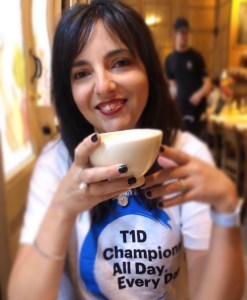
More than happy just raising a cup of coffee!
Two years ago, I walked off the stage at the inaugural ADATS event feeling very shaken. I’m an experienced speaker, and regularly have presented topics that make the audience feel a little uncomfortable. I challenge the status quo and ask people to not accept the idea that something must be right just because ‘that’s how it’s always been done’. Pushing the envelope is something that I am more than happy to do.
But after that very brief talk I gave back in 2017, a mere three months after I started Looping, I swore I would never speak in front of a healthcare professional audience again.
That lasted all of about two months.
In hindsight, I was more than a little naïve at how my enthusiasm about user-led technologies would be received. I can still remember the look of outright horror on the face of one endo when I cheerfully confirmed:‘Yes! Any PWD can access the open source information about how to build their very own system. And isn’t that brilliant?!
Fast forward to last Friday, and what a different two years makes! The level of discomfort was far less, partly because more than just a couple of people in the room knew about DIYAPS. In the intervening years, there have been more talks, interviews and articles about this tech, and I suspect that a number of HCPs now have actually met real-life-walking-talking loopers. Plus, Diabetes Australia launched a position statement over a year ago, which I know has helped shape discussions between HCPs and PWDs.
I’ve gotten smarter too. I have rejigged the words I use, because apparently, #LanguageMatters (who knew?!), and the word ‘hack’ scares the shit out of people, so I don’t use it anymore. (Plus, it’s not really accurate.) And, to protect myself, I’ve added a disclaimer at the beginning of my talk – a slide to reinforce the sentiment that I always express when giving a talk about my own life with diabetes, accentuating that I am speaking about my own personal experiences only and that I don’t in any way, shape or form recommend this for anyone else. (And neither does my employer!)
I framed my talk this time – which had the fabulously alliterative title ‘Benefits, Barriers and Burdens of Diabetes Tech’ by explaining how I had wanted to provide more than just my own perspective of the ‘three B’s’. I am but one voice, so I’d crowd sourced on SoMe for some ideas to accompany my own. Here’s just some of the responses.
 (Click to enlarge)
And this:

One of the recurring themes was people’s frustrations at having to wade through the options, keep up with the tech and customise (as much as possible) systems to work. And that is different for all of us. One person’s burden is another person’s benefit. For every person who reported information overload, another celebrated the data.
What’s just right for me is not going to be just right for the next person with diabetes. So, I used this slide:
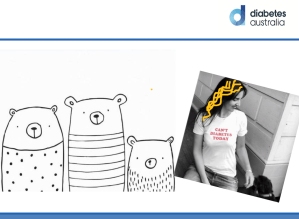
I felt that the story of Goldilocks and the Three Bears was actually a really great analogy for diabetes tech. Unfortunately, my locks are anything but golden, so I needed a little (basic and pathetic) Photoshop help with that.
In this fairy tale, Goldilocks is presented with things that are meant to help her: porridge for her hunger, a seat to relieve her aching legs and then a bed to rest her head after her busy day. But she has to work through options, dealing with things that are not what she wants, until she finds the one that is just right.
Welcome to diabetes technology.
On top of working out what is just right for us, we have to contend with promises on the box that are rarely what is delivered to us. Hence, this slide:

Apart from the Dex add circled in red, all the other offerings are ‘perfect’ numbers, smack bang in the middle of that 4-8 target that we are urged to stay between. These perfect numbers, obviously belonging to perfect PWD with their perfect BGLs, were always completely alien to me.
A selection of my own glucose levels showed my reality.
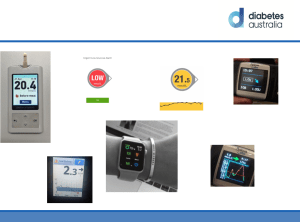
I explained that in my search for finding what was ‘just right’, I had to actually look outside the box. In fact, for me to get those numbers promised on the box, I had to build something that didn’t come in one. (Hashtag: irony)
Welcome to Loop! And my next slide.

And that brings us back to two years ago and the first time I spoke about my Looping experience in front of healthcare professionals. It was after that talk, during a debrief with some of my favourite people, that this term was coined:

Funny thing is, that I am now actually the very definition of a ‘compliant’ PWD. I attend all my medical visits; I have an in-range A1c with hardly any hypos; I am not burnt out. And I have adopted a Goldilocks approach in the way I do diabetes: not too much (lest I be called obsessive) and not too little (lest I be called disengaged), but just right.
It turns out that for me to meet all those expectations placed on us by guidelines and our HCPs, I had to do it by moving right away from the things there meant to help us. The best thing I ever did was start Loop. And I will continue to wear my deliberate non-compliance as a badge of honour and explain how it is absolutely just right for me!
My first endocrinologist was a really nice man. He was very kind in the way that he acknowledged that I was dealing with something quite scary – a new diagnosis of type 1 diabetes.
I remember he was nice. In fact, when people asked me what my new doctor was like, it is highly likely that I actually used that word to describe him.
What I remember more was the way that he told me about diabetes-related complications, and the way that he told me that if I didn’t look after myself, and follow his instructions to the letter, that I would get those complications. If I was a good girl and did as I was told, I would be right. If I didn’t, every one of those terrifying, horrible, distressing complications would occur and it would be my fault.
Now, he didn’t say this in an ‘un-nice’ way; he wasn’t mean, he wasn’t cruel, he didn’t yell. He was saying it as if it was an absolute, and I quickly came to understand that being compliant was what was expected, and that there was a good and bad way to behave in diabetes, and that resulted in good and bad numbers. If I did what he said, I was good; if I didn’t, I was bad. And if I was bad, terrible things would happen and I would have no one to blame but myself.
That was twenty-one and a half years ago, and I can still hear those words in my head. The language he used set me on a course of not coping with my diagnosis and feeling intense fear about my future – a fear that sometimes paralysed me into inaction.
This week, there has been discussion on Twitter about what the #LanguageMatters movement is all about. It started with this tweet from a diabetes consultant in the UK, which suggests that it is ‘..mostly about being nice…’.
Eight years ago, when Diabetes Australia launched the first language position statement, the response from many was that this was not an important issue and that perhaps we should put our efforts into other things; things that matter. This was seen as a little bit of fluff that was a waste of time. It’s political correctness gone mad, was the reaction from many.
We’ve become smarter at showing the evidence to support just how destructive words and language can be. We hear stories from people who explain how damaging language resulted in them not seeking help when needed, and how the fear of being blamed kept them away from their healthcare team. We can show that diabetes gets fewer research dollars; that it’s harder to get people to put their hands in their pockets to donate to a diabetes charity, and that the general community does not understand just how serious diabetes is.
The timing of things is interesting, and it seems that last night someone on the TV show The Great British Bake Off referred to a dish as ‘diabetes on a plate’. The host’s reference to the sugary confection in that way wasn’t about him not being nice. It was about him using a phrase that has been thrown around by many for years, because it is accepted that diabetes is something to make fun of.
Now sure, the way people responded to this incident could be termed as nice and not nice. Nice would be ‘Please don’t refer to my health condition like that’; not nice would be ‘Don’t be an arse’. Obviously, I lean towards the latter. (Also, not especially nice is using an example like this to explain the different types of diabetes, because it is not relevant to the discussion and only adds stigma to type 2 diabetes. Don’t do that!)
As I read the tweets responding to this tired ‘joke’ from people in the diabetes community, what I saw was not people urging the TV host to be nice. It was for him to understand the seriousness of diabetes, to stop shaming people with diabetes, to not fuel the misconception that sugar causes diabetes, to not make diabetes a punchline.
People make diabetes ‘jokes’ because the words and language used around diabetes for years has given them permission to do so. And with that, attitudes were formed and the construct that diabetes is self-inflicted and free game for comedians and TV hosts became accepted.
And that’s where we are now and what we have to undo.
Perhaps part of the problem is that we don’t have an ‘ist’ or ‘ism’ word that we can attach to the language matters movement. We understand that when we challenge racist or sexist conduct, we are not asking people to simply ‘be nice’. We are trying to make a culture shift away from such damaging attitudes and to change behaviours. When I call out a bloke for making a sexist comment, I’m asking him to reconsider the way he thinks about women, change his behaviour and be respectful. I’m not asking him to ‘be nice’. I’m asking him to stop being sexist.
When someone makes a comment about someone based on the colour of their skin or the country they were born, we don’t dismiss it as them not being nice. We (rightly) expect them to stop that rhetoric because it is wrong and no acceptable.
So, I’m making up a word (and I hate made up words…). If you use words and language that judges, shames, blames, and stigmatises people with diabetes, you are being diabetesist. Diabetesism is not okay and should not be tolerated, and we need to challenge people behaving in that way. Perfectly nice people could still be diabetesist; their attitudes are long-held and seemingly socially acceptable. It’s what they have heard all their lives. We need them to stop doing that.
Here’s the thing: I don’t actually consider myself as being a particularly nice person a lot of the time. Nice people are agreeable, and don’t challenge others or their ideas; they accept them. They don’t call people out on Twitter. They’re not the person who rocks the boat. I am the boat rocker, and I do that because I believe that there are institutional, systematic problems that need to be changed in diabetes and diabetes care, and one of those is the way that the language used around diabetes.
So, back to where this all began and this tweet. I agree that berating HCPs is not the way to get the message through. #LanguageMatters is not only looking at HCPs attitudes and behaviours, anyway. My strongest criticism has been aimed squarely at the media and industry. I also believe that it works best when all stakeholders are involved.
But while I accept that there are different approaches, I don’t accept – and really don’t appreciate – that all the work, the research, the education and the efforts about this issue can be distilled into the concept of good manners and niceness.
I also believe in taking a harder line. That doesn’t mean haranguing or being aggressive. But it does mean understanding that there is a (real or perceived) power imbalance in healthcare, and those with influence should be held to account when it comes to the way they speak to and about people with diabetes. It means calling out HCPs and researchers when they stand up at conferences use language that hurts us by reinforcing wrong attitudes; correcting the media when they get it wrong, and calling out industry when their marketing teams misfire.
And I also believe that this is personal. Living with diabetes is not a bit of ‘fun stuff’ or something that we chose to do. It is incredibly personal for me and every single person with diabetes who has been made to feel not enough, or blamed or shamed, or judged or mocked due to beliefs about diabetes – beliefs that have been formed and accepted over time because of the language and attitudes about our health condition. The concepts of non-compliance, of good and bad numbers, of ‘bringing this on myself’, of ‘diabetes on a plate’, of grading A1cs have all been thrown at me, and affected me in ways, varying from feeling a little annoyed right through to deciding diabetes care was an exercise in futility so I was simply not going to bother anymore.
That is why #LanguageMatters and I would ask – and urge – everyone working in this space to listen to those of us living with diabetes, hear us. And sit down and learn. Sure, we can all be nice, because being nice is a good thing to aim for (and I promise that I will endeavour to do better there, too), but accept that language matters much, much, much more than that.

 Today is Pregnancy and Infant Loss Remembrance Day. For many, it’s an occasion to mark the babies that we never got to know and watch grow up. It’s the hugs we never gave, the stories we never got to share, the first days we never got to celebrate. Those of us living with chronic health conditions have an extra level of complexity to deal with, as we wonder if our own bodies were partially (or completely) responsible for those losses. Sometimes, we never know.
But we hold close those losses and all that comes with them, carrying them quietly. Until the roar back into our consciousness.
Just a couple of weeks ago, I went to the GP because I had a UTI. (One day, the oversharing will stop. Today is not that day.) As the gift that keeps on giving, diabetes means that UTIs are more common in women with diabetes than those without. This is another reason that diabetes is so, so much fun.
My new GP asked if I’d noticed an increase in insulin needs because of higher glucose levels due to the infection. She then asked some general questions.
‘Is your period regular?’ she asked.
I nodded. ‘Like bloody clockwork. 28 days to the minute! Where was that when I was trying to have a baby?’ I remembered the desperation of wanting a reliable period to signal some sort of regular ovulation and the relief when I started on fertility treatment to make that happen.
‘Could you be pregnant?’ she then asked.
Could I be pregnant? Well, technically, I guess I could. ‘Jesus! I hope not!’ I exclaimed, wondering how my almost 46-year-old body would cope with such an assault! And then, because I catastrophise everything, I started to imagine first trimester blood sugars and hypos and climbing insulin requirements and all the other things that mammas with diabetes have to think about every second of a pregnancy.
I nearly threw up. Which I attributed to morning sickness. Obviously.
She handed me a jar and sent me to the bathroom for a sample.‘We’ll do a pregnancy test here now and also send the sample away to make sure the infection you have is going to respond to the antibiotics I’m prescribing,’ she explained to me.
I’m not pregnant. I breathed a sigh of relief when she told me that, flashing back to the complete opposite feeling I used to have each month when I realised that was the case. And to the literal and figurative emptiness I would feel when I realised another month had passed and I was not pregnant. And how that emptiness would increase exponentially after each miscarriage.
At the time, I didn’t have anyone to really talk to about how I felt. I had the support of my family, but there was no one who could understand the shame I felt, or the blame I was attributing to my diabetes – and therefore to myself. It’s only since speaking about it that I realised that so many other women feel the same way. And friends with diabetes have similar stories to share. We just needed an opportunity and a space to talk. And listen.
Today is a chance to do that. My love goes out to all of you who have lived through pregnancy loss, or who have lost a baby. I hope that you have a safe place to tell your story. And to my friends with diabetes who have experienced pregnancy loss: be kind to yourself. Sometimes the path we walk is lonely, and littered with too many times when we blame ourselves, when instead we should be kind and gentle. Today is a really, really good day to remember to do that.
Some more stories to read…
I wrote this for Mamamia just after my last miscarriage.
Kerri Sparling wrote this about her own experiences of infertility, and shared this guest post about pregnancy loss.
Anna Floreen’s story of pregnancy loss is heartbreaking, but I am so grateful to her for sharing it.
Look, I know there are times that engaging with people online who are sprouting a load of bullshit is a bad, bad idea, and really, I should just walk on by. But here’s why I don’t always do that…
I was speaking with someone who is thinking about starting to Loop the other day. I explained my own experiences – how simple the set-up had been (even after I’d delayed it for six months because I thought I wouldn’t be able to do it), how it is completely changed the way I think about diabetes, how much less time I have to dedicate to dealing with the daily frustrations of diabetes, how the highs and lows have been evened out and how glucose rollercoasters are a thing of the past.
‘So, you never have highs and lows? Ever?’ he asked me.
‘No; that’s not completely true,’ I said. I am frequently guilty of being evangelical about diabetes technology, and wanted to be sure that I wasn’t overselling DIYAPS. ‘After all, I still have diabetes!’
I have my range set to 4mmol/l – 8.0mml/l. It’s the mythical range that was presented to me as the ultimate goal the day I was diagnosed. It’s quite a tight range – I know that – and I probably could afford to ease up on that upper range. My target is 5.0mmol/l (it used to be 5.5mmol/l – another mythical number).
The reality is that for the very vast majority of the time, I am within that range, and hovering around that target number. If I was to check my Dex as soon as I woke up each morning, it would be boringly somewhere between about 4.8mmol/l and 5.3mmol/l.
But I still do spent time outside of the target range. The thing about Loop is that in most cases, I can explain the reasons when that happens.
I had a hypo the other night. A pretty terrible one, actually. I can’t remember the last time my Dex read LOW, but that was what I was staring at when I checked the app after my phone started screaming at me. I double checked with a finger prick and sure enough I was low. Really low. I treated (over treated) and was fine a short time later, albeit with a rebound leading to numbers I’ve not seen in a very long time.
How did that happen? Well, let’s start with the double bolus I gave myself. For some reason, I decided that the chicken soup with noodles I was eating for dinner needed not one, but two boluses. That was mistake number one. Mistake number two was not eating as much as I thought I was going to because I had a teleconference starting, so I left about half of my dinner in the bowl. Mistake number three was not realising mistake number one. And mistake number four was not doing anything to address mistake number two.
Following? Diabetes is fun!
The low resulted in an ‘eat-the-kitchen’ hypo that saw me eat six jelly beans, wait fifteen minutes and then recheck my glucose levels. Just kidding. I drank half a litre of juice, ate three bowls of breakfast cereal, chomped on a tube of fruit pastilles and then started attacking a homemade fruit bun my mum had delivered earlier in the day.
Because I was dying and all the carbs in the kitchen were the only way to prevent that happening.
The high that followed could be easily explained (see: juice, cereal, pastilles, fruit bun).
Other highs on Loop can usually also be explained quite simply. If I under bolus, I know pretty quickly, and Loop has already started doing its thing anyway to remedy that.
Stubborn highs generally mean one thing and one thing only: Renza, change your cannula. And as soon as I do, numbers come back into range fairly quickly.
Out of range numbers these days aren’t due to the unpredictability of diabetes. These days, they come down to one thing and one thing only: human error. My human error.
I trust Loop more than I trust myself. It is way smarter, completely and utterly unemotional, and an absolute workhorse, making adjustments every five minutes as required. It doesn’t get tired or busy or distracted. It understands numbers better than I ever will.
This is the cool tech I need to help me keep my diabetes moving. Of course, I still need the warm touch – the human connection – to help me make sense of my life with diabetes. But not having to think or do the diabetes numbers nearly as much gives me time and headspace I didn’t know I had. It keeps my numbers in range for the vast, vast majority of each day. And it means far fewer errors. Errors that I used to make all the time.
I am, after all, only human. Loop, on the other hand, is not.
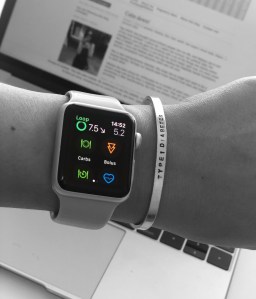
One of the many highlights for me at last week’s EASD meeting was the satellite event about DIYAPS. It was a Hacking Health event, co-organised by the OPEN Project consortium and promised to highlight the perspective of the #WeAreNotWaiting movement through the eyes of people with diabetes, researchers and clinicians.
It was standing room only, with the event having sold out a few days earlier. I was a little late (I had to present at an event involving early researchers and PWD) so unfortunately missed the always brilliant Dana Lewis kick off the event.
If you ever need someone to warm up an audience and set the scene about the DIYAPS movement, Dana is your person! I have seen her present a number of times now, and always pity anyone who shares the stage with her. Her presentations are always enthusiastic, articulate and engaging, and leave the audience wanting more.
I followed her talk on Twitter as I was in the cab from the EASD conference centre to the Centre Cívic Sagrada Família (bonus of offsite events is actually seeing some of the tourist attractions the city has to offer!) and could see that the audience was enchanted and galvanised with her talk.
The program was packed – and provided a balanced view of not only people using the tech (because honestly, sometimes it can sound like we have all drunk the Kool-Aid!), but also about DIYAPS in clinical practice, and research settings, as well as a session on medical ethics.
There were many stand out moments for me, but perhaps the one that stands out the most was from paediatric endo, and fellow Looper, Katarina Braune where she was able to distil DIYAPS into this single sentence (as tweeted by another Looper, Andrea Limbourg):
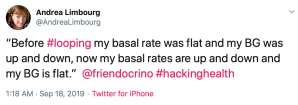
Perfect, perfect summary of looping!
We also heard from Roman Hovorka who presented on the experience of developing the Cambridge closed loop system (CamAPS). Anyone who has been following artificial pancreas technologies and research would know of Roman. I’ve heard him speak a number of times at conferences around the world and have always been grateful for his passion and dedication to advancing technologies to benefit people living with diabetes. So, it was a little surprising that I found his talk a little challenging.
One of the things that I have always admired about the DIYAPS movement is that there is a strong sense that our chosen DIY path sits neatly alongside commercial systems and regulatory bodies. While we may not choose or want to use a commercial system (and, of course, are not waiting for them), that doesn’t mean that there is disdain or derision of other options. In fact, there is admiration and gratitude for industry working to provide this technology to a broader audience. We know that not everyone wants to build their own system, and many ARE happy to wait for a system that will be in warranty, and comes straight out of a box, rather than cobbled together.
I say this knowing that same courtesy is not always afforded to the DIY world from industry, and I can point to every single time someone from a company developing a commercial automated system claims their systems are safe – implying that those of us in the #WeAreNotWaiting world are all cowboys not concerned with safety.
I would so have loved to have heard Roman really highlight all that his system has to offer, and what sets it apart from DIY systems, and how it is one more choice that will be available to PWD, rather than put down the DIY movement. I am all – ALL – about choice and love the idea that with this choice comes a better chance for us to find the tech that works best for our personal circumstances.
We don’t need to be defensive about ‘the other’ in diabetes technology. We need to acknowledge that there is no one right, perfect choice. DIY is certainly one of those choices, and as we heard sprinkled throughout the day, has been life changing for many people. But it is not the only option out there, and few people in the DIYAPS world would even suggest that it is. I guess perhaps that is what challenged me about Roman’s talk – he did seem to throw DIYAPS under the bus a little when it would have been far better to suggest it was just another bus route people may like to take.
So how could this event have been better? Well, I wish it had been part of the official EASD program. There is a lot of opportunity for HCPs to learn from the user-led tech community, and this extends to technologies and treatment options beyond DIYAPS. Reinforcing what is an overarching fact of life with diabetes – that all diabetes is DIY – is important for all working in diabetes to remember.
While DIYAPS technology may be at a far spectrum of the whole DIY diabetes idea, having HCPs and researchers listen to just how diabetes impacts on daily life, and the decisions we need to make is critical in their approach working with us.

Panel session to finish the day.
DISCLOSURES
My airfare and part of my accommodation to attend EASD was covered by Lilly Diabetes so that I could participate in the DOCLab advisory group meeting which took place all of Monday. Another night’s accommodation was covered by Novo Nordisk as I attended their advocate meeting on Digital Health Technologies.
I am part of the OPEN Project Consortium. I did not receive payment for my involvement in the Hacking Health event.
While my travel and some of my accommodation costs have been covered, my words remain all my own and I have not been asked to write or speak about any of the activities I attended, or anything I have seen at the conference. As ever, profanities are also all mine.





 Diabetogenic