You are currently browsing the category archive for the ‘Language’ category.
How are you?
I’m fine. (I’m having a ‘diabetes day’ and I’m a little over it.)
You look tired.
Thanks. But really, I’m okay. (I am tired. I didn’t sleep because my BGL was high all night and I was up every ten minutes peeing and drinking water. Also, stop telling me I look tired!)
How is your diabetes going?
Fine. You know, up and down. Thanks for asking. (Still there. Still a pain in the arse. Still ….)
Did you have a bad night? You look like you haven’t slept much.
It wasn’t a great night. But I’m here! I’m okay. Thanks. (Enough with telling me how shit I look!)
Have you seen the doctor recently? I mean, if you are tired and not feeling great then maybe it’s time to see the doctor.
I’m okay. But thanks. (Seriously, you’re not going to acknowledge the ‘up and down’ comment? And no, I haven’t seen a doctor about the ups and downs, because if I was to do that every time I was low or high or low then high or high then low I would spend all my time in the doctor’s office and I have other far more fun things to do. Such as have this conversation.)
You know, sometimes you just need to take a break from things. Have you thought about that?
That’s a great idea. I’ll see what I can do. (I wish I could take a break from diabetes, but it doesn’t work that way. Instead, it’s about working out how to manage things the best I can.)
Or maybe stay home when you have had a not-so-great night.
Hmmm. That’s tough sometimes, but I will think about it. And I’ll just grab another coffee. (If I was to stay home after every not-so-great night, I would end up with a not-so-great work attendance record. Also, coffee. And more coffee.)
Are you sure you are okay?
Okay. The truth of the matter is that I am exhausted today. I had a lousy night and barely slept. Today, I feel like a bus has hit me, reversed and then hit me again. I would really like to curl up and catch up on the sleep I missed last night, but I had to get up to get the kidlet to school and then get to work because they expect me to show up – regardless of diabetes state – and then get home and parent a little more. But the truth of the matter is that I am tired, emotional and plain over it. Thank you for asking me. (You asked…..)
Um. Okay. Um. Let’s catch up soon.
Yes, let’s. (And let’s not talk about diabetes anymore!)
Despite my parents having been born in Italy, I can barely speak a word of Italian. I can order a coffee, ask for a size 38 shoe or boot, and enquire about where to locate a decent Nutella cornetto for breakfast. I also speak with my hands like a native, so I fool a lot of people into thinking that my Italian must be as good as my Italian hand-waving. Alas, it’s not.
It wasn’t until I was diagnosed with diabetes that I became bi-lingual. That’s right; I learnt how to speak diabetese.
When I am low, I become super fluent in diabetese. It is at that point that words I know to be correct in English completely disappear from my memory and are replaced with words that may or may not work. Frequently they don’t.
The other morning, I announced to the family that ‘I need fooding’. Hilarity ensued from Aaron and the kidlet while I looked on confused and annoyed at their laughter, trying to find the right word, and demanding they stop it and get me a freaking doughnut. Apparently it was so funny that it warranted a Facebook post, where someone kindly responded that I had spoken ‘like a true Calabrese’ (which actually isn’t too far off the mark when I think about some of the words that my grandparents turned from Italian to half-English. My mother still jokingly refers to the first meal of the day as ‘brekkafesta’).
On the same day, I couldn’t remember the word for a particular appliance. ‘Heat that up in the dishwasher…I mean washing machine…I mean microwave,’ I said, desperately searching for the name of the correct white good. (More laughter from the other inhabitants who reminded each other of my earlier ‘fooding‘ comment and laughing about that all over again!)
I don’t even need to be low for diabetese to fall into dialogue.
‘What was Amy Winehouse’s blood sugar level when she died?‘ I asked Aaron when we walked out of the movie the other night. ‘Huh?’ he asked, looking at me. ‘Blood alocohol?’
Of course there is the ability to have whole conversations in acronyms – ‘At the ADA conference I was at a session on IPT and CGM and a CDE pointed out that QoL is as important a measure as HbA1c.’ Makes perfect sense to me and my people.
Being able to speak a LOTE that may only be understood by a (very select, very intelligent) few is kind of special. But I would be more than happy not to have to ever, ever again.
Baby, it’s cold outside. It really is. I am shivering my way through most mornings, cursing the cold and complaining about how far away Summer is. Which is all really weird because I think the coldest it’s been is about 7 degrees (Celsius), and a mere few months ago, I was delighted and delighting at the New York snow. I think that’s what I need. Snow in Melbourne. Snow makes the cold worth it.
Anyway, sit somewhere warm and have a read at what I have been checking out lately.
She quits helmets
I’ve made no secret of the fact that I think Sarah Wilson is a fool. She has done nothing to alter that opinion with her rant and rage against mandatory helmets for cyclists. She wrote this at the end of last year and it has resurfaced, once again showing how irresponsible and downright stupid she is.
If I had a superpower, it would not be flying or invisibility or a magic unicorn. No. It would be to mute people who are dangerous; people with D-grade celebratory status with a following who sprout harmful rhetoric. Sarah Wilson would possibly be first on my list.
beyondblue
Yesterday, this media release from beyondblue had me cheering. Raising awareness about men’s health – in particular men’s mental health – is a tough gig and beyondblue are doing a damn fine job trying to cut through.
Inside Out
When I saw the preview for the new Pixar film, Inside Out, I was so excited. What a gentle, fun, and enjoyable way to talk about mental health with kids. I couldn’t wait to see it. I still can’t. Aaron took the kidlet and one of her friends to see it while I was in the US and they all thought it was terrific. And it has sprouted some really interesting discussion about the topic.
I love this article which talks about the importance of having a strong female character as the protagonist of the film who is not a princess.
Jenna from the Block
A few years ago, Jenna and Josh were contestants on the Block. Josh was diagnosed with type 1 diabetes a couple of years ago, and this moving story from his wife, Jenna, is doing the interweb rounds here at the moment. Thanks for raising awareness of diabetes, guys!
Up your nose
Glucagon injections are not fun. They are not fun for the person who is jabbed (the jabbee?)– mostly because it means that they are having a nasty hypo that warrants being jabbed – and they are not fun for the person doing the jabbing (the jabber?).
Under what is usually an incredibly stressful situation, the ‘jabber’ has to open the little orange box, draw up things into a syringe, shoot it out again, mix it up and then inject it.
Not. Fun.
So, it is with great interest that I have been reading about the trials of inhalable glucagon. Read about it here.
Friends like this
My friend Alecia is awesome. She is uber-talented (her jewellery designs are stunning and her lighting designs a marvel) and is so much fun to hang out with – even if she makes me drink things that taste like orange bathroom cleaner.
We hung out recently in NYC, where she took me to a gorgeous place for dinner and we ate the best Brussel sprouts ever. And then I took her to hear some jazz where she made guitarist Mike Stern kiss me three hundred times so she could get the perfect photo. I didn’t complain. Neither did he, actually.
She is also slightly crazy. But she is crazy for a cause which, I guess, makes it kind of okay. Next month, she is going to be riding 100 miles on a bike. In our language that’s 161 kms. In whatever language, that’s a long way.
If you can, throw her some coin. All money raised is going towards finding a cure for diabetes. Which she has had for 36 years, and since 2001, has raised over USD$350,000 for a cure for type 1 diabetes. I did mention she’s awesome right?
Music and words
Most weeks, I post a link to music I have been listening to. This is fun. And embarrassing at times. But I also think that I should start to post links to some of my favourite JK Rowling quotes because the number of times she beautifully and succinctly manages to say something that I have been trying to bash out is startling.
For all the blog posts and talks I’ve ever given on the importance of language, I could have simply said this.
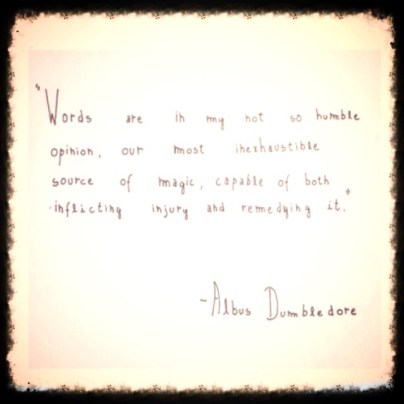
Remedy injury. Always.
Gallery
One of the best films ever is the Peter Sellers’ classic The Party. A couple of years ago, we bought our first ever Josh Agle (known as SHAG) print which is a tribute to this fabulous film.
It was the first in The Party series. Somehow, we completely missed the release of the second print (and now can’t find one anywhere!), but a few weeks ago, when visiting Outré Gallery, we saw and bought the third.
Last night, after a couple of hours of lining things up, measuring things, banging hooks into walls (very satisfying), we finally have our SHAG gallery done.
It looks spectacular and this photo absolutely doesn’t do it justice – mainly because it was really difficult to get the whole wall in one photo. Those larger photos in the middle are each about 150cms wide. Nonetheless, here it is! And we can’t stop looking at them!

Drink Nutella
I mentioned it’s cold, right? Well, here is a nice way to warm you up. Nutella hot chocolate. Just because.
I have a love of words that stems from a love of reading and a love of conversation. I love learning new words and discovering new meanings. Clever conversation makes me swoon. My favourite TV shows become favourites because of the banter between characters. I read cookbooks by Nigella Lawson as much for her prose as for the recipes.
People who know how to use words are my heroes and I envy them enormously.
Language is a thing of great beauty and power. But with power, there comes an ability to destroy and misuse and oh, oh, oh, how words are misused!
I don’t like abbreviated words. ‘Awks’ is not a word. And ‘totes’ as a noun refers to a bag and as a verb to carrying something around. It is not a substitute for ‘totally’. (Also, it’s possible I am an 82-year-old woman called Beryl who is about to call 3AW and complain about ‘the youth of today’.)
But most of all, I despise made up words.
So it’s a little odd that one of my favourite Tumblrs is all about made up words.
The Dictionary of Obscure Sorrows invents words that fill a gap in language. Creator of the Tumblr is John Koenig and he is incredibly clever in the way he comes up with these new words. He has a Facebook page to explain the etymology for each word (often made up from existing words jumbled together) and YouTube clips, exquisitely telling the story of the word.
Some of the made up words are strangely beautiful, although I wonder if that is because what they intend to describe is beautiful. Unsurprisingly, vellichor is my favourite.
Sometimes, there are no words to describe a feeling or an experience. This is often the case when trying to explain diabetes – especially to people who do not live with it.
Here are some things I wish there were words for:
That feeling when you know you are low but refuse to acknowledge it. Your brain is foggy, yet at the same time your mind is defiantly in denial.
The frustration you feel when you are desperately trying to play by the book, yet still not getting the diabetes results you would like to see – that you expect.
The love you feel for diabetes technology which is often coupled with an absolute hate of it.
That feeling of meeting someone with diabetes who you just click with and know that you will be friends forever – not because of diabetes, but just because, although kind of because of diabetes! (Ping: These girls. And this one.)
And adding to that – being in a room full of other people with diabetes and hearing the beeping and vibrating and alarming and clicking of a hundred meters/pumps/lancets/pens/CGMs and being absolutely oblivious to it all because it just feels so ‘normal’.
The anticipation of digging a spoon into a new jar of Nutella.
The superciliousness you feel – and the exaltation you feel you deserve – when you change your lancet more than a couple of times of year.
The rare, unusual and yet liberating feeling of being completely, truly, utterly, entirely, wholly naked – no cannula; no sensor; no tape on your body.
The appreciation, gratitude and indebtedness you feel towards your loved ones who are forced to deal with diabetes that one step removed, and love you no less for it.
The realisation that a diabetes blog post you are reading is so perfectly true, so accurately precise and tells your story so honestly that you feel that you wrote it yourself.
Being high and all that comes with it.
I wish there were words for these things. I wish that there was a way that I could express what diabetes is about – how diabetes feels – in a way that is more than just multiple words on paper and a (frequently ridiculous) stream of consciousness that is often nothing more than an unintelligible mess!
I’m not sure that I would ever use Koenig’s words in a sentence – spoken or written – and he is certainly not the first person to make up words. Shakespeare made up words in his writing. Edward Lear did too – really, just what is a runcible spoon? But nonetheless, it is somewhat magical to see – and hear how – random letters come together to create words that seem to somehow, suddenly, make complete sense and give a name to things that we absolutely feel.

Today, I am at the Diabetes Victoria and Baker IDI Health Professional Symposium and the first session has me thinking – and sitting down the back of the auditorium banging out this post.
The keynote presenter for the Symposium is Professor Herzel Gerstein talking about hypoglycaemia. He made a wonderful point in the Q and A portion of his presentation, one that I think is frequently overlooked.

The language (yes, I’m talking language AGAIN) we use around hypoglycaemia is misleading at times. Generally, we have severe hypoglycaemia and mild hypoglycaemia.
Severe hypos refer to those we need assistance to treat. It may inolve unconsciousness or seizures. Severe hypos sometimes need paramedics’ assistance, or a trip to the hospital.
Mild hypos are those that we can manage ourselves without too much hassle.
The problem with using these two terms is that it makes it sounds as though mild hypos are nothing. They’re just a part of living with diabetes, deal with it, off you go.
That may be the case in practical terms. A so-called mild hypo may mean grabbing a handful of jelly beans, waiting a few minutes and then off you go. Or it might be slightly more than that and take longer. But whatever it is, it’s termed ‘mild’ because no assistance was required.
But the thing with ‘mild hypos’ is that they do have the potential to weed their way into your psyche and suddenly become very significant.
If those mild hypos mean that you are often running late for things, you start to wonder if others are questioning your reliability. If those mild hypos have you needing to sit things out for a moment, you worry your friends or your kids or your family think you are disengaged, not wanting to participate. If those mild hypos result in you being a little vague for a while in work meetings, you start to fear your boss or colleagues think that you are not paying attention, not interested, don’t understand.
These are not ‘mild’ things. These are really significant and mean worrying and stress and anxiety and anger and sadness and fear and guilt and all the other things that diabetes makes you feel. There is nothing mild about it!
I think this is a really important issue for healthcare professionals to remember. By brushing away mild hypos as just a short-term-complication-everyone-has-them notion, the actual impact on the person living with diabetes is ignored. it’s minimising just how big a deal mild hypos can be and not providing any strategies for coping and managing with the emotional side of these episodes.
A mild hypo may not necessarily be terrifying in the moment, it may be quite manageable at the time, it may not affect anyone else or draw too much, if any, attention to the person having the hypo. And this is good!
But don’t for a minute think that it doesn’t mean a silent feeling of dread (and possibly a silent word of thanks to the hypo gods that it was nothing more!) or feelings of significant distress afterwards.
Today, I travelled to Geelong to hang out with Kim and have lunch speak at the Barwon Region Diabetes Health Professionals Group about diabetes and language.
I have given lots of talks about the importance of language when speaking to and about people with diabetes. It is such an important issue and I am always pleased when I am asked to present on this topic.
When I was preparing for today’s talk, I looked over all the blog posts I’ve written here (and on other blogs too) about this issue and I realised that there were many. So very many.
There was this one – the post I wrote following the launch of the Diabetes Australia Language Position Statement.
There was this post where I asked if people consider diabetes a disability and if the word offends them in any way when referring to diabetes.
And this one where I took a couple of ward nurses to task for daring to use the words non-compliant and diabetic in the same sentence.
Also here is a post about someone calling me a diabetic. They really shouldn’t have.
There was this whole post that focused on the word ‘sufferer’ – still a word that I despise!
I discussed a lot about the importance of language specifically relating to diabetes, but I wanted to explore further today. I talked about the language of health, pointing to how I thought Healthy Weight Week missed the boat with the name of the initiative and also the language of food and of the ‘wellness industry‘.
The group was really engaged – lots of terrific discussions and questions and ideas being thrown around, which I love when I am presenting not only because it means less for me to do, but because I love to hear ideas from others and learn about what works for them. This was a really sensitive group. They were very switched on and understood that not only is language important, but the way they use it needs to be tailored to the person they are working with.
We also talked about language extending to more than just what they say. Their waiting rooms need to reflect the same sensitivity being demonstrated in the consultation room. I recalled the incident of the launch of the Diabetes MILES study where in the waiting room of a diabetes clinic was a horrid poster about foot care showing foot ulcers and amputations.
It was a terrific discussion and I am so grateful whenever I spend time with health professionals who are just so damn considerate and respectful when speaking about diabetes. And I am also grateful that they are seeking the consumer/patient/client/PWD (yes, we discussed that too!) perspective.
I’ve been thinking about the word chronic recently. It’s a word that gets thrown around a lot in health. Simply put (although there is nothing simple about it!), when used in relation to health conditions, it means ‘ongoing or constantly recurring’.
Diabetes fits quite nicely into the definition. It’s a bit of both – and ongoing component with a constantly recurring nature too. As far as I’m concerned, the ‘ongoing’ part of diabetes is a given.
Undeniably, it gets me down; of course I get sick of it. But to a degree, I just have to accept it. It’s there and it’s not going anywhere.
The real issue – the thing that makes it extra rough – is the ‘constantly recurring’ side of things. I am really not so good at this stuff; the things that go away and then reappear. That is the part that makes it difficult.
With diabetes, those recurring things – whether it be a round of nasty hypos or high BGLs that won’t go away and are really tough to understand or explain – are always harder for me to manage after a period of diabetes just chugging along.
Perhaps I get lulled into a false sense of security and the sudden ‘crap-ness’ throws everything into chaos. Perhaps I have this ridiculous idea that with almost seventeen years under my belt I should be better at diabetes than I am. Perhaps it’s the fact that I like routine and once I’ve settled into one, I don’t like to have to change for any reason. (Perhaps that last sentence could be condensed into two words: ‘I’m stubborn’.)
I’m not sure, but what I do know is that, in amongst the crap, I can – at least, I need to – summon up an attitude of ‘this too shall pass’. Because I know it will. It may take longer than I’d like, it may be harder to get through. But I know that it will pass.
And then, I will be left with the ongoing stuff. The life-long, never-ending, forever nature that is a chronic health condition like diabetes.
I read this piece by Mike Hoskins (mate, fellow coffee addict, all ‘round good guy) over at Diabetes Mine yesterday where he looked at the use of the word ‘diabetic’. The piece is actually from December last year, but I missed it in the excitement that was New York in December.
I don’t use it. I don’t refer to myself as ‘diabetic’ or ‘a diabetic’. I am a person with diabetes. As far as economy of language goes, it’s a pain, especially when you only have 140 characters to play with. But PWD seems to be pretty widely recognised in my circles.
Perhaps it’s been drummed into me at work, perhaps it’s political correctness gone mad. Regardless, you will not read or hear me use the word diabetic as a label for myself or others with diabetes.
Mike’s article was quite timely as last week I had a little incident that got me more than a little heated.
I was on the phone with VicRoads. This was not an enjoyable experience by any means. I was cut off four times; the four people who answered my call(s) gave me incorrect information and then, when I asked to speak with a medical review case worker, I had someone return my call who was incredibly rude, aggressive and disrespectful. She constantly interrupted me and refused to answer my questions. And gave me the wrong information.
(For context – I was trying to get some clarification as to why I was required to submit an eye exam report along with my medical review.)
‘I was wondering why I am required to submit an eye exam report,’ I explained as the reason for my call.
‘Insulin-dependent diabetics have to must submit a biennial eye exam,’ was the response.
I asked where this is stated in the Guidelines. She would not (could not?) answer this question. She just kept saying (very aggressively) ‘It is a requirement for all insulin-dependent diabetics.’
Now, I am willing to concede that I was pissed off and that if I didn’t have my back up I probably would have let things slide and been happy to continue the discussion about our differing interpretations of the Guidelines.
But I was pissed off. I was annoyed that the medical officer was being rude and patronising and not being helpful. And I was annoyed that she was giving out false information – information that if people didn’t know better could cost a lot of time and (potentially) money for no reason.
So I stopped her.
‘Excuse me,’ I said (and I promise I was being polite and not patronising). ‘Please don’t use the term diabetic. I don’t like it. I would prefer if you used person with diabetes.’
Yes, okay. I know how prissy this sounds. I know how pedantic and, quite frankly, nit-picky I was being. I really do.
But she was being rude and she was spitting out the word as though it was something dirty – that there was something wrong with me.
Without missing a beat, she replied with ‘But you are. You are a diabetic.’ She almost yelled it at me.
The conversation didn’t get any better.
I have diabetes. I own it. I am out, loud and proud about it. But it’s my diabetes and my rules. And my rules include how people speak about me and about my diabetes. They do it with respect, they do it politely and they show courtesy. None of these things were demonstrated. The word ‘diabetic’ was being used here spitefully, and as a label that I felt diminished me.
I don’t care if people with diabetes refer to themselves as (a) diabetic. And I don’t even really mind when other people with diabetes refer to me as (a) diabetic. But it is never done with any judgement. It never pigeon holes someone. And it is never done disrespectfully.
Words matter. I say it all the time and I realise it more and more each day. While it’s a highly personal choice as to the words we each use to describe our ‘diabetes-selves’, using language that is accepted by everyone – and doesn’t have the potential to insult – is clearly a better way.
And here it is. Again. The Diabetes Australia Language Position Statement. And yes, I sent a copy of this to VicRoads as soon as I got off the phone.
‘Oh and I need to keep a food diary this weekend for my homework. Everything I eat today, tomorrow and Sunday,’ announced the kidlet in her rundown of what she had been up to on her second day back at school last Friday. We were walking to our local café for a Friday afternoon treat and to meet up with one of her friends and her friend’s mum.
What? Fuck? Why? The words ‘food diary’ hit me like a brick. Immediately, I wanted to charge at her. ‘Who is going to look at it? What are you doing it for? You know that there is no need to keep a record of what you eat – we eat a really healthy balanced mix of great food.’
I took a deep breath and didn’t say any of that.
While I may not, at times, have a particularly healthy relationship with my body (stupid, broken, scarred, unable to do the things that it should etc. etc.), I do have a very healthy relationship with food. But I know that a lot of other people don’t and I am frequently concerned about how food is discussed.
Food shaming is real and can be damaging. People’s understanding of food and nutrition varies widely and when we start using words like ‘clean’ or ‘good’ and ‘bad’ to describe what we are eating, food suddenly goes from being a source of joy to a source of judgement.
I stepped back for a moment as the kidlet continued her random commentary of her school day and, half paying attention to what she was saying (I knew there would be a quiz about it later!), I thought about how to approach the food diary thing without projecting my issues onto her.
‘So,’ I started casually. ‘What are you doing in class that relates to keeping a food diary?’
‘We are talking about healthy lunchboxes.’ She was wrangling the lead of her puppy as we were walking and pulled Sooty closer to slow her down. ‘You don’t like this idea, do you mum?’
Damn kid and her astuteness. I thought I was playing it so cool.
‘Um…well…I…Why do you say that?’
‘Because I know that you get annoyed when people talk about food in negative ways and say that some foods are bad. And I know that you think things like I Quit Sugar, and that other guy you keep saying is nuts, are really terrible because you love food and think that it should be enjoyed. Not something that is judged. Right?’
We arrived at the café and the conversation was (thankfully) cut short. She ran off to play with her friend.
The next day, we were in the car together, heading home to awaiting homework, and the kidlet said ‘One more thing. We need to say what the word ‘diet’ means to us.’
Again, I (internally) shuddered. What an ugly word. Why are they teaching kids to diet? Or even talking about diets? What is going on? I slowed down my thinking.
‘Okay’, I said. ‘How would you define that word?’
‘I would say it is the variety of foods we eat. And I would say that we have a diet that is made up of lots of different foods including fruit, meat, vegetables, bread, dairy, sometimes we have cakes and biscuits… And that we mostly have homemade food, but eat out too sometimes.’
She paused.
‘Oh darling,’ I wanted to say. ‘You are so on message.’ Instead, I reached over and squeezed her knee. For a brief moment, it flashed through my mind that just maybe we were doing something right in raising this gorgeous kid.
I glanced over at her and smiled, about to tell her that I thought it was a perfect way to define the word diet. But before I could she added, ‘Oh – and Nutella. We eat Nutella too.’ She was looking sideways at me with a cheeky grin on her face.
Bang! On message. That’s our girl.
‘Okay, so I’ll deal with the diabetic who’s just been brought in. She’s been in here four times in the last couple of months. Completely non-compliant.’
Whoa!
I was walking through the rabbit-warren-like corridors of the Epworth Hospital and passed a nurses’ station at the exact moment those words were spoken, stopping me dead in my tracks. If I was in a Warner Bros cartoon, there would have been a dust and smoke cloud around me as I screeched to a halt.
‘Move on, Renz,’ said the first voice in my head.
‘Not freaking likely,’ said the louder voice.
I turned to the nurses who hadn’t noticed me yet.
‘Hi,’ I said. I was trying for sweet and polite, but could already hear the patronising tone in my voice.
They turned and looked at me.
‘Um. I just wanted to say a couple of things. Calling someone a ‘diabetic’ isn’t helpful for anyone. It labels them as their condition and I’m pretty sure that the person you are referring to is a lot more than her insulin problems. Secondly, non-compliant is a really nasty term. I’m guessing that you’ve no idea what else is going on in her life – I have no idea either – but I am pretty sure that there is a reason that she is not managing her diabetes as well as she’d probably be hoping to. Non-compliant suggests that it is a deliberate ploy to make herself unwell – which it may be and if that is the case, then that is something that needs to be addressed.’
At this point, the nurses were just looking at me with a mix of surprise, suspicion, annoyance and interest.
‘Also, to be compliant means following a defined set of rules or guidelines. Diabetes has a funny way of mocking such an idea. The rules keep changing – without notice.
‘Now, I am hoping that you wouldn’t use this language around the person you’ve been referring to when you are actually in the same room as them, but here’s the thing. You’re saying those words now, and that means that somewhere deep inside (or, probably just on the surface) that’s how you really feel.
‘No one wants to have diabetes. No one wants to be in hospital. No one wants to be so overwhelmed by diabetes that they don’t – for whatever reason – manage their condition the best way possible. But sometimes, it gets like that. The never-ending relentlessness of diabetes can be so debilitating that all self-care stops. And then, sometimes, you wind up in hospital. Four times in a month, sometimes.
‘I have diabetes. I’ve been that person you are speaking about. But I wasn’t being non-compliant. I just couldn’t cope. And I felt really bad and guilty that I couldn’t cope. So on top of feeling crap about my diabetes, I also felt crap about not looking after my diabetes.
‘So. Maybe think about what else is going on in her life. She is more than diabetes (that’s why calling her a ‘diabetic’ isn’t a great idea) and I bet she is going to respond a lot better to some kindness and concern and perhaps a suggestion she see a psychologist if she’s not already doing so. Because the judgement and judgemental language is not helping at all.’
I looked at both nurses. I was still using a really calm, level voice, but I could tell that they were a little annoyed. And more than a little stunned. I smiled at them.
‘Okay then. Bye.’ I started to walk off, but stopped and turned back around. ‘Oh – can you tell me how to get to room 18A please?’
Right-oh. Next up on the holiday playlist is James Taylor. Have Yourself a Merry Little Christmas.




 Diabetogenic