
You are currently browsing the category archive for the ‘Language’ category.
By the weekend, after last Friday’s post expressing the terror I felt reading headlines regarding death rates, diabetes and COVID-19, I’d moved from scared and sad to angry. Diabetes reports in the media are always fraught, and this was no exception.
I took to Twitter, because it’s as good a place as any to scream into the void and lighten my chest from what was weighing heavily on it. You can read that thread here. Or you can just keep reading this post. I wrote about the processes that I have been involved in for getting a story about research from the lab/researcher’s desk out into the general sphere.
So today, I am going to address a number of different stakeholder groups with some ideas for your consideration.
To communication and media teams writing media releases about diabetes research:
I know that you want your story in the press. Many of you have KPIs to meet, and measures of success are how frequently you get a headline in a well-known publication. I know that you often are the ones trying to make dry numbers and statistics compelling enough to get the attention of health writers and journalists.
But please, please don’t tell half stories. Don’t only present the scary stuff without an explanation of how/what that means. And when you provide explanatory information in the hope that the journo you’re pitching to will pick up your story and run, don’t revert to lazy, over-simplistic explanations that have the potential to stigmatise people with diabetes.
To health writers and journalists:
You have a tough job. I get that. Pages need to be filled, angles found and content that will grab the attention of a news-hungry public must be written. But remember, if you are writing about diabetes, it is highly likely that a lot of people reading what you write are people affected by diabetes. Your words are personal to us. When you talk about ‘diabetics dying’, we see ourselves or our loved ones. Please write with sympathy and consideration. Don’t use language that stigmatises. Don’t use words that make the people you are writing about feel hopeless or expendable. Don’t forget that we are real people and we are scared. Are your words going to scare us more?
To anyone asked to comment from an ‘expert’ perspective. (I am not referring to PWD asked to comment from a lived-experience perspective here, because no one gets to tell you how to talk about how you are feeling. Tone policing PWD is never okay, especially when it comes to having a chance to explain how your emotional wellbeing is going…)
Thank you for trying to break down what it is that is being discussed into a way that makes sense to the masses. If you are asked to be the expert quoted in a media release, ask to see drafts and the final version of the release before it goes out. Consider how your words can be used in an article. It’s unlikely that you will be called for clarification of what you have said, or to elaborate, so be clear, concise, non-stigmatising and factual. Also, and I say this delicately, this isn’t about you. You are providing commentary from a professional perspective on a news story about the people who this IS about . The fallout may be tough, and the topic may be contentious, people may not like what you say, but when that becomes a focus, the story shifts away from the people who really matter here. I am begging you to not do that.
I am frequently asked to provide comment for media releases, sometimes as a spokesperson for the organisation where I work, other times from a lived experience perspective. I always insist on seeing the final draft of the release. And yes, this has been my practise since I was burnt with a quote I’d approved being used out of context and painting my response in a different light to how it was intended. I also insist on seeing the words that will be used to describe me. For me personally, that means no use of the words such as suffered, diabetic, victim, but as PWD we can choose those words to suit ourselves.
I am also more than happy to be the bolshy advocate who clearly lays out my expectations about overall language used. I send out language position statements. I know that comms, media and writers don’t always appreciate this, but I don’t really care. It’s my health condition they are writing about, and the readers will not be as nuanced about those affected with diabetes. If they see something, they take it at face value. I want that value to be accurate and non-judgemental!
And finally, a point on language (because, of course I am going here). Many pieces that have been written in the last week have dehumanised diabetes, and people with diabetes.
Words such as fatalities, patients, sufferers, diabetics, ‘the dead’ have all been used to describe the same thing: people with diabetes who have lost their lives. Break that down even further and more simplistically to this: PEOPLE. People who had friends and family and colleagues and pets. People who had lives and loves and who meant something to others and to themselves.
I refuse to reduce the #LanguageMatters movement to the diabetic/person with diabetes debate, but here…here I think it is actually critical. Because perhaps if ‘people with diabetes’ was used by the media (as language position statements around the world suggest), it might be a little more difficult to divorce from the idea that those numbers, those data, those stats being written about are actually about PEOPLE! (Of course, PWD – call yourself whatever you want. Because: your diabetes, your rules and #LanguageMatters to us in different ways.)
People. That’s the starting, middle and end point here. Every single person with diabetes deserves to be written and spoken about in a way that is respectful. Those who have lost their lives to this terrible virus shouldn’t be reduced to numbers. Data and statistics are important in helping us understand what is going on and how to shape our response, but not at the expense of the people…
Sometimes it feels as though discussions in the diabetes are seasonal. Like clockwork, we see the same conversations happen at the same times. Without missing a beat, almost as soon as a scientific conference is over, someone will comment about how difficult it is for PWD to get to conferences (true, however this year, #dedoc° voices could have assisted a number of the people who were stating that), and then there are discussions about disclosure by PWD who are fortunate to attend, even though pretty much every advocate I know who attends these sorts of things does a stellar job of disclosing.
And of course, the nature of the first big meeting of the year, ATTD, means that there inevitably will be noise about the gap in technology access. And you bet this is a discussion that we need to be having on regular rotation.
After attending my first ATTD, I wrote a piece about the complete and utter dichotomy of being at a conference that was only talking about the latest and greatest in technology while, at the same time, whilst the community was in the midst of its usual Spare a Rose month of fundraising. I struggled to balance the idea that we were talking about automated insulin delivery at the same time as urging donations so people could just get insulin!
Today, I’m revisiting the piece I wrote after last year’s ATTD, where my worlds of diabetes technology and language matters merged, and combined this with the over-representation of those at the super-dooper-tech-y end of the diabetes technology spectrum. (‘Super-dooper-tech-y’ is, obviously, a very technical term.)
I don’t for a moment think that meetings with a strong tech focus should end, or that those who are innovators in technologies should take a seat and let others speak. I don’t believe that at all. I will be forever grateful to the pioneers who continue to push the envelope and make things better for people with diabetes. But I do think that we need to ensure that there is equal attention to those who – by choice or because of their circumstances – are not walking around with an algorithm driving their diabetes.
If we truly believe that all diabetes stories matter, then we need to hear from people doing diabetes in every way possible. Perhaps if we make more of an effort to find and hear those stories, we will stop minimising our experiences, and starr seeing that whatever we are managing to do is truly enough…
DISCLOSURE 1 (for ATTD 2020)
I was an invited speaker at #ATTD2020, and my registration was covered by the conference organising committee. My airfare and part of my accommodation to attend ATTD was covered by Lilly Diabetes so that I could participate in the DOCLab advisory group meeting which took place on Friday, Saturday and Sunday. Other accommodation was covered by DedocLabs (I am an advisor for the #dedoc° voices program) and Novo Nordisk (I am a member of DEEP). I have not been asked to write or speak about any of the activities I attended, or anything I have seen at the conference.
We all do a good job at undermining ourselves at times. We use a four letter word that diminishes what we are doing, and limits the value of our experience and expertise. That four letter word is ‘just’.
In diabetes, we hear it all the time: ‘Oh, I just have type 2 diabetes’ as though it is insignificant and doesn’t have any challenges. ‘I’ve lived with diabetes for just a couple of years’ because we think there is only currency in decades of living with the condition, when really any length of time with diabetes is meaningful.
And we are all about minimising our experience when it comes to the treatment of our diabetes. ‘I just use diet and exercise to manage my type 2 diabetes’ or ‘I’m just on tablets’ or ‘I’m just on injections twice a day’ or ‘I’m just on MDI’. The list goes on and on. And on.
I realised just how ridiculous we have become with this when I heard myself, during a conversation with a fellow Looper, ‘Oh, I just use Loop’. (More on that later…)
At the Ascensia Social Media Summit at ATTD we spoke about this, specifically how there is almost a stigma within the diabetes for those seen to not be using the shiniest and brightest and newest of technologies. It seems that some people almost feel embarrassed if they are not constantly updating their technology toolkit with the most recently launched product.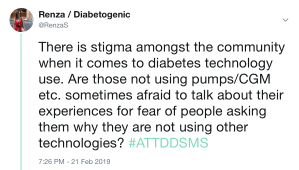
The idea that anything that we are using today is ‘yesterday’s technology’ is wrong. Blood glucose monitoring can’t be ‘yesterday’s tech’ if it is what most people are using to track their glucose. And syringes and pens can’t be considered the ‘old way to deliver insulin’ when that is how the vast, vast majority of inulin-requiring people with diabetes get insulin into their bodies. Plus, every single one of us using a pump must be able to deliver insulin this way because machines break.
Somewhere in discussions about our treatment technologies, we seem to have forgotten that, actually, not everyone wants to be using the latest kit. And that is okay. There is a spectrum of diabetes technology, and as long as we are on it somewhere and managing our diabetes the way that works best for us, then elephant stamps all around!
There is clearly an over-representation of people at one end of that spectrum dominating on and off line conversations. Spend a couple of hours in a diabetes Facebook group and it would be a reasonable assumption that most people are wearing pumps and CGM. But that’s not true.
And it could appear that DIYAPS is the way to go for most people with T1D, when the fact is that numbers are relatively low. It’s hard to estimate exactly, but there may be somewhere between 2,000 and 3,000 worldwide how have ‘built their own pancreas’. That is just a drop in the type 1 diabetes ocean.
It’s fantastic for those of us interested in this technology to be able to (virtually) congregate and talk amongst ourselves. I learn so much from my peers in these groups – just as I have with all aspects of life with diabetes. The lived experience continues to trump any other way of learning about diabetes.
Of course, that doesn’t mean that we shouldn’t be talking about technology used by limited numbers. Of course we should. We want others to know about it so they can make an informed choice about whether it may be right for them. We want our HCPs to know about it and to support those of us using all sorts of technologies and treatments.
Where it becomes problematic is when there is the misconception that this is the norm. Or when those not using the newest technology feel that they are wilfully doing diabetes the ‘old way’. It’s unfair to think for a moment that those who are not using the tech ‘don’t care’ enough about themselves – especially when decisions are made based on a very good understanding of what is available and what they have decided works best for them.
So, back to my ‘Oh, I just use Loop’ comment. It was directed to someone far more technologically advanced than me; someone who runs all sorts of other programs alongside their DIYAPS. They generate lots of reports and make lots of changes and seem to have far more bells and whistles than I even knew were available.
I nodded as they told me all they were doing and then, when they asked me how I manage my diabetes, I answered that I just use Loop. I heard myself saying it and stopped and corrected myself. ‘I mean…I use Loop. It works for me. Perfectly.’
We don’t need to make excuses for doing diabetes our own way. If we truly have choice (which I know is not always the case), and we have made the choice based on what we believe to be the best possible treatment and technology for us at that moment, then surely that’s a great thing. We shouldn’t ever be made to feel less committed to our own health and wellbeing. That’s not how it works.
DISLCOSURE 2 (for ATTD 2019)
I was invited by Ascensia to co-chair the Diabetes Social Media Summit at ATTD (#ATTDDSMS). I did not receive any payment or in-kind support from them for accepting their invitation. I have co-written a piece for the blog, however this was not edited (apart from inevitable jet-lag-induced typos) and all words are those of mine and the piece’s co-author. You can read that piece here.
My head is firmly in the language space at the moment, thanks to a big piece of work I’m involved in. So, I’m sharing this post from last year. I remember being frustrated during a session at ATTD last year where a roomful of diabetes advocates were acknowledging how stigmatising and damaging language could be – and equally, how positive and positively powerful it could be, too. My frustration was because despite some pretty insightful tweets going out from people at the event I was in, the online discussion pivoted it all to being about the diabetic/people with diabetes debate (despite this NOT even being discussed in the session), and then how some people with diabetes don’t even care about the words used.
So, twelve months on from first publishing this post, some people do occasionally call me Blossom. I’m okay with that. It’s my decision. And as a person with diabetes I get to decide how I talk about diabetes, just as every other person with diabetes can. I’m pretty sure that’s been my personal opinion about diabetes language matters for more than decade now: it’s our diabetes. We get to talk about it however we want.
These days, it’s impossible to be at a diabetes conference and not have at least one conversation somewhere about language. Sometimes there are sessions dedicated to the topic on the program, but that wasn’t the case at ATTD a couple of weeks ago – a conference solely devoted to advancements in diabetes technology and treatments.
But despite there not being a session about language, it was still a hot topic. My eagle eye was trained when walking through the exhibition centre for examples where diabetes is misrepresented or the language used stigmatises people living with the condition. And in sessions, I immediately heard terms that suggested that we are misbehaving because the results of treatments aren’t living up to their promise. (A new one: I heard the statement ‘People with diabetes on <therapy> were not performing as expected’ which now makes me think that we are being trained, watched and judged by pageant mums/moms.)
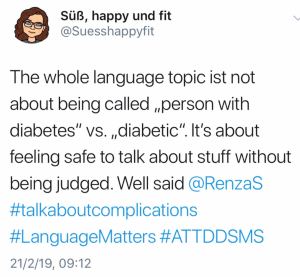
At the Ascensia Diabetes Social Media Summit (more on that another day), there was a discussion about language and diabetes-related complications. This event was a follow on from the one we had at the Australia Diabetes Social Media Summit, and took the initial conversations and expanded it with a new group of PWDs.
Once again, as the discussion unfolded, it was clear to see that the PWD in the room all had experiences where the language they were faced with had impacted negatively and positively. One person commented that early on in their diagnosis, a health professional had addressed diabetes-related complications by saying ‘If you are diagnosed with a diabetes-related complication it will not have been your fault.’ What an empowering way to begin the discussion about complications, care and risk reduction!
I’ve been talking about language for a number of years. Some may call me a one trick pony and, honestly, that’s fine. My appetite for the subject matter has not diminished one bit despite more than a decade of speaking and writing about why language is so important and holds such power.
Language is not a one dimensional issue. Additionally it does not necessarily have a ‘right way’ to do it – especially when looking at it from the perspective of the person living with diabetes. The work I have been involved in has never been about policing the words used by people with diabetes, but rather how words used by others affect us.
It’s why the piece Grumps and I wrote for BMJ was important – it targeted healthcare professionals, explaining to them why the words and language used around diabetes-related complications needs to not make us feel hopeless. Because that is what can happen and when we feel that way, it is all too easy for diabetes to seem just too big and too hard and too much.
I have frequently written about how diabetes can become so overwhelming, that it can leave us unable to attend to even the most basic and mundane of diabetes management tasks. I myself have been paralysed by the detail and demands of this health condition. I understand that there are times when a conversation about language is not possible, because, quite frankly, there is a lot more to deal with. I know that there have been moments when even though I can hear judgement and blame in the words being directed at me, all I want to do is find a way out of what feels like a hole. I’ve heard others say that they have felt harshly treated by HCPs, but simply didn’t have the capacity to try to deal with that because there were other things higher up on the list.
And I am sure that there are people who simply wouldn’t even know where to begin if the words and language being directed at them were disempowering and negative.
But that is exactly why language matters. It is for the people in those situations – for me when I was in that situation – that we need to get the way we communicate about diabetes right.
I am so sick of people trying to delegitimise the language discussion, or, even worse, reduce it to something that is insignificant. It frustrates me when the discussion returns again and again and again to the diabetic/PWD debate. As I said at the Ascenisa event at ATTD when we were discussing the annoying way some try to redirect meaningful discussion back to this single issue: ‘You can call me Blossom for all I care, language is about far more than this.’
And I think that while it is critical that we acknowledge that sometimes the language issue isn’t going to be a priority for some (by choice or otherwise), it seems unfair – and a little counter-intuitive – to diminish its importance, or criticise those of us trying to keep it on the agenda and actually do something about it.
(Click for original tweet)
DISLCOSURE
I attended the 2019 ATTD conference in Berlin. My airfare and part of my accommodation was covered by DOCLab (I attended an advisory group meeting for DOCLab), and other nights’ accommodation was covered by Roche Global (I attended the Roche Blogger MeetUp). While my travel and accommodation costs have been covered, my words remain all my own and I have not been asked by DOCLab or Roche Global to write about my attendance at their events or any other aspect of the conference.
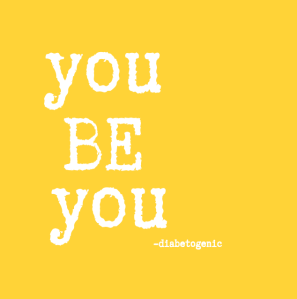
I wrote a post a while ago called ‘You Do You’, (and revisited and expanded on it here). It’s where I wrote about how everyone should have the freedom to do diabetes whichever way they see fit. I’m pro-choice in all aspects of life*, especially when it comes to PWD choosing their own management tools.
And I think that people with diabetes should have the choice to BE the people we need to be. And the people we are. I touched on this on my post on Monday when I spoke about how I felt intimidated online because my opinions and thoughts, and the way I addressed issues, were not everyone’s cup of tea. I felt that I was being called out for being myself. And that wasn’t okay.
No two people with diabetes are the same; no two people with diabetes will have precisely the same management ideas and preferences, and no two people with diabetes will react and respond to situations in exactly the same way.
THAT IS OKAY.
Diabetes is messy, frustrating, weird, annoying, amusing (rarely, but sometimes), scary, boring and a whole lot of other adjectives. And how we react and respond to it is our own business and no one else’s. You BE you, because you have the right to do that.
You have the right to be as loud or as quiet as you want.
You have the right to be as bitter and angry as you need to be in the moment.
You have the right to celebrate and be joyful about your diabetes.
You have the right to call out things that upset you just as much as you have the right to commend the things that make you satisfied.
You have the right to step away from groups, situations, people who upset you.
You have the right to disagree with others. Having an opposing view does not mean that you are attacking another person.
You have the right to have an opinion on what you see in the world of diabetes – even if it is happening on the other side of the world. I was incredulous when it was suggested that I shouldn’t question something happening in a healthcare system of which we are not a part. (I may not use the healthcare system in the US or the UK or Italy or anywhere other than Australia, but I am allowed to comment on what I see being done in those places.)
You have the right to be passionate and not be told that is a character flaw.
You have the right to be emotional because diabetes is real in a way that only makes sense to those of us who are living with it or have a loved one living with it. I don’t know how to take the emotion out of this, so you bet I will be emotional at times. I don’t get to clock off at the end of the work day and not think about it.
You have the right to use the words and language that works for you when talking about your own diabetes and if anyone tells you that #LanguageMatters is actually preventing PWD from doing that, tell them to fuck right off. It’s not. It never was. It never will be, and anyone who says it is has missed the point of the whole movement.
You have the right to use the word ‘fuck’ or whatever else you want to use. Profanity helps some people and we shouldn’t be told to wash out our mouths if others don’t like us using those words. (Sorry, dad.)
You have the right to be the sort of advocate you want to be. Or to not be an advocate.
You have the right to share your experiences – even the ones that don’t shine a particularly positive light on health systems or HCPs. No one – NO ONE – should silence us when we turn to our peers to seek support, or talk about what is going on in our diabetes lives.
You have the freedom to talk about your own diabetes, especially in the diabetes online community which we created for this very reason – to be able to share our experiences, learn from each other, support our peers and build each other up.
So, this? This is me being me. This is me standing up and not going quietly. This is me saying that I will be the person with diabetes I need to be, because it’s the only way I can be true to myself and true to my community.
*Except vaccinations. I don’t believe in choice there.
Each year, as we stop, look back and take stock, the reason that we are feeling so tired becomes apparent. This year is no different for me; my work travel calendar was the most intense it has ever been, with nine long haul trips, some for only a day or two. Combined with regular domestic travel, I can truly say that I have seen the inside of airports far too much. I stopped adding up the trips I did once I passed 100 walks down airbridges to board planes because it was making me weepy.
But on top of the usual exhaustion this year, there seems to be an extra element of fatigue that goes beyond what I’ve experienced before.
But first, let’s talk highlights, because there have been many of them.
The year kicked off with Spare A Rose and whoa, did we start the year with a bang! With the true philosophy of SaR at the forefront (an initiative for the community, by the community), we not only reached our rather audacious target, we smashed it! A cheeky and opportunistic little extra push saw a smiling Grumpy Pumper unleashed to the whole world for just a moment The DOC didn’t break, but the final tally of for the campaign meant that 939 kids in under-resourced countries would be receiving insulin for a year. Amazing!
My favourite issue, #LanguageMatters, only went from strength to strength, and the publication of this piece in BMJ, followed by this podcast, was a brilliant way to get it outside of the diabetes echo chamber. The importance of language featured on the programs of major conferences such as ADA and #IDF2019 with stellar panels speaking about why it really does matter.
My diabetes turned 21 and tied up in all the emotion of that, my pancreas’ performance review didn’t go all that well. Maybe next year? (Unlikely.)
Possibly the most exciting, heart-warming, rewarding and humbling thing I did this year was co-facilitate a workshop in Manila with some of the most dynamic, compassionate and enthusiastic young diabetes advocates I have ever met. I’m thrilled have had a chance to catch up with a couple of the people from this meeting and can see the wonderful work they are doing in more than trying circumstances.
Peer support was never far away. One of my favourite digital campaigns came from Diabetes Australia (remember – I work there so consider my bias) with our The Lowdown campaign. What a brilliant way to showcase how a digital campaign can reach and connect people from all over the world, and encourage them to safely speak about a topic that doesn’t seem to get anywhere enough coverage. I spoke about the campaign’s success in a number of places this year.
My own personal peer support experiences happened all around the globe at conferences, advisory board meetings and other opportunities to see friends and colleagues with diabetes. These moments ground me and help me make sense of what I am seeing and hearing, and are critical for keeping me balanced.
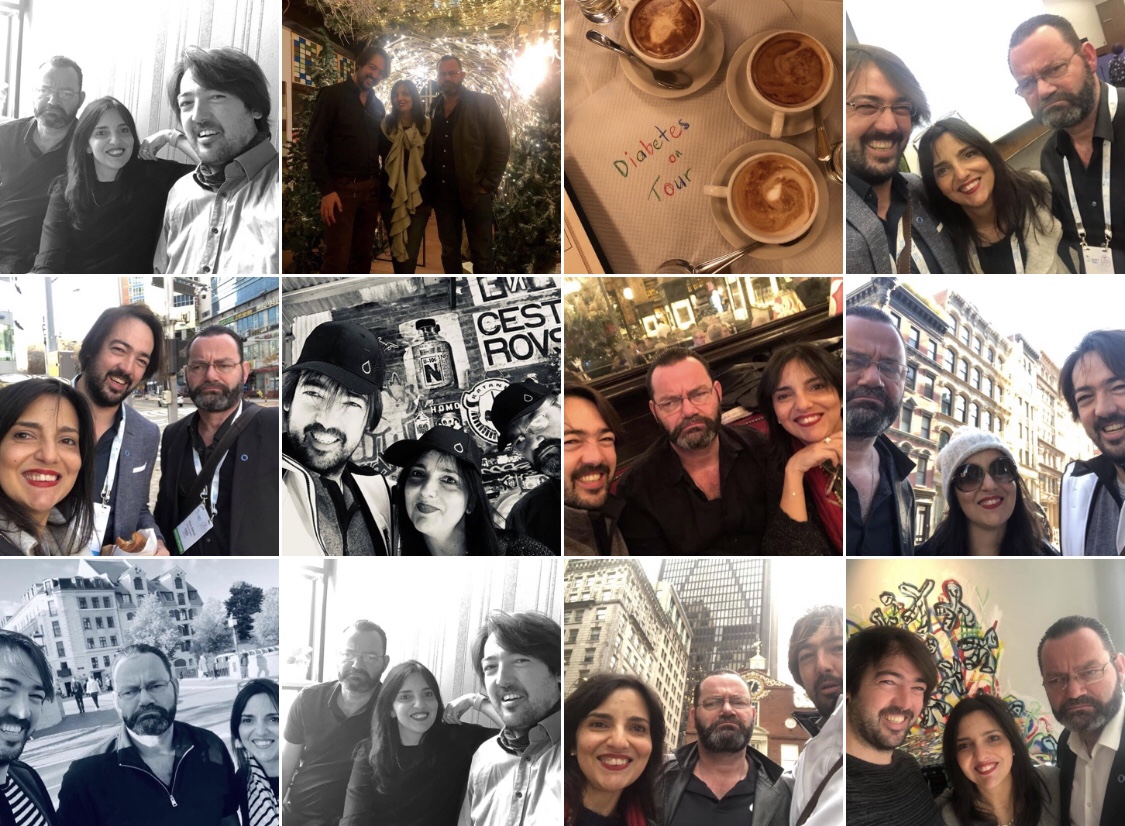
A special shout out to these two peers and dear, dear friends: Bastian and Grumps. We saw each other an inordinate number of times this year, literally all over the globe, travelling on planes, trains and automobiles for our #DiabetesOnTour. I do think we should launch a calendar of the 2020 pics. (Admittedly, we may be the only ones remotely interested in that idea.) When I talk about my diabetes tribe, it’s friends like these two. We’ve celebrated through some pretty amazing things this year, stood up to elevate the lived experience over and over, and also counselled each other through the tough bits. We’ve held post-mortems of long days, sitting in hotel foyers and bars, trying to make sense of what has happened, working out how to always improve, and plotting and planning more and more and more. I am so grateful to them for being the scaffolding holding me up when I’m away from home and feeling overwhelmed.
So, now the reason for that elevated exhaustion…
When I first wrote about advocacy burnout back in January this year, I had no idea at the time that it would set the scene for a difficult and sometimes troubling theme for the year. I get tired and overcome at times throughout the year, but 2019 was different and I’m not really sure why.
There were moments this year where I did honestly wonder how much more energy I have to stand up over and over again to a lot of what I was seeing. I don’t like using war and battle analogies in diabetes, but I did feel that I was fighting a lot of the time. Diabetes advocacy is a tough gig to begin with. Adding burnout on top of it makes it seem shattering.
Being attacked by HCPs for daring to voice my thoughts and challenge their behaviour, or getting it from certain, more confrontational parts of the diabetes community, or having industry reps tell me I don’t know what I’m talking about for daring to suggest that maybe their lame attempts to simulate diabetes in gameshow-style gimmicks at conferences could be better directed at actually engaging and listening to PWD all added up.
Or perhaps it was the repeated examples of ‘diabetes for laughs’…and realising that we are a long way away from HCPs truly being allies in our daily encounters with stigma.
Or perhaps it was feeling that we needed to justify just how important the #LanguageMatters movement, and the decade of work we’ve done really is. I can’t even begin to tell you how upsetting this little incident was.
It added up and several times I’ve felt overcome. I feel like that today. Which is disappointing because on measure, the highlights, the positives and the amazing community should overshadow the negative encounters.
And that is why I’m taking a break from Diabetogenic. I need some time away from feeling as though I want to analyse what is going on and comment on it. I have a wonderful holiday planned with my gorgeous family where we will see friends and wander wintery streets, rugged up in pompom hats. And then, will warm up once back in Australia to finish recharging my seriously diminished batteries, ready for a new year that’s already shaping up to be so, so busy.
Until then, I hope you have a wonderful holiday season, celebrating however you see fit. Thanks for popping by. And I’ll see you in 2020, clapping my hands and raring to go!
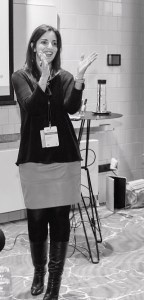
My first endocrinologist was a really nice man. He was very kind in the way that he acknowledged that I was dealing with something quite scary – a new diagnosis of type 1 diabetes.
I remember he was nice. In fact, when people asked me what my new doctor was like, it is highly likely that I actually used that word to describe him.
What I remember more was the way that he told me about diabetes-related complications, and the way that he told me that if I didn’t look after myself, and follow his instructions to the letter, that I would get those complications. If I was a good girl and did as I was told, I would be right. If I didn’t, every one of those terrifying, horrible, distressing complications would occur and it would be my fault.
Now, he didn’t say this in an ‘un-nice’ way; he wasn’t mean, he wasn’t cruel, he didn’t yell. He was saying it as if it was an absolute, and I quickly came to understand that being compliant was what was expected, and that there was a good and bad way to behave in diabetes, and that resulted in good and bad numbers. If I did what he said, I was good; if I didn’t, I was bad. And if I was bad, terrible things would happen and I would have no one to blame but myself.
That was twenty-one and a half years ago, and I can still hear those words in my head. The language he used set me on a course of not coping with my diagnosis and feeling intense fear about my future – a fear that sometimes paralysed me into inaction.
This week, there has been discussion on Twitter about what the #LanguageMatters movement is all about. It started with this tweet from a diabetes consultant in the UK, which suggests that it is ‘..mostly about being nice…’.
Eight years ago, when Diabetes Australia launched the first language position statement, the response from many was that this was not an important issue and that perhaps we should put our efforts into other things; things that matter. This was seen as a little bit of fluff that was a waste of time. It’s political correctness gone mad, was the reaction from many.
We’ve become smarter at showing the evidence to support just how destructive words and language can be. We hear stories from people who explain how damaging language resulted in them not seeking help when needed, and how the fear of being blamed kept them away from their healthcare team. We can show that diabetes gets fewer research dollars; that it’s harder to get people to put their hands in their pockets to donate to a diabetes charity, and that the general community does not understand just how serious diabetes is.
The timing of things is interesting, and it seems that last night someone on the TV show The Great British Bake Off referred to a dish as ‘diabetes on a plate’. The host’s reference to the sugary confection in that way wasn’t about him not being nice. It was about him using a phrase that has been thrown around by many for years, because it is accepted that diabetes is something to make fun of.
Now sure, the way people responded to this incident could be termed as nice and not nice. Nice would be ‘Please don’t refer to my health condition like that’; not nice would be ‘Don’t be an arse’. Obviously, I lean towards the latter. (Also, not especially nice is using an example like this to explain the different types of diabetes, because it is not relevant to the discussion and only adds stigma to type 2 diabetes. Don’t do that!)
As I read the tweets responding to this tired ‘joke’ from people in the diabetes community, what I saw was not people urging the TV host to be nice. It was for him to understand the seriousness of diabetes, to stop shaming people with diabetes, to not fuel the misconception that sugar causes diabetes, to not make diabetes a punchline.
People make diabetes ‘jokes’ because the words and language used around diabetes for years has given them permission to do so. And with that, attitudes were formed and the construct that diabetes is self-inflicted and free game for comedians and TV hosts became accepted.
And that’s where we are now and what we have to undo.
Perhaps part of the problem is that we don’t have an ‘ist’ or ‘ism’ word that we can attach to the language matters movement. We understand that when we challenge racist or sexist conduct, we are not asking people to simply ‘be nice’. We are trying to make a culture shift away from such damaging attitudes and to change behaviours. When I call out a bloke for making a sexist comment, I’m asking him to reconsider the way he thinks about women, change his behaviour and be respectful. I’m not asking him to ‘be nice’. I’m asking him to stop being sexist.
When someone makes a comment about someone based on the colour of their skin or the country they were born, we don’t dismiss it as them not being nice. We (rightly) expect them to stop that rhetoric because it is wrong and no acceptable.
So, I’m making up a word (and I hate made up words…). If you use words and language that judges, shames, blames, and stigmatises people with diabetes, you are being diabetesist. Diabetesism is not okay and should not be tolerated, and we need to challenge people behaving in that way. Perfectly nice people could still be diabetesist; their attitudes are long-held and seemingly socially acceptable. It’s what they have heard all their lives. We need them to stop doing that.
Here’s the thing: I don’t actually consider myself as being a particularly nice person a lot of the time. Nice people are agreeable, and don’t challenge others or their ideas; they accept them. They don’t call people out on Twitter. They’re not the person who rocks the boat. I am the boat rocker, and I do that because I believe that there are institutional, systematic problems that need to be changed in diabetes and diabetes care, and one of those is the way that the language used around diabetes.
So, back to where this all began and this tweet. I agree that berating HCPs is not the way to get the message through. #LanguageMatters is not only looking at HCPs attitudes and behaviours, anyway. My strongest criticism has been aimed squarely at the media and industry. I also believe that it works best when all stakeholders are involved.
But while I accept that there are different approaches, I don’t accept – and really don’t appreciate – that all the work, the research, the education and the efforts about this issue can be distilled into the concept of good manners and niceness.
I also believe in taking a harder line. That doesn’t mean haranguing or being aggressive. But it does mean understanding that there is a (real or perceived) power imbalance in healthcare, and those with influence should be held to account when it comes to the way they speak to and about people with diabetes. It means calling out HCPs and researchers when they stand up at conferences use language that hurts us by reinforcing wrong attitudes; correcting the media when they get it wrong, and calling out industry when their marketing teams misfire.
And I also believe that this is personal. Living with diabetes is not a bit of ‘fun stuff’ or something that we chose to do. It is incredibly personal for me and every single person with diabetes who has been made to feel not enough, or blamed or shamed, or judged or mocked due to beliefs about diabetes – beliefs that have been formed and accepted over time because of the language and attitudes about our health condition. The concepts of non-compliance, of good and bad numbers, of ‘bringing this on myself’, of ‘diabetes on a plate’, of grading A1cs have all been thrown at me, and affected me in ways, varying from feeling a little annoyed right through to deciding diabetes care was an exercise in futility so I was simply not going to bother anymore.
That is why #LanguageMatters and I would ask – and urge – everyone working in this space to listen to those of us living with diabetes, hear us. And sit down and learn. Sure, we can all be nice, because being nice is a good thing to aim for (and I promise that I will endeavour to do better there, too), but accept that language matters much, much, much more than that.

Once or twice in the years I’ve been working in the diabetes advocacy space, I have spoken and written about diabetes and language. And by once or twice, I mean rarely a day goes by when I don’t hashtag language matters somewhere on some social network.
You can call me a one trick pony (or Blossom), but I don’t mind, because I think that trick is pretty bloody important, and for the last eight years, I have been more than happy to highlight why the words we use when speaking about diabetes is critically important.
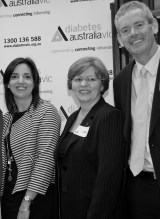
The first time I spoke about this was at the launch of the Diabetes Australia position statement, ‘A New Language for Diabetes’. I stood on stage at the Victoria State Library alongside Diabetes Australia CEO, Greg Johnson and ACBRD Director, Jane Speight as we started what has become a movement, supported by the diabetes community around the world. This was in September 2011 and this photo is from that day.
Now, eight years later, it’s time to revise the statement the started the #LanguageMatters juggernaut, and that’s where you come in.
Diabetes Australia is inviting people living with diabetes, their friends and families and HCPs to complete a survey about to have their say about the words and language used when speaking and writing about diabetes. This is your chance to share what is important to you, what really matters and what doesn’t really bother you at all. We know that the way we communicate about diabetes does matter, but we need your help to shape our revised survey.
Click on the word cloud below to be taken to the survey, and please share in all your networks. We need to hear from you to help build the evidence for why this continues to be a critical issue in diabetes care and communications. Please help us do that!

DISCLOSURE
I work for Diabetes Australia and am on the working group reviewing the Language Position Statement. I was also involved in the development of the initial statement. I have not been asked by Diabetes Australia to share details of the survey which will be used to inform the revision, but of course I am, because how could I not?!
Two things happened that got me excited on the 6 train when I was in New York back in June.
Firstly:

Obviously, every green circle in the world ever is a tribute to Loop. That’s my story and I’m sticking to it, and I refuse to be told otherwise.
And secondly:

Click on pic to be taken to the campaign where you can clearly see this and other images.
I absolutely love this from NYC Department of Health and Mental Hygiene. The campaign is called ‘Choose the Best Words’ and encourages people to speak with their friends and family, and learn how to support those who need it. Ads like this one also highlight a recent city-funded mental health first aid training course that is offered in all five NYC boroughs. The ads, which were all over the subway and other places in the city, point out that using the right words and phrases to support those living with mental illness is really important and can help reduce associated stigma.
I guess this kind of follows on from yesterday’s post. I know that often people say things just because they feel the need to fill a silence…or just to say something, not realising the impact of the specific words they say. But it does matter. The choice of words you make really, really matters. And this beautifully simple campaign shows that.
Sometimes, something happens at a diabetes conference that I need to sit on for a while before I can write or talk about it. At ADA this year (almost six weeks ago now), there was a moment that has stuck with me and I think it’s time to talk about it.
I was sitting in the front row of the language session – because, of course I was – eager to hear from the all-star panel that was going to be looking at the language issues from the perspective of the PWD and HCP, as well as look at the role HCPs play in addressing diabetes stigma and how they can improve communication. I loved the well-rounded approach the session was taking, and settled in for a couple of hours of discussion.
The line-up was a veritable A-list of the best voices in the space. We had ‘Jane squared’, with Dickinson and Speight book-ending the program, Joe Solowiejczyk giving the consumer side and Kevin Joiner providing strategies for dismantling stigma.
Jane Dickinson has been an absolute champion of the diabetes #LanguageMatters movement in the US. And it was in her introductory session that the moment of today’s post happened. Jane was speaking about how HCPs see diabetes and people living with the condition. And she showed this slide:

I can’t remember if Jane read out the quotes. But I do remember how I felt as I read them and took in what they meant. I felt beaten.
As people living with diabetes, so many of us have firsthand experience of hearing these sorts of comments directed to us. Or we have had friends with diabetes tell us their tales. Or we have heard passing comments from HCPs expressing similar sentiments. The idea that we don’t care, have brought it all on ourselves, deserve what we have coming – and conversely, don’t deserve care – us pervasive through the diabetes landscape.
This is how diabetes and those of us are living with it are perceived. And it is heartbreaking.
There is no consistency as to who is making these comments – healthcare professionals from all different disciplines, at different stages of their careers, with different experiences. Some work in tax-funded settings, others in private settings. They are considered the best in their field, they are held up as examples of excellent care. Other HCPs refer PWD to them.
Often, I hear people say that these attitudes are really only ever the thoughts of ’old school’ HCPs who have been around for a long time; it’s a throwback to the patriarchal attitudes of healthcare – to days when doctor or nurse knows best and ‘patient’ does what they are told, and if they don’t, they get told off, while being written off as not caring for themselves.
But that assessment is actually not true at all. Some of the most sensitive and tuned-in HCPs I know have been working in diabetes for many, many years.
And some are yet to have even started their career. In exactly the same way that diabetes doesn’t discriminate, it seems that these horrid attitudes and stigmatising comments can come from people at every stage of their career.
Here is the whole slide.

That’s right. These comments came from future nurses. They hadn’t even set foot on the wards yet as qualified HCPs. But somehow, their perceptions of people with diabetes were already negative, and so full of bias. Already, they have a seed planted that is going to grow into a huge tree of blaming and shaming. And the people they are trusted to help will be made to feel at fault and as though they deserve whatever comes their way.
This – THIS – is why I am not stopping banging on about language and diabetes. THIS is why I get frustrated when someone responds to – and reduces – a discussion about this issue with ‘But I/my kid is happy to be called (a) diabetic’. THIS is why I constantly highlight when people or organisations or people in the media are using stigmatising or negative language.
The words we use shape the attitudes we have, and the attitudes held by many about diabetes are disgraceful. Imagine if instead of mindsets like this, HCPs came out of their training with the idea that people with diabetes need support, education, information, compassion and skills to best manage a condition that no one, but no one, ever asked for Just think about how different – and better – that could be.
The ADA session ended perfectly – with Jane Speight (my personal diabetes #LanguageMatters hero) playing the Mytonomy ‘Changing the Conversation’ video. So, here’s that video again. Watch it. Share it.





 Diabetogenic