You are currently browsing the category archive for the ‘Health’ category.
National Diabetes Week is an important week for people living with diabetes in Australia. It is an opportunity to have all types of diabetes given attention and focus in the media and to talk about the significant health issue it is – for people living with diabetes, their families, and health systems.
And sometimes, messed up in the campaigns and the social media onslaught, we get sidelined by arguments and heated discussions, and we start to forget one of the real reasons this week is important: how diabetes affects those of us actually living with the condition.
Today, I helped launch a new report. The Diabetes MILES Youth survey was conducted last year and the results have now been published. The survey aimed to examine the impact of diabetes on young people living with diabetes and their families.
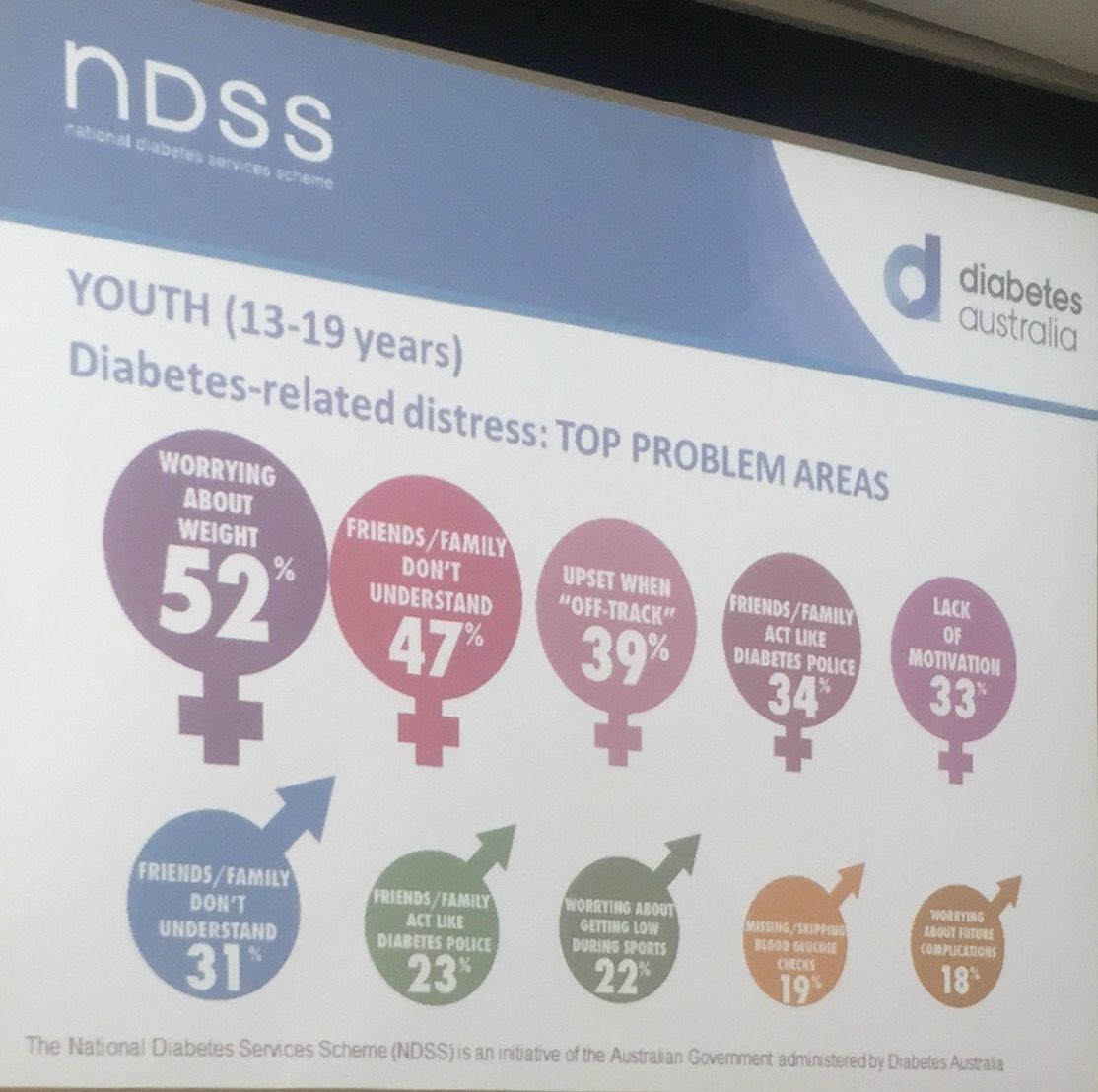
The report (which can be found here) shows that a quarter of young people living with type 1 diabetes experience moderate to severe depressive or anxiety symptoms. This image shows the top problem areas for girls and boys.
Today’s launch was incredibly powerful. Of course, we heard the statistics and heard how significant the problem is (a third of parents of children with diabetes reported impaired emotional well-being). And we heard about why this sort of work is important. But for me, and I suspect most people in attendance this morning, the most powerful moments were when we heard from Ryan Lange and Freya Wickenden, two young people living with diabetes. Both spoke beautifully about the role diabetes plays in their lives. Freya’s mum, Dallas, also spoke and shared some insights into parenting a child with diabetes.
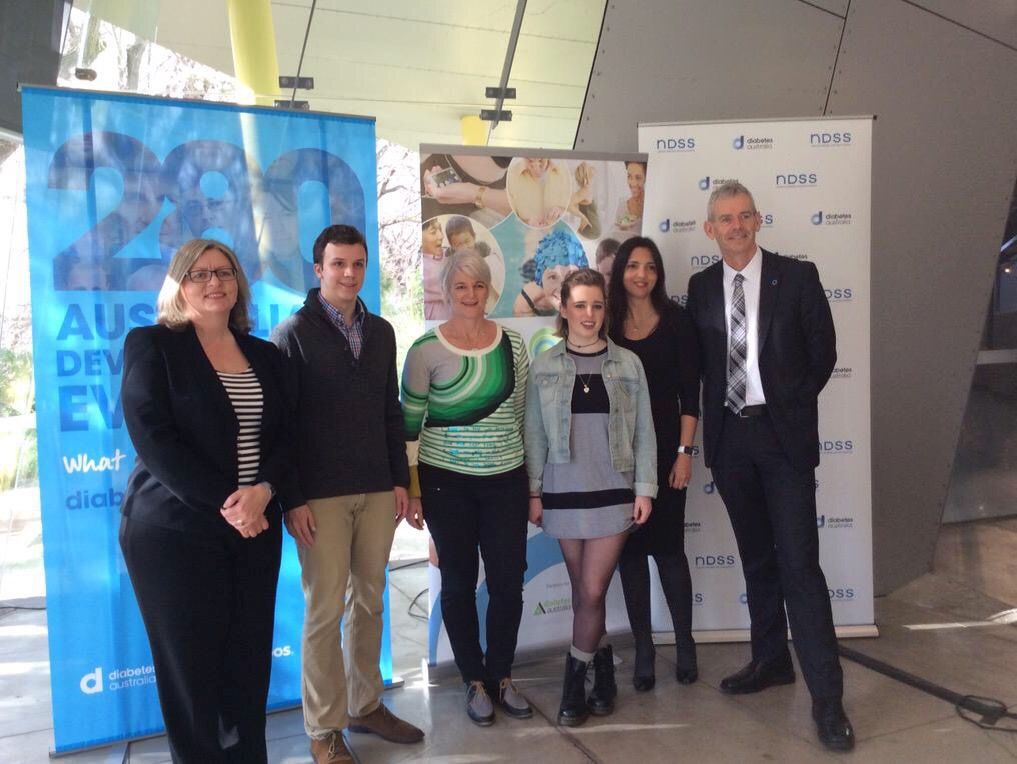
As I said in my presentation at the launch – I can speak about this for hours and hours. I am a passionate advocate for all people with diabetes, but the vulnerability we see so often in young people with diabetes has meant that this has become a focus area of my work. But my words are insignificant and unimportant. It’s the words from young people living with diabetes that are central to understand what they are facing. Here is just some of what they told us.
The Diabetes MILES Youth report – was funded by the National Diabetes Services Scheme, and initiative of the Australian Government administered by Diabetes Australia. The study was conducted in collaboration with Australia Centre for Behavioural Research in Diabetes. The Diabetes MILES Youth project is part of the Young People with Diabetes National Diabetes Program for which I am Program Manager.
Tomorrow, I am flying to Boston to attend the American Diabetes Association 75th Scientific Sessions. (Play along from home by following #2015ADA!)
There will be a strong consumer (reminder to self – use ‘patient’) contingent, which is always terrific. I get to catch up with old friends from the DOC and hear what they have been up to. I learn about new consumer patient-led advocacy efforts that manage to cut through in a way that only people living with diabetes can. I am reminded that conferences ARE the place for people living with the health condition that is being spoken about at that conference.
I attend conferences with my eyes wide open and leave with great excitement. I see new technologies yet to be released here, or still in development. I hear from people on trials of new drugs and devices. And I see the potential and possibilities for making diabetes easier, more streamlined, more user-focused and feel inspired and hopeful. This is good.
But, I am approaching this conference with a slightly different attitude. With some of the recently announced changes to diabetes supplies in Australia (as I wrote about here and here), I really want to speak with some of my US DOC friends about what it means to be reliant on a health system that limits choice. We have never really had that to date.
Whilst we may not have access to every pump or meter on the market, the consumables for the devices that are here have been available to all. Distribution has been overseen by Diabetes Australia (please read the disclaimer in this post!!) – an organisation representing people with diabetes, not big business or shareholders.
Last night, I attended a dinner at Parliament House in Canberra for the Parliamentary Friends of Diabetes Group. It was a grand occasion, attended by many influential politicians. Health Minister, Sussan Ley made this comment:

This is, indeed a noble pursuit.
Diabetes Australia President, Judi Moylan stated:

I would ask that in amidst all of those politically-charged reviews, reports and cost-cutting measures that seem to be the focus of diabetes in Australia at the moment, the human aspect is identified. It is hard to find amongst all the facts and figures.
But it is absolutely critical for our leaders to consider if they want to do best by people living with diabetes. Extraordinary leaders would search for it, find it – and make sure they listen to it. And remember that those extraordinary leaders include people living with diabetes.
I got to Saturday evening and felt like I needed to collapse! I was more than a little diabetes-ed out. The end of last week and the beginning of the weekend were huge – attendance at a health professional event on Friday, the Diabetes Expo on Saturday and, of course, the gift that keeps on giving, the television thing on Thursday.
When diabetes is so front-and-centre, it is really tough to think clearly and about all the information that has been shoved into my itty-bitty mind. Stopping and searching around for some things I have learnt and taken away can be difficult. Which is why Twitter is good!
Here is what I learnt over the last few days.
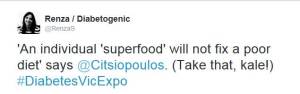
People want information about diabetes. There is still so much misinformation out there that people living with diabetes sometimes have a hard time cutting through the noise and working out what is valuable info and what is made-up-psuedo-science-crap-from-some-idiot-trying-to-sell-you-magic-beans-to-cureall. So it’s good to have sensible people saying sensible things! (Hashtag – Evidence)

 And I also learnt that diabetes is still seen and considered by too many as a clinical condition and there is not enough attention given to the emotional impacts of living with it.
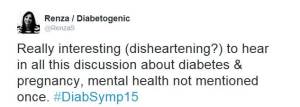
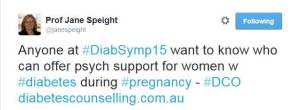
Thankfully though, I was reminded that there are people out there who can help with this!
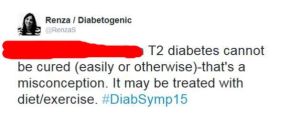
I learnt that Twitter trolls will latch onto hashtags that are getting some attention and try to infiltrate it with their nonsense. These trolls should be ignored. Except, of course, I didn’t. (However, I will not share your Twitter handle here!)
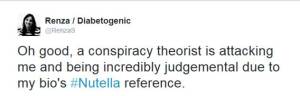
And these nutters will try to discredit you by challenging your Nutella addiction. Fools!
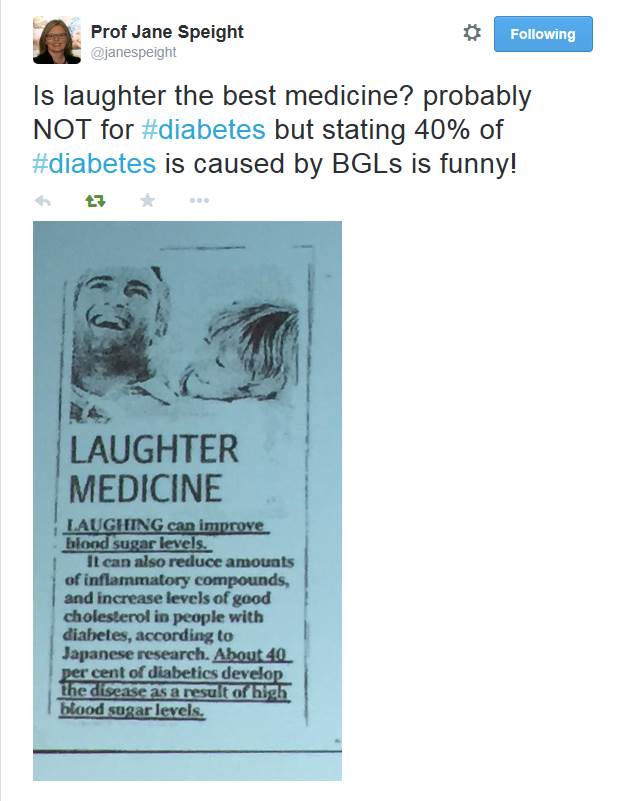
I was reminded why the Herald Sun is not the place to go for credible diabetes information.
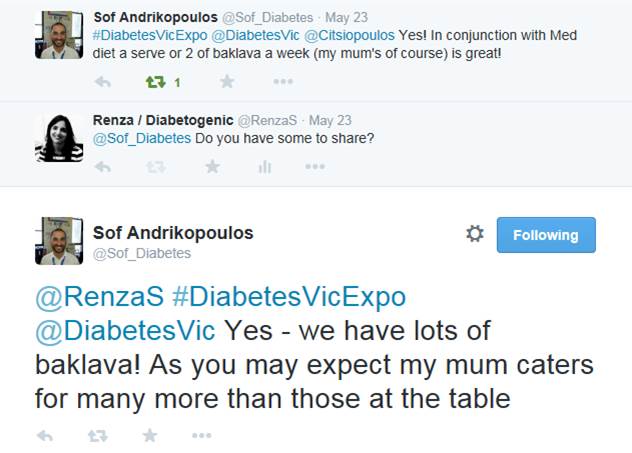
And promised baklava from one of Australia’s leading researchers in diabetes. Thanks Sof!
I learnt that it’s surprising who watches morning magazine television shows. Like the uber-cool waiter at Marios who announced loudly as we walked into the café yesterday, ‘I saw you on TV’!
I remembered that people walk away from these sorts of events feeling positive and rejuvenated and connected. Which makes them worth it in a million different kinds of ways.
And I learnt that after a hugely successful few days of work activities that hanging out with my family, listening to Carol King and drinking coffee in my favourite café and then watching the Eurovision song contest final will make me feel energised and ready to face the new week.
Hello Monday!
I know it’s not Friday, so here is something for your MONDAY listening pleasure!
Earlier this week, The Conversation ran a great article about the value of GPs providing nutrition education and information.
It’s a discussion worth having. For many people, their main HCP contact is a GP, so in the broader scheme of things, having GPs able to provide general health and wellbeing information (which includes nutrition information) is a sound idea.
Whilst most people I know with type 1 diabetes have a network of diabetes healthcare professionals – often including a dietitian – this isn’t the case for everyone. And for many people with type 2 diabetes their GP is the only HCP they see about their diabetes.
This discussion, however, is far broader than people with diabetes. Information about how to eat well and make food choices to enhance our health is a great idea and would be great if it were available to all.
But for this to work, we need to have confidence that our HCPs are equipped with up-to-date and sound information. As well as being across evidence-based nutrition guidelines, they need to be able to respond to queries about fad diets and ‘teatoxes’. (It’s a thing. Really.)
I can still remember the first dietitian I saw. It was within days of my diabetes diagnosis and it wasn’t a good experience at all. In fact, I walked out and vowed never to see another dietitian because, in the hour-long consultation, all I could envision was angst and stress about food thanks to diabetes. I didn’t want that at all. I certainly didn’t want the healthy way I looked at food to be compromised by someone who was extolling the idea of ‘bad foods’ and ‘good foods’, and expecting me to live with a diet that included the same things every single day.
So I never went back and spent the first three years with diabetes muddling along as best I could, adapting what I needed to and trying to keep enjoying food the way I always had.
When I started to consider using a pump, I decided to find another dietitian – one more in line with my attitudes to food. I didn’t have an understanding of carb counting (that wasn’t explained to me because it wasn’t the nutrition ‘in-thing’ in April 1998). Once again, I was disappointed to discover that the restrictive and dictatorial advice she was delivering wasn’t in line with my food philosophy which, I thought then (and still do now) to be quite sensible.
These two experiences have somewhat clouded my opinion of dietitians, despite having met with some amazingly balanced and well-informed dietitians since – including one I saw a few times who was just brilliant and never made me feel guilty because I like Nutella, but really am not a fan of lentils.
Nutrition advice needs to be about a lot more than what the best choices look like for breakfast foods.
There needs to be some acknowledgement of people’s relationship to food – how we view food in our overall life; where it fits in our family; if we enjoy preparing and knowing about food or if we just care about food as fuel; if we have any issues with certain foods. Plus there needs to be the ability to address the different levels of knowledge people have (and want to have) when it comes to food. Not everyone wants to prepare food from scratch, make fresh pasta each week or mill their own flour. And that’s perfectly okay.
And there needs to be openness about the choices – a willingness to understand that some people may want to try something slightly (or very!) outside the guidelines. For example, the low carb movement at the moment is of great interest to a lot of people with insulin-requiring diabetes. I have heard some people say that when they have raised this as a discussion point with their HCP, the topic has been dismissed as irresponsible, not in line with the recommended guidelines and not something people with diabetes should be considering.
And yet, many people with diabetes do manage to eat a lower-than-recommended carb diet and are far happier with the results they see – whether those results be numbers on a meter or how they feel.
With the huge array of food and nutrition and health advice available to people now – frequently by people less than qualified to be providing it – having a respected healthcare professional help cut through definitely, in theory, sounds like a valuable plan.
But because of the very nature of discussions about food, whoever is charged with providing information and assistance – whether that be a GP or a dietitian, or any other HCP – needs to check their judgement at the door, be well informed, sensitive, and open to ensuring that the person they are working with is comfortable with the discussion and feels open to choice.
I remember the first time I ever heard Cassandra Wilson. I was blown away by her beautiful voice and have loved her ever since. She has a gorgeous new album – a tribute to Billie Holiday – which we’ve been listening to this week. But today’s Friday song is from the first album of hers that I listened to, New Moon Daughter. This is Solomon Sang.
Today, I (literally) rolled up my sleeves and put my money where my mouth is.
It’s fluvax day at work and with most of my colleagues, I lined up to get a free lollypop. And my annual flu vaccination. With all my banging on about how important it is for us to be vaccinated, it would be pretty hypocritical of me to not get my flu jab each year.
Here’s how it played out:
Step 1 – look of great suspicion from me because no one but no one can give a needle like I can.

Step 2– Squeeeeeze! And waiting for the sting.

Step 3 – Here. Let me help you! (AKA – I’m really not good at letting other people jab me with needles.)

Step 4 – I’ll take it from here.

Step 5 – Nope – didn’t hurt.

Step 6 – Worth it!

Okay, so here’s the deal. People living with chronic health conditions – such as diabetes – are more susceptible to catching (and experiencing complications from) the flu. The flu is not a little sniffle that has you deciding to take the day off so you can sit on the couch, eat left over Easter eggs and binge-watch Netflix. The flu is terribly debilitating. Approximately 3,000 Australians die every year because of the seasonal flu, or complications due to the flu or pneumonia. Yes – it’s serious.
This terrific information sheet offers lots of information about the flu, and this year’s vaccination program. It’s been developed by the Australian Government’s Department of Health, so if you are an anti-vax twit, now is your time to start talking about conspiracy theories and how the Government is in the pocket of Big Pharma. (Please do it away from me. I’m not interested.)
Also useful is this piece that appeared last month on The Conversation.
The flu is incredibly contagious and spreads easily through infected droplets in the air and by hands. Vaccination is the best way to prevent and stop the spread of the flu. I don’t know about you, but I do as much as I can to live a healthy life. Getting my annual flu vax is a really simple, relatively painless and safe way to help me on my way.





 Diabetogenic