
You are currently browsing the category archive for the ‘Family’ category.
Eighteen months ago, we’d never even heard of American Girl. In fact, it was a completely blank look I gave one of my friends when she told me that we had to take the kidlet to AG when we were visiting the US in the middle of last year.
‘What is it?’ I asked
‘Only the best doll shop in the world.’ My friend had bought her daughter – a friend of our daughter – an AG doll when she was in NYC the year before.
And so it started. Walking the streets of NYC, out of the corner of my eye, I caught the red awning and overall ‘pinkness’ of the three-story American Girl emporium in Midtown Manhattan. My husband saw it too and despite our best efforts to distract our daughter and guide her line of vision away from the store, she noticed it. And started jumping up and down.
‘American Girl! American Girl!’ she squealed. ‘We HAVE to go in.’ And without waiting for us to agree, she stormed through the doors. ‘Oh-Em-Gee,’ she announced. I cringed.
We walked the three floors of the store in delight (the kiddo) and terror (her parents). I started calculating currency conversions in my head and worked out that if we bought only one doll and one outfit we could probably keep both our cars and only get one second mortgage on the house.
Of course, there was not only one outfit. Because there were also accessories, books, shoes, jewellery and a matching outfit for the kid. (Thankfully, there were no ‘But I want a pony!’ demands from our child, unlike the kid near us who was throwing a tantrum and cursing her mother as the ‘WORST MOM IN THE WORLD I CAN’T HAVE A PONY. NOW’ (Possibly, her name was Veruca Salt.)
Our daughter picked out a doll that had long, dark-brown hair, dark eyes and no fringe. She named her Iris. ‘I want her because she looks like me,’ said the kidlet. And she was right; she kind of did. We walked all around New York with Iris, and people in the street would comment that they looked alike. Our daughter smiled proudly.
We retuned to Australia with Iris and her wardrobe of outfits and accessories, and she became the favourite toy – and has remained that way.
When we decided on a return trip to NYC, the kidlet spent all her planning time working out how many times we would visit AG. She saved her birthday money and worked out what she would buy and announced to everyone that the reason we were going to New York was to go to American Girl. (Please know, that is NOT the truth. The reason we are here is to visit Doughnut Plant. Of course.)
So, we arrived last Wednesday and on Thursday, we walked through the revolving door, the kidlet squealing again.
This time, knowing what to expect, I spent the time really looking at all the dolls and the accessories. I actually quite like the back-stories to some of the dolls – it’s an interesting and fun way to introduce kids to different periods of history.
We looked at the accessories and outfits. And there, amongst the dance, soccer and karate uniforms, roller-skates, doll-sized musical instruments, equestrian gear, camping equipment and skis, I noticed a wheelchair, crutches, a hearing aid and seeing glasses.
American Girl dolls come in every hair colour and style, they have different colour eyes, some have freckles, and they have different skin tones. Most girls can find an AG doll that looks just like them, and the boys can find a look-alike Bitty Baby.
Dolls can be customised to look and BE just like the kid who it belongs to. And that’s kind of cool.
‘I wish there was an American Girl insulin pump and CGM. Then I would buy one.’ I said. And you know what? I totally would.
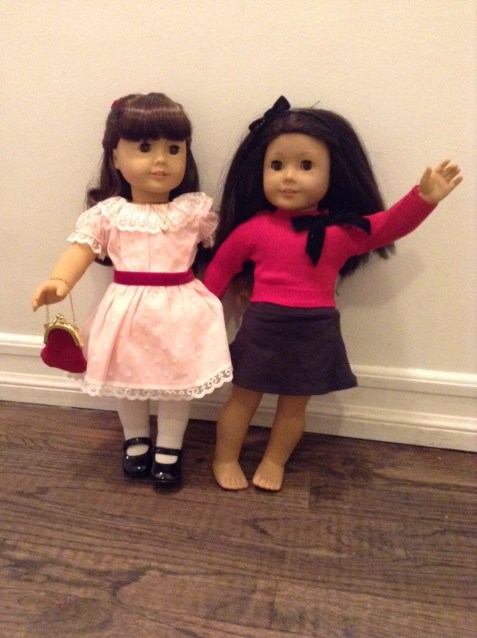
Samantha (on the left) and Iris.
There is much about me that is odd. And much of this oddness can be explained by knowing that I am an Australian-born-and-bred-Italian.
It has taken me some time to understand this, possibly because I spent the first 30 years of my life trying to deny my ‘Italian-ness’, or at least minimise it. Take one look at me, remember that my name is Renza and see me around a plate of spaghetti and you will understand how futile this was.
I am so Italian that there is espresso running through my veins. I talk with my hands and get ridiculously passionate when talking about food. My dream car is a vintage FIAT 500 and I own a Vespa. The ‘Italian-ness’ is somewhat overwhelming.
Italians have a weird way of dealing with physical illness. Actually, before this descends into some sort of cultural stereotyping, I should say the Italians I’ve been around have a weird way of dealing with physical illness.
Often, it is worn as a badge of honour. A conversation between two of ‘my people’ may sound like this:
‘Oh, you have a cold? I have pneumonia.’
‘Oh, you have pneumonia? I have pleurisy and bacterial pneumonia.’
‘Oh, you have pleurisy and bacterial pneumonia? I have Ebola. I am practically dead. Get me a hearse.’
You get the picture.
I grew up spending a lot of time with my extended family. My cousins were like close friends. I saw my grandparents pretty much every single week and aunts and uncles were a very present part of my life. I didn’t realise it at the time, but I was incredibly lucky to have been exposed to this. I took it for granted – actually, I thought that everyone had this sort of connection with their extended familia.
No one in my family has really had any significant health conditions. Well, my mother has lived with lupus for a long time, but her approach to having a chronic health condition is the same as mine – acknowledge it’s a shit and get on with life. She’s been a spectacular role model, really. But apart from mum and me, the rest of us are relatively unscathed by nasty health conditions.
My grandparents who always seemed old to me – even though they would have been quite young when I was little – were pretty healthy. It really wasn’t until they were elderly – and getting towards the end of their lives – that they were unwell.
But despite this, there was always talk about being sick, because they traded in the currency of illness. They constantly spoke about how unwell people were, and the closer the person to them, the higher the value. They could – and would – trade on close family members being sick. So when I was diagnosed with type 1 diabetes, I became a pretty valuable commodity!
‘Oh, your niece has asthma. That’s terrible. My grand-daughter has diabetes – the one where she has to stick needles into her skin. I win. Pass me the grappa.’
I have always been uncomfortable with using illness as a way to get one up on someone, or to use it as an excuse. Equally, I hated the constant talk of people being unwell or in hospital. One night, not long after I was diagnosed, I was at my grandparents’ sitting around a table laden with food, having our weekly family dinner. We were good naturedly laughing at each other and commenting on how much one of my cousins eats. And poking fun of my aunt’s driving abilities. And my sister and I were yelling at anyone making sexists comments.
Typically, the talk eventually turned to a distant cousin/the butcher/next door neighbour/family member in the old country who was unwell.
I’d had enough. I put down my cutlery.
‘I’ve had enough!’ I said (probably waving my hands around). ‘Until I hear of someone actually being close to death – as in actually dead, as announced by a qualified medical practitioner – enough of the sick talk. Enough! I have type 1 diabetes – I win! No one gets to be sicker than me unless they are actually a corpse. Got it?’
I suspect someone translated for my grandmother. Everyone else just looked at me like I was mad.
I reached over and grabbed another cotoletta and kept eating. The subject was changed. We went back to gently joking and laughing at each other – most likely, my sister, cousins and I were making fun of my dad for being short.
The sick talk was a lot less after that. I won. And yet, somehow, I really, really didn’t.

In Roma with my dream car.
I was driving to pick up my daughter from school last Friday afternoon, and could feel the pressure of the previous week lifting. World Diabetes Day was all but over. There was, of course, the matter of a 24 hour tweetathon organised by the clever Cherise from DCAF, but that would be fun and interactive. The official things were over. Done and dusted for another year.
The thought of picking up the kidlet and chatting about her day, and things we had planned for the weekend made me smile. I’d been distracted with the craziness of the week and we’d not had our usual long, meandering conversations. I was looking forward to hearing what she’d been up to and NOT talking about WDD.
She ran out of her classroom to greet me, a big smile on her face, her bag hanging from her back and her latest book in her arms. And off she went filling me in on the day she’d had.
After telling me who she’d played with and what she had done in PE and reminding me that on Monday her Italian Choir was rehearsing for an upcoming concert at a neighbouring school and that she would really like to go cherry picking soon and how Sooty would like a run in the park, she said, ‘I told Mr D that it was World Diabetes Day today. I wrote it up on the board at the beginning of the day.’
I looked at her, surprised at the direction her stream of consciousness conversation had just taken.
‘What’s that, darling?’ I asked.
‘This morning. When I got to school. I told Mr D that it was World Diabetes Day and he said I could write it up on the board. Then we had a discussion about it.’
‘Really? What did you talk about?’
‘Mr D wanted to know if there was anyone who knew someone with diabetes. Of course, I said I did. And so did A.’ She was referring to my beautiful neighbour Jo’s gorgeous boy who is in the same class. ‘And S – her grandmother has diabetes. Type 2 diabetes. She checks her blood sugar like you do.’
‘I was surprised that Mr D knows so much about diabetes. But then he said that one of his friends has type 1 – that’s why he knows about it. We spoke about the different sorts of diabetes. A and I were saying that type 1 is because the body stops making insulin. And we talked about pumps. Hey mum – can we go get iced chocolates for afternoon tea?’
Subject changed, we headed to our local café, sat outside and enjoyed the sunshine.
I looked across the table at my nine year old as she slurped at her iced chocolate. World Diabetes Day is about raising awareness of diabetes to people in the community. In her own little way, she had done that in her classroom. Just because she could. Just because mum has diabetes. I had a little advocate on my hands. And I couldn’t have been prouder.

The kidlet and her side kick.
Who do you write your blog for? The question came after one of my recent presentations about how healthcare professionals can use social media to connect people living with diabetes.
My flippant answer to that question is ‘Oh, me and my mum. And some weird guy in Romania who seems to be really interested in my life…..’
The easy question – which is also frequently asked of me is WHY I started a blog. The answer to that one is simple. I hoped it would help me connect with others sharing my story. Because every single time I told of one of my experiences at least one other person – and usually many more – said ‘oh, me too’.
It was exactly the same as when I heard others with diabetes speaking about their lives. I wanted to jump up and down and yell out to them that it was the same for me. (And if I’m being truthful, I actually did do that a couple of times!) These sorts of connections made me feel less alone.
I considered writing a blog an extension of a lot of the work I was already doing: being the ‘here’s-one-we-prepared-earlier’ case study at meetings and information sessions. This, however, would be writing it down. I did this while I was pregnant with our daughter – I kept a weekly online diary that was published on a diabetes site. It was therapeutic and reassuring for me. An ongoing blog would give me the chance to write about and examine my real life with diabetes, and hopefully connect and share with similar folk around the world.
People tell me they like the candid, raw and honest way I tell my story; they feel they can relate. I try to inject a little humour and sometimes that works, other times it falls flat. I have been told to tone things down (I had to stop telling my ‘I will hunt you and all your family down and hurt you all if you steal my pump’ story because my husband said that with my Italian heritage and (falsely) assumed mafia connections that people would get scared*).
I decided when I started writing my blog that there were certain things I would not write about. I would not share others’ stories and I would never, ever write about things told to me in confidence.
I occasionally write about my family and friends, but it is usually incidental to the real issue I’m writing about – sometimes it helps illustrate the experiences and give context.
But what you see is very much what you get. I am conscious that loved ones and people who actually know me and my family read this and sometimes that makes it difficult to write about the more challenging things I’m facing. I don’t want to worry people, but equally, I don’t want to sugar coat things either.
Everything I write, though, whether it is about a particular experience or my circumstances, it is all honest. Sometimes too honest. There have been times that I’ve written something and then the phone calls have started as friends and family check in with me to make sure I am okay.
So who do I write this blog for? I guess it’s actually the same reason as why I write this blog. Mostly – and selfishly – for myself. To connect and find support. And I’m really lucky, because that has been exactly what’s happened!
*I may have stopped telling the story, but that doesn’t make it any less true!
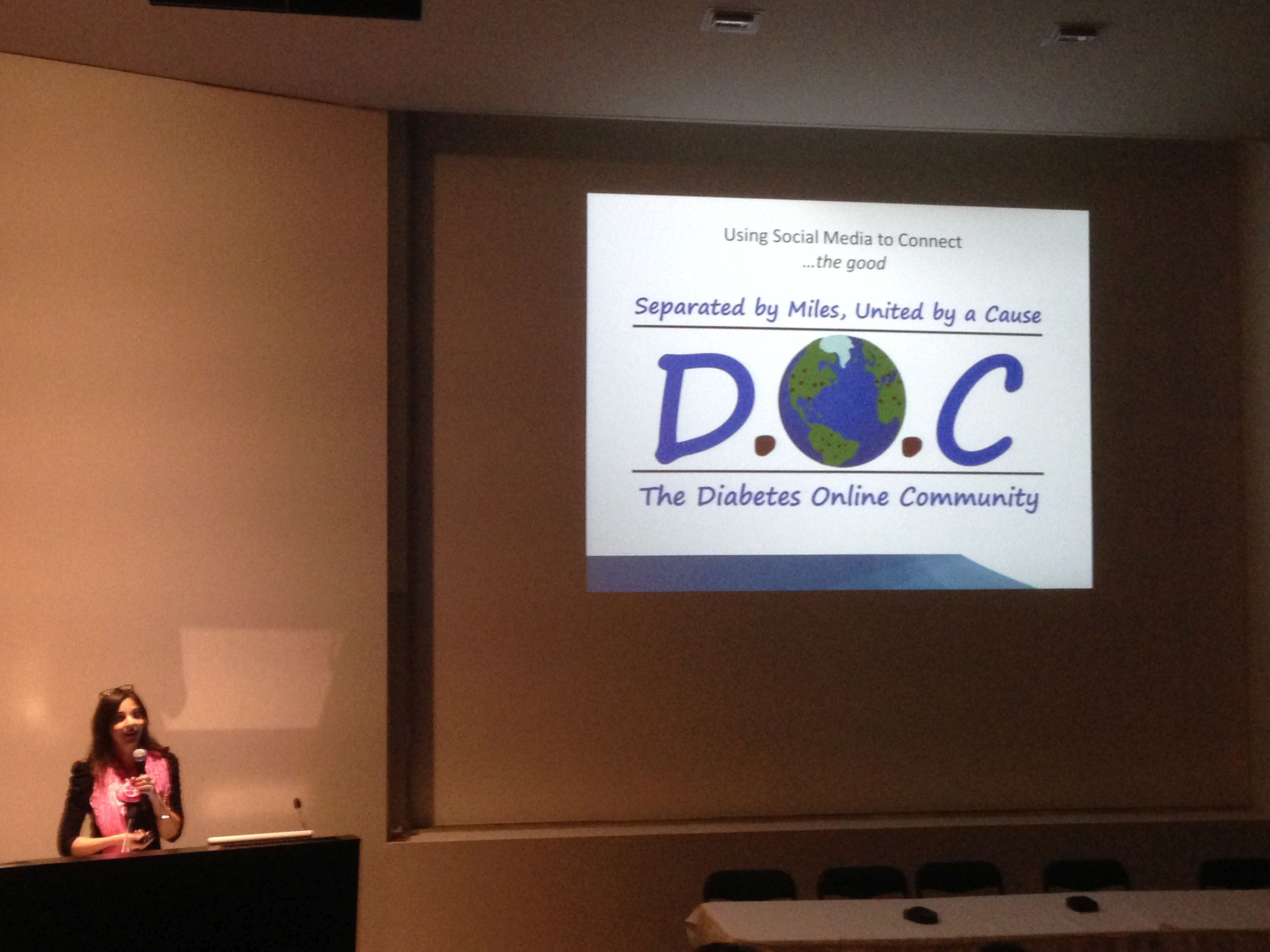
Presenting at yesterday at the Royal Melbourne Hospital’s Grand Rounds.
I’m Paris-dreaming at the moment. The gorgeous Belle du Berry and the rest of Paris Combo are providing the soundtrack. Happy Friday!
When you read about travelling and diabetes, you are told about the practicalities:
Pack twice as many diabetes supplies as you think you’ll need.
Carry a letter from your healthcare professional explaining you have diabetes to give to security personnel.
Don’t forget hypo food.
All of this is great advice and definitely things to consider when packing and planning a trip.
The theory of travelling and diabetes is different for every person and every trip. And every trip I learn something new – and not everything I learn is about diabetes!
Hotel cocktail hours are a great way to wind down from a busy day at a conference, read and respond to work emails and write a blog post of the day’s activities. Hotel cocktails are the work of the devil and their contents cannot be measured ensuring effed up BGLs for the remainder of the evening.
Don’t ever assume that people will know what an insulin pump is. We went through seven security checkpoints (Melbourne, Dubai (x2), Vienna, London (x2), and Amsterdam) and at all bar one I set off alarms and was given a pat down. Each time I asked the security attendant if they had seen an insulin pump before and apart from in Melbourne, the answer was no. (For the record, it was Amsterdam airport that didn’t cause any problems. Perhaps not surprisingly….?)
Don’t try to explain an insulin pump to said security guards who have never before seen such a device. Case in point:
DUBAI
Me: I am wearing a medical device here. It is shaped like a box. I can show it to you.
Security attendant (SA): Yes please.
Me: Here it is. It’s an insulin pump.
SA: Is it a pace-maker?
Me: No. An insulin pump. For diabetes.
SA: Oh – a pace maker. For your heart?
Me: No. It gives me insulin…medicine. For diabetes. Diabetes?
SA: Ah – you have a heart problem.
Me: …..Um. Okay. Yes. Yes.
SA: Thank you. All good. You can go.
The Natural Confectionary Company jelly snakes taste different in London to in Australia. No idea why; they just do.
Jet lag is cruel, evil and soul destroying. I say that as I write this not knowing what day it is; what country I am in, or how to spell my name.
Riding a bike around Amsterdam will cause hypos. Most people who have half a brain and have lived with diabetes for 16 years would know this and therefore make appropriate considerations to the quantity of insulin they give themselves. I am not one of those people.
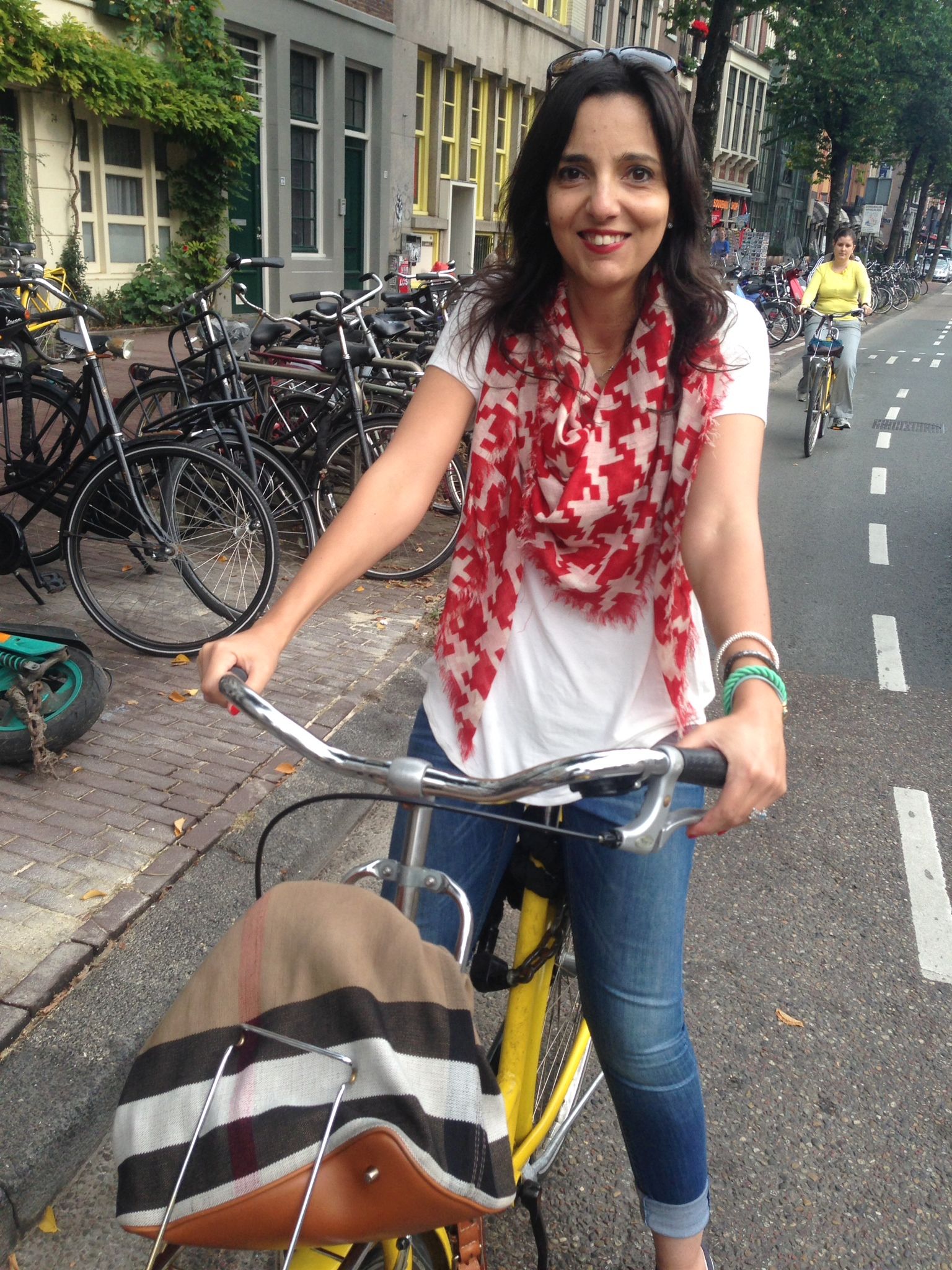
On yer bike.
Walking around cities will cause hypos. See above.
Eating Sacher torte for breakfast may not be nutritionally ideal, but it’s fun and delicious and a lovely way to start the day. And if you have it with whipped cream, you’re getting a serve of dairy. #PracticallyHealthFood #OkayThatWasALie
Being prepared for any contingency is a really good and smart and important idea. But it is a bloody pain to have to carry a whole suitcase (of carry-on luggage) with all the spares only to bring most of them home.
It’s possible that while I will tell everyone that seeing Klimt’s ‘The Kiss’, going to the Rijksmuseum, visiting The Anne Frank House and going to see ‘L’elisir D’amore’ at the Vienna Opera House were all amazing and incredibly culturally enriching, the thing that got me most excited was going on the Harry Potter Tour at Warner Bros. Studio and riding a broomstick.
Travelling is fun; attending conferences about diabetes is eye opening; visiting new places is a privilege; catching up with DOC friends in real life is magical. But. Missing our little girl hurts like nothing else, and being greeted by said little girl late at night as the cab pulled up in front of our house is the sweetest thing ever. Coming home? Nothing ever beats that. Not even riding a broomstick.
Community Service Announcement for those in Australia affected by daylight saving which kicked in yesterday making it even harder for me to have any clue what freaking day it is.
You are welcome!
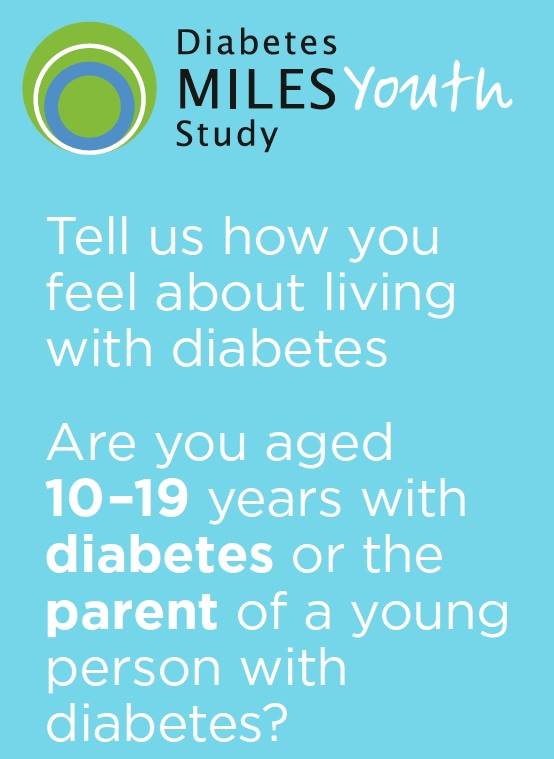
Diabetes MILES Youth
Are you the parent of a child (aged 10 – 19 years) with diabetes? Then we need YOU! And your child with diabetes too.
You may remember that a few years ago now, the Diabetes MILES survey was conducted. Diabetes MILES looked at the psychological health of people living with diabetes, and the survey results continue to be collated and presented.
Now, a new study – Diabetes MILES Youth – is being conducted asking young people about what it’s like to live with diabetes, and how diabetes affects their wellbeing.
And because we all know that diabetes is a ‘family sport’, parents of kids with diabetes are also being asked to complete the survey.
The survey is only open until the end of September, so please take the time (about thirty minutes) to respond. (I know that you would get involved anyway, but as an added incentive, there’s an iPad to be won!)
Diabetes MILES and now Diabetes MILES Youth will actually show just how diabetes affects our lives on a day-to-day basis. The more we can talk about the psychosocial side of diabetes – the more evidence there is to show that diabetes affects our wellbeing – the more that diabetes stops being just a numbers game. (Although, in this case the number of people completing the survey is important, so get clicking!)
DISCLAIMER
Diabetes MILES Youth is part of the NDSS-funded Young People with Diabetes National Development Project of which I am the Project Manager. I’m writing about it here because I think it’s really important for as many people as possible to take part in this survey and have their voice heard.
The survey is being conducted by the Australian Centre for Behavioural Research in Diabetes.
Today is #dblogcheck day. The idea is to ‘check in’ by commenting on any diabetes blogs you read today. The hope is that by commenting, you’ll be reminding people that they are not alone. I love this idea! Thanks to Christopher Snider (@iam_spartacus). Look for the #dblogcheck tag to find some #dblogs to read. You may find a new favourite!
I make dozens of diabetes choices every day. From what I will eat, to the dose of insulin I take, to how many times I’ll check my BGLs, these are all choices that I make. Sometimes they are made with careful consideration. Other times, I barely give them a second thought.
But regardless, I stand by these decisions and their consequences – good or bad. Generally, the outcomes impact me and me alone: too little insulin, a BGL of 20mmol/l means I guzzle water, rage bolus and feel like crap until I get back in range; too much insulin, a low that is usually managed with a juice or a handful of jelly beans. Most of time, I manage to ‘fix the damage’ and move on without involvement of anyone else.
But sometimes, that’s not how it pans out.
One of the burdens of diabetes is how it affects those around us. On the rare occasions I need assistance I experience incredible guilt afterwards. I know I shouldn’t, and I’m never made to feel guilty, but it is how I feel.
I have never heard anyone in my family complain or even comment on their role in my diabetes. I know that doesn’t mean that they don’t get pissed off by my AWOL beta cells (being woken up in the middle of the night and then having to get up to grab me a juice or put on some toast is, whilst a rare occurrence, certainly not fun for my husband), but I never hear complaining.
To date, my daughter’s involvement has been minimal. There have been a handful of times, perhaps, when I have asked her to grab me my lolly jar. For her, I suspect the biggest inconvenience is having to explain to her friends why said lolly jar is out of bounds for their grabby (grubby?) fingers, and the times where we’ve had to briefly postpone whatever we’re about to do as I wait for my BGLs to come up to a safer level.
Last year, when a friend needed to call an ambulance after a particularly nasty hypo, I worried for a long time (I still do!) about how she would feel about my diabetes. For a while, it felt that she was watching me very closely every time we went out to make sure that I wasn’t going to collapse on her again.
I can’t imagine how scary it would have been to have me suddenly pass out. She did such a sterling job of managing this situation (right down to warning the paramedic that I was going to be seriously annoyed when I ‘came to’ and start asking a million questions), and I couldn’t have asked for a more sensible or thoughtful person to have around for this. But still – I worry that it was a choice I made (or didn’t) that resulted in her having to take an active role in dealing with my diabetes. She didn’t sign up for that when she and I became friends back when we were teenagers.
While I try to make choices that yield results that impact me and me alone, I think a lot about how others feel about my diabetes. What I want those around me to know is that I’m sorry when they have to get involved. But also, I’m so grateful.
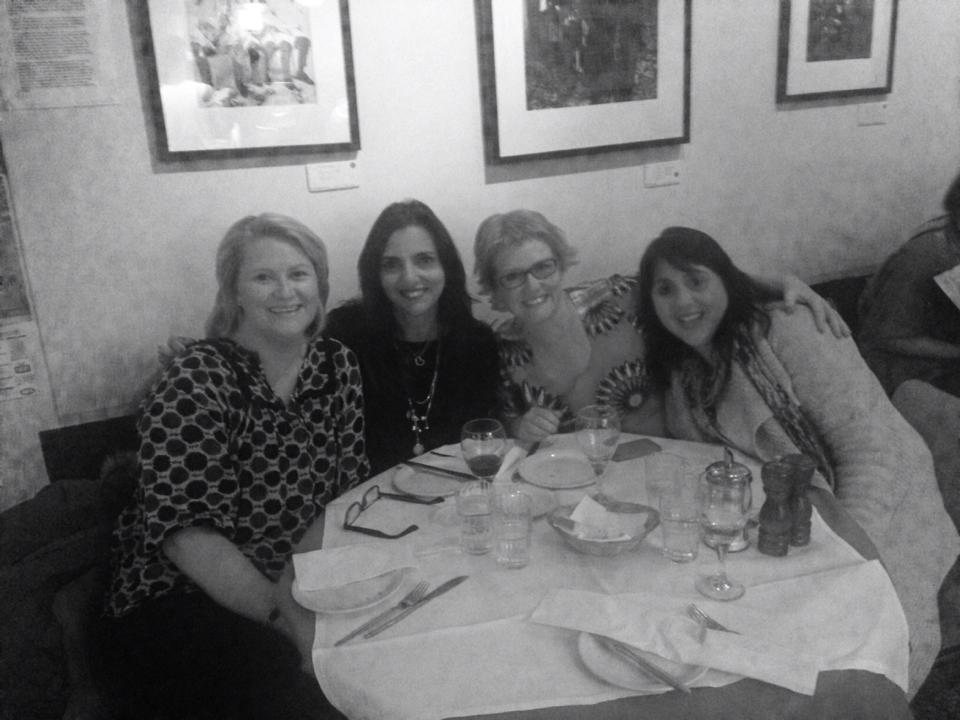
Last night was dinner with the ‘D girls’. These three women are some of my most treasured friends, and we have come together over the years because we have external pancreases. (Pancreata?)
They have been a part of my life for over ten years now. I met them all through my work (another reason to be grateful for this job!) but the reason that we’re friends reaches far beyond diabetes.
A night out with these lovely women generally involves much raucous laughter, a lot of inappropriate comments (we think the people at the next table left the restaurant because they were so disturbed by our conversation at one point) and plotting to fix all that is wrong with the world. We share photos of our gorgeous kids – all born around the same time – and talk about our families and friends and work.
Somewhere in there, we reach into our clothes and pull out insulin pumps, or reach into our bags for BGL meters. Talk of diabetes is scarce, but there may be an occasional comment or question. It certainly doesn’t dominate our conversation though.
As it turns out, some of my nearest and dearest friends do have diabetes. But that is not the reason for the friendship. Whilst it can be acknowledged as why we met in the first place, the reason for our enduring friendship is far more than beta cells that ran out on us. The reason I am friends with these three women is because they are smart, funny, beautiful and incredibly talented. I am honoured to call them friends. I love them to pieces and admire their strength, tenacity and protectiveness.
I see the way they deal with diabetes – the complete and utter ‘eff you’ attitude and acknowledgement that it sucks, but it won’t beat them – and know that I need to be surrounded by people like this.
The commonality that brought us together may be completely and utterly crap at times. But when we’re sitting at Marios catching up, laughing, supporting each other, talking a million miles a minute, we don’t care. Because really, it’s just four girls catching up.
It’s Friday; get your weekend started with some New Orleans funk. Here’s Trombone Shorty. (Swoon!)
‘You do eat, don’t you mum?’ My nine year old had wrapped her arms around my waist this morning as I was fastening a clip in her hair. She squeezed tight.
I kissed her head and stepped back. She looked so concerned.
A couple of years ago, a friend of the kidlet’s had developed some disordered eating behaviours. Using age-appropriate explanations, we discussed what this meant for her friend, what we had to do when we were spending time with this friend and what was being done to help her friend ‘feel better.’ More broadly, I briefly explained that some people do have ongoing issues with how they think their body looks and tried to describe how this wasn’t necessarily about the food that they were eating, but had to do with their feelings and how they felt they looked. Trying to give the ‘eating disorders 101’ talk to a then-six-year-old possibly made my head explode with sadness.
This was a difficult conversation to have because I’ve always been concerned about how we discuss food and weight and body image. When I think about it, this was probably the first time that we’d ever had a discussion about food as being anything other than ‘Gee – that’s yum!’
The relationship between food and diabetes is mentioned occasionally – but again, usually because I’m low and need something to help get my BGL up.
As I’ve mentioned before, I’ve lost a bit of weight in recent times. This was not part of a weight-loss strategy. I wasn’t eating differently, or cooking different foods. I am a hobby baker and throughout this time, our bench top housed Tupperware containers full of cakes and cookies and slices. And I talk a lot about Nutella. Food is something that is celebrated in our house. Nothing is forbidden. We just eat a lot of fresh, healthy stuff with a decent splattering of (mostly home-cooked) treats.
We eat out regularly, but never at fast food restaurants. Our local café (a two minute walk away) is an extension of our kitchen; their coffee machine is our coffee machine!
But it seems that even though I’ve not discussed my weight loss with our daughter, she has noticed. Perhaps she hasn’t noticed that I look different, but, when she hugs me, I certainly feel different; when she wraps her arms around my waist, she knows that they go a lot further than they used to.
Should I be concerned at her concern? Does she equate weight loss with there being a problem? Is she worried that I have developed some of the eating problems her little friend had?
I dealt with this morning’s question by reminding her that we eat together at least one meal each day – more on weekends and holidays. I reminded her of the other night when we were toasting marshmallows by the fire as we watched a movie together. I pointed to a recent trip to the country where we ate pizza and shared doughnuts. We talked about the pasta dish I’d made the night before and how we sat at the dinner table eating it.
‘Okay,’ she said. ‘You just feel skinny when I hug you, that’s all.’ And then she changed the subject. I cringed at the word ‘skinny’ just as I would have if she’d used the word ‘fat’.
But perhaps I was making too much of it. Perhaps she was just stating a fact. Maybe using the word skinny was just an adjective that seemed appropriate, just as fat would have been in a different case. Maybe there was no judgement call attached. Maybe. Or maybe not.
I’ve written before (here and here) about how the day we award Kellion Victory Medals to people who have lived with type 1 diabetes for 50, 60, 70 and even 75 years is my favourite work day of the entire calendar year.
Today was the first 2014 ceremony, and fifteen people were awarded medals, including three who received their seventy year medal.
The amazingness and brilliance and inspiration of these incredible people was captured in this one perfect tweet from Professor Jane Speight. I’ve nothing more to add:





 Diabetogenic