
You are currently browsing the category archive for the ‘DOC’ category.
Once or twice in the years I’ve been working in the diabetes advocacy space, I have spoken and written about diabetes and language. And by once or twice, I mean rarely a day goes by when I don’t hashtag language matters somewhere on some social network.
You can call me a one trick pony (or Blossom), but I don’t mind, because I think that trick is pretty bloody important, and for the last eight years, I have been more than happy to highlight why the words we use when speaking about diabetes is critically important.
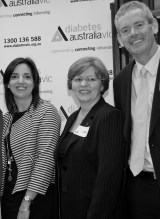
The first time I spoke about this was at the launch of the Diabetes Australia position statement, ‘A New Language for Diabetes’. I stood on stage at the Victoria State Library alongside Diabetes Australia CEO, Greg Johnson and ACBRD Director, Jane Speight as we started what has become a movement, supported by the diabetes community around the world. This was in September 2011 and this photo is from that day.
Now, eight years later, it’s time to revise the statement the started the #LanguageMatters juggernaut, and that’s where you come in.
Diabetes Australia is inviting people living with diabetes, their friends and families and HCPs to complete a survey about to have their say about the words and language used when speaking and writing about diabetes. This is your chance to share what is important to you, what really matters and what doesn’t really bother you at all. We know that the way we communicate about diabetes does matter, but we need your help to shape our revised survey.
Click on the word cloud below to be taken to the survey, and please share in all your networks. We need to hear from you to help build the evidence for why this continues to be a critical issue in diabetes care and communications. Please help us do that!

DISCLOSURE
I work for Diabetes Australia and am on the working group reviewing the Language Position Statement. I was also involved in the development of the initial statement. I have not been asked by Diabetes Australia to share details of the survey which will be used to inform the revision, but of course I am, because how could I not?!
Jeez, burnout sucks. And boy, was I feeling it last week. My blog post from last Friday accurately summed up the exhaustion, stress, feelings of defeat and the heaviness I was feeling as I flew back home. I didn’t even have the energy to yell ‘Bullshit!’ during the part of the safety video when the guy claims lies that there is great coffee to be had on the aircraft. That is just not true, Qantas.
Thanks to everyone who reached out – to everyone who Tweeted, Facebooked, Instagrammed, commented, texted and emailed. I did take a few days off SoMe, but when I logged back on, I read absolutely everything that was sent to me, and I am overwhelmed (but in a really good way) by everyone’s support.
I participated in yesterday’s #DSMA chat because the awesome Cherise thought that a community chat about advocacy burnout was a good idea, and as is Cherise’s way, she was right. I learnt a heap about how others manage the inevitable feelings of overwhelm that affect so many of us at one time or another.
I am incredibly fortunate to work in a place that truly values the lived experience. As I wrote in this piece after the Ascenisa #OzDSMS, my CEO has always not only valued my role in the organisations he has led, but has championed the importance of lived experience. I’m really glad he was able to speak to some of Australia’s most impressive advocates (all of whom he already knew) to continue to explain just how important the work they/we all are doing truly is. I held on to that for a lot of last week and over the weekend too.
But it was the support of those with diabetes that helped me dig deep to find the way out of the dark space; those who understand that special brand of burnout that we feel when not only has our own body done its best to undermine us, but others and circumstances around us pile on, making things just so damn hard.
There is an ever-increasing body of evidence that shows peer support is helpful to people living with health conditions. But there is so much more to why we become parts of these communities than to just improve our health and wellbeing, or to connect with others who ‘get it’.
In these communities, those advocacy efforts we are working on in our own little corners of the world become real and big. Heather Gabel wrote this awesome Twitter thread about frustrations I share with her about how we need to focus on the social change our communities create. I will always need the tea and sympathy, but I also need the connections with those world-changing folks whose drive, determination and dedication help me thrive.
I would be naïve to suggest for a moment that the devastating and crushing burnout I was feeling last week has disappeared. It’s still there, and I suspect it will be for some time, and I’m going to keep taking time out, and stepping back for a little bit longer. But I am far more motivated now, and the crappy things that culminated in feeling overwhelmed are starting to look like blips rather than insurmountable peaks. Thanks to everyone who helped me step back and refocus.
Last week, Instagram got rid of ‘likes’. The company line was that it wants people to concentrate on content shared, rather than its popularity. Sure, Instagram, let’s go with that.
For the platform that is preferred by ‘lifestyle influencers’ (seriously – can you imagine putting that on your arrivals card?) it all seems a little disingenuous, but if not knowing who is liking content speaks to you, then perhaps this is a good idea.
I have a love/hate relationship with Instagram. I have mine pretty locked down and only share with friends and family. I only follow people who make me feel good, or make me laugh. I don’t follow anyone who makes me feel like I am not enough. Or anyone who drinks kale juice for breakfast. These good folks can namaste themselves elsewhere.
If you are connected with me on there, you’ll know that what you see mostly is photos of my family, the coffee I’m about to drink, the cookies I have just baked, and, depending on the season, blossom trees (hello, promise of spring) or jacaranda trees (hello, promise of summer). Plus, there’s diabetes spam…so much diabetes spam.
You won’t see me telling you about my perfect diabetes life though, because my diabetes life is not perfect. And you won’t hear me going on about how grateful I am that diabetes has given me so much, because really, I’m not. And you won’t hear me saying that others have it worse and that I am #SoBlessed, because … well … because #FuckThat.
I wrote once that I despise the concept of ‘At least…’ or ‘It could be worse’. Could it worse? Of course it could! But having a body that does what it is meant to would be a shed-load better!
Positive affirmations are great if they give us hope or something to hold on to. They’re not great if they start to make us feel like we are failing, or feel bad for not always being optimistic and upbeat. Sometimes, diabetes makes it really hard to walk on the sunny side of the street.
I frequently say diabetes sucks (because honestly, I am yet to hear someone tell me how it doesn’t), or that there are days that I truly hate diabetes (because I really, really do). This doesn’t mean that I am looking for someone to throw me a pity party. It doesn’t mean that I think my life is hopeless.
But some days, diabetes is especially challenging, and no number of positive memes or positive self-talk is going to change that.
I am a positive person by nature – annoyingly so at times. I see the good in people and in situations. But I refuse to believe that it is not okay to sometimes admit that my arse has been beaten that day by the health condition that is so difficult to live with, or to privately and publicly say that I truly, honestly, totally, absolutely despise diabetes.
I need the space to have those down days and the bad days and the days where I admit that I am not a superhero. I need the time to snuggle under a quilt on the sofa and watch some trash and not feel all positive or like I can conquer the world.
It is easy to believe that a lot of Instagram diabetes folks are all happy and accepting or grateful to have diabetes. Truly – if they are and are able to maintain that positive attitude all the time, that is wonderful. I’m not those people. I don’t resent them in any way. I just believe it is important to understand that not everyone is able to have that sort of outlook.
Sometimes, it’s not possible to ‘positive’ your way out of a bad diabetes day or try to convince yourself that you don’t hate diabetes, but really do love your body when it feels just so damn broken. And that is okay.
Really – it is okay to not be okay. It is okay for us to not be shiny, happy people* all the time.
What I will say is this: If your hard days are outnumbering the good days, please do see if there is someone who can help. It truly is okay to feel down about diabetes, but when you are feeling that way all the time and it’s affecting your day-to-day life, there is help.
When I find that the scales are definitely tipping that direction, my first port of call is my friends with diabetes. They never make me feel crap for not being positive. They certainly don’t feed my misery, but they do remind me that this is hard and that it is perfectly understandable and acceptable to have negative days. And closer to home, my husband knows that I don’t need a pep talk, or to be told to snap out of it, or a reminder that life could be worse. He tells me that diabetes sucks while passing me some chocolate. Smart, smart man.
I have come to learn the signs of when I need more help than that, and have a great psychologist I can link in with when I need to. I can’t tell you how much this has helped me. One of the first things my psych said to me was that it was okay to grieve my old life, and to feel that diabetes sucked. Being given permission to feel down at times felt like being able to breathe again.
And here’s the rub: knowing I don’t have to be Ms Positivity all the time – and saying just how hard things can be sometimes – actually has made me far more positive in the long run.
*I was talking about this with my beautiful friend Georgie yesterday. She is one of the first people I turn to when I am having a shitty diabetes day and we spend a lot of time just talking about how hard it can be. Her advice is always spot on. Or there is no advice – just an ear and a shoulder and a coffee date. As we were chatting, I said the thing about it being okay to not be shiny, happy people all the time, when I realised (and told her) that REM reference was from before she was born. Oh, how we laughed and laughed. And then I felt old.
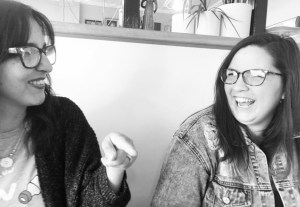
Right here, Georgie and I ARE being shiny, happy people.
Let’s imagine, just for a moment, that a television program or newspaper claimed that there was a cure or treatment for type 1 diabetes that you could brew in your kitchen with a few pantry items.
It’s not really all that hard to pretend that this scenario is real: almost every week there is something somewhere that claims to be a way to treat diabetes, and sometimes, this mythical treatment is for type 1 diabetes.
What happens when we see this? Well, usually, it starts with some low level ranty outrage from a first responder who caught the piece and feels that they need to share it with the diabetes world (hashtag – DOC).
Then, as it gains momentum, others get onboard, because we all love a little SoMe outrage. Inevitably, there will be some comments about how ‘This might work for type 2 diabetes, but I/my child has type 1 diabetes, and I/they did nothing to cause it and this is the serious type of diabetes so stop it now.’ (Because adding some ‘type wars’ to the discussion is always helpful.)
There will be blog posts written about it (possibly/probably by me) and someone will demand an audience with the reporter, so they stop perpetuating myths about type 1 diabetes.
Right?
The outrage can be exhausting, but I do get it. We don’t want people to simplify our condition, of have people thinking that there is an easy fix. We want people to understand that it is hard work to manage diabetes and that every time there is a claim that it can be easily treated, people move further away from what it is really like. We want people to know that, so we talk about it loudly and everywhere.
So, after watching the ridiculous claims from Medicine or Myth the other night, I turned to Twitter to see what people were saying about the idea that hemp kombucha was miracle cure or to hear the criticisms about the poor study design of the trial.
Was there a barrage of people questioning the idea that simply drinking 100ml of a fermented drink a day could possibly be all it is going to take to treat the incredibly complex health condition that is type 2 diabetes? Or tweet after tweet probing whether the ‘trial’ that decided that we’re on a winner with Kombucha would pass any sort of test? Was there a choir suggesting that this was really all a lot of hocus pocus and it was undermining just how serious type 2 diabetes is – and how hard it is to treat it?
There was now tweet from Jane Speight…

…and that was pretty much it. (It is a very fine tweet, and that #sciencefiction hashtag deserves accolades!)
And there was no one up in arms about the way the merry band of doctors was talking about type 2 diabetes in such sensationalist and stigmatising ways. If they had been talking about type 1 diabetes, our response would have been swift.
What we saw on this program this week is actually dangerous. We can’t dismiss it as yet another ridiculous claim from a nut like Pete Evans, or Sarah Wilson, or the latest footballer’s wife. We can’t attribute it to an Instagram wellness guru. Instead, we saw three qualified healthcare professionals – a neurosurgeon, a GP and an immunologist; healthcare professionals that people trust with medical advice.
And – showing some bias here – perhaps it would have been easier to dismiss and discredit the whole show if it was broadcast on a more traditional tabloid program such as A Current Affair. An SBS show, with three Australian practising HCPs? People will think this is legitimate.
The way Medicine or Myth whitewashed type 2 diabetes was a disgrace. And as diabetes advocates, we should be calling out this sort of garbage, the same way we would ludicrous claims about type 1 diabetes treatments.
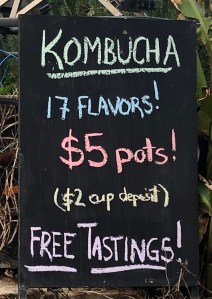
Totally unrelated, but I live in the most hipster street in the most hipster suburb of Melbourne and there is a place on my street that brews and sells seventeen different types of kombucha.
One thing that is somewhat of a consolation while dealing with jet lag, is that while I’m not sleeping in the middle of the night, Twitter is right there keeping me company! There is always someone from the DOC up and ready for a chat. And if I don’t feel like chatting (because honestly, at 3am when I’ve not had enough sleep, stringing words together is a challenge), there are always things to read.
And that is great.
Also great is when people jump on board to support each other, or cheer when others are involved in an exciting initiative. (Seeing people in the DOC welcome and embrace the amazing young advocates from the Philippines as they have launched their online activities is one such example.) There is comfort in the reliability of the way people respond in those situations.
But then there is frustration in the reliability of how people react and complain about being left out when it seems some folks in the DOC are doing something. It may be an event, a conference, or people just doing stuff like starting peer support campaigns. It could be people giving talks, writing pieces or coming together on advisory committees.
I wrote a whole thing about this at 3am. Words were strung together, and I started getting strung out, so I deleted it after wise counsel from a Twitter friend who reminded me that sometimes just writing stuff down is therapy enough. (Thank you to that wise person.)
She is right.
What is also right is that there is an Effin’ Birds moment for everything in life. Even when you don’t think there is and you put a call out, the nice folk at Effin’ Birds direct you and then deliver. And it’s perfect.

Spending time surrounded by diabetes can be overwhelming and that is never more so than at a conference like ADA. It is huge – there are thousands and thousands of people, an exhibition hall with stands from device and pharma companies that messages about diabetes that are all tied up in statistics and words (and not really about people), and for every talk that shares hope and promise, others that focus on despair.
But it’s easy to step away from that – even if just for a moment – and turn to a member of your tribe. Because then…
…not once did I feel despair.
…not once did anyone pass judgement about another’s diabetes.
…not once did anyone make me feel afraid.
…not once did anyone attribute blame or shame.
…not once was anyone expected to explain themselves.
…not once did I feel stigma.
…not once were the words spoken anything other than real and authentic.
…not once did someone ask another person about their glucose level or A1c.
…not once did someone suggest that anything to do with diabetes was someone’s fault.
…not once did I feel overwhelmed or overcome.
…not once did someone make me feel that I was not enough.
…not once did someone look at another PWD to suggest that they were failing.
…not once was fear used as a motivator.
…not once were we made to feel sorry for ourselves.
…not once did my life feel like it should be measured in nothing more than numbers.
…not once did we call each other inspirational for just living with diabetes.
…not once did anyone do anything other than cheer another’s efforts.
…not once did anyone overreact if they noticed another PWD was low.
…not one did I feel that I was a burden.
…not once did I feel that I had to be a superhero.
…not once did I feel alone.
…not once did anyone demand that their way of doing diabetes was the better way.
…not once was diabetes the overall focus.
There are times that diabetes does its best to make me feel a burden, or that I am simply not enough. But not once – not ever – when I am around people like this do I feel anything other than whole.

Find your tribe
Find your tribe…
More musings from ADA, this time following yesterday’s diabetes-related complications session.
DISCLOSURES
I am attending ADA as part of my role at Diabetes Australia. My economy flights and accommodation have been covered by the organisation.
Whoa – fast jet lag and iced coffee-fuelled talking….
DISCLOSURES
I am attending ADA as part of my role at Diabetes Australia. My economy flights and accommodation have been covered by the organisation.





 Diabetogenic
