
You are currently browsing the category archive for the ‘Diabetes’ category.
Until I was given insulin, I never fully understood how powerful drugs could be.
I had walked into the endocrinologist’s office carrying a bottle of water I needed to refill every 15 minutes which coincided with how frequently I needed to find a loo so I could pee. I could barely see – I was always squinting, trying to focus the constant blur through half-open eyes.
That evening, I was given my first insulin injection. And the following day, I learnt how to do it myself.
Within 24 hours, the thirst had gone as had the need to constantly ‘mark my territory’. My vision was already starting to return to normal. The lethargy that had crept over me for the previous week was lifting and I wasn’t falling asleep every time I sat down.
My body, which the day before had been slowly, painfully, dying, came back to life.
I was given a prescription for a couple of different sorts of insulin and got them filled at our local pharmacy. I was given a list of things to buy and I walked into Diabetes Australia and bought them. Both these purchases were heavily subsidised by our Government.
And over the last almost-seventeen years, every time I’ve needed insulin, or strips, or pump consumables or anything else to do with diabetes, it has been as simple as that – a phone call, a pop into a shop or even, a mail delivery.
This is what living with diabetes in a developed country looks like.
It’s not perfect; some people struggle to cover costs despite the subsidies, but insulin is available, consumables are available. And there is assistance to help people as much as possible.
Around there world, there are many places where this is not the case.
I have written about Spare a Rose, Save a Child many, many times over recent months, and I am doing it again today. Because we can do something to address the need for diabetes medicines and supplies in places where access is difficult – and sometimes almost non-existent.
We don’t need to feel guilty about having easy access to insulin and diabetes supplies – that’s not the aim of this campaign. All we are doing is acknowledging that there are places in the world where it is not as simple to access what is needed to manage diabetes, and that we can do something to help level the playing field.
Six dollars. One month. More if you can.
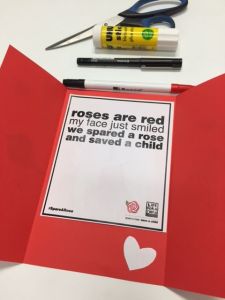
Getting my craft on!
Harry Connick Jr. and a Big Band. What more do you need for a Friday afternoon?
Without opening my eyes – without really waking up – I reached under the covers, searching. It wasn’t there.
I ran my hand ran across my abdomen. Right…over my bellybutton…left. There it was. I found what I was looking for. Or rather, I didn’t find it.
My eyes flew open and I sat up.
Where was my pump? It wasn’t attached to me. I felt the little knob of my infusion set, but the smooth disc that connects it to my pump was absent.
There was a dry feeling in my mouth and my head was fuzzy. I continued searching amongst the tangled bed sheets until I located my pump. It was lying on the very edge of the bed, almost falling off. I reconnected it and started to assess the damage.
How long had I been unconnected? Disconnected? Not attached?
It was about 3am. We’d had a late night and by the time sleep came, it was well after midnight. I guessed that I’d been separated from my pump for about two hours. Not as bad as it could have been, but long enough.
I checked my BGL and discovered it was creeping up into the mid-teens, which explained the dry mouth. ‘Oh,’ I thought ‘And the need to pee.’
I got up, threw on a t-shirt and, pump in hand, went to the bathroom and then stopped by the kitchen to chug two long glasses of water.
Cherry, our cat, wound her way around my bare legs, pleased for company, as I stood over the sink, looking out the window into the dark garden. A wave of nausea rushed over me. Breathing deeply, I contemplated taking an anti-nausea tablet, but the feeling had passed. I stumbled back to bed after giving myself a correction bolus.
By the time I woke up in the morning, my BGL was in range and the dry feeling had gone, my head was clear. Crisis averted.
I am usually really diligent about reconnecting my pump if, for whatever reason, I remove it. I am particularly conscientious about it at bedtime because I am a notoriously heavy sleeper and the likelihood of me sleeping through climbing BGLs is high (as will be my BGL by the time I eventually do wake!). This is especially an issue when not wearing my CGM and there are no warning alarms to wake either me or (more typically) my husband.
This was the case last night. No CGM (I don’t want to talk about how I accidently ripped out my last senor AFTER ONLY 6 DAYS as I was getting dressed), no alarms. Just a pump lying dormant; dripping insulin onto the mattress instead of into me.
This week marks 14 years of wearing a pump. For over 5,000 days I have had this device attached to me for pretty much 24 hours a day. You would think that I simply would never fall asleep without it safely attached to me
And yet, I did. Because as much as having diabetes is part of my DNA, robot parts are always extra.
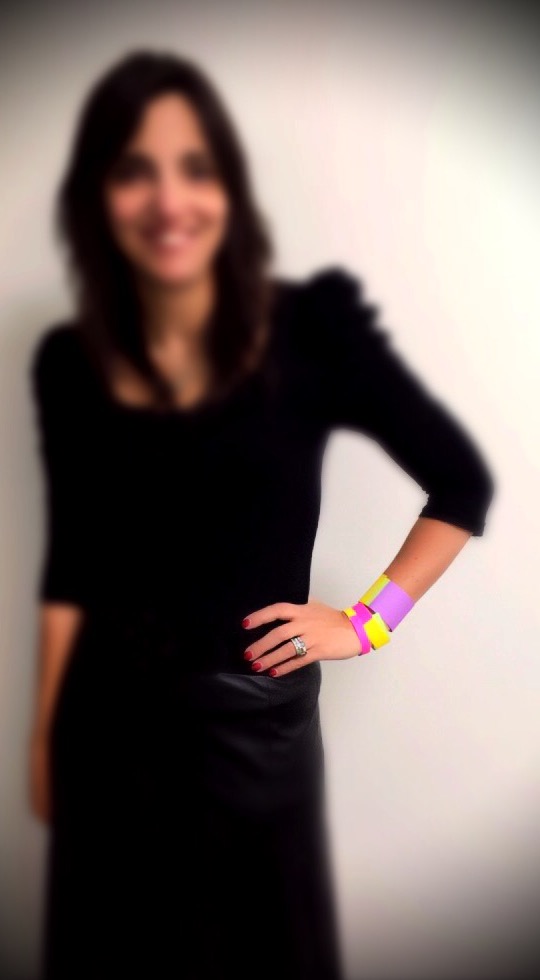
I got up and ready for work, and as I was driving in I realised that I’d forgotten to put on a couple of the enamel bangles I wear most days – especially when I am in all black, as I am today. Perhaps I’m just having a forgetful day, I thought, and weighed up the option of turning the car around. I decided that having forgotten my life-saving medical device at home would probably be accepted as an excuse for being extra late, however forgetting to accessorise would probably not. I proceeded to work, my arms unadorned.
One of my lovely and clever work colleagues came to the rescue though, and, MacGyver-ed me up a solution using nothing put coloured post it notes and sticky tape.
Once again, crisis averted.
Last night, my husband and I went to see Sting and Paul Simon in concert together. It was three hours of fantastic music, two phenomenal bands on stage and trips down memory lane as they played classics dating from …okay, let’s not think about when they dated from.
There were many highlights – how could there not be – but one of them was during the encore when the two of them sang ‘Every Step You Take’.
I’ve always loved this song, despite its connotations of stalking.
But as I danced and sang along at the top of my voice (unpleasant for those within listening range), I heard the lyrics in a different context.
This song is about diabetes. (Well, maybe Sting didn’t intend it to be when he wrote it, but in my warped mind where diabetes constantly appears even when I’m not looking for it, I say the song is about diabetes.)
At times, diabetes intrudes on every part of my life. And it watches and it responds to everything. Every step, every move, every breath – it reacts.
And every vow I break? Every time I miss a diabetes task, deliberately or because I just simply can’t do face it, results in a correlating response from diabetes – going low, going high and everything that then brings.
At those times, it does seem like I belong to it; that diabetes dictates and makes all the rules.
It is actually pretty dire when I think about it.
Unless I turn it around. What about if it is me watching diabetes? What about if I am the one who is watching and responding and reacting and making confident decisions?
I see just how much better I am mentally since feeling that I am back in the driver’s seat. Having the emotional capacity to be in this position was the first step, and once firmly seated, my confidence has started to return. And with that, my ability to simply deal with the tasks at hand.
It is not that I am seeing perfect numbers on my meter (that would be a cure). But I am seeing numbers on my meter. And that is a huge step.
Plus when the numbers are out of target – oh-so-freaking-frequently – I shrug, fix it and move on.
I’m watching. And with every breath, every move, every step, I am making progress.
This morning, just before stepping into the shower, I pulled out my cannula planning to resite once I was dried off.
I got in the shower, a million things going through my mind: (How is it Monday? I feel like I’ve hardly had a weekend. Oh, that’s right; I’ve hardly had a weekend- I worked Friday night and all-day Saturday. What does the kidlet have on at school today? Is it art? We need to buy dog food. Did I organise for the kidlet to sleep over at my parents tomorrow when Aaron and I see Sting? STING!!!!! I love Sting. How AWESOME was it to see Sting last Thursday night at Bennett’s? I want coffee. What’s the weather going to be today? I should download ‘Mozart in the Jungle.’ Sting tomorrow – yay! Oh – I need to keep promoting Spare a Rose, Save a Child this week because it’s Valentine’s Day on Saturday. Sting tomorrow night….)
And then I looked down and saw that the water pooling at my feet was bright, bright red. It took me a moment to realise what was going on – my head was still thinking Spare A Rose and Sting – and in that time, I watched the swirling pattern the red water was making as it moved around me and made its way down the drain.
Involuntarily, my right hand flew to my right side. I looked down and saw the blood gushing from where, just a few moments ago, I’d removed the cannula.
I pressed hard to stem the flow of blood, my hand getting covered with red.
The blood stopped pretty quickly. The water at the bottom of the shower turned from the Russian Red colour of the MAC lippie I wear most days, to pink, to clear again.
Of course, I didn’t lose all that much blood. But it looked pretty impressive. And I thought about how nonchalant and calm I am when things like this happen.
I continued with my shower, my mind drifting again, thinking about how the word ‘sting’ is frequently used in diabetes marketing materials. And then thinking about the Sting gig tomorrow night. And then thinking about blood. And the slight sting I could feel where I’d been bleeding. And roses. My thoughts were all muddled. But I knew that there was something tying them all together. I just couldn’t work out what it was.
It wasn’t until I was standing at the café near work waiting for my morning coffee that it hit me. I remembered an obscure Sting song from a compilation album of pirate songs and sea shanties. Sting sang one song on there. And it was called Blood Red Roses. I’ve not heard that song for years and as soon as I got to work I found it on YouTube and played it.
Sting and roses. That pretty much sums up this week.
Only a few days until Valentine’s Day, but plenty of time for you to Spare a Rose and Save a Child. Remember, for the price of one little rose, you can provide a month’s worth of insulin and save the life of a child.

Sting with Jo Lawry at Bennett’s Lane last Thursday night.
Last year, I wrote a piece for Mamamia’s health and beauty site The Glow about diabetes-related eating disorders, specifically insulin omission, manipulation or restriction for the purpose of weight loss. This is sometimes known as ‘diabulimia’.
This morning, when I checked my Facebook feed, I was really pleased to see that Mamamia had reposted an edited version of the piece on their website. Raising awareness of this issue is, in my opinion, really important, so to see it in mainstream media is a very positive step.
I am dismayed, although not really surprised, at some of the comments following the reposting of this piece. Today’s comments echo those that followed the original post in November last year.
Some commenters have called both me as the author and Mamamia irresponsible for writing about, and then publishing, the post.
I refute that and have done so ever since I started doing work in the area of diabetes and eating disorders more than seven years ago. This wasn’t some self-serving project that I started. I started this work – which including seeking funding to conduct research and developing a consumer resource – because it was clear that it was an issue of concern for many people living with type 1 diabetes. More so, many people who were in fact manipulating insulin to lose weight
The first time I presented our research and the resource we developed (in close consultation with people living with diabetes) at a healthcare professional conference, I was met with some resistance. One HCP stood up and told me that we had just written a ‘how to’ guide – that is, we were showing people with type 1 diabetes just how they could use insulin manipulation to lose weight. She said that she would not be promoting the resource.
And this is the gist of some of the comments on the Mamamia Facebook page today.
I maintain that this thinking is seriously flawed in many ways. It is assuming that only a small number of people are engaging in this practice and that not many people know about it. It suggests that the resource – which focuses on how to begin to discuss the issues and where to find help – is the first time that people reading it will have heard about insulin manipulation for weight loss.
However, this is just not true. The research conducted by Diabetes Australia – Vic in 2008 showed that 60 per cent of respondents (women with type 1 diabetes aged between 18 and 35 years) had omitted or restricted insulin at some point to control weight. And of those, one third did so on a daily basis. This finding was consistent with international research.
That’s not a tiny number.
So why do I think we should be openly talking about this issue? There are so many reasons.
When we don’t talk about things in an open and safe way they go underground. People start to feel that they are the only ones doing it and subsequently don’t talk about it. They feel isolated, shamed, stigmatised and unsure where to go for help.
We need to be talking about it so that HCPs understand that this is a serious and common issue – and to develop strategies to regularly screen for these behaviours and assist people who are engaged in this practice.
The research showed that health professionals working with people with diabetes are ill-equipped to deal with diabetes-related eating disorders. In fact, the same research showed that 85 per cent of those surveyed had never even been approached by a healthcare professional about insulin manipulation, and of those almost 60 per cent reported manipulating insulin for weight loss
We are wasting precious time and energy debating whether or not we should be talking about ‘diabulimia’. Instead, our focus should be on how we talk about it and what we do to treat it. We should be removing shame and stigma so that people with diabetes don’t feel embarrassed or fear judgement if they tell their HCP that they are manipulating insulin to lose weight. We should be removing barriers that prevent people seeking help.
I would argue that in this case being irresponsible has nothing to do with trying to shed light on diabetes-related eating disorders. I believe it is irresponsible to think that not speaking about it – not highlighting it as a serious issue – is that same as actually doing something about it.
So today, I urge you to share the article with your networks and start and contribute to discussions. Don’t sweep this under the carpet. Talk about it. Get it out there.
Sting is in Melbourne at the moment, getting ready to do a couple of concerts. Last night, he just happened to pop into Bennett’s Lane in Melbourne and sang a song with Adelaide musician Jo Lawry who is in his band. Here they are together singing one of my favourite Sting songs ‘Whenever I Say Your Name’.
I discovered my love of Kate Spade New York on one of our trips to the Big Apple. Wandering around Soho, we came across the whimsical corner store and in I went. I was hooked by the quirky, fun, stylish clothes and the beautiful accessories.
Since then, I’ve bought a couple of bags and some other accessories. My favourites of all the Kate Spade things I own are the gorgeous jingly-jangly bangles. I have at least one on most days, coordinating – or violently clashing – with whatever else I am wearing, frequently livening up my ‘Melbourne-Girl-Black’.
But the thing I love most about them is the secret message imprinted on the inside of each bangle. I actually didn’t know about these inscriptions until quite recently when it was pointed out to me by one of their sales staff.
For years, I’d been wearing them without knowing that there was a cute or inspirational or just plain silly little message concealed away. The inscriptions says thing like ‘It’s written in the stars’ or ‘Life’s a breeze’ or ‘Here comes the sun’. But they are hidden away. No one would ever know.
People are often surprised to learn that I have diabetes. (There was one time that a certain former Health Minister who may or may not now be PM – for a few more days anyway – looked surprised when told that I have diabetes and responded with ‘Really? You don’t look diabetic’.)
I’m not sure what people with diabetes are meant to look like. I have dozens and dozens of friends with diabetes and I’m yet to find the common characteristic or style that we all have in common. You can’t ‘tell a person with diabetes’ just by looking at them. Despite what Sarah Wilson says.
I was reminded of this the other day when I caught up with a friend I’d not seen for some time. Facebook updates have kept me across what she has been up to, but I was surprised when she told me that she had been having a really tough time, ‘diabetically-speaking’.
She didn’t tell me what had been going on until we’d been speaking for some time, talking about the great things she has been doing at work, a recent trip to Queensland and plans for a further family holiday to the U.S. We spoke about my family holiday and we chatted about our kids heading back to school.
And then she told me the rest of what she had been managing and it was huge. I looked at her and then said four stupid words ‘But you look fine.‘
I immediately apologised. Of course she looks fine. Diabetes is invisible, even at its nastiest. I think of the most horrid diabetes things I’ve had to deal with and they are relatively minor. Yet even at the most difficult of times, most people don’t know. Unless I tell them.
If I had a secret message inside of me which explained my ‘diabetes state of mind’, it would change every day. Most of the time it would be probably say something like ‘Yep, it’s still there!’ And nothing more. But other times it would say ‘today is tough’ or ‘I want off this BGL roller coaster’ or ‘I don’t want to do this anymore’. Because that is how I feel inside some days.
Today, the secret message in my bracelet says ‘Like Hotcakes’. I’m pretty sure it is referring to the saying ‘Selling like hotcakes’, however I’m going to interpret it as a command. Lunch is sorted!
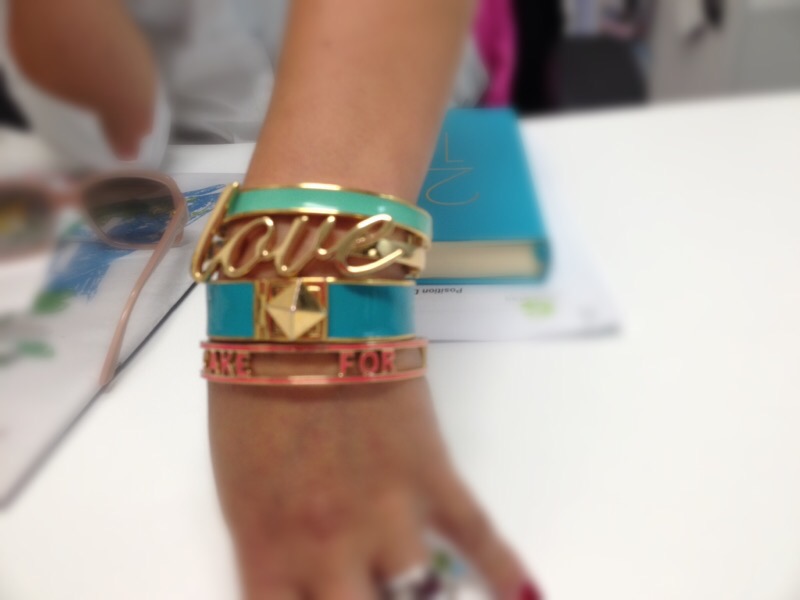
Today’s arm candy.
We know there are many factors that come into play when it comes to managing life with a chronic health condition. Our attitude, outlook, strength and mindset all play an important role.
But what about our personality? Do our personality traits affect the way we deal with living with diabetes?
Well, of course!
If our personality defines the sort of person we are then it stands to reason that our personality traits will play a part in how we view and respond to everything – including the day to day living with diabetes.
The Big Five personality traits in psychology are openness (to experience), conscientiousness, extraversion, agreeableness and neuroticism, all of which I believe, in my very non-scientific approach, impact on our attitude to and way we live with diabetes.
I consider myself to be pretty open to experience, not especially conscientious (I have so little self-discipline it’s not funny…pass me another doughnut. Thank you.), extraverted, agreeable and not particularly neurotic or anxious (unless talking about eye complications and a worry that the world Nutella supply may be in threat).
The way the cards have fallen to determine my personality is not necessarily useful when it comes to managing diabetes. Surely having a high level of conscientiousness is king when it comes to managing something like diabetes! (I’ll use this as the reason that I have never, ever kept a regular BGL diary….)
However, being open to new ideas has definitely been of use when it comes to being an early adopter of diabetes technology or considering an out of the box way to manage a difficult diabetes problem. And extraversion and seeking the company of others to crowd source information and learn about others’ experiences and learnings with diabetes has been nothing but positive in my diabetes management. Being secure and confident in my decision making and abilities rather than neurotic and second guessing myself definitely helps in making decisions, sticking to them and owning how I choose to manage things.
These traits determine how I see and how I live with diabetes each and every day.
But could our personality have something to do with actually developing health conditions? (No – this has nothing to do with lack of self-love causing auto-immune conditions. ‘Cause that’s a load of C R A P.)
This study looked into a link between personality and health, specifically how different personality traits impacted biological immune responses. (This article breaks it down nicely for simpleton folk like yours truly to understand.)
One of the findings of the study is that people defined as have an extroverted personality have more pro-inflammatory genes which means that we may be better at fighting off illness. The negative side of this is that ‘over-alert’ pro-inflammatory genes can also result in an increased incidence of autoimmune conditions.
In my highly non-scientific study of n=1, this rings true. I am overall pretty healthy and manage to avoid catching (most) everyday viruses. Good work, autoimmune system!
I also collect autoimmune conditions (last count – I have three). Not such great work, immune system!
As with many studies, there are still lots of questions to be answered. In a chicken/egg type scenario, there is no answer to what is causing what? Is it our personality that determines our immune system or is it the other way around?
Trying to piece together the puzzle of autoimmune conditions is a long road. I will never ever understand how it is that I developed diabetes at the exact point that I did. Whist I understand the genetic predisposition component, the trigger aspect has me scratching my head to this day.
But this is another little piece slotted into place in what is looking to be a one bazillion piece puzzle.
Last week, Australian social and mainstream media was abuzz with exciting news of a diabetes breakthrough. This filtered through to international media.
Labelled as an artificial pancreas, the new device was covered in online and print newspapers, as well as television news bulletins. The reason for the excitement at home was because Australia is the launch market for this new technology.
Exciting stuff!
Well, yes and no.
The device in question was not really an artificial pancreas. Rather, it is the next generation integrated pump/CGM system to be launched globally.
Technology advances are really important and we should get excited about them, and their promise of improving the lives of people with diabetes.
But reporting honestly and correctly is also really important.
Let’s be clear about the device that was launched last week. It is a pump with a CGM. The real advance is that together they have the potential to predict hypos and turn off insulin delivery, thus (hopefully) preventing hypos.
This is, indeed, an advance in technology.
This is not, however, an artificial pancreas.
There are a number of problems when diabetes advancements are not communicated effectively and correctly. Firstly, the way the reports read last week, this technology would eradicate hypos completely. As far as hopes for diabetes go, living hypo-free is surely something we would all dearly love.
But while this tech MAY help in reducing hypos, it’s certainly not going to eradicate them.
There are still problems with sensor accuracy that need to be addressed before we can be comfortable in saying that CGM technology (whether purely as a ‘warning system’ for impending hypos or being combined with a pump that will switch of insulin administration) removes the risk (and associated fear) of low blood sugar.
Whilst this technology is a step in the right direction, it is not an artificial pancreas. It is not the holy grail.
Diabetes still needs attention, still needs research, still needs funding, still needs donations. We are not there yet, and any report that even suggests that is, I believe, detrimental to continued efforts looking to further improve diabetes management.
All of us who are communicating in any way about diabetes have a responsibility to be truthful, honest and, as much as possible, devoid of sensationalism.
Get it right when we are taking about it and hopefully the mainstream media – who, let’s be honest, have an incredibly rudimentary knowledge base when it comes to diabetes – will hopefully follow suit.
I am really excited about the potential of this new pump and GGM combination and I am fully aware that it may be of significant benefit to many people living with diabetes. I know just how beneficial CGM technology is.
But tell it like it is. Report responsibly. And keep the understanding of what living with diabetes – and the technology we use – real.
This is just so beautiful! Enjoy for your Friday and have a great weekend.
Click
The sound the applicator of my CGM made as the introducer needle pierced the sensor through my skin made me wince. It’s an involuntary response and not because of pain. The little pinch I feel as the needle shoots in is so insignificant it doesn’t really warrant a response.
My last sensor fell out in bed on one of the first nights of our holiday. The next morning as I removed the spent sensor from the transmitter, I decided that I wouldn’t put in another sensor straight away. And then after a few days of enjoying having one fewer device stuck to my skin, I decided that because I was spending so little time alone, I really didn’t need the safety net of a CGM. Plus I had no plans to try to tighten up basal rates or make any other adjustments.
More than five weeks and no CGM.
But the afternoon after we returned from New York, as Aaron was getting ready to go to a gig, I realised that jet lag would possibly be sending me to sleep before he got home. And I’d been chasing hypos all day – continually going low just as I thought I had managed to get on top of things.
I knew that it was time to get hooked up again to my CGM. I needed my safety net back.
So, I pulled out a fresh sensor, swabbed the back of the transmitter and with a click, the new sensor was attached firmly to me.
The clicking sound hit me with a force that surprised me. I actually felt it in the pit of my stomach – a sinking feeling. I felt my breathing quicken. What’s going on? I thought. I checked the site where the sensor had gone in and where I had fastened the transmitter. It looked fine. There was no pain.
I stood in the mirror, my top tucked under my chin and there, staring back at me, was the reason for this sudden unease. Two medical devices. My cannula on my right side, the pump tubing snaking its way up my chest to the middle of my bra where my pump was neatly tucked away, and my CGM sensor and transmitter just to the left side of my belly button.
I could suddenly feel the numbers, I could feel the data, I could sense the information that would soon be available to me. I could feel the vibrating of the alarms.
And the feeling of burnout – that darkness that lives at the pit of of my stomach – sprang to life after having lived quite dormant for a few weeks.
I felt overwhelmed and my sensor wasn’t even transmitting data yet! In fact, I hadn’t even hit the ‘start sensor’ button on my pump yet.
I sat on the bed and breathed deeply before grabbing a piece of paper and pen. I started to make a list of reasons to not get overwhelmed and distressed about reconnecting to my CGM.

I re-read the list and started to feel calmer. But I was surprised at just how sudden and intense the reaction was. I couldn’t really make sense of it either. I love this technology. I love the information it gives. I use a device that is incredibly accurate and reliable. I do feel safer when I have a sensor attached. And I know that, given the cost of running a CGM, I am very fortunate to be able to use it.
So why was I feeling dread instead of reassurance?
I’m not sure; I’m really not.
Later that night, I crawled into bed. It was still light outside – jet lag had indeed hit me! The kidlet was reading in her room getting ready to sleep. Aaron wasn’t home yet and still wouldn’t be for a while.
I started to read and before long, my eyes felt heavy and just as I was about to put my book down, my pump, lying loose in the bed beside me started to vibrate. I looked and saw the two arrows pointing down. I wasn’t low, but would be in about 30 minutes. I reached over and pulled two jelly snakes from the jar on the side table.
As I started to doze, I felt calm and relaxed, looking forward to a good night’s sleep, and woke on Australia Day feeling refreshed. I located my pump amid tangled sheets, and saw the CMG’s straight line. My hand moved to touch my CGM, sitting comfortably on my stomach. Doing its job. Nothing more. Nothing less.
I am terrified of birds. As in, irrationally scared to the point where I scream when I see a bird flying anywhere near my general direction. Walking through places like St Mark’s in Venice causes panic, and the thought of feeding pigeons so they land on my arms and legs is enough to induce hyperventilating.
This fear was borne out of an incident where a blackbird flew at me and hit me – with its beak – just above the eye and drew blood. This happened about fifteen years ago and since then, I have had a theory that the avian world is conspiring to hurt me. There have been many other occurrences, all of them chilling and disturbing. This phobia is a source of great amusement to my family, who mock me every time I wail and bury my head in fear when there are birds around.
The Hitchcock film The Birds is more documentary rather than a work of fiction, as far as I am concerned.
So, birds and me: not great mates.

Gorgeous design!
But, I have found a little bird that I think I am going to love and it’s called Diabeto.
Diabeto is a soon-to-be-launched hardware device which wirelessly transmits BGL readings from a meter to a smartphone. Using a specially designed app, data can then be analysed and, being cloud based, is securely stored and can be accessed by HCPs for analysis. Other data – insulin doses, physical activity, carb intake, mood etc. can also be tracked and stored.
Diabeto is currently compatible with 25 meters (with more being added all the time) which means that most people with diabetes will be able to use this technology.
There is lots to like about this little bird, and for some it’s a great way to keep track of the multitude of numbers that are part of diabetes management. On the Diabeto management team is Shreekant Pawar whose parents have had diabetes for 25 years. He GETS diabetes, which means that this is a product that works and makes sense. (Plus, Shreek has really good taste in music and is fun to converse with on SoMe!)
Diabeto is now available for pre-order and this stage is actually part of their crowd-funding strategy. The hope was that the Indiegogo campaign launched last week would provide the cash needed to enter the manufacturing stage.
The great news is that the $10,000 target was reached after only a few days, suggesting that there are a lot of people willing to invest $59 (or $49 if you get in quickly!) to get their hands on one of these cute little birds.
You can read all about Diabeto here and support the campaign by pre-ordering your little birdie here. (Most important information – it comes in blue and pink. If, like me, you’re having trouble deciding, order both.)
Need more of an incentive to check this out? From 27 January to 3 February, $5 from each Diabeto sold will be donated to T1 International.





 Diabetogenic