
You are currently browsing the category archive for the ‘Diabetes’ category.
Earlier this week, The Conversation ran a great article about the value of GPs providing nutrition education and information.
It’s a discussion worth having. For many people, their main HCP contact is a GP, so in the broader scheme of things, having GPs able to provide general health and wellbeing information (which includes nutrition information) is a sound idea.
Whilst most people I know with type 1 diabetes have a network of diabetes healthcare professionals – often including a dietitian – this isn’t the case for everyone. And for many people with type 2 diabetes their GP is the only HCP they see about their diabetes.
This discussion, however, is far broader than people with diabetes. Information about how to eat well and make food choices to enhance our health is a great idea and would be great if it were available to all.
But for this to work, we need to have confidence that our HCPs are equipped with up-to-date and sound information. As well as being across evidence-based nutrition guidelines, they need to be able to respond to queries about fad diets and ‘teatoxes’. (It’s a thing. Really.)
I can still remember the first dietitian I saw. It was within days of my diabetes diagnosis and it wasn’t a good experience at all. In fact, I walked out and vowed never to see another dietitian because, in the hour-long consultation, all I could envision was angst and stress about food thanks to diabetes. I didn’t want that at all. I certainly didn’t want the healthy way I looked at food to be compromised by someone who was extolling the idea of ‘bad foods’ and ‘good foods’, and expecting me to live with a diet that included the same things every single day.
So I never went back and spent the first three years with diabetes muddling along as best I could, adapting what I needed to and trying to keep enjoying food the way I always had.
When I started to consider using a pump, I decided to find another dietitian – one more in line with my attitudes to food. I didn’t have an understanding of carb counting (that wasn’t explained to me because it wasn’t the nutrition ‘in-thing’ in April 1998). Once again, I was disappointed to discover that the restrictive and dictatorial advice she was delivering wasn’t in line with my food philosophy which, I thought then (and still do now) to be quite sensible.
These two experiences have somewhat clouded my opinion of dietitians, despite having met with some amazingly balanced and well-informed dietitians since – including one I saw a few times who was just brilliant and never made me feel guilty because I like Nutella, but really am not a fan of lentils.
Nutrition advice needs to be about a lot more than what the best choices look like for breakfast foods.
There needs to be some acknowledgement of people’s relationship to food – how we view food in our overall life; where it fits in our family; if we enjoy preparing and knowing about food or if we just care about food as fuel; if we have any issues with certain foods. Plus there needs to be the ability to address the different levels of knowledge people have (and want to have) when it comes to food. Not everyone wants to prepare food from scratch, make fresh pasta each week or mill their own flour. And that’s perfectly okay.
And there needs to be openness about the choices – a willingness to understand that some people may want to try something slightly (or very!) outside the guidelines. For example, the low carb movement at the moment is of great interest to a lot of people with insulin-requiring diabetes. I have heard some people say that when they have raised this as a discussion point with their HCP, the topic has been dismissed as irresponsible, not in line with the recommended guidelines and not something people with diabetes should be considering.
And yet, many people with diabetes do manage to eat a lower-than-recommended carb diet and are far happier with the results they see – whether those results be numbers on a meter or how they feel.
With the huge array of food and nutrition and health advice available to people now – frequently by people less than qualified to be providing it – having a respected healthcare professional help cut through definitely, in theory, sounds like a valuable plan.
But because of the very nature of discussions about food, whoever is charged with providing information and assistance – whether that be a GP or a dietitian, or any other HCP – needs to check their judgement at the door, be well informed, sensitive, and open to ensuring that the person they are working with is comfortable with the discussion and feels open to choice.
I remember the first time I ever heard Cassandra Wilson. I was blown away by her beautiful voice and have loved her ever since. She has a gorgeous new album – a tribute to Billie Holiday – which we’ve been listening to this week. But today’s Friday song is from the first album of hers that I listened to, New Moon Daughter. This is Solomon Sang.
I have an app on my iPhone that tells me what I was doing (social media-wise) on this day in history. When I clicked on the app today, I discovered that I am clearly a creature of habit. Here are some posts for 15 April over the last four years.


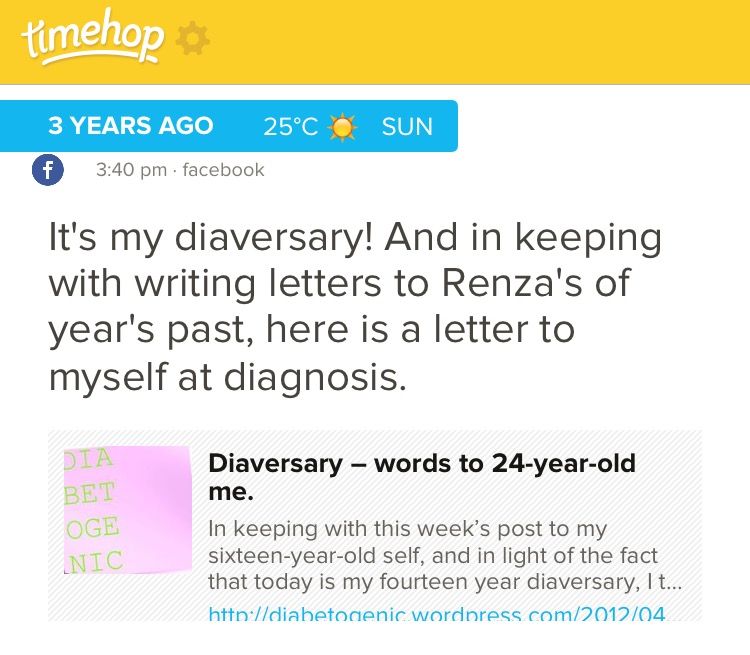

Do you see a pattern? Every year there has been cake and ceremonial yelling from the rooftops that I am another diabetes year older. And someone – anyone – get me damn cupcake!
This year, I’m marking my diaversary with a quiet nod to the last seventeen years, but not much more. I’m just not in the right head space to do anything more.
However, today just happens to be the launch of the Consultation Paper for the development of the Australian National Diabetes Strategy and the opening of the consultation process. You can read all about it in my post at the Diabetes Victoria blog here.
Perhaps instead of using my diaversary to look back at my diabetes life and celebrate the last year, I’ll use it to think about looking forward. I. I might just find myself a little cupcake and consider what I hope to achieve in the next five years. Until there is a cure for diabetes.
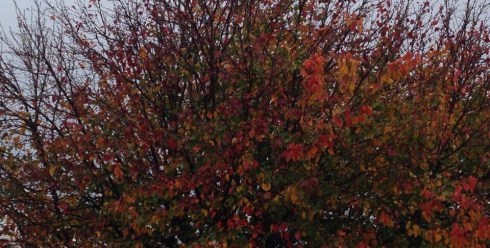
Yesterday, I looked out the kitchen window into the back garden and out over the back fence on the other side of the laneway, and I noticed that our neighbours’ beautiful big tree was starting to wear its Autumn colours. The green leaves were giving way to the most beautiful deep reds and I know that in just a couple of weeks, the branches will be bare, letting in the pale Winter sun.
I don’t think I’ve ever been so aware of the seasons changing as I have in the last couple of years. Perhaps it’s because with more friends overseas I see their seasons change in opposition to ours – we swelter whilst they curse snow; we shiver while their Summer blazes.
But with each season that passes, I am more and more conscious of the time I’ve lived with diabetes.
In the middle of this month, I will have lived with type 1 diabetes for seventeen years. I know that in the grand scheme of things – and when I think of celebrating Kellion medallists – seventeen years is nothing more than a drop in the ocean.
But to me, it feels like a long time. In fact, it’s the first time that I’ve thought the number and it has felt big. While in single figures, it was tiny and even hitting ten or twelve years didn’t seem much. Neither did sixteen.
Seventeen, however, seems big. Really big.
I always plan to celebrate my diaversary and mark it in some way. Sometimes it’s just a cupcake with the family or friends. But I mark it and recognise it as something I want to acknowledge and celebrate. I celebrate that I am living well with diabetes and that I am still doing all the things I love. I celebrate the minimal impact diabetes has had on the previous year.
This year though, I am not feeling like that. It’s not that I don’t want to celebrate (I’m not one to pass up cake), it’s just that I’m not sure what I am celebrating anymore. I’m still living well, but the impact over the last 12 months has seemed greater than ever before.
I have always been proud of the position diabetes has held in my life. And I have always been proud of the way that I have never let it stop me doing anything. But in recent times, I’ve come to wonder and worry – if the reason that things have been that way aren’t so much of my doing, but rather because that’s how my diabetes has been.
The privilege of being able to say ‘diabetes hasn’t stopped me from (insert whatever)’ is because my diabetes has been manageable, and well behaved. What if that really changes? What if things suddenly mean that I am stopped from doing what I want?
I feel like diabetes is, in some ways, stripping me bare with its relentlessness. Feeling like I am managing and coping has become a desperate pursuit and feel overwhelmed and overcome more easily.
I’m not sure if is purely the emotional toll, which has in recent times been more significant, or if is that combined with difficult lows that seem to be becoming more frequent.
But whatever it is, I’m feeling exposed – although to what, I’m not sure.
I thought of all this as I stood at the kitchen window and looked at the tree. I thought about how exposed the branches would be soon. But I also thought about how it was only for a few months. Come Springtime, the branches would be covered in pretty blossom and after that, full again with bright green new growth. The seasons are so defined and clear.
Perhaps the way I feel about diabetes is all cyclical and seasonal too. Maybe the impending cold is why I am feeling exposed at the moment. Maybe I just need to batten down for a few months, wrap myself up and keep myself warm until the season changes again.
And in the meantime, gently and quietly recognise my diaversary, give a nod to the year that has passed and just keep going on.
Soon, I will be turning off my computer, walking out of the office and spending the next four days doing not much other than hanging out with my nearest and dearest. And eating. My main food groups for the next few days will be hot cross buns with lashings of butter. And rabbits. Chocolate bunnies, that is! There will be cake and I have some new cookie cutters that need breaking in, so I expect there will be cookies too.
For those of you lucky enough to be sharing the four day long weekend love, have a wonderful break. Hopefully your diabetes numbers will be kind, and sugar-free chocolate scarce.
If you have a spare 30 or 40 minutes, grab a couple of Easter eggs, a cup of tea and sit in a quiet corner to fill in the Diabetes Miles-2 survey. Jump over to the Diabetes Australia – Vic blog where you can read what I’ve written about the survey and why it’s such an important piece of work.
I’m a day early with some music, but this is definitely worthy of a few plays over the next couple of days. It’s Jon Cleary and the Absolute Monster Gentlemen who we heard play the other night in an incredible gig. Enjoy!
Recently, I had a period where for three days, I dealt with BGLs that would not drop below 15mmol/l. Most of the time, they were above 20mmol/l, which is revolting and even more so when considered in the US-measure: 360mg/dl. (I’m not sure why, but for those few days, I kept converting my high numbers to US numbers. For anyone playing at home, I hit 461mg/dl. Don’t play at home. Really. Don’t. And file under: #StupidThingsIDoWhenHigh and also, I am good at multiplying by 18.)
Anyway, it was crap. I felt crap. And I wanted to cry. A couple of times my stupid meter simply said ‘hi’ which is not so much friendly as a declaration of giving up. It doesn’t know where to go above about 33mmol/l, so it just stops working, instead throwing out random greetings. My CGM graph was off the charts.
Why was I high (hi)? I’ve no idea. Seriously. No idea. I wasn’t eating cupcakes for breakfast, lunch and dinner. I went through the usual checklist of ‘things that could possible make my BGL high’ which includes:
- Eating cupcakes for breakfast, lunch and dinner
- Forgetting to bolus
- Not bolusing enough
- Bent cannula
- Dodgy insulin
- Stress
- Impending virus
- Period
- Exercising when already high (ha, as if!)
- Eating ridiculously large quantities of ridiculously high carb foods
- Eating a whole jar of Nutella in one sitting
- Infection at cannula site
- Pump not delivering properly
- Following a paleo diet/I Quit Sugar diet and pretending I’d cured myself of diabetes and didn’t require insulin anymore
- Anything and everything else ever and ever and ever and ever
I wasn’t forgetting to bolus – I actually was correcting every couple of hours. I (as it turned out, unnecessarily) ripped out three cannulas – and starting looking at the fourth one very suspiciously, wishing I had see-through skin so I could identify any bent-cannula hiding under the skin. And then thinking about how creepy having see-through skin would be and then vomiting a bit in my mouth.
Nope. No reason at all.
I stopped eating anything carb-containing, instead eating a salad of greens and chicken for lunch and chicken soup with (non-carb containing) vegies for dinner. I rage-bolused for the milky coffee that I really needed at 3pm –the only carbs I consumed for the whole day.
And still, every time I checked, I was sitting close to 20mmol/l. Any reading of 15mmol/l, which ordinarily would result in me throwing a mini-tantrum, seemed a victory. But it was fleeting and before long, I would be heading upwards again.
By day three, I felt that I had an aura of exhaustion surrounding me. My limbs were heavy and climbing the stairs to my office was draining. I countered my exhaustion with ridiculous quantities of coffee, replacing my usual latte for a short macchiato to minimise the milk I was drinking.
I had a lunch of sashimi (my favourite no-carb lunch) and got on with my afternoon at work.
At about 2pm, I checked my BGL, expecting to see another high number. But instead, I had my first number under 10mmol/l for three days: 9.8mmol/l said my meter.
Over the next couple of hours, I kept a close eye on things. I had quite a bit of insulin on board (yes, I know I shouldn’t, but of course I rage bolus when numbers won’t come down and I am frustrated) and I didn’t want to crash and burn with a nasty hypo.
I kept a fruit box of pineapple juice next to me and took a sip every now and then and managed to not dip below 4mmol/l.
By the next day, I was back on a far-more level playing field. My numbers were in-range and there were no more surprises.
I reviewed my BGL readings and pump activity for the previous days and in all honesty can’t say what I would have done differently. There really was absolutely no discernible reason for the crazy-high numbers – at least none that I could see.
Although my BGLs remained stable for a few days afterwards, it took me some time to get over the sludgy feeling that follows an extended period of high numbers. I was tired and achy and my legs continued to feel heavy.
All in all, it was about six days of feeling below par – first from the high numbers and then its aftermath. And, of course, the emotional frustration that comes with not being able to pin point the reason for feeling crap – and then being able to fix it.
When people ask what living with diabetes is like, I don’t know how to put into words these sorts of experiences in a way that makes any sense. I can explain the number of times I have to jab my finger to check my BGL. I can talk about how I wear a little box shoved in my bra and press a few buttons for it to deliver me some life-saving medication. I can count out the number of hours I spend with healthcare professionals each year.
But how to explain and quantify the frustration? How do I explain the sense of helplessness when I can’t work out what is going wrong? How do I explain that sometimes there are simply no answers and we just have to ride it out until things (hopefully) get back on track?
I’ve no idea. But for me, this is the essence of diabetes. The frustration and helplessness. And it remains for a long time after numbers get back in range.
It takes me somewhere between 12 and 25 minutes to drive to work in the mornings. I drive down a terribly busy road which carries trams, cars, trucks and bikes. People dash across the road whenever they can. It is hectic!
Yesterday morning, I was sitting in traffic, mentally counting down how long it would be before I got to my morning café for my take away coffee.
I yawned. ‘Need coffee,’ I thought. I yawned again. And again. ‘Oh, shit,’ I thought. Even though I felt fine, the incessant yawning gave it away. I was low.
I reached into my handbag and pulled out the pink and red Marimekko purse and, taking advantage of the banked up traffic, pushed a strip into the bottom of the meter, pricked my finger and wiped the drop of blood across the strip.
2.8mmol/l.
I swore. Loudly. So loudly that the woman in the car next to me looked over at me. We both had our windows closed.
The road is a clearway in the mornings; I couldn’t pull over. I put on my indicator, silently begging the traffic to move so I could turn left into the street ahead.
I grabbed a handful of jellybeans from my bag, and shoved them down my throat, chewing furiously as the cars in front of me inched forward.
Finally I could turn left. I pulled into the side street and parked. Turning off the engine, I sat there chewing and gulping.
How had this happened? I scrolled back through my meter and saw that less than 20 minutes earlier, just before I left the house to drop the kidlet at school, my BGL was 5.9mmol/l.
My eyes filled with tears at this point – typical response when I think about how diabetes impacts on those I love. I swiped my hand across my eyes, cursing (again) as I saw my mascara had run.
Involuntarily, my hand moved to my stomach where my CGM was fastened. As I was rushing around getting ready that morning, my pump pulsed and squealed, telling me that the sensor was dead after having been in for seven days. I knew I just needed to reset it – it was still reading beautifully.
But I didn’t. I didn’t restart it. I just shoved my pump away, thinking that I’d maybe, maybe, not sure, perhaps start it later in the day. If I felt like it.
I swore again – this time at myself.
I need this. At the moment, I need this. I am already feeling so lousy at diabetes – second guessing everything – I need whatever help I can to help me.
I looked at myself in the rear-view mirror. ‘I need this,’ I told myself, tears welling again.
After about ten minutes, I rechecked my BGL and it was back up over five. I was good to drive and make my way to work.
I went to start the car and stopped. I pulled my pump out from my bra and scrolled through the menu until I found what I was looking for. ‘Start CGM Sensor Session’.
I pressed start.

There are some weeks that goals are kicked, to do lists get ticked and I feel a sense of great achievement and success.
And then there are weeks where stuff just gets done – nothing major, nothing particularly significant, but still good.
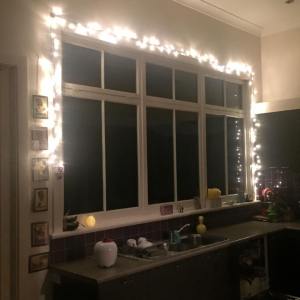
- There are fairy lights in our kitchen. The loo is next.
- I have worn my CGM all week and have not had a meltdown at any point. Plus, today, I think I will be okay wearing it a little longer. I did say that I would be ripping it out this morning because I won’t need a security blanket tonight once Aaron is back from a week away with work. I had even imagined that moment where I would tear it from my body and dance around screaming ‘I’m free, I’m free.’ Instead, I stood in front of the bathroom mirror this morning, saw how clean and pretty the tape still looked and decided to leave it in. I reminded myself that the numbers are there to help, not hinder. And that it can be a useful tool. Deep breath. Baby steps.
- Introduced the kidlet to the Gilmore Girls.
- Removed about 86 used BGL strips from the puppy, who discovered they are fun to push around, eat, roll in, lob at the cat, chase and sleep with.
- Started reading ‘Bad Feminist’ by Roxanne Gay which is everything I hoped it would be.
- Finally shared the Pumpless in Vienna story on here – after having recited it a bazillion times in presentations in the last 10 months.
- I didn’t get a parking ticket!!! (The week is not done yet, so let’s not celebrate that one too soon.)
- Managed to misplace my BGL meter five different times. And the collection of places where it was later found include in the fridge, inside a packet of pasta, on top of the giant jar of Nutella. Interestingly, although perhaps not surprisingly, all food-related places.
- I got blocked from the Pete Evans Facebook page this week. This is possibly the thing of which I am proudest. Ever. In my whole life.
Things I have not achieved and had hoped to:
- Had my blood work done. Because I still don’t want to know the results. Because I am not ready for what the results may show. Because, because, because. Just do it already, Renza.
- Bake cookies shaped like this. I can’t find the requisite cookie cutter. (Although just got a text message from mum telling me that she may have found me one!)
- Get better at throwing BGL strips away after using them.
- Become good at diabetes. That is on my to-do list each and every week. Alas, it never, ever gets ticked off. (See misplaced BGL meter for example of failing at being good at diabetes.)
It’s Autumn here in Australia. We have the most beautiful Japanese maple in our front garden and the leaves are just starting to turn a stunning deep red colour. So, here’s a seasonal song from Eva Cassidy for today’s Friday listening. Have a lovely weekend.
Emergency!!!
I was a little excited to learn the other day that my iPhone 6 could do this:

My medical ID can be accessed from the lock screen (i.e. no password required). The details can be customised (as such, I have chosen to NOT include my weight here!) and ICE contact details can be added.
How much will paramedics and other emergency services staff use it? I’ve no idea. But it gives me another excuse to lull myself into a false sense of security believing that I don’t need to wear a medical alert bracelet. (Okay, okay; I’ll get on to that!)
What’s the latest from MySugr?
This! Congratulations guys – so thrilled to see that you are continuing to go from strength to strength. It’s what happens when people with diabetes are creating things for people with diabetes.
My Sugr – helping diabetes suck less.
Dexcom. Like a pancake.
The new lower profile Dexcom has been launched in Australia. Which is good because the first G4 sticks out this much:
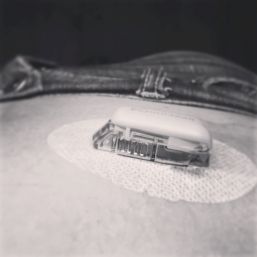
And when wearing a dress that is this tight, it’s pretty bloody unforgiving!

Doctors 2.0 tweetchat
I know that it seems pointless talking about this after it happened, but this morning I took part in a terrific tweet chat from the wonderful Denise Silber (I love that I get to refer to her as an American in Paris – ‘cause that’s what she is!) and the team at Doctors 2.0 and You. Read the transcript if you can (hashtag: #doctors20) – it was a great discussion about fostering the consumer (patient) HCP relationship using SoMe.
Munchausen by Internet
This probably warrants a blog post of its own, but in the meantime, have you been keeping an eye out on the Belle Gibson story? The short of it is that Belle, who has built a social media empire sharing her story of beating cancer using only diet and positive thinking, has not been entirely honest.
Not only does it seem that Belle is not who she says she is (she is not even the age she has said she is!), but there is mounting evidence that she never even had cancer. Add to this some questionable online fundraising activities, and you can understand why this story has captured the media’s attention.
While the whole story is reprehensible, it has left a lot of people asking why someone would fake having cancer (or any other medical condition). As it turns out, this is a thing. And it’s called Munchausen by Internet.
I first read something about Munchausen by Internet years ago in the Good Weekend. (You can find the article here.) And once I became part of the DOC, I remember a couple of times where people who have claimed to have diabetes have been exposed as fakes. (Here’s a post from Your Diabetes May Vary.)
There’s lots about Belle Gibson’s case online at the moment. Start here. And here.
Kudos to D-UK
Last week was the Diabetes UK Professional Conference in London. It was great to see so much twitter activity from the conference with a significant contingent of consumer (patient) bloggers and social media folk at the event and tweeting from some of the sessions.
Well done to D-UK for remembering that even though the event may not be for PWD, we have an interest in what is happening there. And who better to share that information than others living with diabetes?!
Bugger off Pete Evans
It’s never nice to take delight in someone’s misfortune, but let me tell you that I have been doing A LOT of fist pumping with all the articles exposing Pete Evans and his latest ridiculous efforts to provide nutritional information for babies. Yes. Babies.
As a foodie and someone who has a ridiculously large cookbook and cooking magazine collection, I am always on the lookout for new recipe books. Because they are a good source of…recipes. The people writing these books are chefs or cooks who are good at….cooking.
But the second that someone moves from cook/chef/someone who can show me how to incorporate Nutella into another recipe, to pretend healthcare professional, they are no longer welcome on my bookshelf.
I don’t care that Evans claims to be working with a ‘nutritionist’, he is a chef. His area of expertise is mixing ingredients together, cooking them at the right temperature for the right length of time to produce something yummy.
He’s not done any meaningful study that gives him any credibility at all to provide information about nutrition. At all. So why he thinks he should be playing in this space is completely and utterly beyond me.
Recipes!
I made these. And they were delicious. I adapted the recipe slightly and half of the biscuits ended up with Nutella AND peanut butter in the filling. Which made them even better.

Driving
After I wrote this piece, I’ve had a lot of people mention to me that they have been asked to provide an eye report for no apparent reason.
This seems to be a particular issue in Victoria.
Remember – if you’ve not been asked to provide an eye report before and at no time has it been indicated on your medical report (filled in my your GP or endo) that you have diabetes-related eye problems, you are not required to (as a matter of course) submit an eye report.
Again – Nowhere in the regulations does it state that it is mandatory for people with insulin-treated diabetes to arbitrarily provide an eye report.
The best way to address it if this has happened to you is to start by calling the number of Medical Review at VicRoads and query the request.
If you are not satisfied with the response (i.e. you are still being asked to fill in the eye report and are told that the regulations call for this) call the Advocacy team at Diabetes Australia – Vic.
Cartoons
New Yorker cartoons are possibly the best things ever and the medical ones have me giggling all the time. Like this one.

Don’t blame me once you click on this and then don’t get another thing done today!
Happy St Pat’s Day!
When the kidlet was about two weeks from being born, Aaron and I went to see The Chieftains play at The Palais. For two hours of jigs and reels, the little munchkin kicked and danced around, only stopping when the music stopped.
I’ve been thinking about the word chronic recently. It’s a word that gets thrown around a lot in health. Simply put (although there is nothing simple about it!), when used in relation to health conditions, it means ‘ongoing or constantly recurring’.
Diabetes fits quite nicely into the definition. It’s a bit of both – and ongoing component with a constantly recurring nature too. As far as I’m concerned, the ‘ongoing’ part of diabetes is a given.
Undeniably, it gets me down; of course I get sick of it. But to a degree, I just have to accept it. It’s there and it’s not going anywhere.
The real issue – the thing that makes it extra rough – is the ‘constantly recurring’ side of things. I am really not so good at this stuff; the things that go away and then reappear. That is the part that makes it difficult.
With diabetes, those recurring things – whether it be a round of nasty hypos or high BGLs that won’t go away and are really tough to understand or explain – are always harder for me to manage after a period of diabetes just chugging along.
Perhaps I get lulled into a false sense of security and the sudden ‘crap-ness’ throws everything into chaos. Perhaps I have this ridiculous idea that with almost seventeen years under my belt I should be better at diabetes than I am. Perhaps it’s the fact that I like routine and once I’ve settled into one, I don’t like to have to change for any reason. (Perhaps that last sentence could be condensed into two words: ‘I’m stubborn’.)
I’m not sure, but what I do know is that, in amongst the crap, I can – at least, I need to – summon up an attitude of ‘this too shall pass’. Because I know it will. It may take longer than I’d like, it may be harder to get through. But I know that it will pass.
And then, I will be left with the ongoing stuff. The life-long, never-ending, forever nature that is a chronic health condition like diabetes.





 Diabetogenic