You are currently browsing the category archive for the ‘Devices’ category.
Spend enough time trawling through social media posts with a #DOC somewhere in the hashtag, and it is inevitable that you will see photos of people’s CGM graphs. Often, it’s PWD getting excited at their flat line graphs because they have managed to stay within range for a certain period of time. Or perhaps it’s to show shock and utter disbelief at loop systems doing all the work. It can be because we won’t to show how we have managed to nail the timing and amount of a bolus, and that usually-difficult to manage food nemesis (hello, rice!), completely avoiding a spike. Or, it could be just because we feel like sharing.
I don’t share my graphs a heap these days, but have in the past. It’s a personal decision as to whether we want to share their data online, and if you do, knock yourself out. Your data, your rules! I understand why some feel that it can be considered not especially helpful for others, setting us up to feel we are failing if we compare. But the conversation sharing can generate is really useful for a lot of people.
Every now and then, a non-PWD will share their libre or CGM trace to show that even those with a perfectly working pancreases are subject to glucose fluctuations. This is done with the intention of support and encouragement and to show that flat lines really are unrealistic. While I’m sure that those sharing glucose graphs of people without diabetes is never done with any malice – in fact, completely the opposite – I believe it is nonetheless problematic, and misses the point.
I get it. It’s a noble goal to try to make PWD feel less negative when we are unable to manage a perfectly flat line at 4.0mmol/l for hours on end. And to also understand that’s not how the body actually works, even when everything is doing what it should be doing.
But it is totally redundant. And downright annoying. And also, completely inconsiderate.
I live with diabetes and am fixated on trying to limit the variation of my glucose levels because I have to. PWD are told that keeping those numbers between 4mmol/l and 8 mmol/l is the goal. And we’re told that when we go outside of those numbers – especially when we go beyond the upper limit, all manner of nasty things will happen to us. That’s what was told to me the day I was diagnosed with diabetes, and repeatedly what I have seen since.
Showing me your graph that just happens without any effort on your part is not reassuring. It’s pointless. And somewhat heartless. When your level goes up to 12 because you ate a family block of chocolate, it comes back in-range fairly quickly. And not because you had to do any fancy-pants calculations, or micro (or rage) boluses.
When I eat a block of chocolate, whatever happens next is pretty much 100% due to my efforts. I have done some fancy pants calculations. I have had to bolus – maybe once, most likely a number of times – to get my glucose level back in range. And then I sit there and hope that I haven’t over bolused…
Oh – and when you show me that your glucose levels dipped into the low range or sat there for a while, it doesn’t reassure me or make me feel ‘normal’. Because the difference is that when that happens to me, I am doing all I can to make sure that I am okay, that I don’t pass out, that I don’t overtreat (again!), and that I am safe. And then I get to recover from a hypo hangover – something you are fortunate to never experience.
To be honest, I actually find it completely ironic when it is HCPs sharing their data to make me feel better, and a little thoughtless because the reason that I am in constant pursuit of these straight, tightly-in range lines is because it is HCPs that told me in the first place that is where I must stay to ‘prevent’ all.the.nasty.things.
And finally, when this happens, it centres people without diabetes in a conversation that should very much have the spotlight firmly shone on us. Your glucose level data, and the patterns they make are not like ours. They do not represent the blood, sweat and tears, the emotional turmoil, the frustration, the fear that that is somehow reflected in our data.
Perhaps rather than sharing non-PWD data, instead acknowledge just how difficult it is to do diabetes, and commend people with diabetes for showing up, day after day, to do the best we can – regardless the shape of our CGM graph.
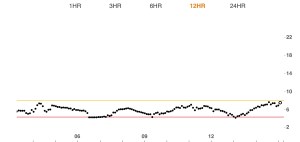
A real-life PWD CGM graph. Mine, from about 10 minutes ago.
This morning I woke up, got myself organised for the day, headed to our local for our morning takeaway coffee. And then I ripped out my pump line on a door handle.

Which, all in all, seems like a pretty damn appropriate way to celebrate my twenty-second diaversary.
One day I might get good at diabetes. But I guess today is not that day.
Other diaversary posts
These days, I usually don’t show my glucose data online. When I first started Looping (about two and a half years ago), I regularly posted the flat CGM lines that amazed and surprised me. I also shared the not-flat lines that showed how hard my Loop app was working as temp basal rates changed almost every five minutes. The technology worked hard so I didn’t need to, and the results were astonishing to me. I shared them with disbelief. (And gratitude.)
I stopped doing that for a number of reasons. It did get boring, and I definitely recognise my privilege when I say that. I also acknowledge my privilege at being able to access the devices required for the technology to work. And there was the consideration that sharing these sorts of stats and data online inevitably lead to comparisons and competition. That was never my intention, but I certainly didn’t want to add to someone having a crappy diabetes day while I blabbed about how easy my day had been.
But today, I’m sharing this:

This was my previous 30-day time in range data from the Dexcom Clarity app on the day I arrived back home in Australia after returning from New York. (My range is set to 3.9mmol/l – 8.1mmol/l.) I’m not sharing it to show off or to boast. I don’t want congratulations or high fives. In fact, if anyone was to see this and pat me on the back, I would respond with the words: ‘I had very little do with it’.
I can’t really take credit for these numbers and would feel a fraud if anyone thought I worked hard to make this happen. Using an automated insulin delivery system full time means that I do so much less diabetes than ever before while yielding time-in-range data that I could once only dream of.
I want to share it, not to focus on the numbers (because it’s NEVER about the numbers!), but to explain what happens when diabetes tools get better and better, and what that means in reality to me.
Those thirty days included the following: End of year break up parties for work and other projects (four of those); ‘We-must-catch-up-before-the-end-of-the-year’ drinks with friends (dozens of those!); actual Xmas family celebrations (three of those over a day and a half– and I’m from an Italian family, so just think of the quantities of food consumed there). Oh, and then there were the three weeks away in NY with my family. Our holiday consisted of long-haul flights from Australia, frightful jet lag (there and back), a lot of food and drink indulgences, out-of-whack schedules, late nights, gallons of coffee, no routine, and more doughnuts than I should admit to consuming.
Add to that some diabetes bloopers of epic proportion that had the potential to completely and utterly railroad any best laid plans: insulin going bad, blocked infusion sets, sensors not lasting the distance, a Dex transmitter disaster.
And yet, despite all of that, my diabetes remained firmly in the background, chugging away, bothering me very little, with the end result being time in range of over eighty per cent.
This graph is only part of the story of why I so appreciate the technology that allowed me to have a carefree and relaxed month. Diabetes intruded so little into our holiday. I bolused from my iPhone or Apple watch, so diabetes devices were rarely even seen. Alarms were few and far between and easily silenced. I was rugged up in the NY cold, so no one even commented on the Dex on my upper arm. The few times I went low, a slug of juice or a few fruit pastilles were all it took, rather than needing to sit out for minutes or hours. Diabetes didn’t make me feel tired or overwhelmed, and my family didn’t need to adapt and adjust to accommodate it.
That time-in-range graph may be the physical evidence that can point to just how my diabetes behaved, but there is a lot more to it, namely, the lack of diabetes I needed to do!
As I spoke about this with Aaron, he reminded me of my well-worn comments about not waiting around for a diabetes cure. ‘You’ve always said that although you would love a cure, it’s the idea that diabetes is easier to manage that excites you. Ten years ago, when you spoke about what that looked like, you used to talk about diabetes intruding less and being less of a burden to your day. That is what you have now. And it is incredible.’
Busan is a very different city today than it was last week. There won’t be warmly dressed people hurrying into BEXCO with IDF2019 lanyards around their necks, eager to learn about diabetes. The word ‘diabetes’ won’t be uttered in almost every language of the globe. There won’t be Melbourne diabetes people loudly lamenting that Starbucks seems to be the coffee of choice in the city.
And you won’t see groups of people from all around the world standing together talking about what it’s like to live with diabetes. Most of us have gone home to our respective corners of the world, back to our families, back to our jobs, back to our real lives. But we will always have Busan and the incredible week of the IDF Congress.
By the time I arrived in Busan on Monday, the IDF was already a different beast. There was a new President and Board in place and some of the concerns that we’d had about the handover had melted away to nothing. This paved the way for what we really there for: a week of learning, networking, hearing different perspectives and truly uniting for diabetes.
We did that.
Was it a perfect conference? Of course not; they never are. There were hiccoughs and AV fun. There were controversies that played out online very differently to the way they actually happened in real life. There were sessions – critically important and brilliant sessions from all streams– with disappointing turnouts.
But these are all minor concerns that are the reality of every conference I have ever attended. There will be a time for post-mortems and evaluations and planning for improvements to future conferences. That time, however, is not now. Now is the time to celebrate.
IDF 2019 was a brilliant showcase of diabetes from around the globe. As expected, I only attended sessions from the Living with Diabetes stream and every single story was beautifully presented, and enhanced by the professional expertise of the HCPs who shared the stage. Amongst the incredible tales were moments of discomfort. It’s challenging to hear of the struggles many of my sisters and brothers with diabetes face in their day to day lives. I was forced to confront my privilege in a way that demands more than just acknowledging it there.
Also, difficult to accept is realising that sometimes the chasm between what people living with diabetes want and need and what HCPs and researchers think we want is gulf-like. For every HCP who ‘gets us’ and understands the value of lived experience in the healthcare space dialogue, there are many others who just don’t accept it, and, despairingly, don’t want to listen.
But more on that another day. Because for now, I’m focused on the people who did such a stellar job. So here are just some of them!

Two hours after touching down in Busan, and we kicked off the sixth Ascensia Social Media Summit with these gems.
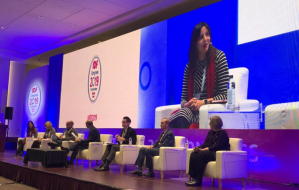
Bright and early on day 1 of IDF2019, and the auditorium was packed to hear about diabetes and tech.
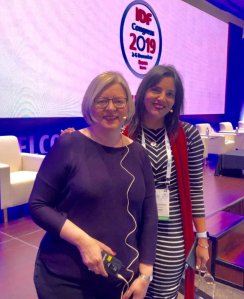
Always, ALWAYS, pleased to share the stage with Jane. Here we are just before the panel session.

Georgie excited to TALK ABOUT HYPOS! (We couldn’t understand why there was an explanation mark at the end of that sentence.)

Manny Hernandez gave the LWD Stream Award Lecture and there is no one more qualified to talk about the importance of diabetes community. How honoured I was to introduce him!

Celebrating Manny! (Photo courtesy of Boudewijn Bertsch)
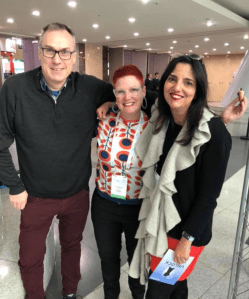
From Melbourne to Busan. Neighbours at IDF2019. Jo was speaking about living with a rare type of diabetes and Andy was there for support (and photos from rooftops).

This woman! Sana, deputy lead of the LWD Stream and a bright, fierce force.
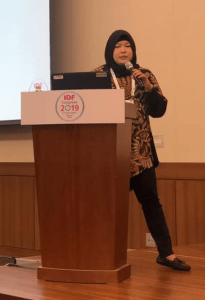
Anita eloquently explaining the challenges of living with diabetes-related complications in Indonesia.
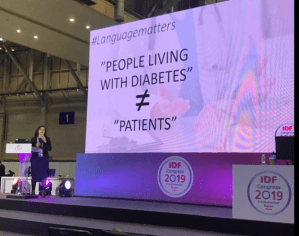
Apoorva highlighting #LanguageMatters in her talk.

Some of the most dynamic young people I have ever met at the Young Leaders in Diabetes Training Summit.

Cherise can always be relied upon to ask thoughtful questions.

I’ve lost count of the cities we’ve done our #DiabetesOnTour this year, but these blokes have made all my travel so much better! Thanks Bastian and Grumps.
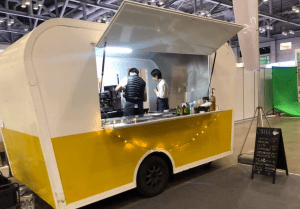
My favourite people at IDF2019? The two baristas running this uber-hipster coffee van.

We were all surprised to see the room packed full at 8.30am on the last day of the Congress. Sex sells. Or people just want to talk about it…
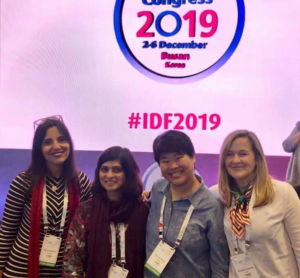
One of the best pieces of advice I was ever give was this: surround yourself with smart women. This is the LWD stream from IDF2019. I truly was surrounded by the smartest of women! Thank you Sana, Pei Yan and Elizabeth.
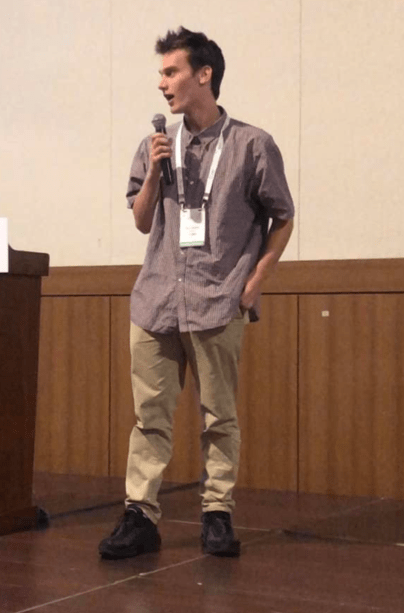
The final session in the LWD and my highlight of the whole congress was my neighbour, Sol, talking about living with MODY 3. We could not have scripted a closing remark better than his: ‘Being at this conference has made me feel part of something and with people that understand.’ Welcome to the world of diabetes peer support, Sol. You are so, so very welcome here.
DISCLOSURE
I was the Chair of the Living with Diabetes Stream at the IDF Congress in Busan. My flights to Busan were covered by Ascensia Global (in order for me to get to Busan in time to co-facilitate their Social Media Summit). Flights home and accommodation were covered by the IDF.
Two years ago, I walked off the stage at the inaugural ADATS event feeling very shaken. I’m an experienced speaker, and regularly have presented topics that make the audience feel a little uncomfortable. I challenge the status quo and ask people to not accept the idea that something must be right just because ‘that’s how it’s always been done’. Pushing the envelope is something that I am more than happy to do.
But after that very brief talk I gave back in 2017, a mere three months after I started Looping, I swore I would never speak in front of a healthcare professional audience again.
That lasted all of about two months.
In hindsight, I was more than a little naïve at how my enthusiasm about user-led technologies would be received. I can still remember the look of outright horror on the face of one endo when I cheerfully confirmed:‘Yes! Any PWD can access the open source information about how to build their very own system. And isn’t that brilliant?!
Fast forward to last Friday, and what a different two years makes! The level of discomfort was far less, partly because more than just a couple of people in the room knew about DIYAPS. In the intervening years, there have been more talks, interviews and articles about this tech, and I suspect that a number of HCPs now have actually met real-life-walking-talking loopers. Plus, Diabetes Australia launched a position statement over a year ago, which I know has helped shape discussions between HCPs and PWDs.
I’ve gotten smarter too. I have rejigged the words I use, because apparently, #LanguageMatters (who knew?!), and the word ‘hack’ scares the shit out of people, so I don’t use it anymore. (Plus, it’s not really accurate.) And, to protect myself, I’ve added a disclaimer at the beginning of my talk – a slide to reinforce the sentiment that I always express when giving a talk about my own life with diabetes, accentuating that I am speaking about my own personal experiences only and that I don’t in any way, shape or form recommend this for anyone else. (And neither does my employer!)
I framed my talk this time – which had the fabulously alliterative title ‘Benefits, Barriers and Burdens of Diabetes Tech’ by explaining how I had wanted to provide more than just my own perspective of the ‘three B’s’. I am but one voice, so I’d crowd sourced on SoMe for some ideas to accompany my own. Here’s just some of the responses.
 (Click to enlarge)
And this:

One of the recurring themes was people’s frustrations at having to wade through the options, keep up with the tech and customise (as much as possible) systems to work. And that is different for all of us. One person’s burden is another person’s benefit. For every person who reported information overload, another celebrated the data.
What’s just right for me is not going to be just right for the next person with diabetes. So, I used this slide:
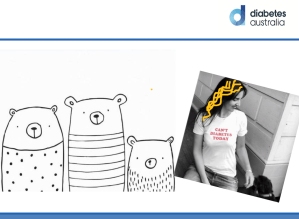
I felt that the story of Goldilocks and the Three Bears was actually a really great analogy for diabetes tech. Unfortunately, my locks are anything but golden, so I needed a little (basic and pathetic) Photoshop help with that.
In this fairy tale, Goldilocks is presented with things that are meant to help her: porridge for her hunger, a seat to relieve her aching legs and then a bed to rest her head after her busy day. But she has to work through options, dealing with things that are not what she wants, until she finds the one that is just right.
Welcome to diabetes technology.
On top of working out what is just right for us, we have to contend with promises on the box that are rarely what is delivered to us. Hence, this slide:

Apart from the Dex add circled in red, all the other offerings are ‘perfect’ numbers, smack bang in the middle of that 4-8 target that we are urged to stay between. These perfect numbers, obviously belonging to perfect PWD with their perfect BGLs, were always completely alien to me.
A selection of my own glucose levels showed my reality.
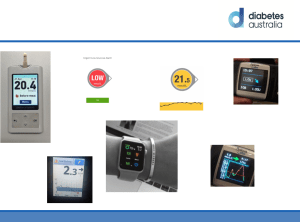
I explained that in my search for finding what was ‘just right’, I had to actually look outside the box. In fact, for me to get those numbers promised on the box, I had to build something that didn’t come in one. (Hashtag: irony)
Welcome to Loop! And my next slide.

And that brings us back to two years ago and the first time I spoke about my Looping experience in front of healthcare professionals. It was after that talk, during a debrief with some of my favourite people, that this term was coined:

Funny thing is, that I am now actually the very definition of a ‘compliant’ PWD. I attend all my medical visits; I have an in-range A1c with hardly any hypos; I am not burnt out. And I have adopted a Goldilocks approach in the way I do diabetes: not too much (lest I be called obsessive) and not too little (lest I be called disengaged), but just right.
It turns out that for me to meet all those expectations placed on us by guidelines and our HCPs, I had to do it by moving right away from the things there meant to help us. The best thing I ever did was start Loop. And I will continue to wear my deliberate non-compliance as a badge of honour and explain how it is absolutely just right for me!
I was speaking with someone who is thinking about starting to Loop the other day. I explained my own experiences – how simple the set-up had been (even after I’d delayed it for six months because I thought I wouldn’t be able to do it), how it is completely changed the way I think about diabetes, how much less time I have to dedicate to dealing with the daily frustrations of diabetes, how the highs and lows have been evened out and how glucose rollercoasters are a thing of the past.
‘So, you never have highs and lows? Ever?’ he asked me.
‘No; that’s not completely true,’ I said. I am frequently guilty of being evangelical about diabetes technology, and wanted to be sure that I wasn’t overselling DIYAPS. ‘After all, I still have diabetes!’
I have my range set to 4mmol/l – 8.0mml/l. It’s the mythical range that was presented to me as the ultimate goal the day I was diagnosed. It’s quite a tight range – I know that – and I probably could afford to ease up on that upper range. My target is 5.0mmol/l (it used to be 5.5mmol/l – another mythical number).
The reality is that for the very vast majority of the time, I am within that range, and hovering around that target number. If I was to check my Dex as soon as I woke up each morning, it would be boringly somewhere between about 4.8mmol/l and 5.3mmol/l.
But I still do spent time outside of the target range. The thing about Loop is that in most cases, I can explain the reasons when that happens.
I had a hypo the other night. A pretty terrible one, actually. I can’t remember the last time my Dex read LOW, but that was what I was staring at when I checked the app after my phone started screaming at me. I double checked with a finger prick and sure enough I was low. Really low. I treated (over treated) and was fine a short time later, albeit with a rebound leading to numbers I’ve not seen in a very long time.
How did that happen? Well, let’s start with the double bolus I gave myself. For some reason, I decided that the chicken soup with noodles I was eating for dinner needed not one, but two boluses. That was mistake number one. Mistake number two was not eating as much as I thought I was going to because I had a teleconference starting, so I left about half of my dinner in the bowl. Mistake number three was not realising mistake number one. And mistake number four was not doing anything to address mistake number two.
Following? Diabetes is fun!
The low resulted in an ‘eat-the-kitchen’ hypo that saw me eat six jelly beans, wait fifteen minutes and then recheck my glucose levels. Just kidding. I drank half a litre of juice, ate three bowls of breakfast cereal, chomped on a tube of fruit pastilles and then started attacking a homemade fruit bun my mum had delivered earlier in the day.
Because I was dying and all the carbs in the kitchen were the only way to prevent that happening.
The high that followed could be easily explained (see: juice, cereal, pastilles, fruit bun).
Other highs on Loop can usually also be explained quite simply. If I under bolus, I know pretty quickly, and Loop has already started doing its thing anyway to remedy that.
Stubborn highs generally mean one thing and one thing only: Renza, change your cannula. And as soon as I do, numbers come back into range fairly quickly.
Out of range numbers these days aren’t due to the unpredictability of diabetes. These days, they come down to one thing and one thing only: human error. My human error.
I trust Loop more than I trust myself. It is way smarter, completely and utterly unemotional, and an absolute workhorse, making adjustments every five minutes as required. It doesn’t get tired or busy or distracted. It understands numbers better than I ever will.
This is the cool tech I need to help me keep my diabetes moving. Of course, I still need the warm touch – the human connection – to help me make sense of my life with diabetes. But not having to think or do the diabetes numbers nearly as much gives me time and headspace I didn’t know I had. It keeps my numbers in range for the vast, vast majority of each day. And it means far fewer errors. Errors that I used to make all the time.
I am, after all, only human. Loop, on the other hand, is not.
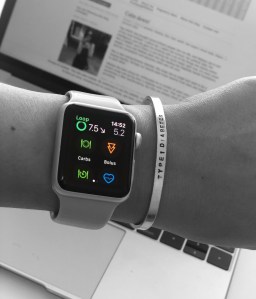
I am not really the type to analyse reports of glucose data. I’ve never been like that, except for a brief period where I was overly obsessive. Or, as it is more commonly known: when pregnant. Then, I was all about entering numbers into Excel spreadsheets, (hey – it was the early 2000s), and I searching for patterns in the 15-20 BGL checks I was doing every day, circling anything even closely resembling a common theme in green. (Oh – green circles may always have been my thing…!)
These days, even with reports and graphs and all sorts of other fancy pants data at my fingertips, I don’t really do any analysis.
The reason I love Loop is because of how it makes me feel in the here and now. By reducing so many of the tasks I do, and my diabetes needing less urgent attention, plus dealing with fewer lows, fewer highs and fewer pretty much all the other shitty stuff, it means that my in-the-moment diabetes is far easier to manage.
Sure – I occasionally have a look at what my Clarity app is telling me, but it’s only ever the snapshot page: TIR, average glucose level and hypo risk.
Since being on Loop, my hypo risk has always looked like this:

Minimal risk. Take that in for a moment.
Diabetes – the condition that demands so much of us in terms of being able to complete highly complicated calculations factoring in pretty much every single variable imaginable and a million more, dosing a potentially lethal drug and really, no room for error.
Diabetes – the definition of a high-risk health condition.
And my personal risk of lows? Minimal.
So, remind me again: How is Loop (or other DIYAPS options) unsafe?
The day before ADA kicked off, I managed to catch a glimpse – my only glimpse this visit to San Francisco – of the Golden Gate Bridge from the back of an Uber on the way to the Diabetes Mine Summer DData Exchange (#DData19).
This is the third DData I’ve attended, and it always delivers. The speakers are brilliant and the topics on the agenda push some of the boundaries we’re used to seeing as part of the ADA conference that runs alongside. Amy Tenderich expertly emceed the day, and Mike Hoskins’ rapid fire tweeting made sure that those not in attendance had a birds eye view of the event.
This year, there was one session that really stood out for me and it was a panel session moderated by Adam Browne from diaTribe and included JDRF International CEO, Aaron Kowalksi and Alain Silk from the FDA.
For some time now, there have been efforts to move away from the idea of HbA1c being the be all and end when it comes to assessing the outcomes of diabetes management.
This doesn’t only mean in terms of the way we measure our own personal diabetes management, or the success or effectiveness of the devices, drugs or treatments on offer, it also is directed to researchers, clinicians and regulators who continue to use A1c as THE measure to determine the value of whatever they are talking about.
The push has been towards time in range (TIR) because with tools such as CGM and Flash glucose monitoring, this is something that can be easily measured and demonstrated.
The A1c is flawed – we all know that. Anyone with diabetes will have tales of A1cs going down, despite their diabetes management being more erratic, or conversely, their A1c increasing despite having fewer roller-coaster episodes. As a one-off number, it tells very little.
But while TIR is certainly one different way of having a look at just how we are tracking, with so few people actually using CGM or Flash (due to access and affordibilty), we can’t throw out other options. The A1c is not dead yet (just ask the queues of HCPs in the Exhibition hall at ADA waiting to get theirs done. Another blog post for another time…)
Also, TIR cannot be the only other measure we look towards as a substitute for A1c, and this session at DData explored more than the idea of a simple like for like between the two.
Aaron Kowalski highlighted how one of the first things people speak about when using an automated insulin delivery device is how their sleep improves. It was indeed the first thing that I noticed, and it was life changing for me. I noted that I slept like I did before diabetes!
Yet, this is not considered as part of regulatory decisions. Neither is how our diabetes experiences can be transformed. Aaron told the story of a young woman who rarely attended to diabetes tasks when around friends because she didn’t want to pull out her pump to check her CGM trace, or bolus insulin. She didn’t want to draw attention to herself or her diabetes. But being able to do those tasks by simply looking at her phone, or her smart watch meant that she felt so much better – and she did what she needed to do when she needed to do it. How are those improved experiences being documented and considered as part of why something is valuable?
In his earlier talk, Alain Silk from the FDA noted that one of the challenges when it comes to technology regulation is too much regulatory and contractual burden and not enough innovative devices getting into the hands of people with diabetes. The DIY movement manages to sidestep that first part and that means that we do have get to have those devices – those transformative devices – in our hands a lot sooner. Our experiences – which all seem to be positive – and our diabetes outcomes – which all seem to report improvements – really should count for something.
Surely one of the goals we are all seeking (and when I say all, I mean everyone involved in any aspect of diabetes) is to increase the time we DO NOT spend on diabetes anymore. At DData last year, DIY-er Justin Walker said that he believes he has gained back an hour a day since using an automated system. That’s seven hours a week. Over a year, that’s more than a total of fifteen days we get back from diabetes. Add that up over a lifetime of diabetes. It’s significant.
Aaron said that one of his goals as CEO of JDRF is to ‘…take diabetes out of our lives as much as is humanly possible.’ When devices allow us to do that – even if it’s just one little bit – that should be assessed as meaningful.
I have been thinking about this session a lot. In fact, anyone who has asked me about ADA has received a lecture on it. My poor boss got an earful when I returned to work on Monday. I’m pretty sure he regretted asking how I’d gone in San Francisco after I launched into a tirade about how we are simply not listening enough to people with diabetes when it comes to just what we are measuring as being valuable to us.
The problem with adding TIR to A1c as a way to assess devices, drugs or other therapies is that we still are focusing on nothing more than numbers. Sure TIR may be more robust and not simply a snapshot average, but it still attributes our success to a number.
When I talk about why Loop has been so transformative to me, I do mention TIR. But the biggest bangs for my buck – the things that really ring true – is not how much time I spend between two number goal posts.
No.
It’s about how much better I feel about my diabetes. It’s about how much less time, less worry, less stress I am forced to dedicate to diabetes. It’s about how the hypos I have these days take three minutes to deal with rather than three hours. It’s about how less stubborn, and how less frequent those highs are. It’s about the much lighter shadow diabetes casts over my family. It’s about sleep – oh dear god, it’s about sleep! It’s about how easy it is to carry out those required tasks and how little they interfere with my day. And it’s about the time I have been able to claim back as my own.
The footprint of diabetes is so far smaller these days than ever before. THAT is what is meaningful. THAT is what I measure. THAT is what it means to truly go beyond A1c.

DISLCOSURES
I attended ADA as part of my role at Diabetes Australia. My economy flights and accommodation have been covered by the organisation.
Thanks to the team at Diabetes Mine, who kindly provide diabetes advocates with the opportunity to attend their DData Exchange at a significantly reduce cost.
I’m back on deck at work today after a whirlwind ten days in Europe for meetings and a conference. I started in Amsterdam, then flew to Florence and finally flew to Copenhagen (via Pisa). Those ten days were busy, long and interesting. And, perhaps best of all, packed full of others from the diabetes community.
Spending time with others living with or around diabetes is restorative. I know I get jaded at times, and burnout – in all its forms – takes its toll. I’ve been feeling a little advocacy burnout lately, and that has the tendency to make me feel that I need to step away from diabetes for a bit. Plus, I wasn’t sure if I could be bothered with the inevitable onslaught that comes when these sorts of activities happen.
Instead of hiding away (which is what I half wanted to do), I got on a crowded plane to Europe to spend almost two weeks ‘doing’ diabetes advocacy in different forms. By the time I got to Nijmegen – an hour and a half out of Amsterdam – for HypoRESOLVE I was already feeling better. I felt the darkness of burnout slip away as I sat in meetings, speaking up and providing PWD input into the project. And there, alongside me, were others living with diabetes. We leaned into each other, stepped back so another could take their turn, and supported each other to feel comfortable and relaxed. We reminded each other that there was a reason we were there – because people with diabetes must have a seat at the table and that we must be heard. We lived, breathed and ate ‘Nothing about us without us’ throughout that meeting and by the time I boarded a hideously early flight to Florence for the next meeting, I was raring to go – further boosted by a diabetes in the wild encounter.
Two days of meeting in Florence with friends and peers from the diabetes community talking about our experiences in the diabetes community continued to see my mojo return. We spoke about difficult topics, how the community works best and the place everyone has in there. I was reminded that the community ebbs and flows, and that it is not static. Sometimes, that rut that I find myself in means I forget that all communities change and grow and develop. This is actually a positive, because as it shifts, more people come in, some people step away (for good or just a bit), we reconfigure how it fits us, and diabetes makes sense in new ways.
Some much needed downtime meant that I could reconnect with peers and feel myself being completely and utterly filled up in a way that only comes when surrounded by people who get diabetes and this weird diabetes space. We don’t all have diabetes – we represent different corners of the community, but we know diabetes in a way that is particular to those who live close to or with it. Our dinner after the second day of the meeting saw us finally able to breathe and take some time out of diabetes speak, and instead revert to a steady flow of laughs (shrieks, actually).
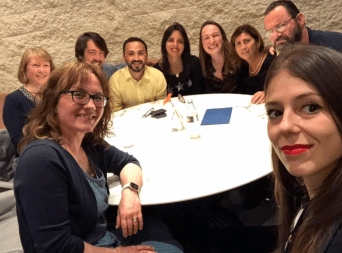
The next day, a friend from Italy just happened to be in Florence. We met up and I met her family, including her son who has diabetes. As we drank coffee just over the Ponte Vecchio, diabetes was spoken about a bit, but mostly, I got to learn about this young man who is clearly going to take on the world. He is smart, funny, delightful and inquisitive. His questions about Loop were intelligent – far more so than anything I would have thought to ask before I started using the tech! I hugged his mum as we said good bye, noting that she had just introduced someone else to our tribe.
By the time I arrived in Copenhagen (at 2.30am thanks to high winds in Florence, a bus ride to Pisa to take a diverted flight and some first-rate Italian disorganisation), I was exhausted, but at the same time felt more enthusiastic about the diabetes space than I had in some time. The next morning when I arrived at the conference venue, I was ready for a packed day of speakers, and to do my own presentation in the afternoon. I looked around and saw that there were a number of people living with and around diabetes that I knew, as well as a whole lot of new faces in there. The event was for HCPs, but as always, those of us with a truly personal connection to diabetes searched each other out. I met members of a support group known as ‘Diabetes Dads’ who meet regularly to speak about their kids with diabetes. They were there to support their friend who was speaking about his Looping son.
At lunch, I sat at a table with two PWD I knew. Two other people joined us and we quickly found out they too have type 1 diabetes. The conversation flowed – we understood each other, and our shorthand of diabetes speak easily fitted into our stories. We nodded as we heard stories that sounded familiar, even though they were being told by someone from another country who, until we sat down with our overflowing lunch plates, we had never met before. One of the women at the table had asked during an earlier session about how to wear the devices required for Loop, and I pulled out my RileyLink and showed it to her. She held it and weighed it in her hands. She’d wanted to know how to wear it with a fitted dress and I was able to show just how easily I could tuck away everything, even with the straight dress I was wearing for the day.
We may have all been there because of an interest or curiosity in DIY diabetes, but there is far more than that to draw us together. Just like as at the earlier meetings. As always, diabetes brings us together, but it’s far more that keeps us that way.
By the time I boarded the Dreamliner at Heathrow, all traces of burnout, and questions about how to manage in the sometimes tricky maze of diabetes community had completely subsided and were replaced with the reminder that when we find out tribe and surround ourselves with them, the burnout is replaced by feeling supported. And that’s how and why we show up. We do what we do, we show up, we speak up and we try to get stuff done. Ten days of that and I feel so much better. Which is good. Because as it turns out, those ten days are just the start …
DISCLOSURES
My flights to Amsterdam and accommodation while in the Netherlands was covered by HypoRESOLVE. I am on the Patient Advisory Committee for this project. My flight to Florence and two nights’ accommodation were covered by Lilly. I was in Florence for a DOCLab Advisory Meeting. My accommodation in, and flight home from Copenhagen was covered by the Danish Diabetes Academy. The Academy invited me to speak at their Diabetes DIY Movement conference.
On Saturday I was invited by Diabetes Victoria to be part of the diabetes technology panel session at their Diabetes Expo. (Disclosures at the end of this post.)
The session was on the program as being about ‘The ins and outs of diabetes technology’ and promised to offer perspectives from people with type 1 and 2 diabetes, a researcher, endocrinologist and CDE.

The panel involved two of my favourite endocrinologists – Professor Peter Colman and Professor David O’Neil. I have known both for a number of years and they are, without a doubt, absolute giants in the diabetes clinical and research world. I love that they accept and acknowledge there are limitations to current tech and are not afraid of DIY solutions. Even more, I love how they are very respectful of the expertise of PWD and understand that choice is essential. How wonderful to be on a panel with HCPs who regularly deferred to the PWD sitting alongside them to answer questions and further the discussion.
The session got off to a slightly rocky start as we diverted a little from the designated topic, but we got back on track eventually with the panellists being able to share their experiences and views about just where we are with diabetes tech in 2019, how it can help people living with diabetes, the frustrations tech can lead to and what we hope for the future.
I enjoyed the question about whether tech makes life easier for PWD. I honestly believe this is a double-edged sword – technology is designed to make our lives easier and that’s what it promises to do on the box, but the reality can be very different.
This is something I speak about when explaining my love/hate relationship with tech. Getting things right so that I don’t want to tear devices from my body and throw them out the window takes time. My first encounter with CGM was shocking and I swore to never use it again. The first sensor insertion caused so much blood that the Medtronic rep helping to teach me how it all worked actually gasped and then claimed never to have seen anything ‘so scary’ before. That was not reassuring. The words scary and gory weren’t on the box.
Then there was the data overload, unstoppable alarms and inaccuracy. How was this device meant to revolutionise my diabetes treatment (thatwas promised on the box!) if it was inaccurate, caused me to bleed everywhere and caused me so much frustration and distress that I never wanted to see, let alone use, CGM as part of my diabetes management. Ever. (Fast forward a number of years and thank god that’s not the case anymore!)
There was a lot of talk on the panel about how far we’d come and how lucky we are to be living with diabetes in 2019 rather than in 1959 or 1969 or anytime other than now. We were reminded of glass syringes that needed boiling and needles that needed sharpening. And days before home glucose monitoring, back-pack sized insulin pumps and the good old days where things were really not so good. Just old.
I won’t for a moment deny that we have come leaps and bounds since those days. In the twenty-one years I’ve lived with diabetes there have been lots of tech changes and improvements.
We were asked by the panel moderator how we feel about tech in 2019 and the answer from other panellists was that they feel hopeful and appreciative. The CDE on the panel has lived with type 1 diabetes for thirty-seven years and obviously has seen a lot of changes in that time. The two endos on the panel said that they feel that there have been huge strides made in tech – rapid and very significant in recent years.
When it got to me, I acknowledged what the other speakers had said. ‘I am really pleased to be living with diabetes in 2019,’ I said. ‘I use tech and I generally do love that it is available to me to use, despite the frustrations.’ I paused and looked around the auditorium. I had more to say and I had a split second to decide whether I just left it there, saying what I felt people expected me to say. Or I speak the truth – my truth.
I lifted the microphone to my mouth. ‘But actually, I’m angry,’ I looked around again, settling my gaze on the group of people in the room I knew. ‘I’m angry because we are where we are, and PWD are being given a rough deal.
 ‘Technology should be easy and accessible and affordable for everyone and it is not. I use a DIY system that means that I am the least burdened by diabetes than I have ever felt. But to get this system, I had to build it myself. It is unregulated, it is experimental. And people like me, doing what we do are largely met with scepticism and suspicion from HCPs who don’t understand the technology. We are accused of not taking our safety seriously – often through passive aggressive comments from not only HCPs but also device companies about the only safe devices being those that have been through RCTs and regulatory bodies. When we talk skin in the game, those of us who have these devices actually attached to our skin have the most at stake, so suggesting we don’t care about safety is ridiculous.’
I paused long enough only to take a breath.
‘The technology is available to do what I am doing, but it takes so long for device companies to get new things to market and through regulators, and even then we are stuck with set targets and limited customisation. We are languishing with older, nowhere near as useful tech. We are expected to accept that and just deal with it and be grateful for it. THAT is why there is a hashtag and a movement called #WeAreNotWaiting. That is why I am not waiting. And it’s why I’m a little angry.’
I don’t know everyone who was at the tech panel session on Saturday, but there was a group that I did know. They were the ones who applauded after my little rant. When they hear a group of panellists claiming that we are fortunate because the current available tech is so much better than what was available 70 years ago, they shrug their shoulders and know that there is more. They are the ones who have started down the DIY road or the Afrezza road (as one audience member explained).
We should not feel that we have to be appreciative, or that what is offered is the best there is. I am so, so glad that there are people out there who have not been prepared to just accept what was on offer, and instead go out there and make better tools – make the current tech better. They were not satisfied, and their smarts and determination has meant that many more of us don’t have to settle for the vastly imperfect tools available. Sure, DIY solutions aren’t perfect either, but they are certainly better.
I’m not really sure how my comment was taken by the broader audience. I suspect that a lot of them weren’t too sure how to take the woman waving her hands about, even after I promised them that I’m really not angry all that much and that I am actually quite delightful (not sure I fooled anyone on that point).
Probably the message that resonated most throughout the panel discussion was that choice is important and that there is no one size fits all solution to diabetes technology. That is definitely true. But that extends to there being no one size fits all to how we feel about the overall tech landscape. And the way I feel is that I am not willing to accept the status quo.
DISCLOSURES
I worked at Diabetes Victoria from September 2001 until January 2016. I was not involved in the planning of the 2019 Expo. I did not receive payment to speak at the Expo.