
You are currently browsing the category archive for the ‘Awareness’ category.
‘You do eat, don’t you mum?’ My nine year old had wrapped her arms around my waist this morning as I was fastening a clip in her hair. She squeezed tight.
I kissed her head and stepped back. She looked so concerned.
A couple of years ago, a friend of the kidlet’s had developed some disordered eating behaviours. Using age-appropriate explanations, we discussed what this meant for her friend, what we had to do when we were spending time with this friend and what was being done to help her friend ‘feel better.’ More broadly, I briefly explained that some people do have ongoing issues with how they think their body looks and tried to describe how this wasn’t necessarily about the food that they were eating, but had to do with their feelings and how they felt they looked. Trying to give the ‘eating disorders 101’ talk to a then-six-year-old possibly made my head explode with sadness.
This was a difficult conversation to have because I’ve always been concerned about how we discuss food and weight and body image. When I think about it, this was probably the first time that we’d ever had a discussion about food as being anything other than ‘Gee – that’s yum!’
The relationship between food and diabetes is mentioned occasionally – but again, usually because I’m low and need something to help get my BGL up.
As I’ve mentioned before, I’ve lost a bit of weight in recent times. This was not part of a weight-loss strategy. I wasn’t eating differently, or cooking different foods. I am a hobby baker and throughout this time, our bench top housed Tupperware containers full of cakes and cookies and slices. And I talk a lot about Nutella. Food is something that is celebrated in our house. Nothing is forbidden. We just eat a lot of fresh, healthy stuff with a decent splattering of (mostly home-cooked) treats.
We eat out regularly, but never at fast food restaurants. Our local café (a two minute walk away) is an extension of our kitchen; their coffee machine is our coffee machine!
But it seems that even though I’ve not discussed my weight loss with our daughter, she has noticed. Perhaps she hasn’t noticed that I look different, but, when she hugs me, I certainly feel different; when she wraps her arms around my waist, she knows that they go a lot further than they used to.
Should I be concerned at her concern? Does she equate weight loss with there being a problem? Is she worried that I have developed some of the eating problems her little friend had?
I dealt with this morning’s question by reminding her that we eat together at least one meal each day – more on weekends and holidays. I reminded her of the other night when we were toasting marshmallows by the fire as we watched a movie together. I pointed to a recent trip to the country where we ate pizza and shared doughnuts. We talked about the pasta dish I’d made the night before and how we sat at the dinner table eating it.
‘Okay,’ she said. ‘You just feel skinny when I hug you, that’s all.’ And then she changed the subject. I cringed at the word ‘skinny’ just as I would have if she’d used the word ‘fat’.
But perhaps I was making too much of it. Perhaps she was just stating a fact. Maybe using the word skinny was just an adjective that seemed appropriate, just as fat would have been in a different case. Maybe there was no judgement call attached. Maybe. Or maybe not.
I’ve written before (here and here) about how the day we award Kellion Victory Medals to people who have lived with type 1 diabetes for 50, 60, 70 and even 75 years is my favourite work day of the entire calendar year.
Today was the first 2014 ceremony, and fifteen people were awarded medals, including three who received their seventy year medal.
The amazingness and brilliance and inspiration of these incredible people was captured in this one perfect tweet from Professor Jane Speight. I’ve nothing more to add:

I was recently sent an article from Medscape that was written by Svetlana Katsnelson MD, endocrinology fellow at Stony Brook University Medical Center in New York.
The gist of the piece is that for a week as part of her endocrine fellowship training, Dr Katsnelson wore an insulin pump and checked her BGLs, and now believes she knows about living with diabetes. She also considers herself non-compliant because she didn’t bolus for an apple.
This may be oversimplifying the article a little and I honestly do believe that the intention here is good. But a little perspective is needed, I think. It was this comment that really upset me:
‘The experience provided me with a better understanding of how to use the devices that many of our patients use every day, but it gave me much more than that. I truly began to understand how difficult it is to live with diabetes.’
No, Dr Katsnelson, no. You do not truly understand how difficult it is to live with diabetes.
What you have is an idea of what it is like to walk around with a device delivering non-life saving saline into your system. You also have an idea of how it sometimes hurts when a sharp object pierces the skin on your finger. You probably could have deduced that anyway because, you know, sharp object, skin, nerve endings etc. You know how the buttons of these devices feel under your fingers and the weight of the devices in your hands.
You may have an idea of how tricky it can be to accommodate a pager-like device if you are wearing a pretty, flowing dress to work (if that is your want). You may now understand how annoying it is to have to stop what you are doing because it’s time to do a BGL check.
But what you don’t understand is that diabetes is about so very much more than that.
Here is what you don’t have any idea about.
You don’t understand the feeling of ‘this is forever’ or ‘I never get a holiday from this crap’. I know that this was acknowledged in the article, but really, you don’t know how it feels to never be able to escape diabetes.
You have no concept of the boredom of living with a chronic health condition, or the monotony of doing the same tasks each and every day over and over and over again!
You don’t understand the fear that overtakes your whole being as you imagine all the terrible complications that have been threatened and promised as result of diabetes.
You have no notion of the frustration of living with a condition that doesn’t have a rule book – and in fact changes the rules all the time!
You haven’t any perception of the fear I sometimes feel that I’ve passed my faulty genetic matter onto my beautiful daughter; or that I am a burden to my family and friends.
You will never feel the judgement from healthcare professionals because numbers are too high or too low – or that there are not enough of them.
You will never be called non-compliant by a doctor or made to feel guilty because you are eating a cupcake – all because your beta cells decided to go AWOL.
While I really do commend the notion of HCPs trying the ‘day in the life’ (or ‘week in the life’) idea, I think that being realistic about what this experience provides is important. It does not give any insight into the emotional aspects of living with a chronic health condition. It doesn’t explain the dark place we sometimes go when we are feeling particularly vulnerable or ‘over it’.
I have to say that all in all, this article left a sour taste in my mouth and I don’t like to feel that way because it sounds like I am being Grouchy McGrouch. I’m not. And as I said, I think that the intention here is good.
I just don’t want Dr Katsnelson to think that she now knows what is going on in my head when I wake up at 4am and every terrible scenario plays out leaves me feeling a pressure on my chest and a blackness in my mind that threatens to overtake me.
But I also want Dr Katsnelson to know that I really don’t expect healthcare professionals to know and understand all of these things. I expect them to treat me with respect and dignity. If this exercise has helped that, then great, but please, call it for what it is.
The article discussed in this post (Svetlana Katsnelson. Becoming the Patient: Not as Easy as It Looks. Medscape. May 12, 2014.) can be accessed here by first creating a free login.
Eat Right and Exercise To Keep Diabetes Under Control promised the email that landed in my inbox at about 3.30 yesterday afternoon. At exactly the same moment I really wanted a loaf of white bread with Nutella and butter. Yes. Real butter.
I receive these sorts of emails quite frequently, including this one:
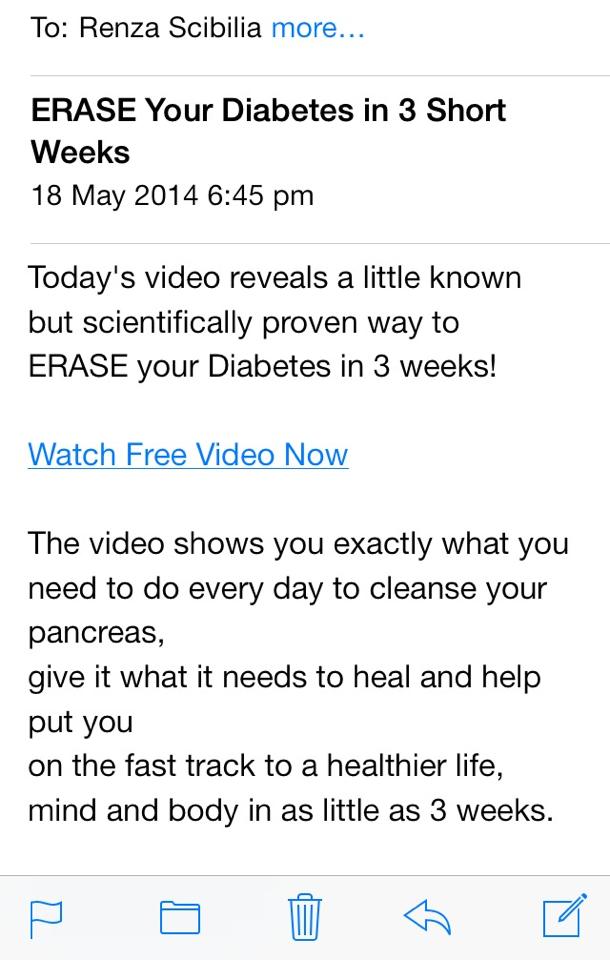
That one arrived a week ago, so I’m expecting to be cured in about 14 days. I’ll let you know how it turns out, but if everything goes to plan, this blog will be defunct in a couple of weeks. Woot! I plan to then blog about something interesting. Like butter and Nutella on white bread.
There is false hope spread through many channels; each and every day. These days, I snort, ignore, share on SoMe and maybe swear (okay, always swear) at the stupidity of these snake oil cures that promise to fix my faulty immune system in one simple step (or three short weeks).
Once someone told me that I needed to read The Secret because that would not only cure my diabetes, but also ensure I found a parking spot every time I needed to. Versatile!
Why can’t these emails tell me to Drink coffee and apple martinis, and have an afternoon nap every day to cure diabetes (or even just keep it under control)? Or Sit by the beach looking at the waves breaking to keep BGLs under 8. But above 4. All the time.
I have had diabetes long enough and have received enough promised cures to know that these are all baloney and I call bullshit on all of them. But they still annoy me because for some people – people newly diagnosed; people fed up with living with diabetes; parents of kids with diabetes – these false promises provide false hope. When you’re looking at anything to stop the pain, the distress, the tedium, the anxiety of living with a chronic health condition, sometimes you want to believe in a miracle cure.
I’ve unsubscribed from the list that sent me the email yesterday. But I know that tomorrow, or the day after, or next week there will be another promise in my inbox or Twitter stream that promises to fix my beta cells. That I can guarantee.
I’m tired.
Today, I woke in a great mood after a good night’s sleep. The weekend had been relaxing and lovely – family, friends, food and gorgeous weather on top of it all. Plus, I bought a new necklace with a pineapple on it. It was a good couple of days!
I was standing at my favourite café near work, waiting for a takeaway coffee and thinking that the barista was a magician as I watched his choreographed movements, filling takeaway cups with perfectly brewed caffeine.
‘This good day is about to get better,’ I naively thought, the taste of that first sip of coffee so close.
And then, I checked my email and ‘bam’. There it was.
A discussion about not distinguishing between type 1 and type 2 diabetes in a setting where it really is not relevant. I sighed.
And realised how tired I am.
Nearly thirteen years ago, I was employed to run a very small and, at the time, somewhat tokenistic type 1 diabetes program for a diabetes organisation. Thanks to a very supportive CEO and me being a pushy little thing, the program grew and grew and now, incorporates a dedicated team doing some incredibly good work for people living with type 1 diabetes.
One of the reasons for the program’s success is that we have been very clear about defining it as a program for people with type 1 diabetes, making sure the information we provide is targeted and relevant to the people we are trying to reach. We acknowledge each and every day that people with type 1 diabetes have specific information requirements and then we go about providing that information in the way people want.
In exactly the same way, a couple of years ago, we realised that the information for people with type 2 diabetes was completely forgetting the changing face of the type 2 diabetes community. There are more and more younger people being diagnosed with type 2 diabetes and the information we had was very much for an older audience. Hence, Generation T2 – a new program for 18 to 39 year olds with type 2 diabetes.
There are times that it is important to distinguish between the diabetes and there is no louder advocate for that than me.
But there are times that it is irrelevant. Yet, people still get angry – even when it really doesn’t matter if the type of diabetes is defined.
I am tired.
I am over this argument and this discussion.
Last week, the government handed down a budget that is going to hit the hip pockets of people with diabetes like never before. All people with diabetes will be affected – regardless of type.
During the World Diabetes Congress we heard of places around the world where the cost of insulin is so prohibitive that there are people dying because they cannot afford to buy the drug they need to stay alive. Slow, painful, horrible deaths because they cannot afford to buy insulin. Just think about that for a moment.
Here in Australia, there are people who cannot afford to use an insulin pump despite desperately wanting to because they cannot afford private health insurance or qualify for the Insulin Pump Program to assist with cost of purchasing the $9,000 (plus) device.
These are the issues that we should be fighting for and getting angry about. These are the issues that are important. Access to healthcare – a basic human right for all people – ALL people with diabetes – is what the topic should be; not whether or not the Channel 10 news forgot to say type 1 (or 2) before the word diabetes.
I am a card carrying member of the diabetes community. I am proud of this community and I am pleased to have a voice within it.
But we need to stop the finger pointing and the name calling and the blaming. How can we expect people outside of our community to get it right if we can’t? Why is it more important for people to understand the how and why we got this condition as compared with the how and why we’re trying to live and manage with it?
I am proud of the Australian diabetes community, but it is here that I hear this attitude more than anywhere else in the world. This discrimination is not helping us – it is harming us. Does it matter if people don’t really understand the different types of diabetes? I get it. It’s annoying, it’s frustrating; it’s constant. But really; does it matter?
This is a first world – a first class – problem.
And I am tired. I am saying it’s time to stop. Enough!

It’s the fifth annual Diabetes Blog Week, with thanks to the lovely Karen Graffeo from Bitter~Sweet Diabetes. Today’s we’re writing about the emotional side of diabetes. Come back tomorrow for the next instalment, and in the meantime, check out #DBlogWeek and follow along!
There is a dark place in my mind that is locked most of the time. Usually, I manage to keep it closed away and it remains hidden.
And when I am feeling strong and robust and life is moving along at its usual pace without too many problems, I am not tempted to go to the dark place, to open the door and examine what’s hidden.
But when I am feeling vulnerable – for whatever reason – and my defences are down, I peek. Stupidly, I go in, treading carefully, cautiously looking around. To the dark place.
The dark place is the fear that lives inside of me about diabetes. It’s the fear of today, of tomorrow. And of the unknown. It scares me and it scars me. It makes me feel fragile; breakable. And highlights how broken I am.
In the dark, I feel the relentless-ness and the never-ending-ness and the overwhelming-ness of diabetes that I usually simply expect – and accept. Suddenly, the day-to-day and more-than-manageable tasks that I need to do seem impossible, daunting, too big to contemplate.
The dark place is quiet, the only sound is my amplified heartbeat.
I’ve learnt to breathe slowly, see the dark place for what it is, allow myself time to visit, accept what is there and then close the door. I come back and face the light and life and the people I love. I go to work, I see my friends, I bake, I drink coffee, I listen to music. I look like I am living my life – and I am. But when I’ve visited the dark place, I am scared and look over my shoulder. I feel oppressed and fatigued. It takes me a while to fully come back – sometimes only a day or two, sometimes longer.
This is my emotional side of diabetes. This is the dark place. This is the exhaustion of diabetes.

It’s the fifth annual Diabetes Blog Week, with thanks to the lovely Karen Graffeo from Bitter~Sweet Diabetes. The first topic for the week asks us about the diabetes causes and issues that really get us fired up. Here’s what I have to say! Come back tomorrow for the next instalment, and in the meantime, check out #DBlogWeek and follow along!
I am not in any way foolish enough to believe that what I write on this here little blog or the work I do as a diabetes consumer (patient) advocate has the ability to change the world.
But I am confident enough to believe that my messaging is strong and that I generally stay on topic.
There are many things that I feel passionate about when it comes to being a diabetes advocate, but nothing more so than who is in charge of driving the diabetes bus. And that is the person with diabetes.
There is so much written about patient-centred care. Google it and you’ll come up with a…well a google of links. But despite much of it talking the talk, I’m not sure that it really walks the walk. The idea of patient-centred care is often at odds with policies and procedures of healthcare settings making it difficult for the person with diabetes (or other medical condition) to really be in the driver’s seat.
For the person with diabetes to be truly in control (and I’m not talking control in the sense of their BGLs, I mean in the sense of decision making) everyone needs to really subscribe to the model where the patient is smack bang in the middle of the picture, directing traffic, and making the ultimate decisions.
This doesn’t mean that it is done in isolation. No. It’s the exact opposite really.
It means that with support from HCPs, from diabetes organisations, from peer groups and from the health system, the person with diabetes is armed with all the information needed, given the right guidance, shown all the choices. And then, with all of this, they make a decision as to what they believe is the best thing for them. Nothing is withheld, everything is discussed, all options are in the table and considered.
I have too often had the options taken away from me. While I am pretty good at standing up for myself, it is exhausting at times to have to fight for my care to be the way I want it to be. And it’s frequently when we are at our most vulnerable that we have to fight the hardest. Hospital admissions (planned or emergency), times of extreme diabetes burnout or when we’re struggling to stay on track are the times that we often need to stand up for ourselves…even if we don’t have the energy, the inclination or the desire to.
When push comes to shove if I am charged with dealing with this condition 8,736 hours a year, then I AM driving this bus. The role of the support team around me is to give me suggestions and options about how to navigate, but then let me decide if I’ll turn left or right. And come along for the ride – even if they don’t necessarily agree with the road I’ve chosen.
Today, I’ve also written a post at the Diabetes Australia – Vic blog about another cause close to my heart – The Diabetes Stigma Project. Have a read!
I’m on a bit of a language thing at the moment. (I should add that my language is pretty horrid a lot of the time. Current diabetes burnout combined with general feelings of exhaustion mean the f-bomb gets dropped far more than it should. Our swear jar is so full that it has become our daughter’s private school education fund. But, I digress…..)
Today though, I am writing about how the language of food sends us down a slippery slope of guilt and competitiveness.
We say things such as ‘naughty’, ‘guilty pleasure, ’oh, I shouldn’t’ or ‘I’ve been so good lately’ when talking about food. We say that food is ‘good’ or ‘bad’ for us.
No, it’s not. Food doesn’t have a moral compass.
Stupid comments like ‘a moment on the lips; a lifetime on the hips’ mean we feel guilty about having a piece of cake or a chocolate bar when we should just enjoy it for what it is – something sweet and delicious!
We start this when talking about the nutrition babies receive (thank goodness the babes in arms are unable to comprehend what we’re saying).’ Breast is best’, we’re told, and nutritionally that may be correct. But the demonisation of formula only makes those unable or not wanting to breastfeed feel they’re failing their babies. Although, that doesn’t last. I went from looks of approval and comments of ‘aren’t you wonderful’ for breastfeeding my daughter. Until she got to 18-months when suddenly I was being asked when I was going to stop.
In recent times, we’ve added ethical eating into the mix so the good/bad extends to more than health. Suddenly, we’re expected to feel guilty if we’re not eating and drinking ethically sourced foods and beverages. Are those apples organic? Is your coffee single origin fair trade?
Today, in The Age there’s an article about clean eating and what using this terminology hints at, saying ‘It implies that anyone who doesn’t eat in the way you deem “clean” is eating “dirty.”’
We detox, inferring that we are full of toxins. We’re not and suggesting that our body is a poisonous, polluted pit of impurities that needs to be exorcised is nothing more than a money making scam at best; a way of making us feel somehow unclean at worst.
Messaging gets confusing – think about how the I Quit Sugar movement has impacted on people with diabetes who already spend a lot of time ‘un-demonising’ sugar. ‘You should do that. It’s good for people with diabetes.’ I’ve been told several times. How? It’s pointless and just like every other diet craze. And mind your own business, by the way.
Reading about food used to be so much fun. The Magic Faraway Tree series included tales of pop biscuits, toffee shocks, lands where lollies grew on trees, and everywhere, oh everywhere, there was warm toast with lashings of butter. There were Mad Hatter Tea Parties, and Harry Potter feasts were full of Pumpkin juice and Butterbeer. Books such as Like Water for Chocolate describe dishes such as ‘quail in rose petal sauce’, and Chocolat sets scenes with ‘The air is hot and rich with the scent of chocolate’. Food is a celebration and joy and a delight. No one counts calories or promises to ‘be good tomorrow’.
I don’t think that we need to go so far as only using utilitarian words such as ‘fuel’ to describe food. But I do think it’s time we moved away from the judgement and the guilt-inducing rhetoric that accompanies the language of food.
Friday listening and dancing – James Taylor singing ‘How sweet it is to be loved by you’ which is for my beautiful daughter who means I get to celebrate Mothers’ Day on Sunday.
How do you describe diabetes? I vary from ‘an inconvenience’ to ‘an effing pain in the arse’ and lots in between.
I’m all about words. Language is very important to me and I spent a lot of time crafting messages about living with diabetes that balances the ‘this is shit’ component with the ‘this is just life’ side of things.
One of the reasons that getting the language right is actually not so much for the people living with diabetes – we know the details and we know the words we choose to describe it. No; it’s for others. Because when we get the language wrong, we start to open ourselves up. To discrimination, stigmatisation, misinformation and negative perceptions.
It’s for this reason that I refuse to use the word ‘disability’ when talking about MY diabetes. There is much written about and debating ‘is diabetes a disability’ and I am definitely not qualified to really enter this discussion in any other capacity other than ‘this is my opinion’. And my opinion is coming from someone who has 16 years of diabetes under her belt with no significant physical or mental complications because of diabetes.
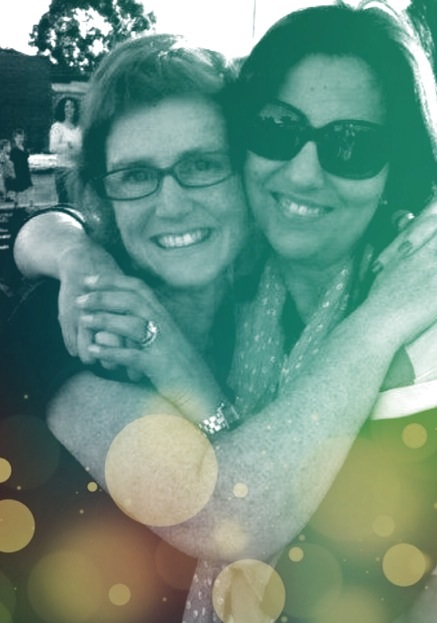
However, my beautiful, gorgeous friend and neighbour Jo is an expert here, so I called her and yelled ‘help me understand this!’ Jo has type 1 diabetes (believe me – there is a blog somewhere about two people with type 1 living two doors down from each other….) and is a speech pathologist who has worked in the area of disability for a long time. She’s clever, compassionate, direct and doesn’t mess around with words. Jo will hate me for saying this, she has recently been recognised with a nomination for a life-time award for working in the field of disability. She’s more than kind of awesome.
Jo suggested I start by having a look at the World Health Organisation’s definition of disability. This sent me into a world of pain because there were words I simply didn’t understand when put with other words and you know, comprehension.
So, I yelled at her some more (it’s what people do when they don’t understand) and here’s what Jo said that made sense to a fool like me:
JO: Renza (you stupid chicken who may make decent brownies but you’re pretty bloody simple, really). What I’m trying to say is that the social model of disability says the disability doesn’t belong to the person with the condition (that would be considered the disability) – let’s say someone with cerebral palsy, for example. It belongs to the environment. The environment doesn’t allow for the disability to be accommodated. People with diabetes can accommodate themselves – carry or buy sugar if they are low is a basic example of accommodation.
RENZA: So, is it like this? The environment accommodates my particular needs. If I was sitting an exam, I could take time to check my BGL or treat a low or take an extra loo break if necessary. But if I had a condition that didn’t allow me to physically or mentally sit for the three hours required to do the exam or have the capacity to understand the questions being asked then I’d be considered as having a disability?
JO: You’re simple, but yes. Now go make me some brownies.
Of course, diabetes throws all sorts of things into the mix including complications that may result in disability. But for me as diabetes affects me now, there is no reason that I consider the fact that my beta cells decided to shut up shop and move to the tropics as a disability.
I see diabetes as a ‘delayer’ at times. There are times that RIGHT NOW it stops me doing what I want, but this is generally remedied quickly (sometimes, not-so-quickly) and I can do whatever it is I planned to do.
The reality of life is that people face challenges of varying degrees. I’m leaving the last word to the clever Jo who says: Some people have challenges that can relatively easily be overcome and others (perhaps someone with a profound and multiple physical and intellectual disability), can’t live, without considerable effort from their environment to keep them alive, and if they are lucky have some kind of quality of life. It’s all relative!
I’m very interested to hear what others think about this. Where do you stand? Do you have an opinion? Do you consider or refer to your diabetes as a disability?
I stick needles into my skin, I shove insulin pump infusion sets into my sides, I rocket-launch CGM sensors into my stomach, I jab my fingers, I unflinchingly hold out my arm for blood to be taken and I roll up my sleeves for my annual fluvax without batting an eyelid.
Needles don’t scare me one little bit. I don’t even feel my heart rate speed up when a needle is coming at me, and although I’ve never checked, I’m sure that if wearing a blood pressure monitor while waiting for a needle to break the skin, there wouldn’t be a blip on the graph.
But other pain? Other pain I don’t deal with quite so well.
This morning, I stubbed my toe on the end of the bed. I collapsed onto the mattress, yelling ‘shit, shit, shit’ ‘ouch, ouch, ouch!’ and then grabbed my foot, expecting to see blood, swelling and possibly a bone sticking out of the skin. The pain was excruciating and clearly, I was about to die. Nope. Nothing. Now, four hours later, there is no sign of this injury that caused tears and swear words that made my daughter give me a warning about using the ‘S-H word, mum’!
I don’t ever recall having been scared of needles, so I don’t think that it’s diabetes that has desensitised me to the ‘pain of the prick’ (not a euphemism). But other pain is another thing altogether. Mouth ulcers reduce me to tears; a sore throat can have me whimpering in pain and headaches make me cover my eyes and swear that I have a tumour because of the agony I’m experiencing. I jammed my finger in the car door not long ago and was convinced that I was going to need reconstructive surgery. (Didn’t even bruise.) Whenever I’m asked what I’d rate the pain from something I always say ‘Ten. At LEAST ten. Does the scale go to eleven? ‘Cause then I’m at eleven’.
So with this in mind, you would think that I demonstrate great sympathy for others when hurt or in pain. But I don’t. I have no compassion for people who complain about discomfort, unless I can see a lot of blood, a cast, crutches, or my mum just after she’d had a double knee replacement (although the feelings of sympathy only lasted a couple of days.) Anyone else; no sympathy whatsoever. Once, after tripping and scraping her knee, my daughter looked at me through her tears and said ‘Just once I’d like you to be sympathetic when I fall over, mum’ in response to my ‘Oops; you’re okay. Up you get!’ (Mother of the year award in the post.)
I wonder if living daily with things that cause pain – even if I don’t flinch – has rendered me completely unsympathetic without an ounce of compassion when others complain. And do I feel that I can overreact when something hurts because I don’t complain about the diabetes stuff?
Whatever it is, I don’t know. But I can’t see myself becoming more tolerant of pain and I certainly don’t think I will ever be caring and kind to others in pain. Instead, I’ll keep moaning and complaining about how much a paper cut hurts me all the while telling others to take a spoonful of cement and toughen the f#@k up. I never promised to be consistent.





