You are currently browsing the monthly archive for October 2019.
Two years ago, I walked off the stage at the inaugural ADATS event feeling very shaken. I’m an experienced speaker, and regularly have presented topics that make the audience feel a little uncomfortable. I challenge the status quo and ask people to not accept the idea that something must be right just because ‘that’s how it’s always been done’. Pushing the envelope is something that I am more than happy to do.
But after that very brief talk I gave back in 2017, a mere three months after I started Looping, I swore I would never speak in front of a healthcare professional audience again.
That lasted all of about two months.
In hindsight, I was more than a little naïve at how my enthusiasm about user-led technologies would be received. I can still remember the look of outright horror on the face of one endo when I cheerfully confirmed:‘Yes! Any PWD can access the open source information about how to build their very own system. And isn’t that brilliant?!
Fast forward to last Friday, and what a different two years makes! The level of discomfort was far less, partly because more than just a couple of people in the room knew about DIYAPS. In the intervening years, there have been more talks, interviews and articles about this tech, and I suspect that a number of HCPs now have actually met real-life-walking-talking loopers. Plus, Diabetes Australia launched a position statement over a year ago, which I know has helped shape discussions between HCPs and PWDs.
I’ve gotten smarter too. I have rejigged the words I use, because apparently, #LanguageMatters (who knew?!), and the word ‘hack’ scares the shit out of people, so I don’t use it anymore. (Plus, it’s not really accurate.) And, to protect myself, I’ve added a disclaimer at the beginning of my talk – a slide to reinforce the sentiment that I always express when giving a talk about my own life with diabetes, accentuating that I am speaking about my own personal experiences only and that I don’t in any way, shape or form recommend this for anyone else. (And neither does my employer!)
I framed my talk this time – which had the fabulously alliterative title ‘Benefits, Barriers and Burdens of Diabetes Tech’ by explaining how I had wanted to provide more than just my own perspective of the ‘three B’s’. I am but one voice, so I’d crowd sourced on SoMe for some ideas to accompany my own. Here’s just some of the responses.
 (Click to enlarge)
And this:

One of the recurring themes was people’s frustrations at having to wade through the options, keep up with the tech and customise (as much as possible) systems to work. And that is different for all of us. One person’s burden is another person’s benefit. For every person who reported information overload, another celebrated the data.
What’s just right for me is not going to be just right for the next person with diabetes. So, I used this slide:
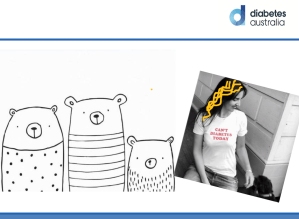
I felt that the story of Goldilocks and the Three Bears was actually a really great analogy for diabetes tech. Unfortunately, my locks are anything but golden, so I needed a little (basic and pathetic) Photoshop help with that.
In this fairy tale, Goldilocks is presented with things that are meant to help her: porridge for her hunger, a seat to relieve her aching legs and then a bed to rest her head after her busy day. But she has to work through options, dealing with things that are not what she wants, until she finds the one that is just right.
Welcome to diabetes technology.
On top of working out what is just right for us, we have to contend with promises on the box that are rarely what is delivered to us. Hence, this slide:

Apart from the Dex add circled in red, all the other offerings are ‘perfect’ numbers, smack bang in the middle of that 4-8 target that we are urged to stay between. These perfect numbers, obviously belonging to perfect PWD with their perfect BGLs, were always completely alien to me.
A selection of my own glucose levels showed my reality.
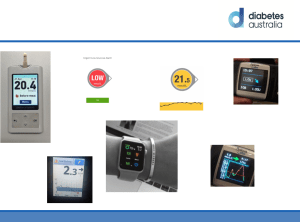
I explained that in my search for finding what was ‘just right’, I had to actually look outside the box. In fact, for me to get those numbers promised on the box, I had to build something that didn’t come in one. (Hashtag: irony)
Welcome to Loop! And my next slide.

And that brings us back to two years ago and the first time I spoke about my Looping experience in front of healthcare professionals. It was after that talk, during a debrief with some of my favourite people, that this term was coined:

Funny thing is, that I am now actually the very definition of a ‘compliant’ PWD. I attend all my medical visits; I have an in-range A1c with hardly any hypos; I am not burnt out. And I have adopted a Goldilocks approach in the way I do diabetes: not too much (lest I be called obsessive) and not too little (lest I be called disengaged), but just right.
It turns out that for me to meet all those expectations placed on us by guidelines and our HCPs, I had to do it by moving right away from the things there meant to help us. The best thing I ever did was start Loop. And I will continue to wear my deliberate non-compliance as a badge of honour and explain how it is absolutely just right for me!
My first endocrinologist was a really nice man. He was very kind in the way that he acknowledged that I was dealing with something quite scary – a new diagnosis of type 1 diabetes.
I remember he was nice. In fact, when people asked me what my new doctor was like, it is highly likely that I actually used that word to describe him.
What I remember more was the way that he told me about diabetes-related complications, and the way that he told me that if I didn’t look after myself, and follow his instructions to the letter, that I would get those complications. If I was a good girl and did as I was told, I would be right. If I didn’t, every one of those terrifying, horrible, distressing complications would occur and it would be my fault.
Now, he didn’t say this in an ‘un-nice’ way; he wasn’t mean, he wasn’t cruel, he didn’t yell. He was saying it as if it was an absolute, and I quickly came to understand that being compliant was what was expected, and that there was a good and bad way to behave in diabetes, and that resulted in good and bad numbers. If I did what he said, I was good; if I didn’t, I was bad. And if I was bad, terrible things would happen and I would have no one to blame but myself.
That was twenty-one and a half years ago, and I can still hear those words in my head. The language he used set me on a course of not coping with my diagnosis and feeling intense fear about my future – a fear that sometimes paralysed me into inaction.
This week, there has been discussion on Twitter about what the #LanguageMatters movement is all about. It started with this tweet from a diabetes consultant in the UK, which suggests that it is ‘..mostly about being nice…’.
Eight years ago, when Diabetes Australia launched the first language position statement, the response from many was that this was not an important issue and that perhaps we should put our efforts into other things; things that matter. This was seen as a little bit of fluff that was a waste of time. It’s political correctness gone mad, was the reaction from many.
We’ve become smarter at showing the evidence to support just how destructive words and language can be. We hear stories from people who explain how damaging language resulted in them not seeking help when needed, and how the fear of being blamed kept them away from their healthcare team. We can show that diabetes gets fewer research dollars; that it’s harder to get people to put their hands in their pockets to donate to a diabetes charity, and that the general community does not understand just how serious diabetes is.
The timing of things is interesting, and it seems that last night someone on the TV show The Great British Bake Off referred to a dish as ‘diabetes on a plate’. The host’s reference to the sugary confection in that way wasn’t about him not being nice. It was about him using a phrase that has been thrown around by many for years, because it is accepted that diabetes is something to make fun of.
Now sure, the way people responded to this incident could be termed as nice and not nice. Nice would be ‘Please don’t refer to my health condition like that’; not nice would be ‘Don’t be an arse’. Obviously, I lean towards the latter. (Also, not especially nice is using an example like this to explain the different types of diabetes, because it is not relevant to the discussion and only adds stigma to type 2 diabetes. Don’t do that!)
As I read the tweets responding to this tired ‘joke’ from people in the diabetes community, what I saw was not people urging the TV host to be nice. It was for him to understand the seriousness of diabetes, to stop shaming people with diabetes, to not fuel the misconception that sugar causes diabetes, to not make diabetes a punchline.
People make diabetes ‘jokes’ because the words and language used around diabetes for years has given them permission to do so. And with that, attitudes were formed and the construct that diabetes is self-inflicted and free game for comedians and TV hosts became accepted.
And that’s where we are now and what we have to undo.
Perhaps part of the problem is that we don’t have an ‘ist’ or ‘ism’ word that we can attach to the language matters movement. We understand that when we challenge racist or sexist conduct, we are not asking people to simply ‘be nice’. We are trying to make a culture shift away from such damaging attitudes and to change behaviours. When I call out a bloke for making a sexist comment, I’m asking him to reconsider the way he thinks about women, change his behaviour and be respectful. I’m not asking him to ‘be nice’. I’m asking him to stop being sexist.
When someone makes a comment about someone based on the colour of their skin or the country they were born, we don’t dismiss it as them not being nice. We (rightly) expect them to stop that rhetoric because it is wrong and no acceptable.
So, I’m making up a word (and I hate made up words…). If you use words and language that judges, shames, blames, and stigmatises people with diabetes, you are being diabetesist. Diabetesism is not okay and should not be tolerated, and we need to challenge people behaving in that way. Perfectly nice people could still be diabetesist; their attitudes are long-held and seemingly socially acceptable. It’s what they have heard all their lives. We need them to stop doing that.
Here’s the thing: I don’t actually consider myself as being a particularly nice person a lot of the time. Nice people are agreeable, and don’t challenge others or their ideas; they accept them. They don’t call people out on Twitter. They’re not the person who rocks the boat. I am the boat rocker, and I do that because I believe that there are institutional, systematic problems that need to be changed in diabetes and diabetes care, and one of those is the way that the language used around diabetes.
So, back to where this all began and this tweet. I agree that berating HCPs is not the way to get the message through. #LanguageMatters is not only looking at HCPs attitudes and behaviours, anyway. My strongest criticism has been aimed squarely at the media and industry. I also believe that it works best when all stakeholders are involved.
But while I accept that there are different approaches, I don’t accept – and really don’t appreciate – that all the work, the research, the education and the efforts about this issue can be distilled into the concept of good manners and niceness.
I also believe in taking a harder line. That doesn’t mean haranguing or being aggressive. But it does mean understanding that there is a (real or perceived) power imbalance in healthcare, and those with influence should be held to account when it comes to the way they speak to and about people with diabetes. It means calling out HCPs and researchers when they stand up at conferences use language that hurts us by reinforcing wrong attitudes; correcting the media when they get it wrong, and calling out industry when their marketing teams misfire.
And I also believe that this is personal. Living with diabetes is not a bit of ‘fun stuff’ or something that we chose to do. It is incredibly personal for me and every single person with diabetes who has been made to feel not enough, or blamed or shamed, or judged or mocked due to beliefs about diabetes – beliefs that have been formed and accepted over time because of the language and attitudes about our health condition. The concepts of non-compliance, of good and bad numbers, of ‘bringing this on myself’, of ‘diabetes on a plate’, of grading A1cs have all been thrown at me, and affected me in ways, varying from feeling a little annoyed right through to deciding diabetes care was an exercise in futility so I was simply not going to bother anymore.
That is why #LanguageMatters and I would ask – and urge – everyone working in this space to listen to those of us living with diabetes, hear us. And sit down and learn. Sure, we can all be nice, because being nice is a good thing to aim for (and I promise that I will endeavour to do better there, too), but accept that language matters much, much, much more than that.

 Today is Pregnancy and Infant Loss Remembrance Day. For many, it’s an occasion to mark the babies that we never got to know and watch grow up. It’s the hugs we never gave, the stories we never got to share, the first days we never got to celebrate. Those of us living with chronic health conditions have an extra level of complexity to deal with, as we wonder if our own bodies were partially (or completely) responsible for those losses. Sometimes, we never know.
But we hold close those losses and all that comes with them, carrying them quietly. Until the roar back into our consciousness.
Just a couple of weeks ago, I went to the GP because I had a UTI. (One day, the oversharing will stop. Today is not that day.) As the gift that keeps on giving, diabetes means that UTIs are more common in women with diabetes than those without. This is another reason that diabetes is so, so much fun.
My new GP asked if I’d noticed an increase in insulin needs because of higher glucose levels due to the infection. She then asked some general questions.
‘Is your period regular?’ she asked.
I nodded. ‘Like bloody clockwork. 28 days to the minute! Where was that when I was trying to have a baby?’ I remembered the desperation of wanting a reliable period to signal some sort of regular ovulation and the relief when I started on fertility treatment to make that happen.
‘Could you be pregnant?’ she then asked.
Could I be pregnant? Well, technically, I guess I could. ‘Jesus! I hope not!’ I exclaimed, wondering how my almost 46-year-old body would cope with such an assault! And then, because I catastrophise everything, I started to imagine first trimester blood sugars and hypos and climbing insulin requirements and all the other things that mammas with diabetes have to think about every second of a pregnancy.
I nearly threw up. Which I attributed to morning sickness. Obviously.
She handed me a jar and sent me to the bathroom for a sample.‘We’ll do a pregnancy test here now and also send the sample away to make sure the infection you have is going to respond to the antibiotics I’m prescribing,’ she explained to me.
I’m not pregnant. I breathed a sigh of relief when she told me that, flashing back to the complete opposite feeling I used to have each month when I realised that was the case. And to the literal and figurative emptiness I would feel when I realised another month had passed and I was not pregnant. And how that emptiness would increase exponentially after each miscarriage.
At the time, I didn’t have anyone to really talk to about how I felt. I had the support of my family, but there was no one who could understand the shame I felt, or the blame I was attributing to my diabetes – and therefore to myself. It’s only since speaking about it that I realised that so many other women feel the same way. And friends with diabetes have similar stories to share. We just needed an opportunity and a space to talk. And listen.
Today is a chance to do that. My love goes out to all of you who have lived through pregnancy loss, or who have lost a baby. I hope that you have a safe place to tell your story. And to my friends with diabetes who have experienced pregnancy loss: be kind to yourself. Sometimes the path we walk is lonely, and littered with too many times when we blame ourselves, when instead we should be kind and gentle. Today is a really, really good day to remember to do that.
Some more stories to read…
I wrote this for Mamamia just after my last miscarriage.
Kerri Sparling wrote this about her own experiences of infertility, and shared this guest post about pregnancy loss.
Anna Floreen’s story of pregnancy loss is heartbreaking, but I am so grateful to her for sharing it.
Look, I know there are times that engaging with people online who are sprouting a load of bullshit is a bad, bad idea, and really, I should just walk on by. But here’s why I don’t always do that…
I’m back from two-and-a-half days in Copenhagen where I was invited to give a talk about diabetes and language matters, and to run a couple of workshops about creating social media content for the 2019 DEEP Summit (please see my disclosures at the end of this post). Lots and lots and lots to write about and share once I’ve been back on Australian time for more than 18 hours, and my brain is less jet lagged and more focused.
But I wanted to share this slide from one of the other presenters because it resonated in more ways than one. I’m interested to know others’ thoughts on this, because mine keep flipping back and forwards.
I’ll be writing about this next week (hopefully), and about how I went from my initial reaction of wanting to cheer #NothingAboutUsWithoutUs, to being a little more considered at just what it is saying when we see it through a lens of inclusion and diversity of voices of lived experience.
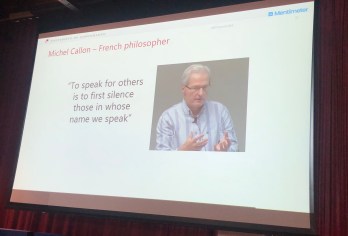
Slide shared by Anna Birna Almarsdottir in her talk about about what it means to be person-centric from the viewpoint of a researcher.
DISCLOSURE
I am a member of the DEEP Program and was invited to participate in the 2019 DEEP Summit. My flights, three nights’ accommodation and other costs were covered by Novo Nordisk. As ever, I have not been asked to write or share about my experience at the DEEP Summit or as a DEEP member. The decision to do so is my own, as are the jumble of words above this disclosure.
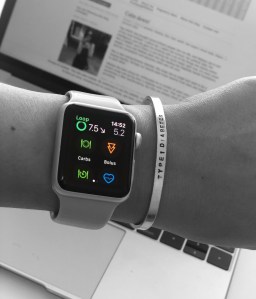
I was speaking with someone who is thinking about starting to Loop the other day. I explained my own experiences – how simple the set-up had been (even after I’d delayed it for six months because I thought I wouldn’t be able to do it), how it is completely changed the way I think about diabetes, how much less time I have to dedicate to dealing with the daily frustrations of diabetes, how the highs and lows have been evened out and how glucose rollercoasters are a thing of the past.
‘So, you never have highs and lows? Ever?’ he asked me.
‘No; that’s not completely true,’ I said. I am frequently guilty of being evangelical about diabetes technology, and wanted to be sure that I wasn’t overselling DIYAPS. ‘After all, I still have diabetes!’
I have my range set to 4mmol/l – 8.0mml/l. It’s the mythical range that was presented to me as the ultimate goal the day I was diagnosed. It’s quite a tight range – I know that – and I probably could afford to ease up on that upper range. My target is 5.0mmol/l (it used to be 5.5mmol/l – another mythical number).
The reality is that for the very vast majority of the time, I am within that range, and hovering around that target number. If I was to check my Dex as soon as I woke up each morning, it would be boringly somewhere between about 4.8mmol/l and 5.3mmol/l.
But I still do spent time outside of the target range. The thing about Loop is that in most cases, I can explain the reasons when that happens.
I had a hypo the other night. A pretty terrible one, actually. I can’t remember the last time my Dex read LOW, but that was what I was staring at when I checked the app after my phone started screaming at me. I double checked with a finger prick and sure enough I was low. Really low. I treated (over treated) and was fine a short time later, albeit with a rebound leading to numbers I’ve not seen in a very long time.
How did that happen? Well, let’s start with the double bolus I gave myself. For some reason, I decided that the chicken soup with noodles I was eating for dinner needed not one, but two boluses. That was mistake number one. Mistake number two was not eating as much as I thought I was going to because I had a teleconference starting, so I left about half of my dinner in the bowl. Mistake number three was not realising mistake number one. And mistake number four was not doing anything to address mistake number two.
Following? Diabetes is fun!
The low resulted in an ‘eat-the-kitchen’ hypo that saw me eat six jelly beans, wait fifteen minutes and then recheck my glucose levels. Just kidding. I drank half a litre of juice, ate three bowls of breakfast cereal, chomped on a tube of fruit pastilles and then started attacking a homemade fruit bun my mum had delivered earlier in the day.
Because I was dying and all the carbs in the kitchen were the only way to prevent that happening.
The high that followed could be easily explained (see: juice, cereal, pastilles, fruit bun).
Other highs on Loop can usually also be explained quite simply. If I under bolus, I know pretty quickly, and Loop has already started doing its thing anyway to remedy that.
Stubborn highs generally mean one thing and one thing only: Renza, change your cannula. And as soon as I do, numbers come back into range fairly quickly.
Out of range numbers these days aren’t due to the unpredictability of diabetes. These days, they come down to one thing and one thing only: human error. My human error.
I trust Loop more than I trust myself. It is way smarter, completely and utterly unemotional, and an absolute workhorse, making adjustments every five minutes as required. It doesn’t get tired or busy or distracted. It understands numbers better than I ever will.
This is the cool tech I need to help me keep my diabetes moving. Of course, I still need the warm touch – the human connection – to help me make sense of my life with diabetes. But not having to think or do the diabetes numbers nearly as much gives me time and headspace I didn’t know I had. It keeps my numbers in range for the vast, vast majority of each day. And it means far fewer errors. Errors that I used to make all the time.
I am, after all, only human. Loop, on the other hand, is not.




 Diabetogenic